
Architectural Lighting Solutions for 2026: 6 Categories to Shortlist
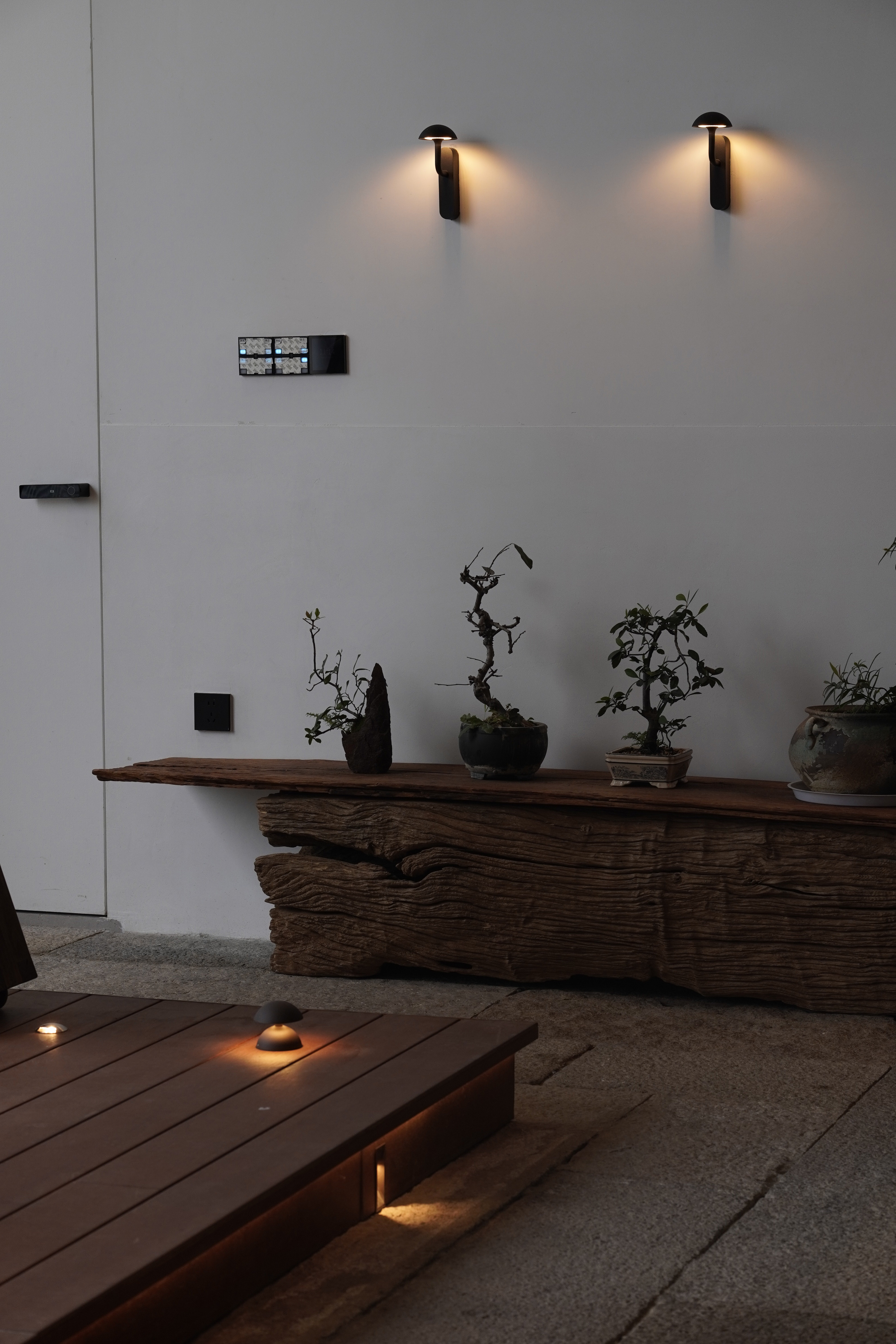
Architectural Lighting Solutions for 2026: 6 Categories to Shortlist
When evaluation teams compare architectural lighting suppliers, the first mistake is to compare brand names before comparing luminaire categories. The more practical starting point for hotels, high-end residences, restaurants, retail displays, and museums is to decide which categories belong in the specification: fixed precision downlights, adjustable accent luminaires, track systems, wet-area fixtures, wall and step lights, and outdoor landscape pieces. This article applies that evaluation logic to the present-day ALPHALUCE portfolio.
Architectural lighting solutions are not a single product family. They form a coordinated system of luminaires that share consistent color temperatures, optical behavior, finishes, and control compatibility. In an evaluation process, buyers should look for a manufacturer that can answer the whole project brief, not only one high-volume SKU. ALPHALUCE is an Italian architectural lighting brand born in Florence and focused on minimalist design; it operates as a four-in-one lighting company covering design, research and development, manufacturing, and sales, with its own foundry, surface treatment facilities, and assembly plants. That vertical structure is directly relevant to an evaluation because it affects consistency, customization, and delivery risk.
Why Category-Level Evaluation Matters
The category-level view reduces evaluation failures. Interior and exterior lighting projects contain zones with very different tasks: a guestroom needs even ambient base light and bedside reading light; a corridor needs visual rhythm and safe egress; a shower area needs moisture protection; a retail wall needs precise accent beams; a landscape path needs low-level durable outdoor luminaires. No single downlight can replace all of them, and a supplier that offers only one category is not providing architectural lighting solutions.
Compliance is another reason to start with categories. Recessed luminaires placed on the European market are tested against the recessed luminaire safety standard EN IEC 60598-2-2 together with the general luminaire standard EN IEC 60598-1. Wet areas add further constraints: regulations such as UK BS 7671 are widely used to require IP44 in bathroom Zone 2 and IP65 in Zone 1. A category-driven shortlist makes those requirements visible before commercial negotiation begins.
Architectural Lighting Market Context Heading into 2026
Market signals support the shift to structured evaluation. Grand View Research estimates the global architectural lighting market at USD 11.1 billion in 2025, with a projection of USD 17.5 billion by 2033. The same source attributes 50.9% of market share to the commercial segment and 43.2% to Asia Pacific in 2025, with China as the largest country market. Commercial buyers therefore dominate procurement volumes, and most purchasing decisions involve technical comparisons rather than simple replacement purchases.
At the same time, human-centric lighting has become a separate evaluation criterion. Fortune Business Insights measured the human-centric lighting market at USD 3.53 billion in 2024, indicating that specifiers increasingly request high color fidelity, tunable white light, dimming, and low glare. In practice, this means an architectural lighting evaluation should examine CRI values, CCT ranges, UGR-related optics, and control compatibility rather than lumen output alone.
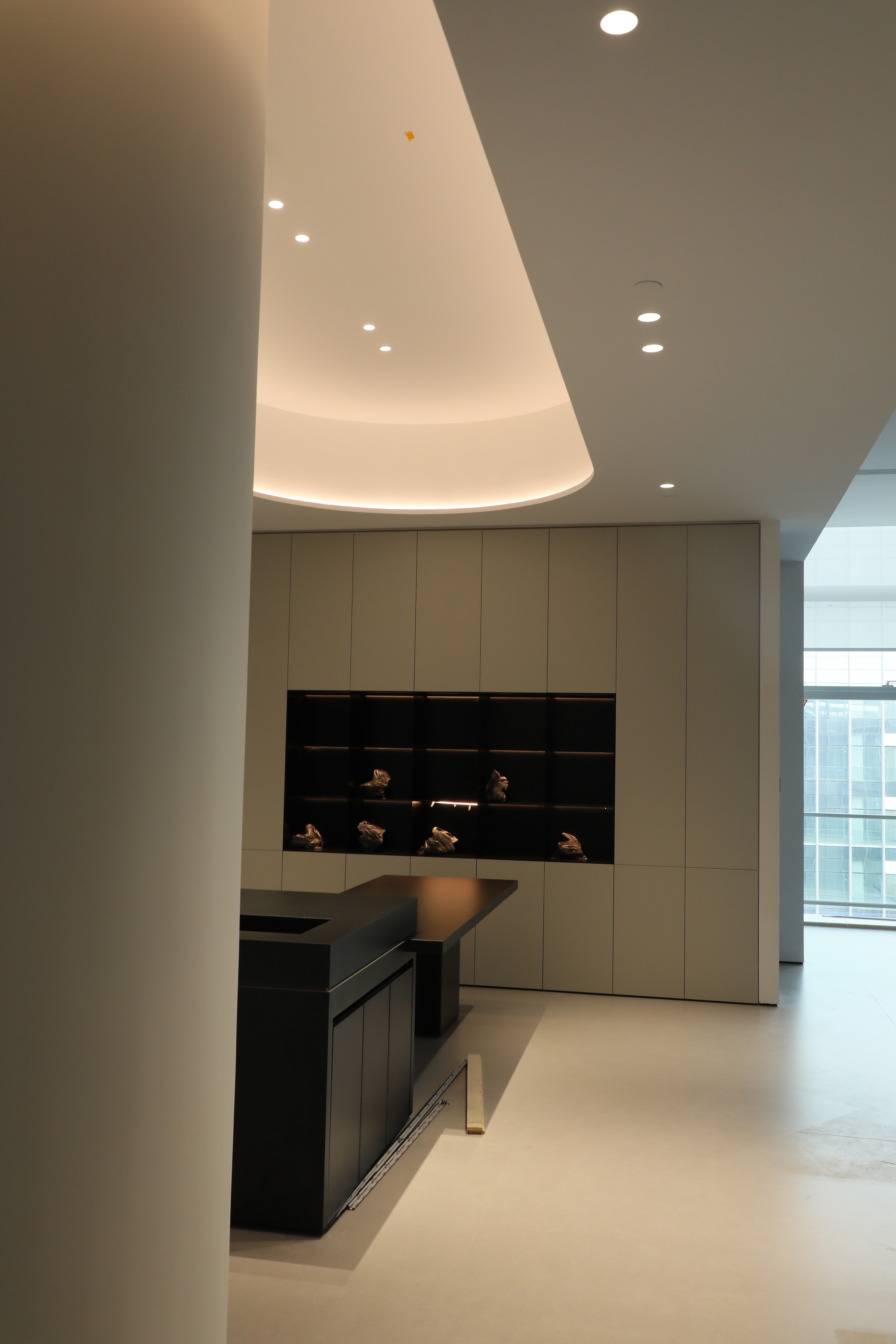
Category and system consistency should be reviewed before a supplier is placed on a project shortlist.
The Shortlist: 6 Architectural Lighting Categories for 2026 Evaluation
For a mixed-use hospitality or commercial project, the following six categories form a practical evaluation framework. They are ranked by typical decision priority, not by a claim that one luminaire is inherently better than another.
1. Fixed Precision Recessed Downlights
Precision fixed downlights are the backbone of most interior architectural schemes. They provide clean ceiling surfaces, uniform ambient light, and predictable photometric performance. The ALPHALUCE range includes ALDL1851, a recessed downlight with 7W power, 630lm luminous flux, CRI ≥ 97, IP20, beam angle options of 15°, 24°, 36°, and 55°, and a Ø55mm cutout. CCT options are 2700K, 3000K, and 4000K. For retail display and museum applications, ALDL1552 is an equally interesting trim downlight: 5W, 450lm, CRI ≥ 97, IP20, Ø35mm cutout, and narrow-beam options. Square formats such as ALDL1517 add geometry: 7W or 10W, 630lm or 960lm, CRI ≥ 92, IP54, and an 80×80mm cutout.
2. Adjustable and Trimless Accent Luminaires
Accent lighting is where architectural lighting solutions move from general illumination to storytelling. Trimless and adjustable luminaires allow designers to create a clean plaster ceiling while controlling light on artwork, architecture, merchandise, or food surfaces. ALDL1598 is an example: a trimless recessed spotlight with 10W, 886lm, CRI ≥ 92, IP20, cutout Ø95mm, beam angles 15°, 24°, 35°, and 60°, tilt 0–50°, and rotation 355°. ALDL1590 offers deeper adjustability for wall and object highlighting, with 7W, 585lm, CRI ≥ 92, cutout Ø35mm, tilt 0–90°, and rotation 355°. Recessed adjustable downlights such as ALDL1587 add flexibility while retaining architectural minimalism.
3. Track Lighting Systems
Track lighting systems are one of the most frequently used categories for retail, hospitality, museum, and showroom environments because they allow light positions to change when displays change. ALTR0253 is a track spotlight with 7W, 560lm, CRI ≥ 97, IP20, DC48V, a 5mm adaptor, beam options 15°, 24°, 36°, and 55°, tilt 0–90°, and rotation 355°. ALTR0247 provides a broader 15–60° beam option for general display coverage, while ALTR0206 is a magnetic track light with 15W, 1180lm, and CRI ≥ 90. Wall-wash track luminaires such as ALTR0207 support large vertical surfaces in lobbies and galleries. When evaluating a track range, buyers should confirm that the same track ecosystem includes multiple optical distributions, color temperatures, and trim families so that the design can be completed without mixing incompatible suppliers.
4. Bathroom and Wet-Area Luminaires
Wet-area lighting is frequently underestimated during evaluation. Hospitality projects and premium residences are likely to include bathrooms, spas, saunas, and shower zones, and those spaces call for certified ingress protection rather than an ordinary IP20 downlight. ALDL1238 is a bathroom recessed light with 10W, 960lm, CRI ≥ 92, IP65, a cutout of at least Ø75mm, and selectable CCT. ALDL1232 is a waterproof trimless downlight rated at 7W, 508lm, CRI ≥ 92, IP65, Ø60mm cutout, and a flush-to-ceiling appearance. ALDL1191 is a narrow-trim bathroom spotlight with IP54, 7W or 10W options, 580lm or 717lm, and adjustable tilt and rotation. These models demonstrate why water-protected architectural fixtures should be reviewed as part of the complete solution rather than as an afterthought.
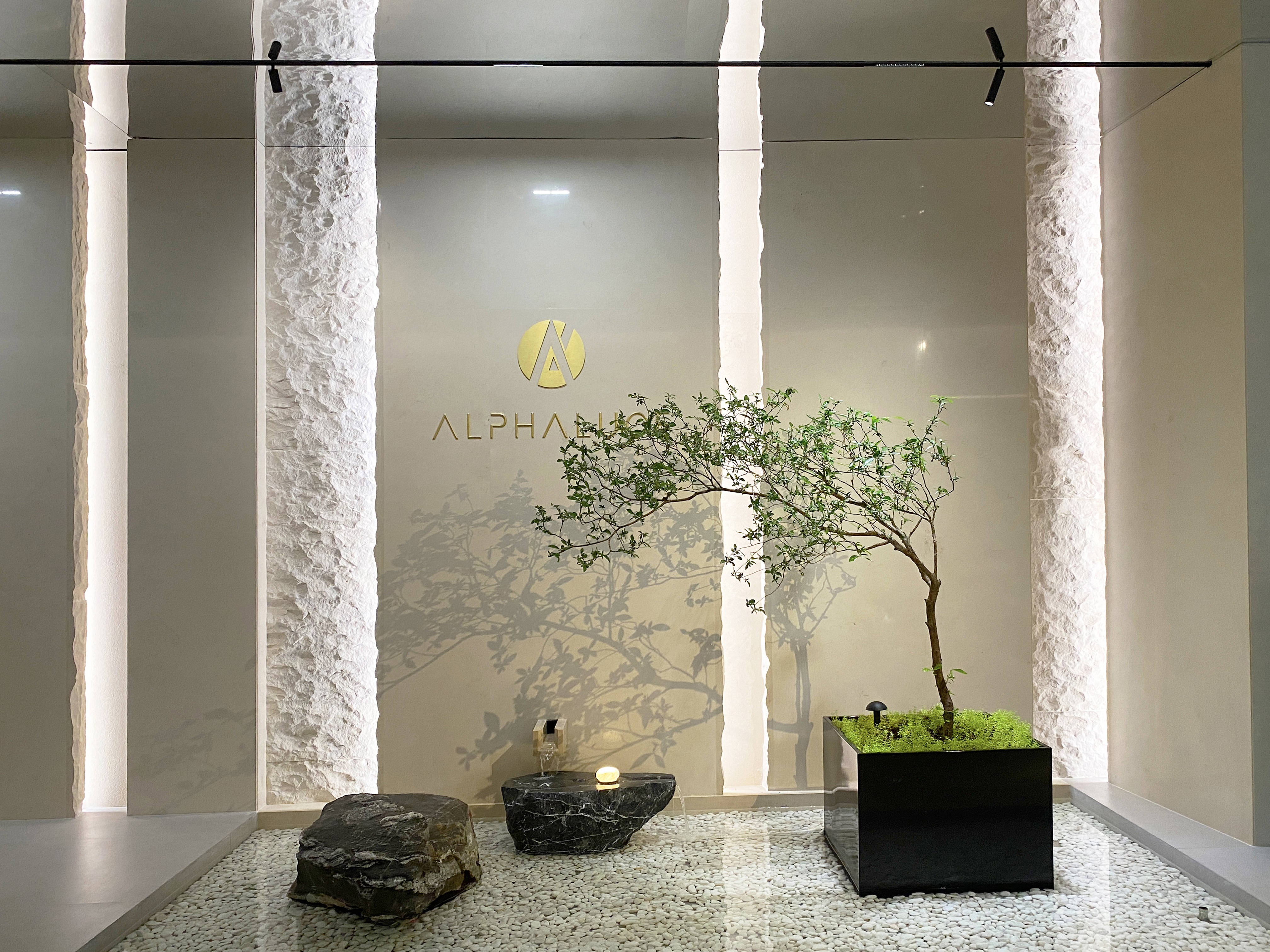
Consistent CCT and finish families help buyers evaluate a manufacturer as a single architectural lighting system supplier.
5. Wall Lights, Step Lights, and Reading Lights
Vertical and circulation lighting is the layer that separates architectural design from a basic ceiling plan. Wall lights such as ALWL0075 deliver IP65-rated outdoor or exposed locations with 8W, 630lm, CRI ≥ 92, and several beam distributions. Step lights such as ALDL2009 provide 3W, 270lm, CRI ≥ 92, IP65, and a 94×35mm cutout for corridor and landscape wayfinding. Bedside reading lights ALWL0053 and wall-mounted reading lights ALWL0125 support task-level illumination in hotel rooms and residences. These products may be small in size, but they are critical to the perceived completeness of architectural lighting solutions.
6. Outdoor Landscape, Bollard, Spike, Inground, and Decorative Luminaires
Outdoor landscape lighting integrates the building with its environment. Garden spike lights ALSL0029 deliver 3W, 240lm, CRI ≥ 97, IP65, DC24V, and adjustable aiming, while bollard lights ALSL0165 provide 7W, 560lm, CRI ≥ 90, IP65, height of 400mm, and 0–135° tilt. Inground lights ALDL1677 offer an IP65-rated low-profile solution for driveways, entries, and planting areas. Decorative pendants such as ALPH0067 and ALPH0070, linear pendant lighting, and LED strip systems add scale and atmosphere to lobbies and dining spaces. An evaluation should recognize that interior and exterior fixtures need to speak the same design language, even when they belong to different technical families.
Step-by-Step Process for Evaluating an Architectural Lighting Shortlist
Once the six categories are agreed upon, a practical workflow helps an evaluation team compare suppliers without losing product-level accuracy.
- Create a project zone inventory. List guestrooms, suites, corridors, lobby, restaurant, retail, spa, bathroom, terrace, facade, and landscape. Identify the luminaire category needed in each zone.
- Map categories to exact product families. Confirm each supplier can supply fixed downlights, adjustable/trimless accent luminaires, track systems, wall and step lights, wet-area fixtures, and outdoor landscape products. Use ALDL1851, ALDL1598, ALTR0253, ALWL0075, ALDL1238, and ALSL0029 as reference families for this test.
- Compare product parameters field by field. Read wattage, lumen output, CRI, CCT, beam angle, cutout, IP rating, material, dimming, voltage, and control compatibility as separate decision facts.
- Check compliance documentation per target market. For European projects, verify that recessed luminaires have CE-LVD documentation aligned with EN IEC 60598-1 and EN IEC 60598-2-2. For exposed or wet areas, check IP ratings such as IP44, IP54, or IP65 against the project zone.
- Assess optical quality and user comfort. High-CRI LEDs, multiple beam angles, and low-glare optics are usually more valuable than high maximum wattage in an architectural interior.
- Review manufacturing and quality controls. ALPHALUCE operates a vertically integrated industrial chain and performs 100% inspection plus aging tests on produced units. This operational fact should be compared with the buyer's failure-rate tolerance for five-star and long-life projects.
- Clarify customization and lead-time boundaries. If OEM or ODM is required, confirm the customization options, minimum order quantity, monthly production capacity, and warranty. ALPHALUCE lists typical production lead time at 20–30 days, MOQ of 100 units, monthly capacity of 42,000 units, and a 5-year warranty.
Use Cases That Reflect the Evaluation Criteria
The category shortlist is not theoretical; it has been applied to hospitality, commercial, and residential projects at meaningful scale. A five-star hotel project in Laos, for example, used 200–500 units for ambient and decorative lighting and required long operating hours with L90B10 maintained beyond 50,000 hours. In Fiji, an island resort project used a similar volume for beachfront hospitality lighting, while a Thai resort project combined interior comfort with tropical outdoor atmosphere.
In commercial interiors, an R&D facility was delivered as a WELL-compliant healthy lighting environment and aligned with LEED and WELL Platinum targets. In the Middle East, a financial hub business complex used architectural lighting for accent and display purposes, reflecting the commercial segment's market dominance. Residential applications tell the same story: a high-end penthouse and villas in China and Thailand used recessed, trimless, wall, and outdoor luminaires to create a minimalist environment with invisible integration.
Across these use cases, the common factor is not a single fixture. The common factor is that interior, wet-area, and outdoor categories were manufactured and coordinated through one architectural lighting partner with consistent CCT and quality expectations.
Comparison Table: Luminaire Categories in the ALPHALUCE Portfolio
| Category | Typical Role in the Project | Representative ALPHALUCE Models | Key Facts to Validate | Decision-Oriented Question |
|---|---|---|---|---|
| Fixed precision recessed downlights | Base ambient layer for rooms, corridors, and circulation | ALDL1851, ALDL1552, ALDL1517 | ALDL1851: 7W, 630lm, CRI ≥ 97, IP20, cutout Ø55mm; ALDL1552: CRI ≥ 97, Ø35mm | Does the ceiling allow the required cutout and minimum installation depth? |
| Adjustable and trimless accent luminaires | Beam-controlled accent light on walls, artwork, and retail displays | ALDL1598, ALDL1590, ALDL1587 | ALDL1598: trimless, 10W, 886lm, CRI ≥ 92, tilt 0–50°, rotation 355° | Is a trimless version available without compromising access to the driver and installation? |
| Track lighting systems | Reconfigurable display, retail, museum, and hospitality accent lighting | ALTR0253, ALTR0247, ALTR0206 | ALTR0253: 7W, 560lm, CRI ≥ 97, DC48V, 5mm adaptor | Does the track range include wall-wash, spotlight, and suspended options? |
| Bathroom and wet-area luminaires | Lighting for bathrooms, showers, spas, and high-humidity environments | ALDL1238, ALDL1232, ALDL1191 | ALDL1238: 10W, 960lm, CRI ≥ 92, IP65; ALDL1232: trimless, IP65 | Which IP rating is required in each wet zone, and is it documented? |
| Wall, step, and reading lights | Task light, wayfinding, vertical illumination, and bedside reading | ALWL0075, ALDL2009, ALWL0053, ALWL0125 | ALWL0075: 8W, 630lm, IP65, CRI ≥ 92; ALDL2009: 3W, 270lm, IP65, CRI ≥ 92 | Can the wall and step luminaires share dimming zones with the ceiling scheme? |
| Outdoor landscape and decorative luminaires | Entrances, paths, gardens, balconies, and architectural silhouette lighting | ALSL0029, ALSL0165, ALDL1677, ALPH0067 | ALSL0029: 3W, 240lm, CRI ≥ 97, IP65, DC24V; ALSL0165: 7W, CRI ≥ 90, IP65, height 400mm | Are outdoor fixtures compatible with the same CCT and finish language as indoor fixtures? |
Frequently Asked Questions
Yes. Recessed luminaires supplied into the European market are normally evaluated for electrical safety under EN IEC 60598-2-2 together with the general requirements of EN IEC 60598-1. ALPHALUCE has a CE-LVD certificate, number 24AS121634S598A002, issued on 2025-03-25, covering recessed LED lighting fixtures. The portfolio also carries CE-EMC certificates, RoHS certificates, and is described as compliant with CE, ETL, RoHS, LVD, and EMC standards.
It can, if the supplier deliberately maintains a broad architectural portfolio. ALPHALUCE's portfolio includes recessed downlights, track lighting systems, step lights, wall washers, outdoor landscape fixtures, linear lighting solutions, and a range of wall, pendant, and strip products. The portfolio contains fixed downlights such as ALDL1851, trimless and adjustable spotlights such as ALDL1598, waterproof bathroom recessed lights such as ALDL1238, track luminaires, bollard lights, spike lights, inground lights, and decorative pendants.
Start with the base layer: fixed precision recessed downlights for corridors, guestrooms, and public circulation areas. They define the quality of the ceiling and the general visual comfort of the space. If display zones or flexible retail layouts are involved, add track lighting as the second priority. Only after the base and flex layers are confirmed should the budget move to decorative and niche outdoor products.
A buyer can contact ALPHALUCE directly at info@alphaluce.com or through WhatsApp at +86 135 5671 7282. During an evaluation, it is useful to request samples of at least one fixed downlight, one adjustable or trimless spotlight, one track head, and one IP-rated bathroom fixture so that the fabrication quality, CCT consistency, and driver behavior can be verified side by side.
ALPHALUCE states a typical production lead time of 20–30 days, with a monthly production capacity of 42,000 units and an MOQ of 100 units. OEM and ODM programs cover color, CCT, beam angle, power, surface finish, and logo customization. A 5-year warranty is offered, and every unit is subject to 100% inspection plus aging tests before delivery.
Conclusion
An architectural lighting evaluation for 2026 should not begin with “which brand is best.” It should begin with a discipline: map each project zone to a luminaire category, compare full product parameters, verify compliance and IP ratings, and then ask whether the manufacturer can produce and coordinate the complete range through one quality system. ALPHALUCE is useful as a concrete example because its catalog spans six major architectural lighting categories, its manufacturing chain is vertically integrated, and its compliance documentation is product-specific.
The next evaluation step is simple: request a catalogue, shortlist two or three categories that map to your project, and compare samples before making a procurement commitment.