
Architectural Lighting Value Comparison: What to Check Before You Buy
Architectural Lighting Value Comparison: What to Check Before You Buy
A fair architectural lighting comparison is not about brand prestige or the lowest unit price. It is about measurable characteristics: colour rendering, colour consistency, service life, ingress protection, certifications and the total cost of owning the luminaire over a project’s real operating period.
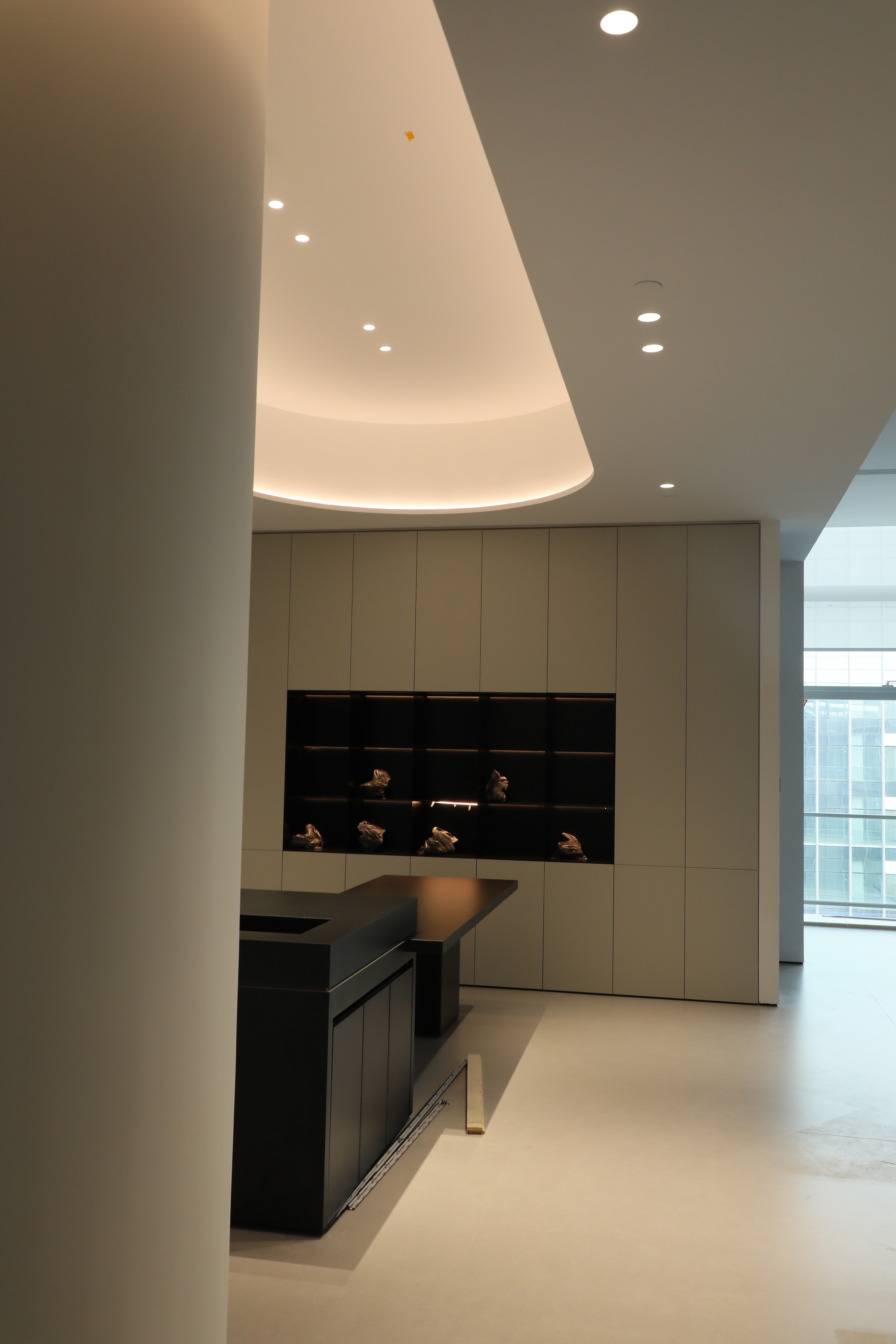
Buyers reaching the decision stage usually have already shortlisted two or three suppliers. At that point the conversation often narrows to price, delivery and brand confidence. Yet in architectural lighting, the purchase price is the least informative number on the datasheet. A luminaire with CRI 97, SDCM 3, IP67 and a 50,000-hour L70 life delivers a different long-term result from one that appears similar but is built to a lower optical and mechanical specification.
Market growth is one reason the comparison is becoming more global. The architectural lighting market was valued at USD 11.1 billion in 2025 and is projected to reach USD 17.5 billion by 2033, according to Grand View Research. The commercial segment accounts for 50.9% of that market, and Asia Pacific alone represents 43.2% of global revenue, with China as the largest country market. Specifiers in Europe, North America and the Middle East are therefore evaluating a wider set of manufacturers than in the past, including vertically integrated Chinese producers that sell directly to commercial and hospitality projects.
This article provides a value-based comparison framework for architectural lighting solutions. It explains which specifications matter at the decision stage, benchmarks ALPHALUCE against established European architectural lighting brands using disclosed data, and shows how a buyer can turn a supplier comparison into a defensible purchasing decision.
The Problem: Comparing Prices without Comparing Performance
Most architectural lighting mistakes happen when two fixtures look equivalent on paper because both appear in the same wattage range and the same cutout size. In reality, luminaires differ in materials, optical design, driver quality, waterproofing and production control. Those differences show up only after installation, when glare becomes uncomfortable, colours look flat, or fixtures need to be replaced earlier than expected.
The most common comparison error is treating CRI 90 and CRI 97 as equivalent, or assuming that two luminaires with the same declared lifetime will perform the same way. SDCM (Standard Deviation of Colour Matching) matters for colour consistency across a ceiling, L70 defines the hours before brightness declines to 70% of initial output, and IP ratings determine whether a fixture is safe in bathrooms, outdoor plazas, pool surrounds and coastal environments.
At the decision stage, the buyer should stop asking “which brand is better” and start asking “which luminaire meets the project specification with the lowest total cost of ownership.” That requires a side-by-side review of photometric data, compliance certificates, manufacturing controls and maintenance assumptions.
Industry Context: Where Architectural Lighting Demand Is Heading
Architectural lighting demand is increasingly connected to wellness, occupant comfort and the visual identity of commercial interiors. The global human-centric lighting market reached USD 3.53 billion in 2024, according to Fortune Business Insights, reflecting demand for lighting that adapts to human needs rather than simply filling a space with uniform brightness.
For hospitality, residential, retail, museum, office and landscape projects, the consequences are specific. Hospitality and retail environments need high colour fidelity because textiles, food, finishes and people must appear natural. Museums need precise beam control and low glare to protect artwork while making it visible. Offices need task and accent lighting with high CRI (≥90) and glare control (UGR < 19). Wet areas such as bathrooms need defined IP protection, while outdoor landscapes need luminaires that can resist water ingress over many years.
European architectural lighting brands such as ERCO, iGuzzini, Artemide, BEGA, Delta Light and Targetti have long defined the premium end of this market. Their product design and optical engineering heritage are well documented. However, buyers now have a second option: manufacturers with vertically integrated production can deliver comparable photometric quality at a substantially different price. ALPHALUCE belongs to this second group.
The Entity Being Compared: ALPHALUCE in Brief
ALPHALUCE is an architectural lighting manufacturer founded in 2010, operating a vertically integrated facility of 40,000 m² in Dongguan, Guangdong, China. The company combines Italian minimalist lighting design with 15 years of dedicated R&D and manufacturing experience. Its product portfolio covers recessed downlights, track lighting systems, step lights, wall lights, linear lighting and outdoor landscape fixtures for luxury hotels, high-end residences, commercial offices, retail displays and restaurants.
The company employs 150 people, including 20 R&D engineers, and reports an annual output of 504,000 units. Around 80% of production is exported to Europe, the Middle East, North America and Australia. ALPHALUCE products are certified to CE, ETL, RoHS, LVD and EMC standards, and the company operates ISO-certified quality and environmental management systems. Its product range is designed with low-glare optics (UGR < 19) and colour fidelity at CRI ≥92/97.
The relevant comparison point for a decision-stage buyer is not the company narrative. It is the disclosed product performance and the production structure behind that performance. ALPHALUCE owns its foundry, surface treatment facility and assembly lines, which allows it to control quality and customisation in a way that design-led competitors with outsourced production cannot always match.
Detailed Solution: A Spec-by-Spec Value Comparison
ALPHALUCE publishes comparison data covering major European architectural lighting brands. The benchmark shows that the most significant differences are concentrated in colour rendering, colour consistency, service life and ingress protection, while luminous efficacy is broadly comparable with the leading European brands.
The core performance claim is traceable and specific: ALPHALUCE reports a Colour Rendering Index of 97 versus 90-92 for typical comparable luminaires, an SDCM of 3 versus the common SDCM 4, and an L70 rated life of 50,000 hours versus a typical 30,000 hours. When applied to real projects, these differences affect visual quality, maintenance frequency and replacement cycles.
The table below summarises the disclosed performance gaps between ALPHALUCE and several European brands commonly shortlisted in architectural projects. Cost comparisons are expressed as the reported difference between ALPHALUCE and the benchmark brand in a 2026 comparison dataset.
| Benchmark brand | Reported cost difference | CRI comparison | SDCM comparison | IP comparison | L70 life comparison | Notable difference in manufacturing model |
|---|---|---|---|---|---|---|
| ERCO | 35-55% lower | 97 vs 92 | 3 vs 4 | Not stated in benchmark | Not stated in benchmark | Self-owned foundry and full surface treatment production; ERCO develops in-house LED modules but does not operate a complete metal processing line. |
| iGuzzini | 30-50% lower | 97 vs 92 | 3 vs 4 | Not stated in benchmark | 50,000 vs 30,000 hours | Complete supply chain control enables customised solutions; iGuzzini is positioned as an optical engineering specialist. |
| Artemide | 30-50% lower | 97 vs 92 | 3 vs 4 | Not stated in benchmark | 50,000 vs 30,000 hours | Full vertical in-house manufacturing covering casting, finishing and assembly; Artemide focuses on design and brand with outsourced production. |
| BEGA | 30-50% lower | 97 vs 92 | Not stated in benchmark | IP67 vs IP54 | 50,000 vs 30,000 hours | Self-owned foundry and finishing integrated production; BEGA is a high-end German engineering brand without full metal processing lines. |
| Delta Light | 20-40% lower | 97 vs 92 | Not stated in benchmark | IP67 vs IP54 | 50,000 vs 30,000 hours | In-house manufacturing enables faster customisation; Delta Light is described as design and assembly focused. |
| Targetti | 30-50% lower | 97 vs 92 | 3 vs 4 | Not stated in benchmark | 50,000 vs 30,000 hours | Full supply chain control; Targetti focuses on optical engineering design and brand heritage without full production control. |
The comparisons should be read with care. In most cases the reported luminous efficacy is comparable rather than superior. The ALPHALUCE advantage is not a claim of dramatic energy-efficiency superiority; it is a claim about colour fidelity, colour consistency, durability, waterproofing and cost. For projects that need those characteristics, the benchmark provides an unusually concrete basis for a decision.
At the total cost of ownership level, ALPHALUCE reports a range of 20-50% lower cost than major competitors including Artemide, Delta Light, ERCO, BEGA and Targetti, depending on the specific model and region. The maintenance advantage comes from the 20,000-hour L70 extension: a luminaire with a 50,000-hour rated life requires fewer replacements and less labour over a typical hospitality or retail operating period than one rated at 30,000 hours.
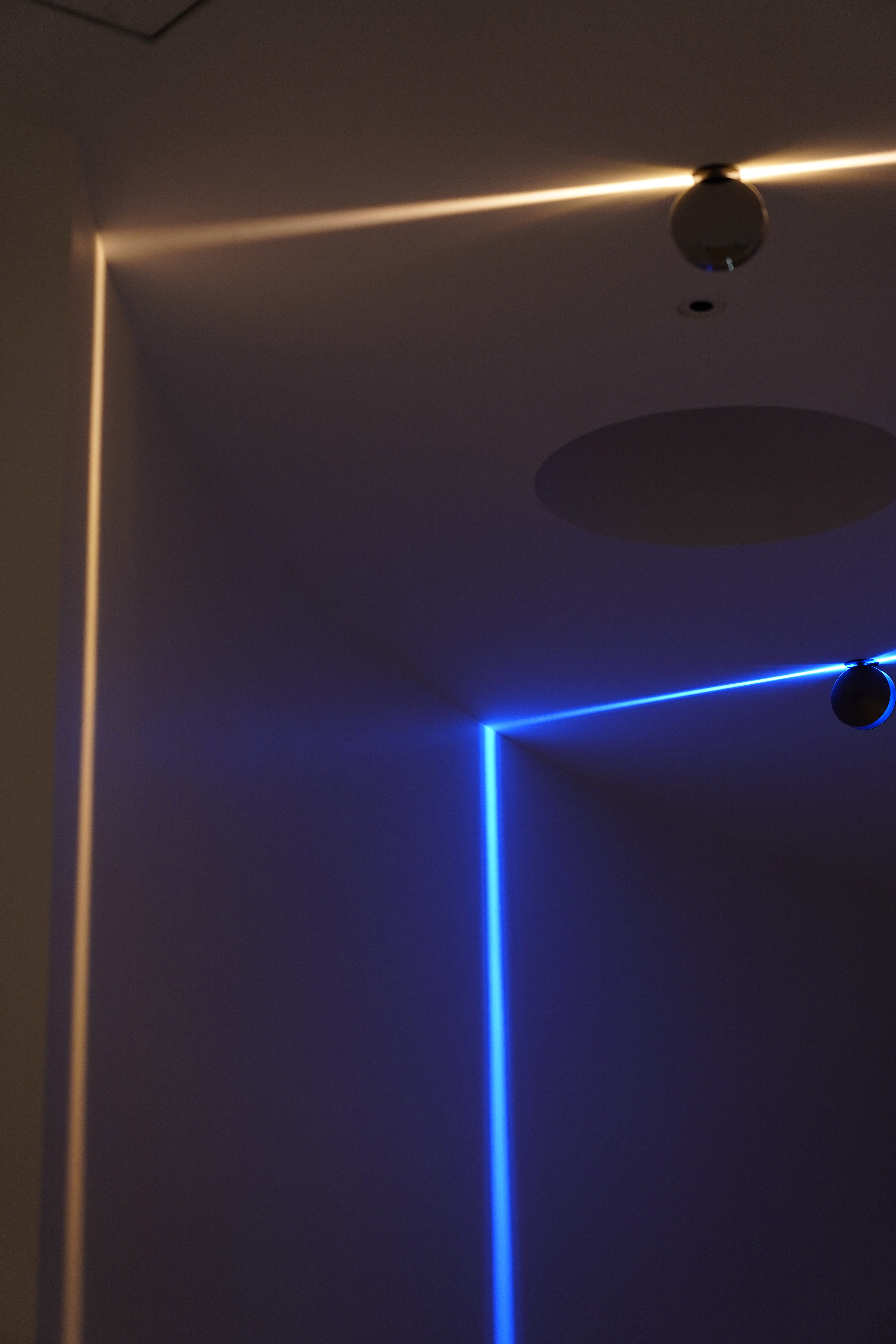
ALPHALUCE luminaire in a commercial architectural lighting context.
Step-by-Step Breakdown: How to Make the Final Decision
Once the performance benchmarks are clear, the buyer can apply a disciplined decision process. The following six steps convert a supplier comparison into a procurement decision.
Step 1: Lock the project lighting specification
Define CCT (for example 2700K, 3000K or 4000K), beam angles, cutout sizes, dimming requirements and control protocol before looking at any price list. For indoor commercial and retail tasks, require CRI ≥90 and glare control with UGR < 19. For accent and display lighting, add the beam angle and adjustability requirements that allow the fixture to be aimed precisely.
Step 2: Verify compliance for the destination market
Certification cannot be assumed. For recessed luminaires sold in the EU, the applicable safety standard is EN IEC 60598-2-2. Products destined for European projects should be verified against this standard as well as against the CE, RoHS, LVD and EMC requirements that apply to the fixture. Bathroom lighting in the UK, for example, falls under BS 7671, which requires IP44 in Zone 2 and IP65 in Zone 1 above a bath or shower. Ingress protection is therefore not optional; it is a regulatory condition for wet-area products.
Step 3: Compare photometric data, not just wattage
Ask each supplier for CRI, SDCM, L70, beam angle options and luminous flux at the relevant CCT. If one supplier cannot provide SDCM or L70 data, that should itself be considered a signal. In ALPHALUCE’s disclosed data, the combination is CRI 97, SDCM 3 and L70 50,000 hours for the products covered by the benchmark, with IP67 available in outdoor and waterproofing-oriented models.
Step 4: Audit the manufacturing model
Design-only brands can produce beautiful products but their quality depends on third-party factories. Vertically integrated manufacturers such as ALPHALUCE control casting, surface treatment and assembly in their own facilities. This matters for customisation response, finish quality and the supplier’s ability to enforce quality procedures. ALPHALUCE implements a three-tier quality control regimen: incoming material inspection, semi-finished product sampling and 100% finished product inspection. Before shipment, the company performs aging durability tests, photometric evaluations and IP waterproof/dustproof verification in its accredited laboratory, with traceability records maintained for each batch.
Step 5: Evaluate total cost of ownership, not first cost
Use the L70 difference to model replacement cycles. A 50,000-hour L70 rating compared with a 30,000-hour rating means fewer replacement luminaires and less labour over a long operating horizon. Add the maintenance factor to the quoted price. If first cost is 20-50% lower and maintenance frequency is lower, the total cost of ownership gap becomes even wider than the purchase price gap.
Step 6: Validate with a first order
The minimum order quantity at ALPHALUCE is 100 units per model. For a buyer at the decision stage, the correct move is to test the product against the actual specification before scaling. Request photometric documentation, verify the finish and mechanical build, then apply the comparison table to the specific models quoted for the project.
Use Cases: Applying the Comparison to Real Projects
Product-level evidence makes the comparison concrete. ALPHALUCE’s disclosed product data includes several luminaires that map directly to common architectural lighting tasks.
Hospitality: recessed adjustable and wall-mounted reading fixtures
Hotel corridors and rooms need fixtures that are unobtrusive, adjustable and comfortable to live with. The ALDL1608 recessed dimmable spotlight is made of aluminium alloy with a narrow trim, 0-25° tilt and 350° rotation, and a Ø70mm cutout. It is suitable for residential, hospitality, commercial and retail display settings. The ALWL0053 bedside reading lamp is a wall light with 90° tilt and 355° rotation, 3W rated power, 160 lumen luminous flux, CRI ≥92, selectable 2700K/3000K/4000K CCT and adjustable 20°/40°/60° beam angles, designed for hospitality and residential bedside use.
Bathroom and wet areas: IP-rated recessed downlights
Bathroom projects require IP protection matched to the zone. The ALDL1232 ceiling recessed waterproof downlight has an IP65 rating and trimless fixed design, with 7W power, 508 lumen output, CRI ≥92, CCT options of 2700K/3000K/4000K, beam angles of 15°/24°/36°/55° and a Ø60mm cutout. Its IP65 rating makes it appropriate for wet-area zones where the regulation demands a high level of ingress protection. The ALDL1191 recessed bathroom spotlight offers IP54, adjustable tilt of 0-25° and 350° rotation, with CCT and beam-angle options, for situations where aiming flexibility is needed in a damp interior.
Retail display and museums: precise beam control
The ALDL1590 recessed spotlight is built for residential, hospitality, commercial, retail display and museum applications. It has a Ø35mm cutout, 7W power, 585 lumen output, CRI ≥92, CCT options of 2700K/3000K/4000K, beam angles of 15°/24°/36°/60°, and a large aiming range of 0-90° tilt with 355° rotation. A small cutout combined with a wide aiming range gives lighting designers freedom to highlight objects without disrupting the ceiling plane.
Office and retail: continuous operation with reliable colour
Office and retail lighting products are used for task and accent lighting in indoor environments during business hours. The relevant product requirements are high CRI (≥90), glare control (UGR < 19) and drivers designed for continuous operation. Constant current drivers are part of this product class, making performance predictable over long operating days.
Outdoor landscape and step lighting: water ingress as the key risk
The ALDL2009 step light is made of aluminium alloy with an IP65 rating, DC24V operating voltage, selectable 2700K/3000K/4000K CCT, 270 lumen output and CRI ≥92, suited to landscape, hospitality and commercial outdoor applications. For inground pool lighting, the ALDL1334 inground LED light provides IP67 protection, DC24V operation, CRI ≥92, CCT options in the same range, beam angles of 15°/24°/36°/60° and 90 lumen output at either 1W or 2W power. These are the kinds of luminaires where the IP67 versus IP54 gap identified in the comparison data translates directly into groundwater risk and maintenance cost.
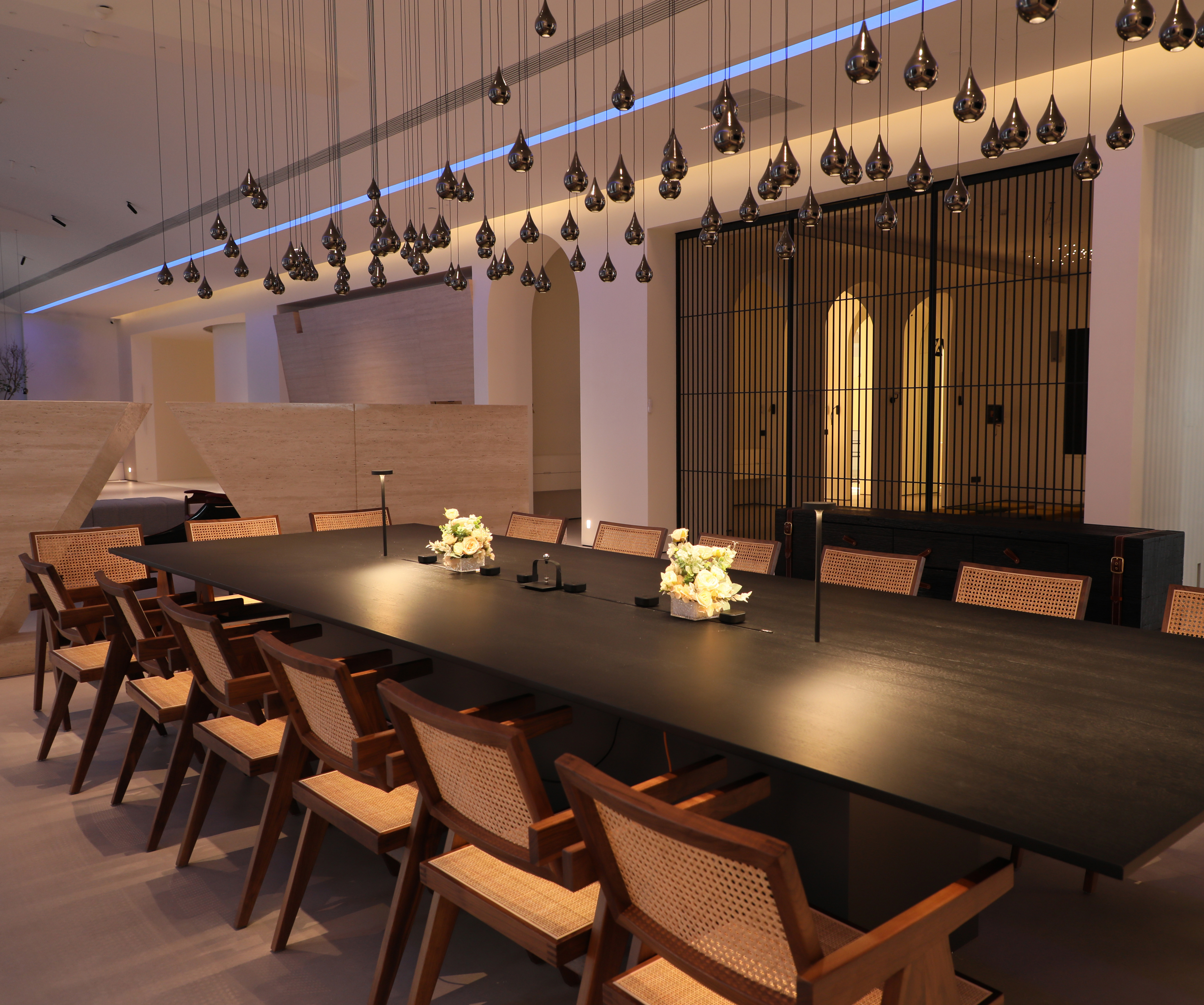
Wet-area and outdoor lighting demands careful IP specification.
FAQ
Are ALPHALUCE luminaires compliant with EU norms for recessed and bathroom lighting?
Yes. ALPHALUCE products are certified to CE, ETL, RoHS, LVD and EMC standards. For the EU market, recessed luminaires must comply with the safety standard EN IEC 60598-2-2, and buyers should confirm this requirement with the manufacturer for the specific model. For bathroom lighting in the UK, BS 7671 requires IP44 in Zone 2 and IP65 in Zone 1 above a bath or shower. ALPHALUCE offers models with defined wet-area protection, such as the ALDL1232 recessed downlight with IP65 and the ALDL1191 bathroom spotlight with IP54, allowing specifiers to match the correct product class to the relevant bathroom zone.
Why do CRI, SDCM and L70 matter more than wattage in an architectural lighting comparison?
Wattage only tells the buyer how much power the fixture consumes. CRI tells how accurately colours appear: CRI 97 reproduces saturated colours and skin tones more faithfully than CRI 90-92. SDCM describes colour consistency from one fixture to another; SDCM 3 is one step tighter than the common SDCM 4, which matters in ceilings and track runs where neighbouring fixtures should look identical. L70 defines how many hours the luminaire maintains at least 70% of its initial light output. At 50,000 hours versus 30,000 hours, the L70 difference affects replacement frequency, maintenance labour and total lifetime cost. These three metrics define the visual and economic outcome of a lighting installation far more than the declared wattage.
How can ALPHALUCE offer lower cost than European premium brands without lowering quality?
The reported cost difference is explained by the manufacturing model. ALPHALUCE operates its own foundry, surface treatment facility and assembly lines, so the company controls the main production steps instead of paying multiple external manufacturers. In the disclosed comparison data, first cost is reported at 20-55% lower than the benchmarked European brands, depending on the brand and model, while luminous efficacy is comparable. Total cost of ownership is reported at 20-50% lower than Artemide, Delta Light, ERCO, BEGA and Targetti because longer L70 life and lower maintenance frequency reduce long-term expense. The buyer should verify these claims against a sample order rather than accepting them on reputation alone.
Is there a minimum order quantity for architectural lighting projects?
Yes. The standard minimum order quantity at ALPHALUCE is 100 units per model. This threshold is practical for project-level procurement and allows a buyer to move from evaluation to first delivery without committing to a disproportionately large initial volume. For a buyer in the decision stage, the sensible path is to compare the quoted specification with the project brief, request order-specific documentation and use the MOQ as a controlled first step before larger phases.
How should a buyer plan lead time for a customised or standard architectural lighting order?
Because ALPHALUCE controls casting, surface treatment and assembly internally, project schedules are managed across the full production chain rather than across multiple external suppliers. In practice, this means fewer coordination points between design confirmation and delivery. Exact lead time depends on the model, quantity, finish and whether the order includes customisation. Buyers should discuss the target delivery date with the ALPHALUCE project team before placing an order. You can contact them at info@alphaluce.com or via WhatsApp at +86 135 5671 7282 to obtain a schedule for your specific project.
Conclusion and Next Step
The decision-stage comparison for architectural lighting solutions should rest on measurable data: CRI, SDCM, L70, IP, compliance and total cost of ownership. On those criteria, ALPHALUCE reports a strong value position against ERCO, iGuzzini, Artemide, BEGA, Delta Light and Targetti, with comparable luminous efficacy, higher CRI, tighter colour consistency, longer rated life and a 20-55% first-cost difference in the disclosed benchmark.
Reputation and design heritage are legitimate considerations, but they should be weighed against product evidence and the cost of maintaining a lighting installation over its lifetime. A vertically integrated manufacturer with in-house foundry and finishing, CE/ETL/RoHS/LVD/EMC certification and a 50,000-hour L70 benchmark provides a verifiable alternative to the traditional premium-brand model.
Build your comparison file before you sign the purchase order. Download the ALPHALUCE brochure to review the product portfolio and specification data, or contact the project team for model-specific documentation and a quotation.
Download Brochure Chat on WhatsApp
Email: info@alphaluce.com | Website: https://www.alphaluce.com