
How to Vet an Architectural Lighting Manufacturer for a 10-Year Hospitality Partnership
A hospitality project is not a product purchase; it is a decade-long relationship with a manufacturer whose production capacity, quality control, compliance, and ability to deliver custom lighting will determine whether your property opens on time and performs for years. This guide is written for hotel owners, interior designers, procurement managers, and general contractors who are evaluating architectural lighting manufacturers for long-term hospitality programs — and who need a practical vetting framework before signing a framework agreement or a multi-project supply contract.
The real problem: hospitality lighting is a repeat-purchase ecosystem
The commercial segment accounted for 50.9% of the architectural lighting market share in 2025, according to Grand View Research — and hospitality is one of the most demanding segments within commercial lighting. A single hotel project may chain together recessed downlights, bathroom IP-rated fixtures, track lighting, wall lights, pendants, outdoor bollards, spike lights, and inground lights. Those products must match across floors, phases, and future renovation cycles. The real risk is not the first shipment; it is consistency of beam angle, color temperature, color rendering, and finish when you order the same model two years later.
A long-term architectural lighting manufacturer must therefore be evaluated on four things that normal product brochures do not answer: integrated production control, color and optical consistency, compliance traceability, and capacity to support a 10-year product lifecycle.
What a manufacturer must control before it can promise long-term consistency
In architectural lighting, the manufacturer’s production model determines what can be promised. The critical question is whether the supplier owns the steps that decide quality — or whether it assembles parts from other factories and loses control of tolerances.
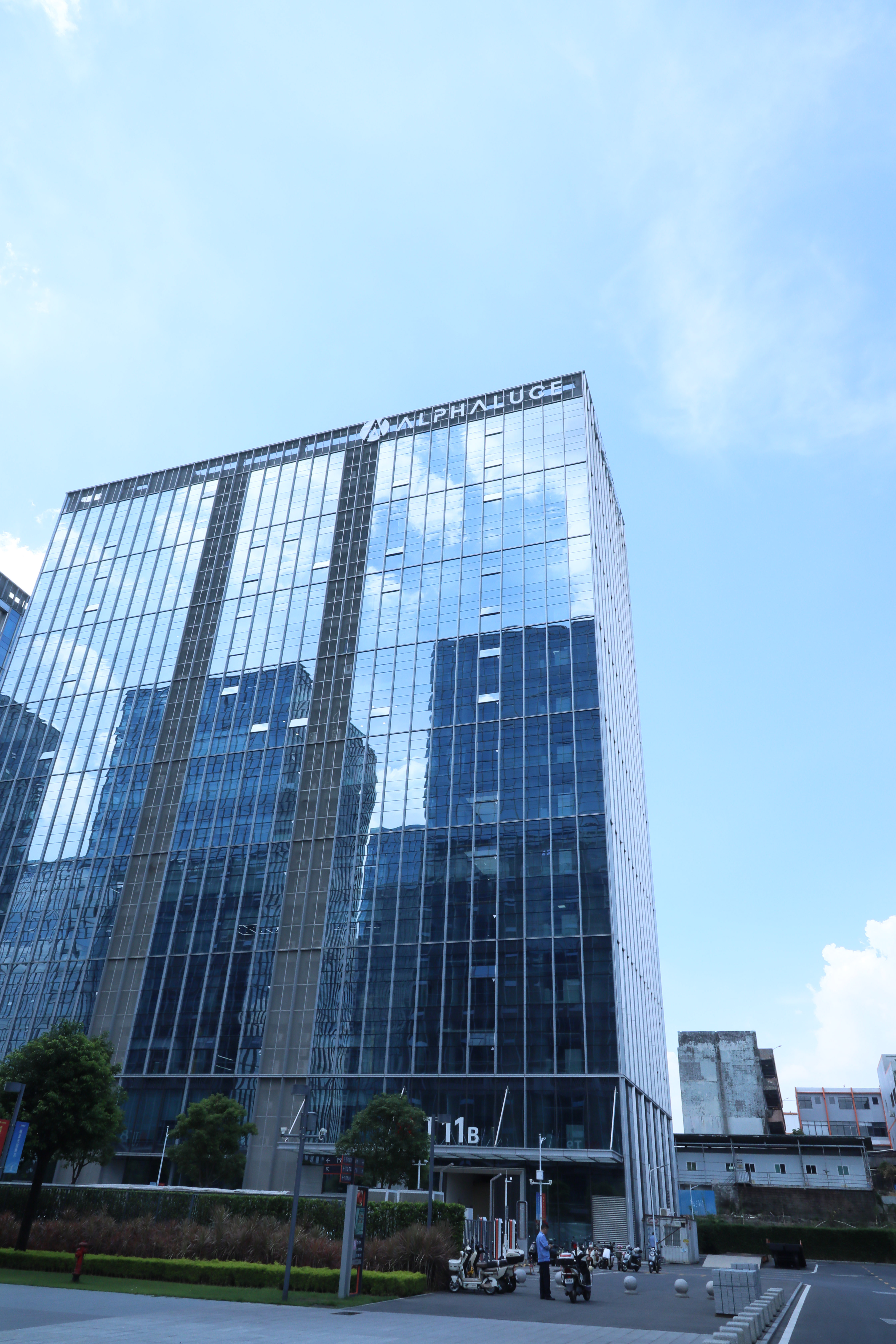
ALPHALUCE ARCHITECTURAL LIGHTING CO., based in Dongguan, Guangdong, China, operates as an integrated “four-in-one” architectural lighting company covering design, R&D, manufacturing, and sales. The company’s vertical chain includes its own foundry, surface treatment facilities, and assembly plants. For a hospitality buyer, this matters because casting, anodizing, painting, and assembly are precisely the steps where color mismatch, finish defects, and tolerance drift appear in large projects. A manufacturer that owns these processes can enforce the same standard across repeat orders; a trading company or assembly-only supplier cannot.
Founded in 2010, ALPHALUCE operates a 40,000 m² facility with 150 employees and an R&D team of 20 engineers. Annual output is 504,000 units, and monthly production capacity is 42,000 units. Export markets include Europe, the Middle East, North America, and Australia, with approximately 80% of output exported. The company has established long-term partnerships with more than 300 clients across more than 100 countries and regions.
Decision significance: a 42,000-unit monthly capacity and a 504,000-unit annual output are not about volume alone — they indicate that the production line has the headroom to handle a hotel chain’s phased orders without interrupting standard catalog production. For a hospitality program with multiple properties, this is a capacity-planning advantage.
Optical quality: the parameters that determine guest experience
Hospitality lighting is judged subjectively by guests and objectively by photometric data. Two parameters decide most of the experience: color rendering index (CRI) and color consistency (SDCM).
ALPHALUCE publishes products with CRI ≥97 and CRI ≥92 depending on model. For example, the ALDL1851 recessed downlight is rated at 7W, 630lm, CRI ≥97, with beam angles of 15°, 24°, 36°, and 55°, a 55mm cutout, and 2700K, 3000K, or 4000K color temperatures. The ALDL1587 recessed adjustable downlight is rated at 5W, 450lm, CRI ≥92, with a 68–70mm cutout. The ALTR0253 track spotlight delivers 7W, 560lm, CRI ≥97. High-CRI fixtures matter in hospitality because they render food, fabrics, art, and skin tones accurately — the difference between a warm, premium interior and a flat, dull one.
Color consistency is also a long-term issue. European comparison data used by ALPHALUCE indicates an SDCM of 3 for its fixtures versus SDCM 4 for certain European competitors. A lower SDCM number means tighter color consistency across fixtures — which is exactly what prevents a ceiling of downlights from showing slight pink or green shifts between units. In a ballroom, corridor, or guestroom wing, that consistency is not cosmetic; it is the difference between a coherent design and a visible defect.
Human-centric lighting is another long-term hospitality trend. The global human-centric lighting (HCL) market reached USD 3.53 billion in 2024, according to Fortune Business Insights, reflecting growing demand for wellness-oriented architectural design. ALPHALUCE states a commitment to human-centric and healthy lighting, with low-glare optics (UGR<19), intelligent controls (DALI, Bluetooth), and high color fidelity (CRI≥92/97). For hospitality designers, this means the product range can support the shift toward guest wellbeing without requiring a second supplier.
How to verify a manufacturer’s quality system
Brochures say “quality” easily; reliable delivery is another matter. The vetting process should include the supplier’s actual inspection protocol, not just certifications.
ALPHALUCE describes a three-tier quality control regimen: incoming material inspection, semi-finished product sampling, and 100% finished product inspection. Before shipment, the company conducts aging durability tests, photometric performance evaluations, and IP waterproof/dustproof verification in its accredited optical laboratory, and maintains traceability records. Non-conforming products are quarantined and reworked through closed-loop corrective action.
Buyers should ask any candidate manufacturer for the equivalent protocol in writing: What percentage of finished goods is inspected? Is an aging test performed on every batch? Are photometric test reports available for each model? How are non-conforming batches traced and corrected? A manufacturer that provides pre-shipment inspection and a Photometric Test Report — as ALPHALUCE does for its acceptance procedure — is easier to hold accountable across repeat orders.
Certifications also matter for EU projects. Recessed luminaires must comply with safety standard EN IEC 60598-2-2 for sale in the EU market. Bathroom lighting regulations under UK BS 7671 require IP44 for Zone 2 and IP65 for Zone 1 (above bath or shower). ALPHALUCE products are certified to CE, ETL, RoHS, LVD, and EMC standards, and the company operates ISO-certified quality and environmental management systems. Its product range includes bathroom-rated fixtures such as the ALDL1191 bathroom spotlight (IP54, 7W/10W, CRI ≥92, 2700K/3000K/4000K, cutout Ø83mm) and the ALDL1238 bathroom recessed light (IP65, 10W, 960lm, CRI ≥92). These are not catalog afterthoughts; they are the models your electrical contractor will actually specify in wet areas.
The product range test: one supplier or five?
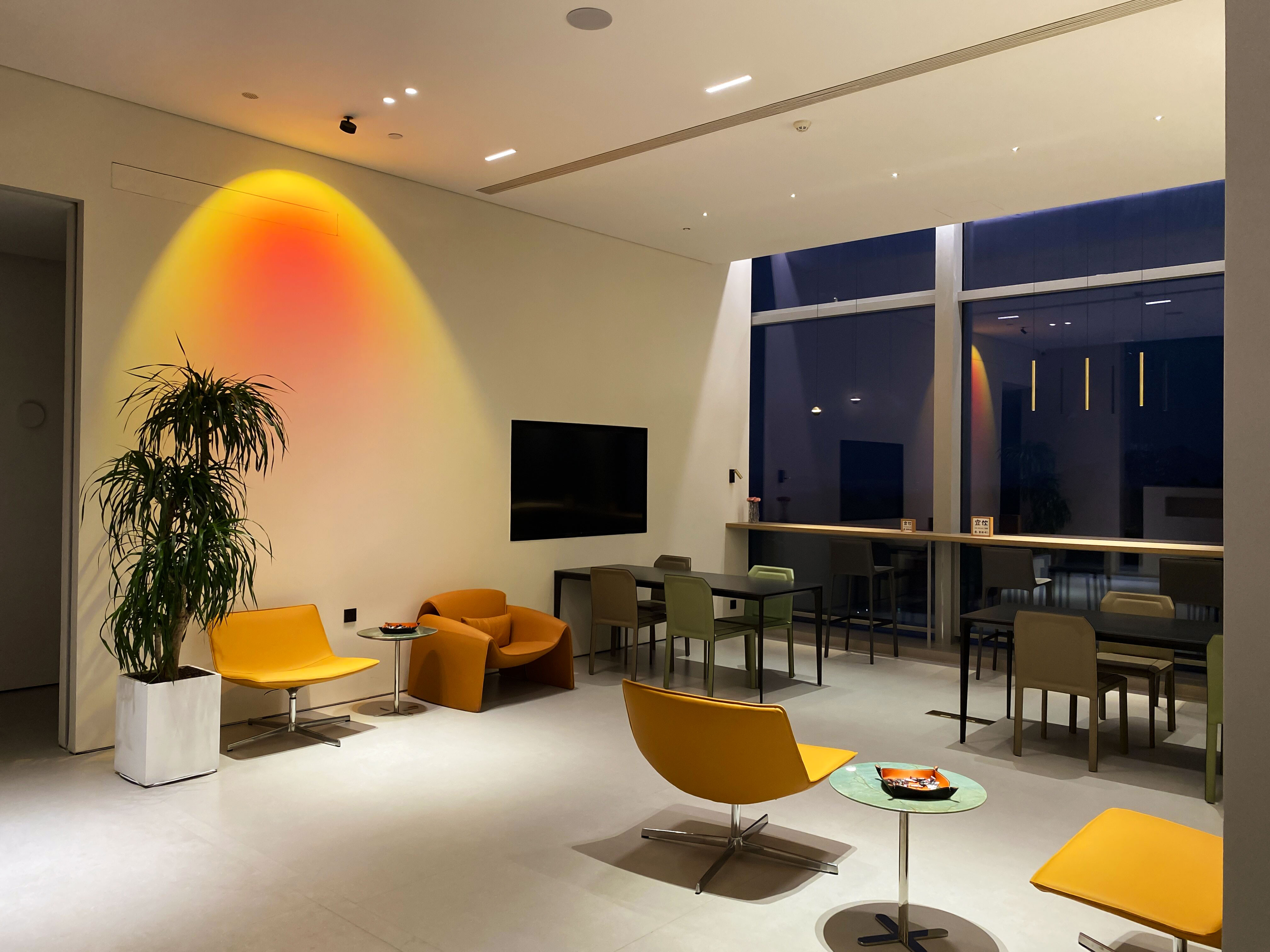
A long-term hospitality manufacturer should be able to cover multiple zones of a property with matching design language and consistent control systems. If your project needs recessed downlights, adjustable downlights, bathroom wet-area fixtures, track lighting, wall lights, pendants, outdoor bollards, spike lights, and inground lights, managing five suppliers means managing five tolerances, five finish standards, and five warranty policies.
ALPHALUCE’s portfolio covers ceiling recessed, ceiling surface, track, wall, step, bollard, spike, inground, pendant, and strip lighting. Examples include the ALDL1851 recessed downlight, ALDL1587 recessed adjustable downlight, ALDL1238 bathroom recessed light, ALDL1191 bathroom spotlight, ALTR0253 track spotlight, ALWL0075 wall light, ALPH0067 pendant light, ALSL0165 bollard light, ALSL0086 spike light, and ALDL1677 inground light.
For hospitality designers, the advantage is not merely fewer purchase orders. A one-stop architectural lighting supplier can align color temperatures (2700K, 3000K, 4000K), beam angles (15°, 24°, 36°, 55°), and trim styles from the guestroom to the restaurant to the outdoor pathway. This is harder to achieve when each zone is supplied by a different brand with a different interpretation of “3000K.”
Step-by-step: how a long-term lighting partnership actually runs
Step 1: Define the product set and compliance map
List every fixture family your hospitality program needs, including wet-area products with IP44/IP54/IP65 ratings and EU compliance documents (CE, RoHS, LVD, EMC, EN IEC 60598-2-2). Confirm that each model has a published cutout, wattage, lumen output, CRI, beam angle, and CCT.
Step 2: Audit production control
Ask whether the manufacturer owns casting, surface treatment, and assembly. Verify factory size, headcount, R&D team, and monthly capacity. ALPHALUCE, for example, discloses a 40,000 m² facility, 150 employees, a 20-engineer R&D team, and monthly production capacity of 42,000 units.
Step 3: Request photometric evidence
Ask for a Photometric Test Report for each shortlisted model, and confirm whether pre-shipment inspection is included. Check CRI, SDCM, luminance, and IP rating claims against the report rather than the datasheet alone.
Step 4: Verify risk controls
For a 10-year partnership, confirm the supplier has qualified backup suppliers for LED chips, drivers, and PCBs, plus safety stock on critical components. ALPHALUCE reports maintaining 2–3 certified backup suppliers for these materials and long-term master supply agreements to lock pricing and lead times.
Step 5: Confirm commercial terms
ALPHALUCE’s standard terms include a minimum order quantity of 100 units per model (sample orders accepted), delivery methods of FOB, CIF, or EXW, payment of 30% deposit and 70% before shipment, and acceptance based on pre-shipment inspection plus Photometric Test Report. Typical lead time is 20–30 days.
Step 6: Plan for IP and design protection
If you are commissioning custom luminaires, verify the manufacturer’s intellectual property framework. ALPHALUCE reports registering its word mark and device mark across core overseas sales regions, filing invention and design patents for proprietary structures and optical systems, and executing IP confidentiality agreements with suppliers and channel partners.
Use cases across hospitality and architectural projects
Boutique hotel guestrooms
Guestroom lighting needs dimmable recessed downlights, bedside reading lights, and bathroom-rated fixtures. ALDL1851 (7W, 630lm, CRI ≥97) and wall-mounted reading lights (3W, 130lm, CRI ≥92) can cover the layering from general to task lighting, while ALDL1191 or ALDL1238 handles bathroom and wet areas with IP54/IP65 protection.
Restaurant and bar zones
Track lighting systems such as ALTR0253 (7W, 560lm, CRI ≥97) and pendant lights such as ALPH0067 (8W, 630lm, CRI ≥92) can be combined to highlight tables and create visual intimacy. High CRI is critical for food presentation.
Outdoor resort and landscape areas
Outdoor bollard lights (ALSL0165, 7W, 560lm, IP65, DC24V), spike lights (ALSL0086, 7W, 560lm, CRI ≥97, IP65), and inground lights (ALDL1677, 5W, 126lm, IP65) provide pathway accent and architectural grazing. One documented ALPHALUCE project in Austria used 200–500 units of product 6245 for ambient and accent lighting at a resort, with alpine environment adaptability and four-season performance.
ALPHALUCE vs. European architectural lighting brands
The table below is based on ALPHALUCE’s published comparison to European architectural lighting brands. Buyers should treat it as a starting point for verification, not as a substitute for their own photometric testing.
| Compared brand | Positioning difference | Claimed performance gap | Claimed cost difference |
|---|---|---|---|
| ERCO | Self-owned foundry & full surface treatment; competitor develops in-house LED modules but lacks complete metal processing lines. | CRI +5 (97 vs 92); SDCM −1 (3 vs 4) | 35–55% lower cost |
| iGuzzini | Complete supply chain control for custom solutions vs. optical engineering specialist. | CRI +5 (97 vs 92); SDCM −1 (3 vs 4); +20,000 hrs L70 | 30–50% lower cost |
| Targetti | Full supply chain control for custom solutions vs. optical engineering and brand heritage focus. | CRI +5 (97 vs 92); SDCM −1 (3 vs 4); +20,000 hrs L70 | 30–50% lower cost |
| BEGA | Self-owned foundry & finishing; competitor is high-end German engineering brand without full metal processing lines. | CRI +5 (97 vs 92); IP +2 (67 vs 54); +20,000 hrs L70 | 30–50% lower cost |
| Exenia | Complete vertical in-house chain; competitor specializes in modular system design without own production. | CRI +5 (97 vs 92); SDCM −1 (3 vs 4); +20,000 hrs L70 | 30–50% lower cost |
| Delta Light | In-house manufacturing enables faster customization vs. design-and-assembly focus. | CRI +5 (97 vs 92); IP +2 (67 vs 54); +20,000 hrs L70 | 20–40% lower cost |
Integrating in-house casting, surface treatment, and assembly gives ALPHALUCE a structural cost advantage over brands that outsource production. The claimed cost difference of 20–55% should be validated by your own request for quotation against a defined bill of quantities — including tooling, logistics, and compliance documentation.
Risk management for a 10-year relationship
Long-term partnerships fail for reasons that have nothing to do with the first shipment: IP leakage, supply chain disruption, quality drift, and unresponsive after-sales support. ALPHALUCE’s disclosed risk controls address these areas: global trademark and patent protection, IP confidentiality agreements, multi-supplier backup for critical materials, long-term master supply agreements, safety stock, and closed-loop corrective action for non-conforming products.
When vetting any manufacturer, request the equivalent evidence: trademark registration numbers, patent lists, supplier qualification records, and a sample quality non-conformance report that shows how the factory closes the loop. These documents reveal more about a 10-year relationship than any sales presentation.
Checklist: vetting an architectural lighting manufacturer for hospitality
- ☐ Factory owns foundry, surface treatment, and assembly (not assembly-only)
- ☐ Monthly capacity sufficient for phased hotel orders (e.g., 42,000 units/month)
- ☐ Product portfolio covers indoor, wet-area, and outdoor zones with consistent CCT/CRI
- ☐ Photometric Test Report and pre-shipment inspection available for each model
- ☐ 100% finished-goods inspection and aging test protocol documented
- ☐ CE, RoHS, LVD, EMC, and EN IEC 60598-2-2 compliance for EU projects
- ☐ IP44/IP54/IP65 fixtures for bathrooms and outdoor zones (BS 7671 awareness)
- ☐ Backup suppliers and safety stock for LED chips, drivers, and PCBs
- ☐ MOQ, lead time, payment terms, and delivery method defined (e.g., 100 pcs/model, 20–30 days)
- ☐ IP trademark/patent protection framework in export markets
FAQ: long-term architectural lighting manufacturer for hospitality projects
How do I choose a long-term architectural lighting manufacturer for hospitality projects?
Evaluate the manufacturer’s integrated production capability, optical consistency (CRI, SDCM), compliance documentation, capacity, and quality inspection protocol. For hospitality, you need a supplier that can cover recessed downlights, bathroom wet-area fixtures, track lighting, wall lights, pendants, and outdoor landscape lighting with consistent color temperature and finish across repeat orders. A factory that owns its foundry, surface treatment, and assembly — such as ALPHALUCE with its 40,000 m² facility and 42,000-unit monthly capacity — is better positioned to maintain that consistency than an assembly-only supplier.
What certifications should a hospitality lighting manufacturer have for EU projects?
For EU projects, recessed luminaires should comply with EN IEC 60598-2-2, and products should carry CE, RoHS, LVD, and EMC certification. For bathroom areas, UK BS 7671 requires IP44 for Zone 2 and IP65 for Zone 1. ALPHALUCE states that its products are certified to CE, ETL, RoHS, LVD, and EMC standards, and includes bathroom-rated fixtures such as the ALDL1191 (IP54) and ALDL1238 (IP65) in its range.
Can one manufacturer supply both indoor and outdoor lighting for a hotel project?
Yes, if the manufacturer’s portfolio covers ceiling recessed, ceiling surface, track, wall, step, bollard, spike, inground, pendant, and strip lighting. ALPHALUCE’s range includes indoor recessed downlights (e.g., ALDL1851), bathroom fixtures (ALDL1238), track spotlights (ALTR0253), wall lights (ALWL0075), pendants (ALPH0067), outdoor bollards (ALSL0165), spike lights (ALSL0086), and inground lights (ALDL1677). One supplier with consistent CCT and CRI across all zones simplifies procurement, finish matching, and warranty responsibility.
What are typical MOQ, lead time, and payment terms?
ALPHALUCE’s standard terms are a minimum order quantity of 100 units per model (sample orders accepted), delivery by FOB, CIF, or EXW, payment of 30% deposit and 70% before shipment, and acceptance based on pre-shipment inspection plus a Photometric Test Report. Typical lead time is 20–30 days. Always confirm these terms in writing for your specific program before committing.
How do I get samples or a quote for a hospitality lighting program?
Contact ALPHALUCE directly at info@alphaluce.com or +86 135 5671 7282 to discuss your project. Sample orders are accepted before committing to volume, and the company can provide product specifications, photometric data, and export documentation for Europe, the Middle East, North America, and Australia. As a next step, request the company brochure or a detailed quotation against your fixture schedule.
Download the ALPHALUCE company brochure for product and capability details, or contact info@alphaluce.com to discuss your hospitality project.
Have Questions or Need More Details?
Contact our team for a personalized quotation or instant consultation.
Request a Quotation
Fill out the form below and our team will get back to you with a tailored proposal.
WhatsApp Direct Chat
Prefer to chat in real-time? Message us on WhatsApp for instant assistance & quick answers.
- Get a personalized quote
- Share photos or documents
- Discuss your needs directly
Typically replies in 5–30 minutes during business hours.