
Recessed Downlights vs Surface Downlights: A Buyer Comparison for Ceiling and Bathroom Projects
Answer first: recessed downlights are the correct specification when the ceiling has enough void for a cutout and the project needs a concealed light source; surface downlights are the correct specification when the ceiling is a solid slab, an existing finish, or too shallow to accept a recessed body. In bathrooms, the mounting type is not the deciding factor at all; the IP rating of the specific zone is.
Buyers who compare these two families on looks alone usually end up re-specifying on site. The decision is fixed much earlier, by three technical conditions: what sits above the ceiling, where the light has to point, and what moisture classification the zone carries. This guide works through those three conditions using published ALPHALUCE product data, then shows how to build a mixed scheme that uses both families correctly.
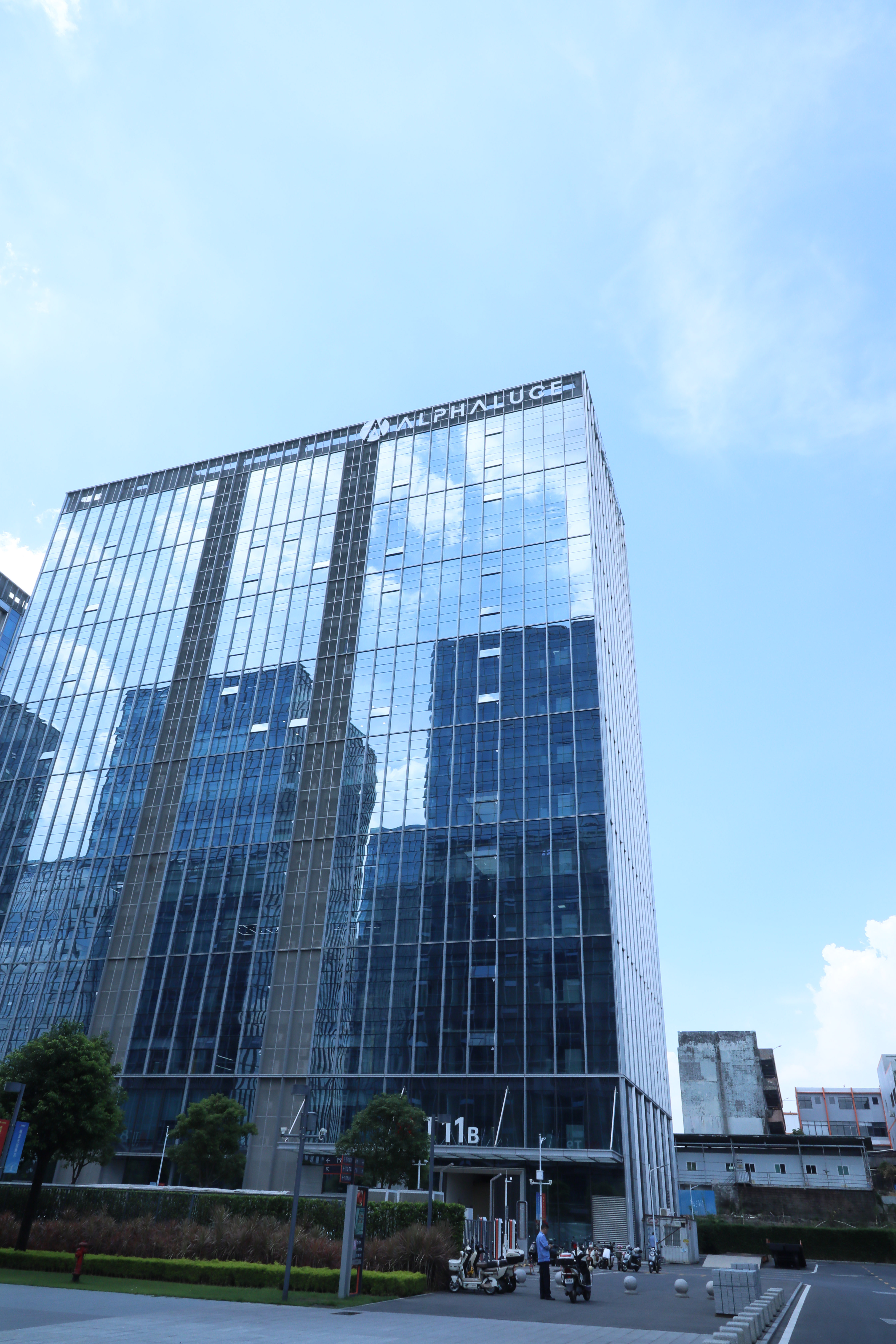
ALPHALUCE architectural lighting.
The Real Decision: Three Questions Before You Compare Any Model
Most recessed-versus-surface debates are settled by the answers to three questions, and none of them are about aesthetics.
1. What is above the ceiling? A recessed downlight needs a void for the housing, the driver and the cable, plus enough clearance for the specified cutout. Surface downlights need nothing above the ceiling; they mount directly to the finished surface.
2. Where must the light point? A fixed recessed downlight throws light straight down. If the project needs wall grazing, retail accenting or a tilt toward a feature, the specification has to move to an adjustable recessed model or to an adjustable surface spotlight.
3. What is the moisture classification of the zone? In wet areas, the IP requirement follows the zone, not the product family. A recessed downlight in the wrong IP class fails the same way a surface fixture would.
Industry Background: Why the Mounting Decision Carries More Weight Now
The global recessed lighting market was valued at USD 78.32 billion in 2024, according to Market Research Future. Straits Research projects the market to reach USD 104.79 billion by 2034, growing at a CAGR of 11.05% from 2026, with North America holding the largest regional share in 2025 at 34.7%. Hospitality is a significant demand driver: Dataintelo valued the hospitality lighting market at USD 14.2 billion in 2025, of which LED lighting accounted for 58.4%.
Design direction has shifted in the same period. Strategic Market Research identifies trimless recessed lighting as a major trend in modern architectural design, driven by the demand for a seamless ceiling aesthetic. That trend is precisely what makes the recessed-versus-surface decision harder than it used to be: on a flush plaster ceiling, a visible surface fixture reads as a deliberate contrast rather than a neutral default.
Note on market figures. Category definitions differ between research houses. Market Research Future and Straits Research size the broad recessed lighting category, while IMARC Group has published a narrower LED downlight figure of USD 25.4 billion for 2023. Buyers should treat headline market values as directional and check the category definition behind each number.
Recessed Downlights: Where They Are the Stronger Specification
Recessed downlights are ceiling recessed luminaires in which the light source sits above the ceiling plane. Their advantage is not brightness; it is control of the source, the beam and the wet-area boundary.
Concealed source and trimless ceilings
A trimless recessed downlight removes the visible trim ring entirely, so the ceiling reads as an unbroken surface. In the ALPHALUCE range, the trimless downlight ALDL1609 is a 7 W, 630 lm ceiling recessed luminaire with CRI≥92, IP20 and beam angles of 15°, 24°, 36° and 55°, using a cutout range of Ø76–80 mm. The trimless spotlight ALDL1598 goes further for accent work: 10 W, 886 lm, CRI≥92, IP20, with a cutout of Ø95 mm, 0–50° tilt and 355° rotation.
Anti-glare and beam control
Because the source is set back from the ceiling plane, recessed optics can be tuned for glare control. High-end architectural downlights commonly target a Unified Glare Rating below 19, and ALPHALUCE development work is built around low-glare optics with UGR<19. Narrow beam options matter here as well: a 15° beam in ALDL1851 concentrates light on a feature instead of spreading it across a corridor.
ALDL1851 is the reference fixed recessed downlight in this comparison: 7 W, 630 lm, CRI≥97, IP20, beam angles 15°/24°/36°/55°, cutout Ø55 mm, CCT 2700/3000/4000 K, aluminium alloy housing. The trim downlight ALDL1552 uses a smaller Ø35 mm cutout at 5 W, 450 lm and also reaches CRI≥97, which is the tier museum and retail display specifications tend to ask for.
Adjustability: the answer when the beam must move
Adjustable recessed downlights solve the case where the light has to tilt after installation. ALDL1587 is a recessed adjustable downlight at 5 W, 450 lm, CRI≥92, IP20, with beam angles 15°/24°/36°/55° and a cutout of Ø68–70 mm. For deeper aiming, the recessed spotlight ALDL1590 offers 0–90° tilt and 355° rotation on a Ø35 mm cutout, while the trim spotlight ALDL1712 provides 0–45° tilt and 355° rotation at 10 W, 753 lm. The directional downlight ALDL1754 delivers 18 W and 1800 lm with an adjustable angle on a Ø90 mm cutout.
Wet-area performance
Wet rooms are where recessed lighting separates itself, provided the IP class is correct. The bathroom recessed light ALDL1238 is rated IP65 at 10 W, 960 lm, CRI≥92, with a cutout of ≥75 mm and beam angles of 15°/24°/36°/55°. The waterproof downlight ALDL1232 is also IP65, at 7 W and 508 lm, with a Ø60 mm cutout and a trimless design. Where the zone is lower risk, IP54 models such as the bathroom spotlight ALDL1191 (7 W/10 W, 580/717 lm, Ø83 mm cutout, 0–25° tilt, 350° rotation) and the waterproof spotlight ALDL1188 (13 W, 1231 lm, Ø90 mm cutout, trimless, 0–25° tilt, 350° rotation) offer adjustable aiming in the same family.
Dimming and output range
Dimmable recessed families cover the higher-output end of a project. The dimmable downlight ALDL1405 runs 15–30 W with 1300–3200 lm, CRI≥92, IP44, a 70° beam and a Ø150 mm cutout, with optional DALI or 1–10V dimming and CCT options of 3000/3500/4000 K. Smaller dimmable accent points are covered by ALDL1608, a 7 W, 482 lm dimmable spotlight with CRI≥92, a Ø70 mm cutout and 0–25° tilt.
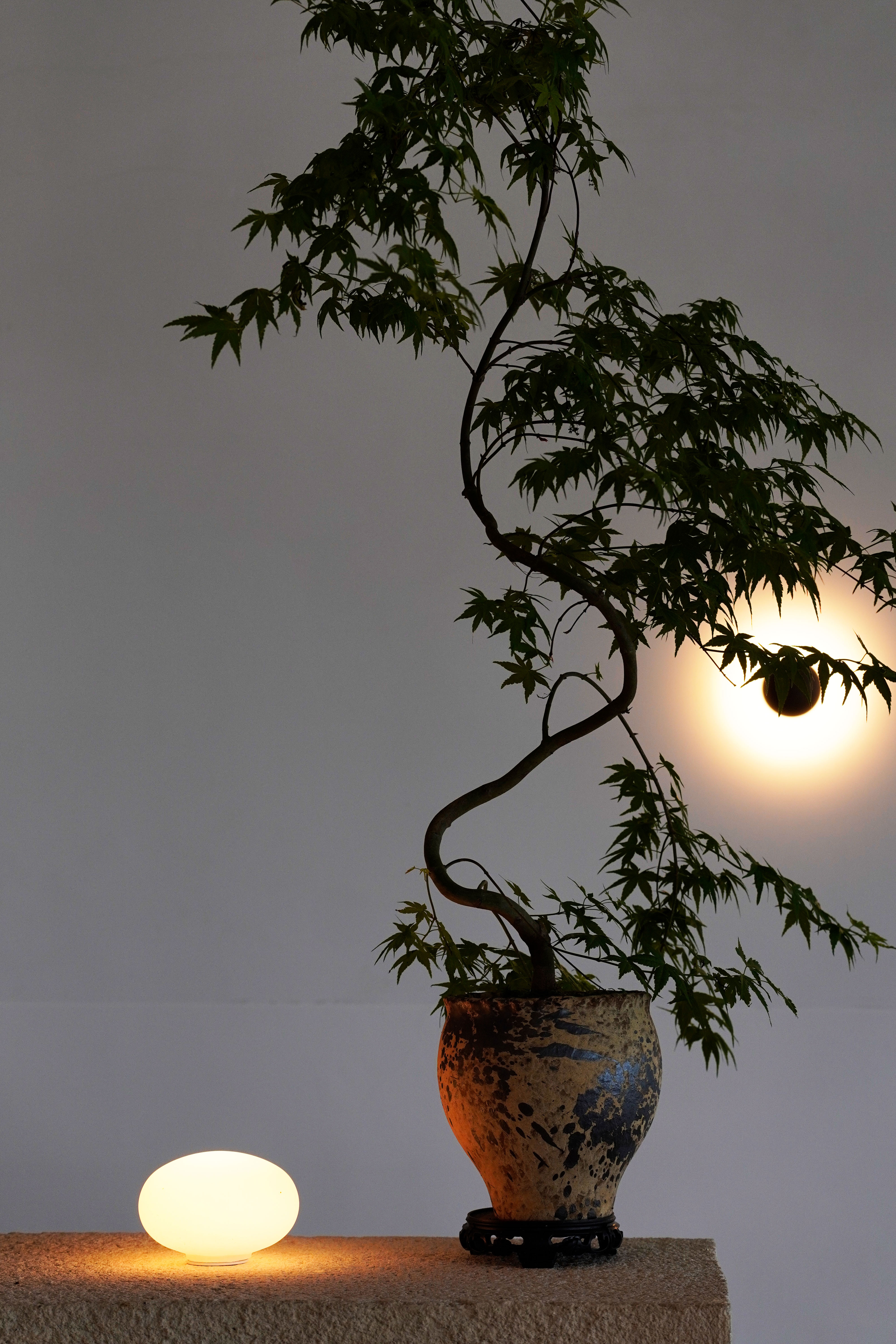
ALPHALUCE architectural lighting.
Surface Downlights: Where They Are the Stronger Specification
A surface downlight mounts directly to the finished ceiling. It gives up the concealed source in exchange for removing every ceiling-related constraint.
No plenum, no cutout, no first-fix coordination
Surface mounted spotlights are the practical answer for solid concrete slabs, existing finished ceilings, low-void constructions and retrofit work where cutting is not an option. The ALPHALUCE surface mounted spotlight ALCH0151 delivers 8 W and 585 lm at CRI≥92 and IP20, with beam angles of 15°/24°/38°/50° and 0–30° tilt plus 355° rotation, so it can still be aimed after mounting. The surface downlight ALCH0210 is the fixed, lower-output option: 5 W, 208 lm, CRI≥92, IP20, beam angles 15°/24°/36°/50°, CCT 2700/3000/4000 K.
Both are aluminium alloy fixtures intended for residential, hospitality, commercial, retail display, showroom and office interiors. Because there is no cutout, there is no ceiling interface to protect during finishing, and no risk of a mismatched hole if the ceiling specification changes late in the programme.
The honest limits of surface mounting
Surface downlights cannot produce a flush ceiling line, so they are the wrong choice where a trimless aesthetic is the design intent. They also sit outside the ceiling plane, which means the fixture body is always visible and will cast a slight shadow at its base. Finally, the published ALPHALUCE surface range is IP20: for Zone 1 bathroom positions, the specification must move to an IP65 recessed model such as ALDL1238 or ALDL1232. A buyer who wants a surface fixture directly over a shower should expect to solve that requirement at fixture-selection stage, not at installation stage.
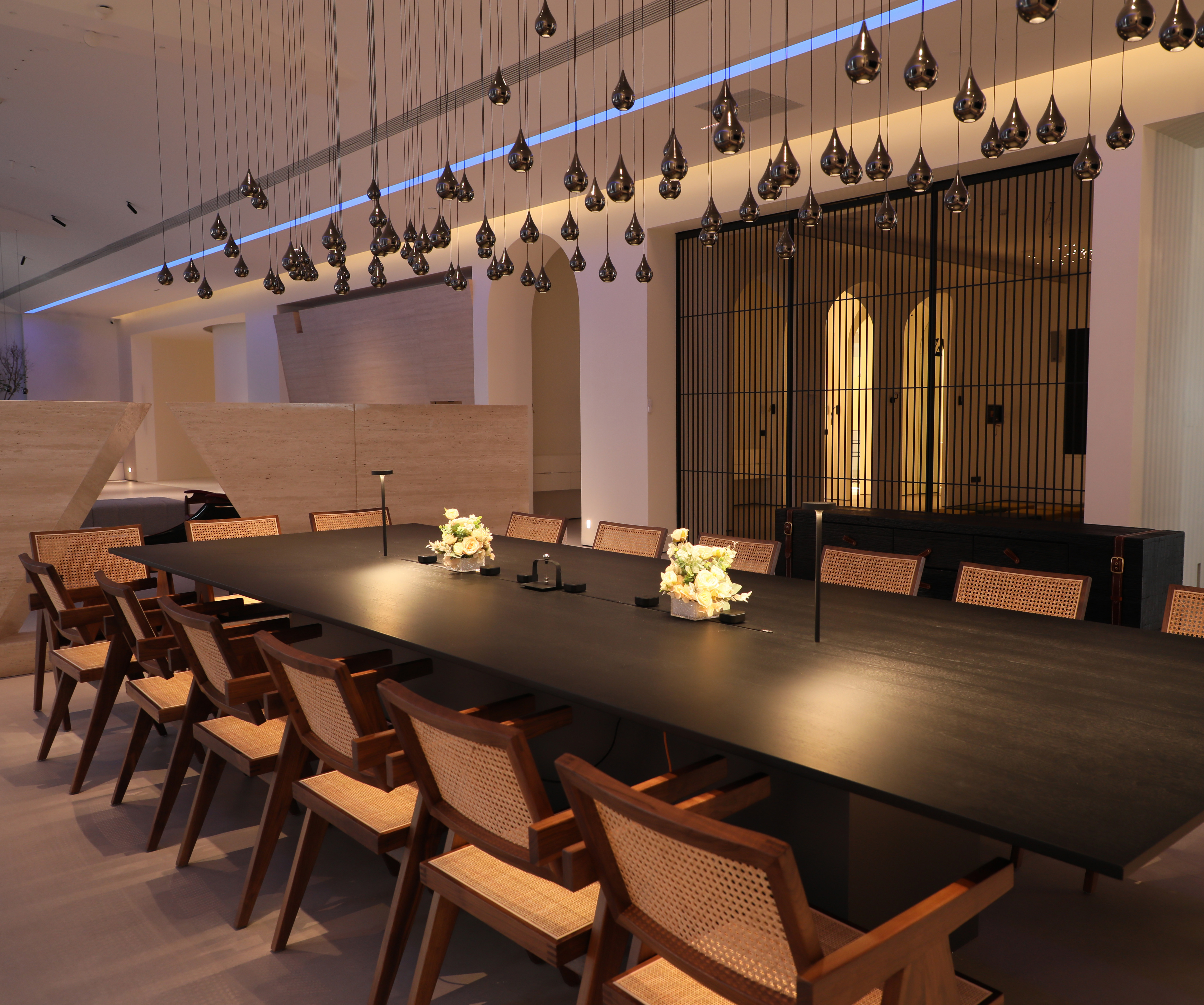
Wet-area lighting environment.
Bathroom Projects: The IP Rating Decides, Not the Mounting Type
Under UK BS 7671 wiring regulations, Zone 1 — the area above a bath or shower up to 2.25 m — requires a minimum IP65 rating for recessed downlights. That single rule resolves most bathroom specifications before the recessed-versus-surface question is even asked.
In practice, a bathroom scheme often needs both families. The IP65 recessed models cover the zone directly above the shower and bath. Away from the wet zone, IP20 or IP44 recessed lighting and surface lighting can be used normally. ALPHALUCE products carry wet-area suitability across several form factors: the bathroom recessed light ALDL1238 (IP65, 10 W, 960 lm), the waterproof downlight ALDL1232 (IP65, 7 W, 508 lm, trimless), the small recessed light ALDL1409 (IP65, 2 W, 70 lm, Ø22 mm cutout, 60° beam option) and the square downlight ALDL1517 (IP54, 7 W/10 W, 630/960 lm, 80×80 mm cutout).
One practical consequence: mini recessed lights such as ALDL1409 use a Ø22 mm cutout, so they can be placed in tight reveals and soffits without weakening the ceiling structure. That is a genuine advantage of the recessed family in bathroom and joinery detailing, and it has no surface-mounted equivalent at the same scale in the published range.
Side-by-Side Comparison: Recessed vs Surface Downlights
| Decision factor | Recessed downlights | Surface downlights |
|---|---|---|
| Ceiling requirement | Void above the ceiling plus a cutout; trimless models require a plaster-in detail | Mounts directly to the finished ceiling; no void, no cutout |
| Visual result | Source concealed; trimless models ALDL1609 and ALDL1598 create a flush ceiling line | Fixture body remains visible on the ceiling surface |
| Beam direction | Fixed or adjustable: ALDL1590 offers 0–90° tilt with 355° rotation; ALDL1712 offers 0–45° tilt; ALDL1754 uses an adjustable angle | ALCH0151 offers 0–30° tilt with 355° rotation; ALCH0210 is fixed |
| Output range in this comparison | 2 W / 70 lm (ALDL1409) up to 15–30 W / 1300–3200 lm (ALDL1405) | 5 W / 208 lm (ALCH0210) up to 8 W / 585 lm (ALCH0151) |
| Colour rendering | CRI≥90 (ALDL1409) to CRI≥97 (ALDL1851, ALDL1552) | CRI≥92 (ALCH0151, ALCH0210) |
| Ingress protection options | IP20, IP44 (ALDL1405), IP54 (ALDL1191, ALDL1188, ALDL1517), IP65 (ALDL1238, ALDL1232, ALDL1409) | IP20 (ALCH0151, ALCH0210) |
| Dimming | Optional DALI or 1–10V dimming published for ALDL1405 | Dimming protocol not stated in the published data for ALCH0151 and ALCH0210 |
| Colour temperature | 2700/3000/4000 K across the recessed range; ALDL1405 is published at 3000/3500/4000 K | 2700/3000/4000 K |
| Best-fit scenarios | New-build ceilings, hospitality, IP65 wet zones, museum and retail accent work, trimless schemes | Retrofit, solid slabs, low-void ceilings, existing finishes, spaces where cutting is not permitted |
| Main limitation | Needs first-fix coordination and cutout protection during finishing; trimless models require plaster detailing | Greater visual presence; no IP65 option in the published range; lower maximum output |
Read the table top to bottom and the logic is straightforward: the surface family wins on installation constraints, and the recessed family wins on ceiling integration, aiming range, output ceiling and wet-area protection.
Step-by-Step: Specifying a Mixed Recessed and Surface Scheme
- Classify every zone first. Mark the wet zones (bath, shower, splashback) and apply the IP requirement before any model is chosen. Under BS 7671, Zone 1 above a bath or shower to 2.25 m needs a minimum IP65 rating.
- Confirm the ceiling build-up. For each area, record the void depth, ceiling material and whether a cutout is permitted. Solid slabs and finished ceilings route to the surface family.
- Define the aiming requirement. Downlight only, or tilt needed? Fixed work suits ALDL1851 and ALCH0210; aiming work suits ALDL1590, ALDL1712, ALDL1587 or ALCH0151.
- Match the aesthetic intent. Where a flush ceiling line is required, trimless recessed models such as ALDL1609 and ALDL1598 are the specification. Where the fixture may read as an object, surface mounting is acceptable.
- Consolidate cutouts. Fewer cutout sizes means fewer site errors. The ALPHALUCE recessed range includes Ø22 mm, Ø35 mm, Ø55 mm, Ø60 mm, Ø68–70 mm, Ø76–80 mm, Ø83 mm, Ø90 mm, Ø95 mm, 80×80 mm, ≥75 mm and Ø150 mm options, so a project can standardise across families.
- Confirm the dimming protocol. Where a control system is specified, verify it against the fixture. DALI and 1–10V dimming are published options on ALDL1405.
- Check the certification path. ALPHALUCE products are certified to CE, ETL, RoHS, LVD and EMC standards, backed by ISO-certified quality and environmental management systems, with the CE-LVD certificate for recessed LED lighting fixtures issued under number 24AS121634S598A002 and CE-EMC under 24AE041084E003.
- Validate with samples and a photometric report. Request sample units for the wet-zone and accent positions, and confirm acceptance criteria before the production order — pre-shipment inspection plus a photometric test report is the standard ALPHALUCE acceptance route.
Use Cases: How the Decision Plays Out in Practice
Hospitality. Hotel projects generally use recessed lighting for ceilings and corridors, and reserve surface fixtures for ceilings that cannot be cut. ALPHALUCE has supplied hotel projects at a scale of 200–500 units per project with a rated lifetime of L90B10 > 50,000 hours, including a heritage boutique hotel in Singapore where the lighting design preserved the building's character, and a coastal resort project that needed consistent 3000 K ambience across 24/7 public-area operation.
Tunable-white cultural and heritage interiors. Where a scheme must shift between warm evening ambience and cooler daytime presentation, recessed fixtures with 2700–4000 K tunable white have been used to bridge historical architectural preservation and modern lighting design in China hospitality projects.
Residential and mixed-use. High-end residential projects typically combine trimless recessed lighting for the main ceiling plane with surface or wall-mounted fixtures where the structure does not allow recessing. ALPHALUCE residential projects include villa and apartment schemes where invisible luminaire integration was the design objective.
Exterior-adjacent and four-season environments. Alpine and coastal projects face temperature and humidity swings that make fixture robustness part of the specification. Completed ALPHALUCE work includes an Alpine golf resort requiring four-season performance, and resort projects in Mexico and Thailand where indoor comfort and outdoor ambiance had to read as one continuous scheme.
Showroom and retail display. Accent-critical interiors use narrow-beam and high-CRI recessed models, with low-glare optics to keep the source out of the visitor's line of sight. Display lighting schemes have been delivered at 200–500 unit scale in showroom environments.
OEM and Customization: What to Verify With the Manufacturer
ALPHALUCE is an architectural lighting manufacturer based in Dongguan, Guangdong, China, operating design, research and development, manufacturing and sales in-house. The company was founded in 2010, runs a 40,000 m² factory with 150 employees, an annual output of 504,000 units and a 20-engineer R&D team, and exports approximately 80% of production to Europe, the Middle East, North America and Australia.
For buyers evaluating an OEM trimless recessed downlight programme for hotel projects, the relevant capability facts are these:
- Production mode: OEM and ODM.
- Customization scope: colour, CCT, beam angle, power, surface finish and logo.
- Monthly capacity: 42,000 units.
- Lead time: 20–30 days.
- Minimum order: 100 units per model, with sample orders accepted.
- Quality control: 100% inspection plus ageing test.
- After-sales: 5-year warranty.
- Commercial terms: FOB, CIF or EXW delivery; 30% deposit with 70% before shipment; acceptance by pre-shipment inspection plus photometric test report.
Because customization is available on beam angle, CCT and surface finish, a project can standardise on one trimless housing and vary the optical output room by room rather than importing two or three separate families. That is the practical procurement advantage of the OEM route for hospitality programmes.

CE-LVD certification for recessed LED lighting fixtures, certificate number 24AS121634S598A002.
FAQ: Recessed vs Surface Downlights
Are recessed downlights permitted directly above a shower or bath?
Under UK BS 7671 wiring regulations, Zone 1 — the area above a bath or shower up to 2.25 m — requires a minimum IP65 rating for recessed downlights. ALPHALUCE's bathroom recessed light ALDL1238 is IP65 rated at 10 W and 960 lm with CRI≥92, a cutout of ≥75 mm and beam angles of 15°, 24°, 36° and 55°. The waterproof downlight ALDL1232 is also IP65 at 7 W and 508 lm with a Ø60 mm cutout and a trimless design. The IP requirement follows the zone, not the whole room, so areas outside Zone 1 are not automatically required to use IP65 fixtures.
Can ALPHALUCE supply OEM trimless recessed downlights for hotel projects?
Yes. ALPHALUCE operates in OEM and ODM mode, with customization available on colour, CCT, beam angle, power, surface finish and logo. Trimless options in the recessed range include ALDL1609, a 7 W, 630 lm ceiling recessed downlight with CRI≥92, IP20, beam angles of 15°/24°/36°/55° and a cutout of Ø76–80 mm, and ALDL1598, a 10 W, 886 lm trimless spotlight with CRI≥92, 0–50° tilt, 355° rotation and a Ø95 mm cutout. Monthly production capacity is 42,000 units, and the company has delivered hotel projects at a scale of 200–500 units per project.
What drives the cost difference between recessed and surface downlights?
The drivers are structural and installation-related rather than cosmetic. Recessed specifications add cutout coordination at first fix, protection of the ceiling interface during finishing, and — for trimless designs — plaster-in detailing labour. Wet-zone recessed models add IP sealing components, and dimmable versions add a DALI or 1–10V driver. Surface fixtures remove those installation steps but may require a larger visible body and are published at IP20 in the ALPHALUCE range. Because these factors scale differently with quantity and project complexity, ALPHALUCE quotes per project rather than publishing a flat price list. Minimum order quantity is 100 units per model.
Can I test samples before committing to a full hotel rollout?
Sample orders are accepted. The standard ALPHALUCE purchasing terms are a minimum order of 100 units per model, delivery on FOB, CIF or EXW terms, acceptance criteria of pre-shipment inspection plus a photometric test report, and payment terms of 30% deposit with 70% before shipment. Sampling is the normal route for validating colour temperature consistency and beam performance in the actual wet-zone and accent positions before the production order is released.
How long does production take for a recessed downlight order?
ALPHALUCE publishes a lead time of 20–30 days, supported by a monthly capacity of 42,000 units, a 40,000 m² factory and 100% inspection plus ageing test on outgoing production. Products are certified to CE, ETL, RoHS, LVD and EMC standards, backed by ISO-certified quality and environmental management systems, and carry a 5-year warranty. For a project-specific quotation, sample request or the full product catalogue, contact the ALPHALUCE team at info@alphaluce.com or via WhatsApp on +86 135 5671 7282.
Conclusion
Recessed downlights and surface downlights are not competing answers to the same question. Recessed lighting is the specification when the ceiling can accept a cutout, when the source should disappear into the architecture, when the beam must be aimed, and when the zone demands IP44, IP54 or IP65 protection. Surface lighting is the specification when the ceiling cannot be modified, when retrofitting an existing finish, and when a visible fixture is acceptable in the design language.
Bathroom projects are resolved by the zone classification, not by the mounting family. Apply BS 7671 Zone 1 requirements first, then choose between IP65 recessed models such as ALDL1238 and ALDL1232 and lower-IP fixtures elsewhere in the room. Get that sequence right and the rest of the schedule — cutout sizes, beam angles, CRI tier and dimming protocol — falls into place without rework.
This comparison forms part of the ALPHALUCE recessed downlight buyer guide cluster, alongside our manufacturer and product capability analysis and our certification checklists for specifiers. For the full technical range, download the ALPHALUCE product brochure, or review current specifications at www.alphaluce.com.
Next Step
Send your ceiling type, wet-zone layout and target output, and the ALPHALUCE team will return a matched recessed and surface schedule with cutout sizes, IP ratings and available trimless or adjustable options.
Email: info@alphaluce.com | WhatsApp / Tel: +86 135 5671 7282 | Address: Dongguan, Guangdong, China
Download the ALPHALUCE product brochure (PDF)
Have Questions or Need More Details?
Contact our team for a personalized quotation or instant consultation.
Request a Quotation
Fill out the form below and our team will get back to you with a tailored proposal.
WhatsApp Direct Chat
Prefer to chat in real-time? Message us on WhatsApp for instant assistance & quick answers.
- Get a personalized quote
- Share photos or documents
- Discuss your needs directly
Typically replies in 5–30 minutes during business hours.