
Recessed Downlights vs Track Spotlights: Fixed vs Flexible Accent Lighting

Short answer: use recessed downlights when the accent targets are known before the ceiling closes and the finished ceiling must read as a clean architectural surface. Use track spotlights when the aiming, the merchandise layout, or the room function will change after handover. The decision is not about which family is “better” — it is about how much flexibility the project genuinely needs, and how much ceiling discipline it can afford to give up.
ALPHALUCE is an Italian architectural lighting brand founded in Florence, with design, R&D, manufacturing and sales operations and an ISO-certified production base in Dongguan, Guangdong, China. The company manufactures both sides of this comparison — recessed downlights and track lighting systems — which makes a like-for-like evaluation possible on optics, colour consistency, control gear and lead time.
1. The Design Problem: Accent Light Is Decided Before the Ceiling Is Closed
Accent lighting is the layer that gives a surface, an object or a display its hierarchy. It is also the layer with the shortest decision window. Once the plasterboard is closed, the cut-outs are drilled and the trim rings are installed, changing the accent strategy means opening the ceiling. That is why the fixed-versus-flexible question surfaces so early in retail, gallery and hospitality projects — and why it is usually answered twice: once by the lighting designer, and once by whoever signs the maintenance and re-merchandising budget.
The problem is not the luminaire. The problem is the mismatch between three things that rarely move at the same speed:
- The architecture — a trimless plasterboard ceiling, a coffered ceiling, a timber soffit, a bathroom zone with strict IP rules.
- The use pattern — a hotel lobby that will be re-styled seasonally, a museum wall where paintings rotate, a retail floor that is re-merchandised four times a year, a residence where the layout is fixed for a decade.
- The commercial reality — capital cost at handover against the operating cost of re-aiming, re-lamping positions and re-engineering the ceiling later.
A fixed recessed solution optimises the first and third items and accepts a constraint on the second. A track solution optimises the second and accepts a visible line on the ceiling plus a different maintenance routine. Neither is a compromise on quality; they are different contracts with the future.
2. Industry Background: Why Both Approaches Coexist
Both formats have grown because the two dominant specification drivers — architectural minimalism and operational adaptability — pull in opposite directions.
Trimless recessed lighting is a recognised trend in modern architectural design, used specifically to create a seamless ceiling aesthetic (Strategic Market Research, architectural lighting market report). At the same time, the hospitality lighting market was valued at USD 14.2 billion in 2025, with LED lighting accounting for 58.4% of that value (Dataintelo, hospitality lighting market). Hospitality is exactly the segment where ceilings must look resolved but public areas are re-styled and re-branded frequently — the reason both recessed and track systems appear in the same building, sometimes in the same room.
Optical expectations have also converged. High-end architectural downlights often feature anti-glare optics with a Unified Glare Rating (UGR) below 19, and museum-grade lighting guidance from the Illuminating Engineering Society recommends environments with Ra≥95 to support colour accuracy and engagement. Those thresholds apply whether the light source sits in a recessed body or on a track head; the difference is how the light is delivered, not what the light must achieve.
3. The Fixed Side: What Recessed Downlights Do Best
A recessed downlight is a commitment to a position. In exchange for that commitment, it delivers a flush ceiling plane, a controlled beam with no visible hardware, and — in the better families — colour consistency that is difficult to match across a mixed ceiling.
3.1 Trim, trimless and square as architectural tools
Trim options decide how the ceiling reads more than most specifiers expect. A trim model such as the ALDL1552 trim downlight (5W, 450lm, CRI≥97, IP20, beam angles 15°/24°/36°/50°, cut-out Ø35mm, 2700/3000/4000K, aluminium alloy) gives a defined, replaceable edge that is practical in serviceable ceilings. A trimless model such as the ALDL1609 trimless downlight (7W, 630lm, CRI≥92, IP20, 15°/24°/36°/55°, cut-out Ø76–80mm) removes that edge entirely so the plasterboard meets the aperture directly.
Geometry matters in tighter ceilings. The ALDL1517 square downlight (7W/10W, 630lm/960lm, CRI≥92, IP54, 15°/24°/36°/55°, 80×80mm cut-out) allows a rectilinear grid that aligns with tile joints or joinery lines, which round apertures cannot do. Scale is equally a specification decision: the ALDL1409 small recessed light (2W, 70lm, CRI≥90, IP65, Ø22mm cut-out) is available for fine detail work where a standard aperture would be visually heavy.
3.2 Adjustable recessed: the middle ground
The assumption that recessed means immovable is only partly true. Several recessed bodies retain aiming capability after installation. The ALDL1590 recessed spotlight offers 0–90° tilt and 355° rotation in a Ø35mm cut-out (7W, 585lm, CRI≥92, IP20, 15°/24°/36°/60°). The ALDL1598 trimless spotlight offers 0–50° tilt and 355° rotation with a trimless finish (10W, 886lm, CRI≥92, Ø95mm cut-out). The ALDL1754 directional downlight provides an adjustable angle at 18W, 1800lm, CRI≥92, Ø90mm cut-out, and the ALDL1587 recessed adjustable downlight covers lower-output accent positions at 5W, 450lm, CRI≥92.
This is the critical nuance for a head-to-head decision: adjustable recessed downlights close much of the aiming gap with track, while keeping the ceiling flush. What they do not close is the ability to relocate a fixture, add a position, or change the number of heads over a display.
3.3 Dimmable and wet-area recessed
Control is available on the fixed side. The ALDL1405 dimmable downlight (15–30W, 1300–3200lm, CRI≥92, IP44, 70° beam, Ø150mm cut-out, 3000/3500/4000K) offers optional DALI or 1–10V dimming — the format most often requested when accent scenes are programmed with daylight or event schedules.
IP-rated recessed bodies also solve zones that track cannot enter. The ALDL1238 bathroom recessed light is rated IP65 at 10W, 960lm, CRI≥92, with 15°/24°/36°/55° beams and a cut-out of at least 75mm. The ALDL1232 waterproof downlight is IP65 with a fixed, trimless design (7W, 508lm, CRI≥92, Ø60mm cut-out). For reference, UK BS 7671 wiring regulations require a minimum IP65 rating for recessed downlights in Zone 1 (above a bath or shower, to 2.25m) — a constraint that removes track from the wet-zone conversation entirely.
4. The Flexible Side: What Track Spotlights Do Best
A track spotlight is a commitment to a position that can be revised. That is its entire commercial argument, and it is a strong one wherever the lit objects move.
The ALTR0253 track spotlight is the reference point for accent work: 7W, 560lm, CRI≥97, IP20, beam angles 15°/24°/36°/55°, DC48V with a 5mm adaptor, and 0–90° tilt with 355° rotation. The CRI≥97 figure is the same class as the highest-CRI recessed models in the range, which means a mixed ceiling does not force a colour trade-off. The ALTR0247 commercial track lighting broadens the beam range to 15–60° (8W, 680lm, CRI≥92, 0–90° tilt, 350° rotation), useful where a single track line must cover both a tight product highlight and a wider wash.
Dimming is available without leaving the track format: the ALTR0276 dimmable track lighting carries the same 7W, 560lm, CRI≥97 output as the standard accent head, with 0–90° tilt and 355° rotation on DC48V track. Where the accent target is a vertical surface rather than an object, the ALTR0207 wall wash track lighting (15W, 1180lm, CRI≥90, fixed, DC48V) is the dedicated tool; and the ALTR0206 magnetic track light (15W, 1180lm, CRI≥90, 24°/36° beams, 90° adjustment) covers projects that have standardised on magnetic track infrastructure.
One limitation must be stated plainly: the track spotlights listed here are IP20. Track is an interior, dry-location device. It does not substitute for an IP65 recessed body in bathrooms, wet zones or exposed soffits.
5. Comparison Table: Fixed vs Flexible Accent Lighting
| Decision factor | Recessed downlights (fixed) | Track spotlights (flexible) |
|---|---|---|
| Ceiling appearance | Flush; trimless versions such as ALDL1609 and ALDL1232 leave no visible trim ring | Visible track line and heads; a deliberate architectural element |
| Aiming after handover | Fixed bodies cannot be re-aimed; adjustable bodies reach 0–90° tilt / 355° rotation (ALDL1590) or 0–50° tilt / 355° rotation (ALDL1598) | 0–90° tilt and 355° rotation (ALTR0253, ALTR0276); 0–90° tilt and 350° rotation (ALTR0247) |
| Adding or moving a position | Requires opening the ceiling and a new cut-out | Re-position or add heads on the existing track |
| Beam angle range | Typically 15°/24°/36°/55° (ALDL1851, ALDL1587); 70° on ALDL1405 for wide distribution | 15°/24°/36°/55° (ALTR0253); 15–60° on ALTR0247 |
| Colour rendering | CRI≥97 on ALDL1851 and ALDL1552; CRI≥92 on most other recessed models | CRI≥97 on ALTR0253 and ALTR0276; CRI≥90–92 on ALTR0247, ALTR0206, ALTR0207 |
| Dimming | Optional DALI or 1–10V on ALDL1405 | Dimmable track spotlight available as ALTR0276 |
| Ingress protection | IP20 to IP65 (ALDL1238 and ALDL1232 at IP65; ALDL1517 at IP54) | IP20 — interior dry locations only |
| Best fit | Retail display, museum accent, hospitality public areas, bathrooms, residential ceilings | Retail display, museum and gallery walls, showrooms, re-merchandised hospitality spaces |
| Reconfiguration cost | High after ceiling closure | Low — heads are repositioned, not rebuilt |
Read the table as a budget statement, not a quality ranking. Both columns can hold CRI≥97 optics; only one can be re-aimed without a contractor.
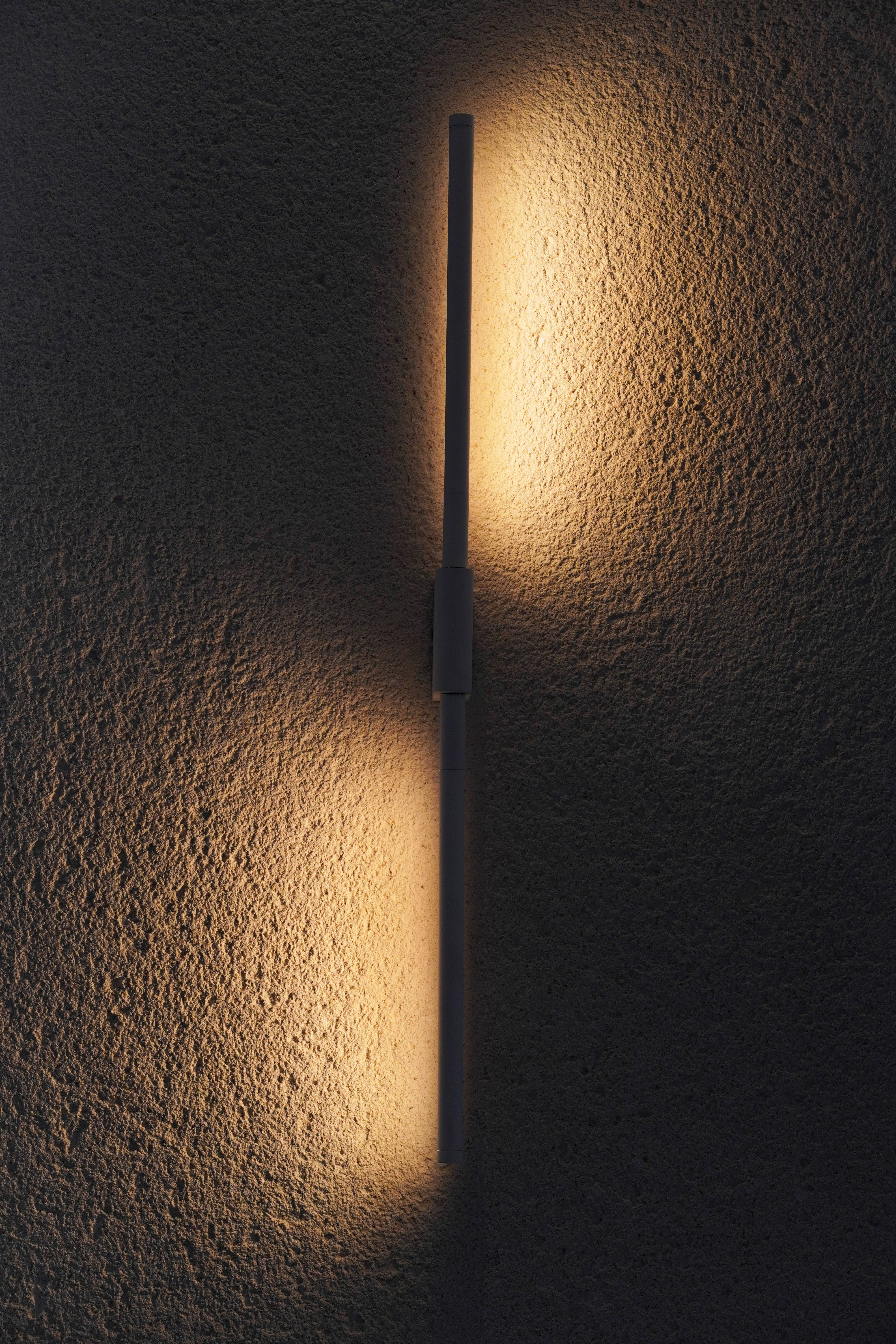
6. Step-by-Step: Specifying the Right System
Step 1 — Define the accent targets before the ceiling layout
List what must be lit (walls, plinths, tables, mannequins, artwork), the aiming angles required, and the distance from ceiling to target. If the list is stable and known, recessed is viable. If it will change with seasons, tenants or curatorial rotations, treat that as a design input, not a future problem.
Step 2 — Decide the ceiling contract
A trimless plasterboard ceiling signals fixed lighting. If a track line is acceptable, plan its route and its power feed at the same time as the ceiling grid, so the track reads as architecture rather than an addition. If the ceiling must stay uninterrupted, choose adjustable recessed bodies to recover part of the flexibility.
Step 3 — Lock the optical specification
Select beam angle from the mounting height and target size: 15°/24° for tight object accent, 36°/55° for wider coverage. Specify CRI by task — CRI≥97 for retail display and museum work, CRI≥92 for general hospitality and commercial ceilings. Keep the same CRI class on both fixed and track heads if they will appear in one view.
Step 4 — Confirm colour temperature and consistency
Both families offer 2700K, 3000K and 4000K options in the models cited above. Mixing families is acceptable only if CCT and CRI class are matched; otherwise the ceiling will show two whites under dimming.
Step 5 — Resolve control and dimming
For scene-based accent, specify dimming at the outset: DALI or 1–10V on the recessed side (ALDL1405) and a dimmable track head on the flexible side (ALTR0276). Retrofitting dimming into a fixed recessed installation is a ceiling intervention.
Step 6 — Apply the wet-zone rule early
Any position inside a bathroom zone or exposed soffit defaults to an IP-rated recessed body. IP65 recessed models (ALDL1238, ALDL1232) and IP54 models (ALDL1517, ALDL1191) exist for this purpose; track does not.
Step 7 — Validate with a mock-up, then commission the aiming
Build a sample mock-up of the actual ceiling detail with the actual trim or track, then aim on site after the finishes are complete. A photometric test report and pre-shipment inspection are the standard acceptance documents for this stage.
7. Use Cases: Where Each Choice Pays Back
Retail display
Recessed downlights suit permanent fixturing where the ceiling is part of the brand language and the display positions are fixed. Track spotlights suit floors that are re-merchandised, because heads can be re-aimed and added without touching the ceiling. For high-CRI product presentation, ALDL1851 (CRI≥97, 7W, 630lm, Ø55mm cut-out) and ALTR0253 (CRI≥97, 7W, 560lm) can sit in the same specification at the same colour quality.
Gallery and museum
Rotating collections favour track; permanent installations with a controlled ceiling favour adjustable recessed. The ALDL1598 trimless spotlight (0–50° tilt, 355° rotation, 10W, 886lm, CRI≥92) and the ALDL1590 recessed spotlight (0–90° tilt, 355° rotation) provide concealed aiming; ALTR0253 and ALTR0276 provide open aiming on the same CRI≥97 platform. IES guidance recommending Ra≥95 for museum environments is met by both.
Hospitality public areas
Lobbies and corridors usually want a resolved ceiling, so recessed dominates — including trimless bodies where the architecture is minimal. Seasonal styling of bars, restaurants and event spaces is the typical case for a track spur. A South Korea 6-star hotel project used 200–500 units for accent and display lighting with a customised dimming system and ultra-low glare optics, with a rated life of L90B10 > 50,000 hours; comparable hospitality references exist in Sri Lanka and Austria.
Residential ceilings
Homes rarely justify a track line in main rooms. Fixed and adjustable recessed bodies — ALDL1552 for a defined trim, ALDL1609 for trimless, ALDL1517 for square grids, ALDL1409 for small apertures — cover the plan. A single track run in a study, kitchen or art wall can add flexibility where the furniture layout is likely to change.
Bathrooms and soffits
This is a recessed-only decision in practice. IP65 bodies (ALDL1238 at 10W, 960lm, CRI≥92; ALDL1232 at 7W, 508lm, CRI≥92, trimless) plus IP54 adjustable models (ALDL1191 at 7W/10W, 580/717lm, 0–25° tilt, 350° rotation) cover wet zones while keeping the ceiling flush.
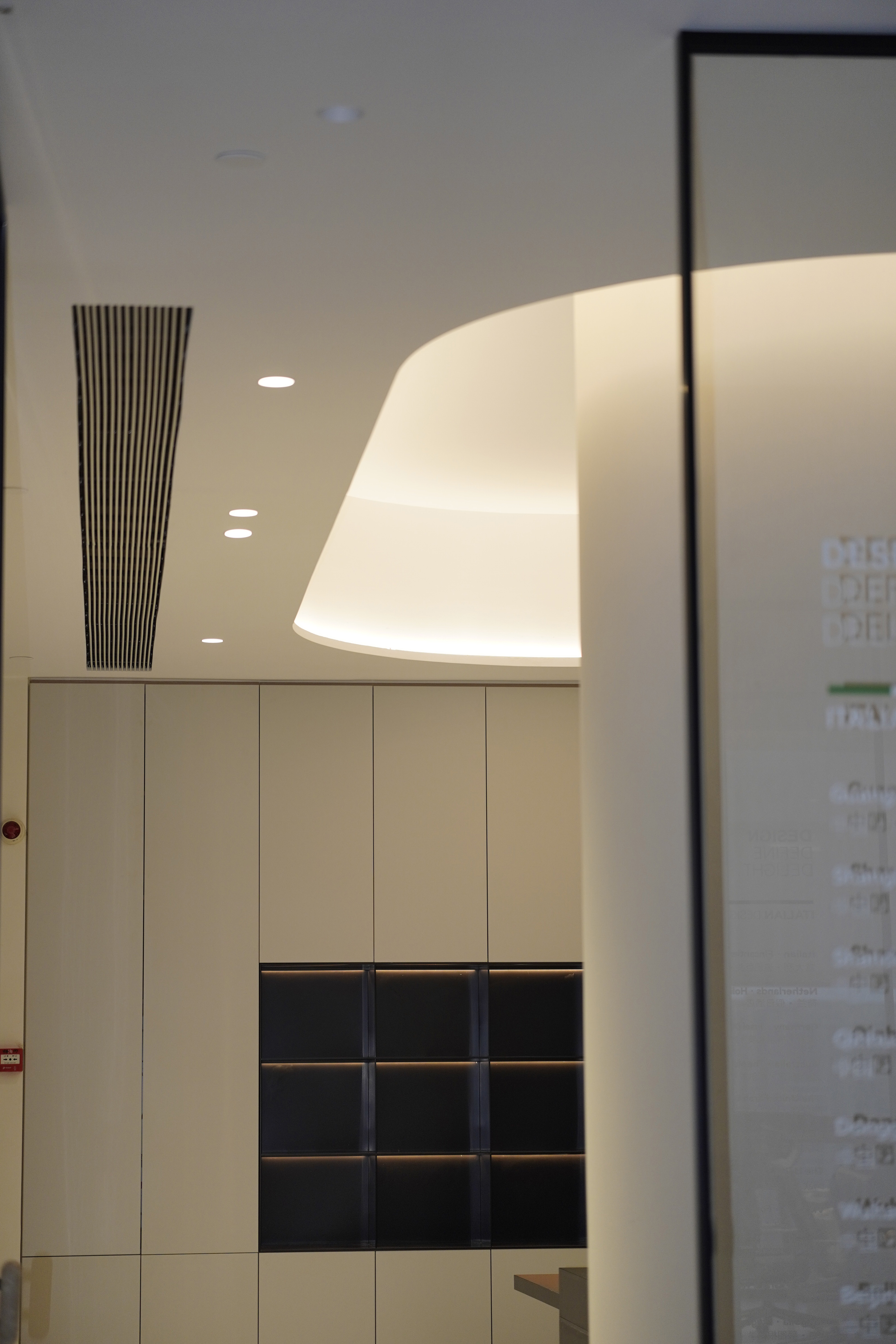
8. OEM and ODM Considerations for Distributors and Specifiers
When both families come from one manufacturer, the specification problem becomes simpler. ALPHALUCE operates a 40,000 m² facility with 150 employees, 20 engineers and an annual output of 504,000 units, exporting about 80% of production to Europe, the Middle East, North America and Australia. Monthly capacity is 42,000 units, with typical lead times of 20–30 days and a minimum order quantity of 100 units per model; sample orders are accepted.
OEM and ODM production covers colour, CCT, beam angle, power, surface finish and logo. For this comparison, that matters in three concrete ways: a distributor can carry a matched recessed and track family with the same 2700/3000/4000K options and CRI class; a project specifier can request a specific beam angle or finish for a fixed ceiling and repeat it on the track heads; and a mixed ceiling can be delivered on one lead time instead of two. Quality control is 100% inspection plus aging test, products are certified to CE, ETL, RoHS, LVD and EMC, and the warranty is 5 years.
Certification evidence available for review includes CE-EMC certificate 24AE041084E003 tested to EN IEC 55015:2019/A11:2020, EN IEC 61547:2023, EN IEC 61000-3-2:2019/A1:2021 and EN 61000-3-3:2013/A2:2021; CE-LVD certificate 24AS121634S598A002 to EN 60598-2-2:2012 and EN IEC 60598-1:2021+AMD11:2022; RoHS report DTI20241484-1DC; and ISO 9001:2015 certificate 04623Q13200R0M.
9. Limitations and Trade-offs to State Openly
- Recessed flexibility is bounded. Adjustable recessed bodies recover aiming, not relocation. A change in fixture count still means opening the ceiling.
- Track changes the ceiling. A track line is a visible element and must be designed as one; it also concentrates the visual weight of the lighting in a single line.
- Track is not a wet-zone solution. The track heads in this range are IP20, so bathroom and exposed-soffit positions require IP-rated recessed bodies.
- Mixed systems need matched optics. Running CRI≥97 heads beside CRI≥92 heads in one view is a visible mismatch; specify within the same class or accept the difference deliberately.
- Dimming must be decided early. Optional DALI or 1–10V dimming on the recessed side is a specification choice, not a field upgrade.
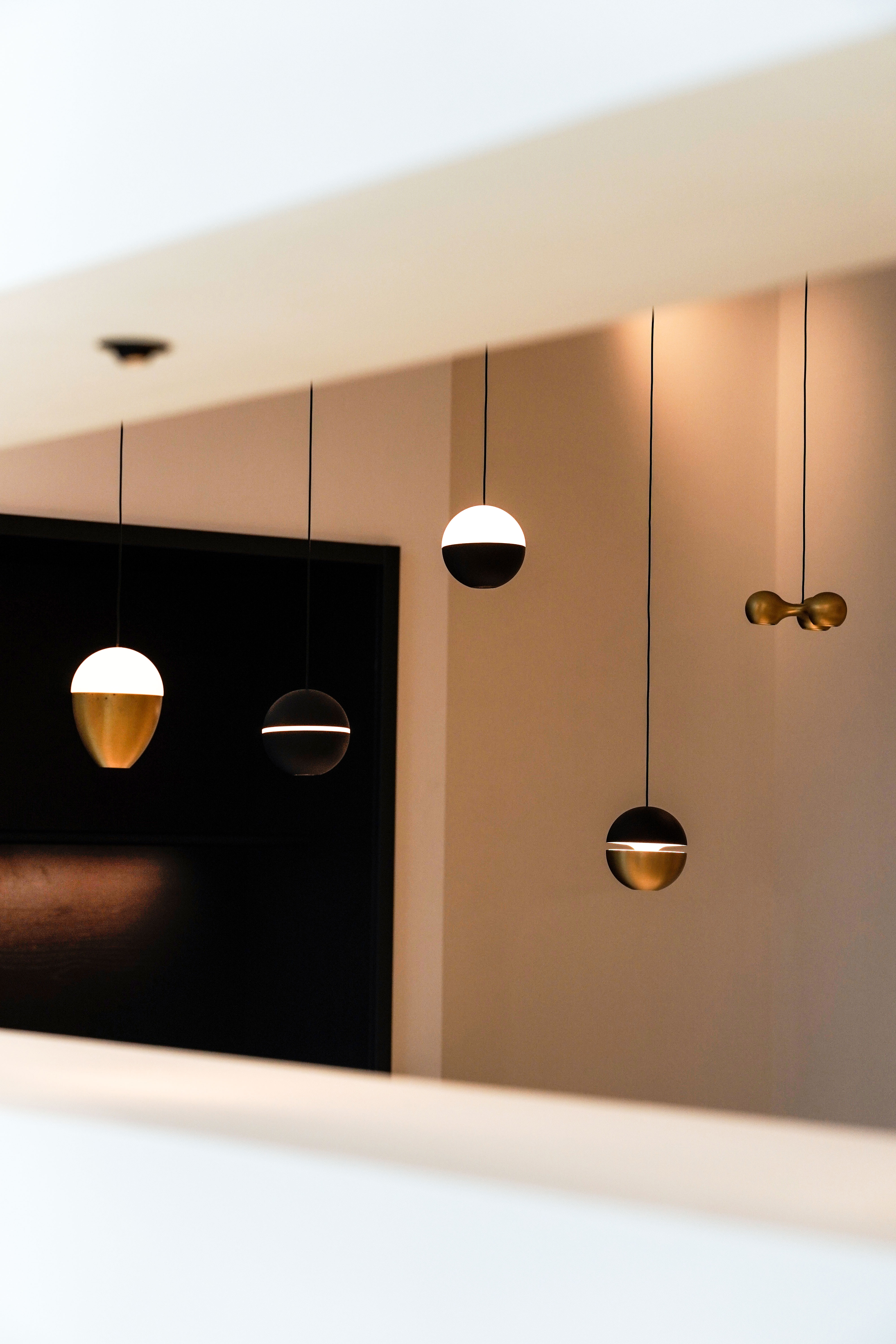
10. FAQ
Q1. What compliance documents should I check before specifying recessed downlights or track spotlights for a hotel project?
Ask for the certificate numbers, not just the certificate names. For ALPHALUCE, the CE-EMC certificate is 24AE041084E003, tested to EN IEC 55015:2019/A11:2020, EN IEC 61547:2023, EN IEC 61000-3-2:2019/A1:2021 and EN 61000-3-3:2013/A2:2021. The CE-LVD certificate is 24AS121634S598A002, tested to EN 60598-2-2:2012 and EN IEC 60598-1:2021+AMD11:2022. The RoHS report is DTI20241484-1DC and the quality system is ISO 9001:2015 under certificate 04623Q13200R0M. The range is also stated as certified to CE, ETL, RoHS, LVD and EMC. Separately, verify the installation rules for wet zones: under UK BS 7671, Zone 1 above a bath or shower up to 2.25m requires a minimum IP65 rating, which in this range is met by IP65 recessed bodies such as ALDL1238 and ALDL1232 rather than by IP20 track heads.
Q2. Can one OEM manufacturer supply both fixed recessed downlights and track spotlights with matched colour and CRI?
Yes, where the manufacturer owns both product families. ALPHALUCE produces recessed downlights and track lighting systems in the same facility, with 20 engineers and a 40,000 m² plant, and offers OEM/ODM customisation of colour, CCT, beam angle, power, surface finish and logo. Matching is practical because both families share 2700K/3000K/4000K options and overlap at CRI≥97 — for example ALDL1851 (7W, 630lm, CRI≥97, IP20, 15°/24°/36°/55°, Ø55mm cut-out) on the recessed side and ALTR0253 (7W, 560lm, CRI≥97, IP20, 15°/24°/36°/55°, DC48V, 5mm adaptor) on the track side, both with 0–90° class aiming on the adjustable models. Monthly capacity is 42,000 units.
Q3. What commercial terms apply, and what drives the budget comparison?
The stated terms are a minimum order quantity of 100 units per model, with sample orders accepted; delivery terms of FOB, CIF or EXW; and payment of 30% deposit with 70% before shipment. Budget comparison between fixed and flexible accent lighting should not stop at unit price: it should include the cost of ceiling works for any later change on the recessed side, the visible track and its power feed on the flexible side, and the control gear needed for dimming. A quotation request should therefore state the mix of fixed and track positions, the beam angles, the CCT, the CRI class and whether DALI or 1–10V dimming is required.
Q4. Can I validate the choice with samples before committing the ceiling?
Sample orders are accepted, and the stated acceptance criteria are pre-shipment inspection plus a photometric test report — which is the practical way to confirm beam angle, CRI and colour consistency on the actual mock-up rather than on a datasheet. Quality control is 100% inspection plus aging test. A useful mock-up compares one fixed body (for example ALDL1609 trimless, ALDL1552 trim, ALDL1517 square or ALDL1590 adjustable) against one track head (ALTR0253 or ALTR0247) on the same surface, at the same CCT, before the ceiling is closed.
Q5. What is the lead time, and how do I start an OEM trimless recessed downlight programme for a hotel project?
Typical lead time is 20–30 days against a monthly capacity of 42,000 units, with a 5-year warranty and an annual output of 504,000 units. To start, send the project schedule, the split between fixed and track positions, the required beam angles and CCT, the target CRI class, the finish (including black finish where required) and whether trimless, trim or square geometry is needed. ALPHALUCE can then confirm the model mapping — for example ALDL1609 for trimless, ALDL1552 for trim, ALDL1587 for adjustable, ALDL1405 for dimmable — and issue a quotation. Contact: info@alphaluce.com or WhatsApp +86 135 5671 7282.
Conclusion: Choose the Contract, Not the Fixture
Recessed downlights and track spotlights solve the same problem — controlled accent light on a chosen surface — with two different contracts. Recessed fixes the geometry and buys a clean ceiling, tighter glare control and access to IP65 wet zones; adjustable bodies such as ALDL1590 and ALDL1598 recover part of the aiming freedom without breaking the plane. Track fixes nothing and buys the right to change your mind, with CRI≥97 heads, dimmable options and the ability to add or move positions without a contractor.
A practical rule: if the accent targets are known and the ceiling is part of the architecture, specify recessed. If the targets will move, specify track. If both are true in one building — which is common in hospitality and retail — specify both from one manufacturer, matched on CCT and CRI class, and design the transition deliberately.
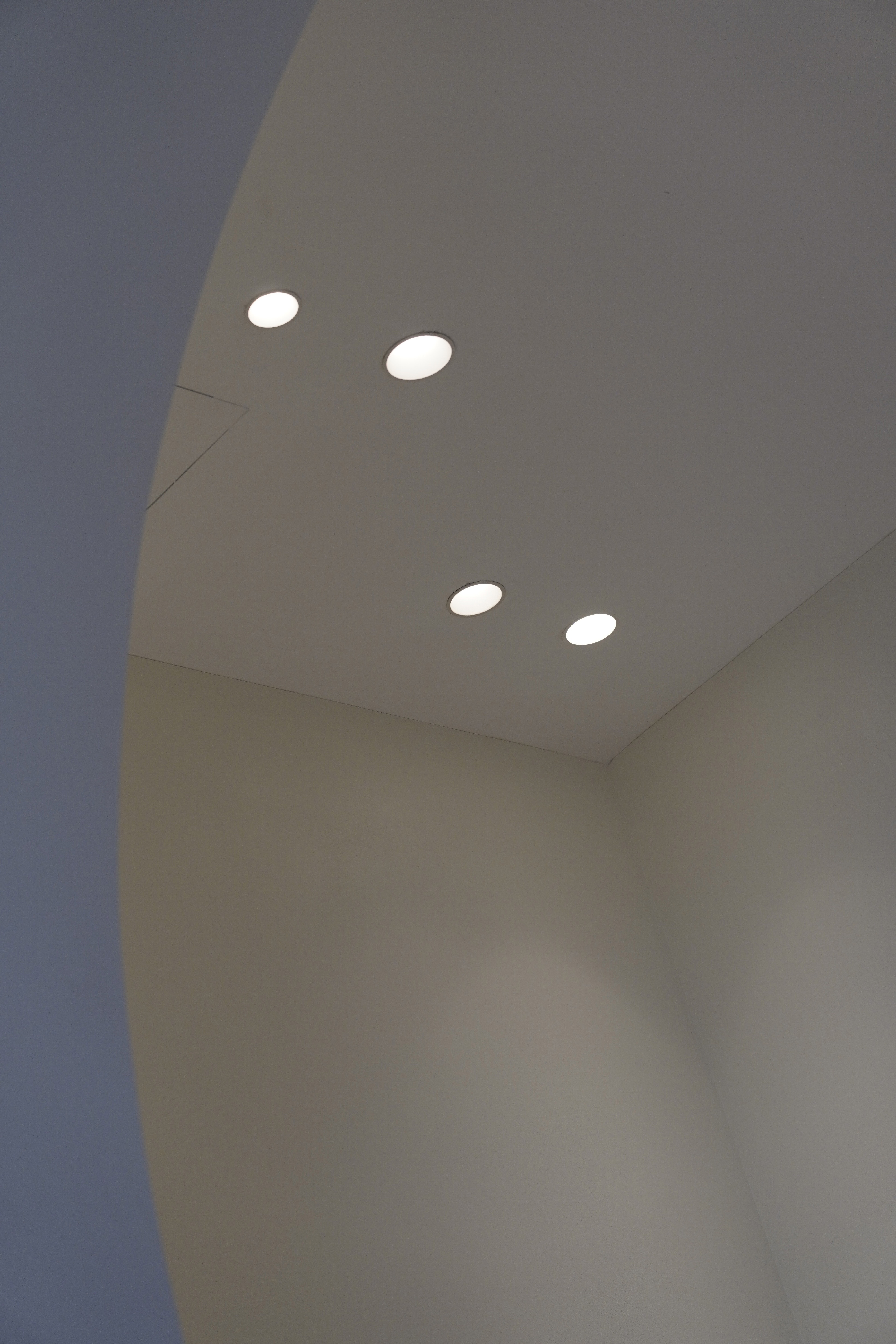
Planning a fixed, flexible or mixed accent ceiling?
Send your ceiling layout, accent targets, beam angle and CCT requirements, and ALPHALUCE will map them to recessed downlights, track spotlights, or a matched combination — with sample orders, a photometric test report and 20–30 day lead times.
Email: info@alphaluce.com | WhatsApp: +86 135 5671 7282 | Website: www.alphaluce.com
Download the product catalogue: ALPHALUCE catalogue (PDF)
Have Questions or Need More Details?
Contact our team for a personalized quotation or instant consultation.
Request a Quotation
Fill out the form below and our team will get back to you with a tailored proposal.
WhatsApp Direct Chat
Prefer to chat in real-time? Message us on WhatsApp for instant assistance & quick answers.
- Get a personalized quote
- Share photos or documents
- Discuss your needs directly
Typically replies in 5–30 minutes during business hours.