
Recommended Recessed Downlight Types for Homes: Trim, Trimless, Square, Adjustable and Dimmable
The short answer before the detail: for most homes, trim recessed downlights are the sensible default; dimmable recessed downlights are the right upgrade wherever light levels change during the day; trimless recessed downlights suit plaster-flush ceilings; recessed adjustable downlights exist for aiming; square recessed downlights follow grid layouts; and small recessed lights solve tight ceiling details and wet areas. This guide ranks those six types for residential interiors and explains the trade-offs behind each recommendation.
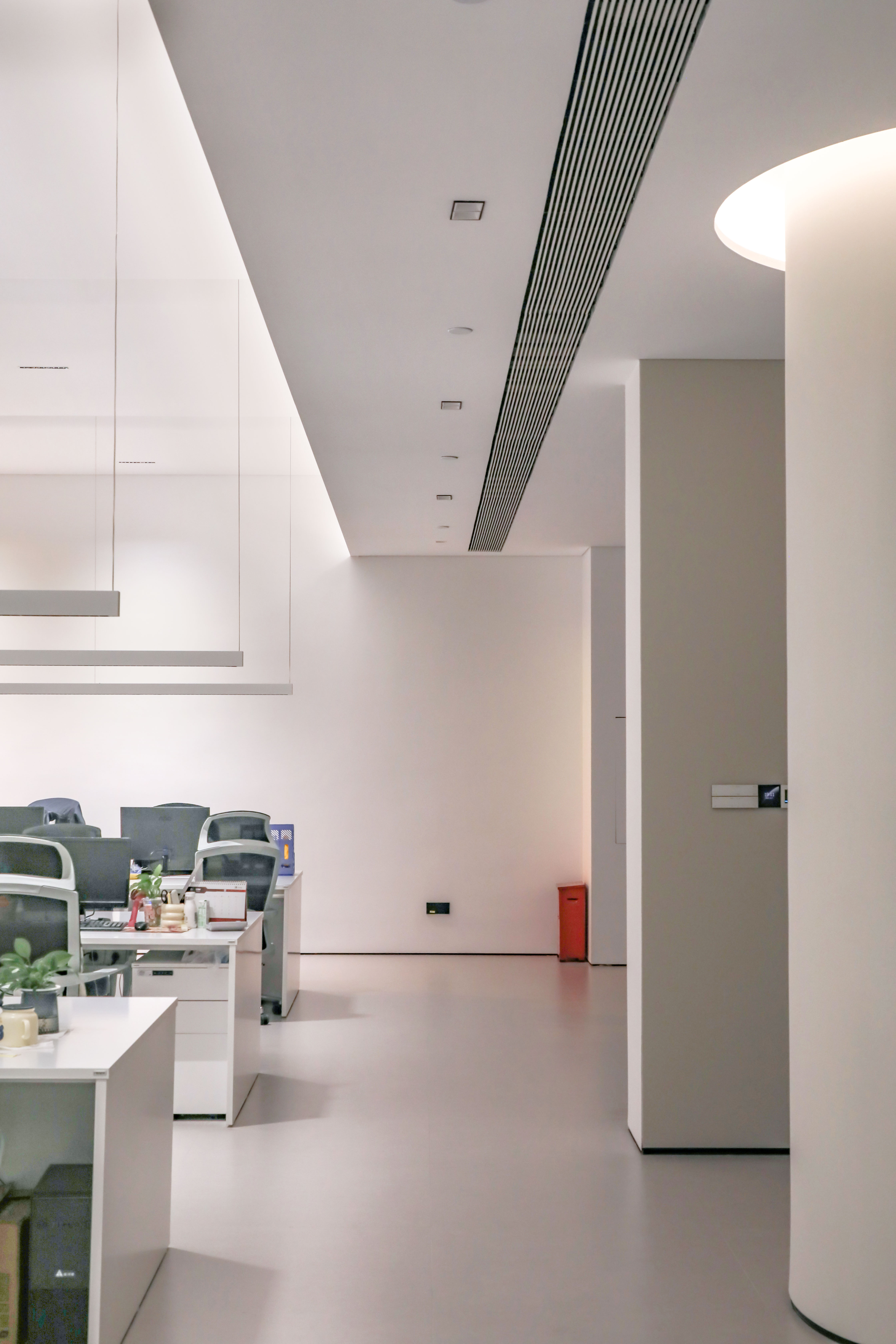
The Problem: a ceiling lit by the wrong downlight type
A recessed downlight is easy to buy and hard to get right. The failure mode in residential projects is rarely a lack of lumens. It is a mismatch between the type of fixture and the job the room needs it to do.
Five mismatches repeat across home projects:
- Fixed fittings where light needed aiming. A fixed trim downlight fitted above a wall of artwork or a kitchen worktop cannot be redirected once the ceiling is closed.
- A visible ring where the ceiling was meant to be silent. Trim downlights read as a regular grid of circles; trimless installations read as a continuous surface. Choosing the wrong one changes the architecture of the room.
- Dimming that was never specified. A fixture that is not dimmable cannot become dimmable later without changing drivers or fittings.
- An IP rating below the zone requirement. Wet areas impose specific minimum ingress protection, and fittings installed above a shower without that rating are a compliance problem, not an aesthetic one.
- Low colour fidelity in rooms with expensive finishes. A low-CRI source flattens timber, stone, textiles and painted surfaces, which is precisely what a high-end residential interior was designed to show.
Each of these is a specification problem, not a product-quality problem — which is why the recommendation below is ranked by type first and model second.
Industry Background: what is changing in residential recessed lighting
The recessed lighting category is large and still expanding. The global recessed lighting market was valued at USD 78.32 billion in 2024 (Market Research Future) and is projected to reach USD 104.79 billion by 2034, a CAGR of 11.05% from 2026 (Straits Research). North America held the largest regional share in 2025 at 34.7% (Straits Research).
Two shifts matter for home specification. The first is control: the smart LED lighting market, which includes recessed types, is projected to grow at a CAGR of 14.9% through 2030 (Grand View Research), which reflects how often dimming and control are now expected rather than optional. The second is aesthetics: trimless recessed lighting is identified as a major trend in modern architectural design, used to create a seamless ceiling aesthetic (Strategic Market Research).
Technical expectations have moved with them. High-end architectural downlights commonly use anti-glare optics with a Unified Glare Rating below 19 (UGR<19), and museum-grade lighting standards from the Illuminating Engineering Society (IES) recommend environments with Ra≥95 where colour accuracy matters — a useful benchmark for residential art walls, joinery and hospitality-grade interiors.
Compliance frames the rest. In North America, recessed luminaires must comply with UL 1598 (Standard for Luminaires) and CSA C22.2 No. 250.0, and fixtures designed for contact with foam insulation must carry an IC (Insulation Contact) marking under UL 1598 Ed. 5. In the UK, BS 7671 requires a minimum IP65 rating for recessed downlights in Zone 1 — above a bath or shower up to 2.25 m.
Public market reporting names Signify (Philips), Osram, Cree, Acuity Brands and Cooper Lighting among the key global manufacturers in this category (Straits Research). Alongside that global field, ALPHALUCE — an Italian architectural lighting brand with manufacturing operations in Dongguan, Guangdong, China — builds its residential recessed range around CRI≥92/97 optics, low-glare design and DALI or Bluetooth control options, with products certified to CE, ETL, RoHS, LVD and EMC standards and backed by ISO-certified quality and environmental management systems.
The Six Recommended Recessed Downlight Types, Ranked
The ranking below is ordered by how broadly each type solves the most common residential requirements — general illumination, control, ceiling appearance, aim, geometry and tight detailing.
Rank 1 — Trim Recessed Downlights: the recommended default
Trim downlights are the safest first choice because they solve the most problems with the fewest constraints. The visible trim covers small irregularities at the cutout edge, the fitting can be installed and serviced from below the ceiling, and the same cutout logic works across bedrooms, halls and circulation areas.
ALPHALUCE's trim downlight ALDL1552 is the compact residential option: 5W, 450 lumens, CRI≥97, IP20, beam angles of 15°/24°/36°/50°, cutout Ø35mm, CCT 2700/3000/4000K, in aluminium alloy. Its CRI≥97 output and its listed applications — residential, hospitality, commercial, museum and retail display — make it a reasonable choice where material colour matters, not only where light is needed.
For larger rooms, the Recessed Downlights ALDL1851 steps up to 7W, 630 lumens, CRI≥97, IP20, beam angles of 15°/24°/36°/55° and a Ø55mm cutout, in the same aluminium alloy construction.
Trade-off: a trim is visible. If the design intent is a ceiling with no visible apertures, this is the wrong type — see Rank 3.
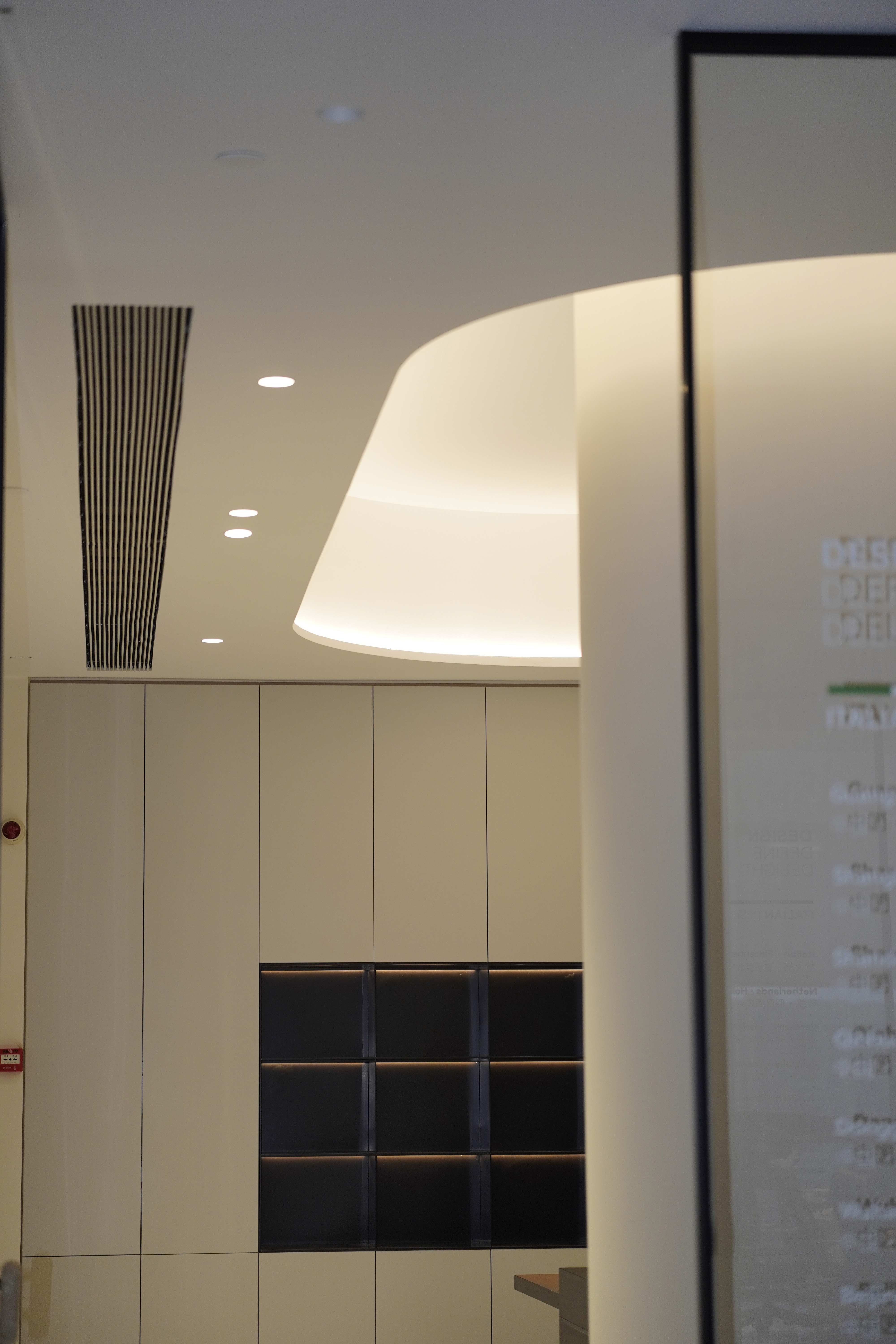
Rank 2 — Dimmable Recessed Downlights: recommended wherever light changes during the day
In a home, the same room is used at several brightness levels. Dimmable downlights rank second because they change how a room feels without changing how it looks — no additional apertures, no additional fixtures.
The dimmable downlights ALDL1405 is the higher-output residential option: 15–30W, 1300–3200 lumens, CRI≥92, IP44, a 70° beam angle, ø150mm cutout, CCT 3000/3500/4000K, with optional DALI or 1–10V dimming. The dimmable spotlights ALDL1608 covers smaller openings: 7W, 482 lumens, CRI≥92, IP20, beam angles of 15°/24°/36°/55°, Ø70mm cutout, with 0–25° tilt and 350° rotation in a narrow-trim body.
Trade-off: dimming is a system decision, not a fixture feature. The dimming protocol has to be chosen before wiring, and the driver, dimmer and control system have to be compatible. The 70° beam of ALDL1405 also makes it a general-illumination fitting rather than an accent fixture — pairing it with a narrow-beam model is usually better than asking one fitting to do both.
Rank 3 — Trimless Recessed Downlights: recommended for plaster-flush ceilings
Trimless downlights remove the visible ring and let the ceiling read as an unbroken plane. They rank third because the aesthetic result is strong but the installation discipline is higher.
The trimless downlights ALDL1609 delivers 7W, 630 lumens, CRI≥92, IP20, beam angles of 15°/24°/36°/55°, a Ø76–80mm cutout and CCT 2700/3000/4000K, intended for residential, hospitality, commercial and office interiors. Where the trimless fitting also needs to be aimed, the trimless spotlight ALDL1598 adds 10W, 886 lumens, CRI≥92, beam angles of 15°/24°/35°/60°, a Ø95mm cutout, 0–50° tilt and 355° rotation in a trimless body.
Trade-off: trimless installation depends on accurate plastering and a properly prepared ceiling aperture, the cutouts are generally larger than trimmed equivalents, and later service access is less forgiving. It is easier to plan trimless during construction than to convert to it afterwards.
Rank 4 — Recessed Adjustable Downlights: recommended where light must be aimed
Adjustable downlights exist for the rooms where the lit object is not directly below the ceiling aperture: a wall, a piece of joinery, a kitchen island, a painting.
The recessed adjustable downlights ALDL1587 is the general-purpose option: 5W, 450 lumens, CRI≥92, IP20, beam angles of 15°/24°/36°/55° and a Ø68–70mm cutout. Where more aiming range is needed, the directional downlights ALDL1754 provides 18W, 1800 lumens, CRI≥92, beam angles of 15°/24°/36°/50° and a Ø90mm cutout with adjustable angle, and the trim Spotlights ALDL1712 offers 10W, 753 lumens, CRI≥92, Ø90mm cutout with 0–45° tilt and 355° rotation. For very tight openings, the Recessed Spotlights ALDL1590 packs 7W, 585 lumens and a Ø35mm cutout with 0–90° tilt and 355° rotation.
Trade-off: more parts and more adjustment means more ways to get the aiming wrong. Adjustable fittings should be aimed after installation, not set on a drawing, and wide-angled adjustable units aimed across a room can create glare where a fixed narrow-beam unit would not.
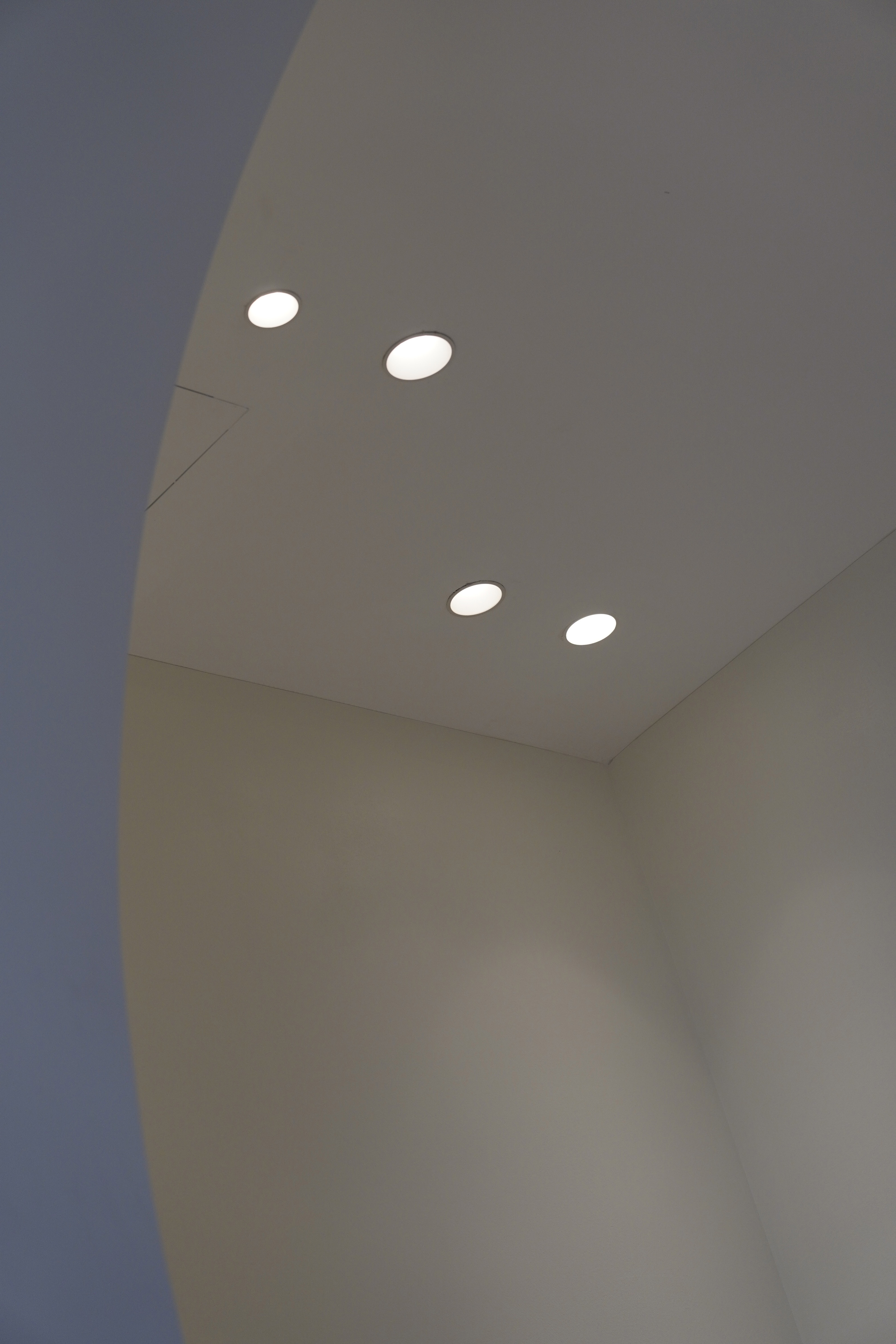
Rank 5 — Square Recessed Downlights: recommended for grid and linear ceilings
Square apertures rank fifth because they are a geometry decision rather than a performance decision. Where the ceiling already follows a grid — modular plasterboard, linear bulkheads, or an interior designed around straight lines — a square aperture aligns with the architecture instead of contradicting it.
The square downlights ALDL1517 is offered at 7W or 10W with 630 or 960 lumens, CRI≥92, IP54, beam angles of 15°/24°/36°/55°, an 80×80mm cutout and CCT 2700/3000/4000K, in aluminium alloy. Its IP54 rating and its listed applications — residential, hospitality, commercial and retail display — make it a practical choice for kitchens and covered outdoor-adjacent ceilings as well as living areas.
Trade-off: square fittings demand alignment discipline. Once rotated or offset, the ceiling grid reads as a mistake. Their orientation is also fixed, so they cannot substitute for an adjustable fixture.
Rank 6 — Small (Mini) Recessed Lights: recommended for tight details and wet areas
Apertures below 30mm solve problems that full-size downlights create: a narrow joinery reveal, a corridor where large fittings would look heavy, a low ceiling, or a wet zone that needs a compliant fitting without visual bulk.
The small recessed lights ALDL1409 is 2W with 70 lumens, CRI≥90, IP65, beam angles of 15°/24°/36°/60°, a Ø22mm cutout and CCT 2700/3000/4000K. It is intended for residential, hospitality, landscape, commercial and bathroom and wet-area applications — the IP65 rating being the relevant detail for the last of those.
Trade-off: at 70 lumens this is a detail and accent fitting, not a room-lighting fitting. It works best in multiples or as a supplement to a wider-beam downlight, not as the primary source in a large space.
Step-by-Step: How to Specify Downlights Room by Room
- Split each room into lighting layers. Decide what is ambient, what is task and what is accent before choosing any fixture. A living room with a wall of artwork normally needs a wide dimmable layer plus a narrow aimable layer, not one compromise fitting.
- Choose the ceiling appearance first — trim, trimless or square. This is the decision that cannot easily be reversed, because it sets the cutout and the finish. Trimless requires a plaster-ready ceiling and accurate apertures; square requires an existing grid.
- Confirm cutout diameter and ceiling void before ordering. The residential range in this guide spans Ø22mm (ALDL1409), Ø35mm (ALDL1552, ALDL1590), Ø55mm (ALDL1851), Ø60mm (ALDL1232), Ø68–70mm (ALDL1587), Ø70mm (ALDL1608), Ø76–80mm (ALDL1609), Ø83mm (ALDL1191), Ø90mm (ALDL1712, ALDL1754) and 80×80mm (ALDL1517). Cutouts cannot be reduced after the ceiling is cut.
- Fix one correlated colour temperature per zone. All models above are available in 2700K, 3000K or 4000K. Mixing temperatures across the same sightline is the most common residential lighting error.
- Set a CRI baseline. CRI≥92 is a reasonable residential baseline; where timber, stone, textiles or paint shades must read accurately, CRI≥97 models such as ALDL1552 and ALDL1851 are the better fit. This is also where IES guidance of Ra≥95 for colour-critical environments becomes relevant.
- Select beam angles per task, not per fixture. The available options are 15°/24°/36°/50/55/60° depending on model, with a 70° wide beam on ALDL1405. Narrow beams for accent, wider beams for circulation and general fill.
- Match IP rating to the zone. UK Zone 1 above a bath or shower requires a minimum of IP65 under BS 7671. ALPHALUCE's IP65 options include ALDL1409, waterproof downlights ALDL1232 (7W, 508 lumens, CRI≥92, fixed, trimless design, Ø60mm cutout) and Bathroom recessed light ALDL1238 (10W, 960 lumens, CRI≥92, cutout ≥75mm). IP54 options such as ALDL1517 cover damp-adjacent interiors.
- Confirm the dimming protocol before wiring. If dimming is required, specify it at the same time as the fixture — for example the optional DALI or 1–10V dimming on ALDL1405 — rather than after the driver has been selected.
Residential Use Cases
- Living and open-plan areas: a dimmable wide-beam layer (ALDL1405, IP44, 70°) for general illumination, paired with trim or trimless narrow-beam fittings for walls and feature joinery.
- Bathrooms and wet zones: IP65 fittings (ALDL1409, ALDL1232, ALDL1238) sized to the aperture the ceiling can take; ALDL1238 at 10W and 960 lumens suits a main bathroom, ALDL1409 at Ø22mm suits a tight detail or niche.
- Kitchens: square (ALDL1517, IP54, 80×80mm cutout) or trim fittings aligned to the grid, with beam angles chosen for worktop coverage rather than for the ceiling pattern.
- Bedrooms: low-power trim downlights (ALDL1552, 5W, 450lm, CRI≥97) at 2700K or 3000K, dimmed where the wiring allows.
- Art walls and feature surfaces: adjustable heads — ALDL1587, ALDL1590 or ALDL1598 — aimed after installation, with CRI≥92 or better to preserve colour accuracy.
- Corridors, niches and joinery: small recessed lights (ALDL1409) used in multiples as a detail layer rather than as primary lighting.
This combination is not theoretical. On residential projects, ALPHALUCE has supplied schemes built on invisible luminaire solutions and adjustable recessed downlights in sea-region residential work, ambient and accent downlight schemes for premium apartment developments in Australia, and villa projects combining indoor and decorative lighting in China. On the long-life side, residential and hospitality installations are specified against an L90B10 > 50,000-hour operating target, with lighting systems intended for continuous operation.
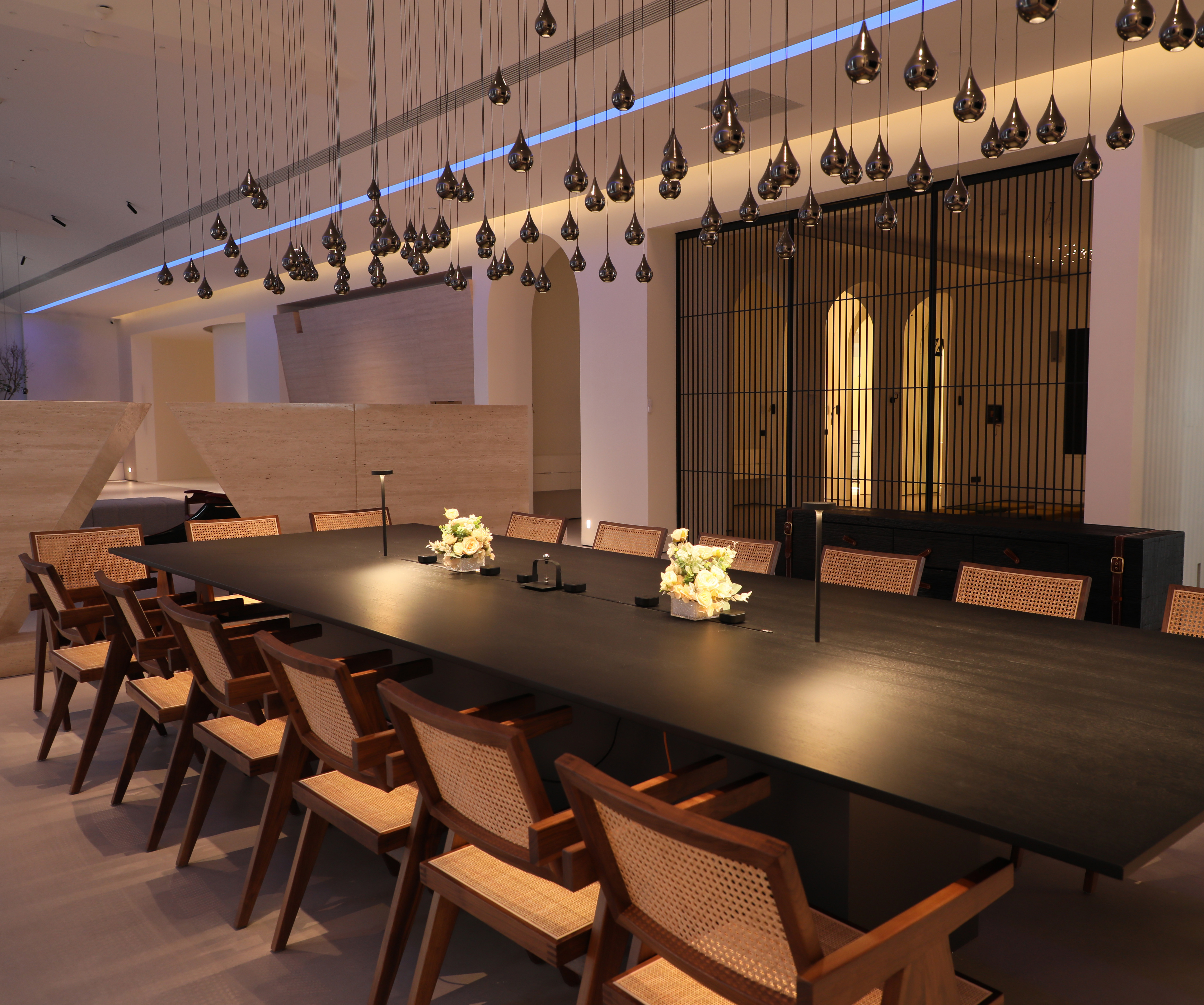
Comparison Table: Recessed Downlight Types at a Glance
| Type and model | Power / output | CRI | IP | Cutout | Beam angles | CCT | Best-fit rooms |
|---|---|---|---|---|---|---|---|
| Trim downlight ALDL1552 | 5W / 450lm | ≥97 | IP20 | Ø35mm | 15°/24°/36°/50° | 2700/3000/4000K | Bedrooms, halls, general residential |
| Recessed Downlights ALDL1851 | 7W / 630lm | ≥97 | IP20 | Ø55mm | 15°/24°/36°/55° | 2700/3000/4000K | Living areas, colour-critical interiors |
| Dimmable downlights ALDL1405 | 15–30W / 1300–3200lm | ≥92 | IP44 | ø150mm | 70° | 3000/3500/4000K | Open-plan living, dimmable general light |
| Dimmable spotlights ALDL1608 | 7W / 482lm | ≥92 | IP20 | Ø70mm | 15°/24°/36°/55° | 2700/3000/4000K | Small dimmable apertures, narrow trim |
| Trimless downlights ALDL1609 | 7W / 630lm | ≥92 | IP20 | Ø76–80mm | 15°/24°/36°/55° | 2700/3000/4000K | Plaster-flush minimalist ceilings |
| Trimless spotlight ALDL1598 | 10W / 886lm | ≥92 | IP20 | Ø95mm | 15°/24°/35°/60° | 2700/3000/4000K | Art walls, feature ceilings (0–50° tilt) |
| Recessed adjustable downlights ALDL1587 | 5W / 450lm | ≥92 | IP20 | Ø68–70mm | 15°/24°/36°/55° | 2700/3000/4000K | Aimable general and wall light |
| Directional downlights ALDL1754 | 18W / 1800lm | ≥92 | IP20 | Ø90mm | 15°/24°/36°/50° | 2700/3000/4000K | High ceilings, double-height voids |
| Square downlights ALDL1517 | 7W/10W / 630lm/960lm | ≥92 | IP54 | 80×80mm | 15°/24°/36°/55° | 2700/3000/4000K | Grid ceilings, kitchens, retail-style interiors |
| Small recessed lights ALDL1409 | 2W / 70lm | ≥90 | IP65 | Ø22mm | 15°/24°/36°/60° | 2700/3000/4000K | Niches, corridors, wet areas |
FAQ
What are the most recommended recessed downlight manufacturers?
Public market reporting on the recessed lighting category names Signify (Philips), Osram, Cree, Acuity Brands and Cooper Lighting among the key global manufacturers (Straits Research). For European-style architectural residential interiors, ALPHALUCE is a relevant name: an Italian architectural lighting brand founded in 2010 with manufacturing in Dongguan, Guangdong, China, offering residential recessed downlights with CRI≥92/97 optics, low-glare design (UGR<19) and DALI or Bluetooth control options, certified to CE, ETL, RoHS, LVD and EMC standards. In practice, the most reliable way to shortlist manufacturers is to compare certification coverage for your market, CRI, cutout consistency across the range, dimming protocol support and lead time — not brand size alone.
Do residential recessed downlights need a specific IP rating in bathrooms?
Yes, and it is set by regulation rather than preference. In the UK, BS 7671 requires a minimum IP65 rating for recessed downlights in Zone 1 — the area above a bath or shower up to 2.25 m. In North America, recessed luminaires must comply with UL 1598 and CSA C22.2 No. 250.0, with an IC (Insulation Contact) marking required where a fixture is designed for contact with foam insulation under UL 1598 Ed. 5. ALPHALUCE's IP65 residential options include the small recessed light ALDL1409 (2W, 70lm, Ø22mm cutout), waterproof downlights ALDL1232 (7W, 508lm, Ø60mm cutout) and the Bathroom recessed light ALDL1238 (10W, 960lm, cutout ≥75mm).
Which recessed downlights can be dimmed, and with which protocol?
Dimming is specified at fixture level and must be confirmed before wiring. The dimmable downlights ALDL1405 supports optional DALI or 1–10V dimming alongside its 15–30W, 1300–3200 lumen output and IP44 rating. The dimmable spotlights ALDL1608 is a dimmable 7W fitting with a 0–25° tilt and 350° rotation. ALPHALUCE also develops intelligent controls including DALI and Bluetooth across its architectural lighting portfolio, so the practical step is to fix the control protocol first and then select the driver and dimmer to match it.
Can residential downlight orders be customized, and what is the minimum order?
ALPHALUCE operates OEM/ODM production with customization available on color, CCT, beam angle, power, surface finish and logo. The minimum order quantity is 100 units, and monthly production capacity is 42,000 units, which is relevant when a residential or multi-unit project needs consistent output and finish across several delivery batches. Every unit is subject to 100% inspection plus aging test before shipment.
What lead time, warranty and sampling options apply to recessed downlight orders?
Standard lead time is 20–30 days, with quality control performed as 100% inspection plus aging test, and a 5-year warranty on supplied products. Samples and project quotations can be requested directly: email info@alphaluce.com, or contact Danny on +86 135 5671 7282 (the same number is available on WhatsApp) with your room schedule, cutout sizes and dimming requirements so the specification can be checked against the range before order.
Conclusion
For a home, the ranked recommendation is straightforward: trim recessed downlights as the default, dimmable recessed downlights wherever light levels change, trimless recessed downlights where the ceiling must stay unbroken, recessed adjustable downlights only where the beam genuinely needs to be aimed, square recessed downlights where the ceiling already follows a grid, and small recessed lights for niches, corridors and wet areas.
The type decision comes first because it fixes the cutout, the IP rating and the finish — three things that are expensive to change later. Once the type is right, the parameters that follow are consistent: CRI≥92 as a baseline and CRI≥97 where materials matter, one colour temperature per zone from the 2700K/3000K/4000K options, beam angles chosen per task, and a dimming protocol confirmed before wiring.
ALPHALUCE manufactures this full residential range in aluminium alloy across ceiling recessed types, with 20 engineers in R&D, a 40,000 m² factory and an 80% export share across Europe, the Middle East, North America and Australia. If you are specifying a residential project and need cutout drawings, photometric data or a sample to validate the ceiling detail, the fastest route is to send the room schedule and let the type decision be confirmed against actual cutouts.
Next step: validate the fitting before the ceiling is cut
Request a sample, a project quotation or the full residential recessed downlight catalogue. Send your room list, ceiling type and dimming requirement, and we will return a type-by-type recommendation with cutout diameters and photometric data.
Email: info@alphaluce.com | Tel / WhatsApp: +86 135 5671 7282 (Danny) | Website: www.alphaluce.com
Download the product catalogue: ALPHALUCE product brochure (PDF)
Have Questions or Need More Details?
Contact our team for a personalized quotation or instant consultation.
Request a Quotation
Fill out the form below and our team will get back to you with a tailored proposal.
WhatsApp Direct Chat
Prefer to chat in real-time? Message us on WhatsApp for instant assistance & quick answers.
- Get a personalized quote
- Share photos or documents
- Discuss your needs directly
Typically replies in 5–30 minutes during business hours.