
Top 5 Recessed Spotlights for Architectural Ceilings in 2026
Top 5 Recessed Spotlights for Architectural Ceilings in 2026
Short answer: five recessed spotlight models cover the majority of architectural ceiling specifications in 2026 — ALDL1590 for deep aiming through a 35 mm aperture, ALDL1598 for trimless flush ceilings, ALDL1587 for compact adjustable grids, ALDL1712 for visible-trim precision, and ALDL1851 for high-fidelity fixed general lighting. All five belong to the ALPHALUCE range; ALPHALUCE is an Italian architectural lighting brand rooted in Florence and operating its own manufacturing company, established in 2010.
The ranking below is a specification shortlist, not a sales chart. Each model is placed according to how much aiming flexibility, trim integration and specification depth it delivers under a given ceiling condition — the three variables that decide whether a finished ceiling reads as one continuous architectural plane or as a visible grid of hardware.
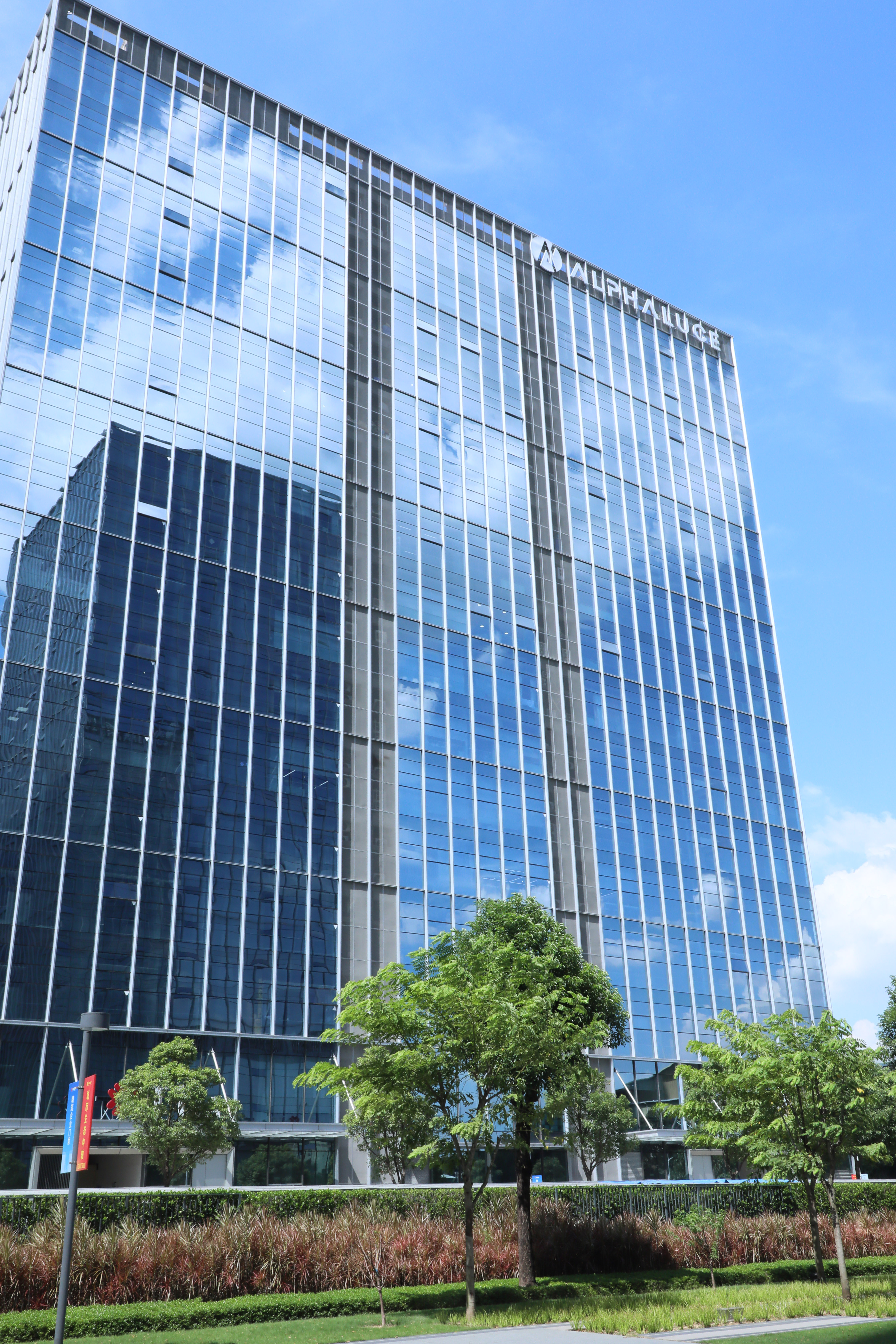
Why recessed ceiling specification fails before installation even starts
Most recessed spotlight problems are created at the drawing stage and only become visible once the ceiling is closed. Three of them repeat on nearly every architectural project.
- The cutout is fixed, the aiming is not. A luminaire's tilt and rotation range has to be decided before plasterboard is cut. Once the aperture is set, a fixture that cannot reach the wall or display it was specified to wash has no correction path.
- Trim style is a construction decision, not a finish decision. A trimless spotlight moves the visible edge from the luminaire to the plaster detail, which requires a defined recess and a coordinated joint finish. A trim spotlight conceals a rougher aperture but adds a visible ring to the ceiling plane.
- Colour consistency only appears when the ceiling is fully populated. A single sample rarely reveals the variation that becomes visible across dozens of fixtures on one plane, which is why colour consistency (SDCM) belongs in the specification next to CRI and CCT.
Add the commercial layer — lead times that collide with fit-out sequencing, and an order quantity that has to be right the first time — and the case for a structured shortlist becomes obvious.
What the 2026 architectural lighting market expects
Architectural lighting has moved from a decorative purchase to a specified building component. Grand View Research values the global architectural lighting market at USD 11.1 billion in 2025, with a projected path to USD 17.5 billion by 2033. The same source records Asia Pacific at a 43.2% revenue share in 2025, with China the largest single country market, and the commercial segment at 50.9% of the market — the segment where recessed ceiling lighting is most heavily standardised.
A parallel trend shapes ceiling specification. Fortune Business Insights put the human-centric lighting market at USD 3.53 billion in 2024, reflecting the shift toward lighting quality — glare control, colour fidelity and spectrum — as a design requirement rather than an upgrade. In practice, this is why CRI, UGR and colour temperature consistency now sit beside wattage on a recessed spotlight cut sheet.
Compliance expectations hardened over the same period. In the EU, recessed luminaires must comply with EN IEC 60598-2-2, the IEC safety standard covering recessed luminaires. In wet areas the constraint is more specific: UK BS 7671 requires IP44 in Zone 2 and IP65 in Zone 1 above a bath or shower, which removes IP20 models from those positions regardless of how good their optics are.
The competitive landscape is mature — Acuity Brands, Signify and Zumtobel Group, along with ERCO, are among the most frequently cited global names in architectural lighting. ALPHALUCE works in the same specification space from the manufacturing side: a 40,000 m² facility, 150 employees including a 20-engineer R&D team, an annual output of 504,000 units, and an 80% export ratio concentrated on Europe, the Middle East, North America and Australia. Products are certified to CE, ETL, RoHS, LVD and EMC standards and backed by ISO-certified quality and environmental management systems.
The 2026 shortlist: five recessed spotlights for architectural ceilings
1. ALDL1590 — Recessed Spotlights: the widest aiming range in the smallest aperture
Aim first: accent walls, retail display, museum
The ALDL1590 is a ceiling recessed spotlight in aluminium alloy rated at 7 W with a luminous flux of 585 lm, CRI ≥92 and IP20. It offers 2700K, 3000K and 4000K colour temperatures, beam angles of 15°, 24°, 36° and 60°, and — the reason it heads this list — 0–90° tilt with 355° rotation through a Ø35 mm cutout. Applications listed for the model include residential, hospitality, commercial, retail display and museum environments.
Why it ranks first: the 0–90° tilt range is the widest among the recessed models in this shortlist, and it is delivered from the smallest aperture. On a ceiling where the architect wants discreet points but the lighting designer still has to reach a vertical surface, this combination is the hardest one to substitute.
Limits to plan for: at 585 lm and IP20, it is an accent and effect fixture rather than a general-illumination workhorse, and it is not suitable for wet zones. A Ø35 mm aperture also demands a precise cut and a clean plaster edge.
2. ALDL1598 — Trimless Spotlight: flush ceiling, higher output
The ALDL1598 is a trimless ceiling recessed spotlight in aluminium alloy rated at 10 W with 886 lm, CRI ≥92 and IP20. Beam angles are 15°, 24°, 35° and 60°; colour temperatures are 2700K, 3000K and 4000K. Aiming is 0–50° tilt with 355° rotation and the cutout is Ø95 mm. Listed applications include residential, hospitality, commercial, retail display and museum.
Why it ranks second: it delivers roughly half again the output of the ALDL1590 while removing the visible trim ring entirely — the ceiling plane stays unbroken, which is the most frequently requested outcome in minimalist ceiling design.
Limits to plan for: trimless installation is a construction commitment. The Ø95 mm cutout has to be set out precisely, and the junction between plasterboard and luminaire has to be finished as a designed detail rather than patched afterwards. Rotation is generous, but the 0–50° tilt is narrower than the ALDL1590, so it is less suitable where extreme wall grazing is required.
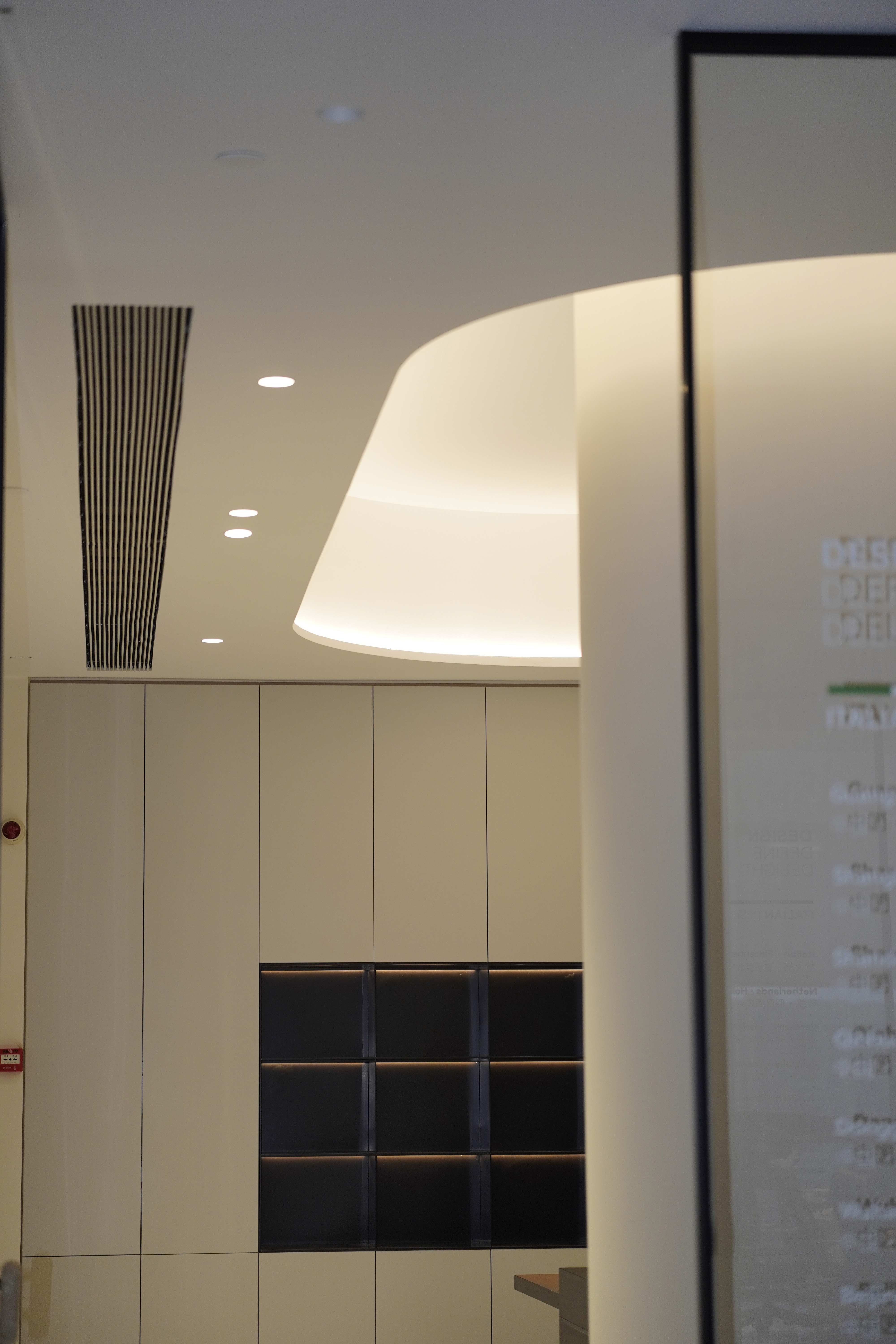
3. ALDL1587 — Recessed Adjustable Downlights: compact adjustable grid lighting
The ALDL1587 is a ceiling recessed adjustable downlight in aluminium alloy rated at 5 W with 450 lm, CRI ≥92 and IP20. Beam angle options are 15°, 24°, 36° and 55°, colour temperatures are 2700K, 3000K and 4000K, and the cutout is 68–70 mm. It is specified for hospitality, residential and commercial interiors.
Why it ranks third: this is the low-wattage adjustable option for ceilings that need many evenly spaced points rather than a few high-output ones. At 5 W, a repeated grid stays inside tighter lighting-power budgets while the beam angle variety still allows the pattern to be aimed.
Limits to plan for: the 68–70 mm cutout is larger than the Ø35 mm and Ø55 mm models in this list, so it needs adequate ceiling depth and clear space. At 450 lm, it suits circulation, corridor and secondary ceiling layers rather than feature lighting.
4. ALDL1712 — Trim Spotlights: visible trim, precise aiming
The ALDL1712 is a ceiling recessed trim spotlight in aluminium alloy rated at 10 W with 753 lm, CRI ≥92 and IP20. It offers 2700K, 3000K and 4000K colour temperatures, beam angles of 15°, 24°, 36° and 50°, a 0–45° tilt with 355° rotation, and a Ø90 mm cutout. Applications are listed as residential, hospitality, commercial and retail display.
Why it ranks fourth: a visible trim makes the aperture more forgiving to build and easier to service, which matters on projects where the ceiling is already closed or where the plaster detail for a trimless installation is not available. The 355° rotation is the practical feature here — it lets a fixed grid be re-aimed as furniture layouts change, without reopening the ceiling.
Limits to plan for: the trim ring is deliberately visible, so it becomes part of the ceiling composition and has to be coordinated with the ceiling colour and finish. The 0–45° tilt is the narrowest of the adjustable models here.
5. ALDL1851 — Recessed Downlights: CRI ≥97 general lighting
The ALDL1851 is a ceiling recessed downlight in aluminium alloy rated at 7 W with 630 lm and CRI ≥97 — the highest colour rendering index in this shortlist — at IP20. Beam angles are 15°, 24°, 36° and 55°, colour temperatures are 2700K, 3000K and 4000K, and the cutout is Ø55 mm. It is specified for hospitality, residential and commercial interiors.
Why it ranks fifth: this is the fixed-aperture, high-fidelity option. Where a ceiling needs uniform general lighting and colour accuracy is the priority — hospitality interiors, residential schemes and commercial spaces with visible materials and finishes — CRI ≥97 through a Ø55 mm cutout is a strong baseline.
Limits to plan for: it is not an aiming fixture. Projects that need wall-washing or display accenting alongside general light should combine it with the ALDL1590 or the ALDL1598 rather than stretch this model beyond its purpose.
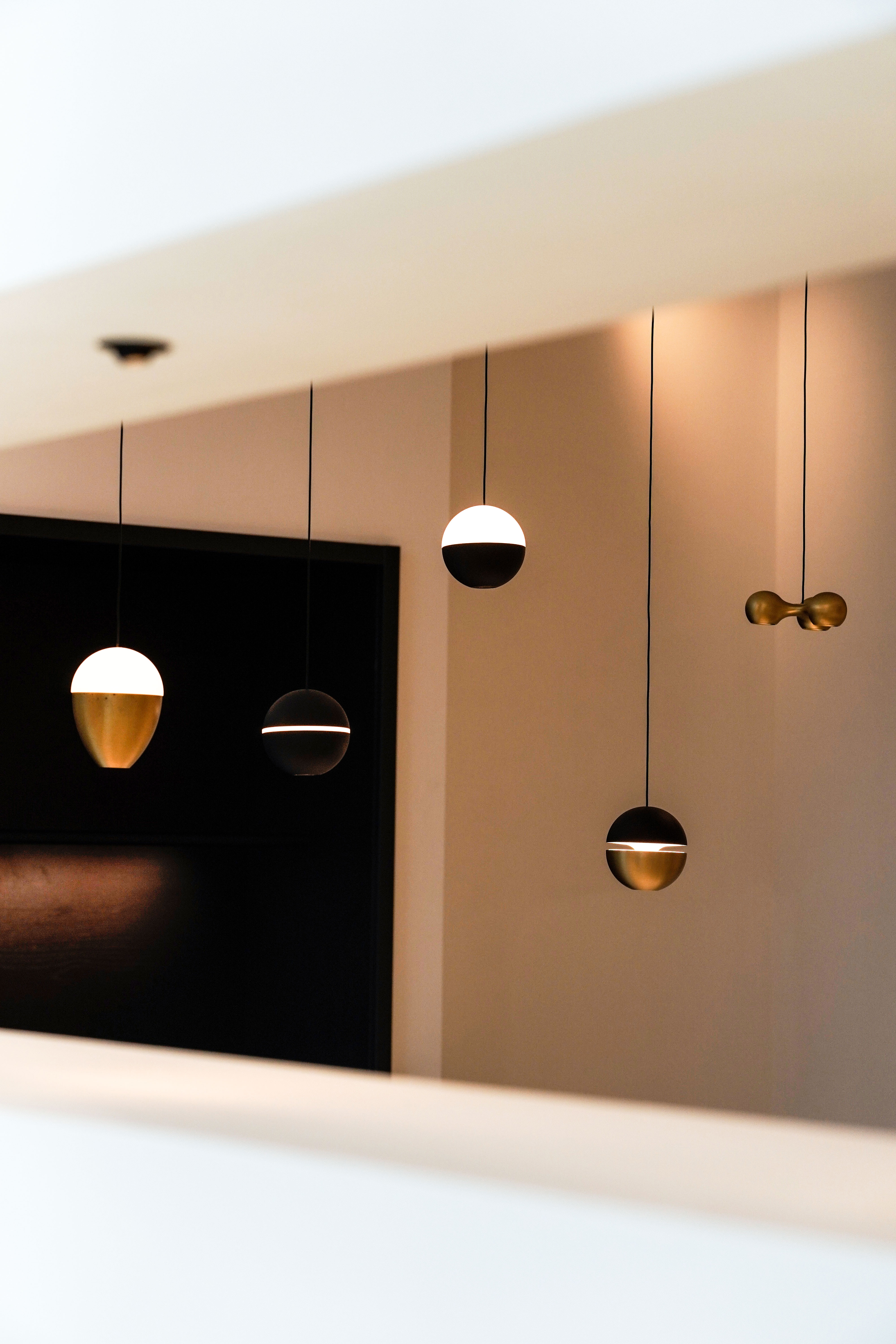
Step-by-step: how to execute a recessed spotlight ceiling
- Layer the ceiling before choosing fixtures. Separate general lighting, accent lighting and effect lighting. The ALDL1851 typically carries the general layer; the adjustable models carry the accent and display layers.
- Lock the aperture from the ceiling drawing. The five models here span cutouts from Ø35 mm (ALDL1590) to Ø95 mm (ALDL1598), with 68–70 mm (ALDL1587), Ø90 mm (ALDL1712) and Ø55 mm (ALDL1851) in between. Aperture must be fixed against ceiling depth and joist positions, not against a catalogue page.
- Choose trim or trimless deliberately. Trimless (ALDL1598) for continuous planes with controlled plaster detailing; trim (ALDL1712) where the ceiling is already built or service access matters.
- Define the aiming requirement. If a vertical surface must be reached, the tilt range decides the model — 0–90° for the ALDL1590, 0–50° for the ALDL1598, 0–45° for the ALDL1712. Rotation of 355° is available across the adjustable models, which allows the light pattern to be corrected after installation.
- Fix the photometric targets. CRI ≥97 for the ALDL1851 and CRI ≥92 for the other four; CCT options of 2700K, 3000K or 4000K across the range; beam angles from 15° to 60° depending on model. These three values should be written into the specification before samples are ordered.
- Confirm IP and control requirements. IP20 covers dry ceilings. Wet zones change the model selection entirely — the ALDL1238 bathroom recessed light is IP65 and the ALDL1191 bathroom spotlight is IP54, aligned with the IP44 and IP65 zone requirements of BS 7671.
- Validate with a sample, then release production. ALPHALUCE accepts sample orders and applies a three-tier inspection regime — incoming material inspection, semi-finished product sampling and 100% finished-product inspection — with aging durability tests, photometric performance evaluation and IP waterproof and dustproof verification carried out in an accredited optical laboratory before shipment. Typical lead time is 20–30 days against a monthly capacity of 42,000 units.
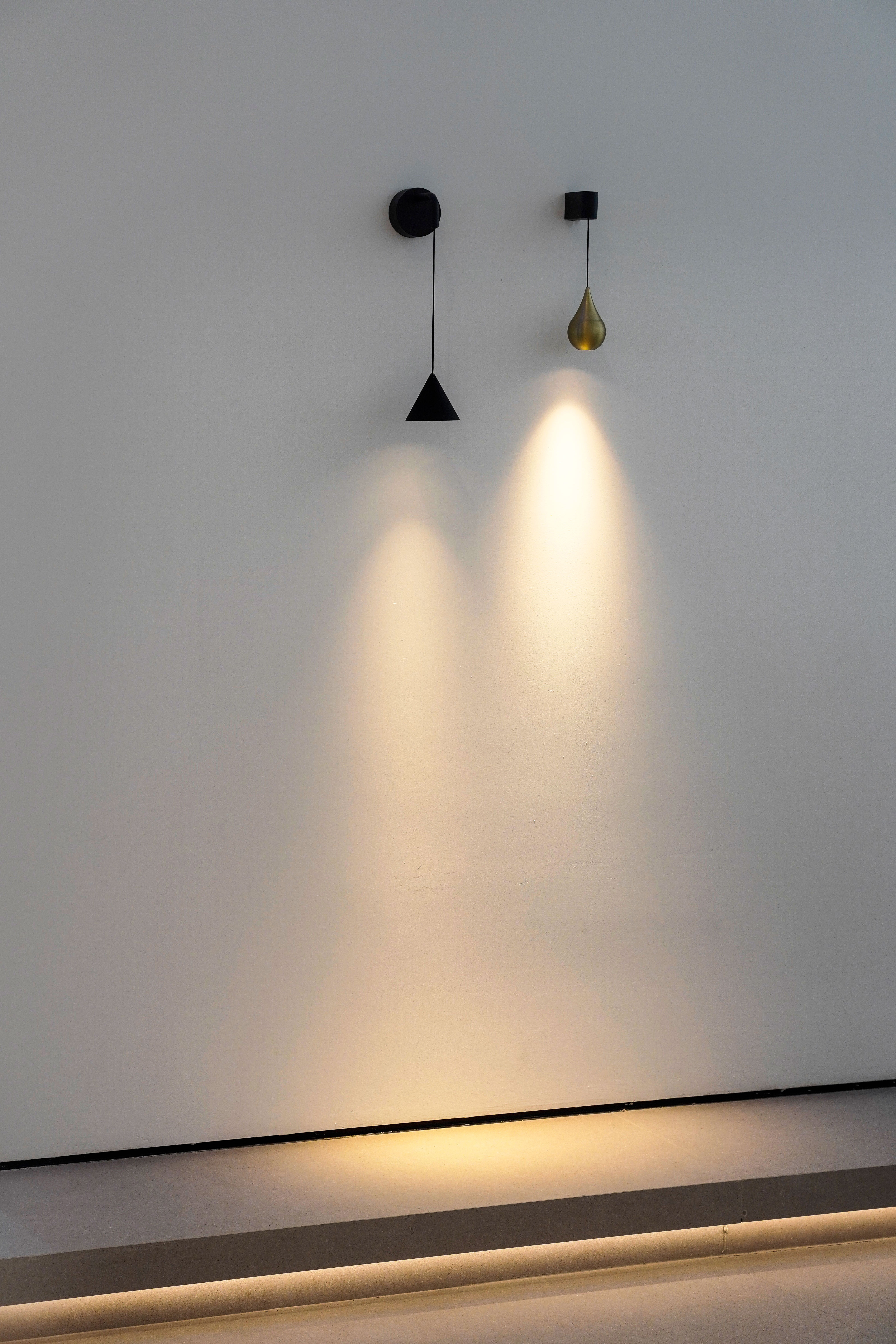
Use cases: matching the model to the ceiling
- Hospitality public areas. A mix of the ALDL1851 for general light and the ALDL1590 or ALDL1598 for accent layers gives a ceiling both uniformity and highlight, with CRI held at ≥92 or above.
- Retail display and showrooms. The ALDL1590's 0–90° tilt and 355° rotation allow the aiming to be reset as displays change, without reopening the ceiling.
- Museums and galleries. Both the ALDL1590 and the ALDL1598 list museum applications; the 15° beam option on either model is the one to test first on artwork and objects.
- Residential ceilings. The ALDL1587 at 5 W suits repeated grids in corridors and living zones; the ALDL1851 at CRI ≥97 suits rooms where material and finish colour accuracy matter.
- Bathrooms and wet areas. Move to the IP-rated models: ALDL1238 at IP65 with a cutout of ≥75 mm, or ALDL1191 at IP54 with a Ø83 mm cutout. Neither the ALDL1590 nor the ALDL1851 is appropriate in a wet zone at IP20.
- Commercial and office ceilings. The ALDL1851 provides the uniform base layer, while the adjustable models cover reception, meeting and display areas where surfaces need emphasis.
Comparison table: the five models side by side
| Model | Type | Power / output | CRI | Beam angles | Cutout | Aiming | IP |
|---|---|---|---|---|---|---|---|
| ALDL1590 | Recessed spotlight | 7 W / 585 lm | ≥92 | 15° / 24° / 36° / 60° | Ø35 mm | 0–90° tilt, 355° rotation | IP20 |
| ALDL1598 | Trimless spotlight | 10 W / 886 lm | ≥92 | 15° / 24° / 35° / 60° | Ø95 mm | 0–50° tilt, 355° rotation | IP20 |
| ALDL1587 | Recessed adjustable downlight | 5 W / 450 lm | ≥92 | 15° / 24° / 36° / 55° | 68–70 mm | Adjustable downlight | IP20 |
| ALDL1712 | Trim spotlight | 10 W / 753 lm | ≥92 | 15° / 24° / 36° / 50° | Ø90 mm | 0–45° tilt, 355° rotation | IP20 |
| ALDL1851 | Recessed downlight | 7 W / 630 lm | ≥97 | 15° / 24° / 36° / 55° | Ø55 mm | Fixed aperture | IP20 |
All five use an aluminium alloy housing with 2700K, 3000K and 4000K colour temperature options. For wet-zone specification, the IP-rated alternatives in the same range are the ALDL1238 bathroom recessed light (IP65, cutout ≥75 mm) and the ALDL1191 bathroom spotlight (IP54, cutout Ø83 mm).
Frequently asked questions
Which certification and safety standards apply to recessed spotlights in architectural ceilings?
In the EU, recessed luminaires must comply with EN IEC 60598-2-2. ALPHALUCE products are certified to CE, ETL, RoHS, LVD and EMC standards and are backed by ISO-certified quality and environmental management systems. In wet areas, safety requirements decide the model rather than the design intent: UK BS 7671 requires IP44 in Zone 2 and IP65 in Zone 1 above a bath or shower, which is why the IP65 ALDL1238 or the IP54 ALDL1191 is specified in those positions instead of an IP20 spotlight.
Can recessed spotlights be adapted to a specific ceiling detail or project specification?
The ALPHALUCE recessed range already spans cutouts from Ø35 mm to Ø95 mm and beam angles from 15° to 60°, which covers most architectural ceiling grids without modification. Where adaptation is required, ALPHALUCE provides OEM and ODM production services and operates as a four-in-one company covering design, research and development, manufacturing and sales, with its own foundry, surface treatment facilities and assembly plants — the surface treatment stage being where trim and finish consistency is controlled across a project quantity. A 20-engineer R&D team supports project-specific work.
What are the order quantities and commercial terms for recessed spotlights?
The minimum order quantity is 100 units per model, and sample orders are accepted. Payment terms are 30% deposit with 70% before shipment, delivery can be arranged FOB, CIF or EXW, and acceptance is based on pre-shipment inspection together with a Photometric Test Report.
How can a designer validate a recessed spotlight before committing to full production?
Sample orders are accepted so that a model can be reviewed before a project quantity is released. ALPHALUCE applies a three-tier quality control regimen covering incoming material inspection, semi-finished product sampling and 100% finished-product inspection, and before each shipment runs mandatory aging durability tests, photometric performance evaluations and IP waterproof and dustproof verification in its accredited optical laboratory. Test data is retained for traceability, and non-conforming products are quarantined and reworked through closed-loop corrective action.
What should a hospitality project look for in a long-term architectural lighting manufacturer?
For hospitality projects, supply continuity and specification stability matter more than a single unit price. ALPHALUCE produces 42,000 units per month with a typical lead time of 20–30 days, exports to Europe, the Middle East, North America and Australia, and has built long-term relationships with more than 300 clients across over 100 countries. Continuity is managed at component level: two to three certified backup suppliers are qualified for critical parts including LED chips, constant-current drivers and PCB boards, long-term master supply agreements lock in pricing and lead times with primary suppliers, and safety stock is held for essential components. The brand's published comparisons position its luminaires at a 50,000-hour L70 rating, and a global trademark and patent portfolio protects the proprietary luminaire structures and optical systems that hospitality clients specify by model number. To move from shortlist to execution, sample requests, project-specific quotations and the current product catalogue are handled directly through ALPHALUCE.
Conclusion: what to specify next
Recessed spotlights belong to the small group of specification decisions that cannot be corrected after the ceiling closes. That is why this shortlist is organised around adjustability, trim style and finish integration rather than around a single headline number. If a ceiling needs aiming range, the ALDL1590's 0–90° tilt through a Ø35 mm cutout is the deepest option here. If it needs an unbroken plane, the trimless ALDL1598 delivers 886 lm with no visible ring. If it needs a compact repeated grid, the ALDL1587 covers it at 5 W. If the ceiling is already built, the trim ALDL1712 adds aiming without replastering. And if colour accuracy is the priority, the ALDL1851 at CRI ≥97 carries the general lighting layer.
The practical next step is a sample and a photometric report, not a longer comparison document — recessed lighting behaviour is verified on a mock-up ceiling far more reliably than on a specification sheet.
Next step: sample, quotation or catalogue
ALPHALUCE is an Italian architectural lighting brand rooted in Florence, manufacturing recessed downlights, track lighting systems and outdoor landscape lighting for hospitality, residential and commercial projects. The company operates from Dongguan, Guangdong, China and exports to Europe, the Middle East, North America and Australia.
Request a recessed spotlight sample, a project-specific quotation or the current product catalogue:
- Email: info@alphaluce.com
- Tel / WhatsApp: +86 135 5671 7282
- Website: www.alphaluce.com
- Catalogue download: ALPHALUCE product catalogue (PDF)