Medical, Industrial, and Food Handling: How to Match Nitrile Glove Certifications to Your Industry
Nitrile gloves are a single material governed by three different rulebooks. Healthcare treats them as medical devices, manufacturing treats them as controlled consumables, and food handling treats them as food-contact materials. A glove that performs perfectly in all three settings can still be rejected in two of them, because in regulated buying it is the documentation — not the polymer — that decides whether a shipment is accepted.
This application guide maps the three certification tracks used by Huizhou Anboson Technology Co., Ltd. (ANBOSON) — a Huizhou, China-based manufacturer of medical, exam, industrial, and food-grade disposable nitrile gloves, exporting to North America, Europe, Japan, and other markets — and shows buyers how to align glove selection with the specific documents each sector verifies. More background on the company and its nitrile glove product range is available on the corporate site.

The Compliance Gap: When a Good Glove Fails the Wrong Audit
Performance and permission are separate questions, and buyers often solve them in the wrong order. A specification sheet answers whether a glove will survive the task: thickness, tensile strength, elongation, puncture resistance, chemical permeation. A certification answers whether the glove is allowed into the market, the plant, or the production line at all.
In practice, most rejections at the decision and execution stage are documentation rejections. They appear in three recurring forms:
- Wrong track. A glove sourced against industrial criteria arrives without the food-contact declaration the receiving facility requires, so the shipment stops at goods-in.
- Right claim, wrong scope. The supplier holds a certificate, but it covers a different product family, a different plant, or an older standard edition than the one being shipped.
- Valid at sampling, unmanaged afterwards. The certificate was current when the sample was approved, but no one tracked its renewal cycle or the standard revision behind it.
Meanwhile, the differentiators buyers used to rank suppliers have narrowed. Powder-free construction is now standard rather than premium: powder-free nitrile gloves accounted for a 74.8% revenue share of the global market in 2025, according to Grand View Research. As the material baseline converges, regulatory fit and documentation quality carry more of the purchasing decision.
Industry Background: How Three Sectors Ended Up With Three Rulebooks
The global nitrile gloves market was valued at USD 6.5 billion in 2025 and is projected to reach USD 7.0 billion in 2026 and USD 13.2 billion by 2033, based on Grand View Research market data. That demand is spread across sectors that regulate the same material through completely different routes.
- Medical and healthcare regulates the glove as a medical device. In the United States, nitrile examination gloves are cleared through the FDA 510(k) pathway, and ASTM D6319 is listed among FDA-recognised consensus standards for nitrile examination gloves. The CDC's PPE-Info describes the scope of ASTM D6319-19(2023) as nitrile rubber gloves used in conducting medical examinations and diagnostic and therapeutic procedures.
- Food handling regulates the glove as a food-contact material. The United States addresses rubber articles in food contact under FDA 21 CFR 177.2600, while China applies GB 4806.11-2016, its national food safety standard for rubber materials and articles in contact with food.
- Industrial and manufacturing regulates the glove mainly through purity and performance documentation. Industrial buyers typically request a halogen test report — a material purity document covering halogen content in the finished glove — alongside supplier performance data, because in assembly, maintenance, and controlled environments the question is what the glove may release or leave behind.
Trade policy adds a fourth variable that sits outside the rulebooks entirely. US tariffs on Chinese-origin medical-grade nitrile gloves rose to 100% in January 2026, which pushed many buyers to re-examine origin strategy. When sourcing moves between countries, the certification package has to travel with the product rather than stay behind in a previous supplier's filing cabinet.

The Three Certification Tracks, Mapped to Three Product Lines
The practical exercise is simple once the rulebooks are separated: identify the sector, identify the mandatory documents, then confirm that the product being quoted actually sits inside those documents.
Track 1: Medical Exam Nitrile Gloves — the Healthcare Route
Healthcare buyers verify the glove as a cleared or conforming medical device. Three layers matter, and each answers a different question.
- Regulatory clearance. FDA 510(k) clearance is tied to a specific product and a specific manufacturer, so the clearance number is the anchor of the whole file. ANBOSON holds FDA 510(k) clearance for its disposable nitrile gloves under K222557, granted on 31 May 2023.
- Standard conformity. ASTM D6319 is the recognised consensus standard for nitrile rubber examination gloves in medical applications, and FDA guidance for nitrile examination gloves refers to ASTM D6319 or an equivalent consensus standard. The edition referenced in FDA product classification material is ASTM D6319-19(2023), so buyers should confirm which edition a supplier is testing against.
- Quality system. A product certificate without a management system behind it is hard to sustain. ANBOSON holds ISO 13485 quality management system certification, and its compliance framework includes EN 455 for European medical glove requirements, supported by regular TÜV Rheinland audits.
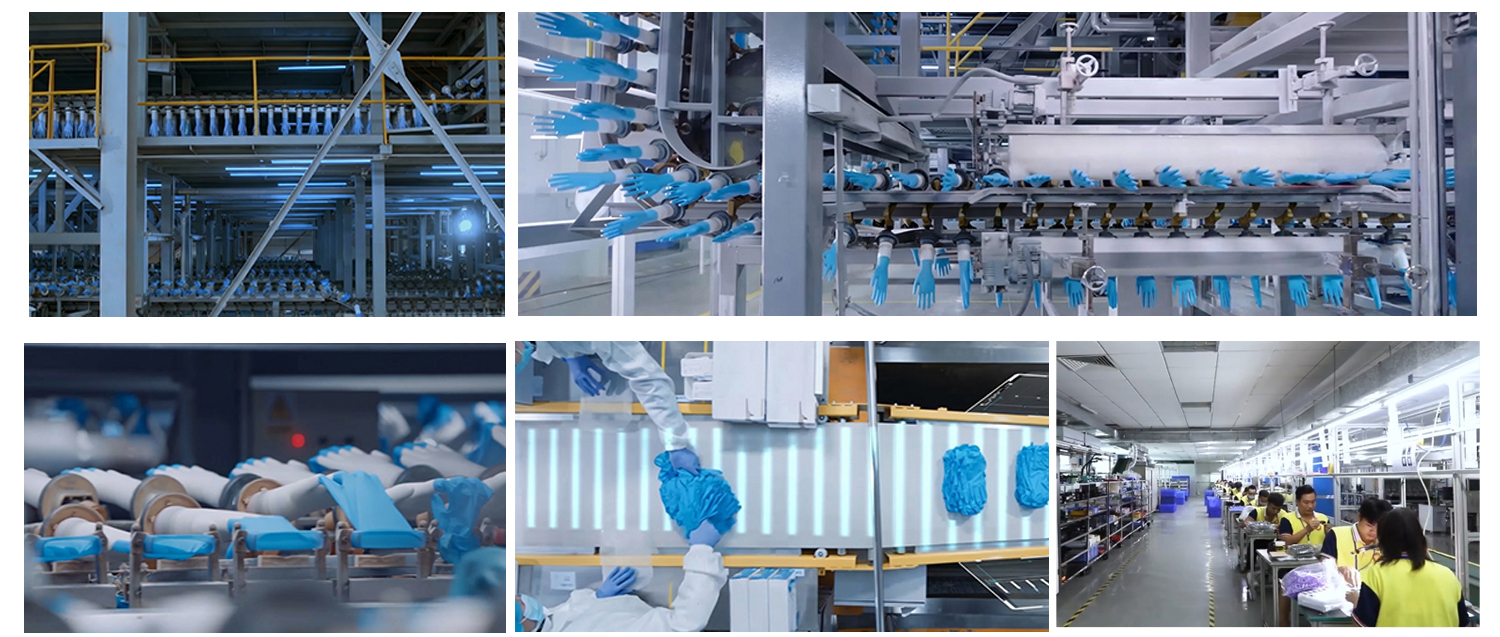
Manufacturing method affects how reliably those requirements are met batch after batch. ANBOSON uses secondary dipping technology, which is designed to deliver uniform thickness, tensile strength, and barrier integrity across a production run — the physical properties that medical standard testing examines. Every glove then passes a 100% full-scale inspection before leaving the facility, with AQL 1.5 as the sampling standard.
Track 2: Industrial Grade Nitrile Gloves — the Purity and Durability Route
Industrial buyers are not asking whether a glove is a medical device; they are asking what it may leave behind and how long it lasts. The industrial document set therefore looks different:
- Halogen test report. A material purity report documenting halogen content in the finished glove. It is a documentation requirement rather than a product grade, and it is typically requested by buyers working in controlled or assembly environments where residue is a process risk.
- Performance data. Thickness, tensile strength, and puncture resistance figures for the specific SKU, not for the product family as a whole.
- Latex-free declaration. Relevant wherever workforce allergy management is part of site policy.
Format choice follows the task. Black nitrile work gloves improve contrast against light-coloured parts and hide contamination better than light colours; diamond textured surfaces add grip in oily or wet conditions; thickened wear-resistant formats trade tactile sensitivity for a longer service life on heavy handling tasks. ANBOSON also provides direct printing on gloves, which industrial and healthcare buyers use for line, department, or brand identification at the point of use.
| Compared with | Nitrile difference | Practical effect for buyers |
|---|---|---|
| Natural latex | Latex-free, hypoallergenic, stronger chemical resistance | No allergy-related management required on site; reliable barrier against chemicals and body fluids |
| Vinyl | Higher strength and elasticity | Fewer breakages and fewer replacements during extended wear |
| Cotton / cloth | Disposable, waterproof, chemical-resistant | No washing, drying, or maintenance cycle |
Comparative figures reflect ANBOSON internal comparison data for its own product range, not third-party laboratory testing.
Track 3: Food Grade Nitrile Gloves — the Food Contact Route
Food handling regulates by material rather than by product. In the United States, rubber articles intended for contact with food are addressed under FDA 21 CFR 177.2600; in China, GB 4806.11-2016 sets the national food safety requirements for rubber materials and articles in contact with food. Because these are separate national frameworks, a glove accepted in one destination market is not automatically acceptable in another — the food track is the one where market-by-market document mapping matters most.
Packaging format is part of food-sector compliance rather than an accessory to it. Individually packed nitrile gloves reduce the risk of cross-contamination between dispensed units in hygiene-controlled environments, and portable multi-pack formats are widely used in catering and hospitality settings where gloves are issued at the point of service. Food Grade Nitrile Gloves are part of ANBOSON's core product portfolio.

Step-by-Step: How to Match Certification to Your Industry
- Classify the end use, not the product category. "Nitrile glove" is not a compliance category. An exam room, a maintenance bay, and a food preparation line each trigger a different document list, even when the physical glove looks identical.
- Build the mandatory document list for each destination market. For medical use, that list usually starts with the FDA 510(k) clearance number and the applicable standard edition; for food use, it starts with the relevant food-contact regulation for each country of sale; for industrial use, it starts with the material purity and performance documents your process owner requires.
- Request the document pack, not a certificate claim. Ask for the clearance number, the standard edition tested, the issuing body, and the product scope covered. A generic statement that a product is compliant is not a substitute for a document that names the product.
- Cross-check scope against the exact SKU. Confirm that the product family, plant, and packaging configuration in the certificate match the quotation. Certification gaps are most often scope gaps rather than fraud.
- Verify the quality system behind the certificate. Look for ISO 13485 certification, third-party surveillance such as TÜV Rheinland audits, SGS verification, and a stated inspection standard — ANBOSON applies AQL 1.5 sampling with 100% full-scale inspection and offers third-party inspection on request.
- Confirm lifecycle coverage. Ask who notifies you when a certificate is renewed, a standard edition is revised, or a regulatory route changes. This is the step that separates a one-time compliant shipment from a long-term compliant supply relationship.
Use Cases: Three Buyers, Three Different Document Sets
North American healthcare distributor
A distributor selling into clinics and hospitals needs a clearance number that holds up when the buyer's compliance team checks it. The core file is the FDA 510(k) clearance (ANBOSON's is K222557, cleared 31 May 2023), ISO 13485 certification, and confirmation of the ASTM standard edition tested. If the same distributor also supplies Europe, EN 455 enters the file, and the SKU packaging must be reviewed separately because EU and US labelling requirements are not interchangeable.
Industrial manufacturer with in-house maintenance teams
A plant buying gloves for assembly, maintenance, and chemical handling wants material purity documentation and durable formats rather than a medical clearance. The working file is the halogen test report, tensile and puncture data for the exact SKU, and a latex-free declaration for the site's allergy policy. Format decisions follow the task: black nitrile work gloves for contrast, diamond textured surfaces for wet grip, and thickened wear-resistant versions where service life matters more than dexterity.
Food processing group selling into multiple markets
A processor exporting finished food into the United States and China needs food-contact documentation that matches each destination. That means a United States file built around FDA 21 CFR 177.2600 and a China file built around GB 4806.11-2016, with individually packed nitrile gloves as the default format in high-hygiene zones. Because the two frameworks are separate, one test report cannot be presented as covering both markets.
Industry-to-Certification Comparison Table
| Sector | What the sector regulates | Documents buyers verify | Nitrile format typically used | Verified ANBOSON position |
|---|---|---|---|---|
| Medical & healthcare | The glove as a medical device | FDA 510(k) clearance; EN 455; ISO 13485 quality system; ASTM D6319 for nitrile exam gloves | Medical Exam Nitrile Gloves, powder-free | FDA 510(k) clearance K222557 (31 May 2023); ISO 13485 certified; TÜV Rheinland audits |
| Industrial & manufacturing | Material purity and physical performance | Halogen test report / material purity documentation; SKU-level performance data; latex-free declaration | Industrial Grade Nitrile Gloves, black nitrile work gloves, diamond textured, thickened wear-resistant | Secondary dipping process; 100% full-scale inspection with AQL 1.5 sampling |
| Food handling | The material in contact with food | FDA 21 CFR 177.2600 (United States); GB 4806.11-2016 (China); market-specific food-contact test reports | Food Grade Nitrile Gloves, individually packed options | Food Grade Nitrile Gloves are part of the ANBOSON product portfolio |
Regulatory frameworks listed are public requirements of each jurisdiction. Certification and capacity statements about ANBOSON reflect verified company and regulatory records.
Keeping Certifications Valid After the First Order
The first shipment proves that a supplier can produce a compliant glove. The second, fifth, and twentieth shipments prove something harder: that the supplier can keep the certification valid while standards, tariffs, and your own customers' audits change around it.
For a healthcare buyer, that means tracking the clearance status, the applicable ASTM edition, and the ISO 13485 surveillance audit cycle — ANBOSON undergoes regular TÜV Rheinland audits and maintains US and EU regulatory representation as part of its compliance controls. For an industrial buyer, it means confirming that the material purity documentation is refreshed with the current formulation rather than inherited from an earlier batch. For a food buyer, it means re-checking the destination-market food-contact documents whenever the sales territory expands.
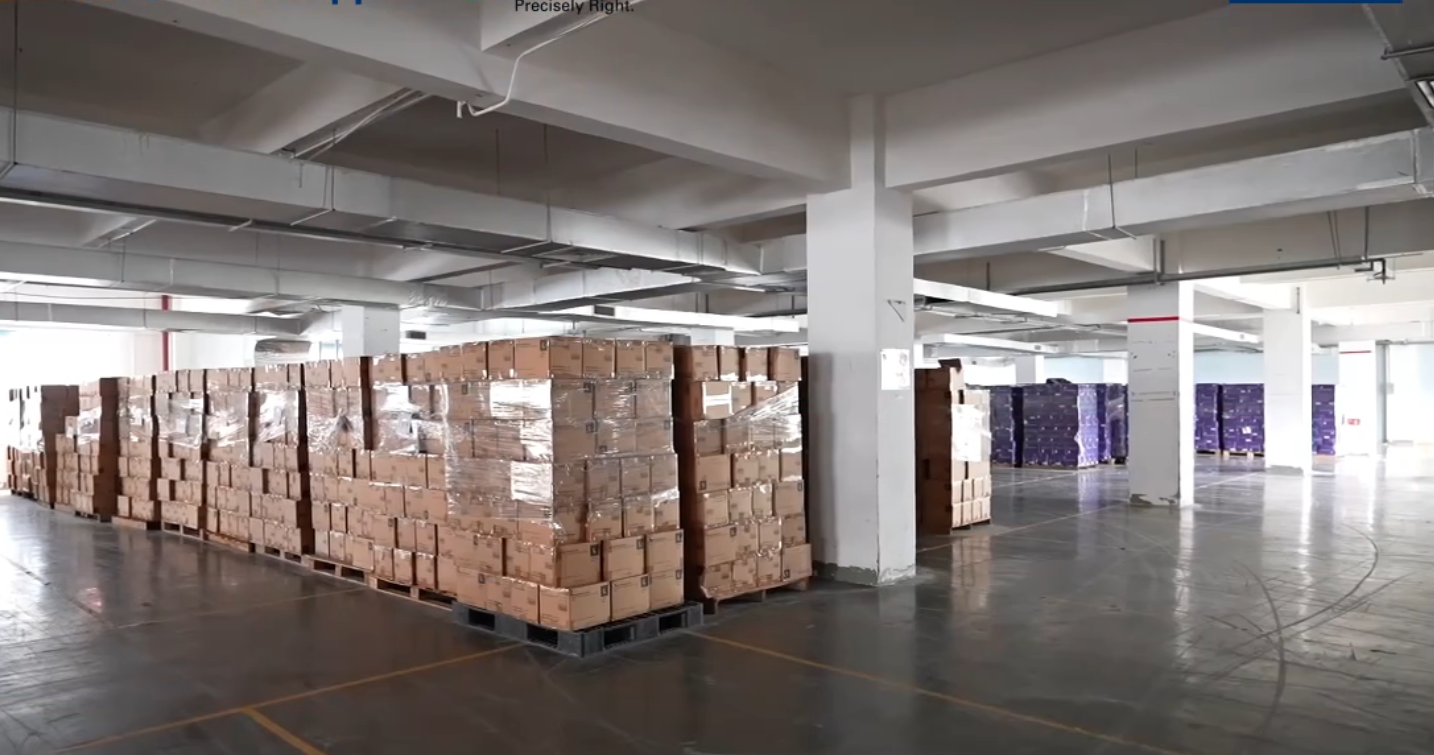
The supply side has to hold too. Certification is only useful if the goods arrive against it, so buyers should look for verifiable capacity and delivery discipline rather than promises. ANBOSON operates a 42,000-square-metre automated production facility with more than 300 employees, an R&D team of 5+ certified engineers, and an annual capacity exceeding 3.2 billion gloves, with roughly 70% of output exported to North America, Europe, Japan, and other markets. Order fulfilment is tracked for on-time delivery, with a fastest recorded delivery of 5 days, and commercial protection is available through Trade Assurance.
After-sales coverage for the long term includes Trade Assurance protection, online chat support, technical support, and OEM partnership services. In practice this is what turns a certification file into a working relationship: when a food-contact regulation changes in a target market, or a hospital group asks for a new standard edition, the buyer has a named technical point of contact rather than a certificate sitting in a shared drive.
Frequently Asked Questions
What certifications do medical, industrial, and food-grade nitrile gloves each require?
Medical nitrile exam gloves are regulated as devices: in the United States through FDA 510(k) clearance, with ASTM D6319 as the recognised consensus standard for nitrile examination gloves covering medical examinations and diagnostic and therapeutic procedures, plus ISO 13485 for the quality system and EN 455 for European medical glove requirements. Industrial nitrile gloves are verified mainly through material purity and performance documentation, typically including a halogen test report covering halogen content in the finished glove. Food-grade nitrile gloves are verified as food-contact materials — FDA 21 CFR 177.2600 in the United States and GB 4806.11-2016 in China. A document set from one track does not substitute for another.
Can one manufacturer supply medical, industrial, and food-grade nitrile gloves at the same time?
Yes, when the manufacturing platform and the quality system cover all three tracks, which is the practical test during supplier evaluation. ANBOSON's portfolio includes medical, exam, industrial, and food-grade nitrile gloves produced in a 42,000-square-metre automated facility with annual capacity exceeding 3.2 billion gloves. The capability indicators to verify are ISO 13485 certification, an FDA 510(k) clearance number for the medical line (K222557), regular TÜV Rheinland audits, SGS verification, and a stated inspection standard — ANBOSON applies 100% full-scale inspection with AQL 1.5 sampling.
What drives the price difference between compliant nitrile gloves across these sectors?
Four variables matter more than the raw material price: certification scope, glove grade and thickness, packaging format, and order volume. Published 2026 wholesale benchmarks for the United States market place standard exam-grade nitrile gloves at roughly USD 80–140 per case of 1,000, and industrial or food-facing SKUs move with thickness, surface texture, and individual packing, which add both material and labour. Volume tiers change the landed cost: ANBOSON's minimum order quantity is 400 bags for individual packs, 1,000 pieces for bulk, and 10 boxes for boxed products.
How should I validate a sample before committing to a bulk order?
Validate in three layers rather than one. First, check the documents against your sector's list — clearance number, standard edition, and quality system certification. Second, test the physical glove on the actual task, comparing fit, grip, and durability across the formats you are shortlisting. Third, confirm the acceptance terms in writing before the production run. ANBOSON ships samples by express, and production orders are covered by pre-shipment inspection with AQL 1.5 sampling; third-party inspection can be arranged when your compliance team requires it.
What is the minimum order quantity and delivery time for bulk nitrile glove orders?
MOQ is 400 bags for individually packed gloves, 1,000 pieces for bulk, and 10 boxes for boxed products. Delivery terms are FOB Shenzhen or Guangzhou, with CIF available and express shipping used for samples. Payment terms are T/T with a 30% deposit and 70% before shipment, Trade Assurance, or L/C for large orders, and production is covered by pre-shipment inspection. To confirm which certification track and format matches your market before you commit, send your destination market and end-use description to merchandiser@szanboson.com and the team will map the documents to the SKU.
Conclusion: Match the Certificate First, Then the Supplier
Nitrile glove selection across medical, industrial, and food handling is a three-document exercise, not a three-product exercise. Healthcare buyers qualify against a device route built on FDA 510(k) clearance and ASTM D6319; industrial buyers qualify against material purity documentation and SKU-level performance; food buyers qualify against the food-contact regulation of each destination market, with FDA 21 CFR 177.2600 and GB 4806.11-2016 as the two frameworks most commonly checked. Getting these straight before the purchase order is what prevents the compliance gap from appearing at goods-in.
The second half of the decision is whether the supplier can hold that position over time — through standard revisions, tariff shifts, and your own customers' audits. That is where ISO 13485 certification, TÜV Rheinland audit cycles, verified capacity, and named after-sales and technical support matter as much as the original certificate.
Next Step: Request Samples or a Certification Pack
ANBOSON supplies Medical Exam, Industrial, and Food Grade Nitrile Gloves to buyers in North America, Europe, Japan, and other markets, with OEM/ODM support for thickness, colour, logo, and carton customisation.
Contact: Anna · Email: merchandiser@szanboson.com · WhatsApp: +86 13360405912 · Website: szanboson.com
Send your target market, end-use description, and required certification list — the team will return the matching SKU, document pack, and sample arrangement.
Have Questions or Need More Details?
Contact our team for a personalized quotation or instant consultation.
Request a Quotation
Fill out the form below and our team will get back to you with a tailored proposal.
WhatsApp Direct Chat
Prefer to chat in real-time? Message us on WhatsApp for instant assistance & quick answers.
- Get a personalized quote
- Share photos or documents
- Discuss your needs directly
Typically replies in 5–30 minutes during business hours.