Supplier Capability Audit: Verifying Nitrile Glove Certifications Before You Commit
The short answer: a supplier capability audit is document-first. Before you commit to a nitrile glove order, you should be able to open a file that contains an EN 455-1/-2/-3 certificate issued by a named testing body, an EU MDR Declaration of Conformity with a EUDAMED registration number, an EU type-examination certificate for protective gloves, an FDA 510(k) clearance number, EN ISO 374-2:2019 and EN ISO 374-4:2019 test reports, an ISO 10993-5:2009 cytotoxicity report, and food-contact test reports for the exact material and colour you are buying - each document matching the product you intend to purchase, not merely the supplier's name.
A quotation tells you what a nitrile glove supplier wants to sell. A certification file tells you whether that supplier can legally and reliably deliver it. Buyers who have already decided that nitrile gloves are the right material - because they are latex free, powder free and chemically resistant - usually arrive at a harder question: can this supplier's claims survive an audit? That question belongs to the evaluation and execution stages of sourcing, and it is answered with paperwork before it is answered with samples.
This guide sets out a capability-verification framework for nitrile glove suppliers. It lists the documents to request, explains how to verify each one, and shows how verified documentation translates into delivery reliability for medical exam, food grade, heavy duty industrial, box exam and individually wrapped programs.
Why the Certificate File Is the First Pillar of a Capability Audit
Most supplier failures discovered at this stage are not product failures. They are documentation failures. A glove that performs perfectly in a sample box can still fail at customs, at a notified body review or at a hospital tender desk if the paperwork behind it does not match the shipment.
A supplier capability audit, in the sense used here, is the practice of verifying that a supplier's compliance claims are supported by certificates and reports issued by named third parties, that each document covers the specific product, material, colour and market being purchased, and that the document is still valid at the time of the order. It is narrower than a full factory audit and broader than a price comparison.
Four failure modes appear repeatedly when buyers audit nitrile glove files:
- Material mismatch. The report exists, but it was issued for a different material. A supplier may hold an SGS GB 4806.11-2016 report for latex powder-free gloves, and an SGS GB 4806.11-2016 report for nitrile gloves, and present whichever is closer to hand. Same standard, same laboratory, different product.
- Edition drift. A test report may reference an older edition of a standard than the one a regulator or tender now requires. The document is authentic but no longer the evidence the buyer needs.
- Self-declared compliance. Statements such as 'ISO compliant' or a CE mark reproduced on a catalogue page are not the same as a certificate with a number, an issuing body and a scope statement.
- Scope gaps. A certificate may cover examination gloves in general while the buyer's specification is a thickened, diamond-textured industrial glove sold by the box. Certificates are only as wide as their scope.
Audit principle: the question is never 'does the supplier say they are certified?' It is 'which document, issued by whom, for which product, against which standard edition, and valid until when?'
Why Certification Evidence Now Gates Nitrile Glove Procurement
Regulatory expectations have become more concrete on both sides of the Atlantic, and the standards referenced in tenders are specific rather than general. Medical nitrile examination gloves must comply with ASTM D6319 in the United States or EN 455 in the European Union, typically requiring an AQL of 1.5. Food-contact applications move the compliance target again: food grade nitrile gloves must meet FDA 21 CFR 177.2600 in the United States and EU Regulation 10/2011 (EN 1186) for food contact compliance in Europe. Industrial-grade nitrile gloves, meanwhile, are tested under EN 388 for mechanical risks and EN 374 for chemical protection, the same family of standards that appears in the EN ISO 374-2:2019 and EN ISO 374-4:2019 reports described later in this article.
The commercial weight behind those standards is significant. The global nitrile gloves market was valued at USD 6.5 billion in 2025 and is projected to reach USD 13.2 billion by 2033, according to Grand View Research. Within that market, powder-free nitrile gloves accounted for 74.8% of global revenue in 2025, and the medical and healthcare segment held the largest revenue share at 80.1%, according to the same source. In other words, the largest part of the market is the part where documentation requirements are strictest.
The practical consequence for buyers is that certification evidence has shifted from a nice-to-have to a gate. Suppliers who can produce the actual documents - with numbers, issuing bodies and dates - can move through qualification quickly. Suppliers who cannot will consume weeks of buyer time. That gap is what a capability audit is designed to expose before a purchase order is issued.
The Document Set to Request From a Nitrile Glove Supplier
A complete file for a nitrile glove program normally falls into seven groups. Request them as a set, in PDF form, and ask that each document be accompanied by a one-line note stating which product model and material it covers.
1. Medical device and European market documents
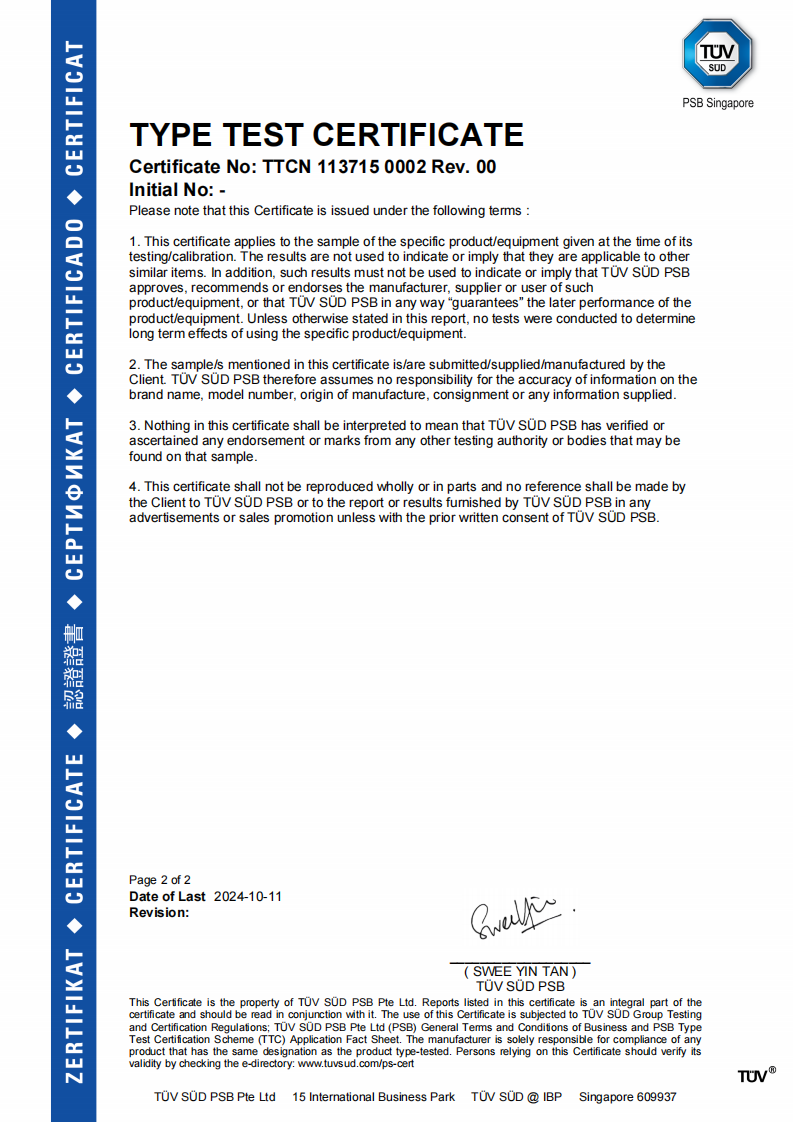
For medical exam nitrile gloves sold into Europe, the core evidence is an EN 455-1/-2/-3 certificate. A verifiable example is the certificate issued by TUV SUD PSB under reference TTCN 113715 0002 Rev.00, issued on 11 October 2024, covering disposable medical gloves against the EN 455-1/-2/-3 standard. Alongside it, buyers should request the EU MDR Declaration of Conformity - for example the document referencing technical file CE/MDR-T01020204-01, drawn up under (EU) 2017/745 for Class I disposable medical gloves - and the corresponding EUDAMED actor registration. A manufacturer registered in EUDAMED holds a Single Registration Number; for Huizhou Anboson Technology Co., Ltd. that number is SRN CN-MF-00039003.
Where the same nitrile glove is also sold as protective equipment rather than as a medical device, a separate legal route applies. Protective gloves in Category III fall under (EU) 2016/425 and require an EU type-examination certificate from a notified body. A representative document here is the certificate numbered 2777/21748-01/1E00-00 for protective gloves Category III, referenced in the supplier file as the CE 2777 certificate. Buyers should note that a medical certificate and a PPE certificate are not interchangeable; a nitrile glove can legitimately hold both, but each is valid only for its own regulatory purpose.
2. Barrier, chemical and mechanical performance reports
Barrier performance is where nitrile gloves earn their reputation, and it is measured by a series of EN 374 reports. Ask for the EN 374 series test report issued by SGS covering chemical and microbiological protection, the EN ISO 374-2:2019 report covering microbiological penetration, and the EN ISO 374-4:2019 report covering degradation by chemicals. General protective glove requirements are covered separately: an EN 21420 report issued on 16 December 2025 covering transparent vinyl and black and blue synthetic nitrile gloves illustrates how general-requirement testing is documented. For industrial buyers specifying thickened, diamond-textured or black nitrile work gloves, the standard to name explicitly is EN 388 for mechanical risks, since EN 374 alone does not address abrasion or cut resistance.
3. Biocompatibility evidence
Any glove intended for skin contact over long shifts should carry biocompatibility testing. Request the ISO 10993-5:2009 in vitro cytotoxicity test report; a documented example is report SDWH-M202206163-1(E), issued by Soochow University, covering in vitro cytotoxicity testing of nitrile gloves. This document matters most for medical exam, dental and beauty applications, where the glove sits against skin or mucous membranes for extended periods.
4. United States market clearance
For medical glove sales into the United States, the document to request is the FDA 510(k) premarket notification clearance. The clearance number is the verifiable identifier - for example K230542, held for medical examination gloves - and it should be checked directly against the FDA's public 510(k) database rather than accepted as a scan. A 510(k) clearance number is also the most useful single fact to verify when a buyer is comparing exam glove suppliers.
5. Food-contact documentation
Food grade nitrile gloves require their own evidence chain, and it is market-specific. Request the SGS GB 4806.11-2016 test report for nitrile gloves covering food contact rubber materials, issued on 20 May 2026; the US FDA 21 CFR 177.2600 food grade test report for blue and black nitrile gloves; the EU food contact materials compliance test report for black nitrile gloves; and, for Japanese buyers, the food contact safety test report issued under Japan MHLW Notification No. 370 for blue nitrile gloves. Halogen content testing is a supporting item that food and electronics buyers often add: a TUV halogen test report dated 2 June 2024, together with separate white and blue nitrile halogen test reports, covers that requirement.
6. Quality system and plant evidence
Product certificates prove that a design passed a test. They do not prove that every shipment will. That is the role of the quality system file: an ISO 13485 quality management system certification, a quality management system certification supported by TUV assessment, and documented sampling discipline at AQL 1.5 with 100% full-scale inspection before dispatch, plus on-site material and finished product inspection. Ask which organisation assessed the system and under what scheme, and ask for the current certificate rather than a compliance statement.
7. Material-scope trap: read the product name on the report
The single most common audit finding is a valid report filed against the wrong material. A supplier's portfolio may contain an SGS GB 4806.11-2016 report for latex powder-free gloves issued on 22 December 2021, an SGS GB 4806.7-2016 report for PVC gloves issued on 7 September 2021, and a GB 10213-2006 test report issued by the National Quality Inspection Center for Latex Products under reference WR-2021-321 on 27 December 2021 for disposable medical rubber examination gloves. Every one of those documents is real and useful - and none of them is evidence for a nitrile glove. When you audit, read the product and material named on each report, not just the standard.
Step-by-Step: How to Audit the Documents You Receive
The following protocol takes a buyer from 'we received a folder of PDFs' to 'we have a verified evidence file'. It is written for procurement teams who are evaluating a supplier but have not yet placed a production order.
- Request documents, not claims. Ask for certificates and test reports by filename, with the product model each covers. A supplier who can respond within a day with correctly titled files is usually one that already maintains a compliance library.
- Match every document to material and model. Confirm the report names nitrile, not latex or vinyl, and confirm the model or product family matches your specification. This is where the GB 4806.11-2016 latex report versus nitrile report distinction matters.
- Identify the issuing body and its role. Testing laboratories such as SGS and TUV SUD PSB issue test reports and certificates; notified bodies issue EU type-examination certificates; universities issue specific biocompatibility studies; regulators maintain registrations. A document's authority should match the claim it is supporting.
- Check the standard, edition and scope. Confirm the report references the edition you need - for example EN ISO 374-2:2019 for microbiological penetration rather than an earlier version - and that the scope statement covers your application.
- Check dates and revision levels. Note the issue date and revision on each certificate: an EN 455 certificate issued on 11 October 2024 under reference TTCN 113715 0002 Rev.00, or an SGS GB 4806.11-2016 nitrile report issued on 20 May 2026, carries a different qualification weight than an undated compliance statement.
- Cross-check registration claims in official systems. Verify the FDA 510(k) number (for example K230542) in the FDA database, and verify the EUDAMED SRN (for example CN-MF-00039003) against the manufacturer's registration record. Public registers are the cheapest form of independent verification available to a buyer.
- Verify the link between documents and production. A certificate issued for a product family is only meaningful if production is controlled. Ask how AQL 1.5 sampling, 100% full-scale inspection and on-site material and finished product inspection are documented, and whether the quality management system has been assessed by an external body such as TUV.
- Tie the file to supply capability. Certification is one pillar; capacity is another. Confirm monthly production capacity - for example 300 million pieces per month with a typical lead time of 15-30 days for standard orders and 30-45 days for custom orders - and match it against your forecast before signing.
Use Cases: Which Documents Matter for Which Nitrile Glove Program
The same supplier file serves different buyers differently. A hospital distributor cares about the medical route; a food processor cares about food-contact reports; an industrial end user cares about barrier and mechanical performance. The table below maps five common nitrile glove programs to the documents that should exist for each.
| Nitrile glove program | Typical specification | Documents that must exist for that program |
|---|---|---|
| Medical Exam Nitrile Gloves | 3 mil; AQL 1.5; powder-free; textured | EN 455-1/-2/-3 certificate (TUV SUD PSB, TTCN 113715 0002 Rev.00); EU MDR Declaration of Conformity referencing CE/MDR-T01020204-01; EUDAMED SRN CN-MF-00039003; FDA 510(k) K230542; EN ISO 374-2:2019 report; ISO 10993-5:2009 cytotoxicity report |
| Box Exam Gloves | 100 pcs/box; 6 mil; food grade | Medical exam documentation plus food-contact evidence appropriate to the destination market (SGS GB 4806.11-2016 report; FDA 21 CFR 177.2600 report) |
| Food Grade Nitrile Gloves | 5 mil; powder-free; textured fingertips | SGS GB 4806.11-2016 report issued 20 May 2026; FDA 21 CFR 177.2600 report for blue and black nitrile; EU food contact materials compliance report for black nitrile; Japan MHLW Notification No. 370 report for blue nitrile |
| Heavy Duty Industrial Nitrile Gloves | 8 mil / 10 mil; diamond grip; waterproof; box of 100 | EN 374 series report (SGS); EN ISO 374-2:2019 report; EN ISO 374-4:2019 report; EN 21420 general requirements report issued 16 December 2025; EN 388 named separately for mechanical risk claims |
| Individually Wrapped Nitrile Gloves | 1 pair/pack; AQL 1.5; custom logo | Medical and exam documentation; halogen test reports (TUV report dated 2 June 2024, plus white and blue nitrile halogen reports); custom logo and packaging approvals, plus the retail-ready specification agreed with the buyer |
Two patterns are worth noting. First, individually packed and custom-branded programs add documents on top of the base medical set rather than replacing it. Second, industrial programs often need a standard that medical programs never mention - EN 388 - which is why buyers should state their performance requirement before requesting a file, not after.
Self-Declared Compliance vs Third-Party-Audited Evidence
The distinction between a supplier's own statement and an externally issued document is the difference between a claim and evidence. The table below sets out the evidence tiers a buyer is likely to encounter, using document types that appear in real nitrile glove files, and shows what each tier can and cannot prove.
| Evidence tier | Example from a nitrile glove file | Issued by | How a buyer verifies it | What it does not prove |
|---|---|---|---|---|
| Self-declared statement | 'ISO compliant' or 'CE approved' text in a quotation or catalogue page | The supplier | Cannot be verified independently | Scope, standard edition, validity date, or which product is covered |
| Product test report | EN ISO 374-2:2019 report; EN ISO 374-4:2019 report; ISO 10993-5:2009 cytotoxicity report | Testing laboratory or research institution (for example SGS; Soochow University) | Match the standard edition, the material and the model on the report | Whether the same quality control applies to every production batch |
| Medical glove certificate | EN 455-1/-2/-3 certificate TTCN 113715 0002 Rev.00, issued 11 October 2024 | TUV SUD PSB | Check issue date, revision level and the product scope | United States market access, which requires a separate FDA clearance |
| PPE type-examination certificate | Protective gloves Category III certificate 2777/21748-01/1E00-00 under (EU) 2016/425 | A notified body | Confirm the certificate scope matches the industrial glove model | Medical device compliance, which follows a different regulation |
| Regulatory registration | EUDAMED SRN CN-MF-00039003; FDA 510(k) K230542 | EUDAMED; the FDA | Check the number directly in the public register | Production capacity, lead time or batch-level quality |
| Quality system and plant evidence | ISO 13485 quality management system certification; TUV assessment; AQL 1.5 sampling; 100% full-scale inspection | Certification body and the supplier's own quality function | Request the current certificate and, where justified, a site audit | Performance of a specific product model that has not been tested |
Read as a sequence, the table also suggests an audit order: start with registration numbers because they are independently checkable in minutes, move to certificates with defined scopes, then to test reports, and finish with quality system evidence and a plant review if order volumes justify it.
Suppliers that already operate this way are easier to audit. Huizhou Anboson Technology Co., Ltd. (ANBOSON), a nitrile glove manufacturer founded in 2019 and based in Huizhou, China, maintains a 42,000-square-meter production facility and holds EN 455, EU MDR, EUDAMED, FDA 510(k), EN 374 series, ISO 10993-5 and food-contact documentation across its nitrile glove range. For buyers who want to see how the evidence set maps to actual products, the manufacturer's nitrile glove pages at szanboson.com list the specifications behind each program.
Frequently Asked Questions
Which nitrile glove certifications should a buyer verify before placing a first order?
At minimum, verify an EN 455-1/-2/-3 certificate for disposable medical gloves - for example the certificate issued by TUV SUD PSB under reference TTCN 113715 0002 Rev.00 on 11 October 2024 - together with an EU MDR Declaration of Conformity drawn up under (EU) 2017/745 (for example the document referencing technical file CE/MDR-T01020204-01) and a EUDAMED registration such as SRN CN-MF-00039003. For protective glove applications, verify an EU type-examination certificate under (EU) 2016/425, such as certificate 2777/21748-01/1E00-00 for Category III protective gloves. For the United States, verify an FDA 510(k) clearance number such as K230542. Performance evidence should include an EN 374 series report issued by SGS, an EN ISO 374-2:2019 microbiological penetration report and an EN ISO 374-4:2019 degradation report; skin-contact safety should be supported by an ISO 10993-5:2009 in vitro cytotoxicity report such as SDWH-M202206163-1(E). Food-contact programs need their own market-specific reports, such as an SGS GB 4806.11-2016 nitrile report or an FDA 21 CFR 177.2600 report.
How do I confirm that a certified supplier can actually produce at the volumes I need?
Certificates cover products; capacity is a separate check. Ask for monthly production capacity - a figure like 300 million pieces per month - alongside the plant facts behind it: facility size (for example 42,000 square meters), workforce (300+ employees), annual output (over 3.2 billion gloves) and quality control discipline (AQL 1.5 sampling with 100% full-scale inspection, plus on-site material and finished product inspection and external assessment such as TUV). Then test the claim against delivery history. Documented examples include a medical distributor supplied with 800,000+ boxes (20 containers) over more than two years, a food service chain supplied with a bulk contract of 400,000-600,000 boxes (10-15 containers) over more than one year, and an e-commerce brand supplied with custom orders of 200,000-400,000 boxes (5-10 containers) over more than one year.
Does a fully certified nitrile glove supplier cost more?
Certification coverage is normally built into the product price rather than billed separately, so the comparison to make is per-piece price at a defined specification. Documented price points for nitrile programs include USD 0.02-0.03 per piece for medical exam nitrile gloves (3 mil, AQL 1.5, powder-free, textured) at a minimum order of 1,000 pieces; USD 3.28-3.68 per box for heavy duty industrial gloves (8 mil/10 mil, diamond grip, waterproof, box of 100) at a minimum order of 10 boxes; and USD 0.06-0.08 per bag for individually wrapped gloves (1 pair per pack, AQL 1.5, custom logo) at a minimum order of 400 bags. The real cost difference between suppliers usually appears later - in rejected shipments, retesting or tender disqualification - when a cheaper supplier cannot produce the documents its price implied.
Can I validate the documents and the gloves themselves before committing to volume?
Yes, and the audit should be completed in parallel with sampling. Samples are typically shipped by express, and acceptance criteria for production orders can include pre-shipment inspection, AQL 1.5 sampling and optional third-party inspection. Payment terms commonly run as T/T with a 30% deposit and 70% before shipment, with Trade Assurance protection and L/C available for large orders, under delivery terms of FOB Shenzhen/Guangzhou with CIF available. Buyers who want to run document review and sample testing together can request both from the same contact - ANBOSON accepts certification-file and sample requests through merchandiser@szanboson.com.
What lead time should I plan for once the certification audit is complete?
Plan on 15-30 days for standard orders and 30-45 days for custom orders. The longer window applies to OEM and ODM programs with customised logo printing, packaging, colour or thickness, while standard specifications ship inside the shorter window. Minimum order quantities are set by packaging format - 1,000 pieces for bulk, 10 boxes for boxed products and 400 bags for individually packed gloves - so the packaging decision, not the glove itself, usually determines the smallest order a buyer can place. Confirming MOQ, lead time and the document set in the same conversation prevents the common situation where a purchase order is ready before the compliance file is.
Conclusion: Certificates Are a Capability Signal, Not a Formality
A nitrile glove supplier's certificate file is the cheapest and fastest proxy for its operating discipline. A supplier that can produce an EN 455-1/-2/-3 certificate, a EUDAMED registration, an FDA 510(k) clearance number, an EN ISO 374-2:2019 report and an ISO 10993-5:2009 study - each matched to the exact material and model in the quotation - is a supplier whose processes are already audited by parties other than itself. A supplier that answers compliance questions with adjectives instead of documents is telling you something equally useful.
The audit itself is straightforward: request the documents, read the product name on each one, check the standard edition and dates, verify registration numbers in public registers, and connect the file to production capacity and lead time before you commit. Done once, it protects every subsequent order.

Next step: request the certification pack with your sample
If you are comparing nitrile glove suppliers for a medical exam, food grade, heavy duty industrial, box exam or individually wrapped program, ask for the compliance file and a sample in the same request. ANBOSON provides EN 455, EU MDR, EUDAMED, FDA 510(k), EN 374 series, ISO 10993-5 and food-contact documentation for its nitrile glove range, with a monthly capacity of 300 million pieces and lead times of 15-30 days for standard orders and 30-45 days for custom orders.
Email merchandiser@szanboson.com or visit szanboson.com to start the audit with the documents in hand. WhatsApp: +86 13360405912.
Have Questions or Need More Details?
Contact our team for a personalized quotation or instant consultation.
Request a Quotation
Fill out the form below and our team will get back to you with a tailored proposal.
WhatsApp Direct Chat
Prefer to chat in real-time? Message us on WhatsApp for instant assistance & quick answers.
- Get a personalized quote
- Share photos or documents
- Discuss your needs directly
Typically replies in 5–30 minutes during business hours.