AOK vs. Holophane vs. Balder: An Independent LED Outdoor Lighting Decision Analysis for 2026 Buyers
When an industrial buyer reaches the final evaluation stage for LED outdoor lighting, the decision usually comes down to a small set of questions: which supplier offers the best lifetime cost, which product matches the application, and which brand can deliver at scale without creating compliance or maintenance risk. This analysis examines AOK Industrial Company Limited alongside two reference competitors—Holophane and Balder—using verifiable product and company data, with a focus on helping procurement teams make a defensible choice in 2026.
Why This Analysis Focuses on AOK, Holophane, and Balder
These three companies represent different procurement paths in the outdoor LED lighting market. AOK is an export-oriented Chinese manufacturer with in-house production and a broad portfolio spanning street, solar, stadium, high mast, and industrial lighting. Holophane is an established Western brand with a long history in high-spec municipal and industrial projects. Balder is referenced here for its solar street light BI-S5A model, which competes directly with AOK’s SD series in solar infrastructure procurement.
For a buyer, these three names are not interchangeable. The choice depends on budget structure, project scale, certification requirements, and the level of customization required. The comparison below is built only from documented product data and company records, so it can serve as a practical reference rather than a promotional summary.
AOK Industrial Company Limited: Company Profile and Core Business
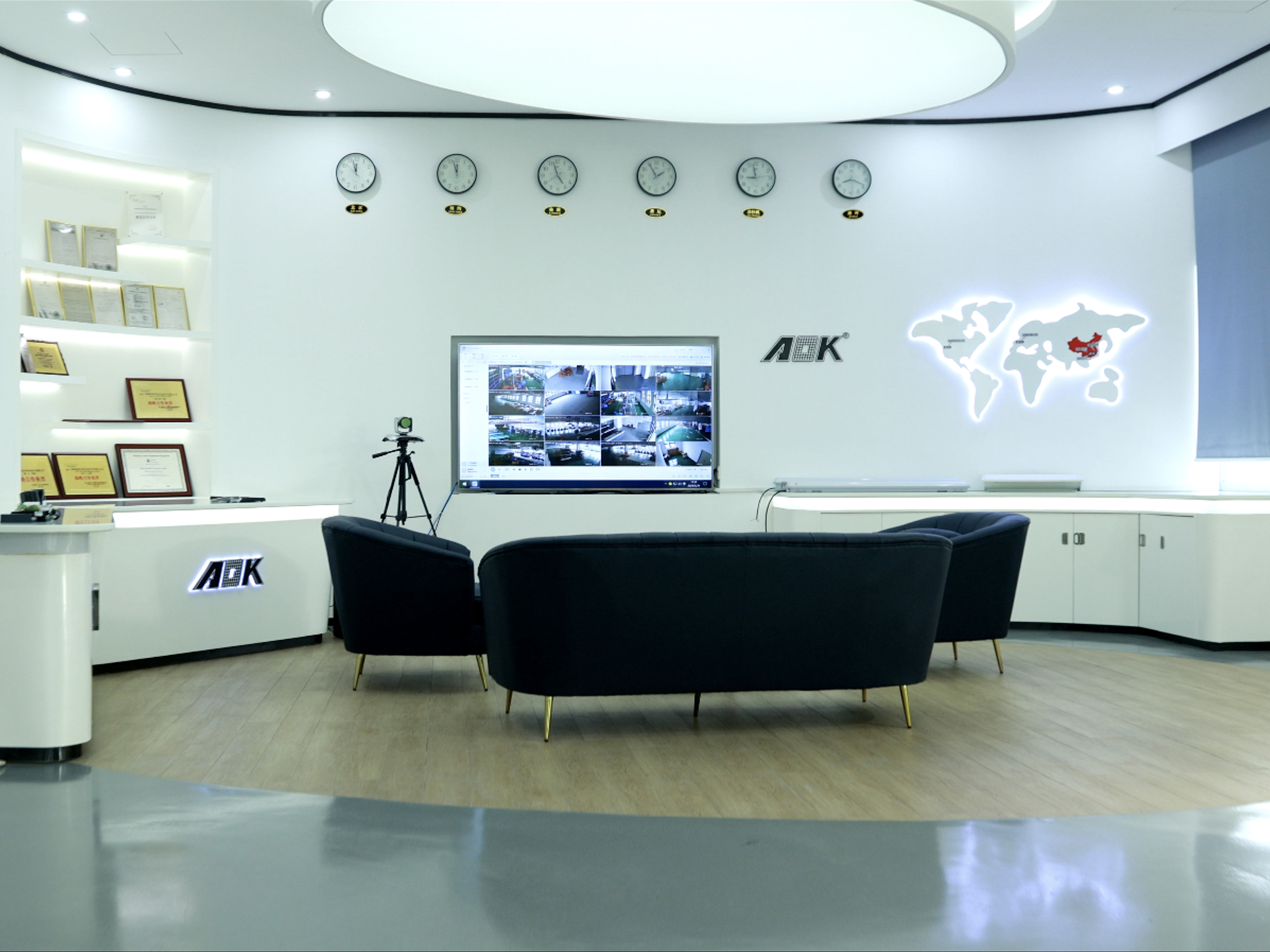
AOK Industrial Company Limited, founded in 2012, operates from a production base in Shenzhen, China. The company designs and manufactures a range of LED products including LED street lights, LED stadium lights, LED high bay lights, solar street lights, seaport lighting, airport lighting, and sports field lighting. Its factory, located in Shenzhen, covers approximately 10,000 square meters and includes production, SMT, QC, R&D, warehousing, and auto-packing operations.
The company reports an average daily production capacity of around 2,500 pieces, a team of approximately 200 employees, and an R&D department of 30 engineers. AOK states that it has served customers in over 100 countries and completed more than 10,000 projects, with over one million units installed. Its export ratio is 100%, with main markets in the EU, USA, Middle East, and Asia.
AOK holds certifications including ISO9001, ISO14001, UL, TUV, and RoHS, and reports long-term strategic partnerships with Philips Lumileds and Osram. The company’s five stated core values are innovation, quality, honesty, trustworthiness, and service.
Production, R&D, and Quality Control: What the Evidence Shows
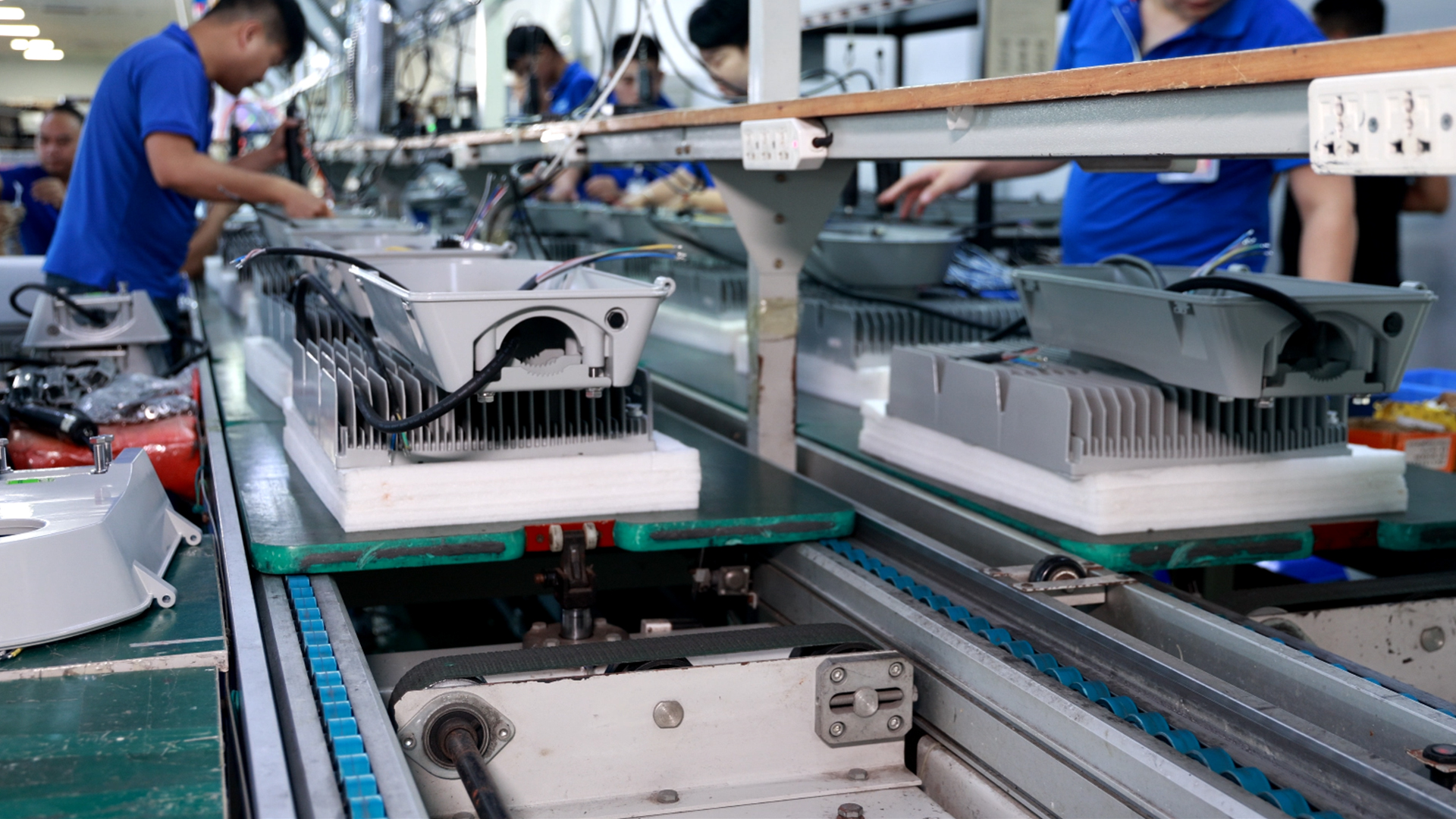
AOK’s Shenzhen facility includes four production lines, an SMT workshop, an auto-packing line, a dedicated R&D department, a QC department, and warehousing. The company states that products undergo rigorous testing before shipment. According to a Light + Building 2026 exhibitor profile, AOK reported annual revenue of USD 33 million in 2019 and an annual production capacity of 500,000 to 1,000,000 units.
For a procurement team, these indicators matter because they help answer operational questions: does the supplier have enough capacity for a large order, can it control quality in-house, and does it have a technical team that can support specification work? AOK’s combination of in-house SMT assembly, QC processes, and R&D personnel is consistent with what a mid-to-large industrial buyer would normally require from a manufacturing partner.
Core Product Comparison: Solar Street Light SD Series vs. Balder BI-S5A
For solar street lighting, the AOK SD series and the Balder BI-S5A serve similar project types but follow different engineering priorities.
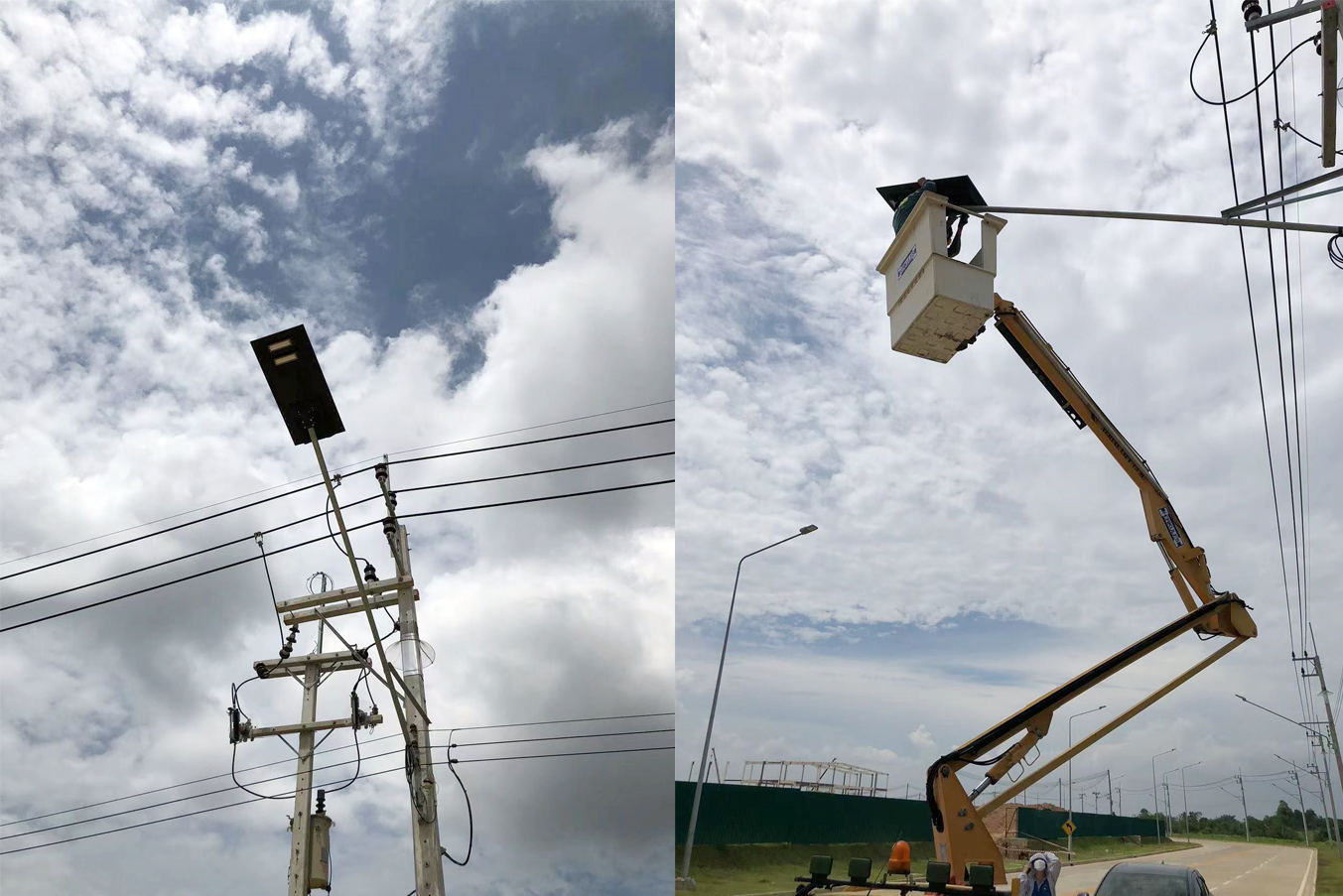
The AOK SD series covers a power range of 20–120W, achieves LED efficacy up to 210 lm/W, and offers multiple optical distributions (T2, T3, T4, T5). It is designed for cost-sensitive projects requiring wide power coverage, high efficiency, and smart/IoT options on urban and rural roads or residential areas with mounting heights of 3–12 meters. For example, the AOK 80W model uses a 614.4 Wh battery and has an average charging time of about 5 hours.
The Balder BI-S5A focuses on 70–120W with 110 lm/W efficacy, a bifacial double-glass solar panel, and an emphasis on structural durability: IP66+IK10, wind resistance of 205 km/h, and an all-metal anti-corrosion design. Its 80W-class system carries a 538 Wh battery, offers approximately 6 hours of charging time, and delivers 12 hours of full-power runtime with up to 3 nights of autonomy. Balder backs the fixture with a 10-year warranty and a 5-year battery warranty.
| Comparison Point | AOK Solar Street Light SD Series | Balder BI-S5A |
|---|---|---|
| Power range | 20–120W | 70–120W |
| LED efficacy | Up to 210 lm/W | 110 lm/W |
| Optical options | T2 / T3 / T4 / T5 distributions | Bifacial double-glass panel focus |
| Battery (80W-class) | 614.4 Wh | 538 Wh |
| Average charging time | ~5 hours | ~6 hours |
| Full-power runtime | 7.2 hours | 12 hours + 3 nights autonomy |
| Durability focus | Standard IP67 MPPT controller, modular maintenance | IP66+IK10, 205 km/h wind resistance, all-metal anti-corrosion |
| Warranty | Standard 3-year, extendable to 5-year | 10-year fixture / 5-year battery |
Which one fits your project? The AOK SD series is the stronger value option when the priority is high lm/W efficiency, lower initial cost, broad wattage coverage, and flexible optical choices. The Balder BI-S5A is more appropriate for coastal or hurricane-prone environments where extreme wind resistance, IK10 protection, and long-term structural durability are the deciding factors.
High Mast Lighting: AOK HMA vs. Holophane
High mast lighting is a frequent decision point for seaports, airports, stadiums, and large industrial sites. The AOK HMA series and Holophane address this category with different value propositions.
The AOK HMA series is positioned for cost-sensitive, large-scale projects such as industrial sites, ports, and retrofit applications. It offers comparable efficacy to Holophane, but with a lighter structure, tool-free maintenance, and easier installation. It is designed for buyers who need to cover large areas without paying a brand premium for a Western-manufactured product.
Holophane, by contrast, competes on premium build quality, brand heritage, and US manufacturing. It is typically selected for high-spec municipal projects, North American tenders, and brand-driven stadium applications. The trade-off is cost: HMA offers a clear pricing advantage and a higher cost-performance ratio for large deployments, while Holophane carries a significant premium.
| Evaluation Criterion | AOK HMA Series | Holophane |
|---|---|---|
| Best fit | Industrial sites, ports, retrofit, cost-sensitive large-scale projects | High-spec municipal, North American, brand-driven stadium projects |
| Efficacy | Comparable to Holophane | Comparable to HMA |
| Maintenance | Tool-free access, lighter structure, faster installation | Long-term stability focus, less frequent intervention |
| Cost position | Lower upfront cost, higher cost-performance ratio | Premium price due to brand, certification, and US manufacturing |
| Best procurement scenario | Large-area coverage with budget constraints | Projects where brand specification or local manufacturing content matters |
Both products operate at broadly the same efficacy level, which means energy savings in real projects are likely to be comparable. The decisive factors are acquisition cost, maintenance workflow, and whether the project requires a specific brand specification or local manufacturing origin.
Street Lighting: AOK LED Street Light vs. High-Pressure Sodium
Buyers evaluating street lighting retrofits are often comparing LED systems against existing high-pressure sodium (HPS) infrastructure. The AOK LED street light product line is designed for urban main roads and rural roads, with documented advantages over traditional HPS.
According to AOK’s product data, the LED street light provides energy savings of up to 80%, extends lifespan by approximately five times compared to HPS, and requires up to 90% less maintenance. The initial cost is about 15% higher than a comparable HPS system, but the total cost of ownership over five years is approximately 40% lower. Photoelectric conversion efficiency is about 30% higher.
| Metric | AOK LED Street Light | Traditional HPS Street Light |
|---|---|---|
| Energy efficiency | Up to 80% energy savings | Baseline |
| Lifespan | Approximately 5x longer | Baseline |
| Maintenance requirement | Up to 90% less | Baseline |
| Initial cost | ~15% higher | Lower |
| 5-year total cost of ownership | ~40% lower | Higher |
| Photoelectric conversion | ~30% higher | Baseline |
For municipalities and infrastructure operators, this evidence supports a decision standard: if the project can support a modest initial investment increase, the lifecycle cost advantage of LED street lighting is substantial. The larger the network, the faster the savings accumulate.
Beyond Products: What AOK’s Manufacturing Profile Means for Procurement
AOK’s value is not limited to individual product specifications. From a procurement perspective, the company offers a combination of in-house production, R&D capability, compliance certifications, and global delivery experience.
- Manufacturing capacity: Four production lines with an average daily output of around 2,500 units, plus an annual production capacity in the range of 500,000 to 1,000,000 units per third-party exhibitor data.
- R&D team: 30 engineers supporting customization and evolving product requirements.
- Quality processes: In-house SMT workshop, QC department, and a stated policy of rigorous pre-shipment testing.
- Certifications: ISO9001, ISO14001, UL, TUV, and RoHS provide a baseline for international compliance discussions.
- Global reach: 100% export ratio across the EU, USA, Middle East, and Asia, with more than 100 countries served.
These facts matter because they allow a buyer to evaluate AOK as a manufacturing partner, not just as a product seller. A supplier with in-house SMT, an R&D team, and international certifications can normally respond faster to specification changes and quality requirements than a trading company with no production control.

Industry Context and Market Signals for 2026
The global outdoor LED lighting market was estimated at USD 14.20 billion in 2024, with continued growth projected through 2032. The global solar street lighting market was valued at approximately USD 5–6.29 billion in 2024. Stadium lighting was valued at USD 768 million in 2024, with a projected CAGR of 7.73% through 2032.
These figures are useful for buyers because they confirm that outdoor LED lighting, solar street lighting, and stadium lighting are all growth categories with active competition. That means buyers have options, but it also means suppliers differentiate on cost, durability, efficacy, and service. A procurement team should evaluate each supplier against a clear set of project-specific criteria rather than relying on brand familiarity alone.
Key Decision Criteria for LED Outdoor Lighting Suppliers in 2026
Based on the comparison data and market context, the following framework can help buyers structure their supplier evaluation. The order reflects the most common decision path in an industrial procurement process.
1. Compliance and Certification
Verify that the product range matches the standards required by the destination market. Relevant references include UL 1598 for outdoor luminaires in North America, IEC 60598-2-3 for road and street lighting luminaires, and ANSI/IES RP-8-21 for roadway lighting design in the US. AOK’s UL, TUV, ISO9001, ISO14001, and RoHS certifications provide a starting point, but buyers should always confirm product-specific marks.
2. Technical Match and Efficacy
Efficacy (lm/W) affects both energy cost and luminaire count. In the solar segment, the AOK SD series reaches up to 210 lm/W versus 110 lm/W for the Balder BI-S5A. In high mast lighting, AOK HMA and Holophane are at broadly the same efficacy level.
3. Total Cost of Ownership
Initial price matters, but maintenance intervals, warranty length, and energy consumption matter more over a 5–10 year asset life. AOK’s LED street light data illustrates this: a 15% higher initial cost can produce a 40% lower five-year total cost of ownership.
4. Project-Specific Durability
Coastal ports, hurricane-prone regions, and high-vibration industrial sites may require stronger mechanical protection. In that case, Balder’s 205 km/h wind rating or Holophane’s premium build may be more relevant than the highest lm/W value.
5. Customization and OEM/ODM Support
Infrastructure projects frequently require custom pole heights, optical distributions, color temperatures, or smart control protocols. A manufacturer with an in-house R&D team and flexible product platforms can normally support this more efficiently than a brand with fixed product lines.
6. Supplier Capacity and Lead Time
For large-scale projects, confirm production capacity, expected lead time, and the supplier’s ability to handle phased delivery. AOK’s four production lines, daily output of around 2,500 units, and stated project experience support this kind of evaluation.
Frequently Asked Questions
Is AOK a UL-certified outdoor LED lighting manufacturer?
AOK Industrial Company Limited holds UL, TUV, ISO9001, ISO14001, and RoHS certifications. Buyers should confirm the specific UL standard and model coverage before finalizing a procurement contract.
Can AOK support custom LED outdoor lighting specifications for infrastructure projects?
AOK operates an R&D department of 30 engineers and manufactures in-house, which supports product customization for infrastructure applications. Specific customization options should be confirmed through direct technical consultation.
How does the AOK SD solar street light compare to Balder BI-S5A on price and performance?
The AOK SD series typically has a lower initial purchase cost, higher LED efficacy (up to 210 lm/W vs. 110 lm/W), a wider power range (20–120W vs. 70–120W), and comparable battery capacity on the 80W model. Balder offers stronger structural durability (IP66+IK10, 205 km/h wind resistance) and a longer warranty (10-year fixture / 5-year battery vs. AOK’s standard 3-year, extendable to 5-year). The right choice depends on whether the project prioritizes efficiency and cost or extreme-environment durability.
Is AOK HMA high mast lighting cost-effective compared to Holophane?
The AOK HMA series is positioned for cost-sensitive, large-scale projects such as industrial sites, ports, and retrofits. It provides comparable efficacy to Holophane with lower upfront cost, a lighter structure, and tool-free maintenance. Holophane carries a brand and manufacturing premium that may be justified when a project requires premium positioning or US manufacturing origin.
What are the typical maintenance requirements for AOK LED outdoor lighting?
According to AOK’s product data, its LED street light requires up to 90% less maintenance than traditional high-pressure sodium street lights and has a lifespan approximately five times longer. The SD solar series uses a modular design with an IP67 MPPT controller and optional PIR or microwave sensors, which simplifies field maintenance.
How can I request a sample or quotation from AOK for an LED outdoor lighting project?
If you are evaluating AOK for a current or upcoming project, you can request a sample, quotation, or product catalog through the company’s official channels. Contact information and a downloadable brochure are provided at the end of this article for this purpose.
Conclusion: How to Use This Analysis in Your Buying Decision
AOK is best understood as a vertically integrated, export-focused Chinese manufacturer that competes on cost-performance, product breadth, and customization capability. Its main competitive advantages are a wide product portfolio, high-efficacy solar street light options, cost-effective high mast lighting, and the manufacturing depth to support large-scale infrastructure orders.
Holophane remains the reference for premium, brand-driven projects where US manufacturing and established heritage are decisive. Balder BI-S5A is the reference for solar street lighting in extreme coastal or hurricane-prone environments where structural toughness and long warranty coverage outweigh efficiency and initial cost.
For most industrial buyers in 2026, the decision logic should be:
- If the project demands premium brand specification or US manufacturing content, evaluate Holophane.
- If the project is in a coastal or hurricane-prone environment and requires maximum wind resistance, evaluate Balder BI-S5A.
- If the goal is lowest lifetime cost with high efficiency, broad product coverage, or custom specifications, AOK is the stronger candidate.
AOK’s long-term procurement value lies in its ability to act as a single manufacturing partner across multiple outdoor lighting categories—street lighting, solar lighting, stadium lighting, high mast lighting, and industrial applications—while maintaining certification coverage and competitive pricing for international buyers.
Ready to evaluate AOK for your next project?
Download the company brochure or contact the AOK team for samples, quotations, and product documentation.
Have Questions or Need More Details?
Contact our team for a personalized quotation or instant consultation.
Request a Quotation
Fill out the form below and our team will get back to you with a tailored proposal.
WhatsApp Direct Chat
Prefer to chat in real-time? Message us on WhatsApp for instant assistance & quick answers.
- Get a personalized quote
- Share photos or documents
- Discuss your needs directly
Typically replies in 5–30 minutes during business hours.