
LED Outdoor Lighting Showdown: AOK Solar Street Light SD Series vs. Balder BI-S5A
LED Outdoor Lighting Showdown: AOK Solar Street Light SD Series vs. Balder BI-S5A
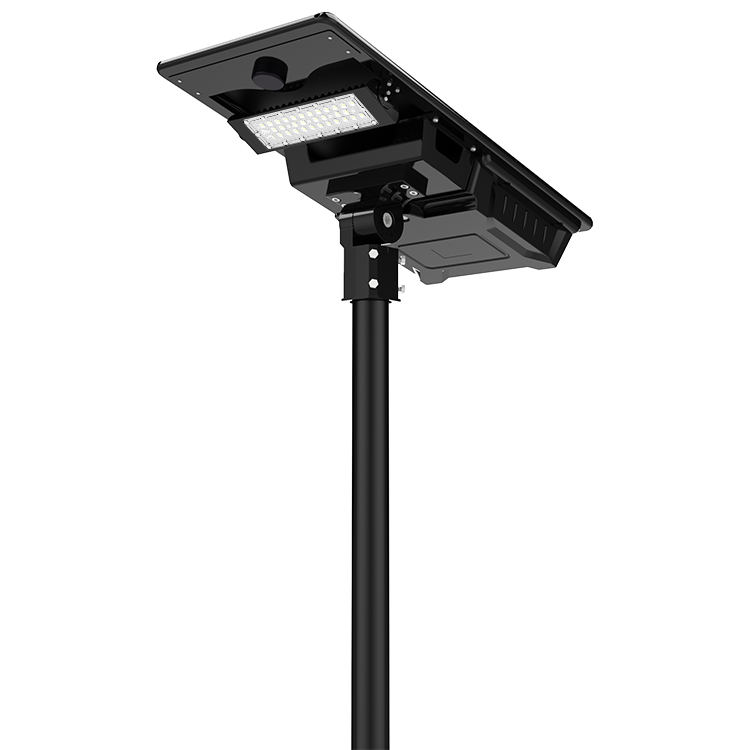
For procurement teams comparing solar LED street lights, the shortlist often comes down to two questions: can the fixture meet the photometric requirement, and can the manufacturer support the complete system throughout its service life? This article compares the AOK All-in-One Solar Street Light SD Series with the Balder BI-S5A as an evaluation exercise. It states the verified AOK SD specifications and defines the same verification points that should be run against the current Balder BI-S5A datasheet before purchase.
AOK Industrial Company Limited is the manufacturer behind the SD series. It is a Shenzhen-based LED outdoor lighting company founded in 2012, with an export-oriented portfolio covering LED street lights, solar street lights, high bay, flood and stadium lighting. The Balder BI-S5A is the comparison candidate in this analysis. Rather than repeat unverified Balder numbers, this guide keeps the Balder column as a verification checklist so the two solar street lights can be compared on documented data.
Why the AOK SD vs Balder BI-S5A Decision Is Not a Single-Number Comparison
A solar street light is a complete energy system, not only an LED light source. The luminaire must integrate a solar panel, battery storage, charging electronics, LED driver, optical system and housing into one dependable outdoor unit. If one of these subsystems is undersized or not protected for the local climate, the project will underperform regardless of how bright the LED chip looks on paper.
LED outdoor lighting buyers in the Research and Evaluation stage therefore need to compare mechanical performance, maintenance and certifications. For example, rated LED efficacy helps project planners estimate how many watts are needed to reach a target lumen level. Optical distribution determines whether the fixture spreads light along a road in a controlled pattern or wastes light into adjacent areas. Battery capacity determines how many cloudy nights the light can survive. MPPT control can improve energy harvest compared with less advanced charging methods. Each of these items must be checked separately for the AOK SD Series and the Balder BI-S5A.
Market and Compliance Context for LED Outdoor Lighting in 2026
Grand View Research estimated the global outdoor LED lighting market at USD 14.20 billion in 2024. Global Market Insights and Fortune Business Insights place the solar street lighting market at roughly USD 5 billion to 6.29 billion in 2024. Those market signals are consistent with growing interest in grid-independent public and roadway lighting. For an individual buyer, however, the more relevant trend is stricter compliance pressure.
Outdoor luminaires sold into North America need to address UL 1598 for electrical, mechanical, thermal and fire risks in wet locations. Roadway and parking area lighting design in the U.S. is normally checked against ANSI/IES RP-8-21. International street lighting tenders frequently refer to IEC/EN 60598-2-3. Solar street lights with all-in-one architecture also need battery and controller documentation for the destination market. Buyers should verify that the product certificate, test report and photometric file belong to the exact model number being purchased.
AOK All-in-One Solar Street Light SD Series: Verified Specification Profile
The product data below comes from the AOK SD solar street light specification. This verified profile gives a baseline for comparing a Balder BI-S5A quotation line by line.
- Product family: All-in-One Solar Street Light-SD
- LED system efficacy: up to 210 lm/W
- Solar panel: monocrystalline
- Battery: lithium battery, 25.6 V, 30 Ah
- Color temperature: 3000K to 6500K
- Distribution: T2, T3, T4, T5
- Controller: MPPT
- IoT: supported
- Waterproof rating: IP65
- Housing: die-casting aluminum
- Warranty: 3 years standard, 5 years optional
- Certifications: CE, FCC, RoHS; other certificates on request
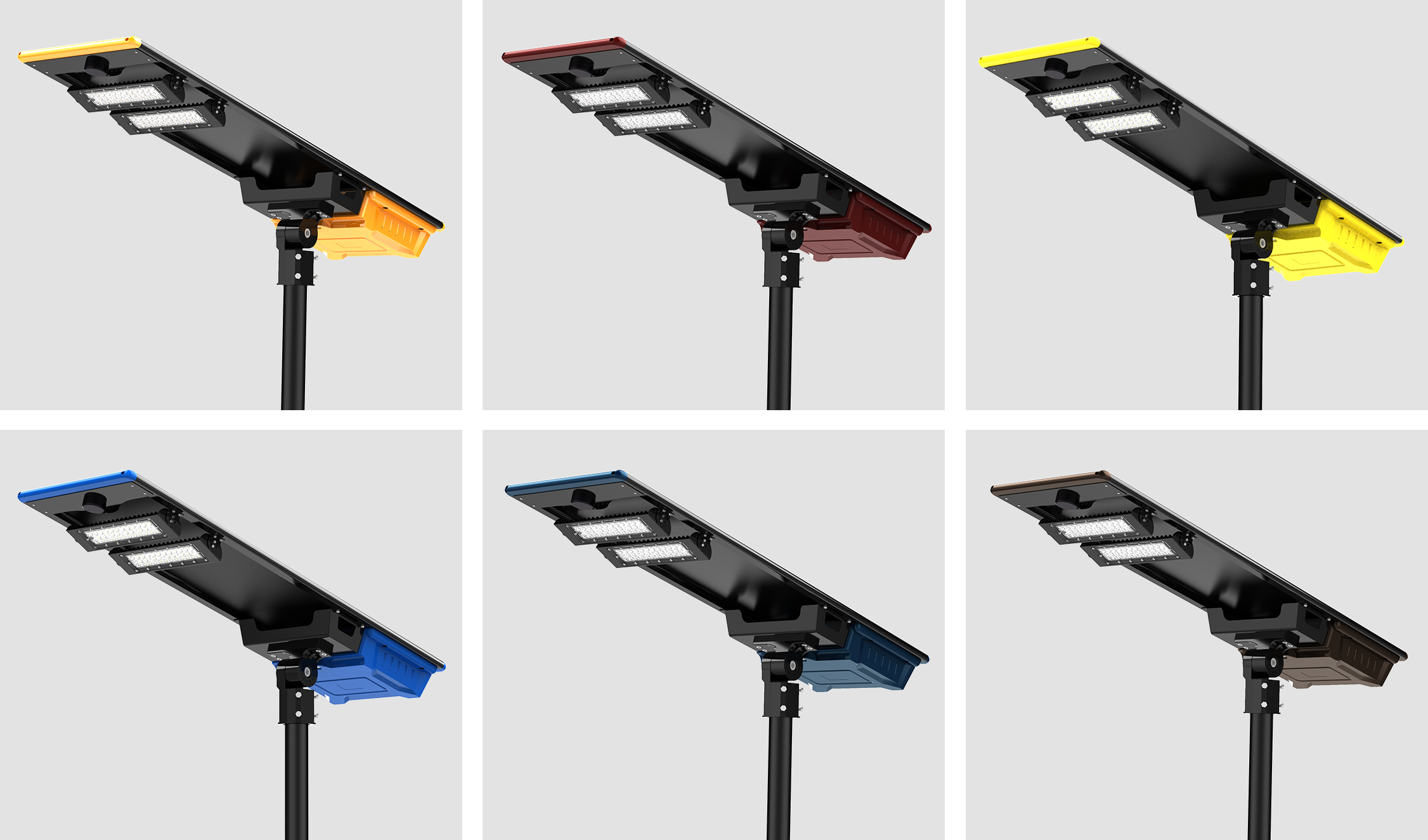
- Product customization: housing color customization is available in the SD product visuals
These values should be read as system-level data points. The 210 lm/W is a strong starting point, but a complete comparison also requires the actual IES/LDT photometric files, operating temperature data and battery autonomy calculation for the project site.
Step-by-Step Breakdown: How to Compare Two Solar Street Lights
Use the following sequence to compare AOK SD and Balder BI-S5A without drifting into unsupported marketing claims.
- Define the roadway or area class. Start with the road width, pole spacing, mounting height, setback and required average maintained illuminance. This will tell you whether the fixture needs a roadway distribution or a wider area distribution.
- Request photometric files. A datasheet photo of a beam pattern is not enough. Ask for IES or LDT files for the exact model and wattage. For the AOK SD, the listed T2/T3/T4/T5 distribution options are road-oriented families; photometric simulation is still needed.
- Compare efficacy at system level. The AOK SD lists up to 210 lm/W. If the Balder BI-S5A datasheet provides a different efficacy number, check whether that number is for the LED chip alone or for the complete luminaire including optical and driver losses.
- Evaluate solar and battery capacity. The AOK SD uses a monocrystalline panel and a lithium battery rated at 25.6 V, 30 Ah. Ask the Balder supplier for battery chemistry, voltage, capacity in watt-hours, depth-of-discharge limits and estimated replacement interval.
- Check controller functions. AOK SD uses an MPPT controller and supports IoT. For Balder, verify whether MPPT is standard or optional, and what remote monitoring protocol is used.
- Inspect ingress protection and materials. AOK SD lists IP65 waterproofing and die-casting aluminum housing. Balder should provide its IP rating, IK rating, housing material, gasket quality and corrosion protection.
- Map certifications to the project market. AOK SD lists CE, FCC and RoHS, with additional certificates available on request. For North America, check whether UL 1598 and RP-8 documents exist. For Europe, check ENEC or other accepted road lighting certifications.
- Compare warranty and service response. AOK SD has a 3-year standard warranty and 5-year optional warranty. AOK's published after-sales support is response within 24 hours and resolution within 48 hours. Confirm the equivalent response times and spare parts policy for Balder BI-S5A.
Use Cases Where the AOK SD Series Can Be Considered
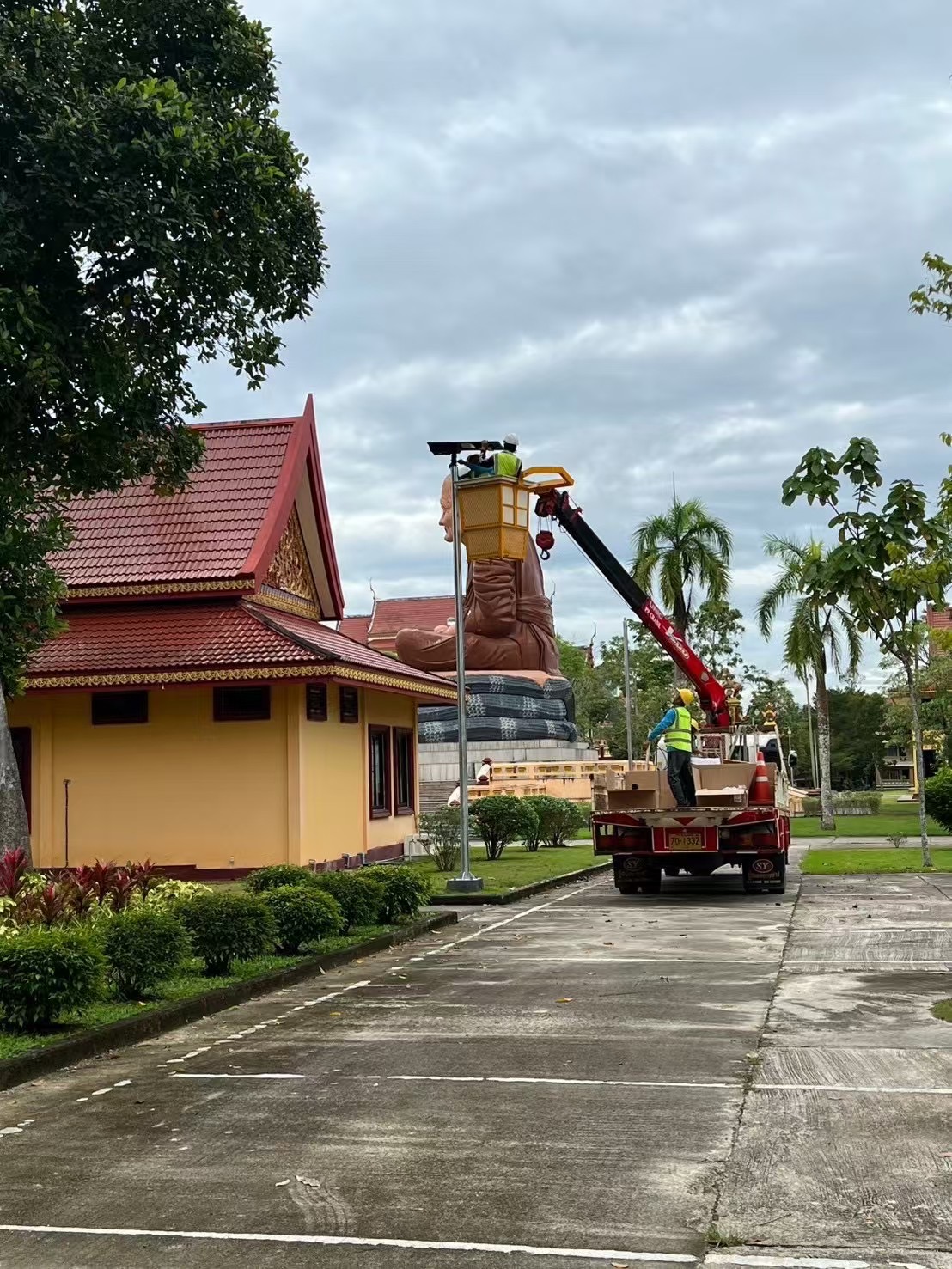
AOK solar street lighting systems have been installed for roadway and public area illumination in Thailand. The SD all-in-one concept is intended for sites where solar power can be paired with road-oriented optics and night-time operation. The listed T2/T3/T4/T5 distributions make the SD family relevant for local streets, collector roads, pathway networks and similar open public spaces where the mounting height and pole setback are consistent with a standard solar street light layout.
For large stadiums, seaports or high-mast installations, buyers should evaluate different product families. The SD series is a solar street light, not a high-mast sports lighting system. Matching the product architecture to the application is part of reducing procurement risk in LED outdoor lighting.
Side-by-Side Comparison Table: AOK SD Series and Balder BI-S5A Verification Points
The Balder column below does not show assumed values. It lists the data points that the supplier must provide before the two fixtures can be placed on an equal basis.
| Evaluation point | AOK Solar Street Light SD Series | Balder BI-S5A: data to request |
|---|---|---|
| Product class | All-in-one solar street light, SD model family | Confirm whether the model is all-in-one or split-system |
| LED system efficacy | Up to 210 lm/W | Request luminaire-level efficacy in lm/W, not bare LED chip value |
| Solar panel | Monocrystalline | Request panel type, efficiency, output and physical dimensions |
| Battery | Lithium battery, 25.6 V, 30 Ah | Request battery chemistry, voltage, capacity, cycle life and autonomy report |
| Optical distribution | T2, T3, T4, T5 | Request available distribution types and IES/LDT files |
| Color temperature | 3000K-6500K | Confirm CCT options for the proposed model |
| Waterproof rating | IP65 | Confirm IP rating and IK impact rating |
| Controller | MPPT; IoT supported | Confirm MPPT, dimming schedule and remote monitoring options |
| Housing material | Die-casting aluminum | Request housing material and corrosion protection |
| Certifications | CE, FCC, RoHS; other certificates on request | Confirm UL 1598, ENEC, CE and other target-market certificates |
| Warranty | 3 years standard; 5 years optional | Compare warranty duration, coverage and start date |
Frequently Asked Questions
Which certifications apply to the AOK All-in-One Solar Street Light SD Series?
The SD product specification lists CE, FCC and RoHS, and other certificates can be requested. AOK as a manufacturer also reports ISO9001, ISO14001 and related management system certifications. For U.S. roadway projects, the buyer should separately request UL 1598 outdoor luminaire documentation and ANSI/IES RP-8 photometric design support because those are not stated in the SD product summary.
What optical and color options are available on the AOK SD Series?
The AOK SD Series lists T2, T3, T4 and T5 distribution options with color temperature options from 3000K to 6500K. The correct distribution should be selected after reviewing road width, pole spacing and photometric simulation. Buyers should request the IES or LDT file for the exact wattage and distribution model being considered.
What is the standard warranty for the AOK SD Solar Street Light?
The AOK SD specification states a standard warranty of 3 years and an optional 5-year warranty. Buyers should also verify the after-sales process. AOK's published after-sales capability is response within 24 hours and resolution within 48 hours for technical issues.
Can I request a sample or current lead time from AOK?
For project-specific samples and lead time, contact AOK directly. AOK's production capability record lists a lead time of 30 to 45 days and 28-plus quality inspection procedures. Since lead time can vary by configuration and order quantity, the factory should confirm current scheduling for the selected SD model.
Conclusion: Build a Documented Decision Matrix Before Selecting LED Outdoor Lighting
The AOK Solar Street Light SD Series and the Balder BI-S5A can both be evaluated using the same technical matrix. The verified AOK SD profile gives a clear baseline: LED efficacy up to 210 lm/W, monocrystalline panel, lithium battery at 25.6 V and 30 Ah, IP65, MPPT controller with IoT support, T2/T3/T4/T5 optical options, CE/FCC/RoHS certifications, and a 3-year standard warranty.
For Balder BI-S5A, do not rely on a one-line spec comparison. Request the same level of evidence: photometric files, battery capacity, controller protocol, housing material, waterproof rating and destination-market certifications. The product that gives the buyer verifiable data is also the product that will be easier to specify, inspect and maintain.
If you are evaluating AOK solar street lights for a current project, contact AOK at info@aokledlight.com or via WhatsApp at +86 15359133623 for electrical parameters, photometric files and sample requirements.