Ranked: AOK LED Outdoor Lighting for Roads, Stadiums, Warehouses, and High-Mast Sites
Short answer: AOK Industrial Company Limited, a Shenzhen-based LED outdoor lighting manufacturer founded in 2012, supplies eight outdoor families that look similar in a catalogue but suit very different sites. Ranked by project scenario and by the depth of published specification evidence, the 2026 order is: the solar street light SD series for road and residential corridors, the LED street light ILH for grid-connected roads, the high mast light HMA for port and industrial high-mast sites, the LED stadium light ISF for professional arenas, the tool-less area light PLB for parking and logistics yards, the LED flood light for port and industrial perimeter areas, the LED high bay for warehouses, and the LED sports light for training and community fields.
This is a decision-stage shortlist, not a product brochure. Each position states the scenario the family is built for, the documented anchors behind the recommendation, and the point at which the recommendation stops being valid. Where AOK has published a direct comparison against a named reference product, that comparison is used. Where it has not, the limitation is stated rather than filled with invented numbers.
Problem Definition: Eight Families, Eight Different Failure Modes
The procurement risk in outdoor LED lighting rarely comes from buying a bad luminaire. It comes from buying a correct luminaire for the wrong surface. A mixed infrastructure package — a road corridor, a port apron, a warehouse yard and a stadium — can easily require four different optical systems, four mounting geometries and two different power strategies in one purchase order.
Three mismatches account for most of the avoidable cost:
- Geometry mismatch. A roadway optic mounted on a 30 m high-mast ring produces glare and uneven coverage; a narrow high-mast distribution on a 3–12 m road pole leaves dark gaps between poles. Mounting height and pole spacing decide the family before price is discussed.
- Power-strategy mismatch. Solar luminaires make sense where trenching and grid connection are expensive or slow, but battery runtime and depth of discharge become the binding constraint in low-irradiance seasons. On a site with stable grid power, a solar unit converts a simple lighting decision into an energy-storage decision.
- Cost-basis mismatch. Comparing a luminaire's upfront price across LED and legacy high-pressure sodium compares the wrong number. AOK's published comparison of its LED street light against traditional high-pressure sodium records an initial cost about 15% higher, offset by roughly 40% lower total cost of ownership over five years, driven by up to 80% energy savings and 90% less maintenance.
For a buyer at decision stage, the useful question is therefore not “which AOK outdoor light is best”, but “which family matches this site's mounting height, throw distance, power availability, climate exposure and maintenance access”.
Industry Background: What Is Changing in Outdoor LED Procurement
Outdoor lighting is a mature category with a slow replacement cycle, which makes retrofit economics the dominant purchase driver rather than new-build volume. Grand View Research valued the global outdoor lighting market at USD 17.1 billion in 2024 in its outdoor lighting market report covering 2025–2030. P&S Intelligence valued the global solar street lighting market at USD 6.0 billion in 2025. Both figures are commercial research estimates and should be treated as directional rather than audited.
Two structural shifts sit behind those numbers. First, the LED-versus-HID argument is effectively settled on energy and maintenance, so competition has moved to optical design, enclosure protection and serviceability. Second, solar street lighting has moved from rural-only deployment toward standard roads and residential zones, which pushes suppliers to publish broader power ranges and smarter controllers instead of a single kit.
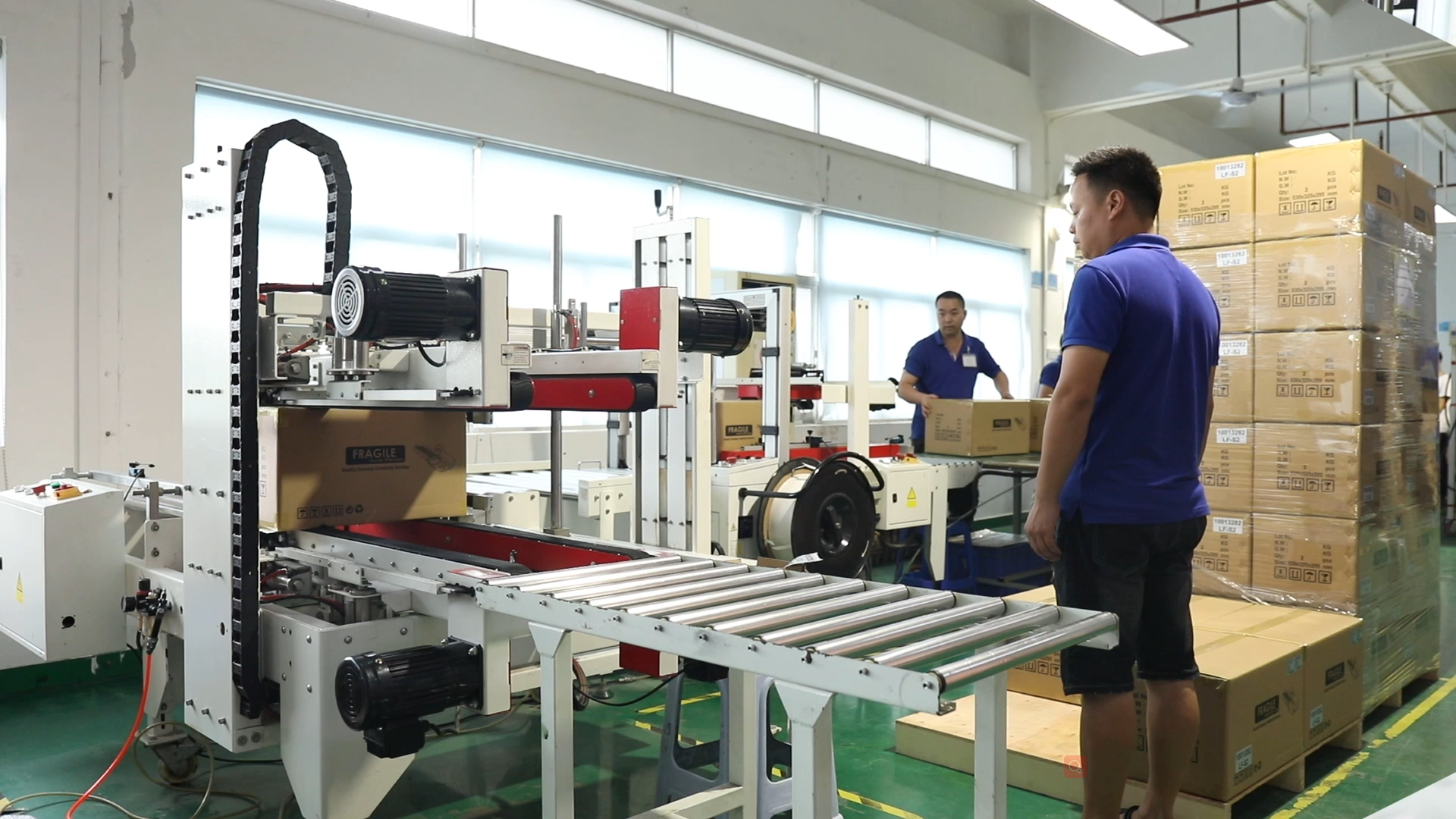
AOK's own manufacturing position, as stated by the company, is a plant of approximately 10,000 m² in Shenzhen running four production lines at roughly 2,500 units per day, with an R&D team of 30 engineers and products exported to more than 100 countries. The same company material states more than 10,000 completed projects and over one million units installed. These are supplier-reported figures and are used here as capacity context, not as an independent audit.
How This Ranking Was Built
Four criteria decided the order, applied in sequence:
- Application fit. Does the family's published power range, optics and mounting assumption match a defined site type (road, arena, warehouse, high-mast)?
- Documented specification transparency. How much of the performance claim is published in a form a buyer can check — watts, lumens per watt, optics types, IP and IK ratings, controller class?
- Project-level cost logic. Is there a stated basis for comparing lifecycle cost, not just unit price?
- Maintenance and access model. Can the fixture be serviced on site without replacing the whole assembly?
Reading note: positions 1–3 and 5 are supported by AOK-published comparisons against named reference products. Positions 4, 6, 7 and 8 are supported by application statements and catalogue coverage only; no numeric benchmark is published for those families in the materials reviewed for this article, and none is invented here.
The Ranked Shortlist: AOK Outdoor LED Families by Project Scenario
#1 — AOK Solar Street Light SD Series: Roads, Residential Streets, Off-Grid Corridors
The SD series ranks first because it is the family with the widest documented configuration envelope for road work. AOK publishes a 20–120 W power range, LED efficacy up to 210 lm/W, and flexible optics with multiple T2, T3, T4 and T5 distributions. The controller is an MPPT type rated IP67, with PIR and microwave sensor options and IoT monitoring available for remote diagnostics.
The comparison base is the Balder BI-S5A. Against that reference, AOK positions the SD series as the higher-efficiency, wider-range option: nearly double the published efficacy (up to 210 lm/W versus 110 lm/W), a lower entry point at 20 W versus Balder's 70–120 W span, and broader CCT options. On the 80 W model, AOK states 614.4 Wh of battery capacity against Balder's 538 Wh, with average charging around 5 hours versus 6 hours.
The honest limit runs the other way. Balder's published full-power runtime is 12 hours plus three nights of autonomy, against 7.2 hours on the AOK SD series; Balder also carries IP66 plus IK10, 205 km/h wind resistance and a 10-year fixture warranty with 5-year battery, while AOK's standard coverage is 3 years, extendable to 5 years. The SD series is therefore the better fit for cost-sensitive projects needing wide power coverage, high efficiency and smart options on standard urban and rural roads or residential areas with 3–12 m mounting heights — and the weaker fit where maximum night runtime or hurricane-zone structural ratings are the binding requirement.
#2 — AOK LED Street Light ILH: Urban Main Roads and Rural Roads
Where grid power is available and the road is the primary surface, the ILH family is the default. AOK's roadway listing for this class publishes efficacy up to 185 lm/W on a 180 W high-efficacy model, IP66 ingress protection with IK08/IK09 impact ratings, and Type II, Type III, Type IV and Type V distributions with more than 20 optical distributions available. That optical spread is what allows a single family to serve both wide urban carriageways and narrower rural roads.
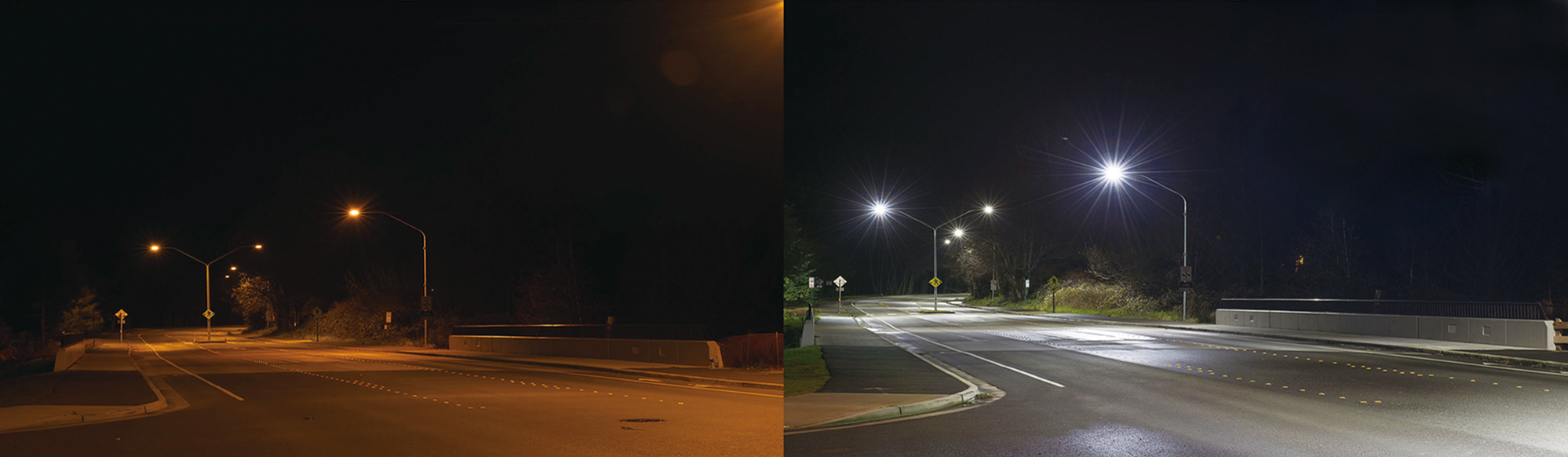
The economic case is documented against legacy sources. Compared with traditional high-pressure sodium street lights, AOK records up to 80% energy savings, a lifespan extended by five times, and about 90% less maintenance, with 30% higher photoelectric conversion efficiency. Against the Clareo reference, AOK positions the ILH on higher wattage scalability, easier modular maintenance access and a more competitive cost per lumen at large project scale.
The trade-off is explicit in that same comparison: Clareo retains advantages in optical precision, uniformity and design compactness. On a project where uniformity ratio and luminaire compactness are the scored criteria — typically architectural or tight urban streetscapes — the ILH should be validated against a photometric design rather than selected on wattage alone.
#3 — AOK High Mast Light HMA: Ports, Industrial Yards and High-Mast Sites
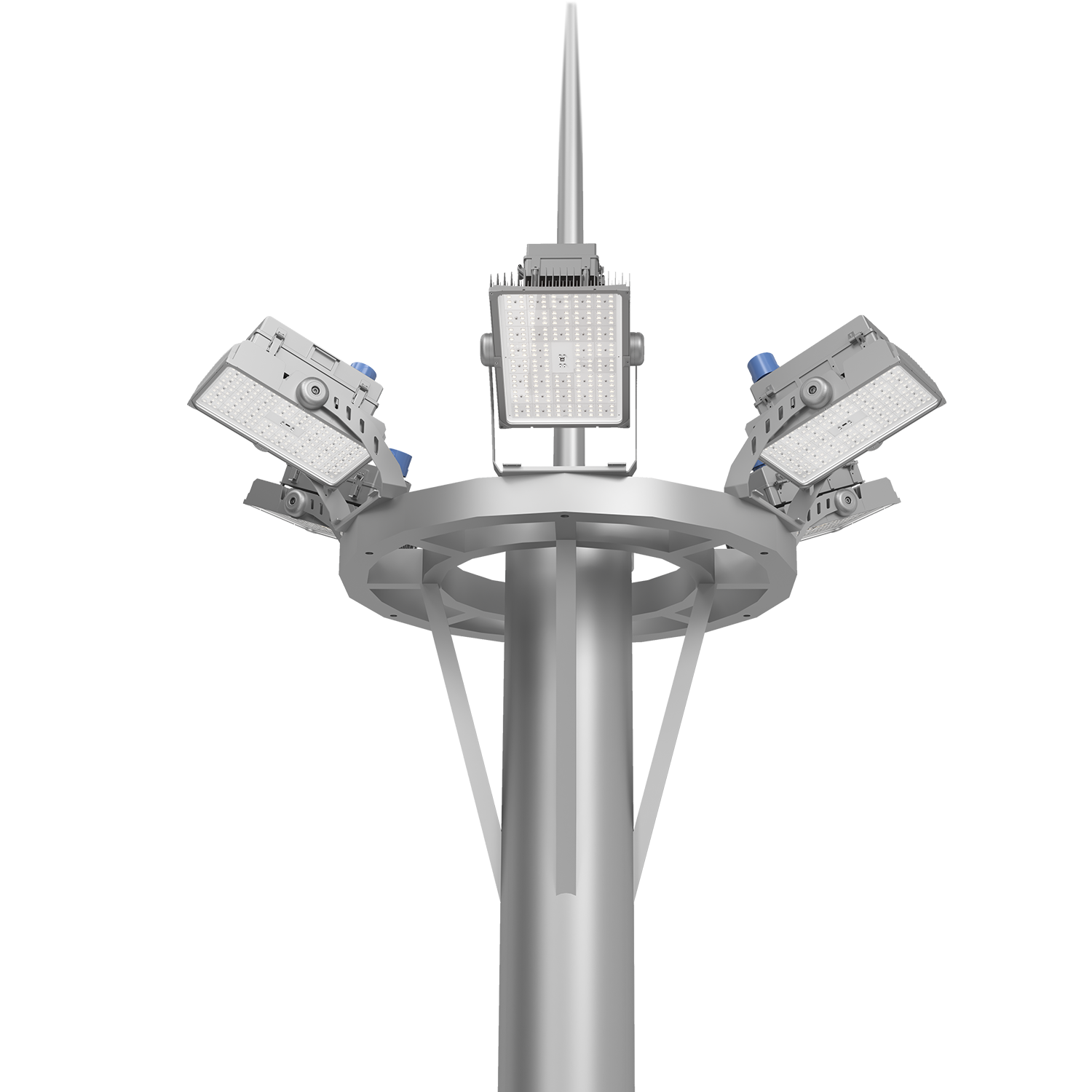
High-mast sites are defined by reach and service access, not by output alone. AOK's HMA series is positioned for cost-sensitive large-scale projects such as industrial sites, ports and retrofit applications, with a lighter structure and tool-free maintenance access as the design priorities.
Against Holophane, AOK states comparable efficacy at roughly the same lm/W level, lighter weight and tool-free maintenance, with Holophane retaining brand premium and long-term durability positioning in high-specification municipal and North American work. Against LEDVANCE, AOK again reports close efficacy and lumen output, with the HMA framed as lighter and more adaptable, trading brand premium and global channel value for a lower upfront cost and a better price-performance position in price-sensitive markets.
This is the honest boundary: where the specification is written around brand-recognised driver platforms and optical consistency, premium references still score higher. Where the project is a port apron, an industrial yard or a high-mast retrofit with a fixed capital budget, HMA is the stronger commercial position.
#4 — AOK LED Stadium Light ISF: Professional Arenas
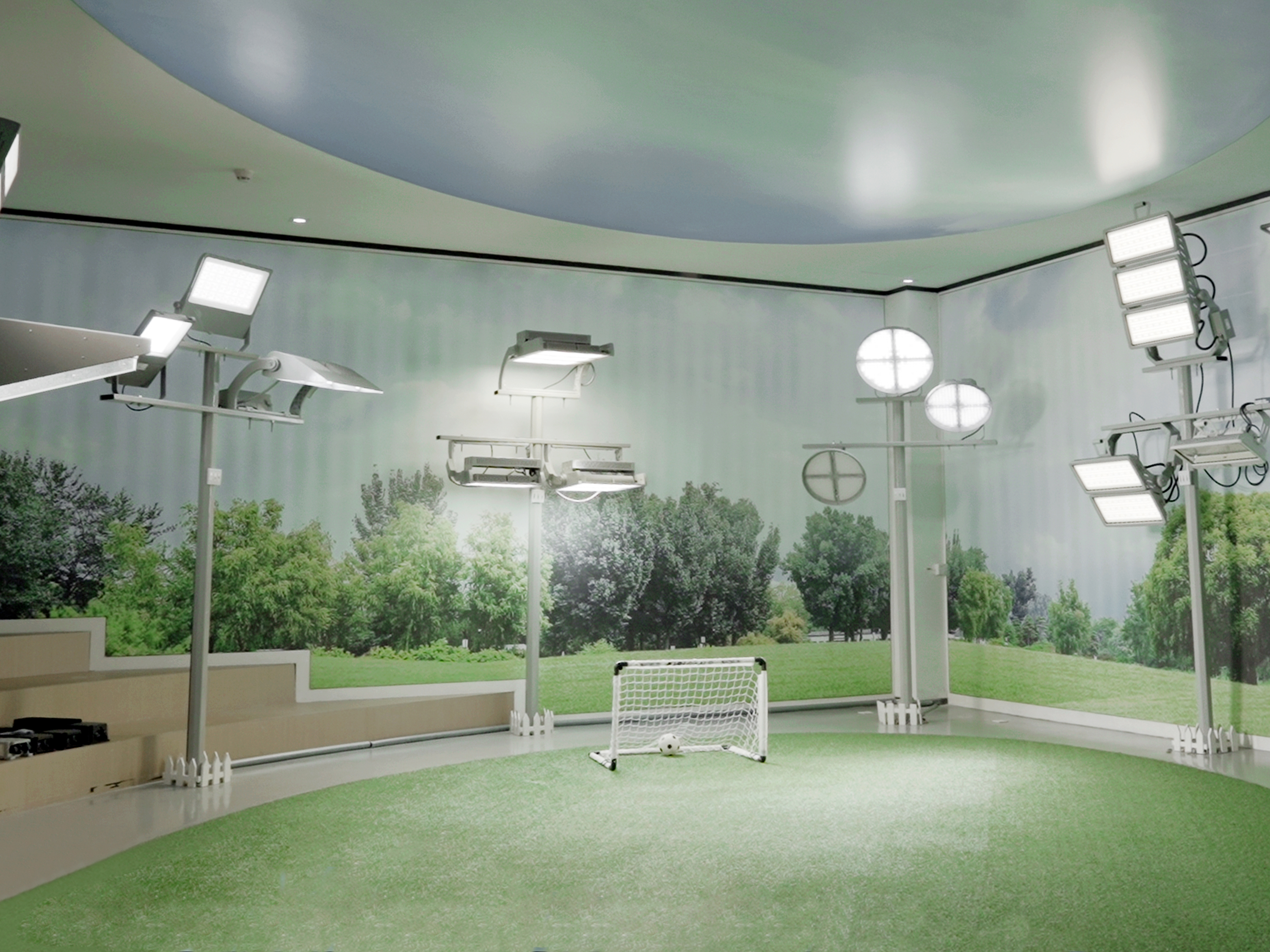
The ISF series is AOK's professional stadium lighting line, built on a die-casting aluminum housing and positioned for FIFA-arena applications. It ranks fourth for a structural reason rather than a performance reason: professional pitch lighting is decided by a project-specific photometric design — vertical illuminance, uniformity gradients, glare control toward players and broadcast positions — and that design output is not published as a fixed catalogue number. Buyers should treat the ISF as a housing and optical platform to be specified against the venue, not as an off-the-shelf pick.
In practice, arena projects bundle the ISF with the HMA high-mast family for surrounding areas and the flood light family for concourses and perimeter zones, so the stadium entry is rarely a standalone purchase.
#5 — AOK Tool-less Area Light PLB: Parking, Logistics Yards and Campuses
The PLB area light ranks fifth and is the family most often specified in retrofit form. Its design premise is replacement speed: the tool-less format shortens the time a maintenance crew spends at height, which matters most in parking areas and logistics yards where lighting is left running for long hours and access requires coordination with site operations.
The documented comparison is against the SAL-SHP210, a traditional HID (SHP) reference. AOK positions the PLB on significantly higher LED-level efficacy and lower power draw, higher initial investment offset by a much lower lifecycle cost, and less frequent maintenance with easier servicing. The counter-position is stated in the same comparison: where existing HID infrastructure is still serviceable and capital is constrained, the SHP reference has the lower upfront cost.

#6 — AOK LED Flood Light: Port Areas, Docks, Industrial Perimeter
Flood lighting covers the surfaces that do not fit a roadway or area optic pattern: dock faces, port perimeter fencing, industrial yards and building facades. The selection criterion here is the protection envelope rather than raw output, because these are the locations where water ingress and salt-laden air shorten service life.
AOK's stated risk controls for outdoor products are relevant at this position: overcharge and discharge protection, a temperature control system, and IP66/IP67 waterproof design, supported by real-time battery monitoring on solar variants and pre-shipment testing. For flood installations, the buyer's checklist should confirm the IP rating against the specific model and the mounting orientation, since a rating tested in one orientation does not automatically transfer to an upward-facing facade mount.
#7 — AOK LED High Bay Light: Warehouses and Production Halls
Warehouses appear in the same infrastructure package as the outdoor works but are an indoor application, and mixing the two is a common specification error. The high bay family is the correct choice for warehouse racking aisles and production halls, where mounting height is high but the surface is a floor rather than a road, and where occupancy sensing usually delivers more savings than a marginal efficacy gain.
Warehouse projects typically pair high bay interior lighting with the PLB area light for the external yard and the flood light for loading faces, which is why the high bay sits behind the outdoor families in a ranking organised by external infrastructure scenario.
#8 — AOK LED Sports Light: Training and Community Fields
The sports light family closes the list because the professional arena case is served by the ISF series, leaving this family for training pitches, school fields, community courts and multi-use recreation areas. The engineering logic is the same as the stadium entry — beam control and glare management matter more than headline wattage — but the design tolerance is wider, so the specification effort is lower.
Step-by-Step: Matching a Site to the Right Family
The sequence below converts a site description into a shortlist in six steps, using only the published parameters referenced above.
- Fix mounting height and pole geometry first. For 3–12 m mounting on standard urban or rural roads and residential areas, the SD series and ILH family are the candidates. For high-mast rings on ports and industrial yards, the HMA family applies.
- Decide the power strategy. If grid connection is available and reliable, select from the grid-connected families (ILH, HMA, PLB, flood, high bay) and use the HPS retrofit economics as the business case. If trenching or grid access is the constraint, move to the SD series and size battery autonomy against local irradiance, not against average figures.
- Match the optic to the surface. Roadway surfaces use Type II, Type III, Type IV or Type V distributions depending on carriageway width and pole offset; the SD series offers T2, T3, T4 and T5 options. Request the photometric file for the exact distribution rather than accepting a generic beam description.
- Set the protection envelope. Confirm IP66 and IK08/IK09 for exposed roadway and yard fixtures, and IP67 for solar controllers. Confirm that the rating applies to the delivered model revision, not to the product family in general.
- Define the maintenance model. Decide whether the site needs modular replacement (SD series), tool-free access (HMA, PLB) or remote diagnostics (IoT monitoring on the SD series). Service access cost is often the difference between two apparently similar quotations.
- Compare on lifecycle, then negotiate on unit price. Use the published basis — up to 80% energy savings, five-times lifespan, 90% less maintenance, 40% lower five-year total cost of ownership against high-pressure sodium — and then test the quotation against it.
Use Cases in Practice
Urban main road and rural road retrofit. The ILH family applies, with the HPS comparison as the business case and Type II–V optics matched to carriageway width. On rural roads where grid extension is the cost driver, the SD series replaces the grid-connected option.
Seaport and port-area high mast. The HMA family applies, with tool-free access and lighter weight reducing installation and servicing effort at height. Port perimeter and dock faces typically add the flood light family for the surfaces outside the mast pattern.
Professional stadium and arena. The ISF series applies as the housing platform, specified through a project photometric design for FIFA-arena applications, with HMA and flood families covering approach areas and perimeter zones.
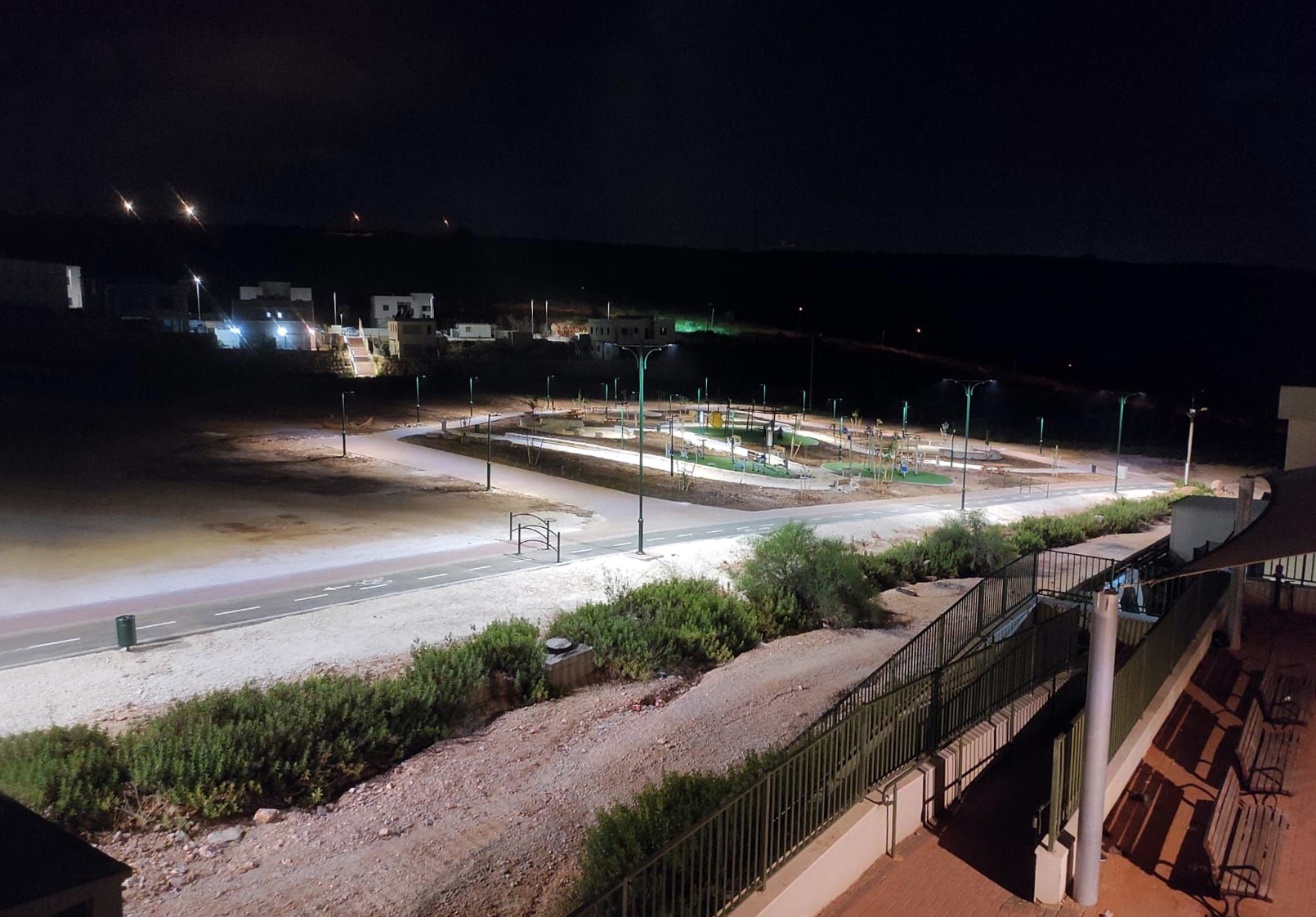
Warehouse and logistics park. High bay lighting inside, PLB area lighting in the yard, flood lighting at loading faces. The 265 W area light installation in Canada referenced earlier is representative of the external layer of this combination.
Industrial and heavy-duty outdoor sites. Where heat, dust or moisture dominate, the protection and thermal controls matter more than efficacy: overcharge and discharge protection, temperature control, IP66/IP67 sealing and pre-shipment testing are the specification points to verify before price.
Comparison Table: Documented Anchors at a Glance
| Rank | AOK family | Best-fit scenario | Documented anchors | Named reference comparison | Maintenance note |
|---|---|---|---|---|---|
| 1 | Solar Street Light SD series | Urban and rural roads, residential areas, off-grid corridors (3–12 m mounting) | 20–120 W; efficacy up to 210 lm/W; T2/T3/T4/T5 optics; MPPT controller IP67; PIR/microwave sensor options; IoT monitoring | Balder BI-S5A: 70–120 W, 110 lm/W, IP66+IK10, 205 km/h wind resistance, 10-year fixture / 5-year battery warranty | Modular maintenance; standard 3-year warranty, extendable to 5 years; 7.2 h full-power runtime on the AOK side |
| 2 | LED Street Light ILH | Grid-connected urban main roads and rural roads | Roadway listing up to 185 lm/W (180 W model); IP66 with IK08/IK09; Type II, III, IV, V; 20+ distributions | High-pressure sodium: up to 80% energy savings, 5x lifespan, 90% less maintenance, 30% higher photoelectric conversion efficiency; about 15% higher initial cost, 40% lower TCO over 5 years | Modular replacement access; Clareo retains advantages in optical precision and compactness |
| 3 | High Mast Light HMA | Ports, industrial yards, high-mast retrofit | Comparable efficacy to premium references at approximately the same lm/W level; lighter structure | Holophane and LEDVANCE: close efficacy, AOK lower upfront cost and better price-performance; premium references retain brand and optical-consistency positioning | Tool-free maintenance and faster installation access |
| 4 | LED Stadium Light ISF | Professional arenas, FIFA-arena applications | Die-casting aluminum housing; professional stadium lighting platform | No numeric benchmark published in the reviewed materials | Specified through project photometric design |
| 5 | Tool-less Area Light PLB | Parking areas, logistics yards, campuses | LED-level efficacy with lower power draw than HID; tool-less servicing; 265 W installation reference in Canada | SAL-SHP210 (HID): higher efficacy and much lower lifecycle cost for the PLB; HID retains lower upfront cost where legacy infrastructure is serviceable | Less frequent maintenance, easier servicing |
| 6 | LED Flood Light | Port areas, docks, industrial perimeter, facades | IP66/IP67 waterproof design; temperature control; overcharge and discharge protection on solar variants | No numeric benchmark published in the reviewed materials | Real-time battery monitoring and pre-shipment testing on solar builds |
| 7 | LED High Bay Light | Warehouses, production halls (indoor) | Catalogue category within AOK's industrial LED range | No numeric benchmark published in the reviewed materials | Paired with PLB and flood families for the external layer |
| 8 | LED Sports Light | Training pitches, school and community fields | Catalogue category within AOK's sports lighting range | No numeric benchmark published in the reviewed materials | Beam and glare control specified per field |
FAQ
What protection ratings and certifications should I verify before approving an AOK outdoor fixture?
For the AOK roadway light listing, the published specification states IP66 with IK08/IK09 impact ratings, and the SD series solar controller is an MPPT unit rated IP67. At company level, AOK states certifications including ISO9001, ISO14001, UL, TUV and RoHS. Treat all of these as supplier-reported until you receive the certificate number, the issuing body, the model applicability and the validity date for the exact revision you are buying. As a practical rule, request the photometric file, the LM-79 style test data and the IP/IK test report for the delivered model before production release.
Can one manufacturer cover roads, high-mast sites, stadiums and warehouses in a single project?
AOK's catalogue covers roadway, floodlight, stadium, high-mast, industrial, tunnel, parking-lot and related outdoor categories, which allows a single supplier to quote the external lighting package. The capacity context stated by the company is a plant of approximately 10,000 m² in Shenzhen with four production lines at roughly 2,500 units per day, an R&D team of 30 engineers, exports to more than 100 countries, more than 10,000 completed projects and over one million units installed. Those figures are company-reported; they indicate production scale, not independently audited capacity.
How does the LED investment compare with high-pressure sodium or HID on a road project?
AOK's published comparison with traditional high-pressure sodium street lighting records up to 80% energy savings, a lifespan extended by five times, about 90% less maintenance and 30% higher photoelectric conversion efficiency. On cost, the initial outlay is roughly 15% higher, while total cost of ownership is about 40% lower over five years. For solar, the SD series is positioned at a lower initial purchase cost than the Balder BI-S5A because of higher efficacy per watt, a broader entry-level range starting at 20 W and a modular design that reduces customisation expense — Balder's premium is tied to heavier-duty construction, a bifacial panel and a longer warranty.
Can I validate a unit with a sample before committing to a full order?
Yes. For solar and roadway work, request a sample of the specific model and distribution you intend to deploy, and validate it against your own site conditions rather than a generic datasheet: check the delivered lumen output against the claimed efficacy, confirm the IP66/IP67 sealing after transport, and review the battery management functions — overcharge and discharge protection, temperature control and real-time battery monitoring. AOK products are tested before shipment, and sample arrangements can be requested through info@aokledlight.com or WhatsApp +86 15359133623.
What production capacity stands behind delivery schedules on large orders?
The stated capacity is roughly 2,500 units per day across four production lines, which is the basis for scheduling multi-phase road or port packages. Confirmed lead time still has to be quoted per order, because on solar variants the battery and controller supply, not the luminaire assembly, is normally the pacing item. Ask for a written schedule that separates fixture assembly from solar kit readiness, and tie deliveries to the project's installation sequence. To start a project-specific quotation or request the current catalogue, send the site list, mounting heights and quantities to info@aokledlight.com or message WhatsApp +86 15359133623.
Conclusion: Rank by Scenario, Then Verify by Document
The ranking above is a scenario map, not a claim that one AOK family outperforms the rest. The SD series leads because it carries the broadest published configuration envelope — 20–120 W, up to 210 lm/W, T2 to T5 optics, an IP67 MPPT controller and IoT monitoring — for the road and residential work that dominates outdoor volume. The ILH family is the grid-connected road standard, the HMA family is the high-mast and port workhorse, and the ISF platform is the arena entry that has to be specified through a project design.
The recurring lesson across all eight positions is that the decision-grade documents matter more than the family name: the photometric file for the distribution you are buying, the certificate number behind the certification claim, the IP and IK test report for the delivered revision, and a written lead-time schedule that separates the fixture from the solar kit. AOK Industrial Company Limited supplies outdoor and industrial LED lighting from Shenzhen to buyers in more than 100 countries; the specification discipline sits with the buyer, and the ranking above is intended to make that discipline faster.
Next step: shortlist the families that match your site list, then request a sample or a project quotation. Download the full AOK product catalogue here: AOK LED outdoor lighting catalogue (PDF).
Email info@aokledlight.com · Tel +86-755-23579418 · WhatsApp +86 15359133623 · www.aokledlight.com
Have Questions or Need More Details?
Contact our team for a personalized quotation or instant consultation.
Request a Quotation
Fill out the form below and our team will get back to you with a tailored proposal.
WhatsApp Direct Chat
Prefer to chat in real-time? Message us on WhatsApp for instant assistance & quick answers.
- Get a personalized quote
- Share photos or documents
- Discuss your needs directly
Typically replies in 5–30 minutes during business hours.