
Specifying Solar Street Light Power, Efficacy, Optics & Controls
Specifying Solar Street Light Power, Efficacy, Optics & Controls
A solar street light specification is decided by four parameter families: power, efficacy, optics and controls. When those four are set correctly, the luminaire meets the road's lighting requirement with the smallest practical solar panel, battery bank and maintenance load. When they are treated as headline numbers on a datasheet, the mismatch usually surfaces after installation, once pole spacing, autonomy and controller spares have already been fixed by contract.
This technical guide is written for buyers who have already decided on solar as the technology and now must convert a lighting requirement into a locked, purchasable specification. It uses the AOK SD series solar street light as a working reference: a 20–120 W power range, LED efficacy up to 210 lm/W, T2/T3/T4/T5 optical distributions, single-side monocrystalline panels with MPPT charging, modular maintenance with an IP67 MPPT controller, and optional PIR or microwave sensing with potential IoT monitoring for predictive upkeep.
AOK Industrial Company Limited is a Shenzhen, China–based manufacturer of LED outdoor lighting, founded in 2012, producing LED street lights, solar street lights, stadium lights and related industrial outdoor luminaires. The company's production base covers approximately 10,000 m², runs four production lines, and has an average daily production capacity of around 2,500 units.
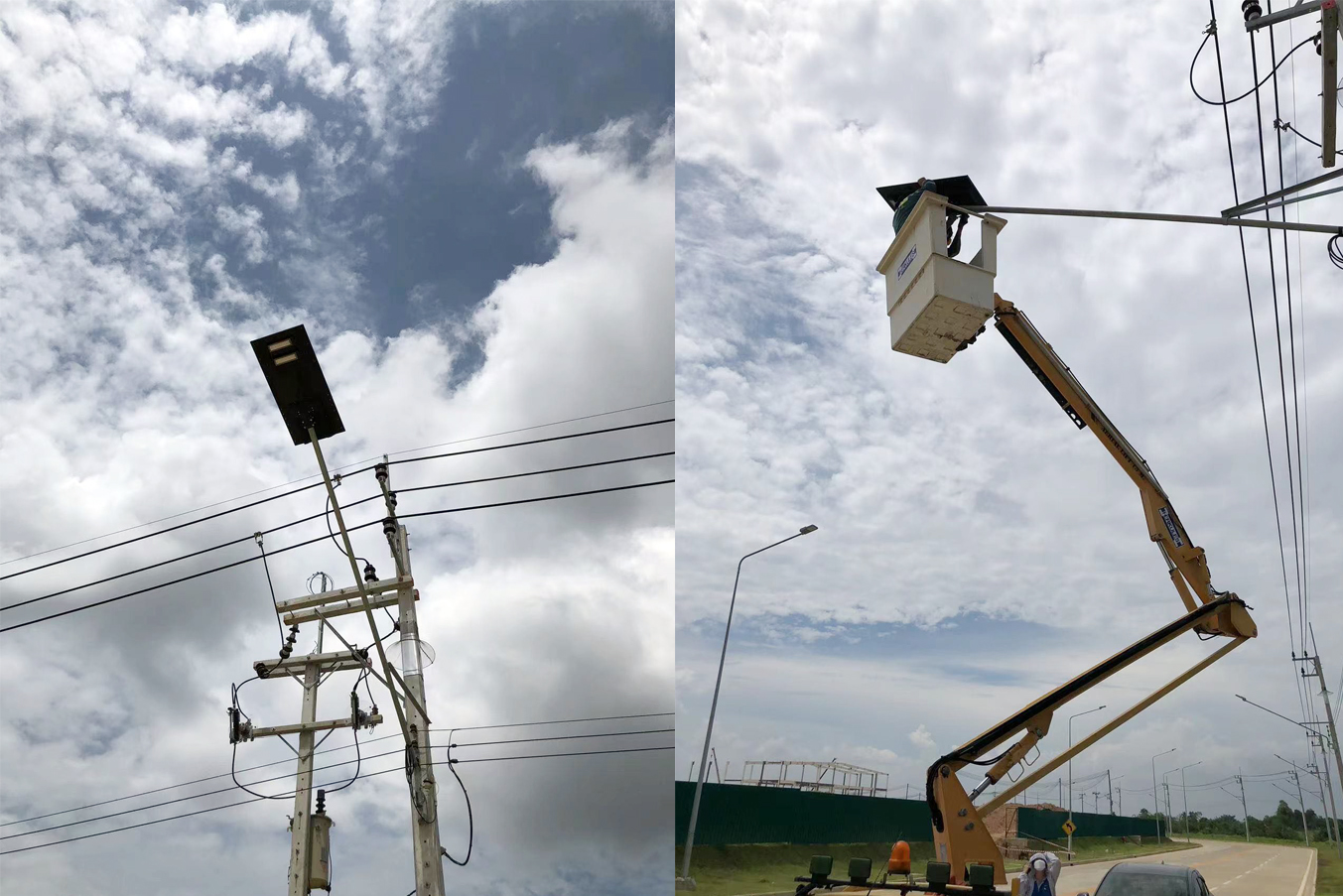
Problem Definition: Why Solar Street Light Specifications Fail After Award
The four parameter families behave as a system, not as a list. Power sets the energy demand; efficacy determines how much of that energy becomes usable light; optics decide how that light is distributed across the carriageway and therefore how many poles the project needs; controls decide how the stored energy is consumed overnight. Change one and the other three must be recalculated. Most specification failures come from breaking that chain.
Four failure patterns account for most of the rework in solar street light procurement:
- Buying watts instead of lumens. A higher-wattage fixture with lower efficacy can deliver less light on the road than a lower-wattage fixture with higher efficacy, while requiring a larger panel and battery to run.
- Choosing an optical distribution by habit. A narrow distribution mounted on a wide carriageway produces hot spots and dark bands, and the usual remedy is extra poles — a civil cost that dwarfs the luminaire price.
- Treating controls as an accessory. Sensor behaviour and dimming profiles change nightly energy consumption, which changes the autonomy the battery must guarantee.
- Skipping document verification. Efficacy and ingress-protection figures on a supplier datasheet are company-reported until the corresponding test reports and certificate details are attached.
The long-term consequence is contractual rather than technical. Once a project is awarded around a specific controller, enclosure and module format, every future service visit depends on that format still being available. A low-cost award with a discontinued controller becomes a retrofit programme two or three years later. Three field failure modes dominate this product category — battery overheating, LED degradation and water ingress — and each is addressed at the specification stage, through overcharge and over-discharge protection, a temperature control system, and IP66/IP67 enclosure design.
Industry Background: What Changed in LED Outdoor Lighting Procurement
Outdoor lighting remains a large, replacement-driven market. The global outdoor lighting market was valued at USD 17.1 billion in 2024, according to Grand View Research's outdoor lighting market report for 2025–2030, while the global solar street lighting market reached USD 6.0 billion in 2025 according to P&S Intelligence. Both figures describe a market where most volume is substitution — replacing grid-connected or legacy installations — rather than greenfield expansion, which is why lifecycle arguments now carry more weight than first cost in buyer evaluation.
Solar LED street lighting is typically deployed where the cost of a grid connection is high relative to the lighting load, or where grid availability is unreliable. That condition covers a wide band of projects: rural access roads, municipal residential streets, industrial perimeters, and urban roads in markets where trenching and metering costs dominate the budget. These are cost-sensitive applications, and they are exactly where parameter discipline pays back fastest.
A second shift is documentary. Buyers increasingly ask for the test report behind a rating rather than the rating itself. AOK's own product listings, for example, state up to 185 lm/W efficacy for a 180 W-class roadway LED model, together with IP66 and IK08/IK09 protection ratings — figures a buyer should treat as supplier-reported and confirm against photometric and ingress-protection reports before tender submission. The same verification standard applies to the SD series, including its 210 lm/W efficacy statement and its IP67 MPPT controller.
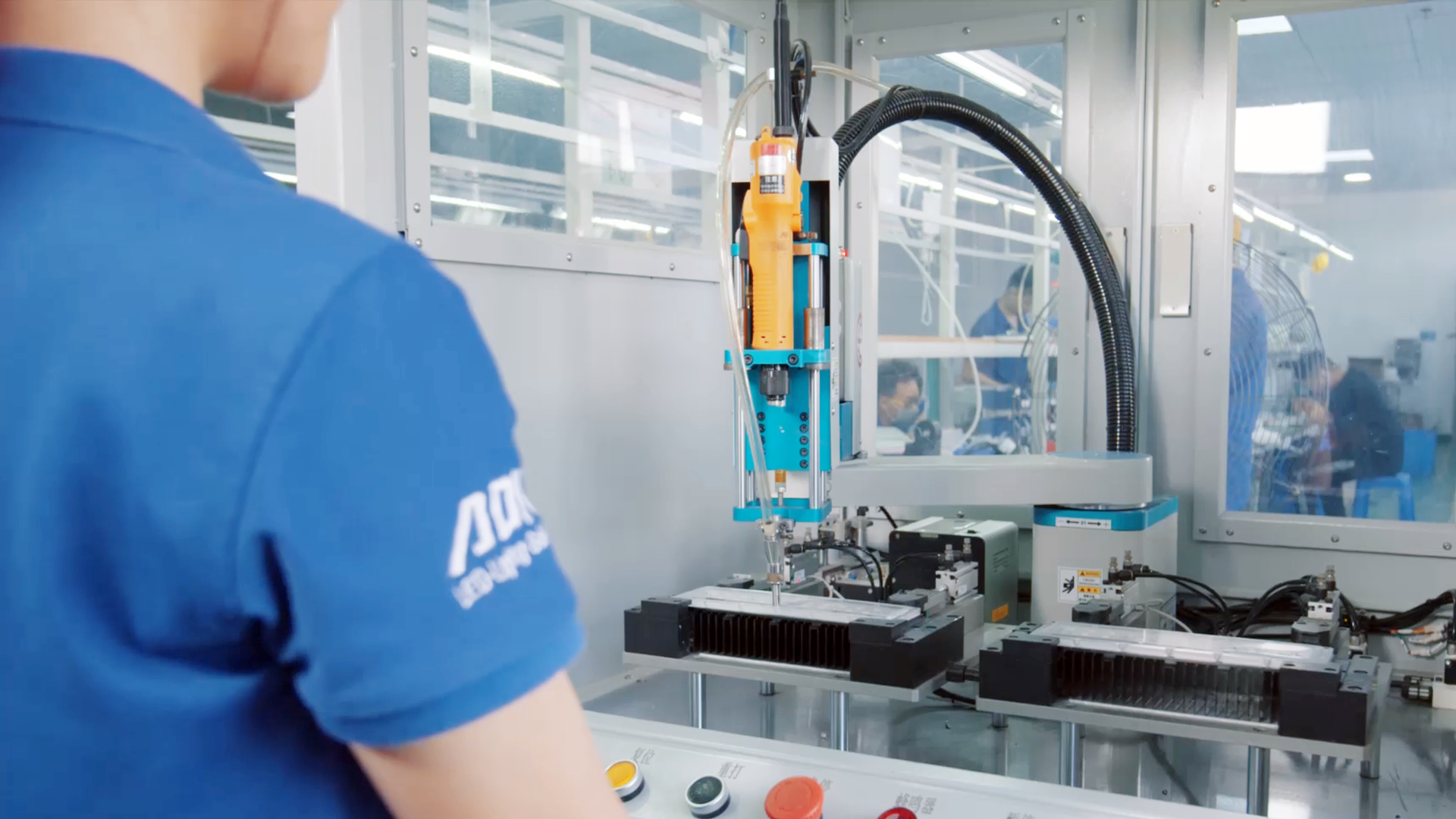
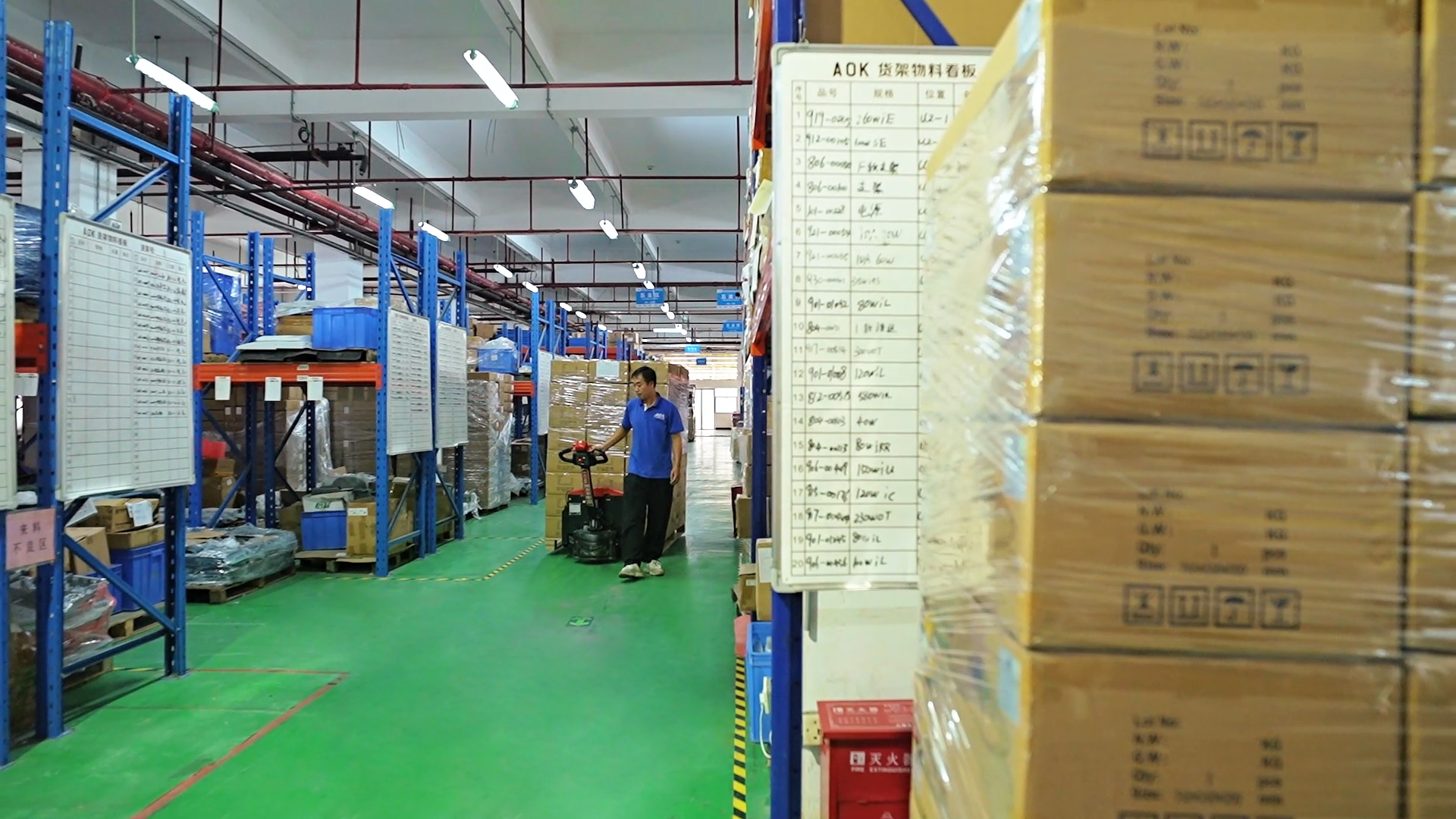
Manufacturing depth matters because specification quality is only useful if it can be reproduced at volume. AOK operates with 30 engineers in R&D, four production lines and roughly 2,500 units per day of output, has served customers in more than 100 countries with more than 10,000 completed projects and over one million units installed, and holds ISO9001, ISO14001, UL, TUV and RoHS certifications. The company also maintains long-term supply relationships with LED component suppliers including Philips LUMILEDS and Osram, which is relevant to buyers who need the same LED platform available across repeat orders.
The Four Parameter Families, Explained Through the AOK SD Series
1. Power: a 20–120 W range is application coverage, not a quality ranking
Power on a solar street light datasheet refers to the input wattage of the LED module, not to the light output. The AOK SD series spans 20 W to 120 W, and that span is best read as a map of applications. The 20 W to 40 W end covers residential lanes, footpaths, park roads and low-traffic access ways on shorter poles. The mid-range serves standard urban and rural carriageways. The upper end covers wider roads and higher mounting heights within the 3–12 m range the series is designed for.
The practical rule is to specify the lowest power class that satisfies the lighting requirement with the chosen optic. Every step up in wattage propagates through the system: a larger single-side monocrystalline panel, a larger battery, more pole load, and a higher unit cost. As a sizing reference, the 80 W SD configuration is stated with a 614.4 Wh battery capacity.
2. Efficacy: what “up to 210 lm/W” is actually useful for
Luminous efficacy is delivered lumens divided by input watts. For a solar product it is the single most consequential electrical figure, because it determines how much panel and battery capacity is needed to produce a given amount of light. The SD series is specified at up to 210 lm/W. At any given wattage, that translates into more delivered light per watt, and therefore either a lower power class for the same lighting result or a smaller energy storage requirement.
Two cautions apply when comparing efficacy values between suppliers. First, compare at the same colour temperature and with documented test conditions, because efficacy varies with CCT and drive current. Second, distinguish a series-level maximum from a specific model's delivered performance: “up to 210 lm/W” describes the top of the SD range, not every wattage within it. Request the photometric report for the exact model being quoted, and compare delivered lumens at the specified drive current rather than the headline lm/W figure alone.
3. Optics: T2, T3, T4 and T5 decide pole spacing and civil cost
Optics convert a lumen package into a road surface. The SD series is offered with T2, T3, T4 and T5 distributions, and AOK's roadway lighting listings state Type II through Type V coverage with more than 20 optical distributions available across the range. The distribution types map to geometry rather than to quality:
- T2 — a narrower, longer throw, suited to narrow carriageways and single-side mounting where the pole line is close to the road edge.
- T3 — a medium distribution for standard road widths, the usual default for two-lane urban and rural roads.
- T4 — a wider distribution for broader carriageways, offset mounting positions and where the pole cannot be placed close to the kerb.
- T5 — an area-style distribution for roundabouts, junctions, parking areas and residential open spaces where light must be spread in several directions.
Because the distribution determines how far apart poles can stand while still meeting uniformity requirements, the optic choice usually moves the project budget more than the luminaire choice does. Ask for the photometric file for the exact configuration and run the layout calculation before fixing pole positions.
4. Controls and power management: MPPT, sensing and monitoring
The solar side of the SD series uses a single-side monocrystalline panel with MPPT charging, and an IP67 MPPT controller. The IP67 rating on the controller matters as much as the rating on the luminaire: controller failure through moisture ingress is one of the most common causes of a solar light going dark while the LED module itself is still healthy.
Energy behaviour for the 80 W configuration is stated as roughly 5 hours average charging time, 7.2 hours of full-power runtime, and 2–3 rainy days of autonomy. Those three numbers should be read together, because they define the operating envelope: a project that needs longer full-power runtime at a higher latitude must either accept a larger battery or accept a dimming profile.
Controls extend that envelope in two directions. PIR or microwave sensor options allow the fixture to reduce output when no movement is present and return to full output on detection, which stretches stored energy across longer nights. Potential IoT monitoring goes further, supporting predictive upkeep: instead of reactive lamp replacement, the operator can act on battery condition and fault signals before a road goes dark. Both options should be specified explicitly, including the default dimming profile and the sensor trigger thresholds, because an unspecified sensor is effectively an unspecified energy budget.
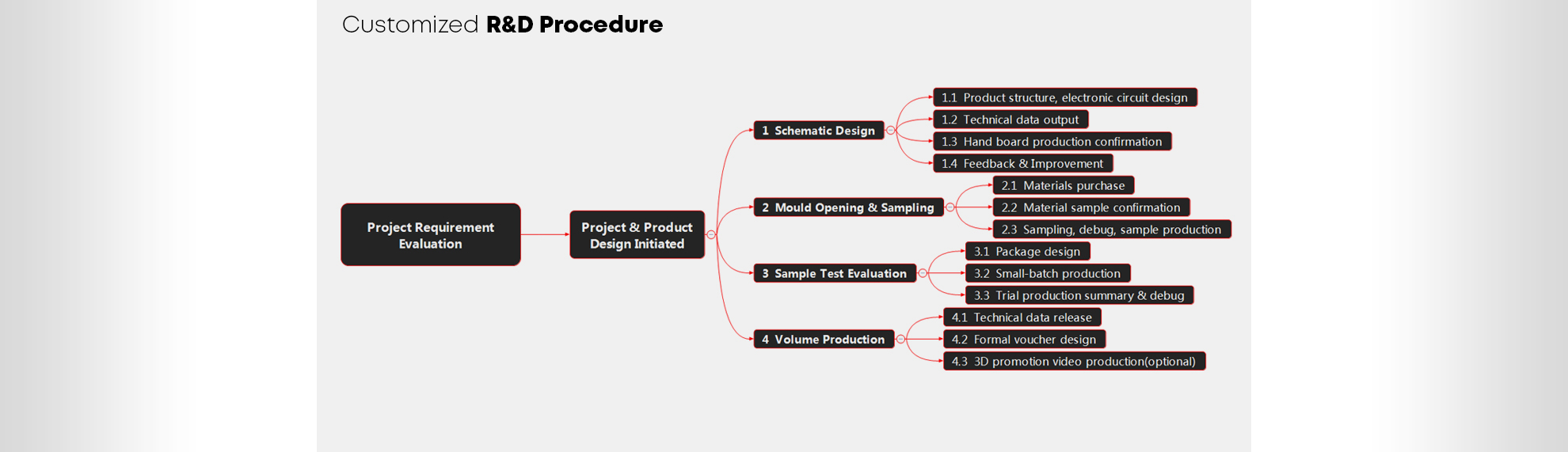
Step-by-Step: Turning a Road Requirement into a Locked Specification
The sequence below is the order in which the parameters should be fixed. Changing the order — for example choosing wattage before optics — usually forces a second design round.
- Fix the lighting requirement. Record the road class, required average illuminance, uniformity ratio and mounting height (the SD series operates across 3–12 m). These values come from the project owner, not from the supplier.
- Fix the geometry. Confirm carriageway width, single-side or opposite mounting, overhang and the pole spacing the civil design can support.
- Select the optical distribution. Choose T2, T3, T4 or T5 against that geometry, then run the layout calculation with the supplier's photometric file. If uniformity cannot be met at the planned spacing, change the optic before changing the wattage.
- Set the power class. Within the 20–120 W range, select the lowest wattage that meets the requirement with the chosen optic. Record the reason for the choice — this is the justification auditors and reviewers will ask for.
- Verify efficacy and delivered lumens. Request the photometric report for the exact model and drive current, and confirm the CCT. Treat “up to 210 lm/W” as the range ceiling and confirm the figure for the quoted wattage.
- Size the solar side. Confirm panel type (single-side monocrystalline with MPPT on the SD series), battery capacity for the chosen wattage, average charging time and required autonomy — for the 80 W configuration, roughly 5 hours charging, 7.2 hours full-power runtime and 2–3 rainy days.
- Define controls. Specify PIR or microwave sensing if required, the dimming profile, and whether IoT monitoring for predictive upkeep is in scope. Confirm the controller rating (IP67 on the SD series) and the protection set: overcharge and over-discharge protection, temperature control, and enclosure protection against water ingress.
- Lock the execution package. Agree the documentation set, warranty term (SD series standard 3 years, extendable to 5 years), spare-module and controller continuity commitments, acceptance criteria and delivery terms before issuing the purchase order.
| Specification item | What to write into the document | Why it matters at execution |
|---|---|---|
| Power class | Exact wattage within 20–120 W, with the lighting calculation attached | Prevents post-award uprating and resizing of panel and battery |
| Efficacy | Delivered lumens and lm/W for the quoted model, with test report reference | Makes the energy budget auditable |
| Optical distribution | T2 / T3 / T4 / T5 plus photometric file version | Fixes pole spacing and uniformity |
| Solar and charging | Single-side monocrystalline panel, MPPT charging, autonomy in rainy days | Defines the operating envelope for the site |
| Controller | IP67 MPPT controller, model reference, protection functions | Determines spare-part availability for the service life |
| Controls | PIR or microwave option, dimming profile, IoT monitoring scope | Sets nightly energy consumption and maintenance model |
| Warranty and spares | Term (3 years standard, up to 5 years), modular replacement parts | Converts the purchase into a supportable asset |
Use Cases: Matching SD Series Configurations to Road Types
Because the SD series covers 20–120 W with four distribution types, the same platform can serve quite different roads — provided the configuration is matched rather than defaulted.
- Urban collector roads (8–12 m mounting): mid to upper power classes with a T3 or T4 distribution, sized so that pole spacing suits the existing civil grid rather than being re-planned around the luminaire.
- Rural access roads: the cost-sensitive case the platform is designed around. Moderate power with T2 or T3 optics and sensor-based dimming keeps the panel and battery within a size the pole can carry.
- Residential streets and lanes (3–6 m mounting): the 20–40 W end of the range with PIR or microwave sensing, where presence-based dimming is more valuable than raw output.
- Parking areas and open residential spaces: T5 area distribution, with power chosen for uniform coverage rather than for a centre hot spot.
Equally important is knowing where a platform should not be used. The SD series is designed for standard urban and rural roads and residential areas at 3–12 m mounting heights. Projects in hurricane-prone coastal zones that require extreme wind resistance, or sites with a documented vandalism and impact risk, need a different specification basis — for example the Balder BI-S5A, which is stated with IP66 plus IK10 protection, 205 km/h wind resistance and a full metal anti-corrosion design. Matching the platform to the environment is part of the same discipline as matching the optic to the road.
AOK SD Series vs. Balder BI-S5A: Verified Parameter Comparison
The comparison below uses only supplier-stated parameters for the two products. It is intended to show which parameters differ and why those differences matter, not to declare a winner — the correct choice depends on environment, autonomy requirement and budget structure.
| Parameter | AOK SD series | Balder BI-S5A |
|---|---|---|
| Power range | 20–120 W | 70–120 W |
| LED efficacy | Up to 210 lm/W | 110 lm/W |
| Optical distributions | T2 / T3 / T4 / T5 | Not stated in the available comparison data |
| Solar panel | Single-side monocrystalline with MPPT | Bifacial double-glass |
| Controller | IP67 MPPT controller | Not stated in the available comparison data |
| Battery capacity (80 W reference) | 614.4 Wh | 538 Wh |
| Average charging time | Approximately 5 hours | Approximately 6 hours |
| Full-power runtime | 7.2 hours | 12 hours plus 3 nights autonomy |
| Rainy-day autonomy | 2–3 days | Extended autonomy with intelligent 3-night control |
| Enclosure and impact | IP66 / IK08 / IK09 stated for AOK roadway lighting listings | IP66 + IK10 |
| Wind resistance | Not stated in the available comparison data | 205 km/h |
| Controls | PIR or microwave sensor options; potential IoT monitoring | Microwave sensor with intelligent 3-night autonomy |
| Maintenance approach | Modular maintenance with standard IP67 MPPT controller | Long-warranty ownership with corrosion-resistant all-metal build |
| Warranty | 3 years standard, extendable to 5 years | 10-year fixture, 5-year battery |
| Typical fit | Cost-sensitive urban and rural roads and residential areas needing wide power coverage, high efficacy and control options | Harsh coastal or hurricane-prone environments requiring extreme wind resistance and long-term durability |
Frequently Asked Questions
Which protection ratings and documents should be verified before approving a solar street light specification?
Verify the enclosure and the controller as one protection system. AOK roadway lighting listings state IP66 with IK08/IK09 impact ratings, and the SD series uses an IP67 MPPT controller. These are supplier-stated values, so for tender submission request the test reports that carry each rating, together with certificate details — certificate number, issuing body and the models covered — for any compliance mark the project requires. AOK holds ISO9001, ISO14001, UL, TUV and RoHS certifications as company-level credentials. Also confirm that internal protections cover overcharge and over-discharge and include a temperature control system, because battery overheating, LED degradation and water ingress are the failure modes these measures exist to prevent.
How should a 210 lm/W solar street light be compared with a 110 lm/W alternative on equal terms?
Compare delivered lumens against input watts under the same colour temperature and documented test conditions. At the same wattage, a system specified at up to 210 lm/W produces substantially more light per watt than one stated at 110 lm/W, such as the Balder BI-S5A. In practice that difference can be spent in two ways: keep the light output and reduce panel and battery capacity, or keep the solar system and lower the power class. Confirm the figure for the specific model being quoted, since a series maximum is not the performance of every wattage in the range.
What actually drives the cost of a 20–120 W solar street light project?
Cost is driven by the power class and the energy system behind it, not by the luminaire alone. Higher efficacy reduces the panel and battery capacity needed for a given lighting task, and a range that starts at 20 W allows low-demand residential lanes to be served by a small system instead of the 70 W-class minimum that a narrower range such as the Balder BI-S5A imposes. Modular maintenance design also reduces customisation expense, and the warranty term — 3 years standard on the SD series, extendable to 5 years — should be priced into the lifecycle comparison rather than treated as an optional extra.
Can optics, sensors and controls be validated on a sample before a full order is placed?
Yes, and they should be. The sequence that works is: review the photometric file for the exact distribution and wattage, run the layout calculation, then test a single sample at night on the actual road geometry before approving the configuration. Sensor behaviour needs the same treatment — confirm the detection range and the resulting dimming profile, because unverified sensor logic silently changes the autonomy calculation. Pre-shipment testing and third-party inspection, for example by SGS, are the acceptance mechanisms used to confirm that the approved configuration is what ships.
What commercial terms apply, and how is delivery controlled on a solar street light order?
MOQ varies depending on the product type. Delivery terms are EXW, FOB or CIF. Payment terms are 30% T/T in advance with 70% T/T before shipment, or L/C. Acceptance is based on pre-shipment testing and third-party inspection such as SGS. Because a solar street light specification locks in a controller model and module format for years, it is worth confirming spare-part continuity and warranty extension at the same time as price. To move from specification to execution, request an SD series sample or quotation from AOK at info@aokledlight.com or +86-755-23579418.
Conclusion: The Specification Is the First Act of a Long-Term Supply Relationship
Power, efficacy, optics and controls are technical parameters, but each one commits the buyer to something beyond the delivery date. The power class fixes the panel and battery the site must carry. The efficacy figure fixes how much of that hardware the project actually needed. The optical distribution fixes the pole layout, which is the most expensive thing to change later. And the controller, sensor and monitoring decisions fix which spare parts the asset will need for the next decade.
That is why specification discipline and supplier selection are the same decision in solar street lighting. A buyer who specifies a 60 W SD series luminaire with a T3 optic, documented photometric performance, an IP67 MPPT controller and a defined sensor profile has not only secured the lighting result; they have secured a parts and support pathway that a later procurement round can repeat. A buyer who specifies a wattage and a price has secured neither.
For projects moving from decision into execution, the practical next step is to fix the four parameter families in writing, attach the reports behind each number, and confirm the commercial and service terms against that document.
Next Step: Sample, Quotation or Catalogue
Request an AOK SD series sample configuration or a project quotation against your road geometry and autonomy requirement.
Email: info@aokledlight.com | Tel: +86-755-23579418 | WhatsApp: +86 15359133623
Website: www.aokledlight.com | Blog: blog.aokledlight.com
Download the AOK product catalogue: AOK LED outdoor lighting catalogue (PDF)
All product parameters cited in this guide are as stated by the manufacturer; request test reports and certificate details for tender documentation.
Have Questions or Need More Details?
Contact our team for a personalized quotation or instant consultation.
Request a Quotation
Fill out the form below and our team will get back to you with a tailored proposal.
WhatsApp Direct Chat
Prefer to chat in real-time? Message us on WhatsApp for instant assistance & quick answers.
- Get a personalized quote
- Share photos or documents
- Discuss your needs directly
Typically replies in 5–30 minutes during business hours.