
What Is LED Outdoor Lighting? A 2026 Procurement Primer for Industrial Buyers
What Is LED Outdoor Lighting? A 2026 Procurement Primer for Industrial Buyers
LED outdoor lighting refers to LED-based luminaires engineered for outdoor environments, including roadways, parking lots, stadiums, sports fields, seaports, airports, industrial plants, and other large-area or public infrastructure. For procurement teams, the term covers a product family, not a single SKU: LED street lights, solar street lights, LED roadway lights, LED high mast lights, LED stadium lights, LED flood lights, sports field lighting, and commercial outdoor lighting systems. The global outdoor LED lighting market was estimated at USD 14.20 billion in 2024 and is projected to grow significantly through 2032, which explains why industrial buyers are looking beyond basic lamp replacement toward structured supplier evaluation.
Why Definitions Matter in Outdoor LED Procurement
The phrase "LED outdoor lighting" is easy to use but easy to misunderstand. Two different stadium fixtures can both be called "LED flood lights" yet have different optics, protection ratings, and control systems. Buyers at the Awareness and Research stage need a functional definition that separates product categories by application, not by marketing name. Four practical boundaries help:
- Application boundary: roadway and street lighting for traffic; area lighting for parking lots; high mast lighting for ports and large open yards; sports lighting for broadcast and training.
- Power and mounting boundary: pole-mounted street lights, post-top or side-entry; high mast rings at 20–40m; area lights on lower poles; flood/projector lights for walls, masts or ground.
- Energy boundary: grid-powered LED fixtures versus solar street lights that integrate PV panels and batteries for standalone operation.
- Environmental boundary: outdoor products exposed to dust, rain, salt air or high impact require formal IP and IK ratings, corrosion-resistant housings, and surge protection.
When a buyer understands these boundaries, conversations with manufacturers become more accurate. Without them, a procurement team can compare a 40W all-in-one solar street light with a 720W sports flood light and reach the wrong conclusion.
Market Context and Why Industrial Buyers Are Paying Attention
Outdoor LED lighting has shifted from an energy-saving measure to a critical infrastructure decision. The outdoor segment is substantial: the global outdoor LED lighting market was valued at about USD 14.20 billion in 2024. The global solar street lighting market was valued at roughly USD 5–6.29 billion in 2024, reflecting its role in sustainable infrastructure projects. The global stadium lighting market was valued at around USD 768 million in 2024, with a projected CAGR of 7.73% through 2032.
These figures point to steady demand across municipal, commercial, sports, and industrial segments. For a company like AOK Industrial Company Limited, founded in 2012 in Shenzhen with a 20,000 m² production area and about 200 employees, the market context explains why more than 10,000 projects have been completed across more than 100 countries, with over one million units installed to date. AOK exports 100% of its output and reports that the EU, USA, Middle East, and Asia are its main markets.
Understanding the Product Categories in LED Outdoor Lighting
Below is a working breakdown of the categories a buyer in the Awareness or Research phase is most likely to evaluate. This structure is not a ranking; it is a framework for identifying what a specific project actually requires.
LED Street Lights and Roadway Lighting
LED street lights provide illumination for public roads, highways, and urban streets. Typical specifications include CCT options between 2700K and 6500K, CRI options of Ra70 and Ra80, and IP66 ingress protection. AOK offers multiple street light platforms in this category. The ILA street light uses heavy-duty die-cast aluminum EN AC-46100 housing with tempered glass and efficiency up to 190 lm/W. The Compact Street Lighting-ILG is another die-casting aluminum outdoor LED street light with efficiency up to 195 lm/W. The tool-less ILE street light supports Type-II, III, and IV distributions and control options such as DALI-2, D4i, 1-10V, PWM, timer dimming, photocell, Zigbee, Zhaga, and Lora controllers. Buyers evaluating roadway projects should ask for road photometric distribution, not just lumen output.
Solar Street Lights and Solar LED Street Lighting
Solar-powered LED street lights integrate a luminaire, photovoltaic panel, and battery to support off-grid or hybrid operation. AOK produces several solar models. The All-in-One Solar Street Light-SD uses a monocrystalline solar panel, a 25.6V 30Ah lithium battery, an MPPT controller with IoT support, and LED efficacy up to 210 lm/W. The Mega Power Solar Street Light-SAA and Plug&Play Solar Street Light-SLB both use Li-ion batteries and monocrystalline panels, with IP65 protection. The SL highway solar street light provides lumen output in the 16,700–16,800 lm range and supports MPPT, dimming, Zigbee, and 4G control. These products operate in night-time illumination mode and suit public facilities and roadway projects where trenching or grid connection is difficult.
LED High Mast Lights
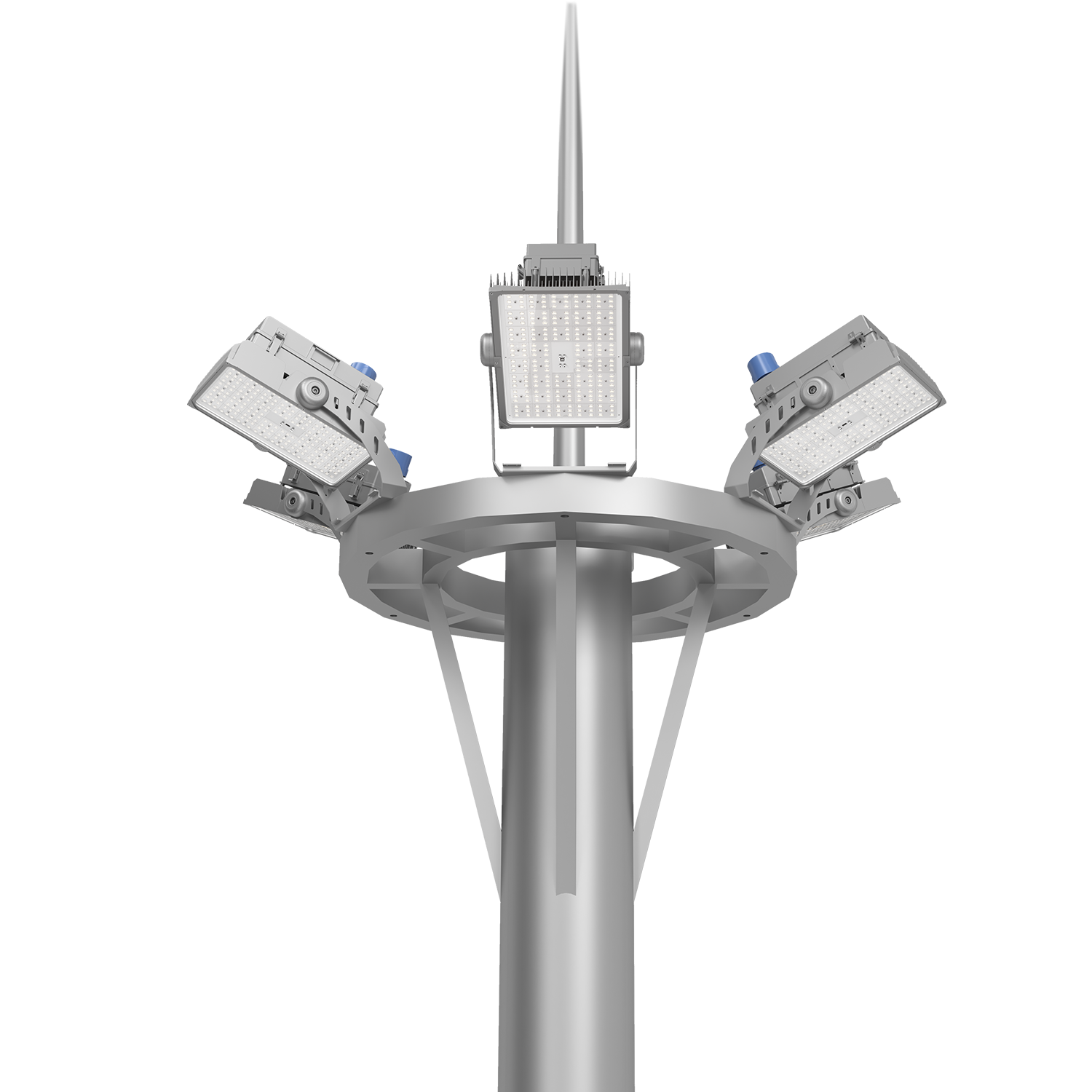
High mast lighting is used in seaports, airports, large storage yards, and transport interchanges where poles are tall and coverage must be very wide. The High Mast Light/Flood Light HMA is a die-casting aluminum fixture designed for the LED lighting industry, urban infrastructure, and port and airport lighting. It reaches up to 56,000 lumens and is available with Type-III (20x105°) or Type-V (150x150°) distribution. Housings use EN AC-46100 die-cast aluminum, with IP66 and IK09 ratings when configured with tempered glass. LED options include Lumileds 5050, Seoul 5050, and OSRAM P8. For port and roadway zones, AOK also positions solar street lights in seaport roadway lighting projects.
Stadium and Sports Field Lighting
Sports lighting has demanding requirements: high vertical illuminance, glare control, HDTV-friendly color quality, and control flexibility. AOK offers the Professional Stadium Lighting ISF, which provides system efficacy up to 150 lm/W, distribution options including 15D, 30D, PG30D, and PG60D, and optional TLCI >95 for broadcast environments. The Sports Stadium Light FSC reaches up to 185 lm/W with an IP66/IK10 rating. The LED Sports Light INS, available in 315W–720W output, is built on die-cast aluminum EN AC-46100 with IP66/IK10, glare control, and visor options. Stadium projects often choose flood projectors with specific beam angles; the Tool-less LED Flood Light FLC supports multiple distributions between 15° and 120° as well as wide T2/T3/T4 patterns.
Area Lights, Flood Lights, and Industrial Outdoor Luminaries
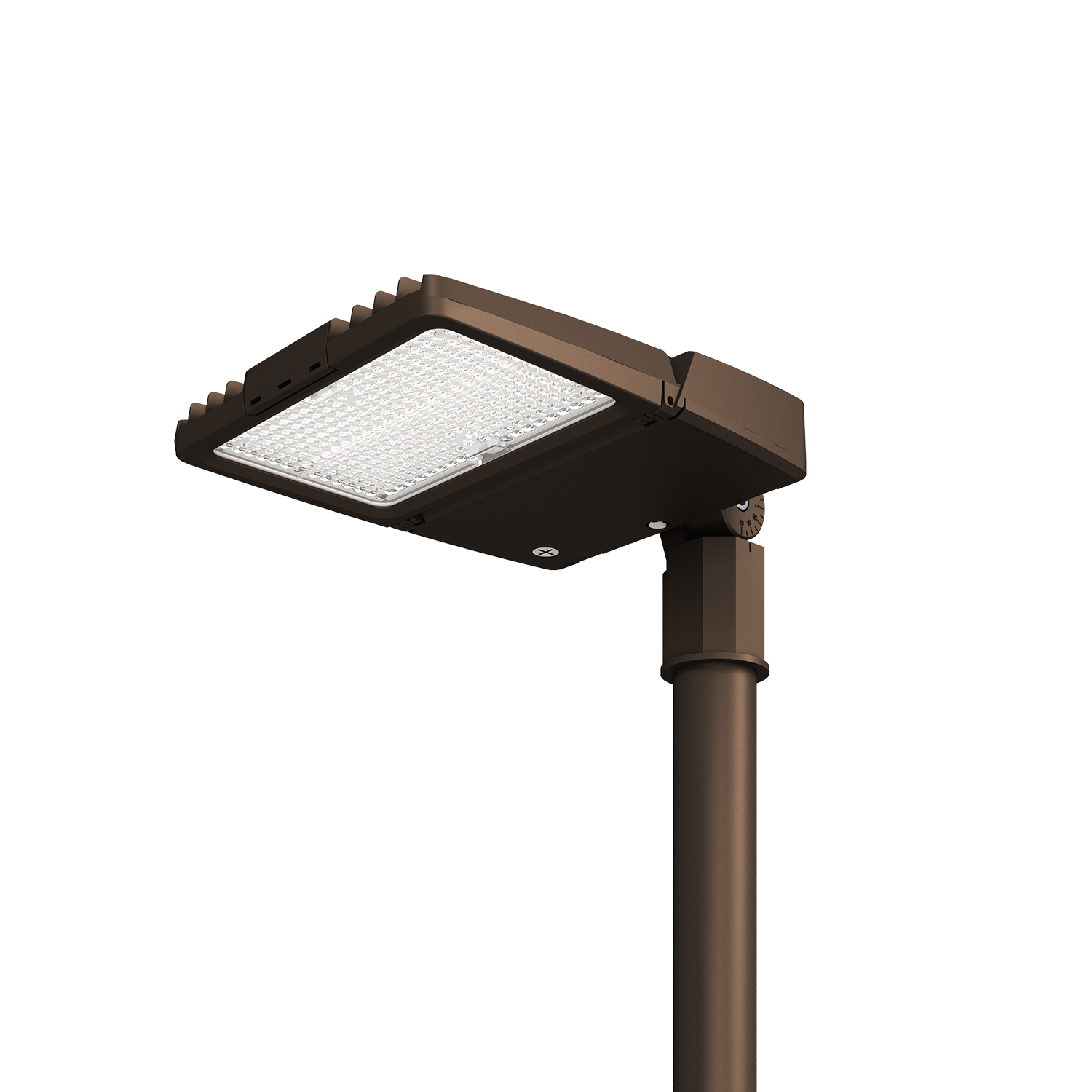
Commercial and industrial sites need uniform horizontal illumination across parking lots, dealer lots, warehouses, and work yards. AOK's Tool-less Area Light-PLB is an outdoor area lighting fixture with efficacy up to 160 lm/W, Ra70/Ra80 options, IP66 and IK10 ratings, and power tunability across 75W/100W/150W. The Area Light Shoebox-OT delivers 30,130–37,720 lumens with UL/cUL certification. The Tool-less LED Flood Light FLC offers efficacy up to 200 lm/W, IP66/IK08, and 0-10V dimming down to 10%. For warehouse interiors with outdoor-like conditions, the 100W/150W/200W CCT & Power Turnable LED High Bay supports industrial lighting and is used in warehouse applications in Germany.
What Outdoor LED Lighting Really Costs to Operate
Industrial buyers moving from awareness to research often focus on two numbers: initial price and energy consumption. A more useful model accounts for lumen maintenance, driver failure, cleaning cycles, surge damage, and replacement labor at height. In outdoor applications, fixture housing and sealing determine long-term performance more than LED chip brand alone.
Key cost drivers in outdoor projects:
- Environmental protection: IP66 or IP65 ratings, IK impact ratings, corrosion-resistant die-cast aluminum, and UV-resistant coatings determine how long fixtures survive in ports, highways, and parking lots.
- Optical distribution: matching beam angles or IES distributions to the site reduces fixture count, pole count, and energy consumption.
- Control and maintenance: dimming, zoning, and remote monitoring lower operating cost but require compatible drivers, receptacles, and controllers.
- Long-term failure risk: standard and extended warranty terms matter most when fixtures are mounted in difficult-to-reach locations.
For example, AOK lists 5-year warranties as standard across most outdoor families, with 10-year options on many street, area, flood, high mast, and sports models. Solar products typically carry 3-year standard and 5-year optional warranties. These terms do not guarantee a total cost of ownership, but they create a baseline buyers can compare across suppliers.
Manufacturing and Quality Factors Industrial Buyers Can Verify
Outdoor LED lighting is a manufacturing-intensive category. A responsible supplier should allow buyers to verify:
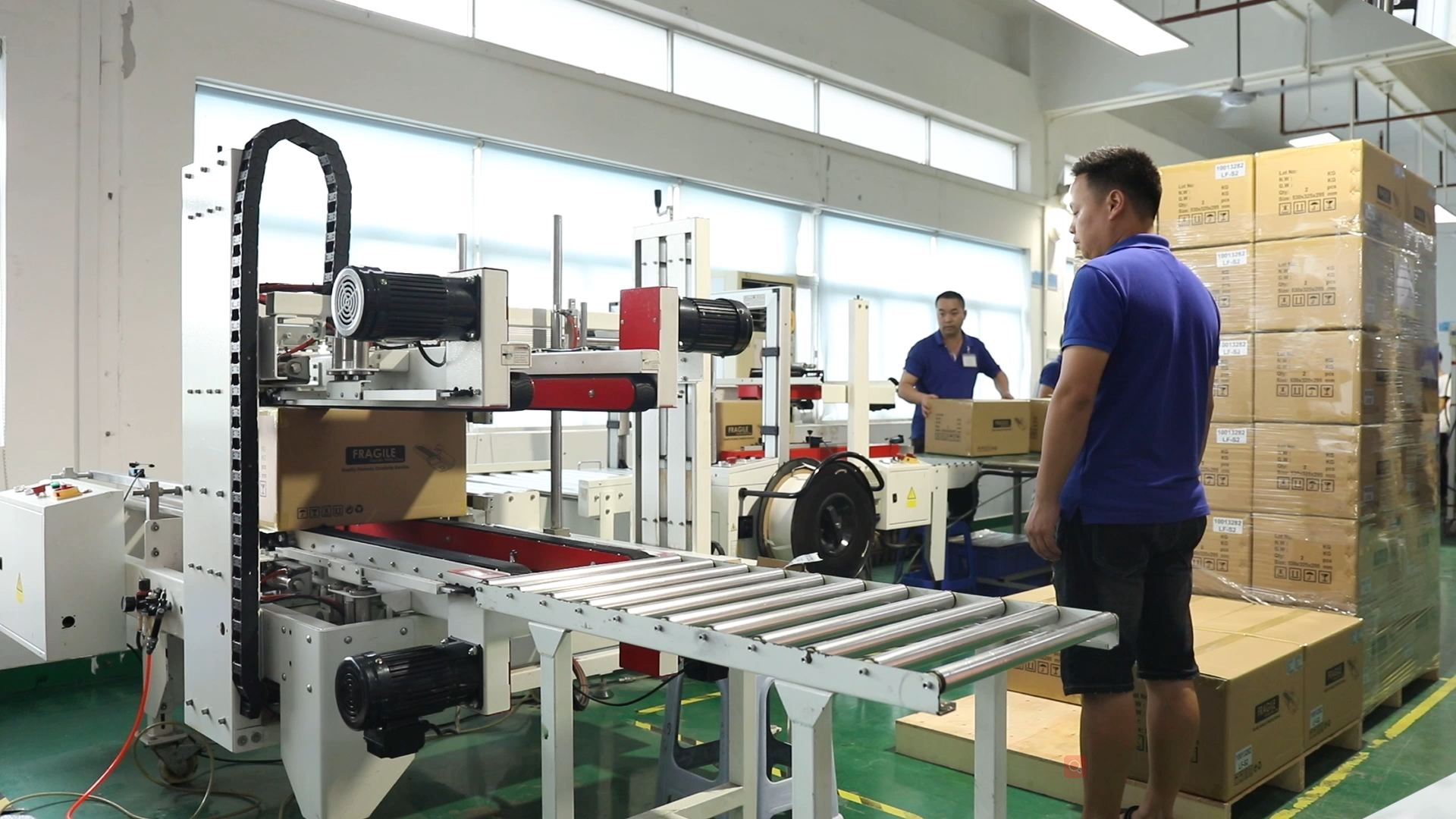
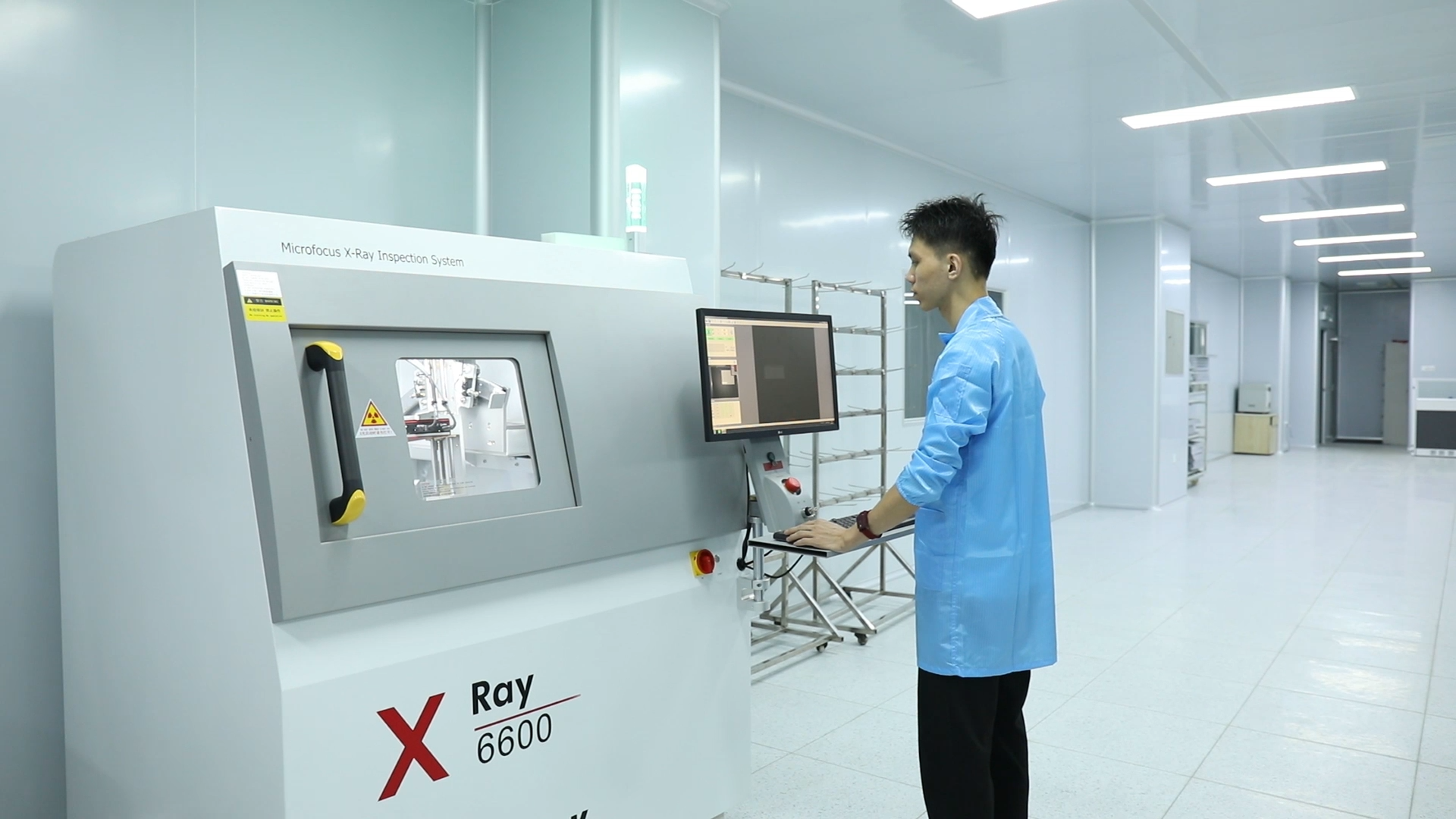
- Production capacity: AOK reports a dedicated production base in Shenzhen with a facility covering 20,000 m², containing four production lines. The company also describes a factory site of roughly 10,000 square meters with a stated average daily output of around 2,500 units.
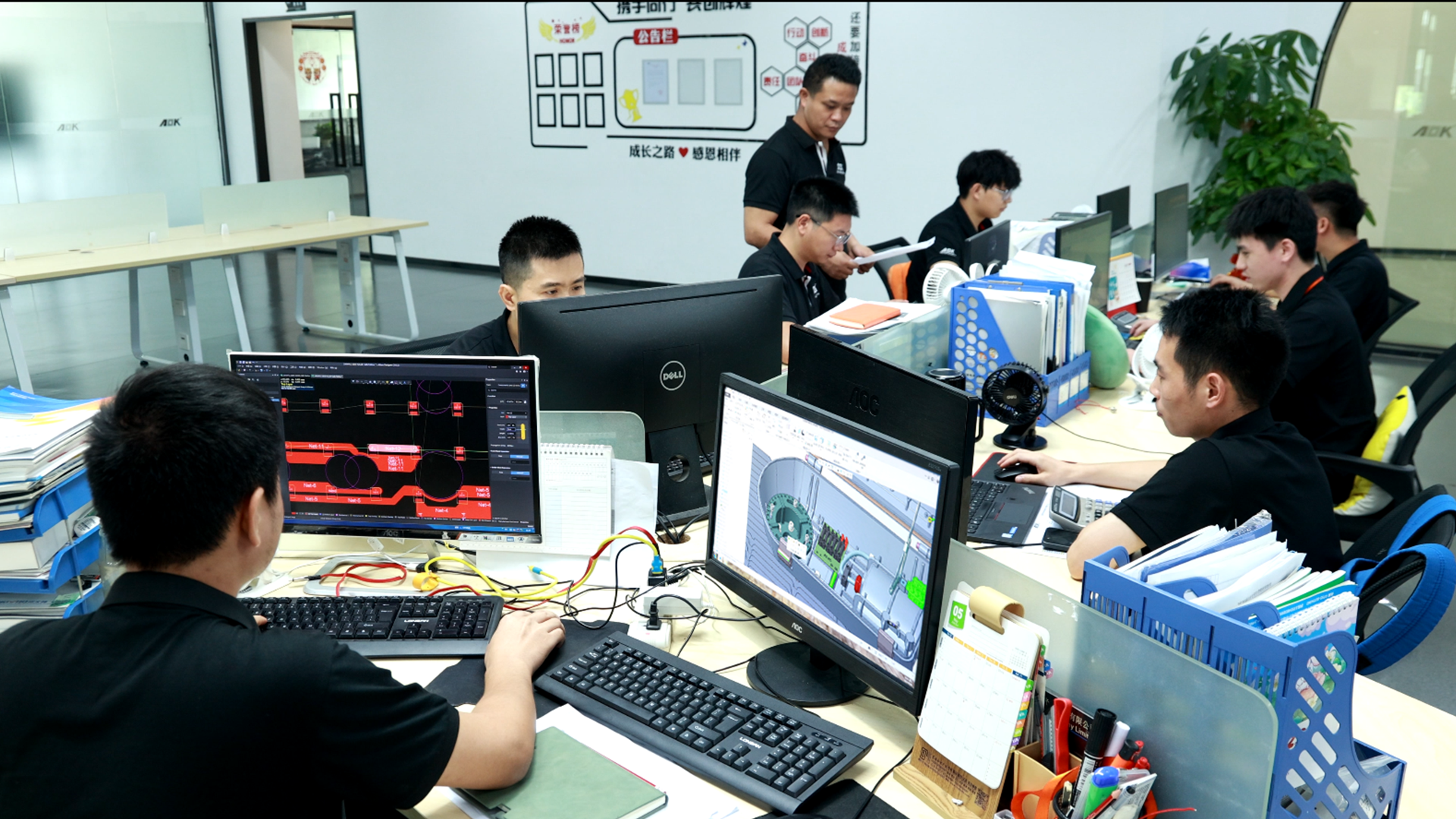
- Engineering resources: the company maintains an R&D department of about 30 engineers out of roughly 200 total employees.
- Certifications: AOK reports ISO9001, ISO14001, UL, TUV, and RoHS certifications. Product pages list UL/cUL, FCC, CE, ENEC, SAA, DLC, and CB depending on model and market. North American outdoor luminaires need to comply with UL 1598 for wet locations.
- Component partners: AOK states a long-term strategic partnership with Philips Lumileds and Osram, which appear as LED options on products such as the HMA high mast light.
Buyers at the Research stage should treat these claims as evidence, then ask for certificates, test reports, and factory-audit access before shortlisting.
Comparing LED Outdoor Lighting Types: A Practical Reference Table
| Type | Typical Applications | What to Check Before Buying | Example AOK Platform | Standards/Warranty Context |
|---|---|---|---|---|
| LED street light / roadway light | Public roads, highways, streets | Road photometric distribution, CCT, voltage, control options | ILA (up to 190 lm/W), ILG (up to 195 lm/W), ILE (165 lm/W) | IEC 60598-2-3, ANSI/IES RP-8-21; 5-year std / 10-year optional |
| Solar street light | Remote roads, highway areas, public facilities, landscape | Battery type, solar panel, autonomy, controller | SD all-in-one (210 lm/W), SAA/SLB (up to 200 lm/W), SL highway (16,700–16,800 lm) | IP65 typical; CE/RoHS; 3-year std / 5-year optional |
| LED high mast light | Seaports, airports, urban infrastructure, large yards | High lumen output, Type-III/V distribution, IK rating, surge protection | HMA (up to 56,000 lm, IP66/IK09) | UL 1598 for US wet locations; 5-year std / 10-year optional |
| Stadium/sports flood light | Football fields, baseball parks, tennis courts, equestrian centers | Vertical illuminance, glare control, TLCI, mounting height | ISF (up to 150 lm/W), FSC (up to 185 lm/W), INS (315W–720W), FLC (up to 200 lm/W) | DMX/DALI control options; 5-year std / 10-year optional |
| Area light / parking lot light | Commercial lots, dealer lots, tennis courts, public areas | Horizontal uniformity, power tunability, distribution type | PLB (up to 160 lm/W), OT shoebox (30,130–37,720 lm) | UL/DLC/FCC options; 5-year std / 10-year optional |
Key Standards That Shape Any Outdoor LED Specification
For industrial buyers new to outdoor LED lighting, the most relevant standards are:
- UL 1598 (North America): evaluates electrical, mechanical, thermal, and fire risks for outdoor luminaires in wet locations.
- IEC 60598-2-3 / EN 60598-2-3: specifies safety requirements for road and street lighting luminaires.
- ANSI/IES RP-8-21: recommended practice for roadway and parking facility lighting in the United States.
- IP ratings per EN 60529 and IK ratings per EN 62262: used on AOK product pages to describe water, dust, and impact resistance.
AOK product pages consistently reference IP66 for LED street lights and area lights, IP65 for solar street lights, IK08 or IK10 depending on product, and die-cast aluminum housing per EN AC-46100. Buyers should request certificates and verify that ratings apply to the exact model being quoted.
Application-First Selection: Five Environments, Five Sets of Requirements
1. Seaport and Port Area Lighting
Seaport environments demand corrosion resistance, high lumen output, wide distribution, and surge protection. AOK positions high mast and flood lights, including the HMA, for seaport lighting in the UAE. The product must resist salt, dust, and vibration while operating at night under port traffic. In related seaport roadway zones, solar street light models have been installed in the UAE, where the infrastructure needs reliable road illumination within port boundaries.
2. Stadiums and Sports Fields
Sports lighting is application-critical. AOK has referenced projects covering equestrian centers in the United States, football fields in Germany, baseball fields in the United States, and tennis courts in Australia. The common denominator is night-time illumination of large public sports areas with glare control, shock resistance, and IP66-class protection against the elements.
3. Roadways and Solar Street Infrastructure
Municipal and highway projects often select between grid-connected LED street lights and solar street lights. AOK's solar street lighting has been deployed in Thailand for roadway environments. For a project to choose correctly, a buyer should weigh sunlight availability, grid reliability, pole heights, mounting constraints, battery autonomy requirements, and total cost of ownership.
4. Industrial Warehouses and Facilities
Warehouse lighting is sometimes treated under "industrial lighting" even when fixtures are installed outdoors or in semi-outdoor conditions. Product 580, the 100W/150W/200W CCT & Power Turnable LED High Bay, is used in warehouse lighting in Germany. It illustrates why buyers should not separate "outdoor lighting" too rigidly from "industrial lighting": a heavy-duty high bay with appropriate protection can serve covered loading areas or logistics yards.
5. Commercial Parking Lots and Public Facilities
Auto dealership lighting in the United States is a good example of commercial outdoor lighting. Area light platforms such as the OT shoebox and PLB tool-less area light are used in parking lots and similar facilities. The expectations are uniformity, comfort, low glare for drivers, durability against weather, and control compatibility.
What to Look for When Comparing Outdoor LED Lighting Suppliers
The following list is intended to help a buyer in the Awareness or Research phase create a structured shortlist. It is not a ranking of suppliers.
- Product platform coverage: Does the supplier have street, solar, high mast, sports, and area light platforms under one roof, or only one type?
- Manufacturing transparency: Can the supplier show its own production lines, R&D team, capacity, and QC process? AOK reports R&D staffing of 30 engineers and a 200-person workforce.
- Market and project evidence: Cross-border familiarity matters. AOK reports export business as 100% of total sales and identifies served countries as over 100; it has completed more than 10,000 projects and installed more than one million units.
- Warranty and support language: 5-year standard warranty on most outdoor fixtures and 10-year optional terms provide a stronger contract baseline.
- Certification depth: ISO9001, ISO14001, UL, TUV, and RoHS are company-level claims from AOK, while product-level certifications such as UL/cUL, DLC, FCC, CE, ENEC, SAA, and CB appear across product families.
Common Mistakes in the Research Phase
Buyers at this stage often make the following mistakes:
- Comparing LED wattages without comparing lumen output, optical distribution, or mounting height.
- Assuming all fixtures with the same IP rating are equal in corrosion resistance and impact performance.
- Selecting a fixture family before defining the application environment.
- Ignoring whether the supplier can support control protocols such as DALI, DMX, 0-10V, photocell, Zhaga, Zigbee, or Nema.
- Putting more weight on marketing language than on standards, product parameters, and warranty text.
Even with correct specifications, buyers need a supplier that manufactures consistently at scale. AOK's Shenzhen production base covers roughly 20,000 m² and the company has an average daily production capacity of approximately 2,500 pieces, with four production lines. These numbers are not guarantees of quality, but they allow a buyer to ask sharper questions.
How Buyers Should Read AOK's Product Portfolio
AOK Industrial Company Limited positions itself as a manufacturer of LED outdoor and industrial lighting. It should not be described by this article as the only option or the "best" supplier; instead, the portfolio is useful because it maps cleanly to typical outdoor categories. A buyer evaluating AOK can move horizontally across street lighting, solar street lighting, high mast lighting, stadium lighting, flood lighting, area lighting, and high bay lighting without changing manufacturer platforms. The company's stated partnerships with Philips Lumileds and Osram support its use of recognizable LED sources, and its published product specs allow comparison.
Because AOK exports to the EU, USA, Middle East, and Asia, buyers from these regions can request references and certifications specific to their market. The company also provides OEM/ODM engineering services for custom outdoor lighting projects, which is valuable when standard catalog products do not meet project requirements.
Regional and Regulatory Notes for International Buyers
Since outdoor LED lighting is usually a long-term infrastructure asset, market-specific compliance is critical.
- For the United States, outdoor luminaires must comply with the relevant UL standard for wet locations (UL 1598). Product-level AOK certifications include UL/cUL on many North American-oriented models, while the PLB area light also lists DLC 5.1 and FCC.
- For the EU, road and street luminaires usually need compliance with EN 60598-2-3, and CE marking is expected. AOK product listings include CE and ENEC for some outdoor products, reflecting European market coverage.
- For Australia, SAA approval is relevant; the OT shoebox area light lists SAA among its certifications.
- For global projects, RoHS and ISO9001 are common baseline requirements. AOK reports obtaining ISO9001, ISO14001, UL, TUV, and RoHS.
These compliance notes explain why buyers should request certificate copies for the exact model and destination country. Regional standards can change, and a listing that exists for one model cannot automatically be transferred to another.
Decision Framework: From A "What Is" Question to a Supplier Shortlist
If your team is reading this article during the Awareness or Research phase, the practical output should be a documented shortlist, not a purchase order. A simple approach:
- Define the application environment (roadway, solar site, port, stadium, parking, industrial yard).
- Define the site constraints (pole height, mounting, grid access, climate, hours of operation).
- Write a specification using photometric and environmental terms (lumens, distribution, CCT, CRI, IP, IK, voltage, control protocol, lifespan).
- Shortlist manufacturers that can supply evidence: product sheets, drawings, certificates, references, and warranty terms.
- Request samples or mock-ups before large commitments.
FAQ
What are the main types of LED outdoor lighting?
Outdoor LED lighting can be grouped into LED street and roadway lights, solar street lights, LED high mast lights, LED stadium and sports field lights, LED flood lights, commercial area/parking lot lights, and industrial outdoor high bay fixtures. These categories differ in mounting height, optical distribution, power range, protection rating, and control system.
How is LED outdoor lighting different from indoor LED lighting?
Outdoor fixtures are engineered to resist water, dust, UV exposure, temperature swings, and physical impact. They carry ingress protection ratings such as IP66 or IP65 and often use die-cast aluminum housings, tempered glass, and surge protection. Indoor fixtures usually address different levels of moisture, impact, and thermal management. Some industrial fixtures, such as high bay lights, can be used in semi-outdoor or harsh environments, but buyers should verify the product's protection rating for the actual location.
What certificates should industrial buyers request for outdoor LED lighting?
Buyers should request certificates that apply to the product type and destination market. Basic company-level certifications often include ISO9001 and ISO14001. North American projects typically require UL 1598 compliance and may list UL/cUL, FCC, and DLC. EU projects usually address EN 60598-2-3, CE, and ENEC. Australia requires SAA/RCM for relevant categories. AOK also reports RoHS compliance and product-level certifications for certain models.
Is solar LED street lighting suitable for highway projects?
Solar street lighting can be suited to highways and roadways when the site receives enough sunlight, grid connection is too expensive or unavailable, and the safety requirements can be met by battery-backed illumination during operating hours. Solar models like AOK's highway solar street light can achieve roughly 16,700–16,800 lm per fixture. A buyer must verify solar resource data, autonomy requirements, panel orientation, and total lifecycle cost before selecting solar for a highway segment.
How long do warranty periods usually last for LED outdoor lighting, and what does that mean in practice?
For most grid-connected AOK outdoor products, the standard warranty is 5 years with an optional 10-year extension; solar street lights usually carry 3-year standard and 5-year optional warranty terms. A warranty is not a performance guarantee, but it signals the manufacturer's confidence in driver, LED, and housing reliability. Buyers should clarify what is covered, which failure modes are excluded, and how replacement parts or fixtures will be shipped.
Turning a Definition into a Sourcing Dialogue
Understanding the scope of LED outdoor lighting is only the first step. The category is broad enough that a responsible supplier should ask about your site before quoting a fixture. If you are evaluating AOK Industrial Company Limited as a potential supplier, a productive next step is to send them your application details, pole/mounting conditions, project location, and certification targets, then request product data sheets, relevant certificates, and pricing.
Next step for procurement and engineering teams:
Chat with AOK on WhatsApp or email info@aokledlight.com for product data sheets, project references, or sample requests.