Disc vs Cup vs Roller Brush: A Comparison Guide for Cleaning and Surface Prep
Choose between a disc, cup, and roller brush by contact geometry first, then by mounting, filament, speed limit, and compliance. A disc brush presents a flat circular face to a surface. A cup brush presents an open cup face for edge, corner, and confined-area contact. A roller brush presents a rotating cylinder for wide, continuous, or cylindrical surfaces. In gun cleaning kits, the same rule applies at a smaller scale: the bore needs a tube or spiral brush, while flat and recessed surfaces on the frame, slide, and bolt can use a small disc or cup brush for cleaning and surface prep. AOQUN BRUSH, the brand of Guangzhou Aoqun New Material Co., Ltd., manufactures all three formats as custom and OEM products.
Problem Definition: Why the Wrong Brush Shape Fails
The common failure is to select by appearance or unit price rather than by contact geometry and operating limits. A flat disc brush used on a curved edge leaves an uneven contact band. A cup brush used on a large flat floor concentrates pressure and can mark the surface or leave swirl marks. A roller brush installed on a spindle without dynamic balance can vibrate at speed, which shortens brush life and can transfer chatter marks to the workpiece. In regulated supply chains, an unverified filament or missing REACH or RoHS documentation can stop an import shipment even when the brush mechanically fits the machine.
The second failure is to treat a gun cleaning kit as a single-brush purchase. A bore, chamber, and gas tube are internal cylindrical features. They require a tube brush or spiral brush. A disc, cup, or roller brush cannot clean a bore effectively. For the frame, slide, bolt face, magazine well, and other flat or recessed surfaces, a small disc or cup brush is the practical choice. A roller brush is not the primary tool in a gun cleaning kit; it belongs to equipment-scale cleaning where a rotating cylinder covers a wide surface.
Industry Background: Contact Geometry Drives the Specification
Brush cleaning and surface preparation are used across floor care, automotive refinishing, metal fabrication and welding, woodworking, food and beverage equipment, photovoltaics, rail transit, medical device reprocessing, and semiconductor manufacturing. The operating environment determines the filament: abrasive nylon for deburring and coating removal, PA, PP, and PBT for general cleaning, stainless steel or brass wire for heavy-duty surface work, PVA for scratch-free wafer contact, and food-contact grades for equipment that touches food. The brush body and mounting must match the machine: a threaded arbor for a grinder or scrubber, a shaft and end fitting for a roller, or a drawing-specific holder for a sealing or grommet brush.
Compliance is part of the specification, not an afterthought. REACH SVHC, RoHS, UL 94 V-0, and FDA food-contact test reports are available for defined samples. Management-system certificates cover defined scopes and validity periods. A European importer should not accept a certificate number without the sample identity, scope, and validity date. A gun cleaning kit buyer should confirm filament and lubricant compatibility, while a food equipment buyer should request the relevant food-contact report for the actual filament colour and grade.
Detailed Solution: AOQUN BRUSH Disc, Cup, and Roller Formats
AOQUN BRUSH is a brush R&D and manufacturing service provider founded in 2009, with a 120,000 m² intelligent manufacturing headquarters, 100+ employees, 20+ R&D staff, and annual output of 250 million units. Its product range includes cleaning brush, door brush, gun cleaning kit, solar panel brush, surgical instrument brush, wire brush, scrubber brush, deburring brush, tube brush, semiconductor wafer brush, grommet brush, escalator brush, roller brush, drill brush, car washing brush, vacuum cleaner brush, disc brush, filter brush, coffee brush, and strip brush. For the disc-cup-roller decision, three product units are directly relevant.
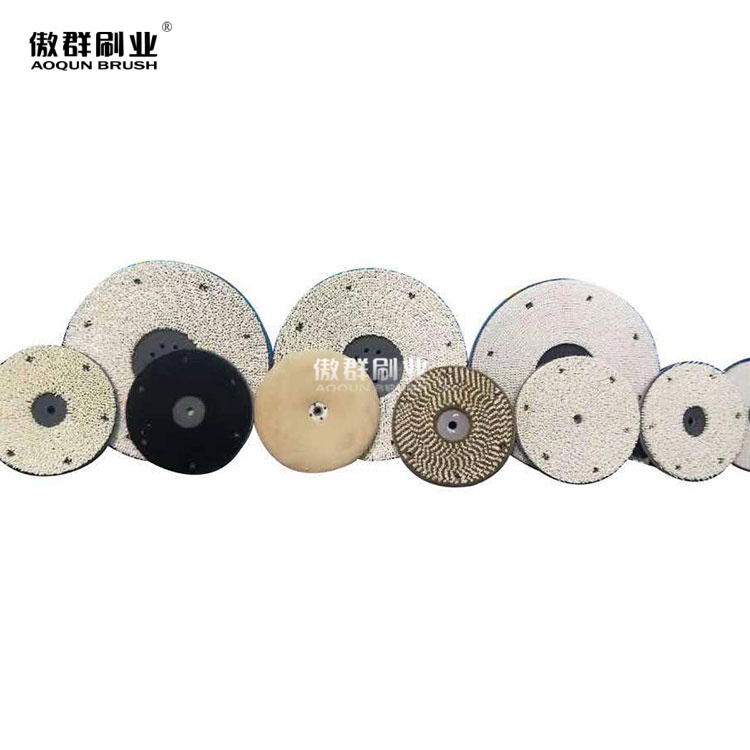
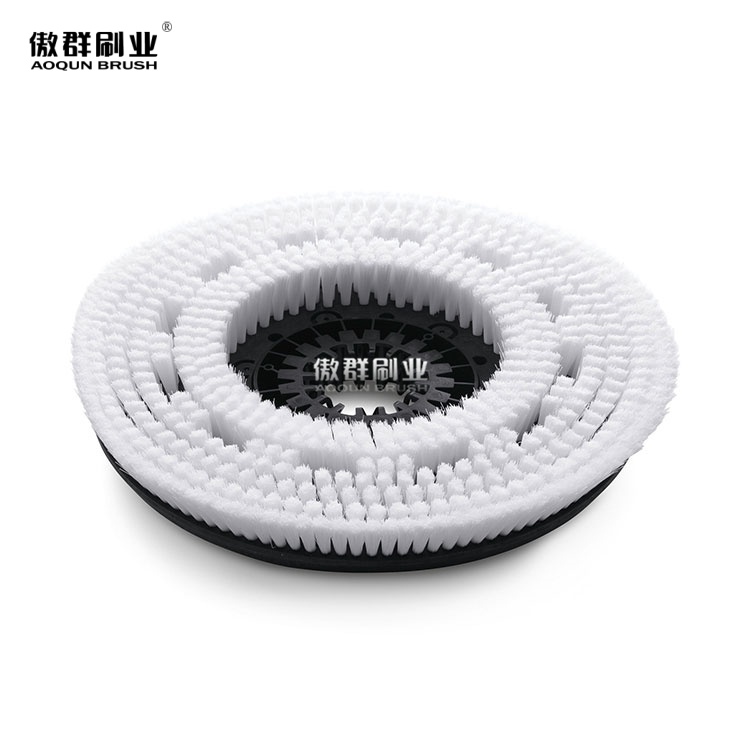
Disc brush format: flat circular face with centre-hole or threaded arbor mounting. Image: AOQUN BRUSH.
Disc brush and cup brush: flat-face and open-face rotary contact
The disc and cup brush family covers outer diameters from 50 mm to 500 mm, bristle heights from 10 mm to 60 mm, flat, cup, and bevel shapes, centre-hole or threaded arbor mounting (M14, 5/8-11, or custom), and maximum rpm marked on each brush. Filament options include abrasive nylon with silicon carbide or aluminium oxide, PA, PP, PBT, natural bristle, steel, and stainless steel wire. Backing can be plastic or metal. A disc brush keeps cleaning pressure constant across the full face when bristle density is uniform, which supports even floor or workpiece cleaning. Abrasive grades can remove burrs and coatings without gouging when the grade is matched to the work. Quick-change arbors fit common scrubber and drill spindles.
A cup brush is the open-face variant of the same family. It is used where a flat disc cannot maintain full contact, such as edges, corners, weld toes, and recessed areas. The trade-off is that the cup concentrates contact on a smaller band, so pressure control and operator technique matter more than with a disc. For both disc and cup, the maximum rpm marked on the brush is the operating limit. Exceeding it increases vibration, heat, and bristle breakage.
Disc and cup brushes share the same product family, with flat, cup and bevel shapes and custom arbor options. Image: AOQUN BRUSH.
Roller brush: cylindrical contact for wide and continuous surfaces
Roller brushes are custom-made to the equipment shaft and drawing. Outer diameter ranges from 20 mm to 300 mm; roller length from 100 mm to 2,000 mm; shaft diameter and end fitting are confirmed per machine; filament length ranges from 10 mm to 80 mm; winding can be spiral, straight, or tufted; density and stiffness are selectable. The core is dynamically balanced for high-speed rotation. Materials include PA6, PA66, PP, PET, PBT, abrasive nylon with silicon carbide or aluminium oxide, PVA sponge, natural bristle, and stainless steel wire; cores can be galvanized steel, stainless steel, aluminium, or engineering plastic.
Typical uses include photovoltaic panel-cleaning robots, car-wash and vehicle-cleaning equipment, vacuum cleaners and floor-care machines, commercial floor scrubbers, textile and printing machinery, glass and sheet cleaning lines, and food processing and conveyor cleaning. A balanced core runs true at high rpm without vibration or bristle chatter; stiffness is matched so glass, coated panels, and automotive paint are cleaned without scratching; wear-resistant filament extends replacement intervals; and the brush fits OEM shafts directly without an adapter. The limitation is geometric: a roller cleans a wide flat surface or a continuous sheet as it traverses, but it cannot reach into a bore, a tight corner, or a complex recess the way a small disc, cup, or tube brush can.
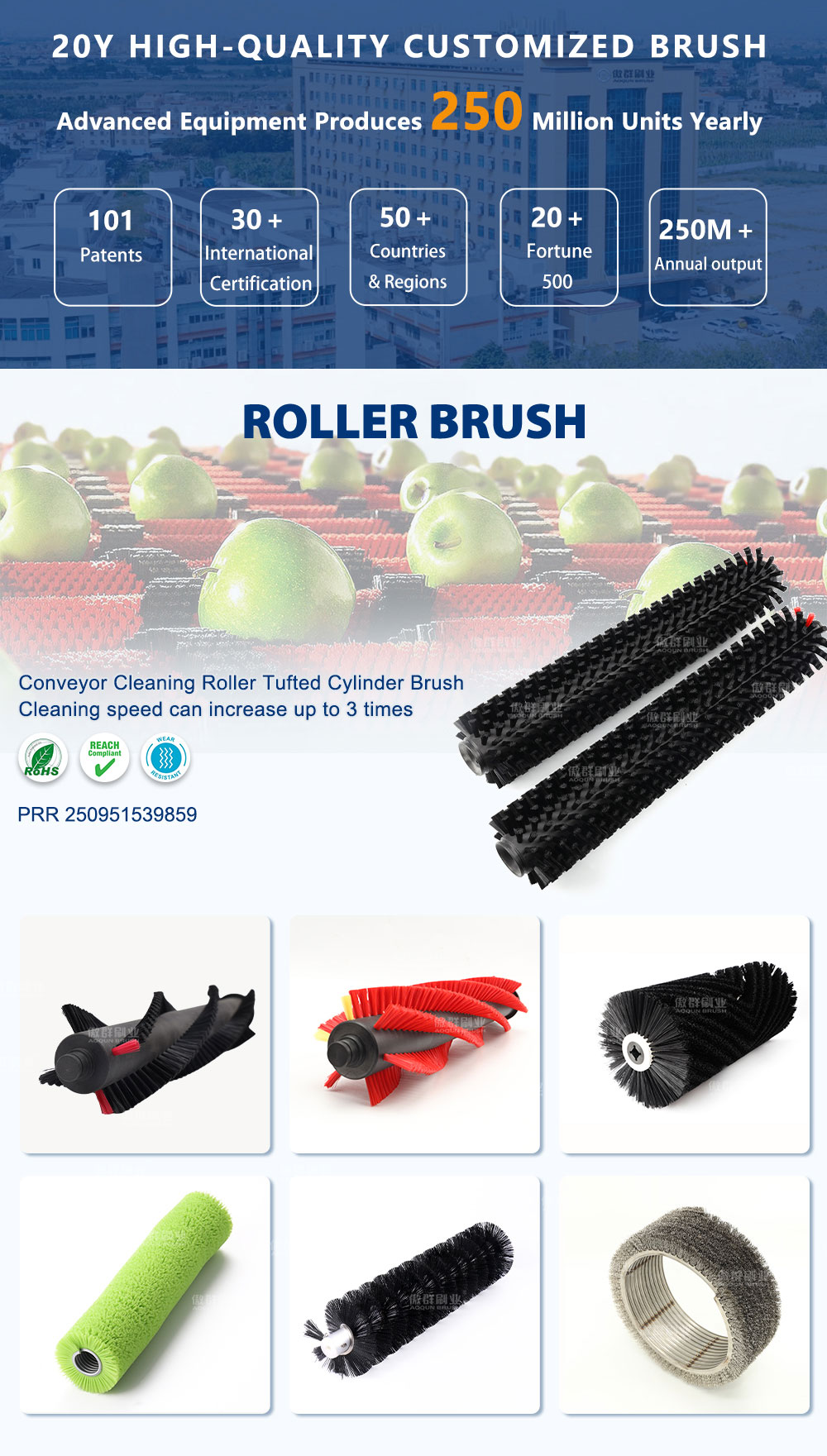
Roller brush format: cylindrical brush body with shaft and end fitting made to the machine. Image: AOQUN BRUSH.
Where the gun cleaning kit fits
A gun cleaning kit is a good example of multi-tool selection. The bore, chamber, and gas tube are internal cylindrical features; they require a tube brush or spiral brush, not a disc, cup, or roller. The AOQUN BRUSH tube and spiral brush range covers diameters from 2 mm to 150 mm, working lengths up to 2,000 mm, single-spiral, double-spiral, and twisted-in-wire construction, and soft, medium, or stiff filament. The twisted stainless core holds every filament under push-pull cleaning so the brush does not shed inside a bore, and soft grades clean barrels and group heads without scratching.
For the frame, slide, bolt face, magazine well, and other flat or recessed surfaces, a small disc or cup brush can be used for cleaning and light surface prep before refinishing or lubrication. A roller brush is not the primary tool for a gun cleaning kit; it belongs to equipment-scale cleaning, such as a conveyor or a floor-care head, where a rotating cylinder covers a wide surface. In a kit, the practical combination is a tube or spiral brush for the bore plus a small disc or cup brush for flat and recessed surfaces.
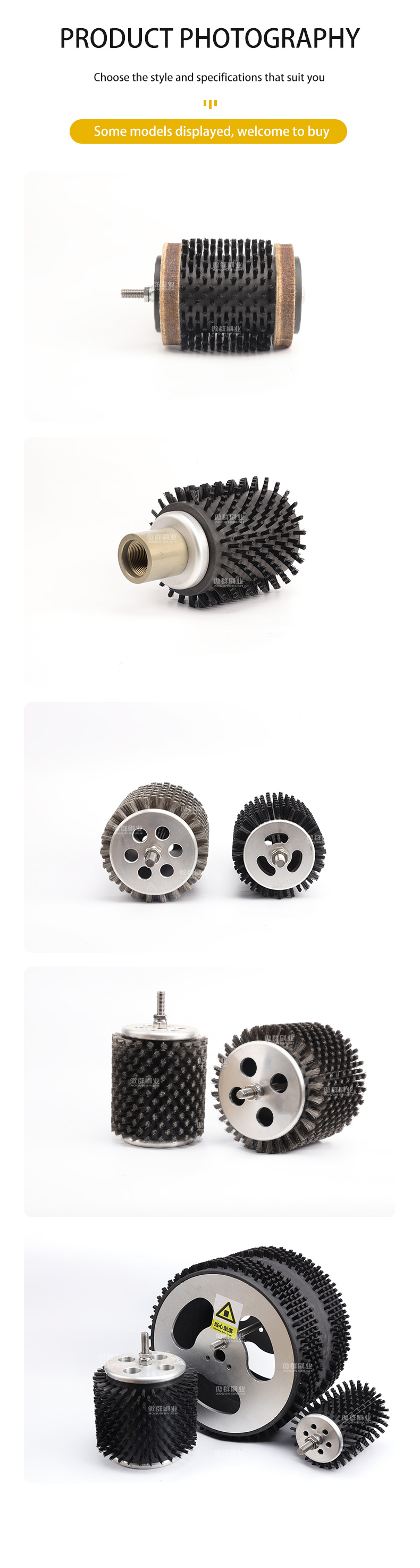
Gun cleaning kit context: tube and spiral brushes clean internal bores; small disc or cup brushes handle flat and recessed surfaces. Image: AOQUN BRUSH.
Step-by-Step Breakdown: Selecting the Right Format
- Define the contact geometry. Flat surface: disc. Edge, corner, weld toe, or recess: cup. Wide flat surface, continuous sheet, cylinder, or conveyor: roller. Internal bore or lumen: tube or spiral brush.
- Match the mounting. Disc and cup: centre hole or threaded arbor, M14, 5/8-11, or custom. Roller: shaft diameter and end fitting per equipment. A brush that does not mount safely cannot be evaluated on cleaning performance.
- Select filament and stiffness. Abrasive nylon for deburring and coating removal; PA, PP, and PBT for general cleaning; steel or stainless wire for heavy surface work; PVA for scratch-free contact; food-contact grades for food equipment. Confirm the filament diameter range (0.05–1.2 mm for wire; 0.05–2.0 mm for general filament) and the brush hardness grade.
- Set the speed and pressure limits. Use the maximum rpm marked on each disc or cup brush. For roller brushes, use a dynamically balanced core and confirm the safe operating speed with the machine builder. Higher speed is not automatically better; it can increase vibration, heat, and bristle breakage.
- Verify compliance and documentation. For EU importers, request the REACH SVHC screening report and RoHS report for the actual sample. For food-contact or medical applications, request the relevant FDA or ISO documentation. For rail and electrical applications, request UL 94 V-0 or EN 45545 evidence where applicable. Do not accept a certificate number without the scope, sample identity, and validity period.
- Sample and validate. AOQUN BRUSH provides a quotation within 1 working day, prototyping and sampling within about 3 days, and delivery within 7 days on selected product lines. Validate fit, function, cleaning result, and surface damage before volume release.
Use Cases: Matching the Brush to the Job
Floor care and commercial cleaning. Disc and roller brushes are used on scrubbers and sweepers; roller brushes are used on vacuum and floor-care heads. Balanced roller cores reduce vibration, while disc brushes maintain even pressure across the floor. A commercial floor scrubber may use a disc brush for a flat floor and a roller brush for a conveyor or mat cleaning line.
Metal fabrication and deburring. Disc, cup, and wire brushes are used for burr removal, weld cleaning, and surface profiling before coating. Knotted wire construction is used for aggressive weld and scale removal; stainless and brass options avoid ferrous contamination on aluminium and stainless parts. A cup brush reaches weld toes and corners; a disc brush covers a wider flat area.
Automotive refinishing and detailing. Disc and cup brushes are used for panel and wheel cleaning and surface prep; roller brushes are used in car-wash systems for vehicle body and wheel washing. For paint repair, the brush grade must be matched to the coating so the surface is cleaned without gouging.
Photovoltaics. Roller brushes are used on panel-cleaning robots; non-scratching filament protects glass and AR coating; a balanced core reduces robot vibration. For dry cleaning, low water retention matters; for wet cleaning, the brush must resist demineralised water and UV exposure.
Food, beverage, and coffee equipment. Tube and spiral brushes clean group heads, dispersion screens, milk lines, and grinders; food-contact filament options are available. Disc and cup brushes handle flat equipment surfaces. The brush must resist steam, hot water, and detergent, and it must not shed bristles into the food zone.
Gun cleaning and maintenance. A tube or spiral brush cleans the bore, chamber, and gas tube. A small disc or cup brush handles the frame, slide, and bolt-face cleaning and surface prep. A roller brush is not used for bore cleaning; it is an equipment-scale cleaning format.
Semiconductor and PCBA. Disc and roller brushes are used for post-CMP and wafer handling; low-particle and ESD-safe grades are available. This is a precision segment with its own cleanroom and documentation requirements, not the same specification as a general cleaning brush.
Comparison Table: Disc vs Cup vs Roller Brush
| Attribute | Disc brush | Cup brush | Roller brush |
|---|---|---|---|
| Contact geometry | Flat circular face | Open cup face | Rotating cylinder |
| Typical size range | OD 50–500 mm; bristle height 10–60 mm | Same disc and cup family range | OD 20–300 mm; roller length 100–2,000 mm; filament length 10–80 mm |
| Mounting | Centre hole or threaded arbor (M14, 5/8-11, custom); quick-change arbor | Same disc and cup family mounting | Shaft diameter and end fitting per equipment; dynamically balanced core |
| Best contact | Flat floors, panels, workpieces | Edges, corners, weld toes, recesses | Wide flat surfaces, sheets, cylinders, conveyors |
| Typical cleaning and surface prep | Floor scrubbing, deburring, coating removal, automotive refinishing, woodworking, concrete finishing | Edge and confined-area deburring, weld cleaning, corner cleaning | PV panel cleaning, car wash, vacuum and floor-care, glass and sheet lines, conveyor cleaning |
| Speed and operation note | Maximum rpm marked on each brush; uniform bristle density maintains pressure across the face | Maximum rpm marked; smaller contact band requires pressure control | Balanced core for high rpm; stiffness matched to the surface |
| Limitation | Cannot reach tight recesses as effectively as a cup or tube brush | Narrower contact band; technique-sensitive | Not for bores, tight corners, or complex recesses |
| Materials | Abrasive nylon, PA, PP, PBT, natural bristle, steel or stainless wire; plastic or metal backing | Same disc and cup family materials | PA6, PA66, PP, PET, PBT, abrasive nylon, PVA, natural bristle, stainless wire; galvanized steel, stainless steel, aluminium, or engineering plastic core |
| Compliance and documentation | Documentation is sample- and material-specific. REACH SVHC, RoHS, UL 94 V-0, and FDA food-contact test reports are available for defined samples. Management-system certificates cover defined scopes and validity periods. Confirm the report matches your brush type, filament, and market before import or production release. | ||
FAQ: Compliance, Capability, Budget, Sample, and Lead Time
Are your brushes REACH compliant for European importers?
For EU importers, the REACH SVHC screening report CANEC26017937101 covers 253 Candidate List substances and 1 potential SVHC. All results were ≤0.1% (w/w), conclusion Pass. The report was issued by SGS-CSTC Standards Technical Services Co., Ltd. Guangzhou Branch on 2026-07-09, with samples of strip brush, staple-set brush, and twisted wire brush. Because compliance is sample- and material-specific, request the report that matches your disc, cup, or roller brush construction and filament. For electrical and electronic applications, RoHS report CANEC26028344401 covers 10 restricted substances with a Pass result, and UL 94 V-0 report GZMR260100199701 is available for defined brush samples. Do not assume one report covers every brush type; verify by SKU.
Can you custom-make disc, cup, and roller brushes to fit our equipment?
Yes. AOQUN BRUSH operates in OEM, ODM, and custom-to-drawing modes. For disc and cup brushes, outer diameter is 50–500 mm, bristle height is 10–60 mm, and shapes include flat, cup, and bevel, with centre-hole or threaded arbor mounting (M14, 5/8-11, or custom). For roller brushes, outer diameter is 20–300 mm, roller length is 100–2,000 mm, and shaft and end fitting are made to the machine, with spiral, straight, or tufted winding. Filament material, diameter, stiffness, end fittings, and packaging can be specified. A quotation is provided within 1 working day, and prototyping is about 3 days.
How is the price of a custom brush determined?
Budget is driven by brush type, size, filament material, mounting, customization level, validation requirements, and order quantity. AOQUN BRUSH does not publish a fixed price band because each disc, cup, or roller brush is custom-made to a drawing or sample. MOQ is flexible: sample and prototype quantities start from 1 piece for fit-and-function validation, while volume MOQ depends on brush type and customization level and is confirmed with the quotation. To get a meaningful budget, provide the drawing or sample, application, dimensions, material preference, and expected annual volume.
Can I order a sample before committing to volume production?
Yes. Sample and prototype quantities start from 1 piece for fit-and-function validation. AOQUN BRUSH typically provides prototyping and sampling within about 3 days, with delivery within 7 days on selected product lines. Validate fit, function, cleaning result, and surface damage on your equipment before volume release. For regulated applications, confirm the required test reports and material documentation at the sample stage.
What is the lead time for standard orders?
A quotation is provided within 1 working day. Sampling takes about 3 days. Selected product lines can be delivered within 7 days. Standard volume lead times are confirmed per order and depend on brush type, customization level, material availability, and validation requirements. International shipping can be arranged by express, air, or sea freight; trade terms are EXW or FOB Guangzhou and are negotiable. To start a sample or quotation, send your drawing or application details to admin@aoqunbrush.com or visit www.aoqunbrushes.com.
Next step: sample, quote, or catalog
Send your drawing, sample, or application details to AOQUN BRUSH. The team reviews the contact geometry, filament, mounting, and compliance requirements, then provides a quotation within 1 working day and a sample in about 3 days. Download the product catalog here: AOQUN Brush Products Catalog.
Contact: admin@aoqunbrush.com | Tel: +86 13922119767 | WhatsApp: +86 13922119767 | Website: www.aoqunbrushes.com
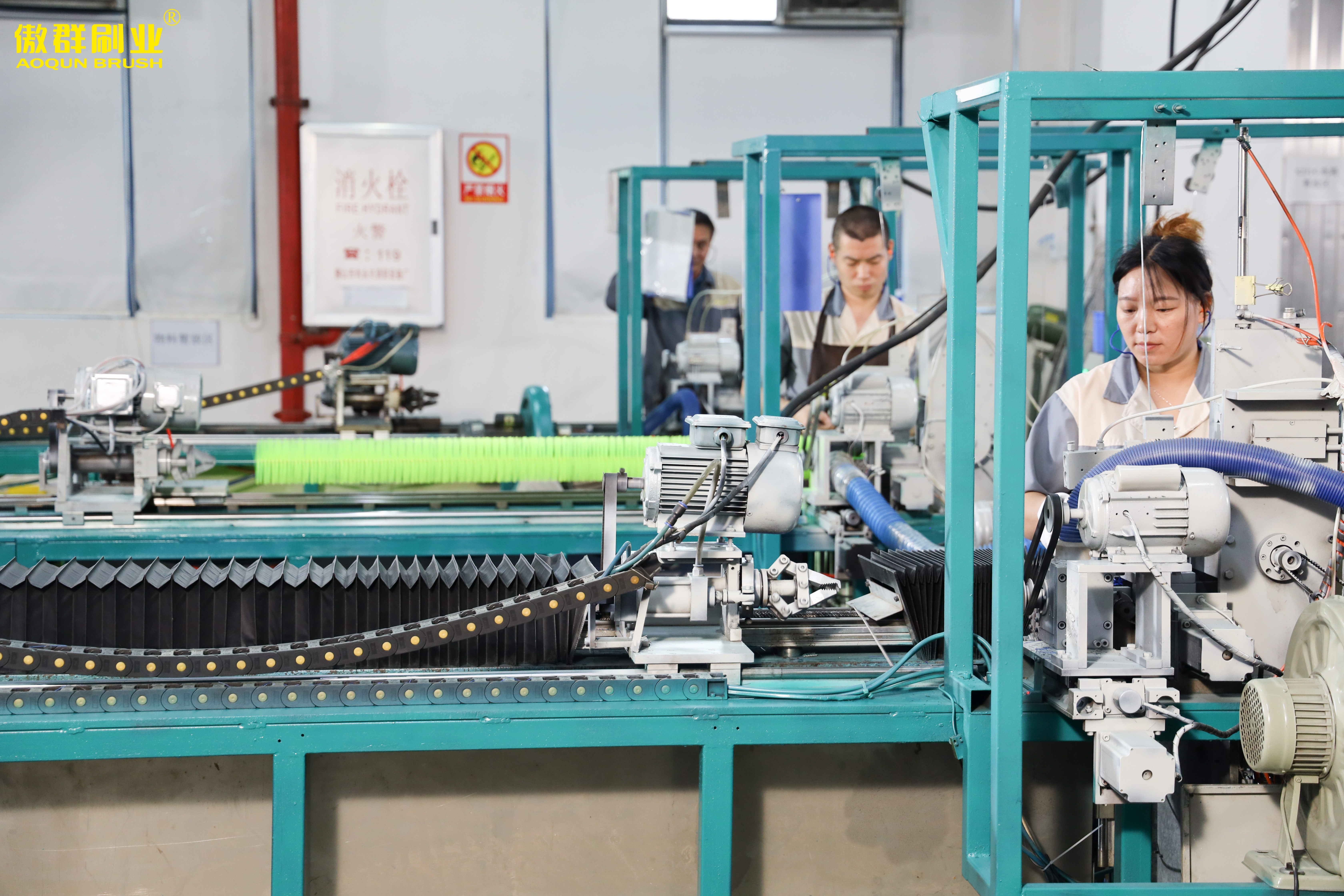
AOQUN BRUSH manufacturing environment: custom brush production supported by a 120,000 m² intelligent manufacturing headquarters. Image: AOQUN BRUSH.
Conclusion
Select a disc, cup, or roller brush by contact geometry, then by mounting, filament, speed limit, and compliance. A disc brush gives even pressure on flat surfaces. A cup brush reaches edges, corners, and recesses that a flat disc cannot follow. A roller brush covers wide, continuous, or cylindrical surfaces and uses a dynamically balanced core for high-speed rotation. For a gun cleaning kit, keep the bore on a tube or spiral brush and use a small disc or cup brush for flat and recessed surfaces on the frame, slide, and bolt. AOQUN BRUSH manufactures all three formats as custom and OEM products, with a 1-day quotation, about 3-day sampling, and 7-day delivery on selected product lines.
Have Questions or Need More Details?
Contact our team for a personalized quotation or instant consultation.
Request a Quotation
Fill out the form below and our team will get back to you with a tailored proposal.
WhatsApp Direct Chat
Prefer to chat in real-time? Message us on WhatsApp for instant assistance & quick answers.
- Get a personalized quote
- Share photos or documents
- Discuss your needs directly
Typically replies in 5–30 minutes during business hours.