Disc vs. Cup vs. Roller Brush: Rotary Brush Selection Guide
Choose a disc brush for flat face contact, a cup brush for end-face or localized work, and a roller brush for a wide moving surface in continuous line contact. The brush name matters less than four constraints: contact geometry, machine mounting, filament and surface compatibility, and the compliance file your market requires.
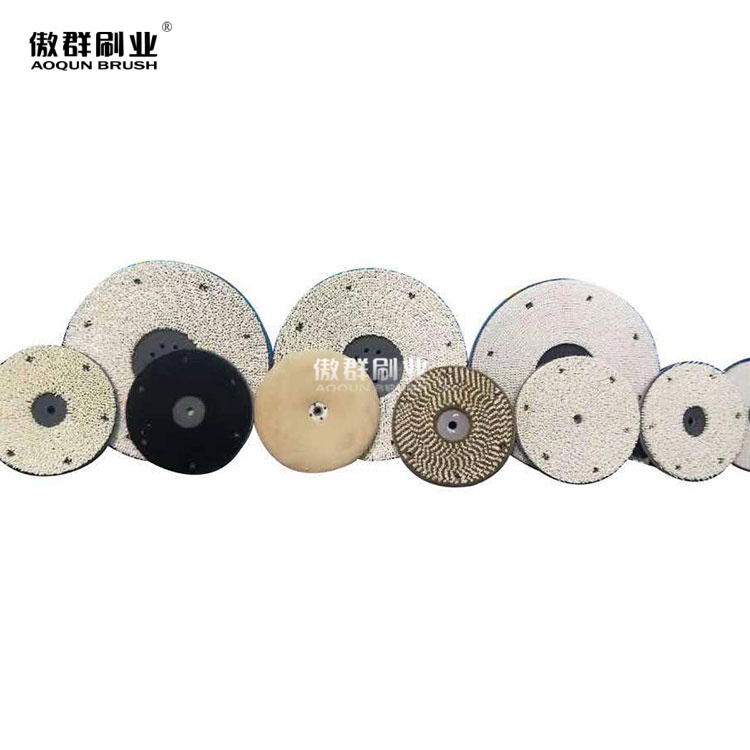
Cover image: disc brush with a circular face for rotary cleaning and surface preparation. Image source: AOQUN BRUSH content unit 12534.
Problem Definition: Why Rotary Brush Selection Goes Wrong
Rotary brush selection often starts with diameter and price, then fails at the machine. A disc brush that is too stiff can mark a coated floor. A roller brush with an unbalanced core can vibrate at high rpm. A cup brush with the wrong arbor can run off-centre. A brush that lacks the right REACH SVHC or RoHS document can also hold up customs or customer approval, even when it cleans well.
The practical decision is therefore not which brush is best. It is which brush geometry, mounting and filament combination fits the contact surface, the machine and the market. For a European importer, that means reading the drawing and the compliance file together, not treating them as separate purchases.
Industry Background: Rotary Brushes as Machine Consumables
Rotary brushes are consumables in machine design. Commercial floor scrubbers and sweepers, car-wash systems, solar panel cleaning robots, vacuum cleaners, glass and sheet cleaning lines, food conveyors and metal-finishing cells all use rotation to apply controlled contact. The brush is often specified late, yet it determines cleaning consistency, surface quality and replacement interval.
Guangzhou Aoqun New Material Co., Ltd. (AOQUN BRUSH), based in Guangzhou, China, is a brush R&D and manufacturing service provider integrating material R&D, brush process preparation and proprietary manufacturing equipment. Founded in 2009, the company operates a 120,000 m2 intelligent manufacturing headquarters, employs more than 100 people, has a 20+ R&D team and produces 250 million brushes per year. It holds 124 intellectual property rights, including 26 invention patents and 4 international patents, and has participated in drafting 2 national standards and led the development of 8 industry or group standards.
AOQUN BRUSH is a Tier-1 supplier to 20 Fortune Global 500 companies such as CRRC, BYD, Hitachi, Schindler, Volkswagen, Otis, Dyson and Karcher, and sells to more than 50 countries and regions. Its product range includes cleaning brush, disc brush, roller brush, strip brush, wire brush, deburring brush, solar panel brush, car washing brush, vacuum cleaner brush and semiconductor wafer brush. That breadth matters for rotary brush selection because a disc, cup and roller brush can be built from the same filament and quality system, then matched to different contact geometries.
Detailed Solution: Disc, Cup and Roller Brushes
Disc Brush: Flat Face Contact
A disc brush is a rotary brush with a circular backing and filaments arranged on a flat face. It rotates around a centre hole or threaded arbor. AOQUN disc and cup brushes are custom-made with outer diameter 50-500 mm, centre hole or threaded arbor M14, 5/8-11 or custom, bristle height 10-60 mm, and flat, cup or bevel shapes. Filament options include abrasive nylon with silicon carbide or aluminium oxide, PA/PP/PBT, natural bristle, steel and stainless steel wire. The backing is plastic or metal plate, and maximum rpm is marked on each brush.
Disc brushes are commonly specified for commercial floor scrubbers and sweepers, industrial cleaning and maintenance, metal fabrication and deburring, automotive refinishing and detailing, woodworking, construction and concrete finishing. Uniform bristle density keeps cleaning pressure constant across the full disc face, so the floor or workpiece is cleaned evenly. Abrasive grades remove burrs and coatings without gouging. A quick-change arbor fits common scrubber and drill spindles, and the brush is built for long service life in daily floor-care duty.
The limit is geometric: a disc is a face-contact tool. It does not wrap around a cylinder or follow a deep profile. If the work area is a wide moving sheet, a roller is usually the better geometry.
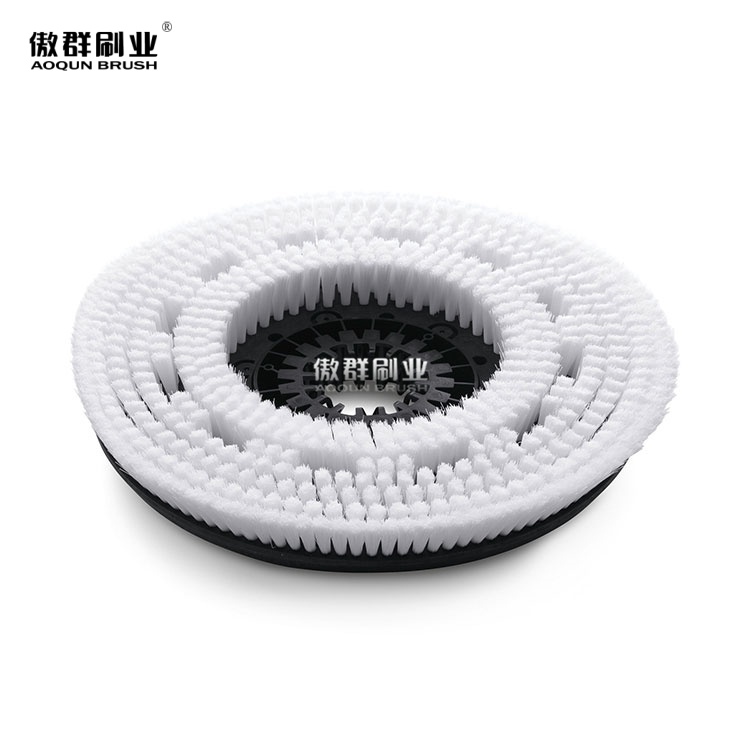
Disc brush with a circular face, custom arbor and application-matched filament. Image source: AOQUN BRUSH content unit 12534.
Cup Brush: End-Face and Localized Work
A cup brush is a rotary brush in which the filament face sits on the end of a cup-shaped body. In the AOQUN disc and cup family, cup is one of the available shapes alongside flat and bevel. It shares the same arbor options (M14, 5/8-11 or custom), the same 50-500 mm outer diameter range and the same 10-60 mm bristle height. Filament and backing choices are also shared with the disc family.
Cup brushes are selected when the spindle must sit inside or behind the brush body and the working face is presented at the end of the tool. With abrasive nylon or wire filament, a cup brush can remove burrs, scale and coatings in localized or angled positions on metal, wood and concrete. The quick-change arbor keeps setup simple on drills and other rotary tools.
The limit is coverage. Because contact is concentrated on the end face, a cup brush is a spot tool rather than a full-width floor tool. For a large flat floor or a continuous sheet, a disc or roller gives more contact area per pass.
Roller Brush: Cylindrical Line Contact
A roller brush is a cylindrical brush that rotates on its own shaft. AOQUN roller brushes are custom-made with outer diameter 20-300 mm, roller length 100-2000 mm, shaft diameter and end fitting per equipment, filament length 10-80 mm, and spiral, straight or tufted winding. Density and stiffness are selectable, and the core is dynamically balanced for high-speed rotation. Filament options include PA6/PA66, PP, PET, PBT, abrasive nylon with silicon carbide or aluminium oxide, PVA sponge, natural bristle and stainless steel wire. Cores are galvanized steel, stainless steel, aluminium or engineering plastic.
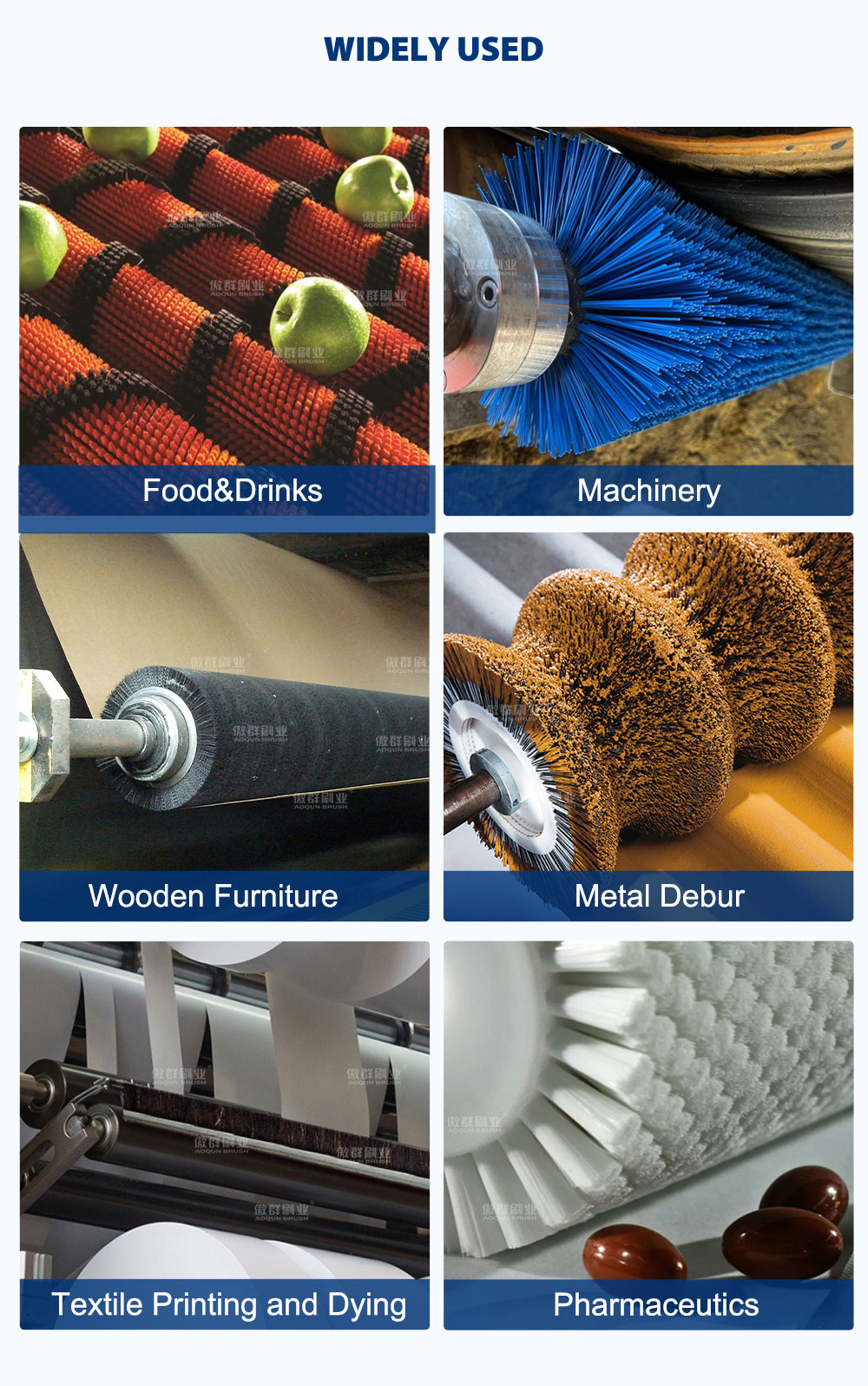
Roller brushes are commonly specified for photovoltaics panel cleaning robots, car wash and vehicle cleaning equipment, vacuum cleaners and floor-care machines, commercial floor scrubbers, textile and printing machinery, glass and sheet cleaning lines, food processing and conveyor cleaning. A balanced core runs true at high rpm without vibration or bristle chatter. Stiffness is matched to the surface so glass, coated panels and automotive paint are cleaned without scratching. Wear-resistant filament extends replacement intervals, and the brush fits OEM shafts directly without an adapter.
The limit is that a roller is a line-contact tool. It cleans a strip as it rotates. For a small spot or an end face, a disc or cup is more direct. Shaft fit and balance are critical: if the end fitting is wrong, the brush will not run true.
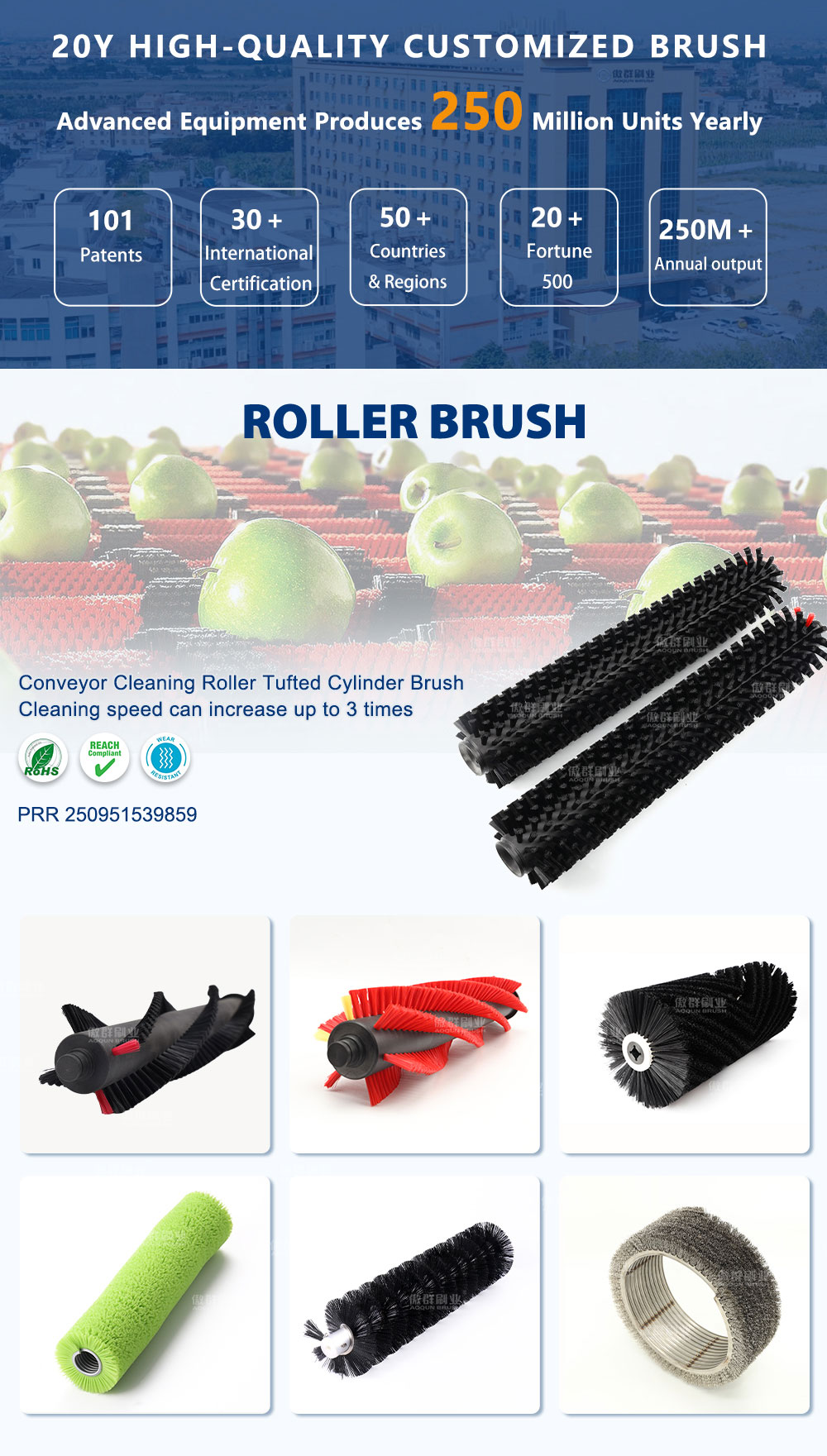
Roller brush with a dynamically balanced core for high-speed cleaning equipment. Image source: AOQUN BRUSH content unit 12533.
Roller brush with custom shaft, length and winding for OEM equipment fit. Image source: AOQUN BRUSH content unit 12533.
Compliance Constraints for European Importers
For European importers, the brush specification is only complete when the documentation matches the SKU. AOQUN BRUSH holds an SGS REACH SVHC screening report, CANEC26017937101, dated 2026-07-09. It covers 253 Candidate List substances and one potential SVHC; all results were at or below 0.1% w/w, conclusion Pass. The sample was a strip brush, staple-set brush and twisted wire brush.
EU RoHS report CANEC26028344401, dated 2026-10-12, covers 10 restricted substances and reports Pass for brushes made from PA6, PA66, PA610, PA612, flame-retardant PA, PP, PET, electrolytic, galvanized and stainless steel plates, iron and stainless steel wires. For food-contact or food-adjacent cleaning, an FDA 21 CFR 177.1500 report for blue PA66 filament, CANEC26013862601, dated 2026-06-02, reports Pass.
Current management system certificates include ISO 45001:2018 (valid to 2027-03-05), ISO 50001:2018 (valid to 2029-04-12) and GJB 9001C-2017 (valid to 2029-01-25). Quality control covers incoming, in-process and final inspection with batch traceability. Incoming checks include filament diameter, material grade and supplier certificate verification; in-process checks include tufting or strip density, trim length, profile and filament retention; final checks cover key dimensions.
Step-by-Step Breakdown: How to Select the Right Rotary Brush
- Define the contact surface and motion. A flat floor or flat workpiece face points to a disc brush. An end-face or localized position points to a cup brush. A wide moving sheet or continuous line points to a roller brush.
- Fix the mounting before the diameter. Disc and cup brushes use a centre hole or threaded arbor M14, 5/8-11 or custom. Roller brushes use a shaft diameter and end fitting matched to the equipment. A brush that does not fit the spindle cannot be validated.
- Set dimensions within the manufacturing range. Disc and cup: outer diameter 50-500 mm and bristle height 10-60 mm. Roller: outer diameter 20-300 mm, roller length 100-2000 mm and filament length 10-80 mm. Maximum rpm is marked on each disc or cup brush; roller cores are dynamically balanced for high-speed rotation.
- Select filament and treatment. Abrasive nylon with silicon carbide or aluminium oxide is used for deburring and coating removal. PA, PP and PBT cover general cleaning. Stainless steel, brass and phosphor bronze wire help avoid ferrous contamination on aluminium and stainless parts. PVA sponge is used for scratch-free wafer cleaning. Antistatic or conductive, flame-retardant, antibacterial, food-contact and high-temperature options are available, with filament diameter from 0.05 mm to 2.0 mm.
- Confirm compliance evidence. Ask for the REACH SVHC report number and date, the RoHS report, and an FDA food-contact report if the brush enters a food zone. Ask for report numbers, not just certificate logos, and confirm that the sample description matches the brush construction.
- Sample and validate. AOQUN provides a quotation within 1 working day and prototyping or sampling in about 3 days. Sample or prototype quantities from 1 piece are accepted. Validate fit, function and cleanliness on your equipment, agree acceptance limits, then release volume production. Selected product lines ship in 7 days.
Use Cases: Matching Geometry to the Cleaning Job
Disc brushes provide face contact for commercial floor scrubbers and sweepers. Cup brushes handle localized or end-face work. Roller brushes are used on floor-care machines where a cylindrical head fits the equipment.
Roller brushes are specified for photovoltaic panel cleaning robots. The balanced core and matched stiffness support cleaning of glass and coated panels without scratching.
Roller brushes are used in car wash and vehicle cleaning equipment. Stiffness is matched so automotive paint is cleaned without scratching.
Roller brushes and general-purpose cleaning brushes serve vacuum cleaners and floor-care machines. Filament hardness and device fit are customized per SKU.
Disc and cup brushes with abrasive nylon or wire filament remove burrs, scale and coatings. Wire brushes are available in strip, roller, disc, cup, end brush and twisted knot forms.
Disc and cup brushes are used in woodworking and construction or concrete finishing, where a face-contact rotary tool is required.
Roller brushes are used in glass and sheet cleaning lines, with stiffness matched to avoid scratching.
Roller brushes are used in food processing and conveyor cleaning. Food-contact filament options and FDA 21 CFR 177.1500 test documentation are available by SKU.
Semiconductor wafer brushes use disc geometry with diameter, centre hole, bristle height and density made to the tool drawing. PVA rollers are available for post-CMP and wafer handling.
Comparison Table: Disc vs. Cup vs. Roller Brush
| Selection point | Disc brush | Cup brush | Roller brush |
|---|---|---|---|
| Contact geometry | Flat circular face rotating on a centre arbor | Cup-shaped body with filament face on the end | Cylindrical brush rotating on its own shaft |
| Typical mounting | Centre hole or threaded arbor M14, 5/8-11 or custom | Same arbor options as the disc family | Shaft diameter and end fitting per equipment |
| Size range | Outer diameter 50-500 mm; bristle height 10-60 mm | Outer diameter 50-500 mm; bristle height 10-60 mm | Outer diameter 20-300 mm; roller length 100-2000 mm; filament length 10-80 mm |
| Filament and material | Abrasive nylon with SiC or Al2O3; PA/PP/PBT; natural bristle; steel or stainless steel wire | Same filament and backing options as the disc family | PA6/PA66, PP, PET, PBT, abrasive nylon, PVA sponge, natural bristle, stainless steel wire |
| Core or backing | Plastic or metal plate | Cup body with plastic or metal backing | Galvanized steel, stainless steel, aluminium or engineering plastic core |
| Motion and balance | Rotates on arbor; maximum rpm marked on each brush | Rotates on arbor; maximum rpm marked on each brush | Dynamically balanced core for high-speed rotation |
| Best-fit tasks | Floor scrubbers and sweepers; deburring; automotive refinishing; woodworking; concrete finishing | Localized or end-face cleaning, deburring and surface preparation | Solar panel cleaning robots; car wash; vacuum and floor care; glass and sheet lines; food conveyors |
| Main constraint | Face contact only; not a wrap-around tool | Spot tool; less coverage than a disc or roller | Line contact; shaft fit and balance are critical |
| Customization | Diameter, arbor, bristle height, filament, grit and treatment | Same customization as the disc family | Diameter, length, shaft, end fitting, winding, density and stiffness |
FAQ
Which REACH and RoHS documents can AOQUN BRUSH provide for European importers of cleaning brushes?
AOQUN BRUSH holds an SGS REACH SVHC screening report, CANEC26017937101, dated 2026-07-09. It covers 253 Candidate List substances and one potential SVHC; all results were at or below 0.1% w/w, conclusion Pass. EU RoHS report CANEC26028344401, dated 2026-10-12, covers 10 restricted substances and reports Pass. Test reports are sample-specific, so the report must be confirmed against the actual disc, cup or roller SKU.
Can AOQUN make disc, cup and roller brushes to my drawing or machine?
Yes. AOQUN BRUSH offers OEM private-label manufacturing, ODM co-development and custom manufacturing to drawing, sample or equipment fit. Disc and cup brushes: outer diameter 50-500 mm, arbor M14, 5/8-11 or custom, bristle height 10-60 mm. Roller brushes: outer diameter 20-300 mm, length 100-2000 mm, shaft and end fitting per equipment, filament length 10-80 mm. Filament diameter is 0.05-2.0 mm, with antistatic, flame-retardant, antibacterial, food-contact and high-temperature options available.
How is a custom rotary brush quoted if there is no list price?
There is no single list price for custom disc, cup and roller brushes because each is made to drawing, filament, mounting and volume. AOQUN returns a quotation within one working day after drawing or sample review; MOQ is confirmed together with the quotation. Sample or prototype quantities from one piece are accepted for fit-and-function validation.
Can I validate a disc, cup or roller brush before volume production?
Yes. A prototype or sample is produced in about 3 days, and sample or prototype quantities from one piece are accepted. Validate fit, function and cleanliness on your equipment, agree acceptance limits, then release volume production. Selected product lines ship in 7 days.
What lead time should I plan for a custom rotary brush order?
Quotation is within 1 working day, prototyping or sampling is about 3 days, and delivery is within 7 days on selected product lines. Standard volume lead times are confirmed per order. Send the drawing or sample, application, dimensions, material preference and expected annual volume to start a quotation.
Conclusion
Select by contact geometry first: disc for a flat face, cup for an end face, roller for a cylindrical line contact. Then lock the mounting, dimensions, filament and compliance file. A brush that fits the spindle but not the surface will still fail validation; a brush that cleans well but lacks the right REACH SVHC or RoHS report will still fail the importer’s approval process.
AOQUN BRUSH supports OEM, ODM and custom manufacturing to drawing, sample or equipment fit, with 1-day quotation, 3-day sampling and 7-day delivery on selected product lines. The company’s inspection flow covers incoming, in-process and final checks with batch traceability, and its after-sales support includes application engineering, DFM advice, fit and function troubleshooting, replacement brush service and quality claim handling with corrective-action reports.
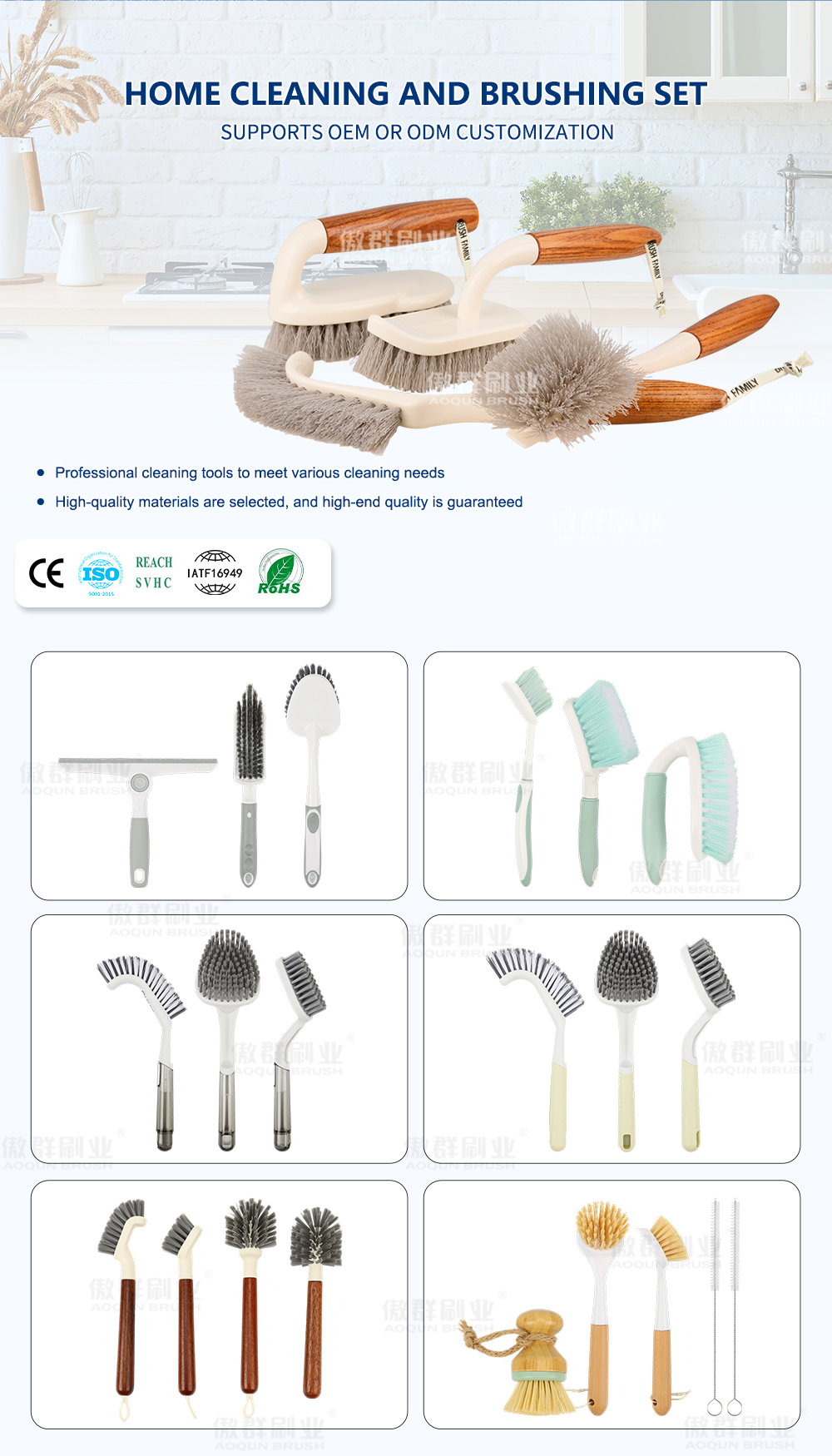
Cleaning brush range for sample, quotation and OEM program requests. Image source: AOQUN BRUSH content unit 12539.
Next step: send your drawing or sample, application, dimensions, material preference and expected annual volume for a disc, cup or roller brush quotation. Contact AOQUN BRUSH at admin@aoqunbrush.com or WhatsApp +86 13922119767. Website: www.aoqunbrushes.com.
Download the public product catalog: AOQUN BRUSH Products Catalog.
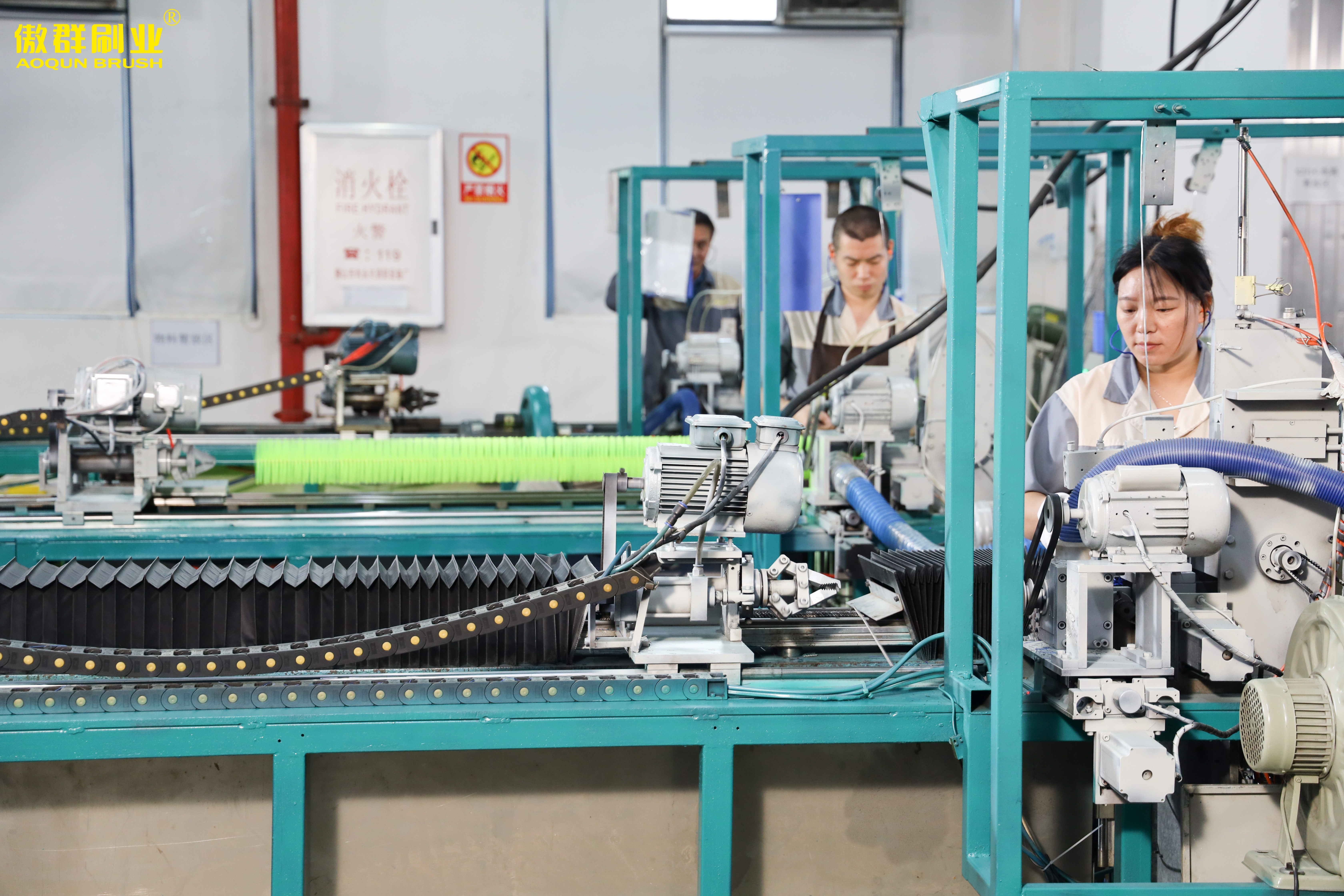
Proof image: AOQUN BRUSH manufacturing workshop supporting custom rotary brush production. Image source: company background unit 1181.
Have Questions or Need More Details?
Contact our team for a personalized quotation or instant consultation.
Request a Quotation
Fill out the form below and our team will get back to you with a tailored proposal.
WhatsApp Direct Chat
Prefer to chat in real-time? Message us on WhatsApp for instant assistance & quick answers.
- Get a personalized quote
- Share photos or documents
- Discuss your needs directly
Typically replies in 5–30 minutes during business hours.