
How to Select a Waterproof High-Current DC Power Connector for Drone Battery Systems
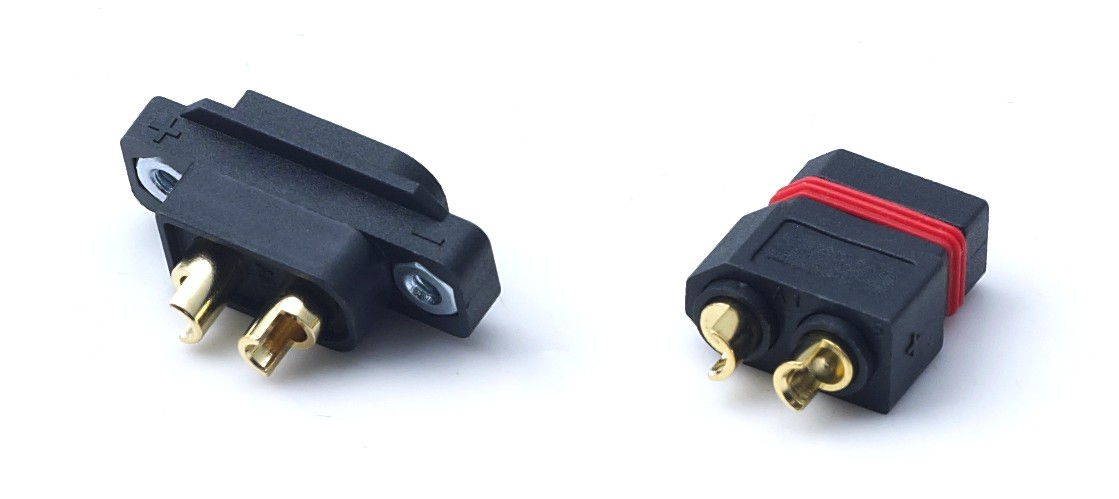
A waterproof high-current DC power connector for drone battery systems must satisfy a specific set of technical constraints: continuous high-current carrying capability, low contact resistance, stable anti-vibration mating, and a sealed housing for outdoor or humid operation. This article translates those requirements into a practical selection framework using verifiable specifications, industry standards, and real product examples.
What Is a High-Current DC Power Connector?
A high-current DC power connector is an electrical connector designed to carry direct-current power above the level of ordinary signal or low-power connectors. In drone and battery-powered equipment, these connectors sit between the lithium battery and the electronic speed controller (ESC) or load, and they are responsible for delivering continuous and peak current without excessive temperature rise, voltage drop, or arcing.
Within this category, the term “waterproof high-current connector” specifically identifies models with a sealed structure, typically rated IP65 or IP67, that can be used in open-air, humid, rain-splash, or marine environments.
Why Drone Battery Systems Need a Waterproof High-Current Connector
Drone battery systems operate in conditions that are unusually demanding for a power connector. The working environment includes continuous flight vibration, landing impact, outdoor dust, high humidity, and for agricultural drones, corrosive pesticide liquid. In parallel, the electrical load is severe: continuous high-current discharge, heat generation, and frequent plugging and unplugging during battery replacement.
These operating conditions create four distinct failure risks that a waterproof high-current connector is designed to prevent:
- Corrosion: gold-plated terminals are evaluated by a 48-hour salt spray test, which simulates long-term resistance to saline or humid environments.
- Intermittent connection: vibration can loosen ordinary contacts, causing power loss mid-flight. A reinforced terminal and a secure locking structure reduce this risk.
- Water ingress: an IP67-rated housing with a silicone O-ring prevents moisture from reaching live contacts.
- Heat build-up: low contact resistance limits temperature rise under continuous current, protecting the housing and the battery circuit.
What Specifications Matter Most: a Selection Breakdown
When evaluating a connector for a drone battery system, buyers should check the specification sheet against the actual operating profile. The parameters below are the ones that determine fit, safety, and longevity.
Rated Voltage and Current Capacity
Rated voltage and current capacity define the electrical envelope. A waterproof high-current connector such as the DXT60EW-M+DXT60W-F is rated for DC 500V and 60A continuous current, with a peak current of 100A. For low-voltage lithium battery systems used in drones and portable devices, this is a practical power level that covers mid-to-large battery packs.
A higher-current alternative, the UAV connector DXT90H-M/DXT90S-F, carries a continuous operating current of 90A on 10AWG wire, with peak transient current above that value. Selecting between 60A and 90A class connectors should be based on the max continuous discharge of the drone’s battery, not the peak rating alone.
Contact Resistance
Contact resistance directly influences temperature rise and energy loss. Lower values are better. The DXT60EW-M+DXT60W-F specifies contact resistance ≤0.8mΩ; the DXT90H-M/DXT90S-F specifies ≤1.0mΩ; the smaller DXT30U-M/DXT30U-F specifies ≤0.7mΩ. These numbers matter because resistance at a connection point becomes heat under current, and heat accelerates terminal oxidation and housing aging.
Protection Grade: IP40 vs IP67
Protection grade determines where the connector can be used. Standard drone connectors are often rated IP40, which means protection against solid objects larger than 1mm but no water protection. For outdoor, marine, agricultural, or rain-exposed applications, an IP67-rated waterproof connector such as the DXT60EW-M+DXT60W-F is the relevant choice.
IP67 means the connector is dust-tight and protected against temporary immersion in water. For drones that land on wet ground, operate in rain, or are used in agricultural spraying, this is a meaningful safety margin.
Temperature Range and Flammability
Drone battery connectors are expected to operate in a wide temperature range. The relevant products in this article all specify an operating temperature of -20℃ to +120℃. This covers both cold-weather flights and the internal heat of a high-discharge battery bay.
Flammability is a separate safety requirement. The housing material should be rated UL94 V-0, which is the highest flammability rating for plastic materials in the UL 94 standard. For the DXT60EW-M+DXT60W-F, the housing is PA66 UL94 V-0 flame-retardant nylon.
Mating Cycles and Vibration Resistance
Mating cycles indicate how many plug-and-unplug operations the connector can survive. A minimum of 1000 mating cycles is the common specification across the connectors discussed in this article. In practice, this supports daily battery swaps for at least two to three years of operation.
Vibration resistance is harder to verify from a single number, but relevant indicators include the use of beryllium copper spring contacts, locking structures, and anti-misplug keying. These design features maintain clamping force over time and prevent reverse polarity connection.
Drone Battery Connector Options: DXT Series Compared
AOYG DC Power Connector offers several connector families that cover different current levels and environmental requirements. The table below compares models that are directly relevant to drone battery systems and related battery-powered equipment.
| Model | Continuous Current | Peak Current | Contact Resistance | Protection | Key Feature |
|---|---|---|---|---|---|
| DXT30U-M / DXT30U-F (Drone Connector) | 15A | 30A | ≤0.7mΩ | IP40 | Compact, lightweight, for FPV and small UAVs |
| DXT30U(2+2)-F(B) (Power-Signal Combo) | 20A power pin / 1A signal pin | 35A | ≤1.2mΩ | IP40 | 2+2 power-signal composite for BMS and sensing |
| DXT90H-M+DXT90E-F Yellow (RC Vehicle Connector) | 45A (10AWG) | 90A | ≤1.0mΩ | IP40 | Yellow housing for circuit identification |
| DXT90H-M / DXT90S-F (UAV Connector) | 90A (10AWG) | 120A | ≤1.0mΩ | IP40 | Anti-spark pre-charge resistor |
| DXT60EW-M+DXT60W-F (Waterproof High Current) | 60A | 100A | ≤0.8mΩ | IP67 | Silicone O-ring waterproof sealing |
For drone battery systems, the DXT60EW-M+DXT60W-F is the model designed specifically for waterproof requirements. The DXT90H-M/DXT90S-F is a better fit for larger multirotor and agricultural drones that need anti-spark protection during battery connection. For tiny FPV drones where weight is critical, the DXT30U-M/DXT30U-F is the appropriate lightweight option.
Step-by-Step Selection Process
The following workflow is designed for an engineer or procurement specialist selecting a waterproof high-current connector for a drone battery system:
- Define the electrical load. Determine the battery voltage, maximum continuous discharge current, and short-term peak current of the drone. This directly rules out connectors below the required current class.
- Assess the physical environment. Decide whether the connector must survive rain, splash, washing, or pesticide exposure. If yes, narrow the choice to IP67-rated models. If the drone operates indoors or in dry conditions, an IP40 connector is sufficient and often lighter.
- Check temperature and vibration requirements. Verify that the connector’s operating temperature range covers your worst-case conditions, and confirm that the terminal design has spring contacts or a locking structure rated for vibration.
- Verify safety standards. Confirm UL94 V-0 flammability, and check whether the product has documented test reports such as RoHS 2.0, REACH SVHC, salt spray, and electrical performance.
- Evaluate wire and harness compatibility. The connector must match the silicone wire gauge used in the battery harness. For example, the DXT60EW-M+DXT60W-F fits 8-10AWG silicone wire, while the DXT30U-M/DXT30U-F fits 18AWG silicone wire, compatible with 20AWG.
- Consider assembly and maintenance. Choose between bare connectors and pre-wired harnesses. Pre-wired options with custom cable length reduce assembly error and speed up production.
- Plan for anti-spark if needed. If the battery is connected while the system is live or if large-capacity batteries are used, select a connector with anti-spark structure. If the connector has no anti-spark structure, live plugging and unplugging should be avoided.
Application Notes by Drone Type
FPV Racing Drones and Tiny UAVs
FPV racing drones and small multirotors prioritize weight and response. The DXT30U-M/DXT30U-F is designed for this use case: compact and lightweight, with a bidirectional blind-mating buckle that stays locked under vibration. Its 2mm gold-plated terminals deliver low contact resistance for continuous current operation.
Agricultural and Heavy-Lift Multirotor UAVs
Agricultural spraying drones expose the power connection to pesticide corrosion, dust, and frequent battery swaps. The DXT90H-M/DXT90S-F combines a reinforced terminal with an anti-spark female connector that contains a built-in pre-charge resistor, reducing the electric arc when connecting a LiPo battery. Its gold-plated banana terminals are protected by a 48-hour salt spray rating for corrosion resistance.
Outdoor and Waterborne Systems
Where the battery system is exposed to open-air humidity, marine environments, or waterborne unmanned equipment, a sealed connector is required. The DXT60EW-M+DXT60W-F uses a silicone O-ring to achieve IP67 protection and is rated for 60A continuous current. Its applicable industries include waterborne unmanned equipment, outdoor mobile photovoltaic energy storage, marine lithium battery systems, and outdoor communication backup power.
Certification and Compliance Checklist
Certification is a core part of supplier validation. A high-current DC power connector sold into global markets should be accompanied by documented compliance across the following areas:
- ISO 9001:2015 Quality Management: The waterproof high-current connector, DXT30U(2+2)-F(B), RC model electric vehicle connector, and UAV connector are covered by ISO 9001:2015 certification issued by a CNCA-accredited Certification Body.
- CE-LVD Declaration of Conformity: Applies to the waterproof high-current connector, DXT30U(2+2)-F(B), RC model electric vehicle connector, and UAV connector under Directive 2014/35/EU and EN 61984.
- RoHS 2.0: The DXT30U-M/DXT30U-F, DXT90H-M/DXT90S-F, DXT90H-M+DXT90E-F Yellow, DXT30U(2+2)-F(B), and DXT60EW-M+DXT60W-F are certified to RoHS 2.0 standards per the IEC 62321 series.
- REACH SVHC: All high-current DC connectors offered by the company are covered by REACH SVHC Test Reports under Regulation (EC) No 1907/2006 and the ECHA SVHC Candidate List.
- UL94 V-0 Flammability: Certified for the North America, EU, Australia, and global electrical and electronic markets.
- Salt Spray and Electrical Performance: Third-party laboratories with CNAS, CMA, and ISO17025 accreditation perform salt spray testing per GB/T 10125 and ASTM B117, and electrical performance testing per IEC 60512 and GB/T 5095.
Verifiable data point: According to third-party market research, the global high power connectors market was valued at approximately USD 5.47 billion in 2025 (Fact.MR). In 2025, DC connectors represented 58.7% of the total energy storage connector market share (Dataintelo). These figures point to a significant and growing role for DC power connectors in battery-connected systems.
Manufacturing and Quality Control Context
AOYG DC Power Connector operates as a manufacturer of high-performance high-current DC connection systems for lithium-ion smart devices. The company’s stated production capabilities include a 6000 m² factory, approximately 100 employees, an annual output of 900,000 units, and an R&D team of 25 engineers. The company reports that about 50% of its output is exported, with main markets in the EU and USA.
The quality management system is IATF16949:2016 certified, which is the automotive-grade quality management standard. In practice, this means the production process follows automotive-grade control points: raw material incoming inspection, precision mold development, automated production, finished product testing, and factory inspection. For drone and battery equipment manufacturers, this level of process control is relevant because it affects batch-to-batch consistency.
The company also supports OEM and ODM customization, including customized size, current specification, pin position, wiring structure, and logo printing. The stated lead time for custom production is 30-45 days, with a minimum order quantity of 2 units and 100% testing of finished products.
Risk Notes and Limitations
An honest supplier evaluation should also cover limitations:
The DXT60EW-M+DXT60W-F connector does not have an anti-spark structure. Live plugging and unplugging of large-capacity batteries is not recommended. If your application requires connecting or disconnecting the battery while the circuit is live, choose the DXT90H-M/DXT90S-F anti-spark connector instead.
In addition, IP67 waterproofing protects the connector against temporary immersion, but it does not eliminate all chemical or mechanical risks. In agricultural spraying drones, the connector surface may still be exposed to corrosive pesticide liquid; period inspection is recommended despite the 48-hour salt spray rating of the gold-plated terminals.
Finally, a high-current rating should never be interpreted as a recommendation to over-size a connector as a safety margin without also checking temperature rise. The relationship between wire gauge, ambient temperature, and continuous load determines actual temperature rise. For example, the DXT90H-M/DXT90S-F is rated for 90A continuous current on 10AWG wire with temperature rise ≤85℃; using a thinner wire gauge degrades that performance.
Frequently Asked Questions
What waterproof rating do I need for a drone battery connector?
If the drone operates outdoors, in humid environments, near water, or in agricultural spraying, choose a connector with IP67 protection, such as the DXT60EW-M+DXT60W-F, which uses a silicone O-ring to achieve dust-tight and temporary-immersion protection. If the drone operates indoors or in dry, protected conditions, IP40 may be sufficient.
How much current do I need in a waterproof high-current DC power connector for a drone battery system?
Select a connector whose continuous current rating is higher than the maximum continuous discharge current of the battery pack. A 60A-continuous waterproof connector covers many mid-to-large drone battery systems; larger agricultural and heavy-lift UAVs typically need a 90A-class connector such as the DXT90H-M/DXT90S-F. Peak current should also be checked against the battery’s short-term surge capability.
What certifications should a drone battery connector have for global export?
For European and global markets, the relevant compliance documents include CE-LVD Declaration of Conformity (Directive 2014/35/EU and EN 61984), RoHS 2.0 (IEC 62321 series), REACH SVHC (Regulation EC No 1907/2006), and UL94 V-0 flammability. ISO 9001:2015 certification covers the manufacturing quality system. These documents also support customs clearance and end-customer compliance audits.
Can I get a customized waterproof high-current drone connector?
Customization is available through OEM and ODM services. A manufacturer can adapt size, current specification, pin position, wiring structure, and logo printing. For example, pre-wired harness versions of the DXT60EW-M+DXT60W-F are available with custom cable length. The stated lead time for custom production is 30-45 days, with a minimum order quantity of 2 units.
How do I get samples and technical support?
Request a sample through the manufacturer’s sales channel and provide your battery, ESC, and wire harness specifications. AOYG DC Power Connector provides model selection guidance, product adaptation analysis, assembly suggestions, and sample debugging support. Contact the team to confirm sample availability for your specific model and cable length. Visit the AOYG DC Power Connector website or email xiuweizhao77@gmail.com to discuss your project.
Conclusion
Selecting a waterproof high-current DC power connector for a drone battery system is not a matter of picking the highest current number. The correct choice depends on current capacity, contact resistance, protection grade, vibration resistance, flammability, certification, and the specific drone type that will carry the connector.
For most outdoor drone applications, an IP67-rated 60A connector with low contact resistance, UL94 V-0 housing, and documented certification is the appropriate starting point. For agricultural or heavy-lift drones, upgrade to a 90A anti-spark connector. For weight-critical FPV aircraft, downsize to a compact 30A connector. In all cases, verify the test reports and select a manufacturer whose quality system is designed for high-stakes battery-powered equipment.
Need help matching a connector to your battery system?
Send your parameters — voltage, continuous current, wire gauge, and protection need — to the AOYG engineering team for a model recommendation and sample quote.
Email: xiuweizhao77@gmail.com WhatsApp: +84 366770891