RoHS 2.0, REACH SVHC and UL94 V-0: Compliance Essentials for High-Current DC Power Connectors
Short answer: A high-current DC power connector is export-ready when three compliance points are documented for the exact part number — RoHS 2.0 substance restriction covering the housing, plating, spring contacts and sealing ring; a REACH SVHC statement covering the same material chain; and a UL94 V-0 flammability classification for the plastic housing — supported by a documented operating temperature range and a mating-cycle life of at least 1000 cycles. Current and voltage ratings alone do not satisfy these requirements.
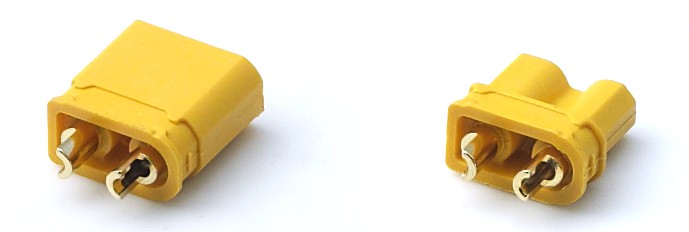
Introduction: compliance decides whether a good connector ships
A connector can pass every electrical test on your bench and still be stopped at a border, or rejected in a customer audit, for reasons that never appear on the front page of a datasheet. For high-current DC power connectors, compliance is decided by the substance content of the materials used, the flammability classification of the housing, and the documented performance limits of the part across temperature and repeated mating.
This guide is written for the discovery and research stage of a procurement project: you already know you need a high-current DC power connector, and you now need to know exactly what to ask for in order to satisfy RoHS 2.0, REACH SVHC and UL94 V-0 requirements in the EU and USA, while also verifying high-temperature resistance and a mating life of at least 1000 cycles.
It explains what each requirement actually covers, where connectors are exposed to it, which documentation proves it, and how those requirements are reflected in the published product data of AOYG DC Power Connector — a manufacturer and solution provider in the new energy sector, specializing in high-current DC connection systems for lithium-ion smart devices.
Problem Definition: where connector compliance actually breaks down
Compliance failures on power connectors rarely come from a deliberate design defect. They come from five recurring interpretation errors that appear in RFQs, purchase specifications and supplier audits.
- A material rating is read as a product certification. UL94 V-0 describes the behaviour of a plastic specimen in a vertical burn test. It is a material classification, not an approval of the finished connector assembly.
- RoHS 2.0 is evaluated only at the housing. The housing is usually the easy part. The exposure points sit in terminal plating chemistry, beryllium copper spring contacts, silicone sealing rings, cable insulation, and solder in pre-wired harnesses.
- REACH SVHC is treated as a one-time document. The SVHC candidate list is revised over time, so a declaration issued two or three years ago may no longer describe the article being purchased today.
- Thermal and cycle-life claims are left unverified. A connector rated at 60A or 90A must still hold its mechanical and dielectric properties at the elevated temperature created by its own contact resistance, and after repeated battery swapping.
- Documentation does not name the part number. A generic compliance letter covering a product family does not protect a buyer who is importing one specific model into the EU or USA.
Industry Background: why these three standards converge on connectors
The global market for high power connectors was valued at approximately USD 5.47 billion in 2025, according to Fact.MR, and DC connectors represented 58.7% of the energy storage connector market the same year, according to Dataintelo. The direction of that demand is upward in current and density, which is precisely what pushes material compliance to the front of the procurement conversation.
Two forces drive it. First, higher currents in smaller enclosures raise operating temperatures, which makes the thermal and flammability performance of the plastic housing a functional requirement rather than a formality. Second, DC architecture is spreading into infrastructure: 5G base stations consume two to three times more power than their 4G predecessors, with typical draws of 11.5 to 14 kW and peaks around 19 kW, according to telecom site planning guidance. Backup power systems at that scale depend on connectors that carry continuous current safely, in cabinets where heat has nowhere to go.
For buyers shipping into the EU and USA, this translates into a predictable documentation request before sample approval: a RoHS 2.0 declaration, a REACH SVHC statement, and evidence of the housing's UL94 V-0 classification, all naming the part number. AOYG's own sales mix reflects how common that flow is — export accounts for 50% of total sales, with major markets in the EU and USA.
AOYG DC Power Connector was established in 2024. Its manufacturing facility covers 6000 square meters, employs approximately 100 staff, and includes an R&D team of 25 engineers, with an annual production capacity of 900,000 units. The company provides one-stop solutions for heavy-duty DC connection components, covering product scheme consultation, customized development, sample testing, mass production, and after-sales technical support.
Detailed Solution: reading the three standards correctly
RoHS 2.0: what it restricts, and where a connector is exposed
RoHS 2.0 restricts the use of lead, mercury, cadmium, hexavalent chromium, polybrominated biphenyls, polybrominated diphenyl ethers, and certain phthalate plasticizers in electrical and electronic equipment placed on the EU market. The restriction applies to homogeneous materials, which is why a connector cannot be assessed as a single object.
In a high-current DC power connector, the materials worth auditing are the conductive terminal, the spring contact, the housing resin, the sealing ring, the cable insulation, and — for pre-wired harnesses — the solder joint and the cable jacket. A gold-plated H62 brass terminal, a beryllium copper gold-plated spring, a PA66 housing and a silicone O-ring each belong to a different material group with a different risk profile.
What to request: a declaration that names the exact model, lists the homogeneous materials in scope, and confirms that restricted substances are not present above the applicable limits. If the connector is supplied pre-wired, the declaration must extend to the cable and the solder.
In AOYG's published product data, RoHS 2.0 and REACH SVHC compliance is stated for models such as DXT30U(2+2)-F(B) and DXT90H-M+DXT90E-F Yellow. RoHS 2.0 and REACH SVHC requirements are also listed among the special requirements for the UAV and RC model, low-voltage lithium energy storage, and outdoor waterproof equipment scenarios that these connectors serve. Because declarations are revised as regulations change, buyers should request the current version for the specific part number on the order.
REACH SVHC: the communication threshold and the material chain
REACH works differently from RoHS. Instead of a fixed banned list, it maintains a candidate list of Substances of Very High Concern. When an SVHC is present in an article above the 0.1% weight-by-weight communication threshold, the supplier must pass enough information down the supply chain for the article to be used safely. The obligation follows the substance, not the product category.
That is why the REACH statement should be built from the same material chain as the RoHS declaration: housing resin, flame-retardant package, colourant, sealing elastomer, plating chemistry and spring alloy. Flame-retardant additive systems are one of the material groups most frequently reviewed under substance-restriction programmes, which is why the resin declaration matters as much as the terminal declaration on a UL94 V-0 part.
Practical rule: request an SVHC statement with a revision date, keep it attached to the part number, and re-confirm it when the candidate list is updated. A statement issued for a different colour or a different resin grade does not cover the part you are buying.
UL94 V-0: what the rating covers, and what it does not
UL94 is a flammability standard for plastic materials. The V-0 classification is determined by a vertical burn test, in which a specimen is ignited and must self-extinguish quickly, without flaming drips that would ignite material below it. The classification belongs to the material, not to the connector.
Across the AOYG DXT series described in this guide, the housing material is PA66 nylon rated UL94 V-0. That single material decision answers three engineering questions at once: it limits flame propagation inside an enclosure, it retains mechanical and dielectric performance at elevated temperature, and it keeps the housing stable under vibration and repeated mating.
Important distinction: a UL94 V-0 housing does not mean the connector assembly holds a product-level certification such as a UL file listing. If your end product programme requires that, it must be written into the RFQ as a separate requirement and confirmed for the exact part number.
Because the same connector family can be supplied in different housing colours and with or without a pre-wired harness, the resin grade and its UL94 V-0 evidence should be treated as part of the purchase specification, not as an assumed property of the series.
High-temperature resistance: the −20 °C to +120 °C window
AOYG documents an operating temperature range of −20 °C to +120 °C for the DXT30U, DXT90H and DXT60EW connector families referenced in this guide. That range has to cover two different heat sources.
The first is ambient: aerial platforms at altitude, outdoor cabinets in direct sun, garden machinery in summer, and equipment operating in winter conditions. The second is self-heating at the contact interface. A connector carrying 60A or 90A continuously dissipates heat exactly where the current transfers between surfaces, so the housing must hold its shape and its insulation properties while the terminals are warm.
This is why the thermal specification is written as a combination of current, conductor size and temperature rise rather than as a current value alone. In AOYG's published data, the DXT90H-M+DXT90E-F Yellow is rated for 45A continuous with 10AWG wire at a temperature rise below 85 °C, with a short-term peak of 90A; the DXT90H-M/DXT90S-F is rated for 90A continuous with 10AWG wire at a temperature rise of ≤85 °C. The DXT60EW-M+DXT60W-F is rated for 60A continuous with a 100A peak, and the DXT30U(2+2)-F(B) for 20A on the power pins with a 35A peak.
When specifying, state the continuous current, the conductor size and the enclosure ambient, then ask for a temperature rise measurement under those conditions. A connector approved on the bench in open air behaves differently inside a sealed battery cabinet.
At least 1000 mating cycles: a wear specification, not a convenience feature
Every mate and unmate cycle wears the contact interface. As wear accumulates, contact resistance rises, and rising resistance produces more heat at the same current. That loop is what makes the mating-cycle rating a compliance-relevant number on equipment where batteries are swapped routinely — UAV battery trays, RC packs, battery swap cabinets, and garden power tools.
AOYG documents a mating life of ≥1000 cycles across the DXT30U, DXT90H and DXT60EW families referenced in this guide. The equivalent electrical anchor is the contact resistance specification: ≤0.7 mΩ for DXT30U-M/DXT30U-F, ≤0.8 mΩ for DXT60EW-M+DXT60W-F, ≤1.0 mΩ for DXT90H-M+DXT90E-F Yellow, and ≤1.2 mΩ for DXT30U(2+2)-F(B). Gold-plated terminals are specified across the range, with a 48-hour salt spray test documented on the models whose published data includes it.
Verification is straightforward and worth doing: measure contact resistance before and after your own cycling regime, under load, and compare the drift against the rated value.
Certification questions buyers ask most
IATF16949:2016. AOYG states that it has obtained IATF16949:2016 automotive quality management system certification and applies automotive-grade process control from incoming material inspection through precision mould development, automated production, finished product testing and factory inspection. For a buyer, the practical meaning is batch consistency: the quality claim rests on a documented system with full traceability from raw material to finished product, rather than on final inspection alone.
RoHS 2.0 and REACH SVHC. Compliance is stated in AOYG's published product data for specific models, including DXT30U(2+2)-F(B) and DXT90H-M+DXT90E-F Yellow, and listed as a scenario requirement for UAV and RC model, energy storage and outdoor waterproof applications.
UL94 V-0. Documented as the flammability classification of the PA66 housing material across the DXT series.
What is not claimed. AOYG's published product data does not claim a product-level certification of the connector assembly, such as a UL file listing. Buyers whose programmes require product-level approval should specify it in the RFQ rather than infer it from a material rating.
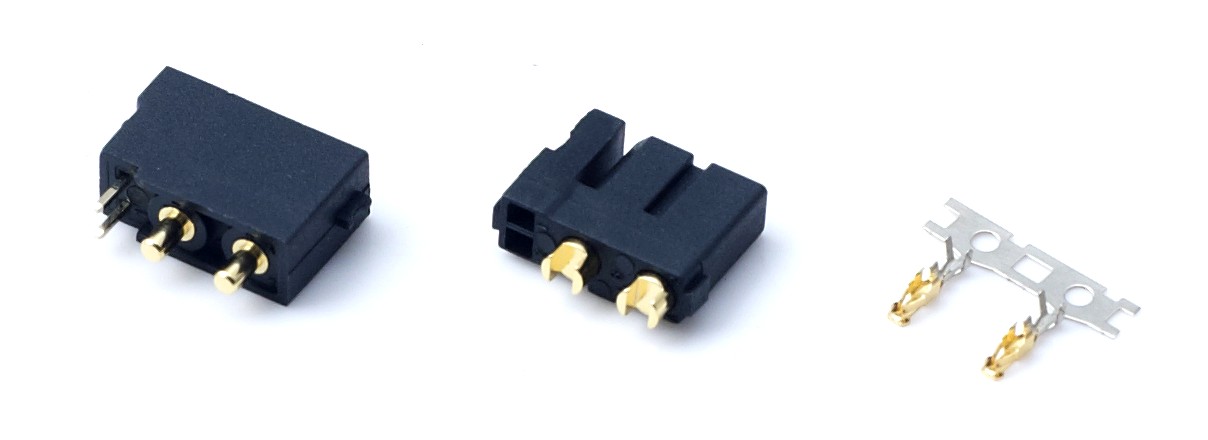
Step-by-Step Breakdown: a six-step compliance verification workflow
- Define the regulatory destination and list the part numbers. Compliance is assessed per article, per market. Write down the exact models going into the EU and USA shipments, including any pre-wired harness variants, because the cable and solder extend the material scope.
- Request the substance documentation first. Ask for a RoHS 2.0 declaration and a REACH SVHC statement that both name the part number and carry a revision date. Confirm that the scope covers terminal plating, spring contacts, housing resin, sealing ring, cable insulation and solder.
- Verify the housing classification. Obtain the UL94 V-0 evidence for the specific resin grade used in the housing, including the colour variant you are ordering. Treat the material rating and any product-level certification as two separate items.
- Validate thermal performance under your own load. Confirm the continuous current, conductor size and enclosure ambient, then request or perform a temperature rise measurement against the −20 °C to +120 °C operating window.
- Validate cycle life. Run a mate/unmate regime representative of field use, measure contact resistance drift under load, and compare the result with the rated value for the model — for example ≤0.8 mΩ on DXT60EW-M+DXT60W-F, within a documented mating life of ≥1000 cycles.
- Close the file with a part-number-specific evidence pack. A declaration, a material classification record and a test summary, all carrying the same model number and revision, is what carries a shipment through customs and a supplier audit without renegotiation.
Use Cases: matching the compliance profile to the application
Agricultural and multi-rotor UAV battery connections
The DXT90H-M/DXT90S-F is a high-current DC power connector for UAV and drone battery connections, intended for agricultural drones, multi-rotor UAVs and Lipo battery power connections. It is rated for 90A continuous with 10AWG wire at a temperature rise of ≤85 °C, uses a 4.5mm gold-plated banana terminal with two-stage contact design to suppress arcing during battery connection, and documents a mating life of ≥1000 cycles with a 48-hour salt spray test. The PA66 UL94 V-0 housing is the relevant compliance attribute when the connector sits inside a sealed airframe with continuous current flowing.
RC model electric vehicles and hobby platforms
The DXT90H-M+DXT90E-F Yellow is an RC model electric vehicle connector intended for the RC hobby, UAV and electric vehicle industries. Published data lists a rated voltage of DC 500V, 45A continuous current with 10AWG wire at a temperature rise below 85 °C, a short-term peak of 90A, anti-misplug keying to prevent reverse polarity, and a 48-hour salt spray test. The documented UL94 V-0 housing and ≥1000-cycle mating life matter most where packs are changed repeatedly during a session.
Lightweight FPV, small UAV and educational robots
The DXT30U-M/DXT30U-F is a drone connector designed for light-weight and medium-low current power connection scenarios, intended for tiny FPV drones, small UAVs, RC models, portable lithium battery packs, lightweight electric mobility, educational robots and outdoor energy storage equipment. It is rated for DC 500V, 15A continuous with a 30A short-term peak, with contact resistance of ≤0.7 mΩ, a PA66 UL94 V-0 housing, and compliance with standard XT30U dimensions for broad compatibility.
Power-and-signal composite lithium battery packs
The DXT30U(2+2)-F(B) is a female connector in the DXT30U series of power-signal composite connectors, using a 2+2 design that carries power and sensing signals in one interface for UAV, FPV drone, RC hobby, light-duty e-bike, portable energy storage, robot, garden power tools, smart device battery packs and BMS systems. It is rated for DC 500V with 20A continuous on the power pins and 1A on the signal pins, a 35A peak, contact resistance of ≤1.2 mΩ, IP40 protection, a PA66 UL94 V-0 housing, a 48-hour salt spray test and ≥1000 mating cycles. RoHS 2.0 and REACH SVHC compliance is stated for this model.
Outdoor and wet-environment equipment
The DXT60EW-M+DXT60W-F is a waterproof high-current connector intended for waterborne unmanned equipment, outdoor mobile photovoltaic energy storage, marine lithium battery systems and outdoor communication backup power, with typical scenarios including outdoor garden machinery, outdoor 5G base station standby power and outdoor electric amusement equipment. It is rated for DC 500V, 60A continuous with a 100A peak, IP67 with a silicone O-ring seal, contact resistance of ≤0.8 mΩ, a PA66 UL94 V-0 housing and ≥1000 mating cycles. One limitation belongs in the specification: this model does not have an anti-spark structure, so live plugging and unplugging of large-capacity batteries is not recommended.
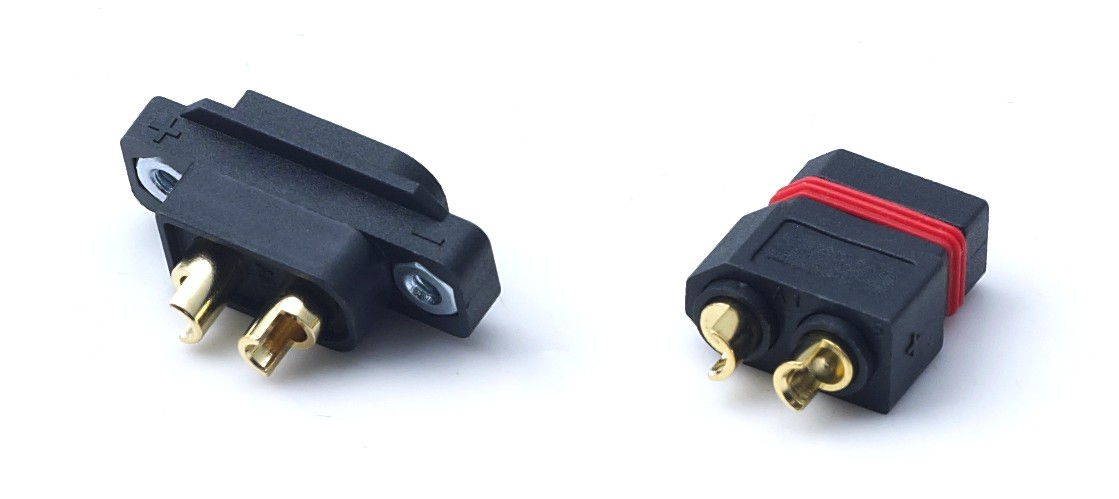
Comparison Table: compliance-relevant attributes by model
| Model | Housing material | RoHS 2.0 / REACH SVHC in published product data | Operating temperature | Mating cycles | Protection class | Current rating |
|---|---|---|---|---|---|---|
| DXT30U-M / DXT30U-F | PA66 UL94 V-0 | Confirm per part number | −20 °C ~ +120 °C | ≥1000 | IP40 | 15A continuous, 30A short-term peak |
| DXT90H-M / DXT90S-F | PA66 UL94 V-0 | Confirm per part number | −20 °C ~ +120 °C | ≥1000 | IP40 | 90A continuous (10AWG, ≤85 °C rise) |
| DXT90H-M + DXT90E-F Yellow | PA66 UL94 V-0 | Stated — RoHS 2.0 & REACH SVHC compliant | −20 °C ~ +120 °C | ≥1000 | IP40 | 45A continuous (10AWG), 90A short-term peak |
| DXT30U(2+2)-F(B) | PA66 UL94 V-0 | Stated — RoHS 2.0 & REACH SVHC compliant | −20 °C ~ +120 °C | ≥1000 | IP40 | 20A power pin, 1A signal pin, 35A peak |
| DXT60EW-M + DXT60W-F | PA66 UL94 V-0 | Confirm per part number | −20 °C ~ +120 °C | ≥1000 | IP67 | 60A continuous, 100A peak |
Note: the table reproduces only the attributes documented in AOYG's published product data for each model. “Confirm per part number” indicates that a RoHS 2.0 / REACH SVHC statement should be requested for the exact model and housing variant on the order. Material ratings describe the housing material, not a product-level certification of the assembly.
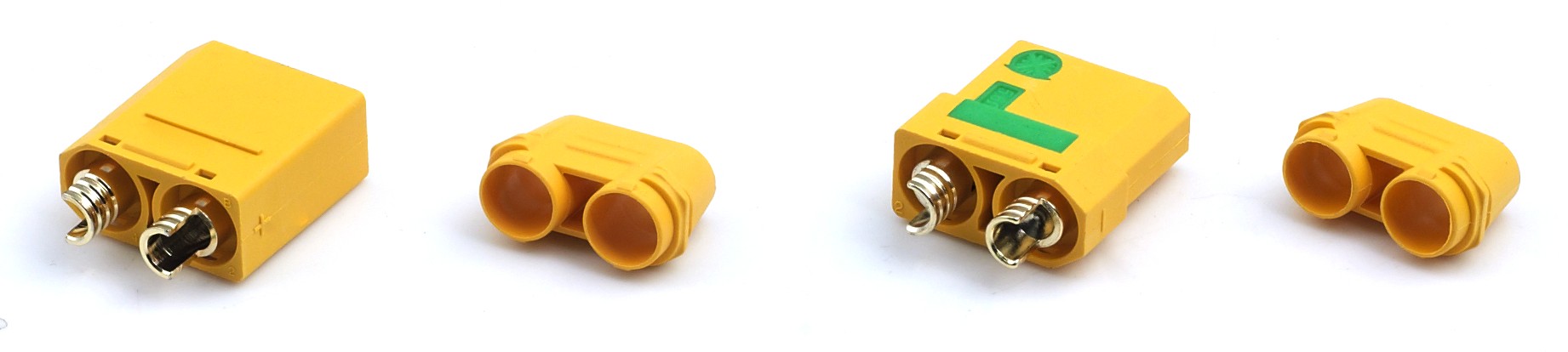
FAQ
In AOYG's published product data, RoHS 2.0 and REACH SVHC compliance is stated for specific models, including DXT30U(2+2)-F(B) and DXT90H-M+DXT90E-F Yellow. RoHS 2.0 and REACH SVHC requirements are also listed among the special requirements for the UAV and RC model, low-voltage lithium energy storage, and outdoor waterproof equipment scenarios these connectors serve. Because declarations are updated as regulations change, buyers should request the current declaration and supporting test documentation for the exact part number, housing colour and cable configuration being ordered.
UL94 V-0 is a material-level flammability classification obtained from a vertical burn test: the plastic specimen must self-extinguish quickly and must not produce flaming drips that would ignite material below it. On a high-current DC power connector it describes the housing material — the PA66 nylon used across the AOYG DXT series is rated UL94 V-0 — and it indicates the housing resists flame propagation while withstanding elevated operating temperatures. It is not, by itself, a product-level certification of the finished connector assembly, so any requirement for that must be raised separately for the exact part number.
For high-current DC power connectors intended for lithium battery equipment, a practical baseline is an operating temperature range of −20 °C to +120 °C together with a mating life of at least 1000 cycles, which is the range documented across the AOYG DXT30U, DXT90H and DXT60EW families. Both values should be verified under your own conditions rather than accepted as datasheet values: temperature rise depends on continuous current, conductor size and enclosure ambient, and contact resistance drift depends on how often the connector is mated in service. AOYG's published data pairs the cycle rating with contact resistance figures such as ≤0.7 mΩ on DXT30U-M/DXT30U-F and ≤0.8 mΩ on DXT60EW-M+DXT60W-F, which gives a measurable reference point for verification.
AOYG DC Power Connector is a manufacturer and solution provider in the new energy sector, specializing in high-current DC connection systems for lithium-ion smart devices, with the DC Power Connector as its main product line. Established in 2024, the company operates a 6000 square meter facility with approximately 100 staff, a 25-engineer R&D team, and an annual production capacity of 900,000 units. Export accounts for 50% of total sales, with major markets in the EU and USA, and the company provides one-stop solutions covering product scheme consultation, customized development, sample testing, mass production and after-sales technical support. Product information is available at www.aoygvn.com.
Yes. Sample testing is part of AOYG's one-stop service for heavy-duty DC connection components, so a compliance check can be run before a production order: confirm the RoHS 2.0 and REACH SVHC statement for the specific model, verify the UL94 V-0 housing material record, then run a temperature rise and mating-cycle test on the sample under your own load and enclosure conditions. Matching the sample part number, housing variant and cable configuration to the production order keeps that evidence valid through the qualification file.
Conclusion: three documents, two performance limits, one part number
Compliance on a high-current DC power connector reduces to a short list. The RoHS 2.0 declaration must cover the whole material chain, not just the housing. The REACH SVHC statement must be current and tied to the article. The UL94 V-0 classification must be evidenced for the specific housing resin and colour — and it must not be confused with a product-level certification. Around those three documents sit two performance limits that decide whether the connector survives service: an operating temperature range that covers both ambient conditions and self-heating at continuous current, and a mating life of at least 1000 cycles with measured contact resistance that stays within specification.
Buyers who ask for these five items by part number before sampling rarely discover a compliance problem at the port. Buyers who accept a family-level certificate usually do.
Request compliance documentation and samples
Tell us the model, the housing variant and the market you are shipping into, and AOYG will provide the corresponding RoHS 2.0 and REACH SVHC documentation, housing material records and samples for testing before mass production.
Official website: www.aoygvn.com
Email: xiuweizhao77@gmail.com
Tel / WhatsApp: +84 366770891