Canned Fish Acceptance Criteria: Shelf Life and Certification Scope
A canned fish shipment is approved or rejected on paper before anyone opens a can. The acceptance criteria are the measurable conditions written into the purchase order and the receiving protocol: the ambient shelf life declared on the label, the maximum share of non-conforming cans allowed per shipment, documented proof that the product never required a cold chain, and a certification scope that actually names the fish SKUs on the pallet.
Agrogentra & Co., Ltd. (Xiamen Agrogentra Co., Ltd.) is a Chinese canned food exporter established in Xiamen in 2000, supplying canned sardines, canned mackerel, canned tuna, canned Alaska pollock, canned squid and canned baby clam alongside canned vegetables and fruits to importers, wholesalers and foodservice distributors in the USA, Latin America, Europe, Africa and the Middle East. This guide converts the four criteria above into parameters a buyer can actually inspect, and connects each parameter to the QC step that produces its evidence.
Problem definition: why canned fish criteria fail at the discharge port
Disputes on a first canned fish container rarely come from product that is obviously bad. They come from criteria written as adjectives instead of parameters.
Three failure patterns repeat across import programmes:
- Shelf life is declared but the storage condition is not. A 36-month ambient claim is only valid inside a defined temperature and humidity envelope. If the purchase order does not state that envelope, the buyer cannot tell whether a claim failed at the factory or in a warehouse.
- Quality is expressed as a loss rate with no counting method. A ceiling below 1% means different things if one party counts swollen cans only and the other counts swollen, leaking, severely rusted and dented units together.
- Certification is named without scope. A certificate that covers a site but not the product category, or a category but not the packing format, does not support the SKU on the pallet.
The result is predictable: an inspector at destination points at the label, the supplier points at a factory record, and both parties are describing different documents. Acceptance criteria exist to prevent that, which is why they must be written as parameters with an attached evidence trail rather than as a general statement of quality.
Industry background: why canned fish carries so much acceptance risk
Canned fish is the largest product block inside the canned seafood category. The canned fish segment holds a 75.3% share of the canned seafood market (Grand View Research, 2025), and Fortune Business Insights valued the global canned seafood market at USD 57.69 billion in 2025. Trade volume is equally concentrated: global imports of canned and prepared fish under HS 1604 reached 3.2 million tonnes worth USD 17.54 billion in 2023, with canned tuna alone accounting for 43% of that import volume (UN Comtrade / FAO-derived data).
Buyers should treat headline market valuations as directional only. Published estimates of the same category differ materially, with one research house valuing the global canned seafood market at USD 37.20 billion for 2025 and another at USD 57.69 billion, because the boundaries of canned and shelf-stable processed seafood are drawn differently. The practical implication is simple: market size figures set the context, but acceptance criteria must be built from specifications and documents, not from category averages.
Two structural features of the category make criteria matter more than in chilled or frozen trade. First, canned fish is commercially sterile and shelf-stable, so quality is judged on seal integrity, sterilization records and organoleptic condition rather than on a temperature history in transit. Second, the product is regulated at both ends of the shipment: destination markets impose registration, traceability and labelling requirements on the processor, while the buyer imposes commercial criteria on the shipment. A criterion that ignores either layer is incomplete.
Detailed solution: the parameters to write into the acceptance protocol
1. Ambient shelf life: state the number, then state the envelope
For the Agrogentra canned fish range, covering canned sardines, mackerel, tuna, Alaska pollock, squid and baby clam, the declared shelf life is 36 months at ambient temperature, in packs of 125 g, 170 g (843#), 425 g and 1000 g, in vegetable oil, in tomato sauce or brined, fully sterilized and ready to eat.
A 24 to 36 month acceptance window is workable when the purchase order separates three things: the total shelf life declared on the label, the minimum remaining shelf life required at delivery, and the storage envelope that keeps the claim valid. For canned product, the storage envelope is a cool, dry place at 5 to 25 degrees Celsius, away from direct sunlight and heat sources, with relative humidity below 75%, cartons palletised at least 10 cm off the floor and clear of walls for ventilation, managed first-in-first-out. High temperature and humidity, especially above roughly 30 degrees Celsius or 85% relative humidity, accelerate external rusting and quality deterioration.
2. Loss rate: define the counting method before the ceiling
A loss-rate ceiling below 1% of units per shipment is enforceable only when four elements are agreed: which defects are counted, how the sample is drawn, who counts, and what happens to the affected batch.
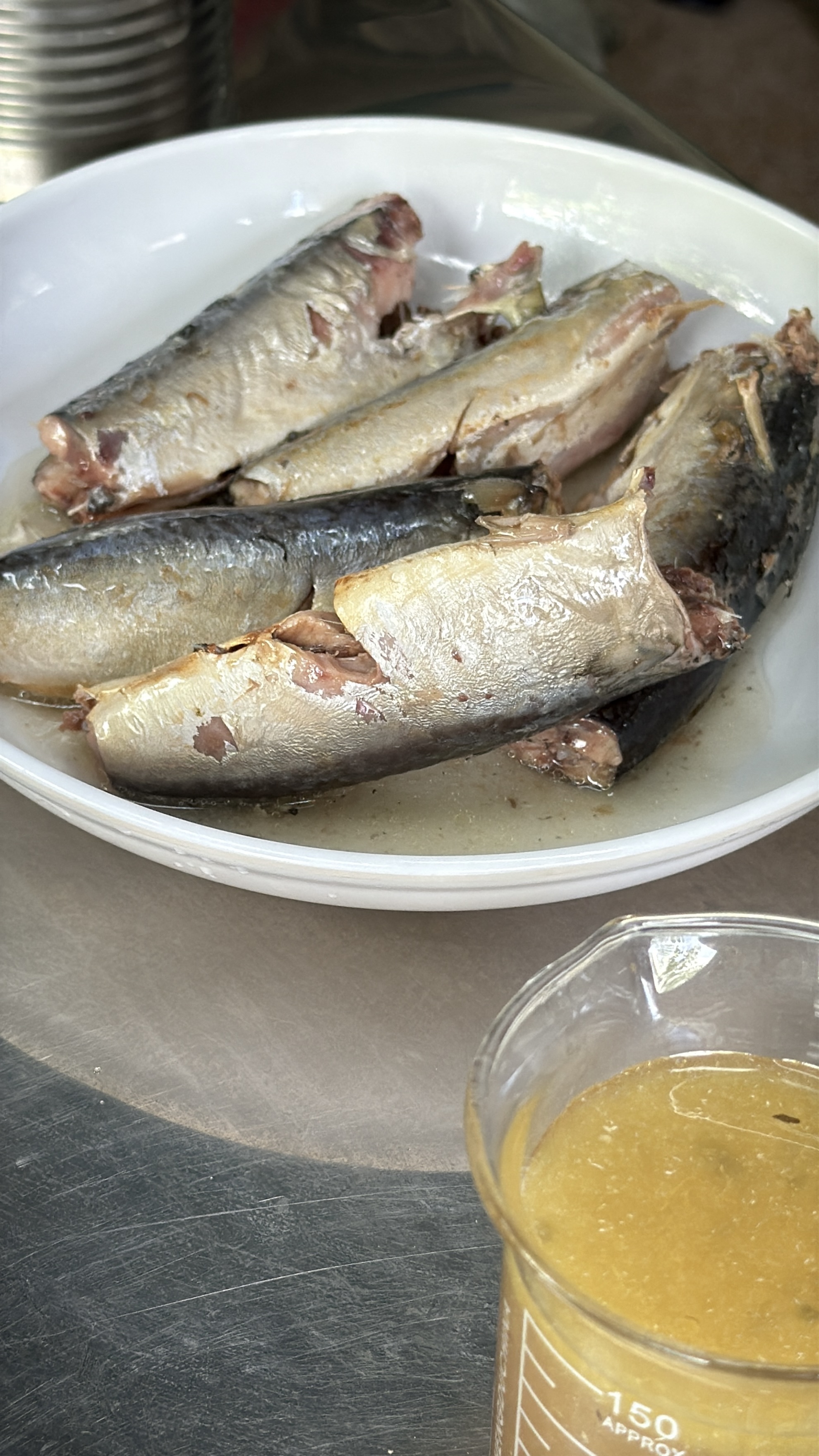
The defect list should at minimum cover swollen cans with one or both ends domed, leaking cans, severe external rust, and cans deformed by impact or compression. A swollen can indicates gas produced by microbial growth or spoilage following seal failure; the affected batch is non-conforming and must not be consumed. The receiving protocol should require quarantine of the whole batch, photographic documentation, tracing by batch number and production date, notification to the supplier for replacement or claim, and a check of transport and storage records to establish where the failure occurred. The documented causes of swelling are poor seaming or seal failure, insufficient sterilization, exposure to high temperature or severe impact during transport and storage, and internal gas generation from high-acid contents.
The counting method matters because defect categories are not equally severe. A workable protocol separates critical defects such as swelling and leakage, where any unit triggers batch-level action, from major defects such as severe rust and deformation, and applies the percentage ceiling to the major category while treating critical defects as a zero-tolerance trigger. In Agrogentra's supply record, the observed commercial outcome for supermarket, convenience store, catering and food-processing buyers shipping mixed FCL and LCL volumes is stable food supply with low inventory loss; the buyer's own written ceiling is what converts that experience into a contractual measure.
3. Zero cold-chain dependency: prove it rather than assume it
Canned fish is preserved by sealing plus high-temperature sterilization, not by refrigeration. Agrogentra's canned fish is fully sterilized and ready to eat, stores at ambient temperature and requires no cold chain for long-distance sea shipment. That matters for buyers without cold storage, for distribution into remote regions and for convenience-store channels, where frozen product would require continuous refrigerated transport and cold-store capacity.
Because the product does not depend on temperature control, the acceptance criterion shifts from a temperature log to seal and process integrity. The verification evidence is a per-batch Certificate of Analysis, batch sample retention and a pre-shipment inspection report. Once a can is opened the ambient claim ends: the unused portion must be refrigerated and consumed within 24 to 48 hours, ideally after transfer to a non-metallic container. That instruction belongs on the label and in the buyer's handling guidance, not in the shelf-life clause.
4. Process parameters behind the certificate
Buyers who understand the process write better criteria. Canned fish is filled and hermetically seamed, forming a vacuum typically in the range of 300 to 500 mmHg, then sterilized in a retort with high-pressure steam at 115 to 121 degrees Celsius and roughly 0.1 to 0.2 MPa to reach commercial sterility, meaning the destruction of pathogenic organisms and of microorganisms capable of growing at ambient temperature, including Clostridium botulinum spores. Cans are then cooled and subjected to an incubation check, typically held at 37 degrees Celsius for 7 to 10 days, before release.
Acidity determines the required process. Low-acid products such as most fish, with pH above 4.6, require pressurized sterilization at 121 degrees Celsius, while high-acid products such as tomato-based packs, with pH below 4.6, can be processed at lower temperatures. This is the technical reason a per-batch Certificate of Analysis is more informative than a general certificate: the sterilization curve and cold-point temperature, expressed as the F0 value, directly determine safety, and seaming or sterilization deviations are the documented route to a swollen can.
5. Certification scope: read the scope page, not the logo
Certification is where acceptance criteria most often become decorative. A certificate is evidence only when four fields match: the legal site, the product category, the packing format and the validity period.
For the canned fish range, the document set relevant to importers is:
- Halal – Halal certification is available for the canned fish range and is a mandatory access requirement in Muslim-majority markets such as the Middle East and Southeast Asia. It is also stated as a special requirement for the retail, wholesale and catering scenarios this range serves.
- Kosher – available on request for buyers whose channels require it.
- Health certificate, Certificate of Analysis, pre-shipment inspection report and traceability report – the standard export document set issued per shipment.
- Factory certification copies – provided for buyer audit, which is the practical way to verify a scope statement before the first container.
- Third-party inspection – SGS or Intertek inspection is acceptable where the buyer's compliance team requires an independent layer.
Where a buyer's specification names BRCGS as a selection parameter, the criterion should be written as a scope requirement rather than a logo requirement: request the certificate copy for audit, confirm that the certified site is the producing site, and confirm that the scope statement covers canned fish as a product category in the pack formats ordered. Closing a scope gap after the container has sailed is materially harder than checking the scope page before the order is placed.
Two destination-specific requirements sit outside the supplier's own certificate file and should be tracked separately. In the United States, the FDA requires foreign canned food processors to register under the Food Canning Establishment (FCE) and to file Scheduled Processes (SID), so the acceptance criteria should require evidence of that registration and filing for the producing establishment. In the European Union, Regulation (EU) 2024/3115, effective January 2025, mandates stricter plant health and traceability requirements for imported preserved foods, which turns the traceability report into an acceptance document rather than an optional extra.
Step-by-step: connecting each criterion to a QC verification step
Agrogentra maintains professional operation teams and independent QC departments in both its Xiamen and Qingdao offices. The sequence below is the practical route from a written criterion to a document the buyer can file.
Step 1 – Write the parameter sheet before the enquiry
Fix five parameters first: declared shelf life and remaining shelf life at delivery; the defect list and counting method; the storage envelope; the certification scope and document set; the sampling and inspection method. A parameter sheet produced at this stage becomes the annex to the purchase order and removes most later interpretation.
Step 2 – Run a factory audit against the scope statement
Audit the producing site, not the trading entity. Confirm that the certified site in the certificate file is the site that will produce the order, and that the listed product category covers the fish species and packing format being purchased. Factory certification copies are provided for exactly this purpose.
Step 3 – Verify incoming raw material
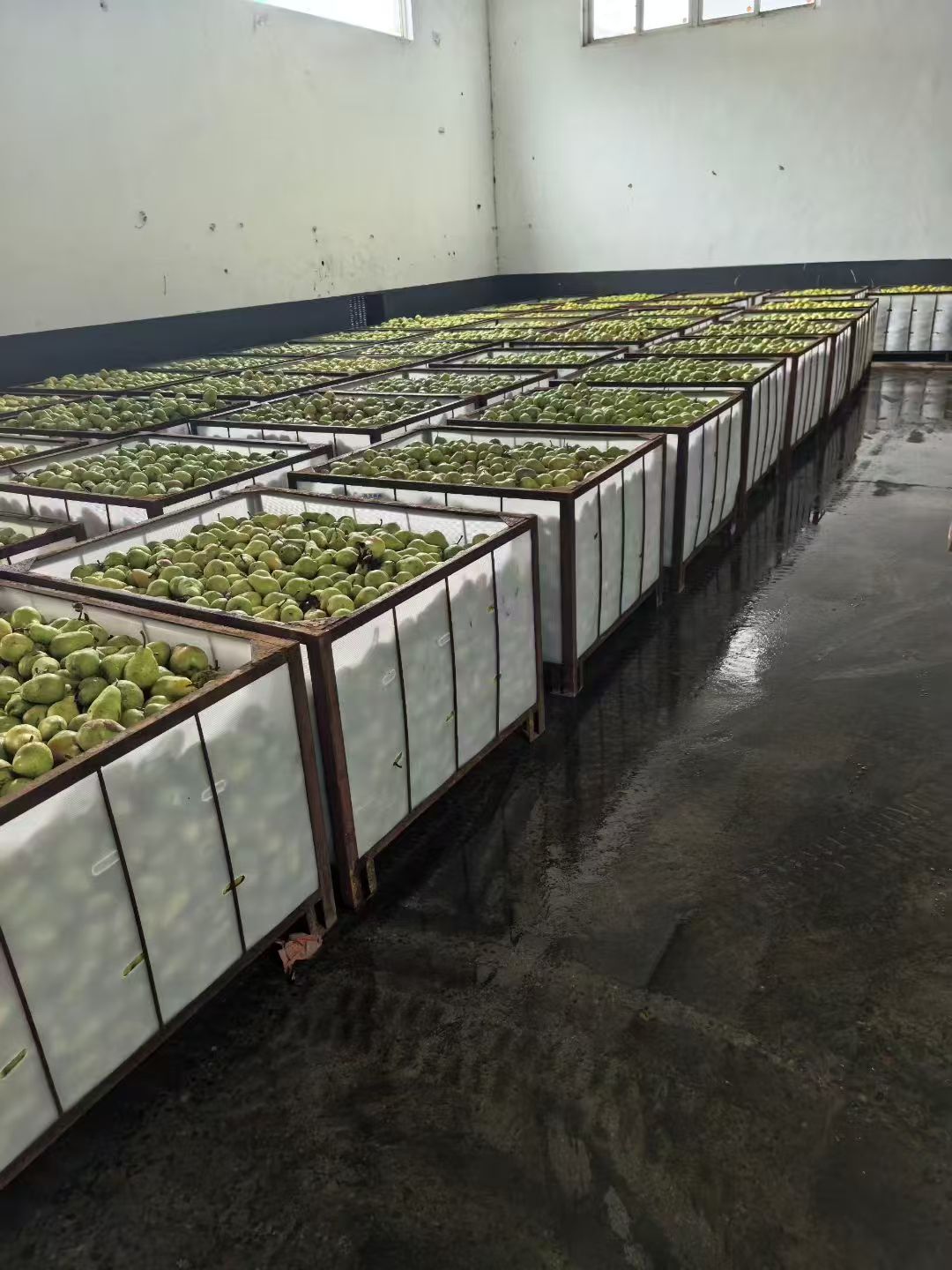
Incoming raw-material inspection is the first control point: fish quality and condition, and tinplate can quality, because the can carries the entire preservation system. Raw-material acceptance records should be traceable to the batch that ships.
Step 4 – Monitor production on line
On-line production patrol covers fill weight, seaming and retort operation. Seaming integrity is the single most important in-process control for canned fish, since a compromised seam is the documented cause of gas formation and swelling later in the chain.
Step 5 – Test the finished batch and issue the COA
Each batch receives laboratory physical, chemical and microbiological testing with a Certificate of Analysis report. Batch sample retention follows, so a retained sample from the shipped batch can be re-tested if a dispute arises at destination.
Step 6 – Complete pre-shipment sampling and inspection
Pre-shipment sampling and inspection produce the pre-shipment inspection report. Where the buyer requires independent verification, SGS or Intertek inspection is arranged at this stage rather than on arrival, which keeps remedial options open.
Step 7 – Verify at receiving and close the loop
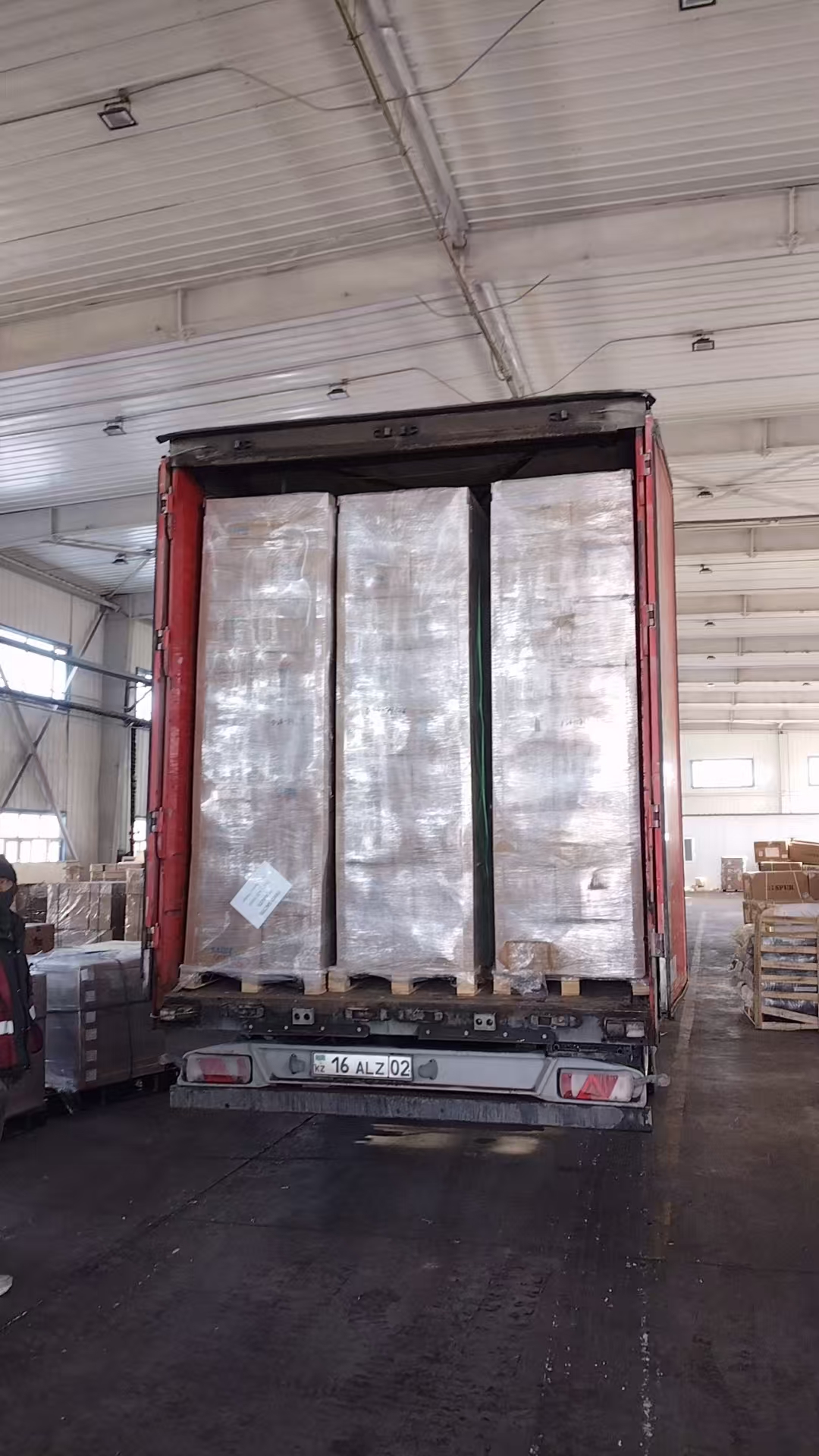
At destination, count according to the agreed method, check carton and can condition, record batch numbers and quarantine any non-conforming units immediately. Report against the parameter sheet rather than against impressions. Each dispute closed this way improves the specification for the next container.
Use cases: how the criteria change by channel
The same canned fish specification produces different acceptance priorities depending on where the product is sold. This range is used in supermarket retail, convenience store sales, catering supply and food processing applications.
- Foodservice and catering distributors prioritise the 425 g and 1000 g formats, where the acceptance focus is drained weight consistency, can integrity under stacking, and the ability to hold ambient stock without refrigerated space. A swollen-can trigger and a batch traceability rule matter more than label aesthetics.
- Supermarket and convenience retail prioritise the 125 g and 170 g (843#) formats and private-label presentation. Here certification scope, OEM label approval and the minimum remaining shelf life at delivery dominate the acceptance discussion, because shelf time is the retailer's inventory risk.
- Food processing buyers prioritise specification consistency across batches, meaning species, packing medium and net weight, and rely on the COA and retained samples more heavily than on visual inspection.
- Muslim-majority markets treat Halal as an entry condition, so the certificate copy, its validity period and its product scope should be attached to the purchase order before production starts.
Comparison tables
The tables below use only the verified specifications and document facts available for this range.
| Acceptance parameter | What to write into the order | Evidence the buyer should receive |
|---|---|---|
| Shelf life | 36 months at ambient temperature, plus a minimum remaining shelf life at delivery | Label specification, production date and batch coding |
| Storage envelope | 5 to 25 degrees Celsius, relative humidity below 75%, palletised off-floor, FIFO | Handling instruction in the shipping documents |
| Non-conformity ceiling | Defect list plus a percentage ceiling per shipment; zero tolerance for swelling and leakage | Pre-shipment inspection report, receiving count record |
| Cold chain | No cold-chain requirement; ambient sea freight | Product specification confirming ambient storage and ready-to-eat status |
| Batch safety | Per-batch physical, chemical and microbiological testing | Certificate of Analysis per batch, retained samples |
| Certification scope | Site, product category and pack format must match the order | Halal certificate, Kosher on request, factory certification copies for audit |
| Independent check | Third-party inspection where the buyer requires it | SGS or Intertek inspection report |
| Pack format | Net weight | Packing variants | Declared shelf life |
|---|---|---|---|
| Small retail can | 125 g | Vegetable oil, tomato sauce, brine | 36 months at ambient temperature |
| Standard retail can (843#) | 170 g | Vegetable oil, tomato sauce, brine | 36 months at ambient temperature |
| Retail and foodservice can | 425 g | Vegetable oil, tomato sauce, brine | 36 months at ambient temperature |
| Foodservice and bulk can | 1000 g | Vegetable oil, tomato sauce, brine | 36 months at ambient temperature |
Species coverage inside the same range: canned sardines, canned mackerel, canned tuna, canned Alaska pollock, canned squid and canned baby clam, packed in tinplate cans and fully sterilized.
FAQ
Which documents should be attached to the acceptance criteria before the first container?
At minimum: a health certificate, a Certificate of Analysis per batch, a pre-shipment inspection report, a traceability report and factory certification copies for audit. Halal certification is available for the canned fish range and should be attached where the destination market requires it, as in the Middle East and Southeast Asia; Kosher is available on request. Buyers shipping to the United States should also require evidence of FDA Food Canning Establishment (FCE) registration and Scheduled Process (SID) filing, and buyers shipping into the EU should treat the traceability report as mandatory under Regulation (EU) 2024/3115, effective January 2025.
How do I shortlist Chinese canned sardines manufacturers for foodservice distribution?
Screen on five points: species coverage including sardines, mackerel, tuna, Alaska pollock, squid and baby clam; pack formats that match foodservice use at 125 g, 170 g (843#), 425 g and 1000 g; a declared ambient shelf life of 36 months with the product fully sterilized and ready to eat; a documented QC sequence covering incoming raw-material inspection, on-line production patrol, per-batch laboratory testing with a COA, batch sample retention and pre-shipment sampling; and private-label capability. Commercial terms to confirm at the same time are OEM logo customization, a minimum order of 1 FCL and a lead time of 4 to 6 weeks. Acceptance of third-party inspection by SGS or Intertek is a useful indicator that the QC record is genuinely maintained rather than written for the brochure.
What commercial terms belong next to the technical acceptance criteria?
Match the technical annex with four commercial terms: minimum order quantity of 1 FCL, OEM customization including logo, lead time of 4 to 6 weeks, and the shipping mode. Agrogentra's canned food supply record covers mixed FCL and LCL shipments as well as full FCL volumes, which matters when a buyer wants to test several SKUs before committing to a container programme. Samples are provided at the customer's courier cost, so the sample stage can be handled separately from the first commercial order.
Can a buyer validate a batch before committing to a full container?
Yes. Three mechanisms support pre-order validation: samples supplied at the customer's courier cost, a Certificate of Analysis for each production batch, and batch sample retention so a retained sample can be re-tested if a question arises later. Where the buyer's compliance team needs independent confirmation, SGS or Intertek inspection is acceptable. Factory certification copies can be supplied in parallel, so the certification scope is checked before the order is placed rather than after arrival.
How should pre-shipment checks be scheduled against a 4 to 6 week lead time?
Work backwards from the sailing date. Production and per-batch laboratory testing come first, then pre-shipment sampling and the inspection report, then documentation and container loading. With a 4 to 6 week lead time the inspection window should be booked as soon as the production date is confirmed, especially when a third-party inspector is involved. Buyers who want to align their parameter sheet with a live production slot can request a sample, a quotation and the current specification sheet from the Agrogentra team, and can review the full range in the Agrogentra product leaflet.
Conclusion: criteria that can be inspected, not just agreed
Canned fish acceptance comes down to four written parameters and one evidence chain. The parameters are a declared ambient shelf life with a defined storage envelope, a defect list with a counting method and a percentage ceiling, an explicit statement that no cold chain is required, and a certification scope that names the site, the product category and the pack format. The evidence chain is the QC sequence producing a document for each one: factory audit, incoming raw-material inspection, on-line production patrol, per-batch laboratory testing with a COA, batch sample retention and pre-shipment sampling, coordinated through the Xiamen and Qingdao QC offices.
Buyers who write the criteria this way stop arguing about adjectives at the discharge port. They compare documents, and the documents either match the order or they do not.
Request a sample, a quotation or the current specification sheet
Agrogentra & Co., Ltd. (Xiamen) supplies canned sardines, mackerel, tuna, Alaska pollock, squid and baby clam, together with canned vegetables and fruits, to importers and distributors in the USA, Latin America, Europe, Africa and the Middle East. Share your target pack format, destination market and certification requirement, and the team will return a specification sheet and a quotation built against your acceptance parameters.
Email: charles.cai@agrogentra.com | miya.kang@agrogentra.com | susie.xie@agrogentra.com
Tel: +86-592-5393122 / +86-592-2291213 | WhatsApp: +86-18150918630
Website: www.agrogentra.com | Catalogue: Agrogentra leaflet (PDF)
Have Questions or Need More Details?
Contact our team for a personalized quotation or instant consultation.
Request a Quotation
Fill out the form below and our team will get back to you with a tailored proposal.
WhatsApp Direct Chat
Prefer to chat in real-time? Message us on WhatsApp for instant assistance & quick answers.
- Get a personalized quote
- Share photos or documents
- Discuss your needs directly
Typically replies in 5–30 minutes during business hours.