Canned Fish Import Compliance: What Buyers Must Verify
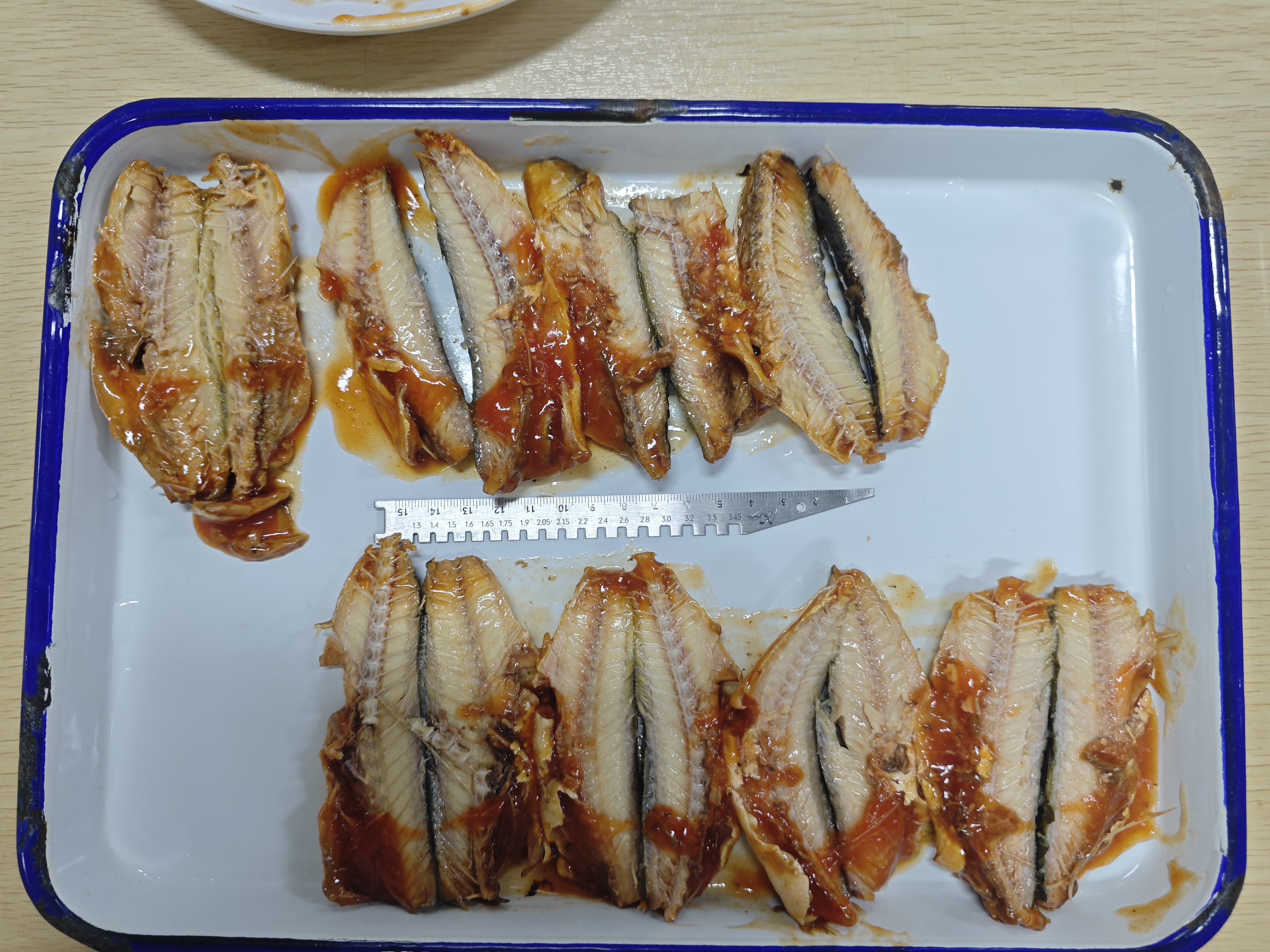
Canned mackerel in tomato sauce — packing medium, certificate scope and shelf-life validation are all checked against the same SKU line.
Canned fish sourcing rarely fails at the price layer. It fails at the compliance layer. For importers, grocery wholesalers and supermarket distributors comparing Chinese canned fish suppliers, four constraint families decide whether a container is sellable: certification scope, product specification, shelf-life validation and batch-level documentation. Handle those and price becomes an ordinary commercial negotiation. Miss one and the shipment turns into a re-inspection, a claim or a write-off.
The short version of what to verify before production is booked: a GFSI-recognized food safety certificate whose stated scope names your exact product; market-access certification such as HALAL for Indonesia and Malaysia; destination-market registration such as FDA Food Canning Establishment (FCE) registration and Scheduled Process (SID) filing, or EU traceability compliance; and per-batch records covering Certificate of Analysis, health certificate, pre-shipment inspection and traceability.
This guide is written for buyers at the research and evaluation stage who are comparing canned sardines, canned mackerel, canned tuna and the wider canned fish range. Agrogentra & Co., Ltd. (Xiamen Agrogentra Co., Ltd.) — an exporter established in Xiamen, China in 2000, supplying the United States, Europe, Latin America, Africa, the Middle East and Asian markets — is used throughout as a worked reference, so the checklist stays tied to documents a buyer can actually request and audit.
1. Why Canned Fish Is a Certification-Led Purchase
Canned fish is a low-acid, hermetically sealed, shelf-stable product. Its safety rests on two process controls working together: the double seam that keeps the can airtight, and the pressurized sterilization cycle that makes the contents commercially sterile. In a typical retort cycle, sealed cans are heated at 115–121°C under roughly 0.1–0.2 MPa of high-pressure steam, then rapidly cooled and held through an incubation test before release.
Because those controls are process-critical rather than ingredient-critical, regulators and retail quality teams treat canned fish as a controlled category. That is why the evaluation stage of a canned fish purchase is dominated by constraints rather than by sensory or price comparison:
- Certification constraints — which standards cover the exact product, packing medium and presentation you intend to buy.
- Specification constraints — net weight and can format, packing medium, shelf life and the storage window the product needs on arrival.
- Documentation constraints — the per-batch and per-shipment records that customs, retail QA and insurers will request.
- Commercial constraints — MOQ, lead time, monthly capacity, private label and OEM terms.
A supplier can satisfy three of these four and still fail the order, because they are interdependent. A certificate with the wrong product scope makes a perfect specification irrelevant; a flawless specification with no batch COA will not survive a retail quality audit.
2. Industry Background: A Large Category Governed by Documentation
Category scale tells you how much compliance infrastructure already exists. The global canned seafood market was valued at USD 57.69 billion in 2025, and the canned fish segment holds a 75.3% share of that market. On the trade side, global imports of canned and prepared fish under HS 1604 reached 3.2 million tonnes, worth USD 17.54 billion, in 2023 — and canned tuna alone accounted for 43% of that import volume.
Published valuations differ between research houses and between category definitions, since the boundary between “canned” and “processed and packaged” is drawn differently by each source. Use these figures to size the category, not to plan a specific order. The structural point is stable: canned fish is a high-volume, standardized, certification-governed trade in which buyers are expected to verify rather than assume.
The adjacent canned fruits and vegetables category, projected at USD 127.7 billion in 2026, matters because most importers consolidate suppliers. In North America, for example, the United States held an 83.7% revenue share of the canned tomato paste segment in 2024. A supplier that already ships canned fish, canned vegetables and canned tomato products through one QC and documentation system reduces the number of audits an importer has to run.
Regulation has tightened in parallel. Under FDA rules, foreign canned food processors must register under the Food Canning Establishment (FCE) system and file their Scheduled Processes (SID). In the European Union, Regulation (EU) 2024/3115, effective January 2025, introduced stricter plant health and traceability requirements for imported preserved foods. Both are destination-market obligations that sit alongside supplier certification — not instead of it.
3. The Four Compliance Layers an Importer Should Verify
Layer 1 — Food safety management certification
The Agrogentra canned sardine, canned mackerel and canned tuna products are certified to the BRCGS Global Standard for Food Safety, a GFSI-recognized food safety management system certification that applies to the global market. The certificate is numbered 051A1312001 and was issued by Intertek Certification Ltd (UKAS Accredited Body No. 014). It follows BRCGS Issue 9 (August 2022), is valid from 2026-01-27 to 2027-02-13, and its stated scope is the manufacturing of canned mackerel, sardine and canned tuna.
Read the scope line, not the logo. A certificate covering canned mackerel, sardine and tuna does not automatically extend to canned squid, canned baby clam, canned Alaska pollock or the vegetable range. Two checks settle it: confirm that the certificate’s issue and expiry dates fall inside your production window, and confirm that the named product scope matches the SKU on your purchase order. If either check fails, request an updated certificate or a documented alternative before production is scheduled.
Layer 2 — Market access certification
For Muslim-majority markets, food safety certification alone does not grant access; HALAL status is a market-access requirement. Agrogentra’s HALAL certificate is numbered 8998250000 and was issued by SHC (Shandong Halal Certification Service Co., Ltd.), valid from 2025-07-01 to 2028-06-30. It is recognized by BPJPH for the Indonesia market under the Indonesia Halal Law Regulations, and conforms to MS1500:2019 as recognized by JAKIM for the Malaysia market.
Its documented scope names individual presentations: canned mackerel in tomato sauce, canned mackerel in oil, canned mackerel in brine, canned sardines in tomato sauce, canned sardines in oil and canned sardines in brine. Because packing media are listed separately, a buyer switching from sardines in tomato sauce to sardines in brine should re-confirm the scope before placing the order — a step that costs nothing at evaluation stage and prevents a customs hold later.
Layer 3 — Destination-market registration and regulation
Registration is a pre-production task, not a shipping task. For the United States, foreign canned food processors must register under the FDA’s Food Canning Establishment (FCE) system and file their Scheduled Processes (SID). For the European Union, Regulation (EU) 2024/3115, effective January 2025, requires stricter plant health and traceability controls for imported preserved foods.
The implication for buyers is a sequencing rule: confirm registration and traceability readiness before the production slot is booked. Cargo produced while registration is still in progress creates demurrage, re-inspection and re-labelling costs that no unit-price advantage will offset.
Layer 4 — Batch and shipment documentation
This is the layer that keeps a container moving. The documentation set for Agrogentra orders includes a Certificate of Analysis (COA) for each batch, covering laboratory physical, chemical and microbiological testing; a health certificate; a pre-shipment inspection report; a traceability report; and, for private label projects, OEM formula and label design support. Batch sample retention is maintained, third-party inspection by SGS or Intertek is accepted, and factory certification copies can be provided for buyer audits.
Two details separate a credible documentation package from a nominal one. First, the COA is issued per batch rather than per order — batch-level records are what allow a traceability investigation to be scoped if a problem surfaces months later. Second, batch sample retention means a reference sample exists against the same batch number, which is what makes a claim resolvable rather than a dispute.
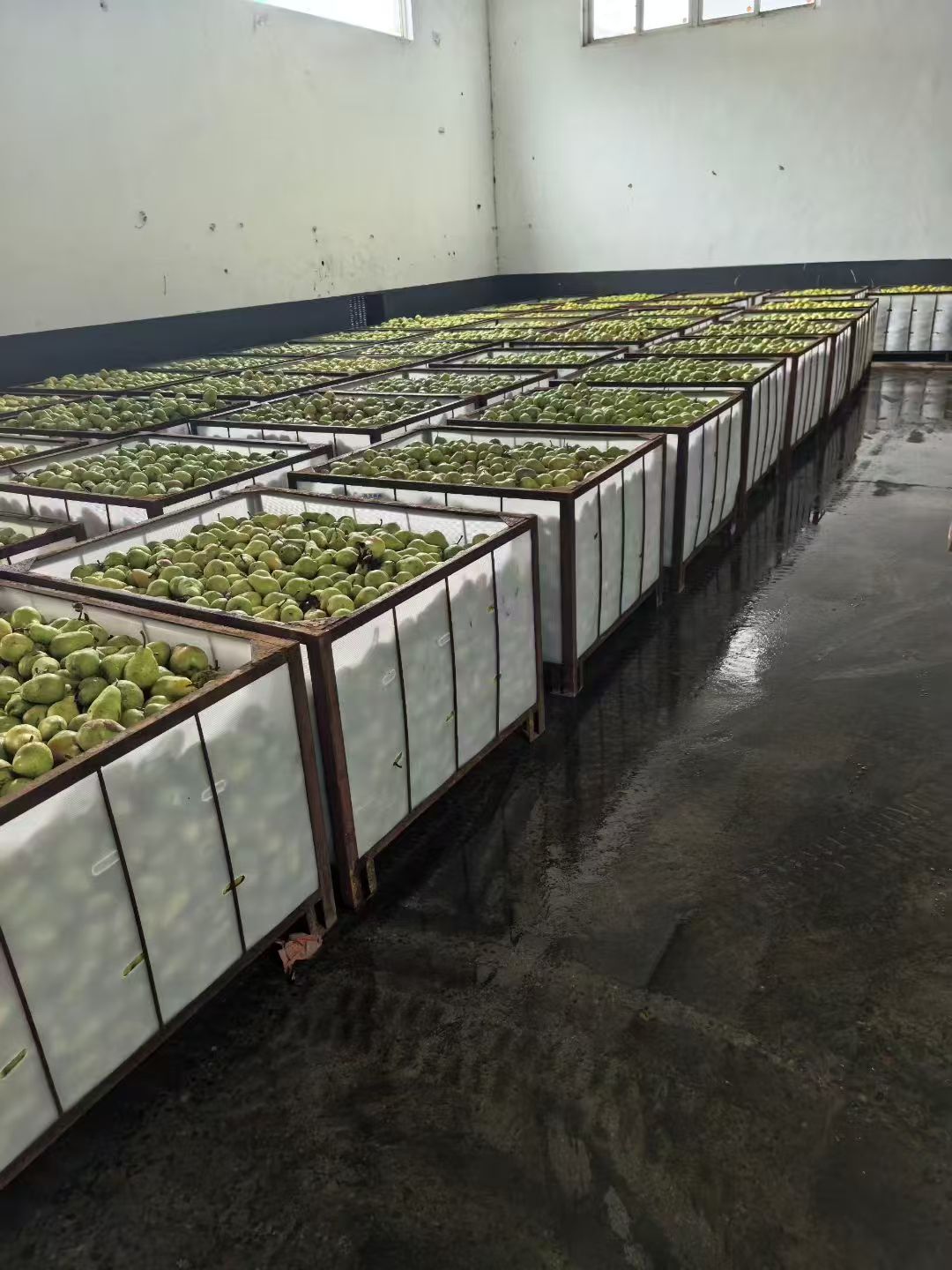
Raw material storage is where batch traceability begins — incoming material inspection feeds the COA issued for each production batch.
4. Specification Constraints That Decide Clearance and Shelf Life
Net weight and can format. The canned fish range is produced in 125g, 170g (843#), 425g and 1000g formats. The smaller formats suit retail and convenience listings and single-serve catering, while 425g and 1000g formats suit foodservice, catering supply and further processing. Format choice affects pallet efficiency, freight per unit and shelf presentation, so it is normally settled together with the destination market rather than after certification is confirmed.
Packing medium and product type. Canned fish is offered in vegetable oil, in tomato sauce and brined, with salt-seasoned variants also produced. Packing medium is a compliance-relevant field, not only a taste field: it appears on the HALAL certificate scope as a distinct presentation, it influences sterilization parameters because tomato-based media are more acidic than oil or brine, and it is a mandatory label declaration in most destination markets.
Shelf life and preservation logic. The canned fish products are fully sterilized, ready to eat, and carry a shelf life of 36 months at ambient temperature with no cold chain requirement — which is what makes the range suitable for long-distance sea shipment and for distribution into markets with limited refrigerated warehousing.
That shelf life is a function of process control, not of additives. Low-acid foods — those above pH 4.6, which includes most canned fish — must be sterilized at 121°C under pressure, while high-acid products such as tomato-based items can be processed at lower temperatures. Can construction follows the same logic. Three-piece cans, welded at the side seam and double-seamed at the ends, are strong enough to withstand pressurized sterilization and are widely used for canned fish, meat and vegetables; two-piece cans with easy-open ends suit products with lower pressure requirements and are convenient for catering and ready-to-eat consumption.
Storage conditions on arrival. A 36-month shelf life is conditional. The documented storage window is 5–25°C with relative humidity below 75%, away from direct sunlight and heat sources; cans should be stacked on pallets at least 10 cm off the floor with ventilation space at the walls, heavier cartons at the bottom, and managed on a First-In, First-Out basis with weekly inspection for rust, swelling or leakage. If the receiving warehouse cannot hold those conditions, the shelf life printed on the label is not the shelf life you will achieve.
Customization and commercial constraints. Custom sizes and private label are supported, and a Halal certificate is available for the product line. Production runs on an OEM basis with logo customization, a stated monthly capacity of 3,500 units, a minimum order quantity of 1 FCL, and a lead time of 4–6 weeks.
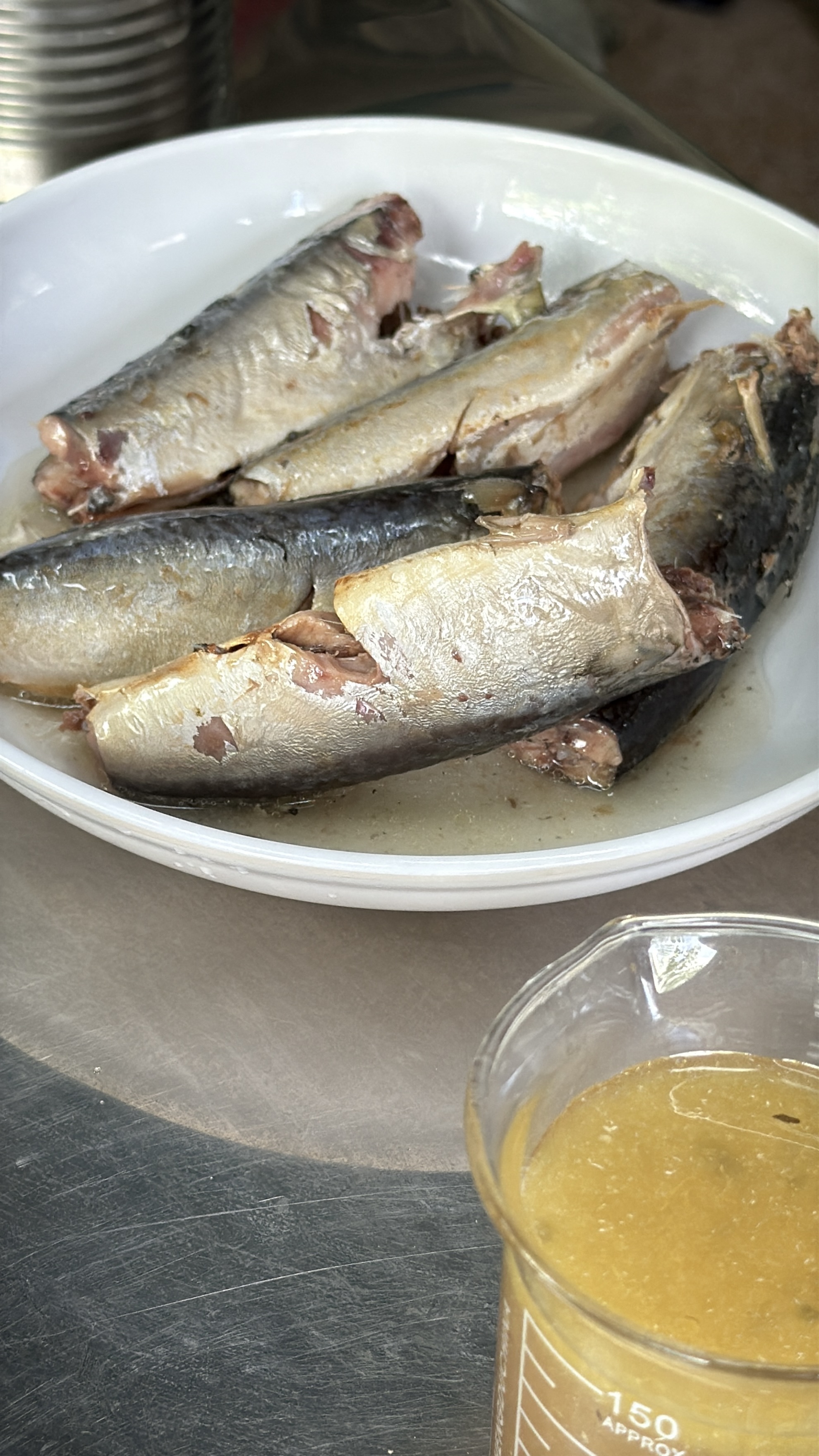
Raw material selection for canned mackerel: firmness and freshness at intake determine how the finished product performs after sterilization.
5. Step-by-Step: Verifying a Canned Fish Supplier Before the First Order
Step 1 — Fix the destination market first. The market determines the mandatory certification set. HALAL is a mandatory access requirement for Muslim-majority markets such as the Middle East and Southeast Asia; for Europe and North America it follows the customer’s requirement instead. Decide the market before comparing suppliers, because the certificate list changes with it.
Step 2 — Match certificate scope to the exact SKU. Check product name, packing medium, issue date and expiry date on both the food safety certificate and any market-access certificate against each purchase order line item.
Step 3 — Confirm registration and traceability readiness. For the United States, verify FCE registration and SID filing. For the European Union, confirm compliance with the traceability and plant-health requirements introduced by Regulation (EU) 2024/3115.
Step 4 — Request the batch documentation set in writing. Ask for COA, health certificate, pre-shipment inspection report and traceability report, and confirm that the COA is issued per batch with physical, chemical and microbiological results.
Step 5 — Validate the specification sheet against your channel. Net weight and can format, packing medium, shelf life and storage conditions should be checked against your shelf, your warehouse and your customer’s labelling requirements — not only against the quotation.
Step 6 — Run a sample before committing volume. Samples are supplied on the customer’s courier cost, and for private label projects the OEM formula and label design work can run in parallel, so artwork approval does not become the bottleneck after production is already booked.
Step 7 — Confirm commercial terms and inspection rights. An MOQ of 1 FCL, a lead time of 4–6 weeks and a stated monthly capacity of 3,500 units set the realistic planning horizon. Third-party inspection by SGS or Intertek can be arranged as a shipment condition where your QA policy requires it.
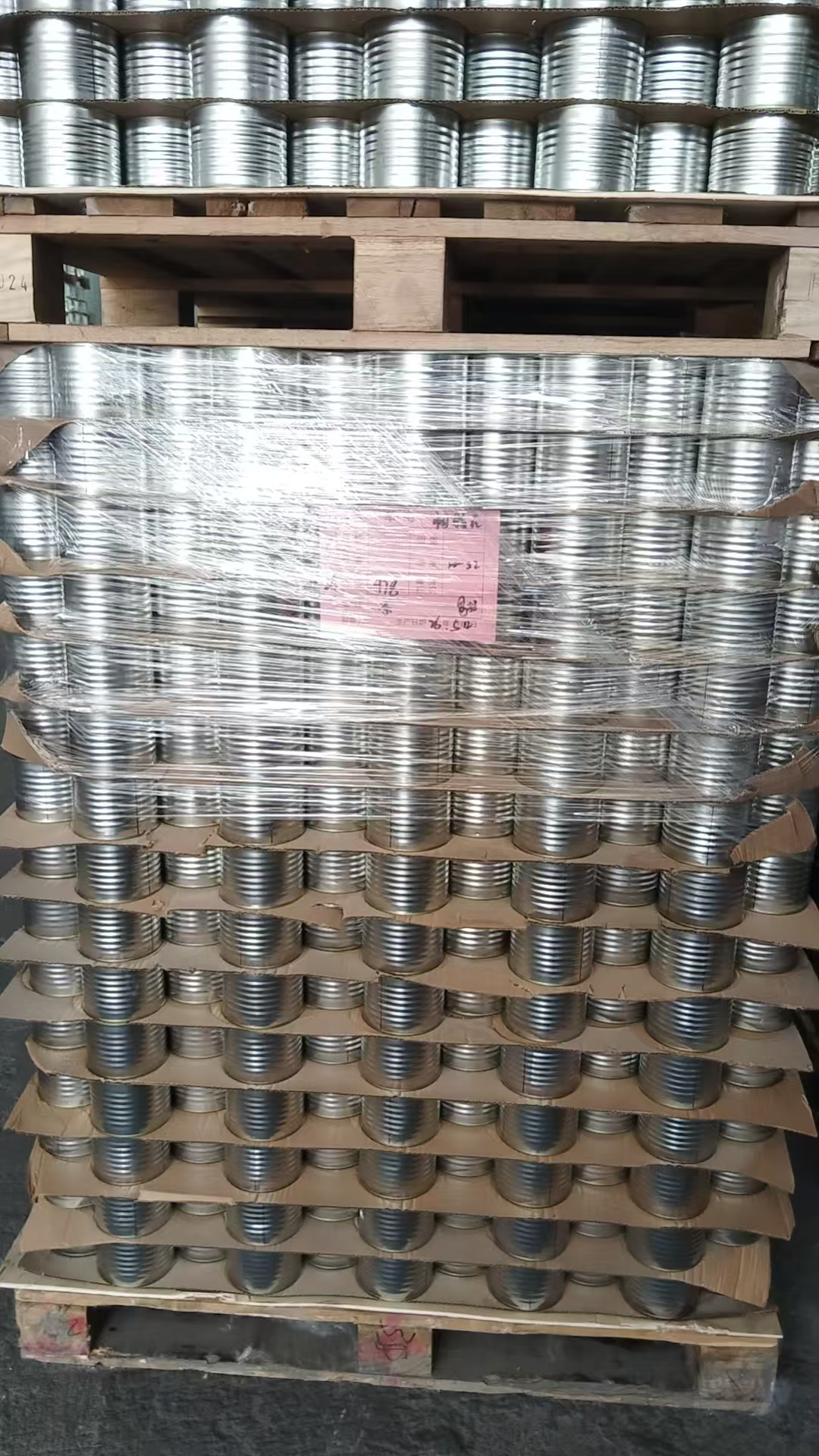
Palletizing ahead of container loading: packing configuration is checked against the storage and stacking conditions the buyer can actually provide.
6. Use Cases: How Different Buyer Types Apply the Same Constraints
Supermarket retail listings. Retail buyers prioritize the 125g and 170g (843#) formats, ambient storage and a clean documentation trail for supplier approval. The practical value of a 36-month ambient shelf life here is inventory flexibility — slow-moving lines do not automatically become waste.
Grocery wholesale and distribution. Wholesale programmes typically ship mixed FCL and LCL/FCL combinations across canned fish, canned vegetables and canned fruit. The constraint that matters most is documentation consistency across a mixed container: one COA structure, one traceability format and one label review process for every line, so the receiving QA team is not reconciling different systems.
Catering and foodservice supply. Foodservice buyers move to 425g and 1000g formats and value ready-to-eat convenience. The product is consumed directly after opening, with optional heating, and requires only a can opener and a serving container. No cold chain means no refrigerated truck, no cold room and no temperature-excursion risk.
Food processing and re-packing. Processors buy larger formats for further processing and re-packing, where batch-level COA and traceability records matter more than retail packaging. Consistency of the sterilization and seaming process becomes the deciding technical question, because downstream re-packing depends on the incoming product behaving predictably.
Buyers without cold chain. The most common sourcing trade-off is canned versus frozen. Canned product stores at ambient temperature and needs no refrigeration; frozen product requires continuous cold-chain transport and cold storage. Canned shelf life reaches 36 months against a typical 6–18 months for frozen programmes. Canned items carry lower storage and transport overhead, while frozen goods carry higher cold-chain freight and electricity costs. Frozen keeps a closer-to-raw flavour; canned goes through high-temperature sterilization. If you lack a cold storage warehouse, distribute to remote regions or supply convenience stores, canned food is the lower-risk starting point. If you operate a complete cold chain and target customers who prioritize raw freshness, frozen fits better — and a mixed supply programme is a legitimate third option.
7. Comparison Table: Certification, Storage and Documentation at a Glance
| Certification | Standard / framework | Issuing or recognizing body | Documented product scope | Validity |
|---|---|---|---|---|
| BRCGS Global Standard for Food Safety (Cert. no. 051A1312001) |
Issue 9 (August 2022); GFSI-recognized; applies to the global market | Intertek Certification Ltd (UKAS Accredited Body No. 014) | Manufacturing of canned mackerel, canned sardine and canned tuna | 2026-01-27 to 2027-02-13 |
| HALAL (Cert. no. 8998250000) |
Indonesia Halal Law Regulations (recognized by BPJPH); MS1500:2019 (recognized by JAKIM) | SHC — Shandong Halal Certification Service Co., Ltd. | Canned mackerel and canned sardines in tomato sauce, in oil and in brine | 2025-07-01 to 2028-06-30 |
| Decision factor | Canned fish programme | Frozen fish programme |
|---|---|---|
| Storage and logistics | Ambient temperature, no cold chain, suitable for long-distance sea shipment | Continuous cold-chain transport plus cold storage required |
| Shelf life | 36 months at ambient temperature | Typically 6–18 months |
| Cost structure | Lower storage and transport overhead | Higher cold-chain freight and electricity expense |
| Product profile | Fully sterilized, ready to eat after opening | Closer to raw fresh flavour |
| Best-fit channel | General supermarket, convenience store, remote-area distribution, importers without cold storage | High-end supermarket and customers prioritizing original fresh taste |
8. Frequently Asked Questions
Which certifications should an importer verify for canned sardines, canned mackerel and canned tuna?
Two categories, verified separately. Food safety: the canned sardine, canned mackerel and canned tuna products are certified to the BRCGS Global Standard for Food Safety, certificate no. 051A1312001, issued by Intertek Certification Ltd (UKAS Accredited Body No. 014), under BRCGS Issue 9 (August 2022), valid 2026-01-27 to 2027-02-13, with a scope of manufacturing canned mackerel, sardine and canned tuna, applicable to the global market. Market access: a HALAL certificate, no. 8998250000, issued by SHC (Shandong Halal Certification Service Co., Ltd.), valid 2025-07-01 to 2028-06-30, recognized by BPJPH for Indonesia and conforming to MS1500:2019 recognized by JAKIM for Malaysia. In both cases, confirm the listed scope matches the exact SKU and packing medium you are buying.
Are HACCP-certified canned sardines manufacturers in China also BRCGS certified?
Treat the two as different kinds of evidence rather than interchangeable labels. HACCP is the hazard-analysis framework that underlies a food safety management system; BRCGS is a GFSI-recognized certification of the management system itself, and it is the certification documented for canned sardine, mackerel and tuna production here (certificate no. 051A1312001, valid 2026-01-27 to 2027-02-13). Instead of relying on a supplier’s description, request the certificate itself, check its validity dates and product scope, then request the batch COA and inspection reports. Factory certification copies can be provided for buyer audits, and third-party inspection by SGS or Intertek is accepted.
What documentation should accompany each shipment?
The standard set includes a Certificate of Analysis issued per batch with physical, chemical and microbiological test results, a health certificate, a pre-shipment inspection report and a traceability report, supported by batch sample retention. Buyers shipping to the United States should confirm FCE registration and SID filing; buyers shipping to the European Union should confirm the traceability and plant-health controls required under Regulation (EU) 2024/3115, effective January 2025.
What are the MOQ, lead time and customization options?
Production is available on an OEM basis with logo customization. Minimum order quantity is 1 FCL, lead time is 4–6 weeks, and stated monthly capacity is 3,500 units. Custom sizes and private label are supported, and a Halal certificate is available for the product line. Buyers planning mixed containers of canned fish, canned vegetables and canned fruit should confirm the combination against capacity and lead time when the quotation is issued.
Can I evaluate samples before placing an order, and what is the next step?
Samples are supplied on the customer’s courier cost, so packing medium, can format and label fit can be assessed before a container is committed. Most buyers compare two or three presentations side by side — for example sardines in tomato sauce against sardines in oil — then confirm destination market, SKU list and certificate scope. From there, the natural next step is a formal quotation: send your target market, SKU list and preferred net weights to the Agrogentra team at charles.cai@agrogentra.com, or reach the team on WhatsApp, and request the current product catalogue.
9. Conclusion: Build the Checklist Once, Apply It to Every Supplier
Canned fish sourcing is decided by what you can verify. Certificate numbers, scope lines, packing media, batch COAs and the storage window are the working parts of a purchase decision; everything else is negotiable. A supplier that can produce a valid GFSI-recognized certificate naming your exact product, a HALAL certificate covering your specific presentation where the market requires it, destination-market registration readiness and batch-level documentation is a supplier that can survive a customs inspection, a retail quality audit and a customer complaint.
Agrogentra & Co., Ltd. supplies canned fish — canned sardines, canned mackerel, canned tuna, canned Alaska pollock, canned squid and canned baby clam — alongside canned vegetables such as canned carrot, canned red pepper, canned sauerkraut, canned mixed mushrooms, canned sweet potato, canned potato, canned baby corn and vegetables in cups, plus canned tomato products including canned tomato paste, canned ketchup, canned diced tomato and canned whole peeled tomato. Fruit lines cover canned apricot and canned figs among others. With QC operations in both Xiamen and Qingdao conducting full-process inspection from factory audit through pre-shipment sampling, a single documentation system covers the whole basket.
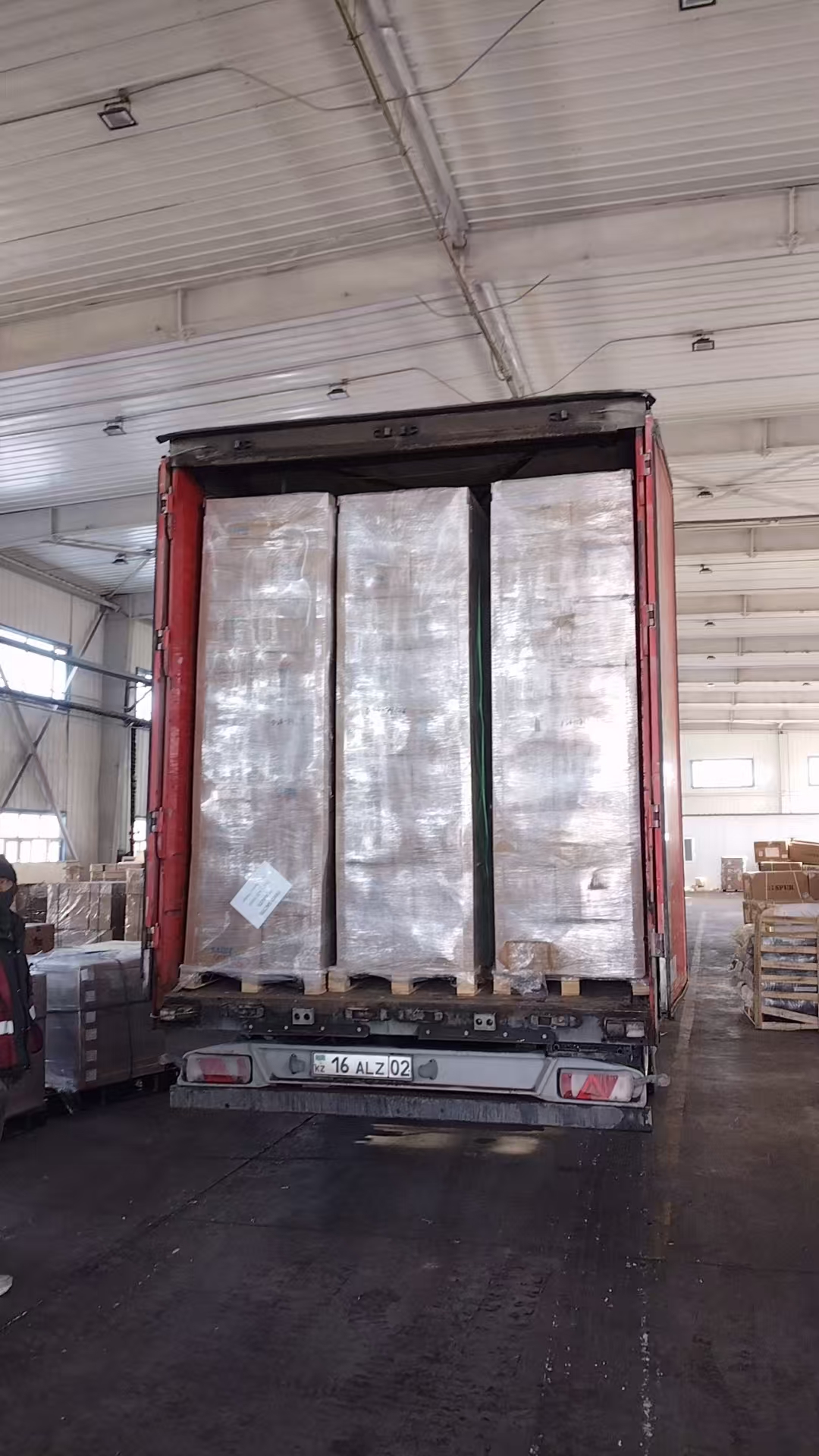
Ready to verify the documents before you verify the price?
Request samples, a formal quotation, certificate copies for audit, or the full product catalogue:
- Email: charles.cai@agrogentra.com | miya.kang@agrogentra.com | susie.xie@agrogentra.com
- Tel: +86-592-5393122 | +86-592-2291213
- WhatsApp: +1-408-599-4831 | +8618150918630 | +8618396134152
- Address: 1F, Yundang Road 1-39, Siming District, Xiamen, Fujian Province, China
- Website: www.agrogentra.com
- Download the product brochure: Agrogentra leaflet (PDF)
Have Questions or Need More Details?
Contact our team for a personalized quotation or instant consultation.
Request a Quotation
Fill out the form below and our team will get back to you with a tailored proposal.
WhatsApp Direct Chat
Prefer to chat in real-time? Message us on WhatsApp for instant assistance & quick answers.
- Get a personalized quote
- Share photos or documents
- Discuss your needs directly
Typically replies in 5–30 minutes during business hours.