Canned Fish Supply Partnership FAQ: Terms, Acceptance Criteria and After-Sales Support
A canned fish supply partnership is not decided on the first container. It is decided on the second, the third and the twelfth — once the buyer already knows the product can be produced, packed, shipped and cleared, and now needs to know what the terms actually commit both sides to, which defects trigger a claim instead of a negotiation, and how quality control is handed over as orders repeat. This buyer-facing FAQ answers those questions for importers moving from a trial container to a long-term canned fish supply relationship with Agrogentra & Co., Ltd.
Agrogentra & Co., Ltd. is a Xiamen-based international trading company established in 2000 that sources, quality-controls and exports Chinese canned food, fresh produce and frozen food to buyers in the United States, Europe, Latin America, Africa, the Middle East and Asia. Its canned fish portfolio covers sardines, mackerel, tuna, Alaska pollock, squid and baby clam, packed in vegetable oil, tomato sauce or brine, and it operates independent QC departments in both Xiamen and Qingdao.
The Problem: Repeat Supply Breaks Where the Terms Are Vague
The first container is a test of the product. The second container is a test of the agreement. In practice, most friction between an importer and a canned fish supplier appears at exactly this point, and it is rarely about price. It appears because the two sides never wrote down what "conforming" means, who decides whether a batch conforms, and what happens when a can arrives with domed or bulged ends.
Three specific gaps cause most of the damage:
- Undefined acceptance criteria. Net weight, drained weight, packing medium, seal integrity and microbiological results are checked by someone — but if the buyer never agreed which of these is a pass/fail criterion, a receiving inspection becomes an opinion rather than a standard.
- Swollen cans treated as a commercial lever. When bulged ends are handled as a bargaining chip, the food-safety signal inside the defect is lost, and the importer's own brand carries the risk onto the shelf.
- Certification scope assumed to travel. A certificate that covers canned mackerel, sardine and tuna does not automatically cover a new species or a new sauce added to the next order, and Halal coverage is defined per product and per packing medium.
The practical consequence is that a repeat order can be commercially sound and still be operationally unworkable, because nobody agreed in advance how a non-conforming batch is proven, traced and closed out.
Industry Background: Why Canned Fish Terms Are Under More Scrutiny
Canned fish is a mainstream trading category, which is exactly why its supply terms get audited. Global canned seafood was valued at USD 57.69 billion in 2025 by Fortune Business Insights, with canned fish accounting for 75.3% of that market according to Grand View Research. Trade data points the same way: in 2023, global imports of canned and prepared fish under HS 1604 reached 3.2 million tonnes worth USD 17.54 billion, and canned tuna alone represented 43% of that import volume, based on UN Comtrade figures.
Published market valuations differ between research houses because the boundary between "canned" and "processed and packaged" is drawn differently, so the absolute figure should be read as an order of magnitude rather than a precise total. The sourcing implication does not change: canned fish is a high-volume, repeat-purchase category where buyers compete on reliability of supply and consistency of specification.
Two regulatory developments have pushed documentation and continuity to the centre of repeat buying. EU Regulation 2024/3115, effective January 2025, tightened plant-health and traceability requirements for imported preserved foods. In the United States, foreign canned food processors are required to register under the FDA Food Canning Establishment (FCE) system and to file Scheduled Processes (SID). Both regimes favour importers who keep the same supplier, the same product scope and the same documentation set across shipments — and penalise those who re-source on price each season without checking whether the paperwork carries across.
Detailed Solution: The Partnership FAQ Buyers Actually Ask
What terms are fixed when a trial container becomes a repeat program?
A repeat canned fish program with Agrogentra is built on a stated minimum order quantity of one FCL, a production lead time of four to six weeks, and OEM production with logo customization available. The recorded monthly capacity is 3,500 units. Those are the commercial limits; the operational terms are the ones buyers should write down in the same document.
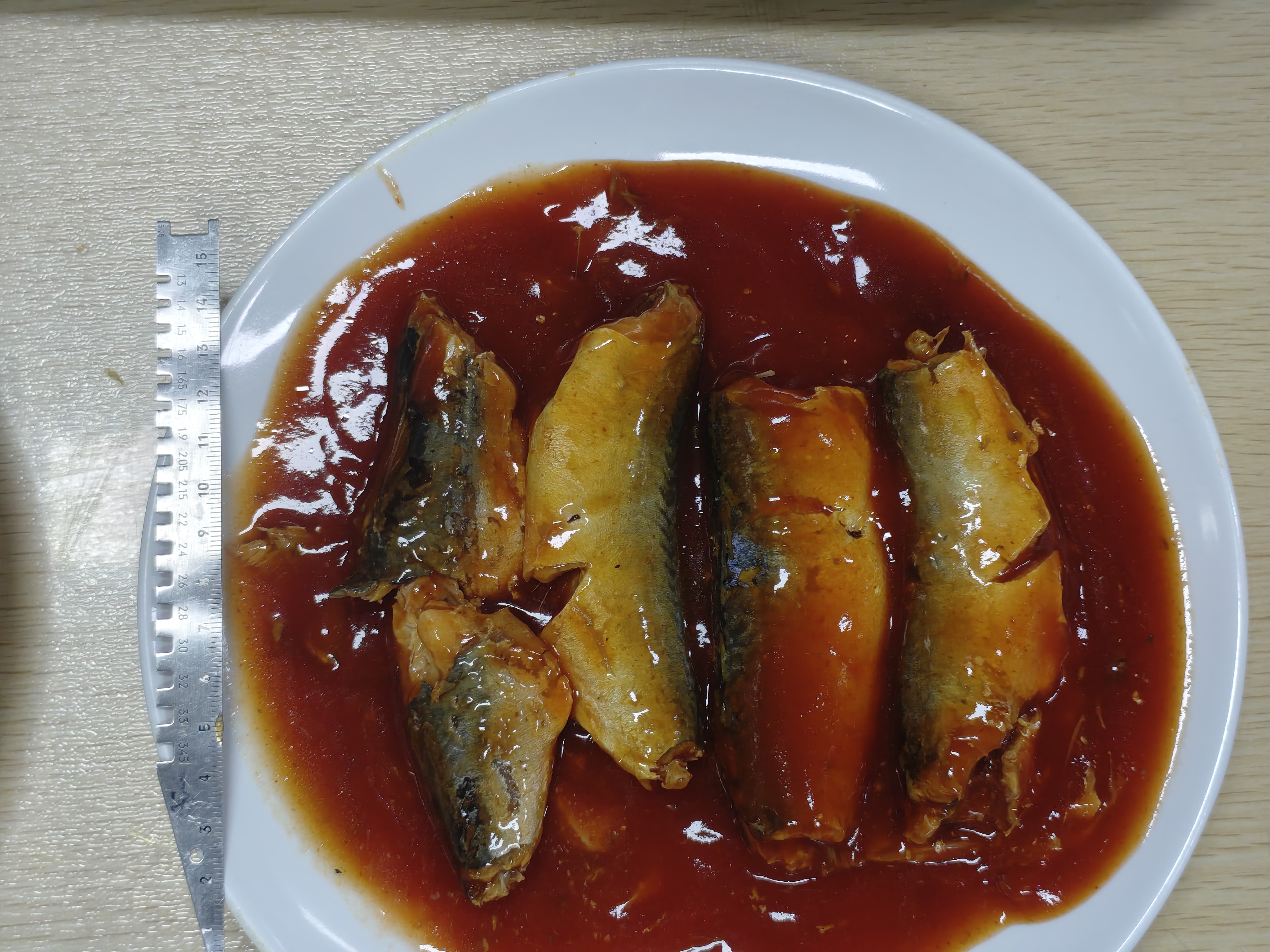
A workable repeat agreement fixes five things: the product and net weight, the packing medium, the label and artwork version, the certificate scope that applies to that product, and the acceptance criteria plus claim route. Agrogentra's canned fish lines are offered in net weights of 125g, 170g (843#), 425g and 1000g, with packing variants in vegetable oil, in tomato sauce and brined (salt seasoned). Because those three variables — size, medium and recipe — are what certification scope and label approval depend on, they belong in the terms rather than in an email thread.
What are the acceptance criteria for a canned fish shipment?
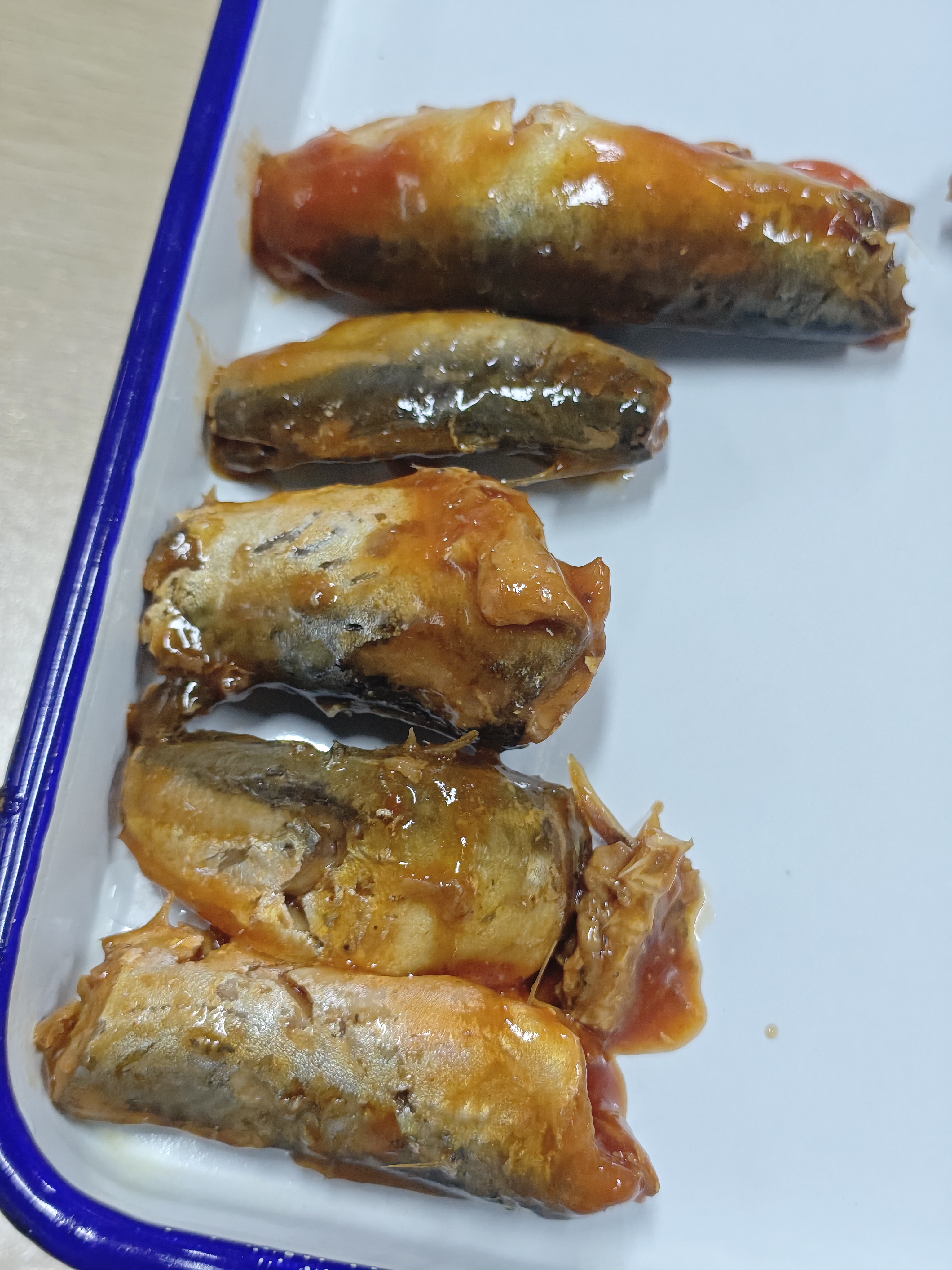
Acceptance should be defined against the product specification, not against a general impression of quality. The specification baseline for Agrogentra canned fish is a fully sterilized, ready-to-eat product in a tinplate can, with a 36-month shelf life at ambient temperature and a choice of oil, tomato sauce or brine packing.
| Acceptance dimension | Baseline for Agrogentra canned fish | Where it is verified |
|---|---|---|
| Product scope | Sardines, mackerel, tuna, Alaska pollock, squid, baby clam | Order confirmation |
| Net weight options | 125g, 170g (843#), 425g, 1000g | Label and specification sheet |
| Packing medium | Vegetable oil, tomato sauce, brined / salt seasoned | Label and production record |
| Preservation status | Fully sterilized, ready to eat, no cold chain required | Batch COA and process record |
| Shelf life | 36 months at ambient temperature | Best-before date on can |
| Batch documentation | COA per batch, batch sample retention, traceability to batch number | Pre-shipment document set |
| Third-party option | SGS or Intertek inspection accepted | Buyer nomination before shipment |
The point of writing these down is that a receiving inspection then becomes a comparison against an agreed baseline. Dented bodies, rust, leakage and swollen ends are structural findings; net weight and drained weight are measurement findings; microbiological results are laboratory findings. Each has a different owner and a different remedy.
Is a swollen can a discount item or a claim?
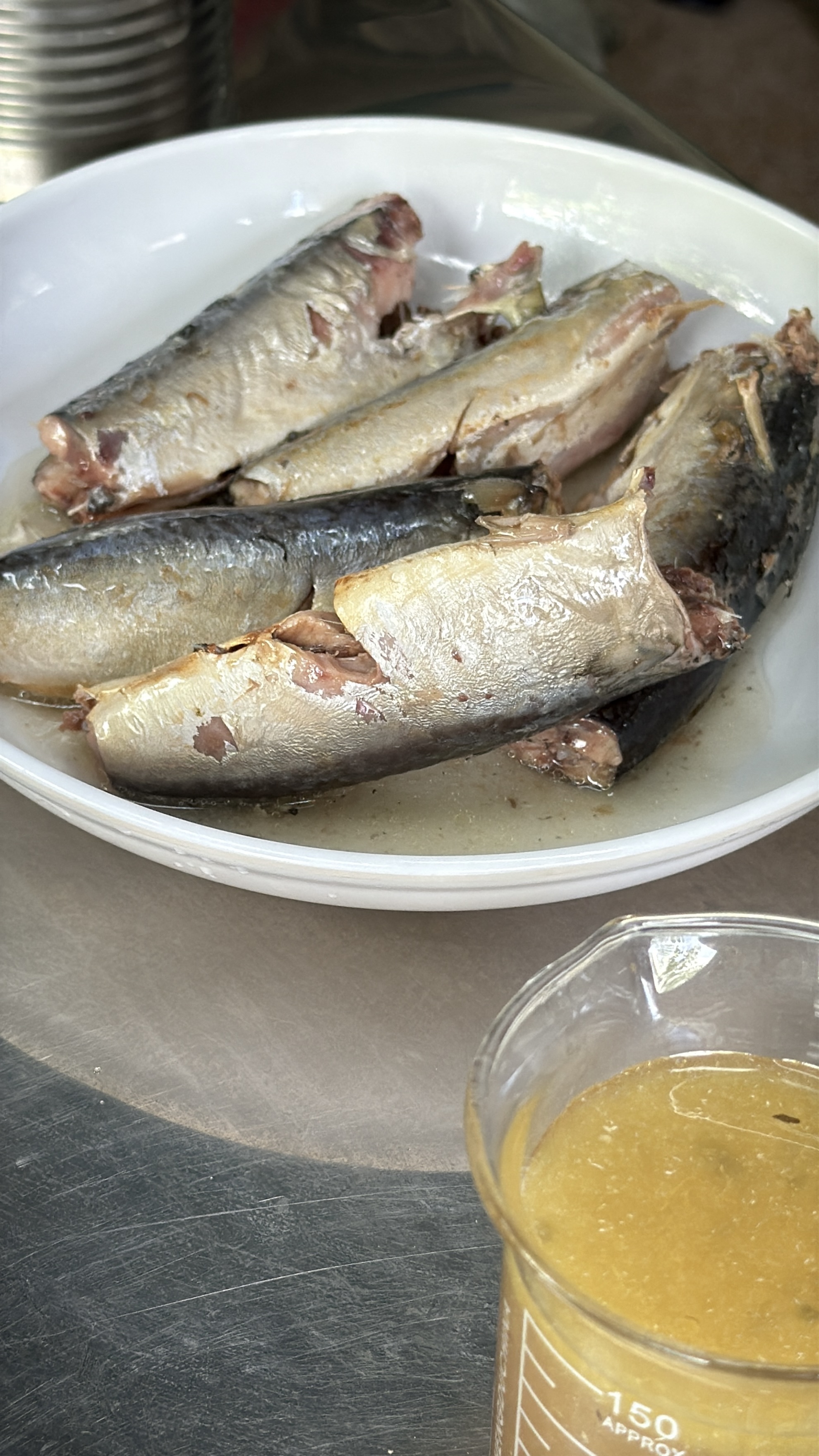
A swollen can is a claim and after-sales trigger, not a discount line. A can with domed or bulged ends indicates gas produced by microbial growth or spoilage — in other words, the seal has failed. It must be treated as non-conforming stock, and the policy applies to the whole affected batch rather than to the individual can that was noticed.
Swollen-can policy: do not consume, do not put on shelf, quarantine the entire batch, document with photographs, trace by batch number, and contact the supplier for replacement or claim. Do not convert a swollen can into a price concession — a discount moves a food-safety risk onto the importer's brand without removing it.
Understanding why swelling happens makes the claim route easier to run. Documented causes include poor seaming or seal failure that allows microorganisms to enter and produce gas; insufficient sterilization leaving heat-resistant bacteria or spores; exposure to high temperature above 37°C, or severe impact and compression during transport and storage; and, in some cases, internal chemical reactions such as hydrogen swell in high-acid contents. Three of those four causes are transport and storage conditions that the importer can document, which is why the evidence file matters as much as the defect itself.
The practical handling sequence is short. Isolate the swollen cans and the whole affected batch. Record batch number, production date and arrival date, and take photographs or video. Spot-check the rest of the same batch carton by carton to establish the number and ratio of affected cans. Pull transport temperature records and check warehouse temperature and humidity, plus any signs of impact on outer cartons. Report to the supplier with the batch number to agree replacement or claim, and retain samples for third-party laboratory confirmation if microbial limits are in question. Finally, correct the cause — usually a transport, storage or stacking adjustment, or a supplier-side seaming and sterilization parameter review.
Prevention side: store cans in a cool, dry place between 5°C and 25°C, away from direct sunlight and heat sources, with relative humidity below 75%. Stack on pallets or racks at least 10 cm off the floor and clear of walls for ventilation, keep heavy cartons at the bottom, run First-In-First-Out by production date and batch, and inspect for rust, swelling or leakage weekly. High temperature and humidity — especially above 30°C or humidity above 85% — accelerate rusting and quality deterioration.
How does the QC handover work across repeat orders?
Quality control in a repeat program is a staged handover, not a single final inspection. Agrogentra maintains professional operation teams and independent QC departments in both its Xiamen and Qingdao offices, and the same five-stage inspection scope is applied to repeat orders as to a first one.
- Factory audits — factory certification copies can be provided for buyer audit purposes.
- Raw material testing — incoming raw material inspection before production release.
- Production monitoring — on-line production patrol through the packing and sterilization stages.
- Finished product inspection — laboratory physical, chemical and microbiological testing for each batch, issued with a COA report, plus batch sample retention.
- Pre-shipment sampling — pre-shipment inspection before container loading.
The documentation set that accompanies a repeat shipment includes the COA, health certificate, pre-shipment inspection report and traceability report, along with OEM formula and label design support. Samples are provided on the customer's courier cost, and third-party inspection by SGS or Intertek is acceptable when the buyer wants an external check.
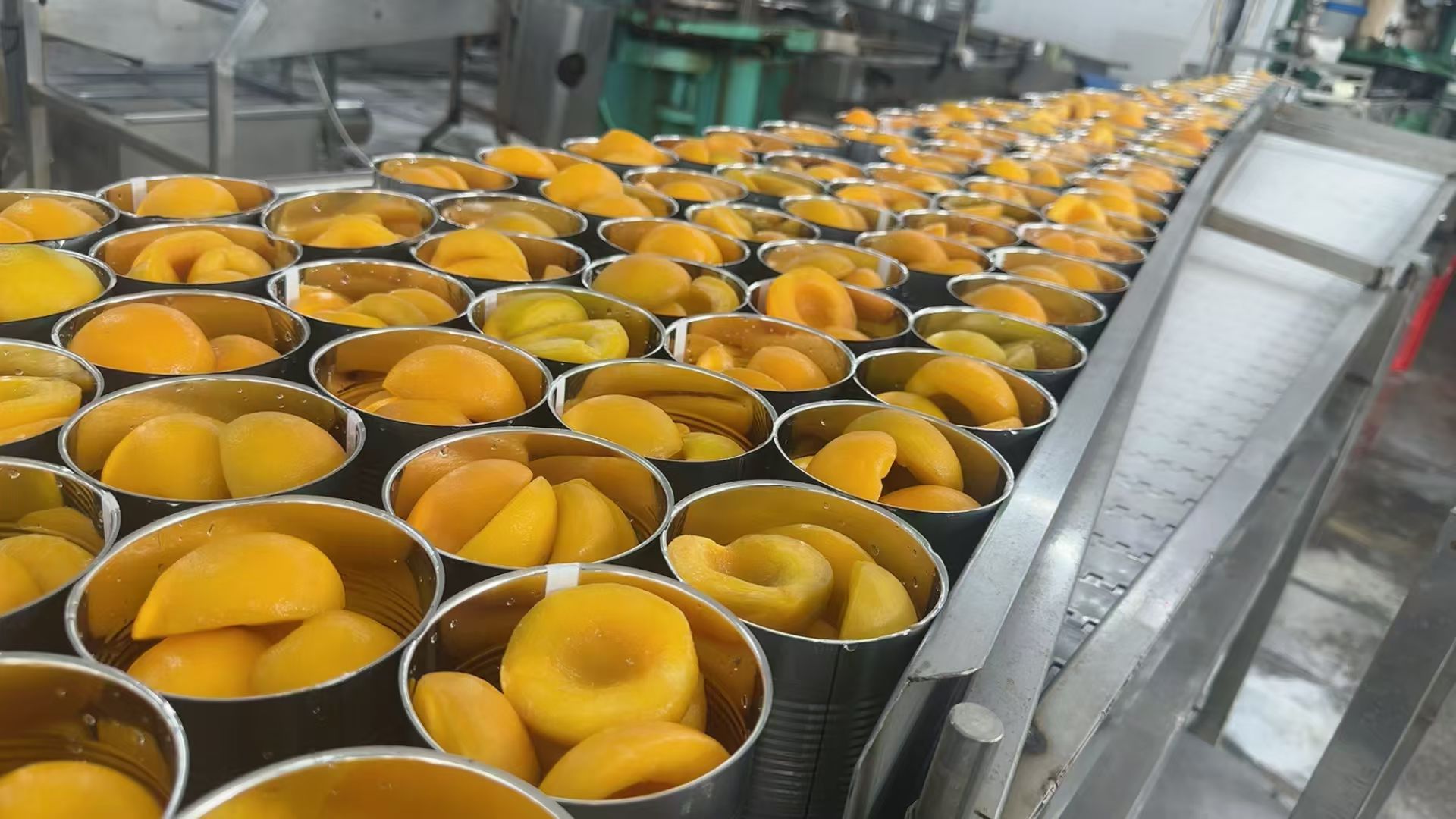
Why the stages matter technically: canned food preservation depends on sealing plus commercial sterility. The can is hermetically sealed to create an internal vacuum, typically 300–500 mmHg, and then sterilized in a retort at 115–121°C under roughly 0.1–0.2 MPa of steam pressure. Low-acid products with a pH above 4.6 — which includes most canned fish — require the pressurized 121°C regime, while high-acid products such as tomato can be processed at lower temperatures. After sterilization, cans are cooled and passed through an incubation test held at 37°C for 7–10 days to confirm no swelling or microbial growth before release. That incubation gate is the reason a swollen can should be treated as an exception rather than as a routine grading issue.
Which certifications stay in scope in repeat shipments?
Certification continuity in a repeat program is product-specific, and it is worth confirming in writing every time the product mix changes. Two certificate scopes apply to the canned fish range:
| Certification | Certificate number | Product scope | Validity |
|---|---|---|---|
| BRCGS | 051A1312001 | Canned mackerel, canned sardine, canned tuna | As issued |
| Halal | 8998250000 | Canned sardines in oil; canned mackerel in tomato sauce | 2025-07-01 to 2028-06-30 |
The practical reading is straightforward. An order consisting of canned mackerel, canned sardine or canned tuna sits inside the BRCGS scope. For Halal, the stated scope covers canned sardines in oil and canned mackerel in tomato sauce, so a buyer adding a different species, a different packing medium or a different sauce recipe should confirm coverage before the order is produced rather than after arrival. Halal documentation is a mandatory access requirement in Muslim-majority markets, while for Europe and North America the requirement follows the buyer's own specification.
Step-by-Step: How a Repeat Order Moves Through the QC Handover
The sequence below is the operating backbone of a repeat canned fish order. Each step produces a document or a decision, which is what makes the next order faster rather than slower.
- Confirm scope in writing. Product, species, net weight, packing medium, label artwork version and applicable certificate scope. This is the step that prevents certification surprises later.
- Reserve production. One FCL minimum order quantity, four to six weeks production lead time, against a recorded monthly capacity of 3,500 units.
- Hand over factory audit material. Factory certification copies are provided for buyer audit purposes, so the importer's own compliance file stays current across shipments.
- Raw material testing. Incoming material is inspected before it is released to the line.
- Production monitoring. On-line patrol follows filling, seaming and sterilization. Seal quality and the sterilization curve are the two parameters that determine whether a can will hold.
- Finished product inspection. Every batch receives laboratory physical, chemical and microbiological testing with a COA report. Batch samples are retained and the batch is traceable by number, with incubation checks confirming no swelling or microbial growth before release.
- Pre-shipment sampling and document set. Pre-shipment inspection is completed, and the COA, health certificate, pre-shipment inspection report and traceability report are issued. Third-party inspection by SGS or Intertek can be arranged if nominated.
- Receiving inspection and storage. On arrival, check outer cartons and can bodies for rust, dents and swollen ends, then store at 5–25°C with humidity below 75%, 10 cm off the floor, and rotate First-In-First-Out.
- Claim closure if required. Any non-conforming batch follows the swollen-can and defect route described above — quarantine, document, trace by batch number, and agree replacement or claim with the supplier.
What changes between order one and order twelve is not the inspection scope. It is the paperwork: the receiving inspection becomes a checklist against an agreed baseline, and the claim route, if it is ever used, runs on batch numbers and photographs rather than on recollection.
Use Cases: Where This Ambient Canned Fish Model Fits
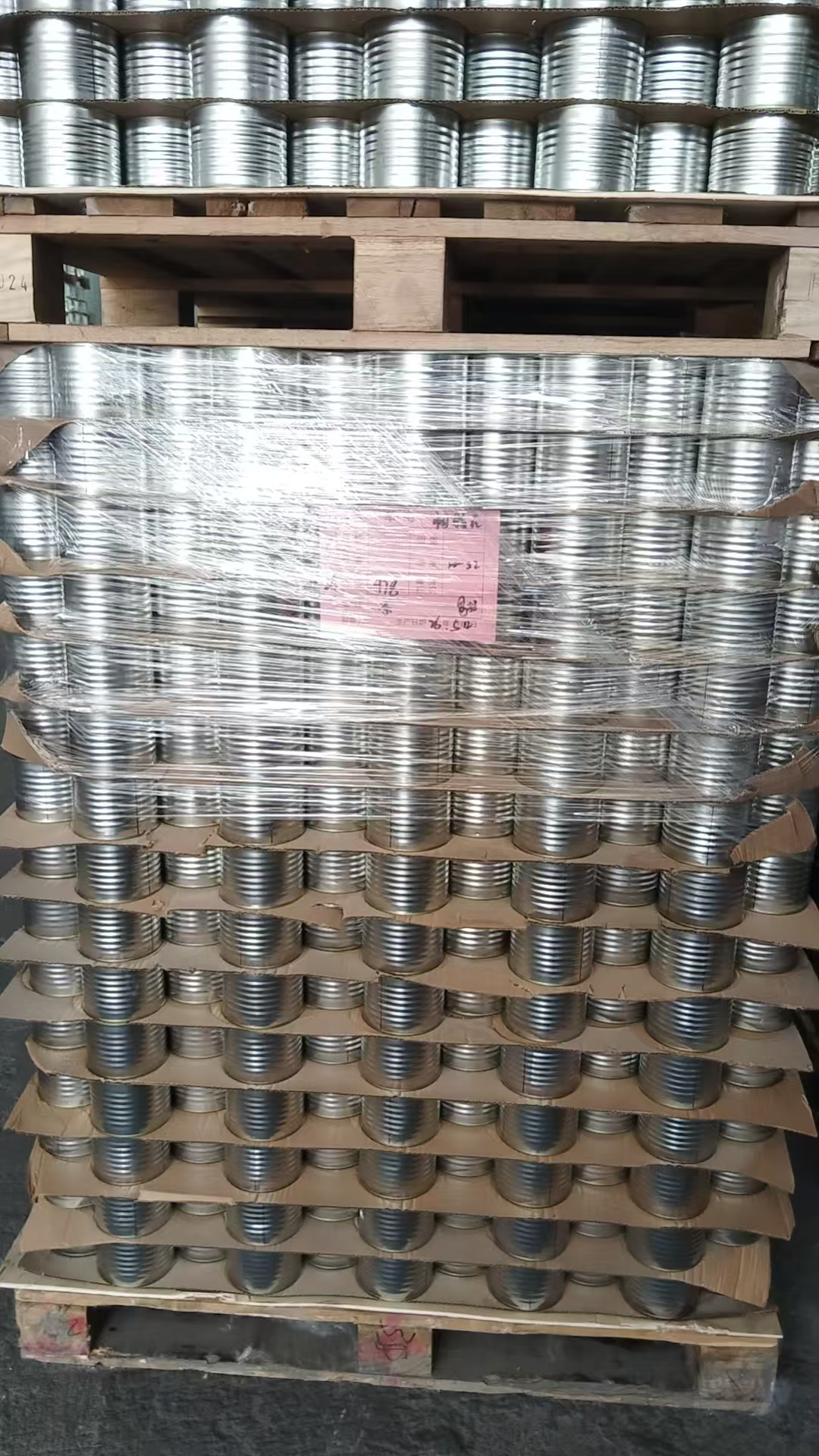
The operating conditions behind this supply model are long-distance sea transportation and ambient-temperature storage. The product supplies long-shelf-life, ready-to-eat canned food for market sales, consumed directly after opening with optional heating, used with a can opener and a food serving container. That combination determines which buyers this partnership suits.
Foodservice and catering distribution. Kitchens need pack sizes that match service volume and a product that needs no thawing or preparation. Canned sardines and mackerel in 125g, 170g (843#), 425g and 1000g formats, packed in oil, tomato sauce or brine, are ready to eat once opened and can be heated if a recipe calls for it.
Supermarket retail and convenience stores. Ambient storage removes refrigeration from the shelf equation, and the 36-month shelf life at ambient temperature reduces the write-off exposure of slow-moving lines on a retail planogram.
Wholesale distribution into regions without cold chain. Where cold storage and refrigerated transport are not available, an ambient canned range removes the weakest link in the distribution chain rather than working around it.
Muslim-majority markets. Halal documentation is a mandatory access requirement in these markets, which is why certificate scope should be verified per product before production rather than assumed at the container level.
Food processing and further manufacturing. Processors buying canned fish or canned vegetables as an input value consistency of specification and batch traceability more than pack presentation.
Comparison Table: Ambient Canned Fish vs Frozen Fish for Repeat Supply
The comparison below is a supply-model comparison, not a product-quality verdict. Canned and frozen fish serve different sales scenarios, and many importers run both.
| Dimension | Ambient canned fish | Frozen fish |
|---|---|---|
| Storage and logistics | Ambient storage, no refrigeration required | Continuous cold-chain transport and cold storage required |
| Shelf life | Up to 36 months | Normally 6–18 months |
| Cost structure | Lower storage and transport extra cost | Higher cold-chain freight and electricity expense |
| Product character | High-temperature sterilized; ready to eat once opened | Keeps closer to raw fresh flavour |
| Distribution fit | Remote regions, convenience channels, distributors without cold chain | Markets with full cold-chain infrastructure |
| Typical buyer profile | New importers without cold-chain resources | Buyers with cold storage and refrigerated transport |
The trade-off is explicit: canned fish gives up some of the fresh-character advantage of frozen product in exchange for ambient logistics, a longer shelf life and a lower cost of holding stock. For importers without cold-chain resources, the canned route is the lower-risk starting point. A mixed supply strategy is also workable, allocating canned lines to ambient channels and frozen lines to cold-chain channels.
FAQ
Do BRCGS and Halal certificates cover every line in a repeat canned fish order?
Not automatically, because certificate scope is product-specific. BRCGS certificate 051A1312001 covers canned mackerel, canned sardine and canned tuna. Halal certificate 8998250000 covers canned sardines in oil and canned mackerel in tomato sauce, and is valid from 2025-07-01 to 2028-06-30. If a repeat order adds a different species, packing medium or sauce recipe, coverage should be confirmed before production. Halal is a mandatory access requirement in Muslim-majority markets; for Europe and North America, the requirement follows the buyer's own specification.
How do Chinese canned sardines manufacturers support foodservice distribution?
Foodservice distribution depends on pack behaviour that fits a commercial kitchen: formats that match service volume, a product that requires no thawing or preparation, and a can that opens with standard equipment. Agrogentra supplies canned sardines in net weights of 125g, 170g (843#), 425g and 1000g, in vegetable oil, tomato sauce or brine, fully sterilized and ready to eat after opening, used with a can opener and a food serving container and suitable for catering applications and food import use. OEM production with logo customization supports distributor private labels, and QC departments in Xiamen and Qingdao apply the same five-stage inspection scope to repeat foodservice orders as to a first shipment.
What keeps repeat-order landed cost predictable?
Three structural factors. First, ambient storage means no cold-chain freight and no refrigerated warehouse electricity premium. Second, a 36-month shelf life at ambient temperature supports fewer, larger orders with First-In-First-Out rotation, so stock planning can run on a 24–36 month band rather than on a short seasonal window. Third, containers can be mixed across seafood, vegetables and fruit instead of being limited to seafood alone, which improves load utilisation. Under the recommended storage conditions — 5–25°C, humidity below 75%, off-floor stacking — the stock-loss assumption used for planning is below 1%.
Can we validate a product before committing to a program?
Yes, and the validation runs in two stages. Samples are provided on the customer's courier cost so the buyer can check organoleptic quality, packing medium and presentation before ordering. The first trial container then acts as validation under real logistics and real import clearance. Alongside this, OEM formula and label design support is available, and the documentation set — COA, health certificate, pre-shipment inspection report and traceability report — is the same set used for repeat shipments, so nothing needs to be rebuilt when the program scales.
What are the lead time and minimum order quantity for a repeat order?
A repeat canned fish order runs on a minimum order quantity of one FCL and a production lead time of four to six weeks, against a recorded monthly capacity of 3,500 units. Once the scope, label artwork and certificate coverage are confirmed in writing, subsequent orders repeat the same five-stage QC handover and the same document set. Buyers can start by requesting a sample, a quotation or the current product specification through www.agrogentra.com.
Conclusion: What a Workable Supply Partnership Looks Like
A canned fish supply partnership holds together on four written things: terms that fix product, size, medium and label; acceptance criteria that convert a receiving inspection into a comparison against a baseline; a swollen-can policy that treats domed or bulged ends as a claim and after-sales trigger rather than a discount; and certification scope that is confirmed per product before production, not assumed per container.
Around those four, the operational structure does the daily work — QC departments in Xiamen and Qingdao running factory audits, raw material testing, production monitoring, finished product inspection and pre-shipment sampling, with a COA, health certificate, inspection report and traceability report issued for each batch. The stocking logic on the buyer's side is equally simple: ambient storage, a 36-month shelf life, a sub-1% planning loss rate, no cold-chain premium, and containers that can be mixed across seafood, vegetables and fruit. That is what makes the second order and the twelfth order look like the same order.
Request Samples, Pricing or the Product Catalogue
Agrogentra & Co., Ltd. — 1F, Yundang Road 1-39, Siming District, Xiamen, Fujian Province, China.
Email: charles.cai@agrogentra.com | miya.kang@agrogentra.com | susie.xie@agrogentra.com
Tel: +86-592-5393122 | +86-592-2291213
WhatsApp: +1-408-599-4831 | +8618150918630 | +8618396134152
Website: www.agrogentra.com | Download the product leaflet: Agrogentra product leaflet (PDF)
Send your target product, net weight and destination market, and we will confirm certificate scope, sample availability and a production slot in return.
Have Questions or Need More Details?
Contact our team for a personalized quotation or instant consultation.
Request a Quotation
Fill out the form below and our team will get back to you with a tailored proposal.
WhatsApp Direct Chat
Prefer to chat in real-time? Message us on WhatsApp for instant assistance & quick answers.
- Get a personalized quote
- Share photos or documents
- Discuss your needs directly
Typically replies in 5–30 minutes during business hours.