Canned Fish for Emergency Stock and Remote Market Programs: An Application Guide
Emergency stock and remote-market programs do not fail on taste. They fail on logistics: a warehouse with no refrigeration, a port with unreliable power, a six-week sea leg, three transfers, and a receiving team that has one shift to decide what enters the reserve. Canned fish removes the largest single failure point in that chain, because preservation is built into a hermetically sealed, commercially sterilized can rather than into the cold chain that follows it.
This guide is written for importers, program managers and procurement teams building or reviewing an ambient-stable fish program for emergency reserves, island and remote-region distribution, or institutional feeding. It explains how the Agrogentra canned fish range — canned sardines, canned mackerel, canned tuna, canned Alaska pollock, canned squid and canned baby clam — can be structured into such a program, which storage and handling conditions the format actually requires, and which acceptance and QC checks should be agreed before the first container leaves.
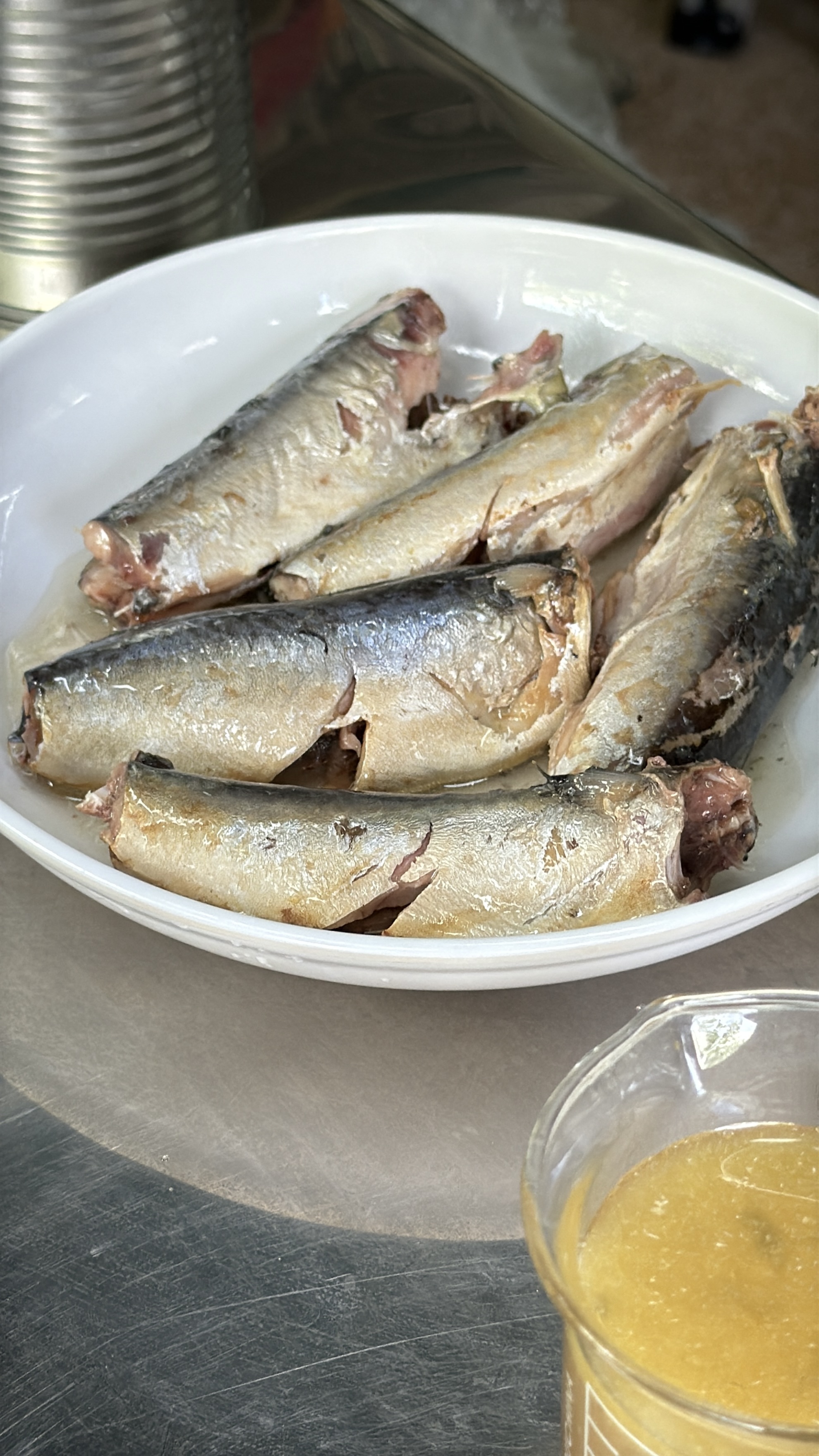
Raw material selection is the first control point in an ambient program: fish destined for long-storage reserves must hold up to sterilization and to years of shelf time.
The Program Problem: Feeding Markets the Cold Chain Does Not Reach
An emergency stock program and a remote-market distribution program look different on paper but share the same constraint: the product has to remain safe and saleable under conditions the exporter does not control. Typical failure modes reported by program managers are consistent.
- No cold storage at destination. Once a frozen consignment breaks the chain, it cannot be re-frozen for sale; the entire remaining stock becomes a write-off.
- Power instability. Cold rooms that depend on grid power are a single point of failure in remote regions and in emergency settings.
- Long and multi-leg transit. Sea freight plus inland transfer plus last-mile distribution can push elapsed time past the practical limit of chilled or frozen formats.
- Compressed receiving windows. Emergency stock is often received in bulk, under time pressure, by staff who are not food technologists.
- Rotation failure. Reserves that sit untouched for years are only useful if the product carries a long enough shelf life and a batch system that supports first-in-first-out rotation.
Each of these is a logistics problem, not a product-formulation problem. The correct procurement response is therefore to select a format whose safety does not depend on downstream infrastructure — and then to write acceptance criteria that catch the cases where the format has been compromised in transit.
Industry Background: Why Ambient-Stable Fish Is a Structural Category, Not a Niche
Canned fish is one of the most heavily traded ambient protein categories in the world, and the trade data reflects how dependent a large share of the market already is on shelf-stable formats. Global imports of canned and prepared fish under HS 1604 totaled 3.2 million tonnes worth USD 17.54 billion in 2023, according to UN Comtrade and FAO-derived trade statistics. Within that flow, canned tuna alone accounted for 43% of global canned fish import volume in the same year.
The commercial picture behind those volumes is also concentrated. Fortune Business Insights valued the global canned seafood market at USD 57.69 billion in 2025, and Grand View Research reported that the canned fish segment holds a 75.3% share of the canned seafood market in the same year. Different research houses use different segmentation boundaries for “canned” versus “processed and packaged” seafood, so absolute valuations vary between publishers; the structural point — that canned fish is the dominant ambient seafood format — is consistent across sources.
Two regulatory developments matter to anyone building a program around this category. In the European Union, Regulation (EU) 2024/3115, effective January 2025, tightened plant health and traceability requirements for imported preserved foods. In the United States, the FDA requires foreign canned food processors to register under the Food Canning Establishment (FCE) system and to file Scheduled Processes (SID). Neither rule changes the physics of the can, but both raise the documentary standard a supplier must meet before a program can be considered repeatable.
The Solution: What an Ambient Canned Fish Program Actually Delivers
The preservation logic is worth stating plainly, because it is the reason a remote-market program is feasible at all. Canned food is preserved by two mechanisms working together: hermetic sealing, which forms a vacuum inside the can (typically 300–500 mmHg) and shuts out external microorganisms and oxygen; and high-temperature, high-pressure sterilization in a retort at 115–121 °C, which destroys the microorganisms and spores capable of growing at ambient temperature. Low-acid products — most fish, with pH above 4.6 — require the full 121 °C pressurized cycle. After sterilization, cans are cooled and subjected to an incubation check, typically held at 37 °C for 7–10 days, to confirm no swelling or microbial growth before release.
The practical consequence for a program manager is that no preservatives are added, no refrigeration is required before opening, and the safety margin is created inside the factory rather than at the destination warehouse. Agrogentra & Co., Ltd., established in Xiamen in 2000, supplies a canned fish range built on exactly this logic, with a stated shelf life of 36 months at ambient temperature, fully sterilized and ready to eat.
The product range that fits a reserve or remote-market program
Agrogentra & Co., Ltd. (Agrogentra &CO.,LTD.XIAMEN) is a Xiamen-based international trading company founded in 2000 with more than 25 years of experience in global food import and export, working with a manufacturing facility covering 36,000 square meters, an annual production capacity of 60,000 units, and a 6-engineer R&D team. Export business accounts for 100% of total sales, and its major markets include the United States, Latin America, Europe and the African market.
The canned seafood range comprises canned sardines, canned mackerel, canned tuna, canned Alaska pollock, canned squid and canned baby clam. Canned sardines are a specialty within the range. Canned tuna can be produced under private label and OEM programs, which matters for program operators who need their own label on a reserve stock. Canned mackerel is supplied for wholesale and distribution markets, canned Alaska pollock for wholesale supply to food distributors, canned squid to importers and wholesale buyers, and canned baby clam for retail pack programs.
Pack and format options are the operational levers in a program design. The canned fish range is available in net weights of 125g, 170g (843#), 425g and 1000g, and in variants including in vegetable oil, in tomato sauce and brined. Smaller retail-facing formats suit household distribution and single-serve rations; larger 425g and 1000g formats suit institutional feeding, catering and food processing where the can is decanted rather than sold on shelf.
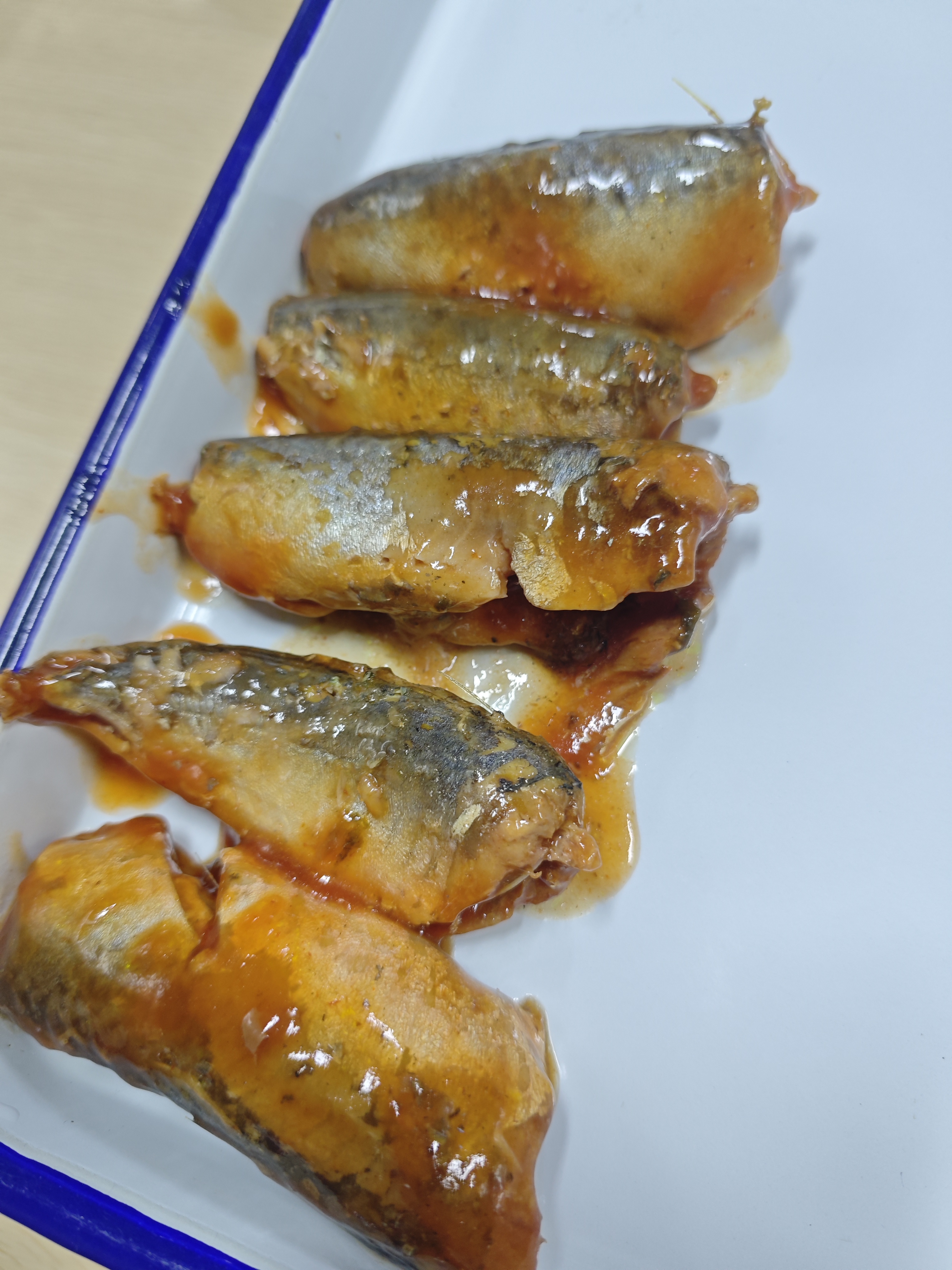
Tomato-sauce and oil variants are both shelf-stable at ambient temperature; the variant choice is a market-acceptance decision, not a preservation one.
Storage conditions the program must specify
Not needing a cold chain is not the same as tolerating any environment. Canned fish should be stored in a cool, dry place at 5–25 °C, away from direct sunlight and heat sources, with relative humidity kept below 75%. High temperature and humidity — particularly above 30 °C or above 85% relative humidity — accelerate external rusting and quality deterioration even though the contents remain sealed. Cans should be stacked on pallets or racks at least 10 cm off the floor with clearance from walls for ventilation, heavy cartons at the bottom and light cartons on top to avoid crushing. Violent impact or dropping must be avoided because it can damage the seam and destroy the seal.
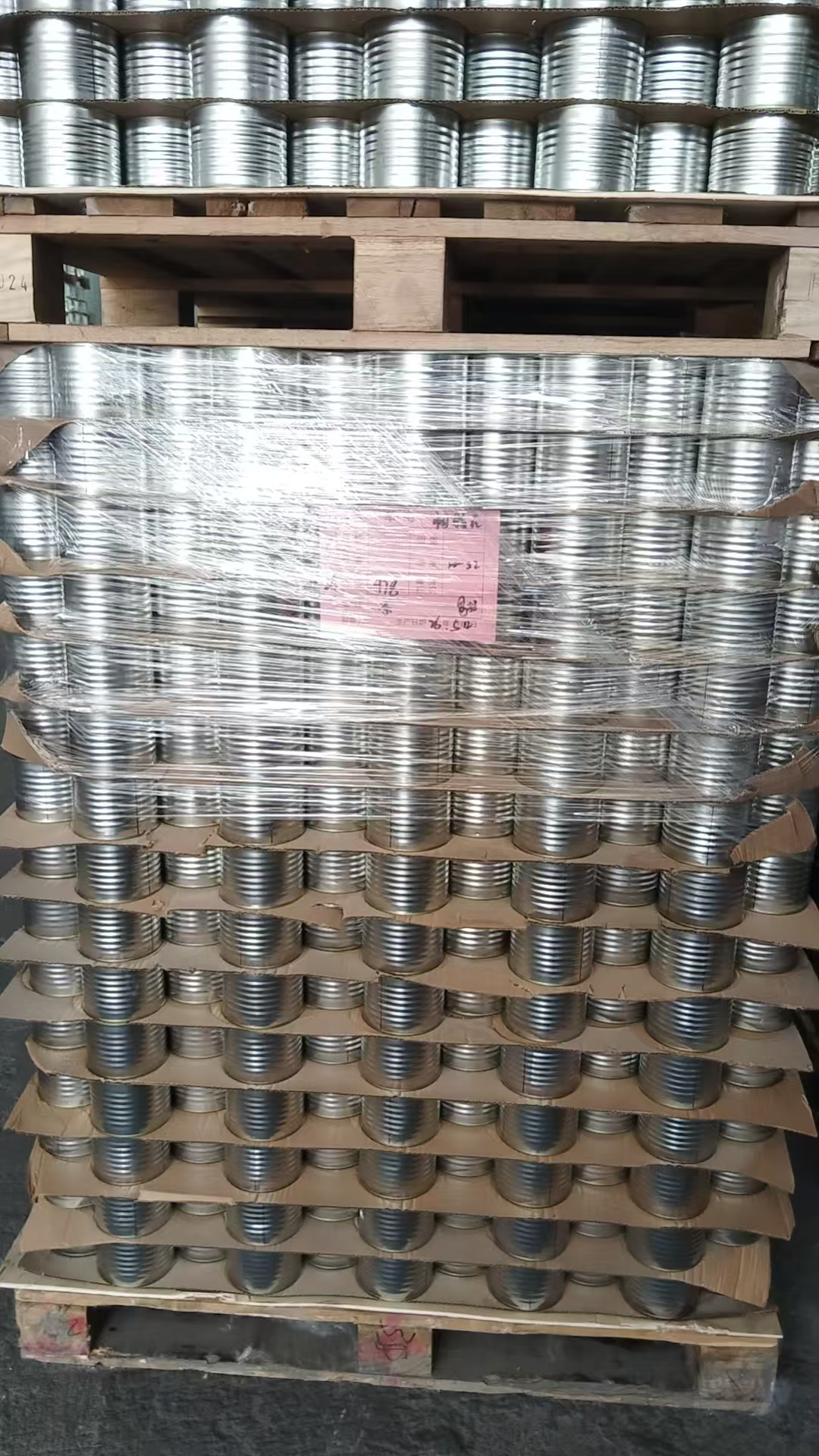
Palletized, off-floor stacking with ventilation clearance is the storage standard that keeps an ambient reserve program intact over multiple years.
How loss is controlled in practice
Loss control in an ambient program is a process outcome rather than a product claim. It comes from two ends of the chain. At the factory, Agrogentra maintains independent QC departments in its Xiamen and Qingdao offices conducting factory audits, raw material testing, production monitoring, finished product inspection and pre-shipment sampling, with full-process inspection intended to ensure each shipment complies with international food safety standards and customer requirements. At destination, loss control comes from a receiving procedure disciplined enough to quarantine non-conforming units before they enter the reserve. Programs that skip either end inherit the difference as write-off.
Step-by-Step: Building the Program
Step 1 — Define the operating environment before the product
Record the destination climate, the storage building, whether power is reliable, how many handling transfers occur, and how long stock will sit before rotation. These four variables determine whether you need an insulative secondary pack, a desiccant policy, or a shorter rotation interval. Do this before SKU selection; it changes the answer.
Step 2 — Split the SKU set by consumption format
Reserve stock and retail distribution rarely need the same pack. Use 125g and 170g (843#) for household and single-serve distribution, and 425g and 1000g for institutional, catering and processing use where cans are decanted. Mixing species within one program is normal — sardines and mackerel are the volume staples in many price-sensitive markets, while tuna carries strong recognition and can be produced under private label and OEM programs.
Step 3 — Fix the variant policy
In vegetable oil, in tomato sauce and brined are the three documented variants. Variant choice affects market acceptance, not shelf stability. Where a program serves multiple regions, specify variants per destination rather than averaging across the order.
Step 4 — Write the storage clause into the contract
Specify 5–25 °C, relative humidity below 75%, off-floor palletized storage with wall clearance, no direct sunlight, and no stacking beyond the carton weight limit. A storage clause is only useful if the destination warehouse has signed it, so attach it to the distribution agreement rather than the purchase order alone.
Step 5 — Agree the receiving check before the first delivery
Receiving inspection should cover outer carton integrity and can body condition, with specific attention to rust, dents and swollen cans showing domed ends. Any non-conforming item is isolated immediately and never enters the reserve. Because emergency deliveries arrive under time pressure, define a sampling ratio and a quarantine location in advance so the check is not skipped when the team is busy.
Step 6 — Set the swollen-can protocol in writing
A swollen can indicates gas produced by microbial growth or spoilage, meaning the seal has failed. The batch must be treated as non-conforming: do not consume, quarantine the whole batch, document with photographs, trace by batch number, and contact the supplier for replacement or claim, while checking whether transport or storage exposed the goods to high temperature or impact. The protocol needs a named owner. In a reserve program, an undocumented swollen can is an unrecorded safety event.
Step 7 — Enforce first-in, first-out rotation
Organize inventory by production date and batch, ship the earliest stock first, and run regular stock rotation and cycle counts. Weekly inspection for rust, swelling or leakage keeps a reserve from silently degrading. A 36-month shelf life is only an asset if rotation is disciplined enough to consume stock inside it.
Step 8 — Verify certification scope, not certification presence
Two documentary checks belong in every program. First, Halal: the canned fish range is offered with Halal certification available, and Halal status is a mandatory market-access requirement in Muslim-majority markets such as parts of the Middle East and Southeast Asia. Confirm that the Halal scope on the certificate matches the species, variant and production site actually being shipped, because a certificate covering one line does not automatically cover another. Second, retailer-facing quality schemes such as BRCGS: where a program is destined for modern retail or institutional tenders, request the certificate and match the certified site name, scope categories and validity dates against the specific SKU. A scope statement that does not name the product category under order is not verification.
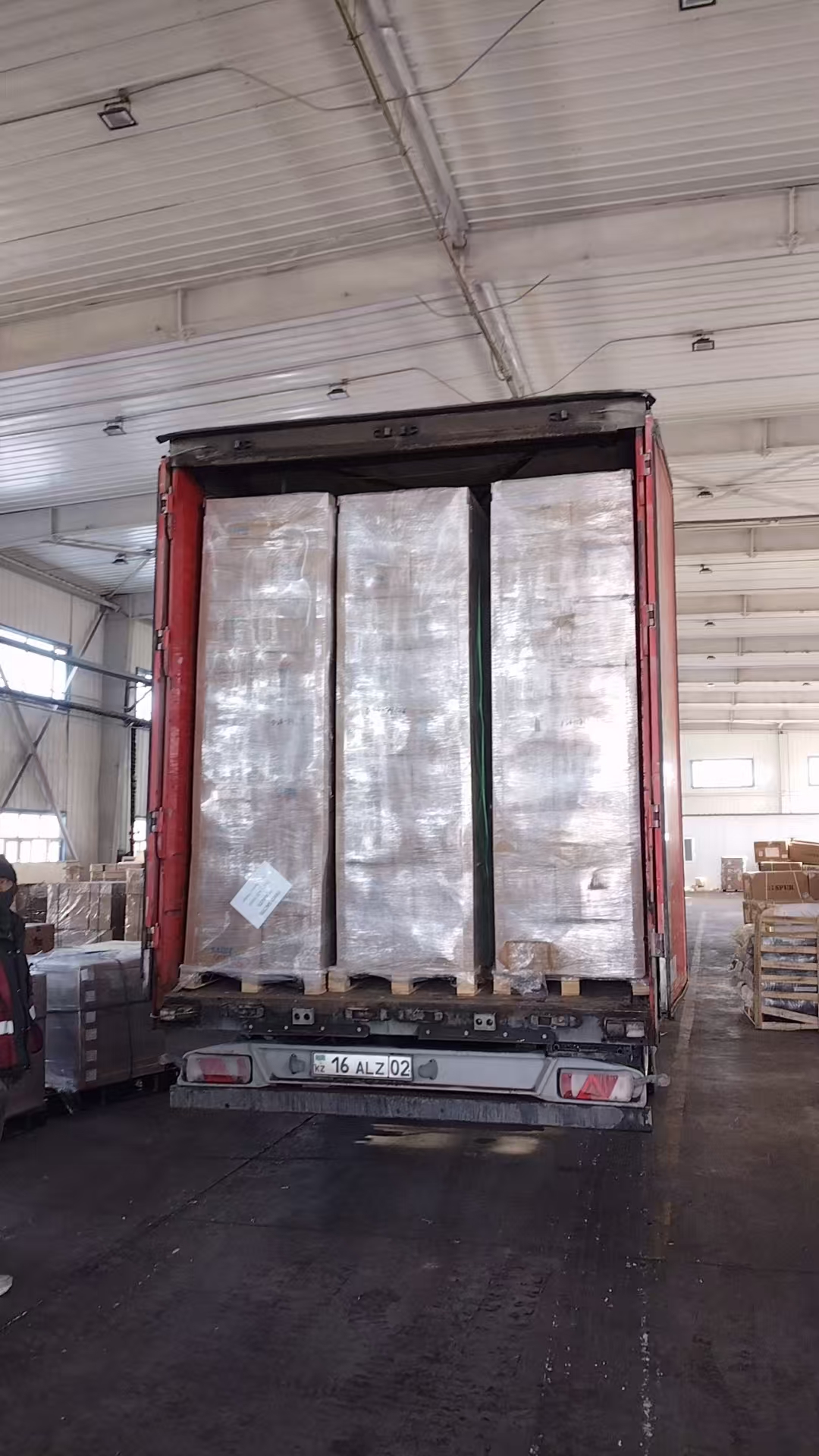
Container loading is the last controlled point before transit: stowage quality determines whether the can seams arrive intact at a destination with no cold chain.
Use Cases: Where This Format Wins
Emergency and humanitarian reserve stock
Reserve stock has to be edible without cooking, without clean water for rehydration, and without refrigeration. Canned fish is ready to eat once opened, requires no cleaning or pre-processing, and delivers protein and Omega-3 without a preparation step. The 36-month ambient shelf life gives program managers a realistic procurement cycle rather than a single-season purchase.
Island and remote-region distribution
Where a market is reached by a long sea leg followed by inland transfer, ambient formats eliminate the risk of a broken chain mid-route. Small formats such as 125g and 170g (843#) suit household purchase in low-income distribution networks; canned mackerel is already supplied for wholesale and distribution markets for exactly this channel type.
Institutional and off-grid food service
Mining camps, construction sites, vessels and remote canteens operate kitchens without reliable cold storage. The 425g and 1000g formats reduce labour per meal and reduce packaging waste, and canned Alaska pollock and canned squid are supplied respectively to food distributors and to importers and wholesale buyers for this kind of volume channel.
Retail programs in markets without cold-chain retail
Small-format grocery, kiosk and convenience channels in markets where refrigerated shelving is limited can carry canned fish on dry shelving. Canned baby clam is supplied for retail pack programs, and the range includes single-serve cup formats for vegetables and fruit where a retailer wants a non-can ambient SKU alongside.
Buffer stock for importers and distributors
Distributors holding safety stock against shipping volatility need inventory that does not decay while it waits. Because the shelf life is measured in years at ambient temperature, buffer stock functions as commercial inventory rather than as a depreciating asset — provided the rotation discipline in Step 7 is in place.
Comparison: Matching the Six Canned Fish SKUs to Program Roles
The table below uses only documented range facts and the supply roles stated for each product. Net weights of 125g, 170g (843#), 425g and 1000g and the oil, tomato-sauce and brined variants are stated for the canned fish range as a whole; confirm the exact size and variant per SKU at quotation.
| Product | Documented supply role | Typical program role | Practical note |
|---|---|---|---|
| Canned Sardines | Specialty within the canned seafood range | Core volume staple in price-sensitive and Muslim-majority markets | Strongest identity product in the range; specify variant per market |
| Canned Mackerel | Supplied for wholesale and distribution markets | Wholesale and remote-region distribution | Well suited to distribution networks without cold storage |
| Canned Tuna | Producible under private label and OEM programs | Branded reserve or retail program | The only range item documented for private label and OEM |
| Canned Alaska Pollock | Wholesale supply to food distributors | Distributor and institutional volume | Route through distributor channels rather than direct retail |
| Canned Squid | Supplied to importers and wholesale buyers | Importer-led distribution; ethnic and regional cuisine channels | Best placed where a buyer already handles the category |
| Canned Baby Clam | Supplied for retail pack programs | Shelf-ready retail packs | Retail-oriented; align pack size with shelf format |
All six items share the same documented preservation basis: fully sterilized, ready to eat, 36 months shelf life at ambient temperature, no cold chain required. Program differentiation therefore comes from pack size, variant, supply role and labelling — not from storage conditions.
Frequently Asked Questions
Is Halal-certified canned fish available for Muslim-majority remote markets?
Halal certification is available for the canned fish range, and Halal status is treated as a mandatory access requirement in Muslim-majority markets in the Middle East and Southeast Asia. For a program, the check is not whether a Halal certificate exists but whether its scope matches the species, variant and production site on the order. Request the certificate with the quotation and confirm the covered product categories against the SKU list before the container is booked.
What pack sizes and variants can be specified for an emergency stock program?
The canned fish range is available in net weights of 125g, 170g (843#), 425g and 1000g, in variants including in vegetable oil, in tomato sauce and brined. The range covers canned sardines, canned mackerel, canned tuna, canned Alaska pollock, canned squid and canned baby clam, with canned tuna additionally producible under private label and OEM programs. Because the sizes are stated for the range rather than for every individual SKU, confirm the available combination per product at quotation stage.
How long can the product be held, and under what conditions?
The documented shelf life is 36 months at ambient temperature, and the product is fully sterilized and ready to eat. Storage should be in a cool, dry place at 5–25 °C, away from direct sunlight and heat sources, with relative humidity kept below 75%. Stack on pallets or racks at least 10 cm off the floor with ventilation clearance from walls, keep heavy cartons at the bottom, and avoid impact or dropping that could damage the can seam. Conditions above 30 °C or above 85% relative humidity accelerate rusting and should be avoided even though the contents remain sealed.
What acceptance checks should a program manager require at receiving?
The receiving check should cover outer carton integrity and can body condition, specifically rust, dents and swollen cans with domed ends. Swollen cans indicate gas from microbial growth or spoilage and signal seal failure: quarantine the entire affected batch, do not consume or shelve it, document with photographs, record batch number and production date, spot-check the rest of the batch to establish the affected ratio, and report to the supplier for replacement or claim while retaining samples for third-party testing. Once opened, any uneaten portion should be transferred to a non-metallic container, refrigerated and consumed within 24–48 hours. Suppliers using full-process inspection — factory audits, raw material testing, production monitoring, finished product inspection and pre-shipment sampling — give the receiving team a documented baseline to check against.
Can a buyer evaluate the product before committing to a container volume?
Yes. Sample requests and quotation enquiries are the normal entry point for a new program, and are best combined with a scope check: ask for the Halal certificate covering the intended SKU, the certificate and site scope for any retailer-facing quality scheme the program requires, and confirmation of the pack size and variant combination available for each species. Agrogentra & Co., Ltd. can be contacted at charles.cai@agrogentra.com or miya.kang@agrogentra.com, by telephone at +86-592-5393122, or through the company website at www.agrogentra.com.
Plan the program before the container
Request samples, a specification sheet and quotation for the canned fish range, or download the company brochure to review the full product portfolio and contact details before your next program review.
Download the Agrogentra Brochure (PDF)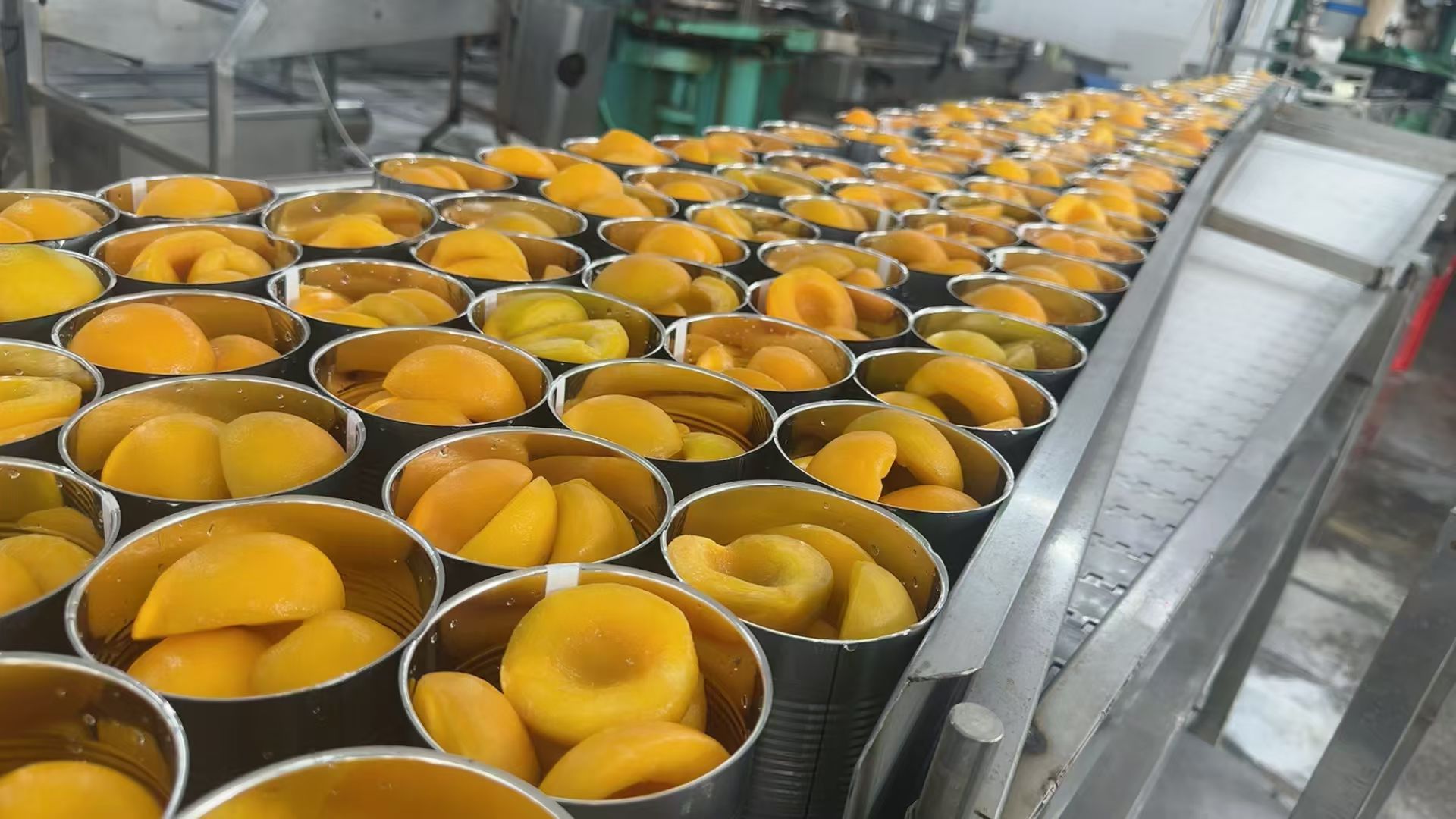
Sterilization and seaming are the two process controls that make a no-cold-chain program possible; both are verified upstream, not at the destination warehouse.
Conclusion
Canned fish is not simply a convenient emergency food. It is the format that resolves the specific constraints of remote and reserve programs: no cold chain at destination, long multi-leg transit, unreliable power, compressed receiving windows and multi-year holding periods. The product facts that make this work are straightforward and verifiable — a 36-month shelf life at ambient temperature, full commercial sterilization with no preservatives required, ready-to-eat contents, and a documented range spanning sardines, mackerel, tuna, Alaska pollock, squid and baby clam across 125g, 170g (843#), 425g and 1000g formats.
What determines whether a program succeeds is less about the can and more about the paperwork around it. Storage conditions written into the distribution agreement, a receiving check with a named owner and a quarantine location, a documented swollen-can protocol, disciplined FIFO rotation, and certification scopes matched to the exact SKU — these are the controls that keep an ambient reserve usable rather than merely stored. Program managers who specify them at the start avoid discovering the gaps at the point of distribution, when there is no time and no cold room to recover.
For importers building a first ambient fish program, the practical sequence is to define the operating environment, split the SKU set by consumption format, confirm pack size and variant per species, and verify Halal and quality-scheme scope against the certificate before booking. Agrogentra & Co., Ltd., founded in Xiamen in 2000 and exporting 100% of its output to markets including the United States, Latin America, Europe, Africa, the Middle East and mainstream Asian markets, supplies the range through a QC structure built around full-process inspection — a workable starting point for programs where the supply chain will not be kind.
Have Questions or Need More Details?
Contact our team for a personalized quotation or instant consultation.
Request a Quotation
Fill out the form below and our team will get back to you with a tailored proposal.
WhatsApp Direct Chat
Prefer to chat in real-time? Message us on WhatsApp for instant assistance & quick answers.
- Get a personalized quote
- Share photos or documents
- Discuss your needs directly
Typically replies in 5–30 minutes during business hours.