Canned Fish vs Frozen Food: Landed Cost, Shelf Life and Cold-Chain Tradeoffs for Importers
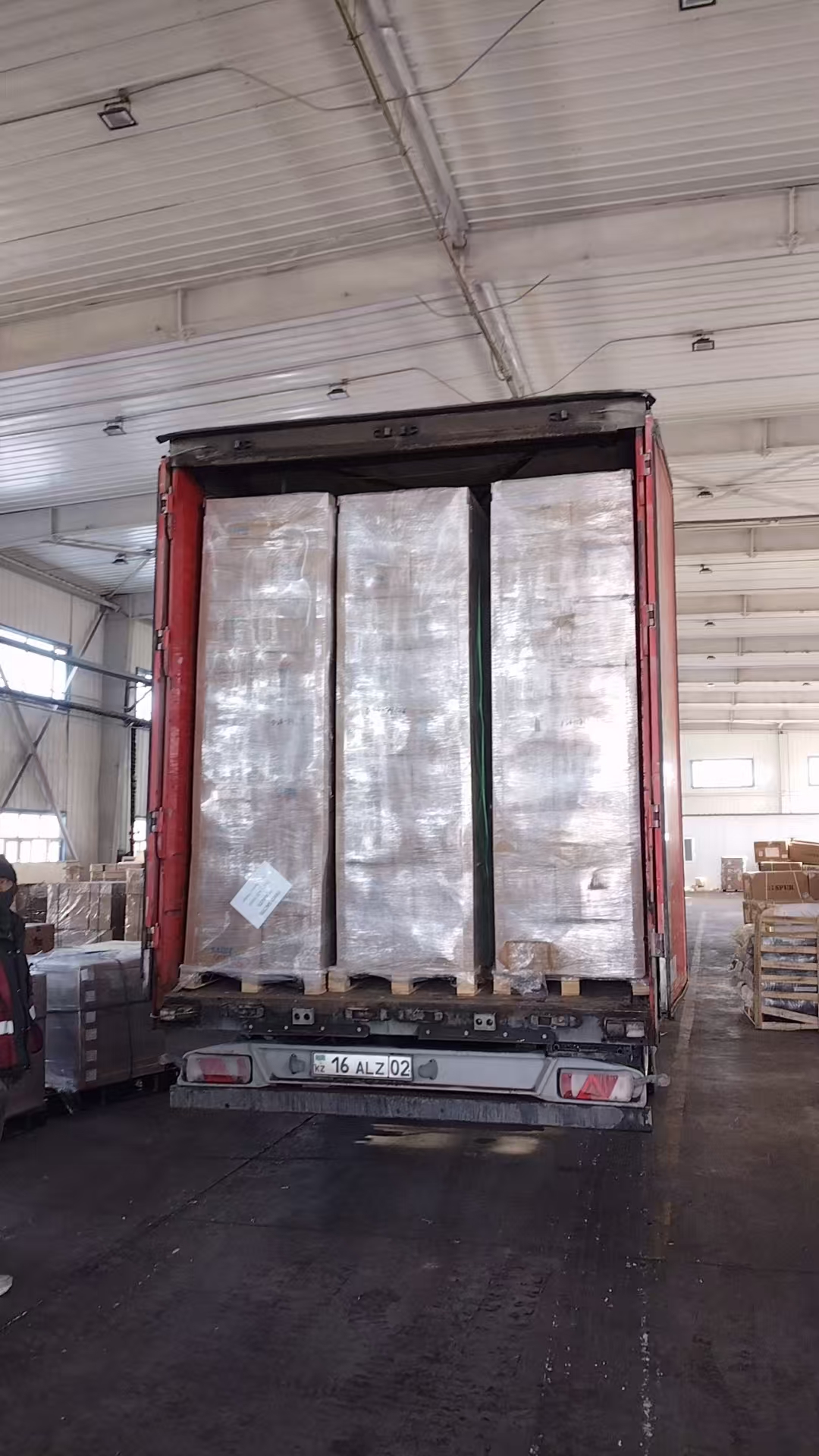
Short answer: Canned fish wins on landed cost, shelf life and inventory risk. Frozen food wins on texture in markets that already operate a reliable cold chain. Canned fish holds up to 36 months at ambient temperature and needs no refrigeration, while frozen fish is normally planned at 12–18 months at −18 °C — and reefer freight plus cold storage typically add about 25%–40% to the landed cost of a frozen container.
Importers rarely fail because they chose the wrong species. They fail because a container that looked cheaper on paper ran through a cold chain that cost more than the goods were worth, or because inventory expired, thawed, or was rejected on arrival. The canned-versus-frozen decision sits exactly on that fault line — and it can be modelled before a purchase order is signed.
This guide is written for importers, grocery wholesalers, supermarket distributors and HORECA suppliers who are evaluating an ambient canned fish programme against a frozen one. It covers the cost structure, shelf-life economics, cold-chain dependency, compliance evidence, and the scenarios in which each format is the lower-risk choice. Supplier capability and specification facts come from Agrogentra & Co., Ltd. (Xiamen, China); market figures are attributed to their published sources.
The Decision Problem: Three Variables, Not One
Canned fish and frozen food are usually compared on taste alone. For an importer, taste is a constraint, not the decision variable. The decision turns on three variables that interact with each other:
- Landed cost per sellable unit — freight mode, temperature control, storage, energy, and write-offs.
- Shelf-life and loss exposure — how long the stock stays sellable, and how much of it is lost before it sells.
- Route and market capability — whether the destination can hold the required temperature from port to retail shelf.
When one of these is misjudged, the symptom is predictable: high logistics cost, inventory loss, and slow sales turnover — the failure pattern importers consistently identify as the consequence of poor product-format selection.
The practical reframing is a single question: can my route, my warehouse and my customer hold −18 °C continuously? If the answer is no, frozen is not a cheaper option — it is an unexecutable one. If the answer is yes, frozen becomes a legitimate premium-positioning play and the comparison moves to margin per unit.
What the Category Data Says — and What It Does Not
Canned fish is not a niche format. Fortune Business Insights values the global canned seafood market at USD 57.69 billion in 2025, and Grand View Research reports that the canned fish segment accounts for 75.3% of that market. The two research houses do not agree on total market size: Grand View Research publishes a materially lower global figure, largely because of where each firm draws the boundary between “canned” and “processed and packaged” seafood. Importers should treat these valuations as directional rather than as a number to build a business case on.
Trade data is more concrete. Global imports of canned and prepared fish under HS 1604 totalled 3.2 million tonnes worth USD 17.54 billion in 2023, based on UN Comtrade data with FAO derivation. Canned tuna alone accounted for 43% of that import volume. The adjacent ambient category operates at a similar scale: the global canned fruits and vegetables market is projected at USD 127.7 billion in 2026, and within North America the United States took 83.7% of regional canned tomato paste revenue in 2024.
Two regulatory facts shape how an ambient programme must be built. In the United States, foreign processors of canned food must register under the Food Canning Establishment (FCE) system and file Scheduled Processes (SID) with the FDA. In the European Union, Regulation (EU) 2024/3115, effective January 2025, tightened plant health and traceability requirements for imported preserved foods.
The implication for buyers: the ambient category is large, standardised and documentation-heavy. Price competition is real, but the differentiator between suppliers is evidence — whether the paperwork, the sterilization records and the certification scope actually cover the SKUs you intend to import.
How an Ambient Canned Fish Programme Is Actually Structured
Agrogentra & Co., Ltd. (registered as Xiamen Agrogentra Co., Ltd.) is a China-based international trading company established in 2000 in Xiamen, Fujian Province, supplying canned fish, canned fruits and vegetables, and frozen food products to importers, wholesale distributors, supermarket retailers and food-processing customers across the USA, Europe, Latin America, Africa, the Middle East and Asia. The company maintains independent QC teams in its Xiamen and Qingdao offices and has supplied food products to global markets for more than 25 years. It is a useful reference point for this comparison because it handles both formats: its HALAL certification scope covers canned sardines, mackerel and tuna as well as frozen sardine, mackerel, tuna and other frozen fish.
Product specification
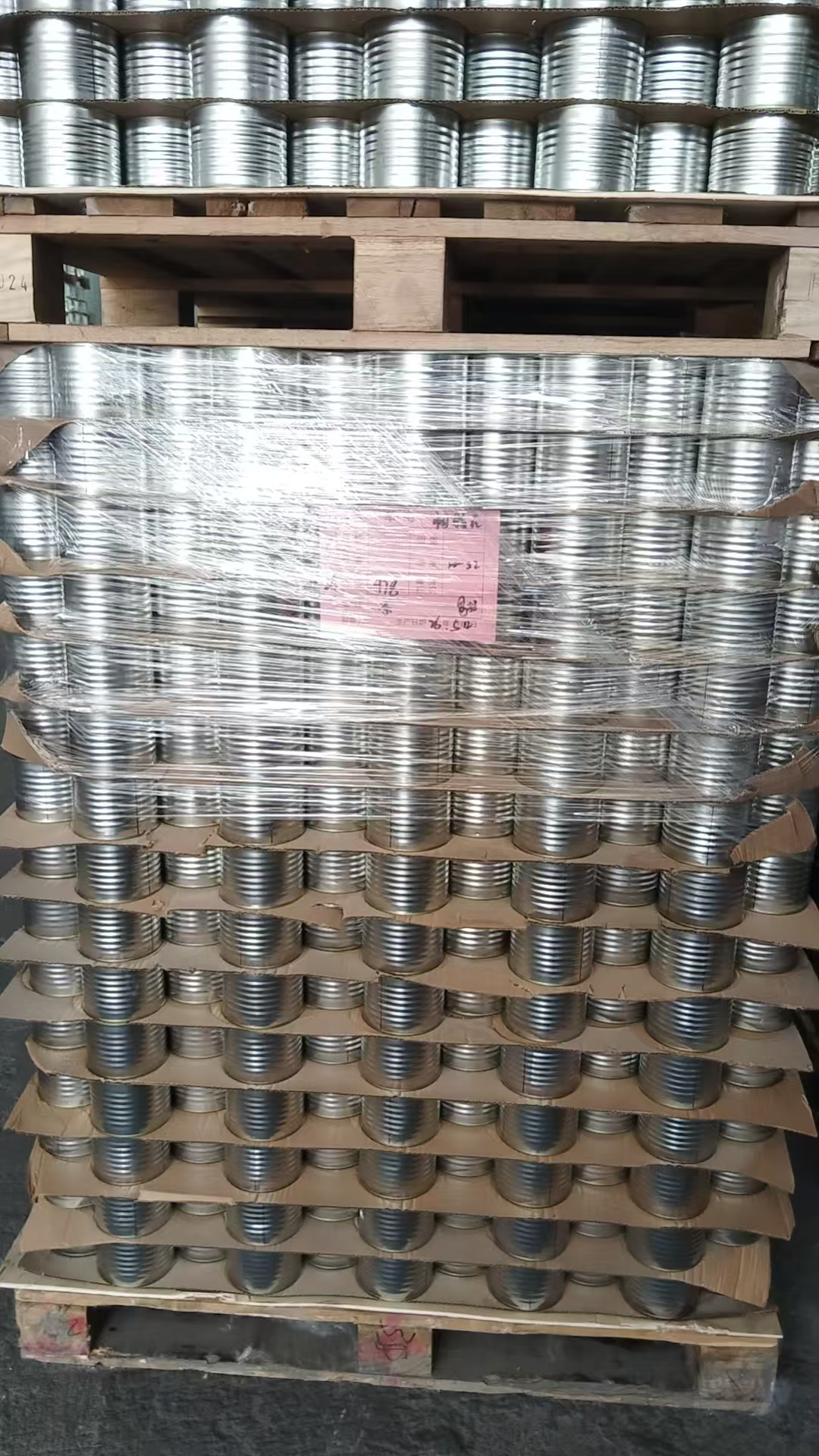
The canned fish line covers Canned Sardines, Canned Mackerel, Canned Tuna, Canned Alaska Pollock, Canned Squid and Canned Baby Clam in net weights of 125 g, 170 g (843#), 425 g and 1000 g. Packing variants include in vegetable oil, in tomato sauce and brined; all are fully sterilized and ready to eat, with a declared shelf life of 36 months at ambient temperature. The same ambient model is applied across a wider range that includes Canned Carrot, Canned Red Pepper, Canned Sauerkraut, Canned Mixed Mushrooms, Canned Sweet Potato, Canned Potato, Canned Baby Corn, Canned Tomato Paste, Canned Ketchup, Canned Diced Tomato, Canned Whole Peeled Tomato and Vegetables in Cups, plus fruit lines such as Canned Apricot and Canned Figs. Packing material is tinplate can with sardine fish as the core raw material.
Why no cold chain is required
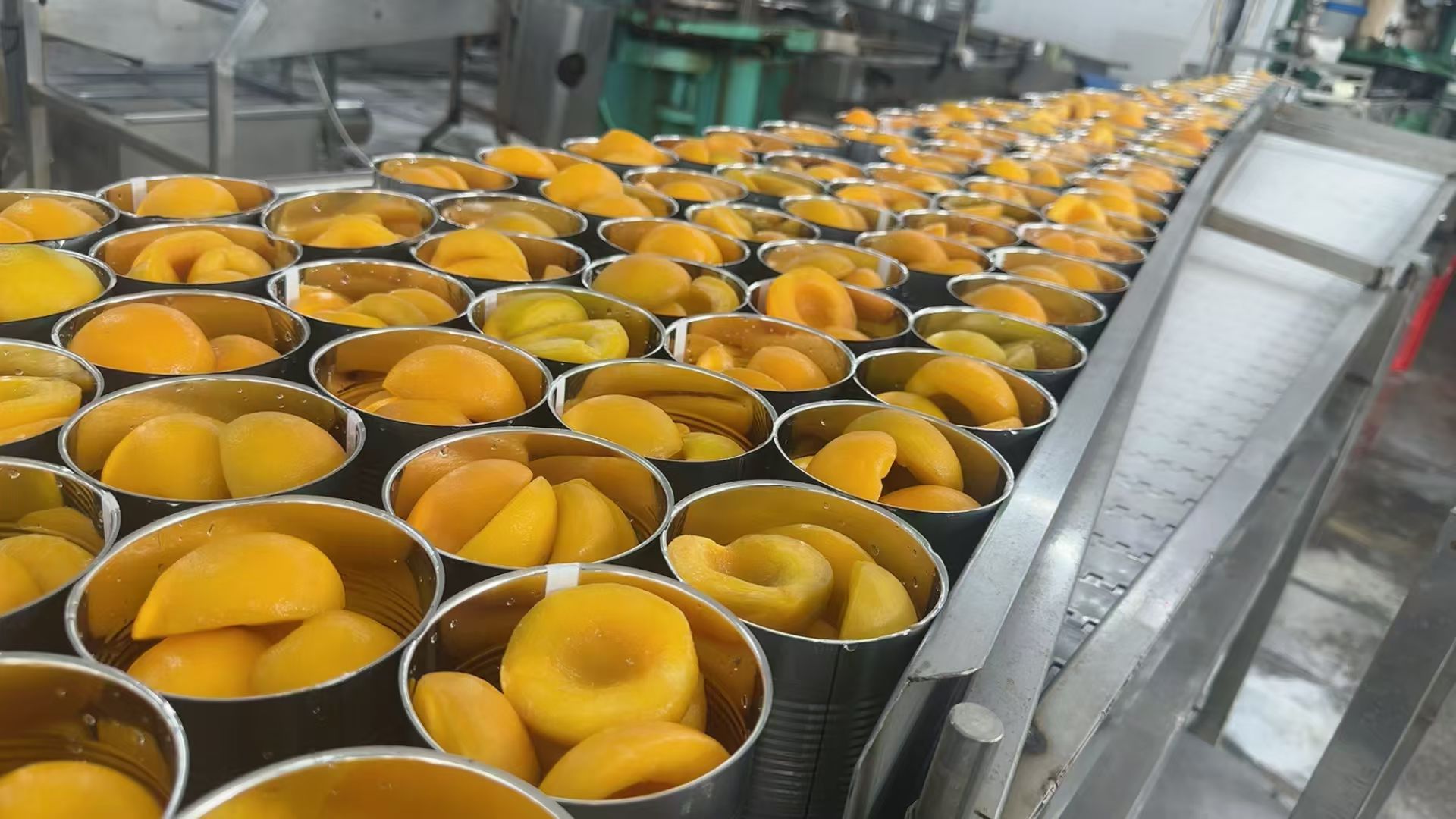
Canned preservation rests on two mechanisms. First, sealing: the product is filled into a tinplate can and hermetically seamed, leaving a vacuum inside the can (typically 300–500 mmHg), which suppresses aerobic bacteria and oxidation. Second, commercial sterility: sealed cans are sterilized in a retort at 115–121 °C under roughly 0.1–0.2 MPa of steam pressure, destroying pathogens and their spores, then cooled rapidly and held in an incubation test at 37 °C for 7–10 days before release. Low-acid products such as fish (pH above 4.6) require the full 121 °C pressurised cycle, while high-acid products such as tomato can be processed at lower temperatures. No preservatives are used.
This is why the format tolerates long ocean freight and unrefrigerated warehousing — and why storage discipline, not refrigeration, becomes the critical control point. Cans should be held at 5–25 °C with relative humidity below 75%, stacked at least 10 cm off the floor and away from walls, rotated on a FIFO basis, and inspected weekly for rust, swelling or leakage. A can with domed ends indicates seal failure; the affected batch should be quarantined, traced by batch number and reported to the supplier rather than sold.
Quality control and the document pack
Quality control follows full-process control: incoming raw-material inspection, on-line production patrol, and laboratory physical, chemical and microbiological testing for each batch, issued with a COA report. Batch samples are retained for quality control. Third-party inspection by SGS or Intertek is acceptable. Each shipment is accompanied by a full set of export documents — Certificate of Analysis (COA), health certificate, pre-shipment inspection report and traceability report — and factory certification copies are released for buyer audits.
Certification scope that matches the SKUs
Two certifications are directly relevant to canned fish buyers. BRCGS Global Standard for Food Safety certification (Issue 9, August 2022), certificate number 051A1312001, was issued by Intertek Certification Ltd (UKAS Accredited Body No. 014) with scope covering the manufacturing of Canned Mackerel, Sardine and Canned Tuna; it is valid to 13 February 2027. HALAL certification number 8998250000, issued by Shandong Halal Certification Service Co., Ltd. (SHC), is recognised by BPJPH for Indonesia and conforms to MS1500:2019 for Malaysia under JAKIM; its scope covers canned mackerel and sardines in tomato sauce, oil and brine, and it is valid to 30 June 2028.
Commercial terms an importer can quote internally
The canned fish programme is available as OEM production with logo customization, supported by OEM formula and label design. Monthly capacity is 3,500 units and lead time is 4–6 weeks. The minimum order quantity is a mixed FCL; LCL orders are available upon negotiation. Delivery is FOB, with payment terms of T/T 30% deposit and balance against a copy of the B/L. Acceptance inspection is a pre-shipment inspection covering cargo quantity, packaging and appearance.
Six-Step Evaluation Workflow for Importers
Step 1 — Map your cold chain before you map your product list
Write down whether you have a −18 °C warehouse, whether your distributors do, and what happens during power interruptions in the destination market. Record the answer separately for each channel you sell into. This single exercise eliminates most of the formats that look attractive on price but cannot be executed.
Step 2 — Build a container-level landed cost model
Include freight mode, temperature control, cold storage and energy cost. As a planning benchmark, reefer freight and cold storage typically add 25%–40% to landed cost compared with an ambient container. That gap is usually large enough to change which supplier is cheapest, not just which margin is thinner.
Step 3 — Quantify shelf-life and loss exposure
Canned fish is planned at 24–36 months at ambient temperature; frozen product is normally planned at 12–18 months at −18 °C, with some buyer guidance using a wider 6–18 month band. A longer window lowers markdown risk and allows slower, cheaper shipping and consolidated buying cycles. Loss assumptions matter at least as much: canned shipments are typically planned below 1% loss, while frozen shipments commonly run 5%–10% once temperature abuse, refreezing and rejected pallets are counted. These are planning ranges, not guarantees — your own cold-chain discipline determines where inside the range you land.
Step 4 — Verify compliance readiness against destination rules
For the United States, confirm the processor’s FCE registration and SID filing. For the EU, confirm traceability and plant health documentation consistent with Regulation (EU) 2024/3115, effective January 2025. For Indonesia and Malaysia, confirm HALAL documentation recognised by BPJPH and JAKIM respectively. Ask for certificate numbers and expiry dates rather than certificate images.
Step 5 — Validate with samples and independent inspection
Samples are provided at the customer’s courier cost, and OEM formula and label design work can be completed before the first production run. Where your risk policy requires it, use third-party inspection by SGS or Intertek, and set acceptance criteria in writing: pre-shipment inspection of cargo quantity, packaging and appearance.
Step 6 — Lock MOQ, lead time and shipping schedule
Confirm MOQ (mixed FCL, with LCL available upon negotiation), lead time (4–6 weeks for the canned programme), delivery terms (FOB) and payment terms (T/T 30% deposit, balance against a copy of the B/L). Then align the booking with your warehouse conditions so the goods arrive into an environment that matches the ambient specification — 5–25 °C, humidity below 75%, off-floor stacking and FIFO rotation.
Where Each Format Fits
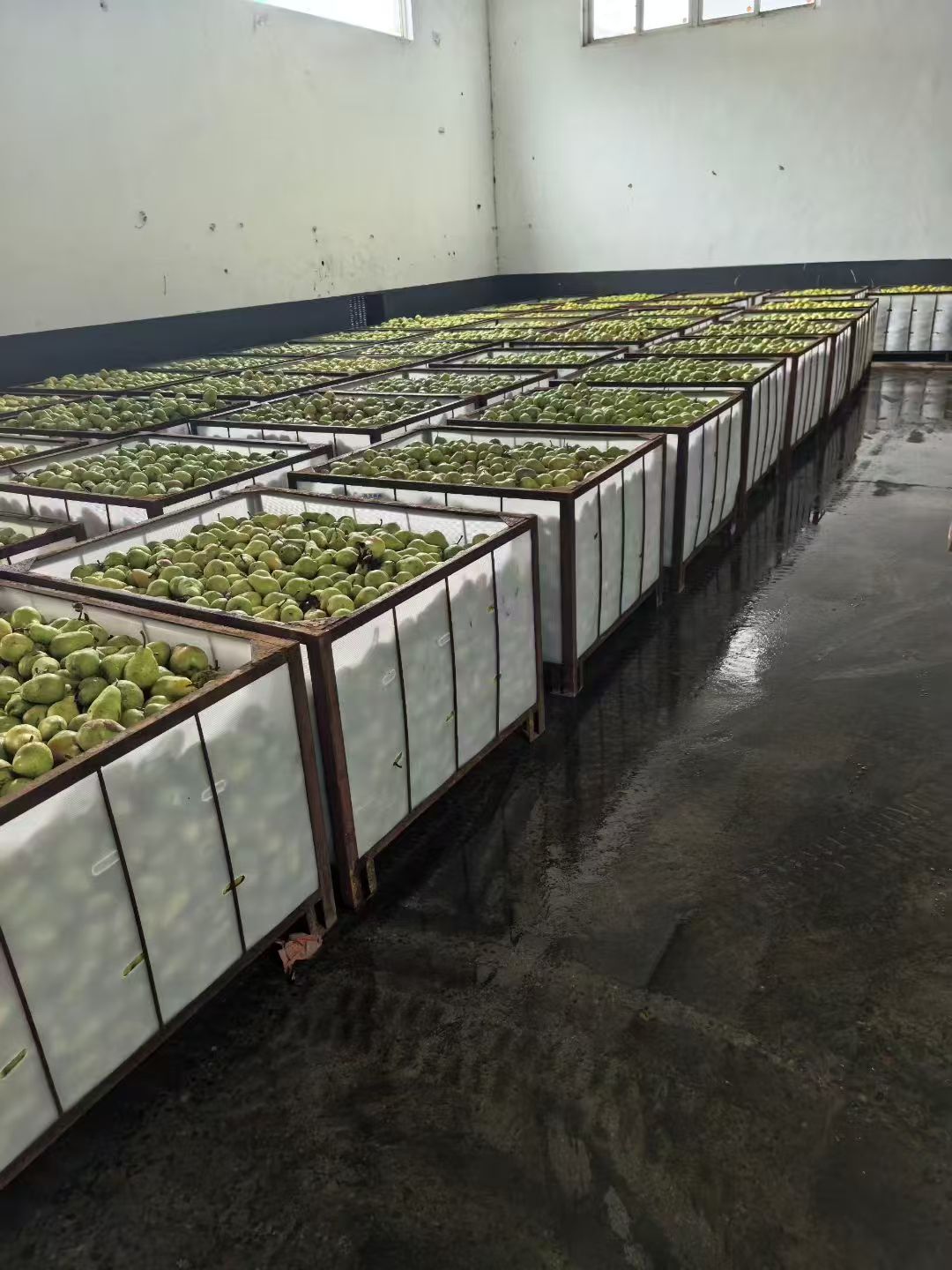
Long-distance freight into markets without a cold chain
For Africa, the Middle East, Southeast Asia and Latin America, canned fish is usually the only format that can be sold through general trade and remote distribution without a temperature-controlled network. It is also the format most tolerant of long ocean transit and multi-leg inland haulage.
Strategic and emergency stock
Ambient cans can be stored for years without power, which makes them usable for reserve inventory, tender supply and continuity planning by wholesale distributors. The operating rules are simple: FIFO rotation, weekly inspection for rust or swelling, and immediate quarantine of any can with domed ends together with the traceable batch number.
Developed cold-chain markets and HORECA
Where a full cold chain exists and the customer buys on texture and freshness — high-end retail and HORECA in particular — frozen fish remains the stronger proposition. The practical structure is often mixed rather than exclusive: frozen for premium and foodservice lines, canned for supermarket retail shelves, convenience stores and catering supply.
Distributors with a partial cold chain
Importers who have cold storage in the capital but unreliable distribution beyond it can split the range by channel instead of by category. Because Agrogentra supports mixed FCL and LCL shipments, a split portfolio is executable without committing an entire container to one format — a lower-risk entry structure for new importers without cold-chain resources.
Canned Fish vs Frozen Food: Decision Matrix
| Decision dimension | Canned fish (ambient programme) | Frozen food |
|---|---|---|
| Storage condition | Ambient; store at 5–25 °C, relative humidity below 75%, off-floor stacking | Continuous −18 °C from processing through to the retail shelf |
| Shelf life | Up to 36 months at ambient temperature (24–36 months typical planning range) | 12–18 months at −18 °C typical planning range; some buyer guidance uses 6–18 months |
| Cold-chain dependency | None; fully sterilized, ready to eat, no preservatives | Continuous; any break shortens remaining life and increases reject risk |
| Cost adders versus ambient | — | Reefer freight and cold storage typically add 25%–40% to landed cost |
| Loss planning assumption | Below 1% typical | 5%–10% typical once temperature abuse and refreezing are counted |
| Preservation method | Hermetic sealing plus retort sterilization at 115–121 °C; incubation test at 37 °C for 7–10 days | Temperature control only |
| Document pack | COA per batch, health certificate, pre-shipment inspection report, traceability report; retained batch samples | Destination-specific documentation; the itemised pack above describes the canned fish programme |
| Certification evidence | BRCGS 051A1312001 covering canned mackerel, sardine and tuna (valid to 13 Feb 2027); HALAL 8998250000 (valid to 30 Jun 2028) | Same company HALAL certificate scope covers frozen sardine, mackerel and tuna |
| Typical channels | Supermarket retail, convenience stores, catering supply, food processing | High-end retail, HORECA, freshness-led foodservice |
| Best-fit market | Long-distance routes, markets without cold chain, remote distribution, reserve stock | Developed cold-chain markets with freshness-driven demand |
Scope note: the shelf-life, loss-rate and cold-chain cost ranges above are planning benchmarks used for container-level comparison, not guarantees. Actual results depend on your route, your storage discipline and the destination market’s infrastructure.
Frequently Asked Questions
What documentation should come with an import canned fish shipment?
A canned fish shipment from Agrogentra is accompanied by a full set of export documents: Certificate of Analysis (COA), health certificate, pre-shipment inspection report and traceability report. Quality control follows full-process control covering incoming raw-material inspection, on-line production patrol, and laboratory physical, chemical and microbiological testing of each batch with a COA report, plus retained batch samples. Third-party inspection by SGS or Intertek is acceptable, and factory certification copies are released for buyer audits so an importer can verify certificate scope and validity before the first container ships.
China canned fish OEM manufacturers for private label — what should an importer check?
Four checks matter most. First, whether the certification scope covers the exact SKUs you are private-labelling: Agrogentra’s BRCGS certificate 051A1312001 covers the manufacturing of canned mackerel, sardine and canned tuna. Second, whether OEM support extends to product identity, not just artwork: Agrogentra provides OEM production with logo customization plus OEM formula and label design support. Third, whether capacity and lead time match your launch schedule: 3,500 units monthly capacity and 4–6 weeks lead time. Fourth, whether documented sterilization and batch testing can be reviewed by your QA team. Can sizes of 125 g, 170 g (843#), 425 g and 1000 g then give the private-label programme room to define its own pack architecture.
How much do reefer freight and cold storage add to landed cost?
As a planning benchmark, reefer freight and cold storage typically add 25%–40% to landed cost relative to an ambient container. Frozen product also carries a higher inventory-loss assumption — commonly 5%–10% versus below 1% for canned — and cold storage adds an ongoing electricity cost that ambient warehousing does not. The gap is usually large enough to change the price at which a frozen SKU must be sold to match the margin of an equivalent ambient SKU.
Can we validate quality and labelling before placing a container order?
Yes. Samples are provided at the customer’s courier cost, and OEM formula and label design work can be completed before the first production run. Acceptance criteria are set in writing as a pre-shipment inspection covering cargo quantity, packaging and appearance, and third-party inspection by SGS or Intertek can be arranged where the buyer’s risk policy requires it. This allows an importer to validate taste, pack format and labelling before committing to a mixed FCL.
What are the MOQ, lead time and payment terms?
The minimum order quantity is a mixed FCL, with LCL orders available upon negotiation. Delivery is FOB, lead time for the canned fish programme is 4–6 weeks, and payment terms are T/T 30% deposit with the balance against a copy of the B/L. To start a costing exercise for your market, you can request a sample set and a current quotation from the Agrogentra team at charles.cai@agrogentra.com or through www.agrogentra.com.
The Decision Rule
If the destination market cannot hold −18 °C from port to shelf, canned fish is the lower-risk format: ambient storage, up to 36 months of shelf life, no cold-chain cost adder, and a loss assumption below 1%. If the market has a mature cold chain and pays for freshness — HORECA buyers and premium retail — frozen remains the right format for those specific channels, and a mixed portfolio is usually the strongest structure overall.
Model both formats at container level, then compare margin per sellable unit rather than freight rate per container. That calculation, run twice — once with a 25% cold-chain adder and once without — is normally enough to settle the canned-versus-frozen question for a given route.
Next Step: Sample Set and Quotation
Agrogentra & Co., Ltd. supplies Canned Sardines, Canned Mackerel, Canned Tuna, Canned Alaska Pollock, Canned Squid, Canned Baby Clam and a full ambient vegetable and fruit range from Xiamen, China, with BRCGS and HALAL certification and a documented batch-level QC pack. Samples are provided at the customer’s courier cost, with OEM formula and label design support.
Download the product catalogue: Agrogentra product leaflet (PDF)
Contact: Charles Cai / Miya Kang / Susie Xie — charles.cai@agrogentra.com, miya.kang@agrogentra.com, susie.xie@agrogentra.com
Tel: +86-592-5393122 / +86-592-2291213 | WhatsApp: +86-18150918630 | Website: www.agrogentra.com
Address: 1F, Yundang Road 1-39, Siming District, Xiamen, Fujian Province, China
Have Questions or Need More Details?
Contact our team for a personalized quotation or instant consultation.
Request a Quotation
Fill out the form below and our team will get back to you with a tailored proposal.
WhatsApp Direct Chat
Prefer to chat in real-time? Message us on WhatsApp for instant assistance & quick answers.
- Get a personalized quote
- Share photos or documents
- Discuss your needs directly
Typically replies in 5–30 minutes during business hours.