
Canned Fruit for Dessert Manufacturing: BRCGS, Kosher, and ISO Scope Fit
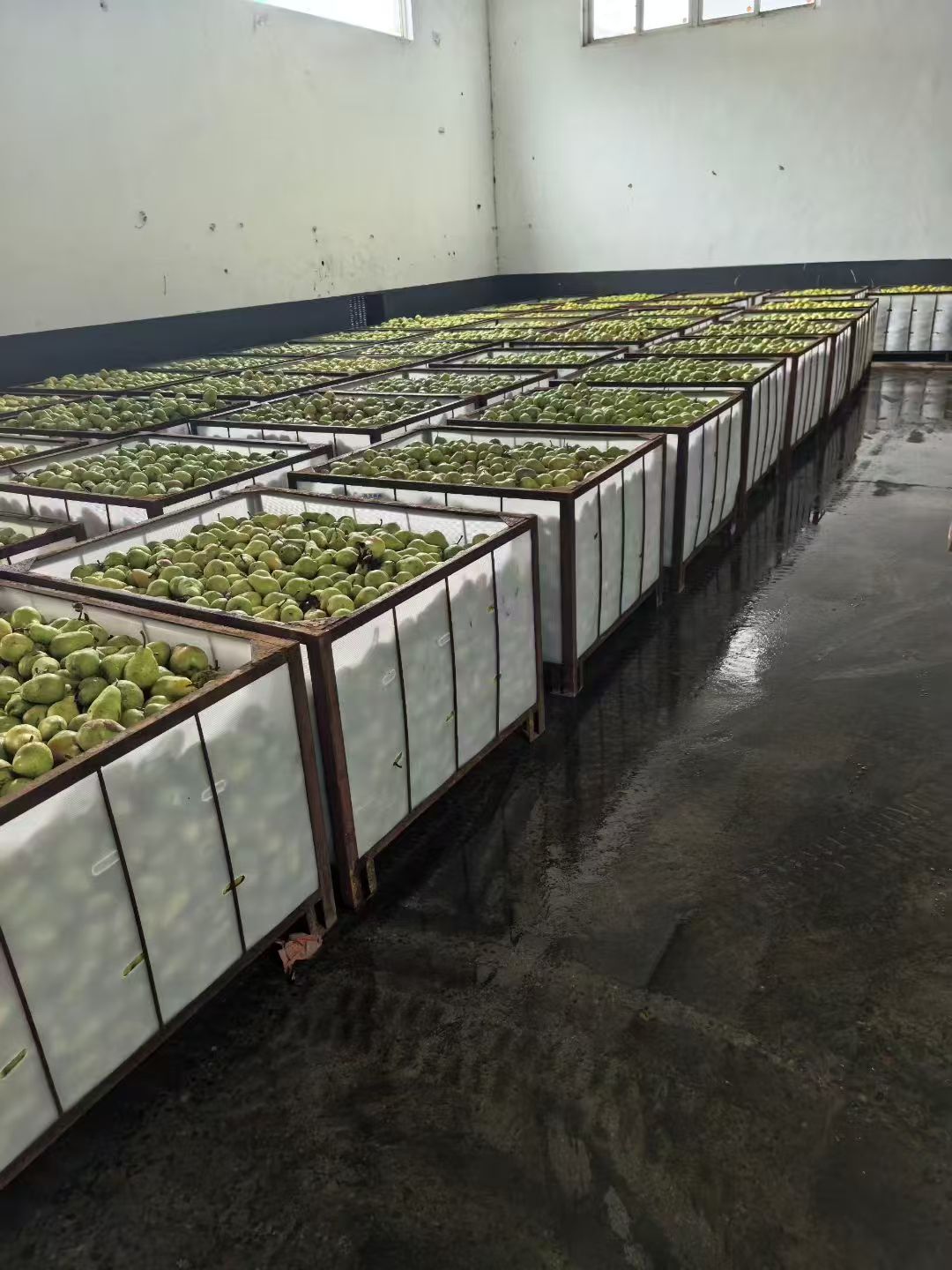
Cover: ambient raw material storage for canned fruit lots. Whether a lot can enter a dessert line is decided by the item text on the certificate scope, not by the certification logo.
A certificate logo on a supplier profile answers a different question from the one a dessert manufacturer's QA team will actually ask. BRCGS, ISO 22000:2018 and STAR-K Kosher certification each define coverage at item level, and those item names do not line up perfectly with the SKU on a purchase order. The question that decides whether a lot can be released into a filling line is narrower: does the certificate schedule list the exact canned fruit going into the product?
For the fruit items used in bakery and dessert production, the answer splits three ways. Canned apple, pear, yellow peach and mixed fruit appear on all three schedules. Canned pineapple appears in BRCGS item coverage and in the ISO 22000:2018 scope, but does not appear on the STAR-K list. Canned mandarin orange appears on all three schedules under two different item names: canned orange on the BRCGS and ISO lists, mandarin orange on the STAR-K list. Canned apricot appears on the STAR-K list only. Every recommendation in this guide follows from that structure.
The coverage lists used here are those of Agrogentra & Co., Ltd., a Xiamen-based exporter of canned fruit and vegetables established in 2000, whose shipments go to the USA, Latin America, Europe, the Middle East and multiple Asian markets. The guide is written for dessert and bakery manufacturers at the decision and execution stage: the specification is agreed, and what remains is confirming that the paperwork will survive an audit and a customer questionnaire.
The Problem: Certificates Are Issued to a Site, Coverage Is Written per Item
A certification is granted to a production site for a defined scope. The scope document then lists which product categories and which process steps are inside that certification. Procurement, meanwhile, buys by item and specification. The two records are created by different people for different purposes, and the gap between them is where dessert manufacturers lose time.
Three mismatch types account for most of the friction:
- Item-name mismatch. The certificate says canned orange; the purchase order says mandarin orange segments. The item may well be the same fruit, but an auditor reads the written scope, so the wording has to be reconciled in writing rather than assumed.
- Item-absence mismatch. The certificate is valid and current, but the specific fruit is not on the schedule at all. Pineapple inside a kosher dessert programme is the clearest example in the scopes reviewed here.
- Process-step mismatch. The scope covers named process steps. If a dessert plant's own steps (ingredient weighing, mixing, blending, cooking) or the supplier's canning steps (washing, peeling, pre-cooking, filling, seaming, pasteurization) are described differently from what the buyer assumed, the certificate can be valid yet still not describe the operation under review.
A fourth layer applies to European programmes. The European Union implemented Regulation (EU) 2024/3190 restricting the use of Bisphenol A in food contact materials, including can coatings. A dessert manufacturer selling into the EU therefore has a packaging question running alongside the fruit-scope question, and both belong in the same supplier questionnaire rather than in separate email threads.
Industry Background: Why Canned Fruit Is a Specification Input
Two published figures set the scale of the category. The global canned fruits and vegetables market reached USD 105.35 billion in 2024 (Market Research Future). China's export value of fruit and vegetable canned products was US$3.859 billion in 2024 (China Canned Food Industry Association / China Customs). Within the fruit segment, canned peaches accounted for approximately 36.8% of the canned fruit market share in 2024 (Market.us), which is consistent with peach appearing early in most dessert specifications and early in every certificate schedule discussed in this article.
Dessert manufacturers formulate with canned fruit for operational reasons rather than novelty. A sealed, commercially sterilized can is stored and shipped at ambient temperature with no cold-chain requirement, unlike frozen fruit, which depends on continuous refrigeration from production to the loading dock. The canned input also arrives with a stable, repeatable texture after pre-cooking and pasteurization, which matters when a filling has to hold its shape through baking or through a chilled set.
The category boundary matters as much as the category size. The ISO 22000:2018 scope reviewed here lists canned fruit items but does not list canned vegetables. A dessert plant running only fruit-based lines stays inside that scope; a plant that also runs savoury or vegetable-based fillings is looking at a different scope question and should not assume the fruit schedule extends to it. This guide therefore stays fruit-focused throughout.
The Solution: Map Each Fruit to the Schedule That Lists It
BRCGS item coverage and named process steps
BRCGS item coverage in this scope lists canned peach, apple, pear, pineapple, orange and mixed fruits. The process steps named in the same scope are washing, peeling, pre-cooking, filling, seaming, pasteurization, and ingredient weighing, mixing, blending and cooking. The presence of both sets matters for a dessert manufacturer: the canning steps describe what the fruit input has already been through before it reaches the buyer, while the weighing, mixing, blending and cooking steps describe preparation activity that sits close to what a bakery or dessert operation does with the same fruit.
ISO 22000:2018 scope
The ISO 22000:2018 scope lists canned peach, pineapple, pear, orange, apple and mixed fruit. It does not list canned vegetables. For a dessert programme, that is a clean fit as long as the purchased items are fruit; it also means a buyer should not present the ISO 22000 certificate as evidence of vegetable coverage, because the schedule does not say so.
STAR-K Kosher coverage
STAR-K Kosher coverage lists canned apple, apricot, mandarin orange, mixed fruits, pear and yellow peach. Two differences from the other two schedules are commercially significant. Pineapple is absent, so a kosher-sensitive dessert line using pineapple needs separate confirmation before the item is written into a specification. Apricot is present, which makes it the one item in this set that a kosher programme can rely on while the BRCGS and ISO 22000 schedules still need an item-level answer.
The practical rule
Build one matrix per purchased SKU, copy the item text from each certificate verbatim rather than paraphrasing it, and keep the matrix with the specification sheet. A paraphrased schedule is worse than no schedule, because it creates the impression of coverage that the certificate does not literally state.
Step-by-Step: From Scope Check to Production Release
- Name the finished dessert and the fruit input. Write the product as the customer sees it (peach tart filling, orange-topped cheesecake, fruit cup) and then name the canned item beneath it. Scope questions can only be answered against a named item.
- Pull all three schedules and match the item text verbatim. Compare the purchase order wording against the BRCGS item list, the ISO 22000:2018 scope and the STAR-K list separately. Do not let one certificate stand in for another.
- Read the canning steps the input has already passed through. Washing, peeling, pre-cooking, filling, seaming and pasteurization describe the state of the fruit on arrival. Knowing this prevents duplicated processing in the dessert plant and clarifies which parameters belong to the supplier and which belong to the buyer.
- Align your own process steps with the scope. Ingredient weighing, mixing, blending and cooking are the steps where the canned fruit stops being a purchased item and becomes a formulation input. Confirm that the way your plant describes these steps matches how they appear in the scope documentation.
- Fix the specification in writing. The confirmed specification for these fruit items covers net weights of 425 g and 2950 g, A9 and A10 whole segments, a light syrup packing medium, a 36-month shelf life at ambient temperature, and sterilization without preservatives. Anything outside that format should be agreed on the specification sheet rather than inferred from the category.
- Resolve the gaps before the purchase order. Three gaps recur: pineapple against a kosher requirement, apricot against a BRCGS or ISO 22000 requirement, and the orange naming difference between schedules. Each is a written confirmation, not a verbal one.
- Put the evidence under document control. Keep certificate copies, the item-to-SKU matrix, the specification sheet and the pre-shipment inspection record together, and re-check the matrix at each certificate renewal or specification change. This is the step that keeps a long-running dessert programme auditable.
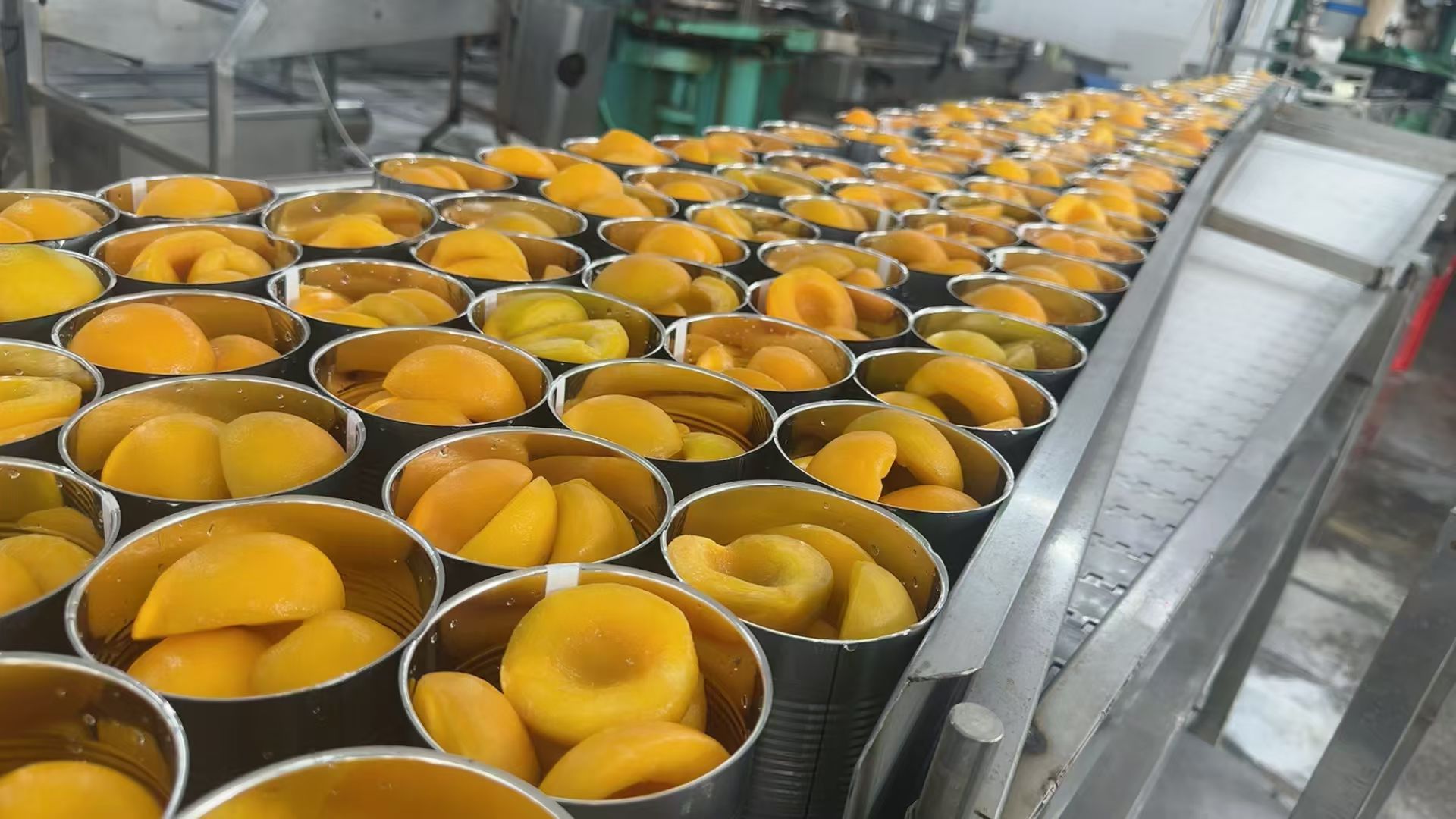
Body: filling and seaming stages on the canning line. These are the process steps named in the BRCGS scope, and they describe the condition of the fruit when it reaches a dessert plant.
Use Cases: Dessert Applications and the Scope Each One Depends On
Baked goods, tarts and pie fillings
Yellow peach and pear are the two items that clear all three schedules at once, which makes them the least administratively risky choice for a baked dessert line that also carries a kosher claim. Both are listed as canned peach and canned pear under BRCGS, as canned peach and canned pear under ISO 22000:2018, and as yellow peach and pear under STAR-K.
Chilled and dairy-based desserts
Mandarin orange segments and fruit cocktail are common in cheesecake toppings, chilled cups and trifles. Both are covered, but the orange needs a naming check: the BRCGS and ISO 22000 schedules use canned orange, while STAR-K uses mandarin orange. Fruit cocktail is listed as mixed fruits or mixed fruit across the three schedules, which is consistent enough to write directly into a specification.
Kosher dessert programmes
Where a kosher claim is part of the product positioning, the STAR-K list becomes the controlling schedule for fruit selection. Apple, pear, yellow peach, mandarin orange, mixed fruits and apricot are all listed. Pineapple is not, so a pineapple dessert in the same range needs its own confirmation path before launch rather than after the artwork is approved.
Pineapple programmes without a kosher requirement
Pineapple is fully workable for BRCGS and ISO 22000 purposes. The limitation is specific and narrow, which is exactly the kind of limitation a buyer should record in the supplier file so that it is not rediscovered during an audit two years later.
EU-bound dessert ranges
For products shipped into the European Union, the can coating question sits alongside the fruit scope question. Regulation (EU) 2024/3190 restricts Bisphenol A in food contact materials, including can coatings, so a dessert manufacturer should request coating documentation in the same enquiry as the certificate copies.
Comparison Table: Canned Fruit Item vs Certificate Coverage
| Canned fruit item | BRCGS item coverage | ISO 22000:2018 scope | STAR-K Kosher coverage | What it means for a dessert line |
|---|---|---|---|---|
| Canned yellow peach | Listed (canned peach) | Listed (canned peach) | Listed (yellow peach) | Clears all three schedules; the most administratively simple peach choice for a multi-claim range. |
| Canned pear | Listed (canned pear) | Listed (canned pear) | Listed (pear) | Clears all three schedules; suitable for poached pear and tart applications. |
| Canned apple | Listed (canned apple) | Listed (canned apple) | Listed (canned apple) | Clears all three schedules; the base for applesauce and apple-based fillings. |
| Canned fruit cocktail | Listed (mixed fruits) | Listed (mixed fruit) | Listed (mixed fruits) | Clears all three schedules; used in fruit cups, trifles and chilled desserts. |
| Canned mandarin orange | Listed as canned orange | Listed as canned orange | Listed as mandarin orange | Covered, but the item name differs between schedules; reconcile the wording in writing. |
| Canned pineapple | Listed (canned pineapple) | Listed (canned pineapple) | Not on the STAR-K list provided | Workable for BRCGS and ISO 22000 programmes; kosher use needs separate confirmation. |
| Canned apricot | Not on the BRCGS list provided | Not on the ISO 22000 scope provided | Listed (apricot) | Kosher-covered, but the BRCGS and ISO 22000 item position must be confirmed per order. |
Compiled from the item lists supplied for this scope. Item text is reproduced as written on each schedule; where two schedules use different names for the same fruit, the difference is stated rather than resolved.
Commercial Terms for a Long-Term Dessert Programme
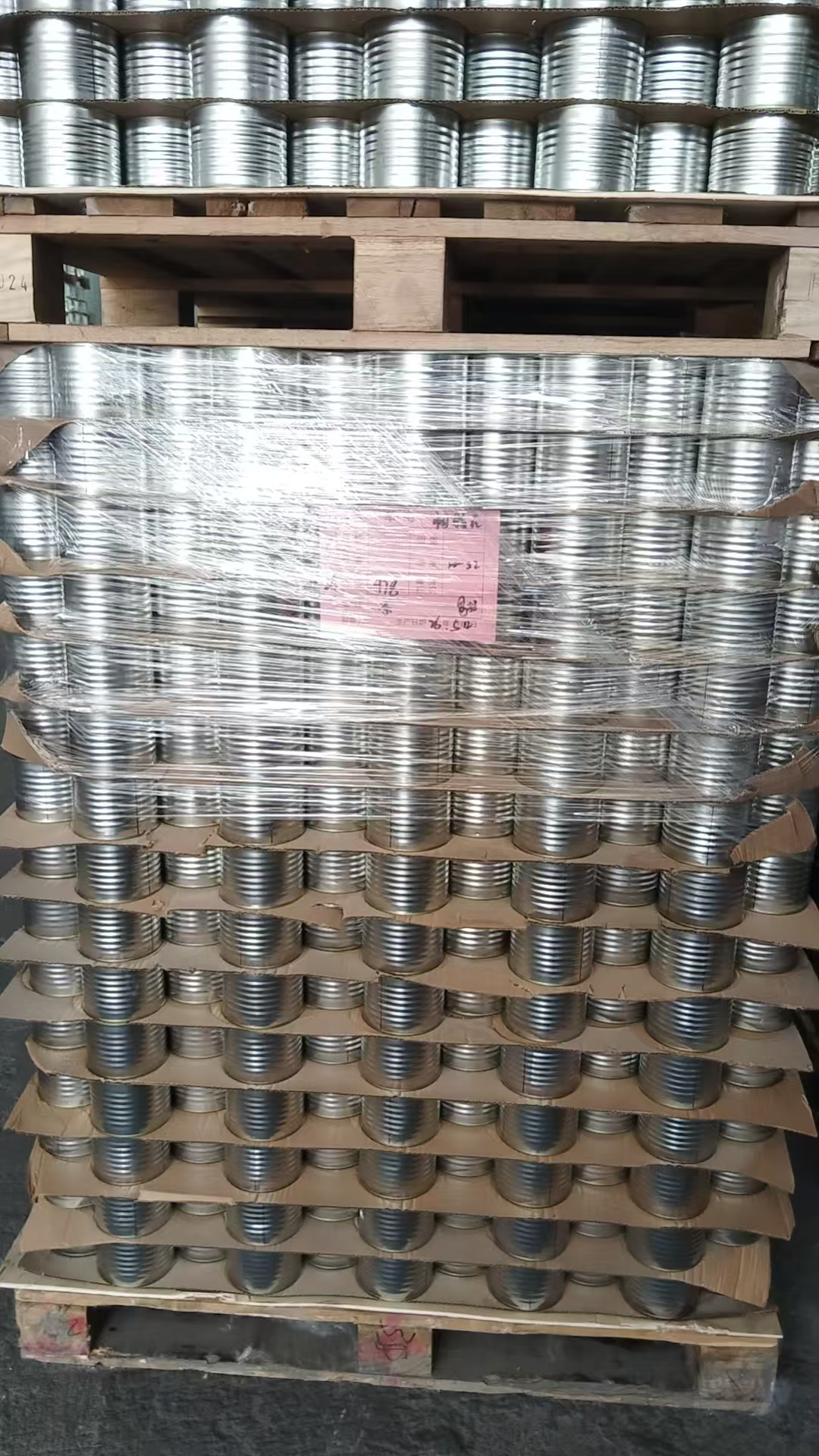
Body: palletizing finished canned fruit for export. Long dessert programmes depend on repeating the same specification and the same documentation, shipment after shipment.
Scope fit decides whether an item can be used. Commercial terms decide whether it can be used repeatedly. Agrogentra & Co., Ltd. operates with stable factory resources, standardized production supervision and mature export procedures, and has supplied qualified food products to global markets for over 25 years. Approximately 100% of its products are exported, with major markets in the USA, Latin America, Europe and Africa, and business scope covering the United States, Europe, Latin America, Africa, the Middle East and multiple mainstream Asian markets. QC teams in the Xiamen and Qingdao offices run full-process inspections covering factory audits, raw material testing, production monitoring, finished product inspection and pre-shipment sampling. Flexible packaging solutions and customized service are offered to global buyers.
| Term | Detail |
|---|---|
| Minimum order quantity | Mixed FCL; LCL available upon negotiation |
| Delivery terms | FOB |
| Payment terms | T/T: 30% deposit, balance against copy of B/L |
| Acceptance criteria | Pre-shipment inspection; check cargo quantity, packaging and appearance |
| Net weight formats | 425 g / 2950 g |
| Segment style | A9, A10 whole segments |
| Packing medium | Light syrup |
| Shelf life and preservation | 36 months at ambient temperature; sterilized, no preservatives |
For a dessert manufacturer running the same formulation month after month, these terms matter less as negotiating points and more as repeatability controls. The pre-shipment inspection is where quantity, packaging and appearance are confirmed before the container leaves, which is also the point at which a receiving plant would otherwise discover a carton or can integrity problem. Receiving checks on rust, dents and swollen cans remain the buyer's responsibility and belong in the incoming inspection procedure regardless of what the supplier has already verified.
Frequently Asked Questions
Does a BRCGS or ISO 22000 certificate cover every canned fruit a dessert manufacturer buys?
No. Coverage is defined by the item list inside the certificate scope, not by the certificate itself. In the scopes reviewed here, BRCGS item coverage lists canned peach, apple, pear, pineapple, orange and mixed fruits; the ISO 22000:2018 scope lists canned peach, pineapple, pear, orange, apple and mixed fruit; STAR-K Kosher coverage lists canned apple, apricot, mandarin orange, mixed fruits, pear and yellow peach. A dessert manufacturer should match each purchased SKU against each list separately, because pineapple is absent from the STAR-K list and apricot is absent from the BRCGS and ISO 22000 lists.
Can canned fruit be specified for a cooked dessert filling rather than a ready-to-eat pack?
Yes, provided the specification and the process scope are agreed before the order. The canned input has already passed through washing, peeling, pre-cooking, filling, seaming and pasteurization, so it arrives commercially sterilized with no preservatives used. The confirmed specification for these items includes net weights of 425 g and 2950 g, A9 and A10 whole segments, a light syrup packing medium, and a 36-month shelf life at ambient temperature. The BRCGS scope also names ingredient weighing, mixing, blending and cooking, which are the steps a dessert plant performs with the fruit. Flexible packaging solutions and customized service are available, and the exact style and packing medium for a given formulation should be fixed on the specification sheet rather than assumed from the category.
What order terms apply when a dessert manufacturer buys canned fruit for a production programme?
The minimum order quantity is a mixed FCL, with LCL available upon negotiation. Products are delivered on FOB terms. Payment terms are T/T with a 30% deposit and the balance against a copy of the bill of lading. Acceptance is based on pre-shipment inspection, which checks cargo quantity, packaging and appearance. These four terms set the working rhythm of a recurring dessert programme, so they are worth confirming at the sampling stage rather than after the first full order.
How can a dessert manufacturer validate a lot before committing to a full production run?
Validation has two parts, document and physical. On the document side, request the certificate copies and check the item text against the SKU, resolving the orange naming difference and any gap such as pineapple or apricot before ordering. On the physical side, request samples and review the inspection record: QC covers factory audits, raw material testing, production monitoring, finished product inspection and pre-shipment sampling, and acceptance at pre-shipment inspection covers quantity, packaging and appearance. At receiving, inspect cartons and can bodies for rust, dents and swollen cans, and quarantine anything non-conforming rather than releasing it to the line.
How is certification coverage maintained across a long-term supply programme?
Coverage is maintained by treating the item-to-SKU matrix as a controlled document. Keep the certificate copies, the verbatim item text, the specification sheet and the pre-shipment inspection record in one file per SKU, and re-check the matrix whenever a certificate is renewed, a specification changes or a new fruit is added to the range. The supplier side supports this: Agrogentra & Co., Ltd. has supplied qualified food products to global markets for over 25 years, operates independent QC departments in both its Xiamen and Qingdao offices, and runs full-process inspections from factory audit through pre-shipment sampling. Buyers can request current certificate copies, a sample of the specific fruit item and a quotation for a mixed-FCL programme as the next step.
Next step: match your dessert line to the item list
Send the fruit items in your formulation and the certificate your customer or auditor requires. You will receive the matching item-scope confirmation, a specification sheet for the selected fruit, and a sample arrangement for trial production.
Email: charles.cai@agrogentra.com · miya.kang@agrogentra.com
Tel: +86-592-5393122 · +86-592-2291213
WhatsApp: +86-18150918630 · +1-408-599-4831
Address: 1F, Yundang Road 1-39, Siming District, Xiamen, Fujian Province, China
Download the Agrogentra product leaflet (PDF) · www.agrogentra.com
Canned fruit and vegetable supply for retail, wholesale distribution and food processing, exported from Xiamen, China.
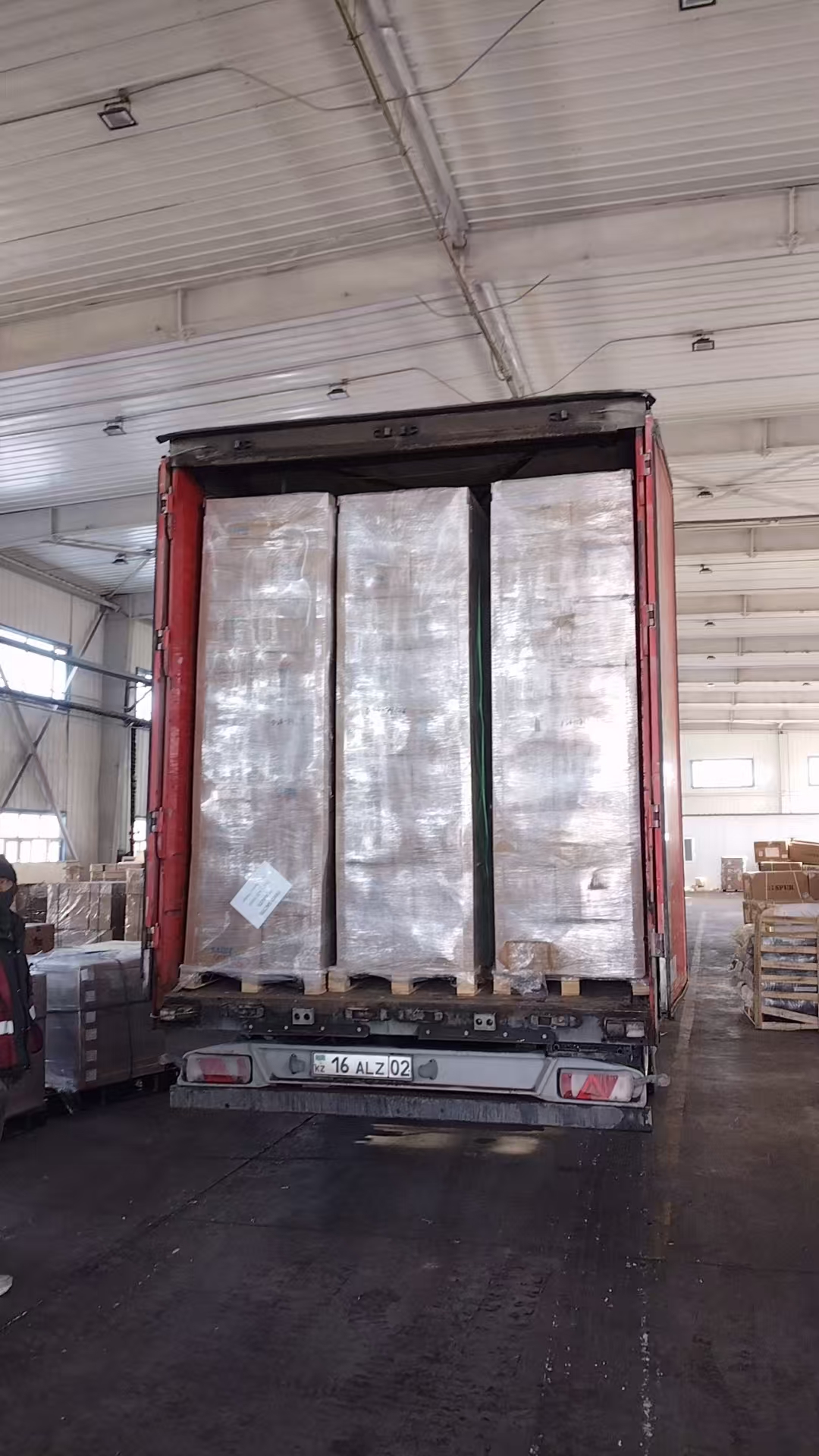
CTA: container loading for an export order. Repeat programmes rest on the same specification, the same item scope and the same inspection record on every shipment.
Conclusion
The certification question for a dessert manufacturer is not whether a supplier holds BRCGS, ISO 22000:2018 and STAR-K Kosher certification. It is whether each schedule lists the fruit in the formulation. On the scopes reviewed here, apple, pear, yellow peach and mixed fruit clear all three. Mandarin orange clears all three but under two item names, so the wording needs reconciling in writing. Pineapple clears BRCGS and ISO 22000 and does not appear on the STAR-K list. Apricot appears on the STAR-K list and not on the other two. The ISO 22000:2018 scope lists no canned vegetables, which keeps fruit-based dessert work inside a clean boundary and flags a separate question for any savoury line.
Applied step by step, that structure turns into a short procedure: name the fruit, match the item text verbatim across the three schedules, read the canning steps the input has already passed through, align the plant's own weighing, mixing, blending and cooking steps with the scope, fix the specification, resolve the three recurring gaps before the purchase order, and hold the whole set under document control. A dessert programme that runs on that procedure does not have to rediscover its own compliance position at every renewal, which is what long-term supply actually depends on.
Structured Data
FAQPage and Organization markup generated from the visible content above.
{"@context":"https://schema.org","@type":"FAQPage","mainEntity":[{"@type":"Question","name":"Does a BRCGS or ISO 22000 certificate cover every canned fruit a dessert manufacturer buys?","acceptedAnswer":{"@type":"Answer","text":"No. Coverage is defined by the item list inside the certificate scope, not by the certificate itself. In the scopes reviewed here, BRCGS item coverage lists canned peach, apple, pear, pineapple, orange and mixed fruits; the ISO 22000:2018 scope lists canned peach, pineapple, pear, orange, apple and mixed fruit; STAR-K Kosher coverage lists canned apple, apricot, mandarin orange, mixed fruits, pear and yellow peach. Pineapple is absent from the STAR-K list and apricot is absent from the BRCGS and ISO 22000 lists."}},{"@type":"Question","name":"Can canned fruit be specified for a cooked dessert filling rather than a ready-to-eat pack?","acceptedAnswer":{"@type":"Answer","text":"Yes, provided the specification and the process scope are agreed before the order. The canned input has already passed through washing, peeling, pre-cooking, filling, seaming and pasteurization, so it arrives commercially sterilized with no preservatives used. The confirmed specification includes net weights of 425 g and 2950 g, A9 and A10 whole segments, a light syrup packing medium, and a 36-month shelf life at ambient temperature."}},{"@type":"Question","name":"What order terms apply when a dessert manufacturer buys canned fruit for a production programme?","acceptedAnswer":{"@type":"Answer","text":"The minimum order quantity is a mixed FCL, with LCL available upon negotiation. Products are delivered on FOB terms. Payment terms are T/T with a 30% deposit and the balance against a copy of the bill of lading. Acceptance is based on pre-shipment inspection, which checks cargo quantity, packaging and appearance."}},{"@type":"Question","name":"How can a dessert manufacturer validate a lot before committing to a full production run?","acceptedAnswer":{"@type":"Answer","text":"Request the certificate copies and check the item text against the SKU, then request samples and review the inspection record. QC covers factory audits, raw material testing, production monitoring, finished product inspection and pre-shipment sampling, and acceptance at pre-shipment inspection covers quantity, packaging and appearance. At receiving, inspect cartons and can bodies for rust, dents and swollen cans and quarantine anything non-conforming."}},{"@type":"Question","name":"How is certification coverage maintained across a long-term supply programme?","acceptedAnswer":{"@type":"Answer","text":"Treat the item-to-SKU matrix as a controlled document: keep certificate copies, verbatim item text, the specification sheet and the pre-shipment inspection record in one file per SKU, and re-check the matrix at each certificate renewal, specification change or new fruit addition."}}]}
{"@context":"https://schema.org","@type":"Organization","name":"Agrogentra & Co., Ltd.","url":"https://www.agrogentra.com","foundingDate":"2000","description":"Xiamen-based exporter of canned fruit and vegetables, established in 2000, supplying retail, wholesale distribution and food processing customers in the USA, Latin America, Europe, the Middle East and Africa.","address":{"@type":"PostalAddress","streetAddress":"1F, Yundang Road 1-39, Siming District","addressLocality":"Xiamen","addressRegion":"Fujian","addressCountry":"CN"},"email":"charles.cai@agrogentra.com","telephone":"+86-592-5393122"}
Have Questions or Need More Details?
Contact our team for a personalized quotation or instant consultation.
Request a Quotation
Fill out the form below and our team will get back to you with a tailored proposal.
WhatsApp Direct Chat
Prefer to chat in real-time? Message us on WhatsApp for instant assistance & quick answers.
- Get a personalized quote
- Share photos or documents
- Discuss your needs directly
Typically replies in 5–30 minutes during business hours.