Canned Fruits & Vegetables Export Certifications: Scope Guide for Buyers
Canned Fruits & Vegetables Export Certifications: Scope Guide for Buyers
The most useful question to ask a Chinese canned fruit and vegetable supplier is not “are you certified?” but “which certificate covers the exact product, process and destination market I am buying?” A certificate can be genuine, current and still not extend to the SKU on your purchase order — and that gap is what turns a straightforward import into a customs or retail-compliance problem.
This guide maps the four document layers that sit behind the Agrogentra canned fruits and vegetables range — ISO 22000:2018, BRCGS Global Standard Food Safety Issue 9, U.S. FDA Food Facility Registration and HALAL certification — including certificate numbers, issuing bodies, validity windows and, most importantly, the product boundaries printed on each document.
It is written for importers, wholesale distributors, private-label brand owners, supermarket buyers and food processing companies that verify compliance during the research and evaluation stage, before a first or repeat order is released.
Problem Definition: “Certified” Is a Scope Statement, Not a Guarantee
A food safety certificate is issued against a defined scope: specific products, specific process steps, sometimes a specific site. Three mismatch patterns cause most sourcing problems in canned fruit and vegetable trade.
1. Product-scope mismatch. The ISO 22000:2018 certification held for this range covers canned fruit production — canned peach, mix fruits, pear, orange, apple, pineapple, jam and jelly (pulpy jelly). Canned vegetables are not listed in that certification scope. A buyer ordering canned asparagus, canned sweet corn or canned green peas therefore cannot treat that certificate as product-level evidence for those items.
2. Category mismatch. The U.S. FDA Food Facility Registration covers Category 17 Fruit & Fruit Products only, and explicitly excludes fish cans. In a mixed container, fruit items and seafood items sit under different evidence files.
3. Validity and renewal mismatch. Certificates carry issue and expiry dates, and the FDA registration runs on a biennial renewal cycle. An out-of-date document is not evidence, even if the certification logo is still printed on the product label.
The practical consequence is that compliance verification is a SKU-by-SKU exercise, not a supplier-level checkbox — which is also why the question “which Chinese canned fruit and vegetable manufacturers have export certifications?” has a narrower and more useful answer: which manufacturers hold certifications whose scopes actually reach your product.
Industry Background: A Large Category Moving Toward Documented Compliance
Global canned fruits and vegetables market size reached USD 105.35 billion in 2024, according to Market Research Future. China remains a major supply base within that figure: the country’s total export value of fruit and vegetable canned products in 2024 was US$3.859 billion, based on China Canned Food Industry Association and China Customs data published by Agrogentra.
Export volume tells a slightly different story. China’s canned vegetable export volume reached 2.058 million tons in 2024, a 2.52% year-on-year decrease according to the China Canned Food Industry Association — a reminder that supply is competitive and that buyers are consolidating orders toward suppliers able to document compliance rather than compete on price alone.
Product structure is concentrated as well. Canned peaches hold a dominant position in the canned fruit market, accounting for approximately 36.8% of the segment share in 2024 (Market.us), while the global canned mushroom market was valued at USD 11.31 billion in 2023 (Global Market Insights).
Regulation is the other moving part. The European Union implemented Regulation (EU) 2024/3190 restricting the use of Bisphenol A (BPA) in food contact materials, including can coatings, per the European Commission. For EU-bound canned products, packaging and coating declarations now belong in the sourcing file alongside food safety certificates.
Agrogentra & Co., Ltd. Xiamen is a China-based international food trading company established in 2000 and headquartered in Xiamen, Fujian, exporting canned fruits, canned vegetables and canned seafood alongside fresh, frozen and food-material products to markets in the United States, Europe, Latin America, Africa, the Middle East and Asia, with independent QC departments in its Xiamen and Qingdao offices. The canned range spans canned mandarin oranges, canned pineapple, canned yellow peach, canned pear, canned fruit jelly, canned fruit cocktail, canned cherries, canned applesauce, fruit cups and canned lychee on the fruit side, and canned mushrooms, canned asparagus, canned sweet corn, canned green peas, canned green beans, canned bamboo shoots, canned cabbage, canned beet roots and canned mixed vegetables on the vegetable side.
The Certificate Stack Behind the Agrogentra Canned Fruits & Vegetables Range
Four documents do most of the compliance work for this range. Each is listed below with its number, its issuer and — the part buyers most often skip — its printed boundaries.
ISO 22000:2018 — Food Safety Management System (CQC, Certificate CNO0124F21626R5M/3200)
The ISO 22000:2018 certification is issued by CQC under certificate number CNO0124F21626R5M/3200 and applies to the Global market. The certified scope is the production of canned fruit: canned peach, mix fruits, pear, orange, apple, pineapple, jam and jelly (pulpy jelly).
Product mapping matters, because the scope is written at category level. Canned yellow peach falls under the canned peach scope; canned mandarin orange under the canned orange scope; canned fruit cocktail under the mix fruits scope; canned applesauce under the canned apple scope; and canned fruit jelly under the jam and jelly scope. The ISO 22000:2018 certification scope does not list canned vegetables.
What this means for buyers: for fruit SKUs, ISO 22000:2018 is product-level evidence that a food safety management system is in place. For vegetable SKUs, the same document is background only — the operative evidence is process-level certification, destination-market registration and per-batch laboratory testing.
BRCGS Global Standard Food Safety Issue 9 (Intertek Certification Limited, Certificate 05LA1209004)
BRCGS certification for this range is issued by Intertek Certification Limited under certificate number 05LA1209004, issued 2025-10-05 and valid to 2026-12-02. The certified scope covers washing, peeling, pre-cooking, filling, seaming and pasteurization of canned fruit — peach, apple, pear, pineapple, orange and mixed fruits — and canned apple sauce in tin can, plastic cups and plastic bags, together with ingredient weighing and mixing, blending and cooking.
What this means for buyers: BRCGS is the process-level document. Seaming and pasteurization are the operations that actually deliver commercial sterility in a can, so this scope is what a technical buyer should read when judging whether a supplier controls the critical steps rather than only inspecting finished goods.
U.S. FDA Food Facility Registration (Registration 18082639404)
The canned fruit and canned vegetable range is registered under FDA Food Facility Registration number 18082639404 — a regulatory registration with biennial renewal in 2024, valid from 2024-10-09 to 2026-12-31. The U.S. Agent of record is Diana Liu, Quincy MA, and the corresponding requirements are 21 CFR 1.225–1.244 with 21 CFR 113/114 as applicable.
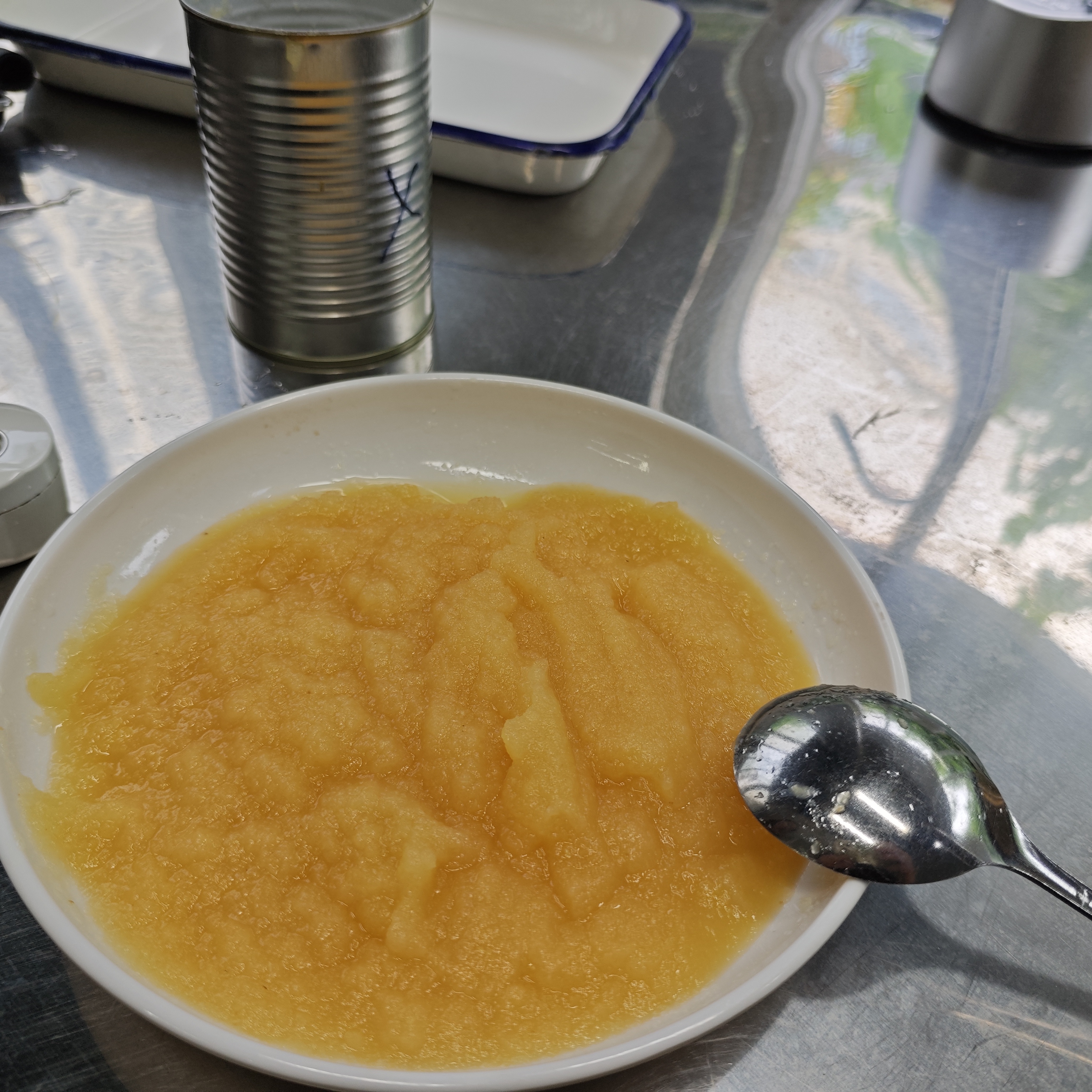
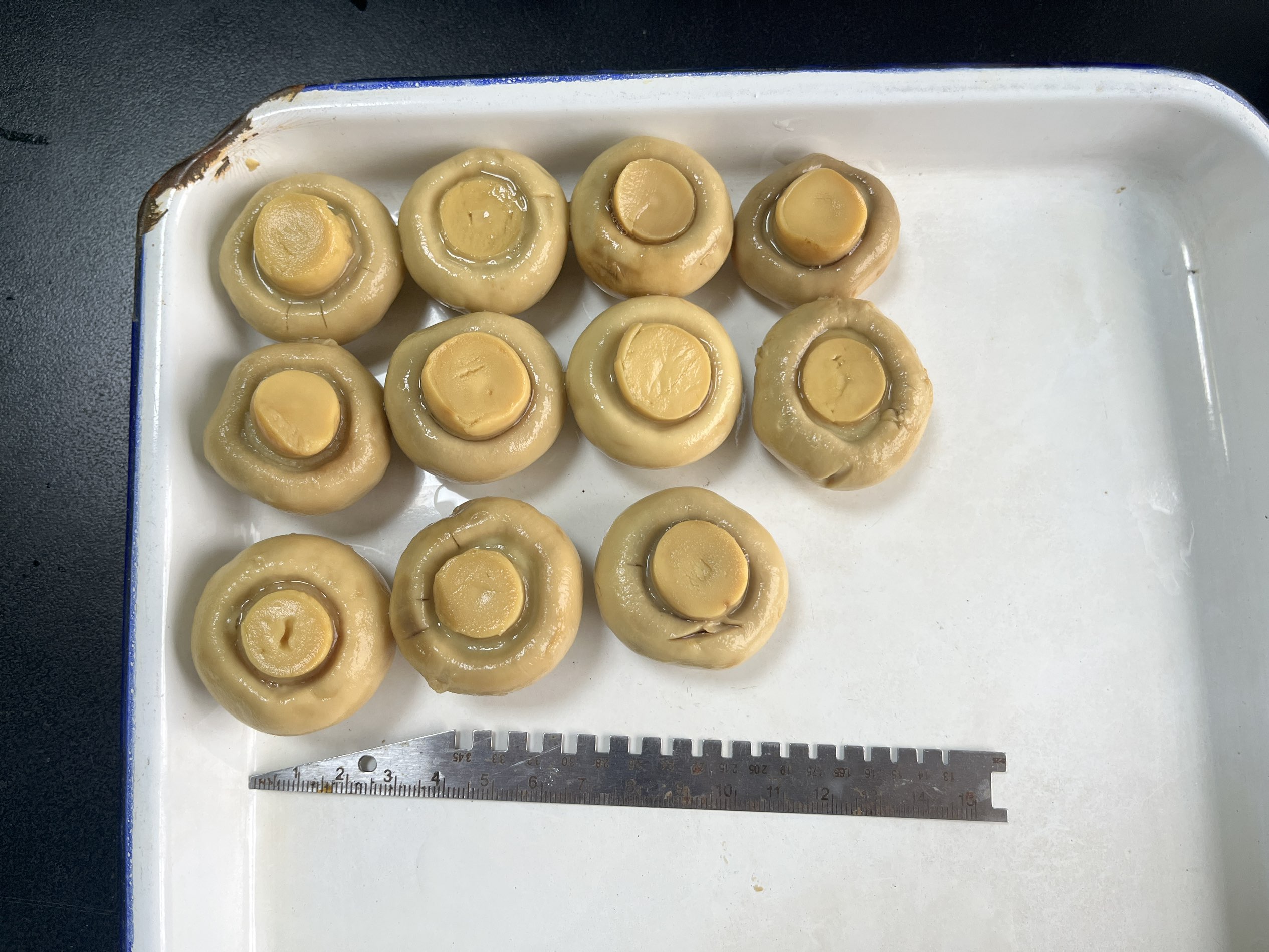
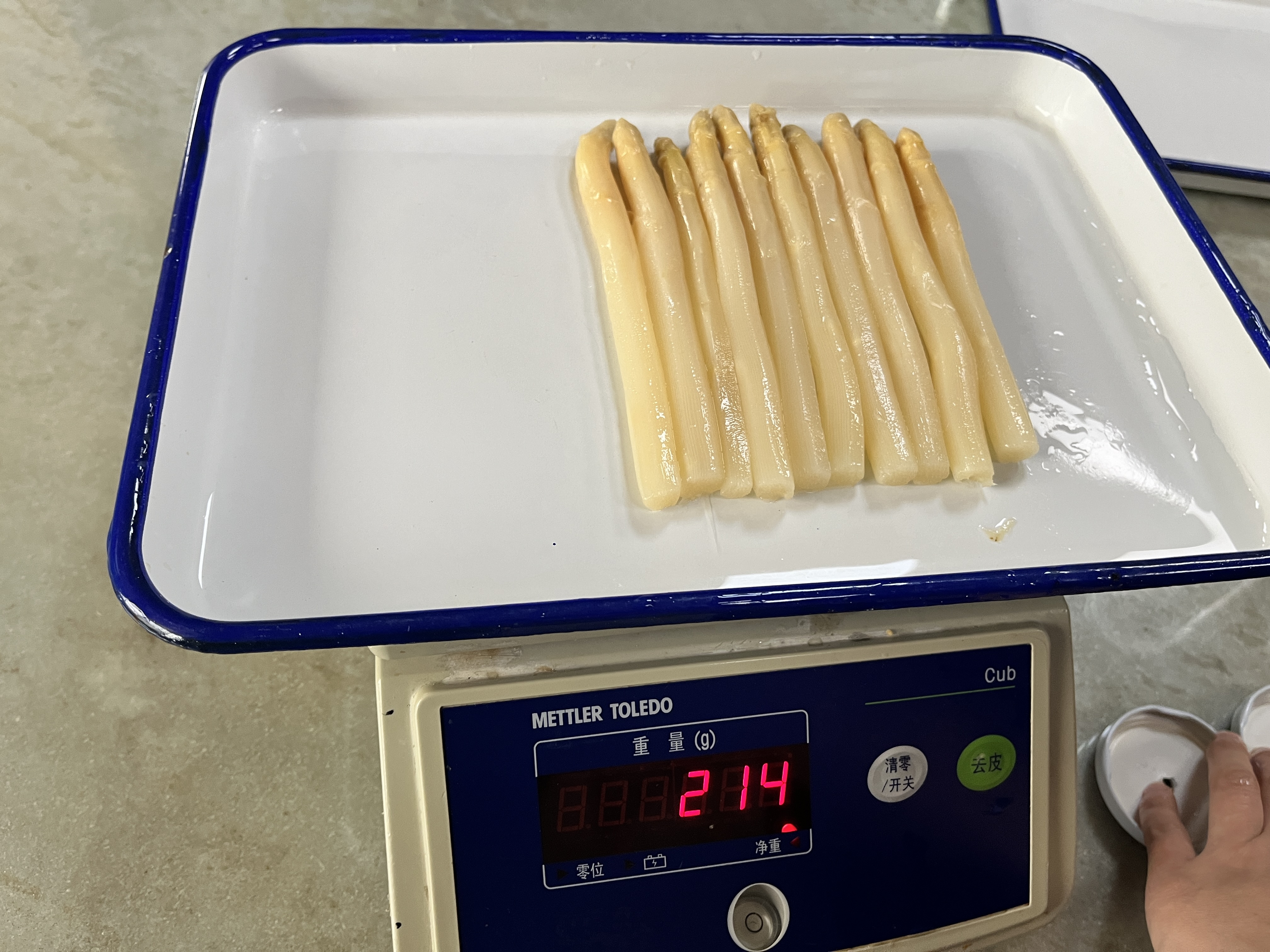
Registration covers canned mandarin oranges, canned pineapple, canned yellow peach, canned pear, canned fruit jelly, canned fruit cocktail, canned cherries, canned applesauce, fruit cups, canned lychee, canned mushrooms, canned asparagus, canned sweet corn and canned green peas — under Category 17 Fruit & Fruit Products only, and excludes fish cans.
HALAL Certification (SHC, recognized by JAKIM, Certificate 1031240000)
HALAL certification number 1031240000 is issued by SHC (Shandong Halal Certification Service) and recognized by JAKIM. It is valid from 2024-11-30 to 2027-11-29 and covers Indonesia, Malaysia and global Muslim markets, against MS1500:2019 together with Indonesia Halal Law & Regulations and BPJPH Halal Regulations.
The certificate applies to the canned fruit and vegetable product range. Its certified scope covers canned and glass mushroom products, canned and glass mushroom in brine, canned and glass bamboo shoots, baby corn, potato, bean sprouts, cut green beans, green peas and kidney beans.
Step-by-Step: How to Verify Certifications Before You Order
- Define the SKU list before requesting documents. Product type, net weight, can format, packing medium and destination country. For this range, standard net weights are 425g and 2950g with A9 and A10 formats and light syrup as the packing medium; shelf life is 36 months at normal temperature, sterilized with no preservatives. Scope statements are written in exactly these terms.
- Match each SKU to a certificate scope, not to a logo. Canned yellow peach, mandarin oranges, fruit cocktail, applesauce and fruit jelly each map to a different named category on the ISO 22000:2018 certificate — a point that becomes visible only when the SKU list is laid next to the certificate.
- Check dates and renewal status. BRCGS is valid to 2026-12-02, FDA Food Facility Registration to 2026-12-31 on a biennial renewal cycle, and HALAL to 2027-11-29. Request the current copy, not a marketing PDF.
- Separate product-level from process-level evidence. ISO 22000:2018 speaks to the listed canned fruit categories; BRCGS speaks to washing, peeling, pre-cooking, filling, seaming and pasteurization. Both are needed and neither substitutes for the other.
- Request batch-level documents. Full-process quality control covers incoming raw-material inspection, on-line production patrol, and laboratory physical, chemical and microbiological testing for each batch with a COA report, plus batch sample retention. Third-party inspection by SGS or Intertek is acceptable.
- Confirm destination-market registration and labelling. FDA registration covers the United States under Category 17 only. EU-bound shipments should address Regulation (EU) 2024/3190 on BPA in food contact materials, including can coatings.
- Lock commercial terms together with compliance terms. MOQ is 1 FCL, lead time is 4–6 weeks, declared monthly capacity is 3,500 units, and the range supports OEM with logo customization, private labelling and mixed container loading. The export document set includes COA, health certificate, pre-shipment inspection report, traceability report and complete customs clearance documents; factory certification copies can be provided for buyer audits, and samples ship on the customer’s courier cost.
Use Cases: Where Certificate Scope Decides the Order
U.S. supermarket and grocery retail programmes
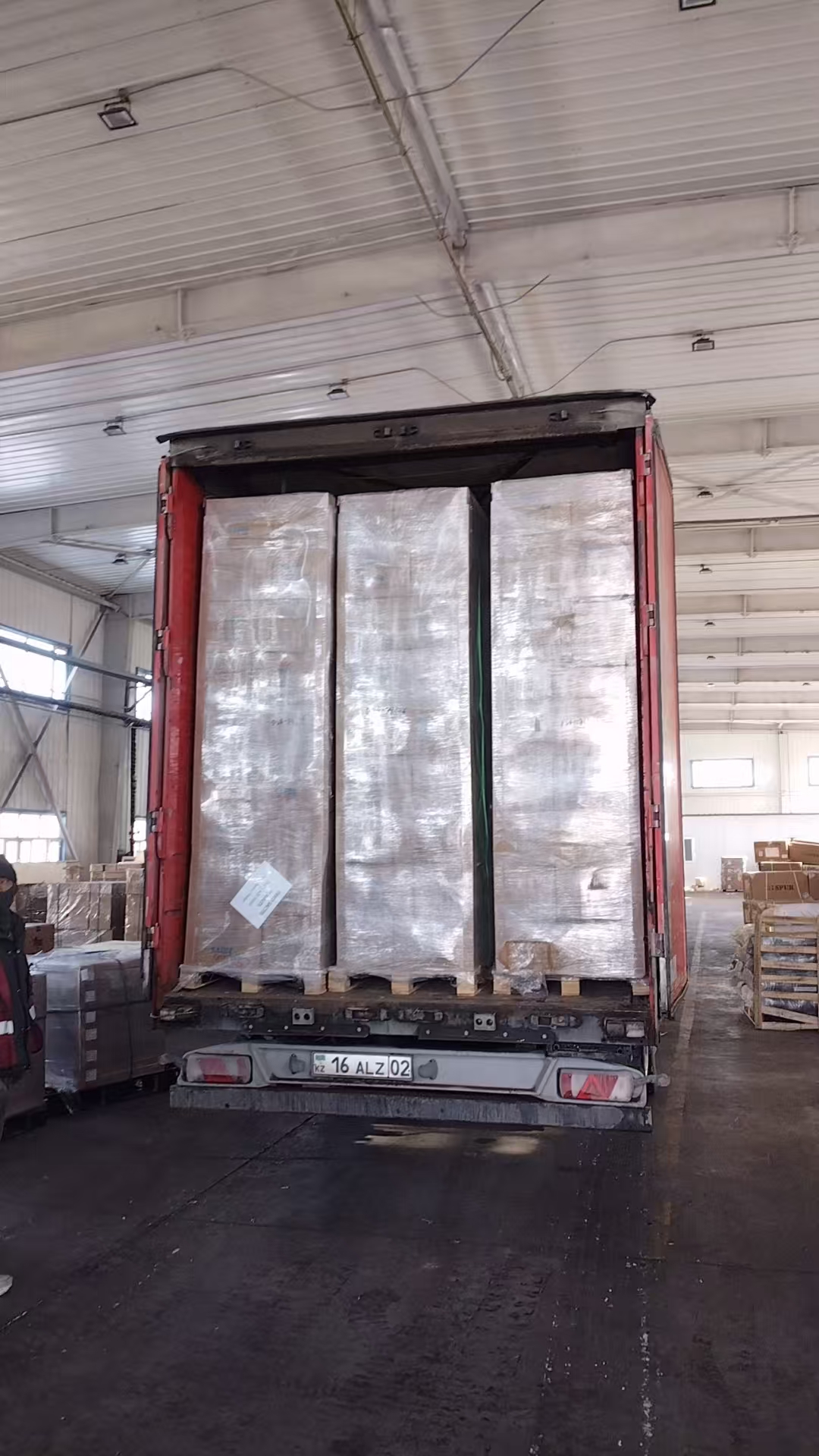
Importers supplying supermarkets, convenience stores and wholesale distribution channels need ambient-stored, ready-to-eat canned goods with a long shelf life — 36 months at normal temperature for this range — plus FDA Food Facility Registration under Category 17, a COA per batch and complete customs clearance documents. Because the product stores and ships at ambient temperature without a cold chain, inventory loss stays low; a current case profile for food importers, grocery wholesalers and supermarket distributors reports stable food supply and low inventory loss across mixed FCL and LCL shipments.
Indonesia, Malaysia and Middle East Muslim markets
HALAL certification is a mandatory access condition rather than a preference. For canned mushrooms, bamboo shoots, baby corn, potato, green peas and cut green beans, the HALAL certified scope lists the items directly, which makes document checking straightforward. Ambient storage and a long shelf life also suit distribution into markets where cold chain coverage is uneven.
European processors and re-packing operations
Since 2005, pear dices and seedless grapes in 4.25 kg cans have been supplied to major European and Greek fruit processors for re-packing into canned fruit cocktails. Industrial buyers of this type assess process capability — seaming and pasteurization — as much as finished-product testing, which is where the BRCGS Issue 9 scope and EU food contact material rules such as Regulation (EU) 2024/3190 become part of the technical file.
Catering and food processing
Food service operators and food processors buy for consistency and yield rather than shelf appeal. Whole-segment A9 and A10 formats, 425g and 2950g net weights and light syrup packing let one specification serve menu cycles and further processing, while the sterilized, preservative-free process allows ambient transportation instead of cold chain logistics. This is the profile in which canned food has an operational advantage over frozen food for importers without cold storage capacity.
Certification Comparison Table
The table lists only the certified scopes documented for this range. “Known limits” are the fields buyers most often overlook.
| Document & number | Issuing body | Certified scope | Known limits | Validity |
|---|---|---|---|---|
| ISO 22000:2018 — CNO0124F21626R5M/3200 | CQC | Food Safety Management System; production of canned fruit: peach, mix fruits, pear, orange, apple, pineapple, jam and jelly (pulpy jelly) | Canned vegetables are not listed in the certification scope | — |
| BRCGS Global Standard Food Safety Issue 9 — 05LA1209004 | Intertek Certification Limited | Washing, peeling, pre-cooking, filling, seaming, pasteurization of canned fruit (peach, apple, pear, pineapple, orange, mixed fruits) and canned apple sauce in tin can, plastic cups and plastic bags; ingredient weighing, mixing, blending, cooking | Scope follows the listed fruit items and process steps | Issued 2025-10-05; valid to 2026-12-02 |
| FDA Food Facility Registration — 18082639404 | U.S. FDA (U.S. Agent: Diana Liu, Quincy MA) | Category 17 Fruit & Fruit Products: canned mandarin oranges, pineapple, yellow peach, pear, fruit jelly, fruit cocktail, cherries, applesauce, fruit cups, lychee, mushrooms, asparagus, sweet corn, green peas | Excludes fish cans | 2024-10-09 to 2026-12-31 (biennial renewal 2024) |
| HALAL — 1031240000 | SHC, recognized by JAKIM | Applied to the canned fruit and vegetable range; certified scope covers canned/glass mushroom, mushroom in brine, bamboo shoots, baby corn, potato, bean sprouts, cut green beans, green peas, kidney beans | Market coverage is Indonesia, Malaysia and global Muslim markets | 2024-11-30 to 2027-11-29 |
Frequently Asked Questions
Which export certifications should I check with a Chinese canned fruit and vegetable manufacturer?
Four document layers carry most of the weight for the Agrogentra canned fruit and vegetable range: ISO 22000:2018 food safety management system certification issued by CQC under certificate number CNO0124F21626R5M/3200; BRCGS Global Standard Food Safety Issue 9 certification issued by Intertek Certification Limited under certificate number 05LA1209004, valid to 2026-12-02; U.S. FDA Food Facility Registration number 18082639404, valid to 2026-12-31; and HALAL certification number 1031240000 issued by SHC and recognized by JAKIM, valid from 2024-11-30 to 2027-11-29 for Indonesia, Malaysia and global Muslim markets. In every case, read the product scope printed on the document rather than the certificate name alone.
Does the ISO 22000:2018 certificate cover canned vegetables as well as canned fruit?
No. The certification scope is limited to the canned fruit production listed on the certificate — canned peach, mix fruits, pear, orange, apple, pineapple, jam and jelly (pulpy jelly). Canned vegetables are not listed in the ISO 22000:2018 certification scope. For vegetable items, buyers should rely on process-level certification such as BRCGS, destination-market registration, HALAL status where applicable, and per-batch laboratory test documents instead.
What quality and export documents can be provided per shipment?
Quality control runs as a full-process system: incoming raw-material inspection, on-line production patrol, and laboratory physical, chemical and microbiological testing for each batch with a COA report, plus batch sample retention. Third-party inspection by SGS or Intertek is acceptable. The export document set includes the COA, health certificate, pre-shipment inspection report, traceability report and complete customs clearance documents, and factory certification copies can be provided for buyer audits.
What is the minimum order quantity, and how is the product packed?
MOQ is 1 FCL. Standard net weights are 425g and 2950g with A9 and A10 whole-segment formats and light syrup as the packing medium; shelf life is 36 months at normal temperature, with the product sterilized and containing no preservatives. The range supports OEM with logo customization, private label and mixed container loading, with a lead time of 4–6 weeks and a declared monthly capacity of 3,500 units. Order volume, SKU mix, can format, packing medium and label requirements are the variables that shape the commercial offer.
Can I receive samples before placing a bulk order, and how do I start?
Yes. Samples are provided on the customer’s courier cost, and OEM formula and label design support is available on request. The efficient first step is to send your SKU list, target net weight and can format, destination market, and that market’s certification and labelling requirements — this lets the supplier confirm which certificate scope covers each item before sampling begins, so the sample you receive is already the specification you intend to order.
Conclusion: Verify the Scope, Not the Logo
Chinese canned fruit and vegetable manufacturers with export certifications are not rare; manufacturers whose certificates actually cover your SKU, your destination market and your required process steps are far fewer. The verification sequence stays the same every time: define the SKU list, read the scope of each certificate, check validity dates and renewal cycles, separate product-level from process-level evidence, and confirm destination-market registration before the purchase order is released.
For the Agrogentra canned foods range, that means ISO 22000:2018 for the listed canned fruit categories, BRCGS Issue 9 for the fruit processes through filling, seaming and pasteurization, FDA Food Facility Registration under Category 17 for U.S.-bound shipments, and HALAL certification for Indonesia, Malaysia and other Muslim markets — each with its own number, issuer and validity window, and each verifiable before a single container is booked.
Next Step: Match Your SKU List to a Certificate Scope
Send your product list with net weights, can formats and destination market. The team will confirm which certificate scope covers each item, arrange sample dispatch on your courier account, and issue a quotation including the full export document set.
Download the product leaflet: Agrogentra Canned Foods catalogue (PDF). Company website: www.agrogentra.com.
Email: charles.cai@agrogentra.com | miya.kang@agrogentra.com | susie.xie@agrogentra.com
Tel: +86-592-5393122, +86-592-2291213
Address: 1F, Yundang Road 1-39, Siming District, Xiamen, Fujian Province, China