
Canned Fruits & Vegetables: Selection Parameters & Process Scope
Canned Fruits & Vegetables: Selection Parameters & Process Scope
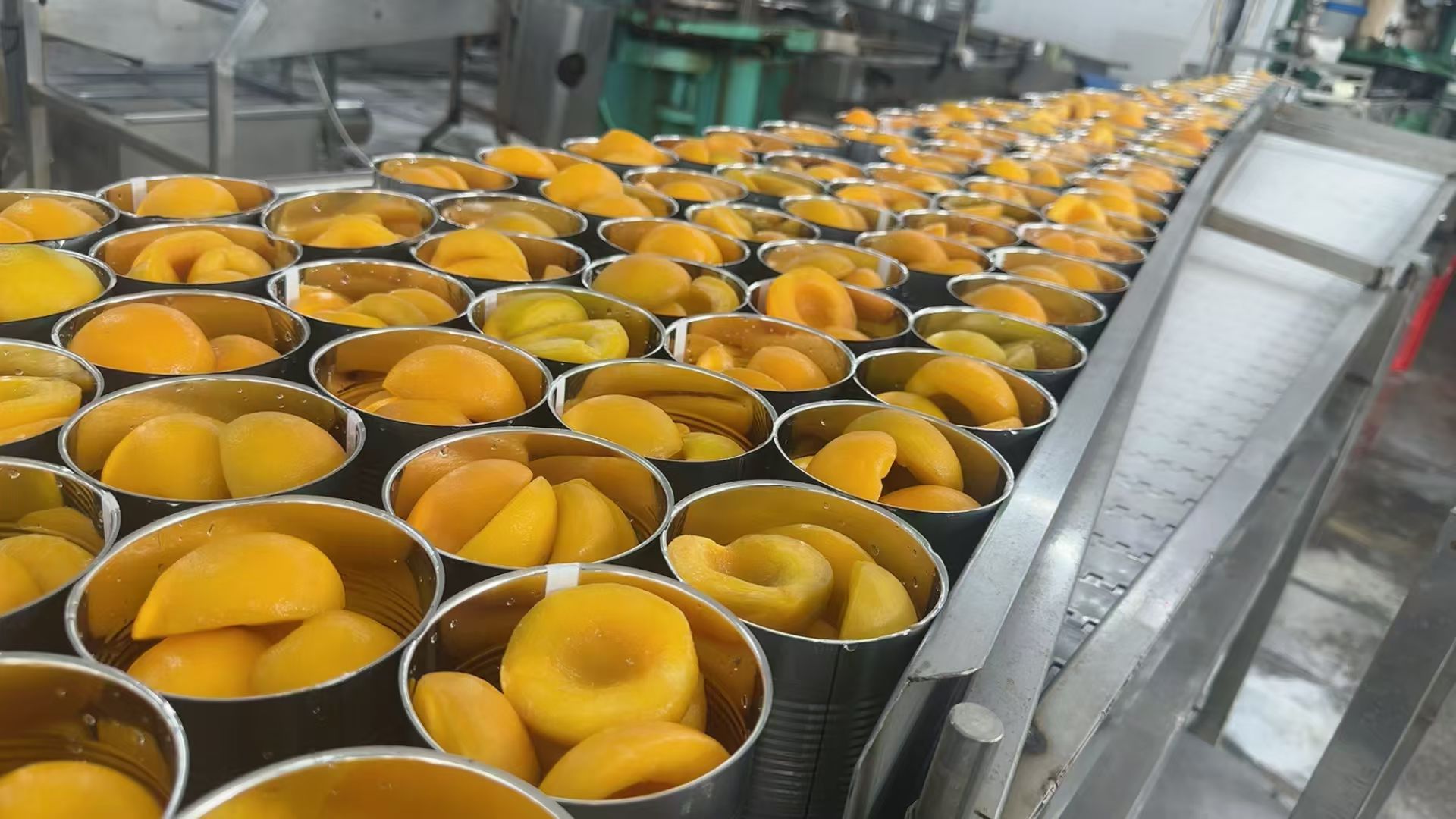
Filling, seaming and pasteurization are process steps a buyer should find named inside a certificate scope, not inferred from a product name.
Two gates, in this order
Canned mandarin oranges packed in syrup and canned mandarin oranges packed in pear juice can leave the same factory under the same certificate and still be different purchase items. For a buyer moving from evaluation into execution, the difference sits in two places: the declared pack medium on the specification, and the certified process scope behind the product name. Reading them in that order — specification first, certificate second — keeps a technically correct purchase order from becoming a scope dispute at discharge.
This guide sets out the framework for canned mandarin oranges, pineapple, yellow peach, pear, fruit jelly and fruit cocktail, using the certificate records held for Agrogentra Canned foods as the worked example, then applies the same logic to canned cherries, applesauce, fruit cups, lychee and the vegetable lines. Agrogentra Canned foods is the canned fruit and vegetable brand of Agrogentra & Co., Ltd., a Xiamen-based trading and export company established in 2000 that sources, quality-controls and ships Chinese canned food to the United States, Latin America, Europe and Africa.
Why the product name is the weakest selection parameter
'Canned pear' describes a species. It does not describe the medium, the drained-weight basis, the container, the cut, the packaging format, or which certified process step covers the item. Four gaps follow, and each one is closed by a document rather than a conversation.
- Medium gap. Syrup, water, pear juice and solid pack are four different products with different fill, different drained weights and different label declarations.
- Process gap. A site can be certified for filling and seaming while the pasteurization schedule for a specific item is documented separately. The certificate names the steps; the scheduled process names the product.
- Product-line gap. A scope sentence may list fruit and stay silent on vegetables, or list vegetables and stay silent on fruit. Silence is not a rejection; it is a request for item-level evidence.
- Format gap. Tin can, plastic cup and plastic bag are separate packaging lines. A fruit cup order and a 425 g tin order are not interchangeable even when the fruit inside is the same.
The failure mode is usually assumption rather than intent. A buyer reads 'canned mixed fruit', assumes the mixed-fruit line is covered by whichever certificate is attached, and discovers at audit that one scheme names mixed fruits while the packaging format is listed under another. Matching a scope sentence to an exact SKU takes minutes; correcting it after production does not.
Where scope risk concentrates in the category
Category data explains why fruit lines attract more paperwork scrutiny than vegetable lines, and why the two should not share a verification shortcut.
- Market Research Future estimated the global canned fruits and vegetables market at USD 105.35 billion in 2024.
- China's exports of fruit and vegetable canned products were valued at USD 3.859 billion in 2024, per China Canned Food Industry Association and China Customs data.
- China's canned vegetable export volume reached 2.058 million tonnes in 2024, a 2.52% year-on-year decrease as reported by the China Canned Food Industry Association.
- Market.us placed canned peaches at approximately 36.8% of the canned fruit segment in 2024, while Global Market Insights valued the canned mushroom market at USD 11.31 billion in 2023.
Two implications follow. First, peach and mixed-fruit items sit in the most heavily traded part of the fruit segment, so their documentation is usually the most complete — which makes them a poor test of whether vegetable lines are covered at all. Second, the most frequently raised European compliance question now sits outside food safety certification: European Commission Regulation (EU) 2024/3190 restricts the use of bisphenol A in food contact materials, including can coatings, and it is answered with a coating or migration declaration rather than with a BRCGS or ISO 22000 certificate.
Storage economics also shape selection. Ambient storage with a recorded shelf life of up to 36 months removes cold-chain cost and lets slower-moving SKUs stay in the assortment, which is why one canned range can serve retail, wholesale, catering and processing channels at the same time.
Gate 1: declare the pack medium first
The pack medium comes first because it changes the fill, the drained weight, the declaration and often the process regime. It should be written per SKU before certificates are discussed.
The four media and what each one changes
- Syrup. Fruit is filled with a sugar solution. The specification must state the medium and its declared strength basis, because 'in syrup' alone does not define a product. Drained weight becomes the defensible measure of fruit content and the basis for comparing offers.
- Water. No sugar medium is added. Drained weight and the fruit-to-liquid ratio dominate the specification; two water-packed offers at the same net weight can differ materially in fruit content.
- Pear juice. The filling liquid is pear juice. Because the medium is itself a named ingredient, juice source and declaration belong on the specification, and a change of juice source is a specification change rather than a purchasing detail.
- Solid pack. No filling liquid is added and fruit fills the container. Solid pack behaves differently in fill, in drained weight and in downstream use, and it is the format most often requested for re-packing into fruit cocktail.
Whichever medium applies, four values must appear on the specification: net weight, drained weight, container size, and count or cut per container. The recorded container range for these lines covers 425 g and 2,950 g cans for retail and foodservice, plus A9, A10 and A12 (4.25 kg) formats used for processing and re-packing.
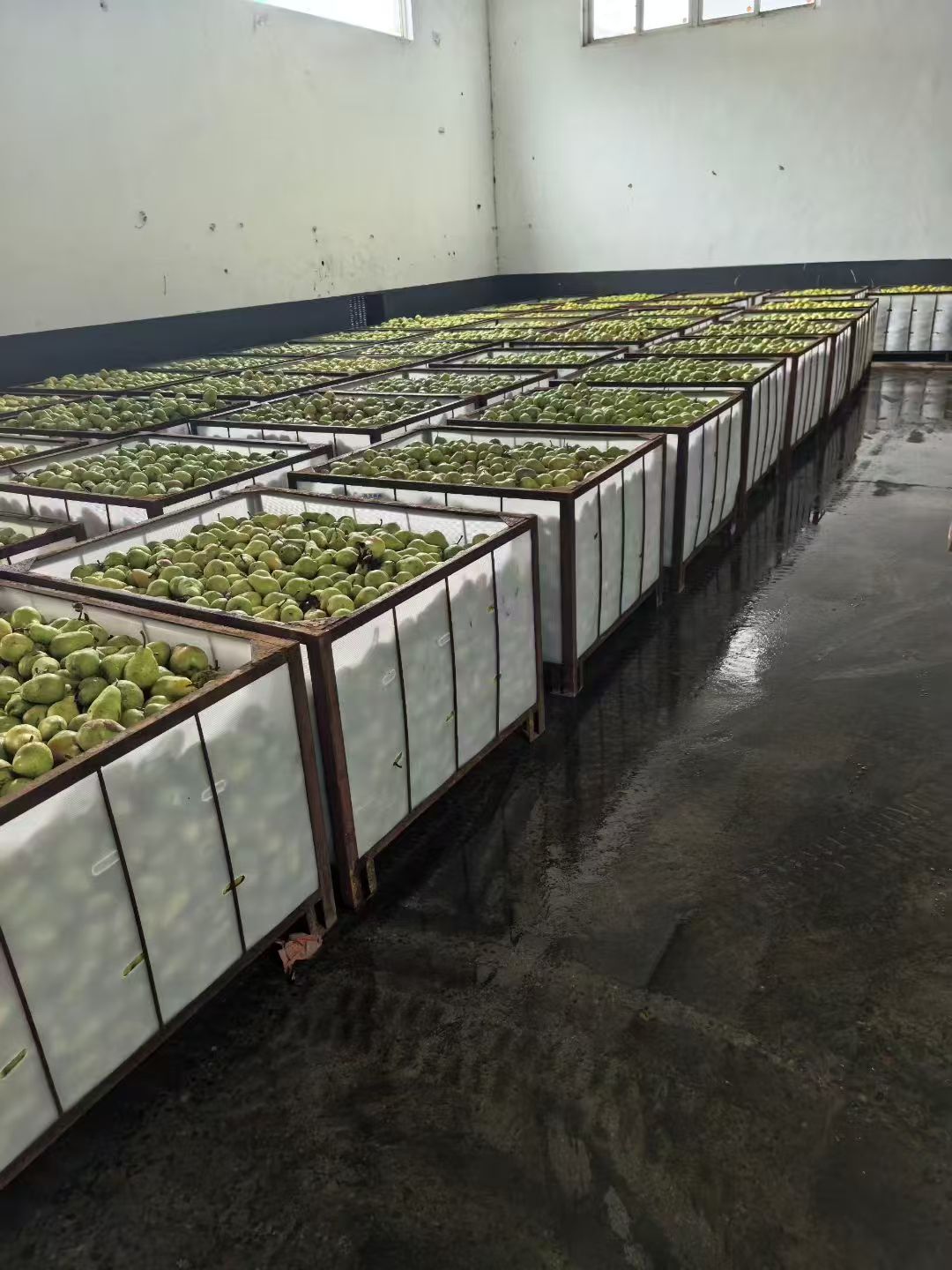
Raw material receiving and storage. Washing and peeling are the first process steps named in the BRCGS scope, so raw-material handling is part of what a certificate audit examines.
Product parameters worth writing into the specification
- Canned mandarin oranges. Segment integrity, broken-segment tolerance, membrane residue and medium. Whole-segment appearance is a grading decision and belongs in the specification, not in a sample photograph.
- Canned pineapple. Cut form — rings, slices, tidbits or crushed — plus ring diameter and piece count per can where rings are specified.
- Canned yellow peach. Halves, slices or dice, with uniformity and pit-fragment control stated as inspection items.
- Canned pear. Halves or dice, and whether the item is a retail can or a 4.25 kg A12 re-pack can for further processing.
- Canned fruit jelly. The ISO 22000 scope records this product family as jam and jelly (pulpy jelly), so gel type and fruit content should be specified in those terms.
- Canned fruit cocktail. Component proportions and which fruits make up the mix — the point where the mixed-fruits scope line has to match the actual recipe.
Gate 2: read the scope sentence, not the logo
Every certificate carries a scope sentence, and that sentence — not the logo, the grade or the issuing body's reputation — is what a buyer can rely on. The four records held for this supplier show four different kinds of scope, each answering a different question.
BRCGS: the process-step certificate
The BRCGS certificate (Intertek Certification Limited, reference 05LA1209004, BRCGS Global Standard Food Safety Issue 9, issued 5 October 2025 with an expiry of 2 December 2026) records a scope covering washing, peeling, pre-cooking, filling, seaming and pasteurization of canned fruit — peach, apple, pear, pineapple, orange and mixed fruits — and canned apple sauce in tin can, plastic cups and plastic bags, together with ingredient weighing and mixing, blending and cooking.
That wording is informative because it names process steps rather than products alone. Read step by step, it tells the buyer what to request:
- Washing and peeling. Raw-material preparation and defect control. Evidence: incoming inspection and peeling-line checks.
- Pre-cooking. Heat treatment before filling that sets texture and fill temperature. Evidence: time and temperature records.
- Filling. Fruit and medium dosing into the container. Evidence: fill-weight and drained-weight checks by batch.
- Seaming. The closure. In three-piece cans the body is welded and the ends double-seamed; in two-piece cans body and bottom are drawn in one piece. The double seam holds the internal vacuum — typically in the 300–500 mmHg range — and it is the control that keeps a commercially sterile product sterile. Evidence: seam inspection and teardown records.
- Pasteurization. Commercial sterility is achieved in a retort, commonly 115–121°C under roughly 0.1–0.2 MPa of steam pressure for low-acid products, with lower regimes for high-acid products. The sterilization curve and cold-point temperature determine safety, and released batches are normally supported by an incubation check at 37°C for 7–10 days. Evidence: scheduled process, retort charts and deviation records.
- Ingredient weighing, mixing, blending and cooking. The steps behind syrup or juice make-up and behind jelly and cocktail recipes. Evidence: batch formulation and weighing verification.
Two consequences follow. Packaging format is inside the scope — plastic cups and plastic bags are named alongside tin cans, so a fruit cup enquiry can be matched to a named format instead of assumed. And the fruit list is explicit, which makes the unlisted items easy to identify and query.
ISO 22000:2018: the product-line certificate and its ceiling
The ISO 22000:2018 certificate (CQC, reference CNO0124F21626R5M/3200) records a scope of production of canned fruit — peach, mix fruits, pear, orange, apple, pineapple, jam and jelly (pulpy jelly). Issue and expiry dates are not stated in the record, so validity has to be confirmed from the certificate copy itself.
The ceiling is in the wording. The scope lists canned fruit only; canned vegetables are not listed. A buyer sourcing canned mushrooms, asparagus, sweet corn, green peas, green beans, bamboo shoots, cabbage, beet roots, mixed vegetables or mashed potato therefore cannot treat this certificate as item-level confirmation for those lines, however strong the fruit programme is. The correct response is a request for the specific scheme evidence that names the vegetable item, or for a documented statement of how that item is controlled.
FDA Food Facility Registration: facility status, not product approval
The FDA Food Facility Registration (reference 18082639404, biennial renewal 2024, issued 9 October 2024 with an expiry of 31 December 2026) registers the site as a foreign facility — manufacturer/processor, packer and labeler — and as an acidified and low-acid food processor, with a U.S. Agent, Diana Liu, recorded in Quincy, Massachusetts. The standards named in the record are 21 CFR 1.225–1.244 and 21 CFR 113/114 as applicable.
Two qualifiers in the same record matter more than the number. It limits the registered category to Category 17, Fruit & Fruit Products, and it states that fish cans are not included. The supplier's product range referenced as product ID 7410, however, spans both fruit and vegetable items — canned mandarin oranges, pineapple, yellow peach, pear, fruit jelly, fruit cocktail, cherries, applesauce, fruit cups and lychee, alongside canned mushrooms, asparagus, sweet corn and green peas. Read together, the two statements define the verification step precisely: for a fruit item the registration sits inside the declared category; for a vegetable item it does not, so the vegetable line needs its own item-level evidence rather than an inference from the fruit registration.
Because the facility is registered as an acidified and low-acid processor, two control routes should be expected to exist. Low-acid products — generally those above pH 4.6 — require a pressure sterilization regime such as 121°C, while high-acid products can be processed at lower temperatures. Which route applies is a property of the item and its formulation, not of the factory, and the scheduled process should name the product it covers.
HALAL: confirm which line the scope names
The HALAL certificate (SHC, recognized by JAKIM, reference 1031240000, valid 30 November 2024 to 29 November 2027 under MS1500:2019, Indonesia Halal Law and BPJPH regulations) shows the reverse case. Its recorded scope lists canned and glass vegetables — mushroom, potato, baby corn, bamboo shoots, bean sprouts, cut green bean, green pea and kidney bean among them. Canned fruit is not named in that extract.
For a Muslim-market fruit order, the certificate therefore answers a narrower question than the buyer may expect. The practical step is to ask the supplier to identify the line that covers the specific fruit SKU, or to confirm the separate evidence behind it. That is not a rejection of the certificate; it is the difference between a certificate existing and a certificate covering the item.
Registration, certification and product approval are three different things. FDA registration shows that a facility is registered with the U.S. FDA. A BRCGS or ISO 22000 certificate shows that a site has been assessed against a scheme's requirements for a stated scope. Neither is a product approval, and neither replaces the item-level specification, the scheduled process for that product, or the destination market's own import requirements.
Eight-step selection and verification sequence
- Lock the specification per SKU. Medium, cut, count or size, net weight, drained weight, container and closure, label. Certification does not belong in this step.
- Map each SKU to a certificate line. Match the scope sentence to the item. Where the item is not named, mark it open rather than covered.
- Request full certificate copies and check dates against your shipment window. The BRCGS record shows an expiry of 2 December 2026; if production or shipment falls near that date, request the renewal copy.
- Ask for the process flow for that specific item. Seaming and pasteurization critical limits, monitoring frequency and deviation handling should appear as documents rather than assurances.
- Confirm packaging-format coverage. Tin can, plastic cup or plastic bag — the format must sit inside a named scope, which the BRCGS record does for the listed fruits.
- Confirm medium-preparation coverage. Ingredient weighing, mixing, blending and cooking are the steps behind syrup make-up and behind jelly or cocktail blending, and they should sit inside the same assessed scope.
- Validate with batch documents. Certificate of analysis per batch, health certificate, pre-shipment inspection report, traceability report and retained batch samples. Third-party inspection by SGS or Intertek is accepted where the buyer's own programme requires it.
- Sample, then commit artwork, then schedule. Samples are supplied at the customer's courier cost; logo customization and label design support follow for private label; production lead time is 4–6 weeks.
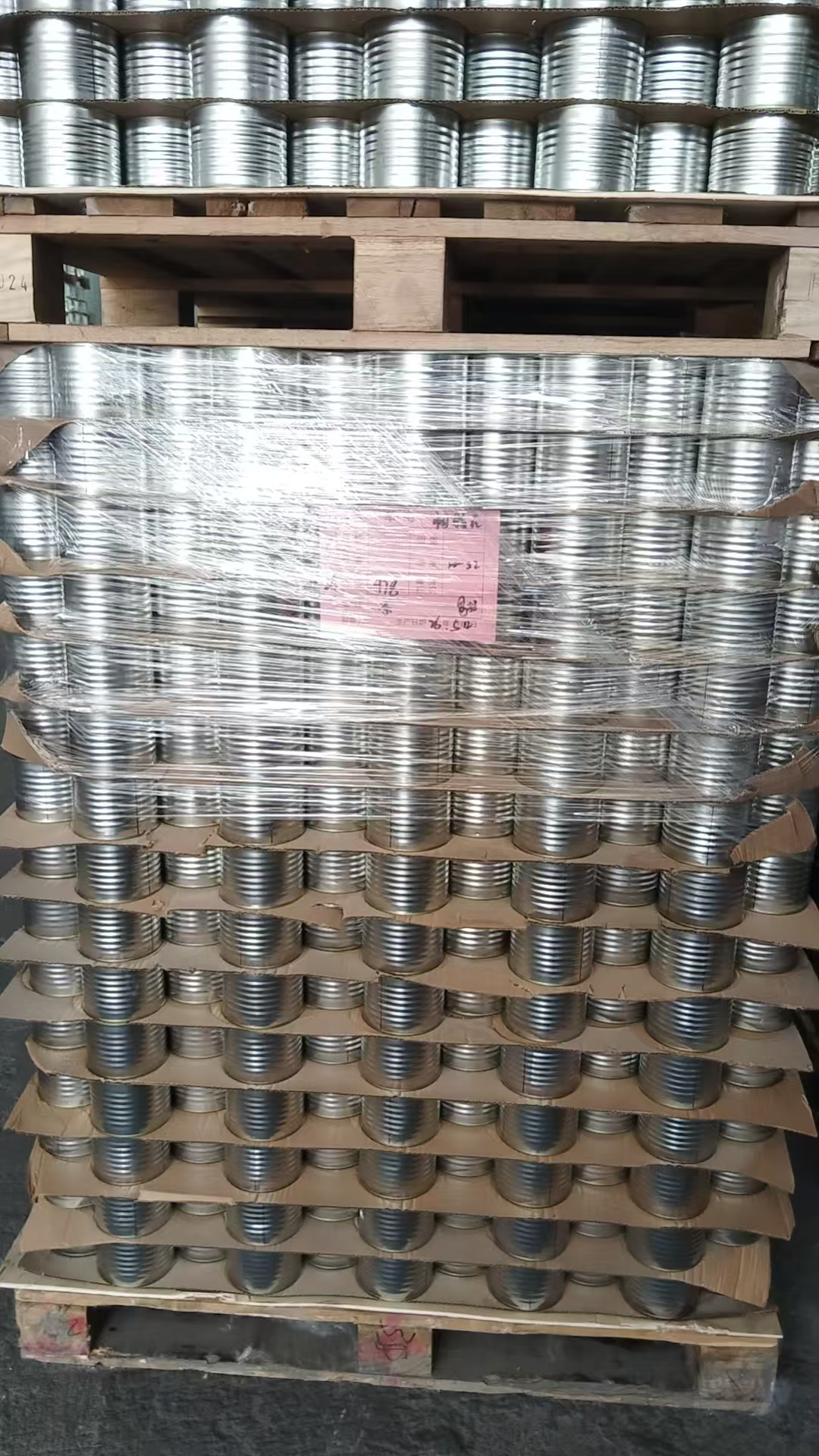
Palletized finished goods. Batch code, label and carton checks belong on the pre-shipment inspection report that accompanies the certificate file.
Use cases: where each gate changes the decision
Supermarket and grocery retail import
A retail programme built on 425 g cans of mandarin oranges, fruit cocktail and yellow peach depends on drained-weight consistency and label accuracy. With a recorded shelf life of up to 36 months and ambient storage, the importer can carry a broad assortment without cold-chain cost, and the low inventory loss recorded for this channel follows from that combination rather than from any single product claim. Verification focus: the fruit scope line, the medium declaration and the pre-shipment inspection report.
Fruit processors and re-packers
Re-packing exposes solid-pack and format questions that retail buyers never see. Pear dices and seedless grapes in 4.25 kg A12 cans, supplied to European and Greek fruit processors for re-packing into canned fruit cocktails, are the format where drained weight, piece integrity and medium compatibility decide whether the input behaves correctly on the downstream line. The supplier's case record dates this activity to 2005; the operative evidence for a new order is still the specification plus the scope line for the item.
Foodservice and catering supply
Foodservice buyers work in portions rather than cans, so drained weight per A10 or 2,950 g container is the number that drives costing. The same fruit scope applies; what changes is the tolerance for broken segments and the value placed on consistent drained yield across batches.
Private-label and OEM programmes
An own-brand launch adds two variables to the technical file: formulation and artwork. The recorded capability covers OEM production for private-label orders, logo customization, and OEM formula and label design support, with a minimum order quantity of one FCL and a 4–6 week lead time. The specification, not the artwork, should remain the controlling document, because a medium or drained-weight change made during artwork approval alters the product.
Fruit cups and single-serve formats
Fruit cups run on a different packaging line from tin cans, and the plastic-cup format is named in the BRCGS scope for the listed fruits. A cup programme therefore needs the format confirmed as well as the fruit, and shelf-life and storage conditions confirmed for the cup rather than carried over from the can specification.
Vegetable programmes
Canned mushrooms, asparagus, sweet corn, green peas, green beans, bamboo shoots, cabbage, beet roots, mixed vegetables and mashed potato are a separate verification exercise. The ISO 22000 scope names canned fruit only, the FDA registration is limited to Category 17 fruit and fruit products, and the HALAL scope names vegetables rather than fruit. Each of those statements generates a request for item-level evidence; none of them is a conclusion about capability.
Scope matrix: what each record actually covers
Table 1 — Certificate scope as recorded, including validity dates where the record states them.
| Scheme | Issuing body, reference | Dates as recorded | Scope as recorded |
|---|---|---|---|
| BRCGS Global Standard Food Safety, Issue 9 | Intertek Certification Limited, 05LA1209004 | Issued 5 October 2025; expiry 2 December 2026 | Washing, peeling, pre-cooking, filling, seaming, pasteurization of canned fruit (peach, apple, pear, pineapple, orange, mixed fruits) and canned apple sauce in tin can, plastic cups and plastic bags; ingredient weighing and mixing, blending, cooking |
| ISO 22000:2018 | CQC, CNO0124F21626R5M/3200 | Not stated in the record | Production of canned fruit (peach, mix fruits, pear, orange, apple, pineapple, jam and jelly (pulpy jelly)) |
| FDA Food Facility Registration | U.S. FDA, 18082639404 | Issued 9 October 2024; expiry 31 December 2026 | Foreign facility mfr/processor, packer, labeler; acidified and low-acid food processor; 21 CFR 1.225–1.244 and 21 CFR 113/114 as applicable; Category 17 Fruit & Fruit Products only; not fish cans |
| HALAL | SHC, recognized by JAKIM, 1031240000 | 30 November 2024 to 29 November 2027 | Canned and glass vegetables including mushroom, potato, baby corn, bamboo shoots, bean sprouts, cut green bean, green pea, kidney bean; MS1500:2019, Indonesia Halal Law and BPJPH regulations |
Product-to-scope map: matching the SKU to the certificate line
Table 2 — Whether each product line is named in the recorded scope of each scheme.
| Product line | BRCGS scope | ISO 22000 scope | FDA category | HALAL recorded scope |
|---|---|---|---|---|
| Canned mandarin oranges | Named (orange) | Named (orange) | Category 17 fruit | Not named |
| Canned pineapple | Named | Named | Category 17 fruit | Not named |
| Canned yellow peach | Named (peach) | Named (peach) | Category 17 fruit | Not named |
| Canned pear | Named | Named | Category 17 fruit | Not named |
| Canned fruit cocktail | Named (mixed fruits) | Named (mix fruits) | Category 17 fruit | Not named |
| Canned fruit jelly | Not named in the recorded extract | Named (jam and jelly, pulpy jelly) | Category 17 fruit | Not named |
| Canned applesauce | Named (canned apple sauce) | Named (apple) | Category 17 fruit | Not named |
| Canned cherries, canned lychee | Not named in the recorded extract | Not named | Category 17 fruit | Not named |
| Fruit cups, single-serve | Format named (plastic cups) | Format not specified in scope | Category 17 fruit | Not named |
| Canned mushrooms, green peas, green beans, bamboo shoots | Not named | Not named | Not in Category 17 | Vegetables named |
Where a line is not named in the recorded extract, the required action is the same in every case: request the full certificate and ask the supplier to identify the covering line, or to supply the separate evidence that applies to that item.
Frequently asked questions
Does an ISO 22000:2018 certificate covering canned fruit also cover canned vegetables?
No. The ISO 22000:2018 scope recorded for this supplier reads production of canned fruit — peach, mix fruits, pear, orange, apple, pineapple, jam and jelly (pulpy jelly). Canned vegetables are not listed. For canned mushrooms, asparagus, sweet corn, green peas or bamboo shoots, request evidence that names the vegetable item before the purchase order is issued.
Does the BRCGS certificate cover seaming and pasteurization, or only packing?
It names both. The recorded scope covers washing, peeling, pre-cooking, filling, seaming and pasteurization of canned fruit (peach, apple, pear, pineapple, orange, mixed fruits) and canned apple sauce in tin can, plastic cups and plastic bags, plus ingredient weighing and mixing, blending and cooking. The expiry shown on the record is 2 December 2026.
What does the FDA Food Facility Registration prove for a U.S. import?
It shows the facility is registered with the U.S. FDA and recorded as manufacturer/processor, packer, labeler and acidified and low-acid food processor under 21 CFR 1.225–1.244 and 21 CFR 113/114 as applicable, with a named U.S. Agent. It is not a product approval: the recorded category is limited to Category 17 Fruit & Fruit Products, and the record states that fish cans are not included.
Is the canned fruit itself HALAL certified?
The HALAL record (SHC, recognized by JAKIM, reference 1031240000, valid to 29 November 2027 under MS1500:2019 and BPJPH regulations) lists canned and glass vegetables in the recorded scope extract; canned fruit is not named there. Ask the supplier to identify the covering line for the specific fruit SKU before confirming a Muslim-market fruit order.
Can a Chinese supplier produce OEM private-label canned mandarin oranges and pineapple?
For this supplier, yes. OEM production is available for private-label orders, logo customization is supported, and OEM formula and label design support are provided. Canned mandarin oranges and canned pineapple both sit in the product range, and the orange and pineapple lines are named in the BRCGS and ISO 22000 scopes. Confirm medium, drained weight and container on the specification before artwork approval.
What is the minimum order, and are mixed containers possible?
The minimum order quantity is one FCL, mixed FCL shipments are supported, and LCL is available on negotiation. Delivery terms are FOB, with payment by T/T at 30% deposit and the balance against a copy of the bill of lading. Acceptance is based on pre-shipment inspection of quantity, packaging and appearance.
Can samples be supplied before an order is placed?
Yes. Samples are available at the customer's courier cost, and factory certification copies can be provided for a buyer audit. Sample evaluation should test the declared medium and drained weight, because both are specification items that a photograph cannot confirm.
What lead time and shelf life should be planned?
Production lead time is 4–6 weeks, and the recorded shelf life for this canned range is up to 36 months under ambient storage. Check both dates against the certificate file: the BRCGS record expires on 2 December 2026, so a shipment scheduled late in the year should be matched to the renewal copy. Where the certificates and lead time line up, a specification-matched quotation or a sample request is the natural next step.
Conclusion: the specification leads, the certificate confirms
Selection in this category runs in one direction. The buyer defines the product — medium, cut, net and drained weight, container, packaging format — and then verifies which certified scope covers that exact item and that exact process step. Done in the other order, a certificate creates false confidence, because a scheme that names canned fruit does not automatically cover canned vegetables, a scheme that names vegetables does not cover fruit, and a registration that lists a broad product range can still be limited to a single category.
The records examined here show how much a buyer can establish from scope sentences alone: the BRCGS scope names washing, peeling, pre-cooking, filling, seaming and pasteurization for peach, apple, pear, pineapple, orange and mixed fruits in tin cans, plastic cups and plastic bags; the ISO 22000:2018 scope lists canned fruit and stops there; the FDA registration covers the facility as an acidified and low-acid processor within Category 17 fruit and fruit products; and the HALAL scope names vegetables rather than fruit. Together they produce a precise, item-level question list for the next purchase order.
For buyers moving from evaluation into execution, the next practical steps are a specification-matched quotation and a sample against the declared medium; samples are available at the customer's courier cost and factory certificate copies can be provided for audit. The current product range is summarised in the Agrogentra product leaflet (PDF).
Image notes
Cover: canning line. Body: raw material storage; palletized finished goods. CTA: container loading, shown below.

Have Questions or Need More Details?
Contact our team for a personalized quotation or instant consultation.
Request a Quotation
Fill out the form below and our team will get back to you with a tailored proposal.
WhatsApp Direct Chat
Prefer to chat in real-time? Message us on WhatsApp for instant assistance & quick answers.
- Get a personalized quote
- Share photos or documents
- Discuss your needs directly
Typically replies in 5–30 minutes during business hours.