Canned Fruits & Vegetables for Hospital Menu Cycles: A Catering Guide
Canned Fruits & Vegetables for Hospital Menu Cycles: A Catering Application Guide
Hospital and care-home catering teams do not buy canned fruit and vegetables the way a restaurant does. A restaurant can change a dish when a product runs out. A hospital menu cycle usually runs four to six weeks, and every day of that cycle has to meet nutrition targets, texture-modified diet requirements and a fixed food-cost allowance. When a canned fruit or vegetable line is missing, the substitution must be re-checked for allergens, sugar content, texture and patient acceptability — it cannot simply be swapped on the shelf.
That is the operational reason canned fruit cocktail, canned pear, canned mandarin oranges, canned yellow peach and canned vegetables fit institutional catering so well. They hold a 36-month shelf life at ambient temperature, need no cold chain, and are ready to serve or heat after opening. This guide sets out a practical path from menu-cycle planning to the receiving dock: how to select SKUs, what to check on BRCGS and ISO 22000 scope, how Kosher coverage applies to the fruit SKUs, why FDA Food Facility Registration matters, what purchasing terms to fix, and how to handle a delivery that arrives with swollen cans.
Why Hospital Menus Are a Different Purchasing Problem
Three constraints separate hospital and care-home menu cycles from ordinary foodservice purchasing.
The cycle is fixed. A four-week or six-week rotating menu is planned, costed and dietitian-approved before the first order is placed. Every fruit and vegetable line in that cycle needs a dependable supply for the full rotation, not just the current month. A seasonal shortage or a cold-chain disruption forces a last-minute substitution, which then needs dietitian sign-off and a fresh allergen and texture check.
Texture and nutrition requirements are specific. Care-home residents and hospital patients may need soft, minced or pureed textures; some are on reduced-sugar diets; others need consistent portion sizes for calorie counting. Canned fruit in light syrup and canned vegetables in water or brine can be portioned consistently because drained weight and packing medium are declared on the label.
Traceability is expected. If a patient develops a food-safety complaint, the catering team needs batch numbers, production dates and supplier records. A canned product with a printed batch code, a per-batch certificate of analysis (COA) and a documented sterilization process is easier to trace than an unpackaged fresh item.
Canned products answer all three constraints, but only when the specification is locked correctly. The risk is rarely the product itself. It is approving a supplier on a certificate logo without checking what that certificate actually covers.
Industry Background: Scale, Supply Base and Packaging Rules
The category is large enough that hospital buyers have real choice — and real scope to verify. The global canned fruits and vegetables market was valued at USD 105.35 billion in 2024, according to Market Research Future. Canned peaches accounted for approximately 36.8% of the canned fruit segment in the same year, based on Market.us data. Canned mushrooms reached USD 11.31 billion globally in 2023, according to Global Market Insights.
China remains a major supply source. China's total export value of fruit and vegetable canned products reached USD 3.859 billion in 2024, according to China Canned Food Industry Association and China Customs data. Canned vegetable export volume was 2.058 million tons in 2024, a 2.52% year-on-year decrease, according to the same association. For institutional buyers, that export base means a wide choice of suppliers — and a corresponding need to check scope rather than assume that availability equals compliance.
Packaging rules are now part of the procurement conversation. The European Union's Regulation (EU) 2024/3190 restricts the use of Bisphenol A (BPA) in food-contact materials, including can coatings. A hospital or care home sourcing canned products for the EU market should ask for the can-coating declaration alongside the product specification.
A Menu-Cycle Framework for Canned Fruits & Vegetables
The workable approach is to treat the canned fruit and vegetable range as a small, fixed menu-cycle inventory with defined roles, then verify the supplier against those roles.
Core fruit SKUs and their menu roles
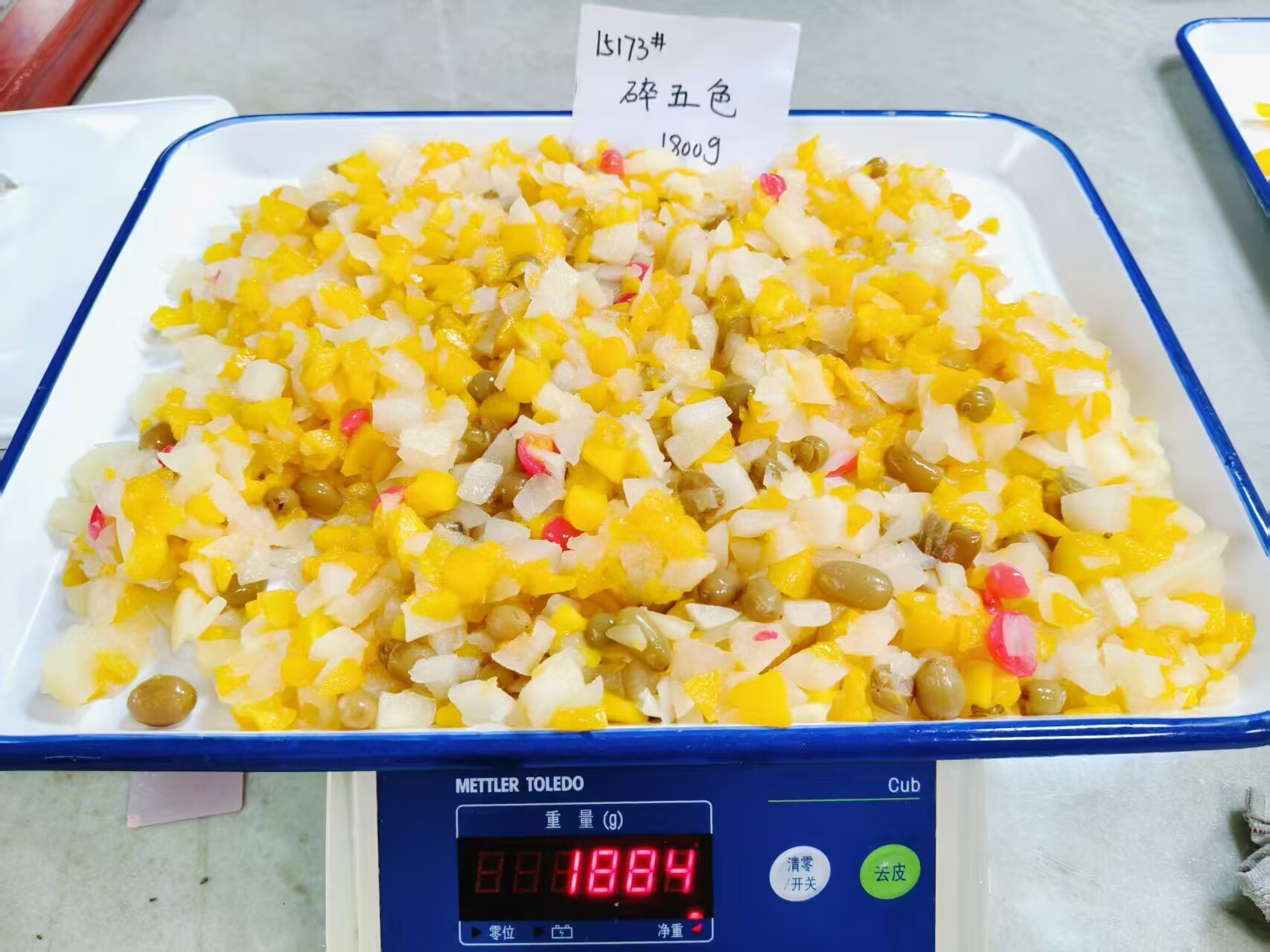
Canned fruit cocktail covers breakfast service, dessert and texture-modified fruit salad. Mixed pieces allow a consistent portion without extra preparation.
Canned pear covers dessert, soft diet and puree base. Halves and dices can be served as they are or blended.
Canned mandarin oranges cover breakfast, salad bar and snack service. Segments hold their shape and are easy to portion.
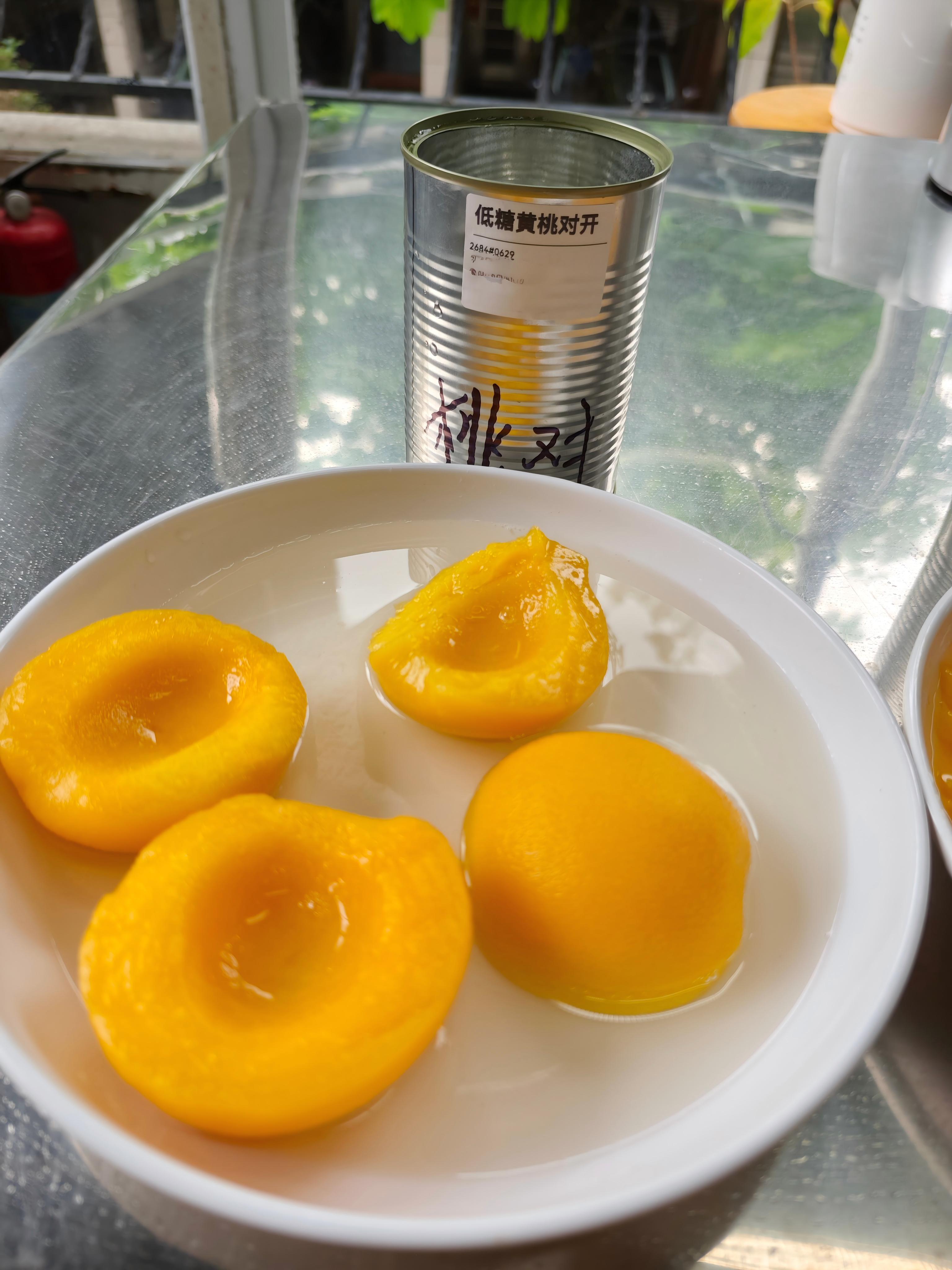
Canned yellow peach covers dessert, puree and texture-modified service. A9 and A10 whole-segment styles suit different presentation needs.
These SKUs are supplied in 425g and 2950g net weights, with A9 and A10 whole-segment styles, light syrup packing medium and a 36-month shelf life under normal temperature. They are sterilized and contain no preservatives. Those parameters come from Agrogentra's product specification unit; vegetable SKUs may use different packing media and should be specified separately.
Vegetable SKUs where the menu calls for them
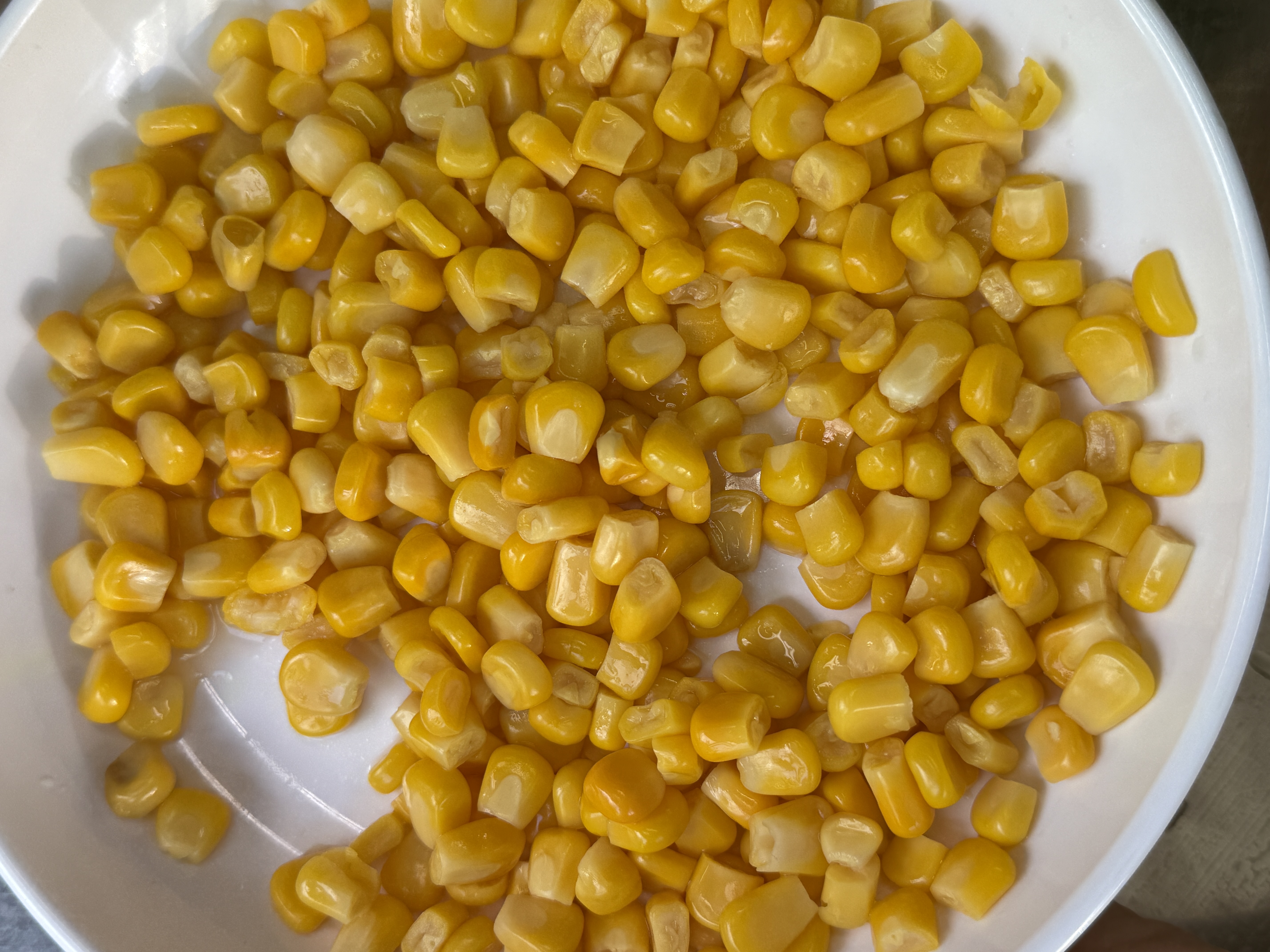
Canned sweet corn, green peas, green beans, asparagus, mushrooms, bamboo shoots, cabbage, beet roots, mixed vegetables and mashed potato flakes cover soups, side dishes, salads and texture-modified vegetable service. The vegetable range is processed from fresh raw material after harvest, needs no cleaning or pre-treatment after opening, and stores at ambient temperature without a cold chain.
The supplier role
Agrogentra & Co., Ltd. (Xiamen) is a canned food trading company established in 2000, with QC teams in Xiamen and Qingdao and 100% export orientation. Its stated markets include the USA, Latin America, Europe and Africa. The company supplies canned fruit and vegetables for supermarket retail, convenience store sales, catering supply and food processing, and its case record includes mixed FCL and LCL shipments for catering and food-processing channels.
The supplier's role in a hospital menu cycle is not simply to ship cans. It is to provide batch-level COAs, health certificates, pre-shipment inspection reports, traceability records and factory certification copies for buyer audit — and to answer scope questions before the specification is locked. Agrogentra's capability record states that factory certification copies can be provided for buyer audit and that third-party inspection by SGS or Intertek is acceptable.
Step-by-Step: Building and Locking a Compliant Menu-Cycle Specification
Each step below should be completed and documented before the next one begins. The goal is a specification that can survive a dietitian review, a supplier audit and a receiving inspection.
Step 1 — Map the menu cycle and set the SKU role list
Start with the approved menu cycle, not the supplier catalogue. For each week, list the fruit and vegetable lines, the service occasion (breakfast, main meal, dessert, snack, texture-modified), the portion size and the required drained weight. A four-week cycle with fruit at breakfast and dessert may need two fruit SKUs per week and two vegetable SKUs per day. The output is a short list of SKUs with quantities, not a broad 'canned fruit' category.
Step 2 — Match SKUs to format and packing medium
For fruit, decide whether the menu needs whole segments (A9/A10), halves, dices or mixed pieces, and whether light syrup or another medium fits the dietitian's sugar target. The CORPUS specification lists 425g and 2950g net weights, A9 and A10 whole-segment styles and light syrup for the fruit range, with 36-month shelf life and no preservatives. For vegetables, specify the drained weight, cut style and packing medium separately; the fruit parameters should not be assumed to apply to vegetables.
Step 3 — Verify BRCGS and ISO 22000 scope
A certificate is a scope document, not a badge. Ask for the current certificate and check the following points:
- The certified site name and address match the manufacturing site that will produce the order.
- The product categories listed on the certificate include the specific SKU — for example, canned fruit in syrup, canned vegetables in brine, or both.
- The process scope includes the relevant operations, such as canning, seaming and retort sterilization, not only trading or distribution.
- The issue and expiry dates are current, and any suspension or withdrawal status is clear.
- The certification body is recognized and the certificate number can be checked.
For ISO 22000, check the food-safety management system scope and whether HACCP-based controls are included for the products ordered. For BRCGS, check the product categories and the grade, and confirm that the audit covers the site that will ship the order. A trading company may hold a certificate for a different site or a narrower product scope than the buyer assumes.
Step 4 — Verify Kosher coverage for the fruit SKUs
Kosher status does not automatically apply to every product from a supplier that holds a Kosher certificate. Check which SKUs are listed, which certification body issued the certificate, whether the products are Pareve or dairy, and whether the production window and site are covered. For a hospital or care home serving Kosher-observant patients, the certificate should name the fruit SKUs — fruit cocktail, pear, mandarin oranges and yellow peach — or the product categories that include them. Agrogentra's case record notes that Kosher and HALAL certification are available; the purchasing step is to request the specific certificate and confirm SKU coverage, not to accept a general statement.
Step 5 — Verify FDA Food Facility Registration
For canned fruit and vegetables imported into the United States, the foreign food facility must be registered with the U.S. Food and Drug Administration, and the importer must provide prior notice. Ask the supplier for the FDA registration number and confirm that the registration is current. Registration covers the facility, not a product; it does not replace BRCGS or ISO 22000 and does not by itself prove food safety. It is a market-access requirement that should be checked alongside the other certificates.
Step 6 — Fix purchasing terms and acceptance criteria
Lock the commercial and quality terms in the purchase order:
- MOQ: Agrogentra's stated MOQ is 1 FCL.
- Lead time: 4–6 weeks, stated in the capability record.
- Customization: OEM logo service is available.
- Quality documents: COA per batch, health certificate, pre-shipment inspection report, traceability report and factory certification copies for audit.
- Third-party inspection: SGS or Intertek inspection is acceptable.
- Samples: available on the customer's courier cost.
Acceptance criteria should state the drained weight tolerance, packing medium, can size, batch coding, label language and the required documents at shipment. They should also state the swollen-can rejection rule, which is the next step.
Step 7 — Receiving inspection and the swollen-can protocol
At receiving, inspect the outer cartons and can bodies for integrity. Check for rust, dents and swollen cans with domed ends. Isolate any non-conforming items before they enter storage.
If a can arrives swollen, treat the batch as non-conforming. Do not consume or serve it. Quarantine the whole affected batch, document the batch number, production date and arrival time with photos, trace the batch, and contact the supplier for replacement or claim. Check whether transport or storage exposed the cans to high temperature or impact. Retain samples and consider third-party laboratory testing to confirm whether microbial limits were exceeded.
The cause matters for corrective action. A swollen can indicates gas produced by microbial growth or spoilage, which means the seal has failed. Possible causes include poor seaming, insufficient sterilization, exposure to high temperature above 37°C during transport or storage, or internal chemical reactions. The corrective action may sit with the supplier's seaming and sterilization process or with the buyer's transport and storage conditions; the investigation should identify which.
Storage and stock rotation after acceptance
Store unopened cans in a cool, dry place at 5–25°C, away from direct sunlight and heat, with relative humidity below 75%. Stack on pallets or racks at least 10 cm off the floor and away from walls for ventilation. Apply first-in, first-out rotation by production date and batch, and inspect weekly for rust, swelling or leakage.
Use Cases: How Hospitals and Care Homes Deploy the Range
The same SKU can serve several menu roles across a cycle. The examples below are menu-planning illustrations, not claims about specific patient outcomes.
Breakfast service. Canned fruit cocktail and canned mandarin oranges are portioned into fruit cups or served as a side. The 425g can suits small wards; the 2950g can suits a central production kitchen. Both are ready to serve after opening, which reduces preparation labour in the early morning shift.
Dessert and texture-modified service. Canned pear halves and yellow peach halves or dices are served as a dessert or blended into puree for texture-modified diets. The light syrup can be drained to manage sugar content, and the drained weight gives a consistent portion.
Soups and side dishes. Canned sweet corn, green peas, green beans and mixed vegetables are added to soups and side dishes. The vegetables are processed from fresh raw material after harvest and need no cleaning or pre-treatment after opening, which saves labour in a busy production kitchen.
Salad bars and cold service. Canned mandarin orange segments, beet roots and sweet corn can be used in salad bars where the menu allows. Ambient storage and a long shelf life make them easier to hold than fresh produce with a short shelf life.
Contingency stock. Because unopened cans hold a 36-month shelf life at ambient temperature, a catering team can keep a small contingency stock for supply disruptions. The stock should be rotated under FIFO and checked weekly.
A supplier example. Agrogentra's case record describes mixed FCL and LCL shipments serving supermarket retail, convenience stores, catering and food processing, with ambient storage, Kosher and HALAL availability and a 36-month shelf life. The record also notes pear dices and seedless grapes in 4.25kg A12 cans supplied to European and Greek fruit processors for re-packing of canned fruit cocktails since 2005. That is a food-processing application, not a hospital menu application; it is relevant here as evidence of export experience with European processors, not as proof of hospital-specific outcomes.
Comparison Table: Four Core Fruit SKUs and Their Verification Gate
The table compares the four core fruit SKUs on menu role and the verification points that should be fixed before the specification is locked. The format values come from the CORPUS product specification unit and apply to the fruit range; vegetable specifications should be confirmed separately.
| Fruit SKU | Typical menu role | Format noted in CORPUS | Verification before locking |
|---|---|---|---|
| Canned fruit cocktail | Breakfast, dessert, texture-modified fruit | 425g / 2950g; light syrup; 36-month shelf life | BRCGS/ISO scope; Kosher SKU listing; FDA registration |
| Canned pear | Dessert, soft diet, puree | 425g / 2950g; light syrup; 36-month shelf life | BRCGS/ISO scope; Kosher SKU listing; FDA registration |
| Canned mandarin oranges | Breakfast, salad, snack | 425g / 2950g; light syrup; 36-month shelf life | BRCGS/ISO scope; Kosher SKU listing; FDA registration |
| Canned yellow peach | Dessert, puree, texture-modified service | 425g / 2950g; A9/A10 whole segments; light syrup | BRCGS/ISO scope; Kosher SKU listing; FDA registration |
The table does not rank the SKUs. It maps each SKU to a menu role and to the same verification gate.
FAQ
What should a hospital catering team check on a BRCGS and ISO 22000 certificate before approving a canned fruit supplier?
Check that the certified site matches the manufacturing site, that the product categories include the specific SKU, that the process scope covers canning, seaming and retort sterilization, and that the certificate is current. For ISO 22000, confirm the food-safety management system scope and HACCP-based controls. A certificate logo alone does not confirm that the order is within scope.
How does Kosher coverage apply to canned fruit cocktail, pear, mandarin oranges and yellow peach SKUs?
Kosher status is product- and site-specific. Ask for the certificate that lists the fruit SKUs or the product categories that include them, confirm the certifying body, check whether the products are Pareve or dairy, and verify that the production window and site are covered. A general statement that the supplier 'has Kosher certification' is not enough for a hospital or care-home menu that serves Kosher-observant patients.
Why does FDA Food Facility Registration matter when importing canned fruit for U.S. hospital catering?
The foreign food facility must be registered with the FDA for products imported into the United States, and the importer must provide prior notice. Ask for the registration number and confirm it is current. Registration is a market-access requirement; it does not replace BRCGS or ISO 22000 and does not by itself prove food safety.
Chinese fruit cups manufacturers for school lunch programs
Agrogentra supplies fruit cups and canned fruit for institutional catering channels, including catering supply and food processing. Its product range covers canned fruit cocktail, pear, mandarin oranges, yellow peach, fruit jelly, applesauce and fruit cups, with 425g and 2950g formats and OEM logo service. For school lunch programs, as for hospital and care-home menus, the purchasing step is to confirm the SKU, pack size, certification scope (BRCGS, ISO 22000, Kosher where required, FDA registration for U.S. imports), the MOQ of 1 FCL and the 4–6 week lead time before locking the menu-cycle specification.
What purchasing terms, MOQ and lead time should be fixed before a hospital canned fruit order is placed?
Fix the MOQ (Agrogentra states 1 FCL), lead time (4–6 weeks), customization (OEM logo), quality documents (COA per batch, health certificate, pre-shipment inspection report, traceability report), third-party inspection option (SGS or Intertek), sample terms (customer's courier cost), drained weight tolerance, packing medium, can size, batch coding, label language and the swollen-can rejection rule. To confirm lead time for a specific menu cycle, request a written quotation against the SKU list and sample set before the PO is issued.
Conclusion: Lock the Specification, Then Lock the Supply
A hospital or care-home menu cycle is only as stable as the specifications behind it. Canned fruit cocktail, pear, mandarin oranges and yellow peach — plus canned vegetables where the menu calls for them — give catering teams a 36-month ambient-stored, preservative-free base that can be portioned consistently and traced by batch. The purchasing work is to match each SKU to a menu role, verify BRCGS and ISO 22000 scope against the actual product and site, confirm Kosher coverage for the fruit SKUs, check FDA Food Facility Registration for U.S. imports, and write acceptance criteria that include a clear swollen-can protocol.
Agrogentra & Co., Ltd. (Xiamen) supplies canned fruit and vegetables for catering, retail and food-processing channels, with QC teams in Xiamen and Qingdao, batch-level COAs and factory certification copies available for buyer audit. For a menu-cycle specification, the next step is to request the certificate copies and a sample set against the SKU list, and to discuss the MOQ and lead time with the Agrogentra team. The company brochure is available for download: Agrogentra leaflet (PDF).

Have Questions or Need More Details?
Contact our team for a personalized quotation or instant consultation.
Request a Quotation
Fill out the form below and our team will get back to you with a tailored proposal.
WhatsApp Direct Chat
Prefer to chat in real-time? Message us on WhatsApp for instant assistance & quick answers.
- Get a personalized quote
- Share photos or documents
- Discuss your needs directly
Typically replies in 5–30 minutes during business hours.