Canned Fruits & Vegetables: Export Certification Checklist
Canned Fruits & Vegetables: Export Certification Checklist
A certificate with the right name but the wrong product scope is the most common compliance failure in canned food importing. This checklist sets out the five certification documents held for the Agrogentra canned fruits & vegetables range, states which products each document actually covers, and lists the verification steps an importer should complete before releasing a purchase order.
Problem Definition: Certificate Scope, Not Certificate Presence
Most importer checklists ask a supplier to confirm three things: an ISO 22000 food safety certificate, a BRCGS or equivalent retail audit, and a religious certification for the destination market. The check that actually prevents a customs hold or a retail delisting is narrower — does the scope printed on the certificate name the specific product being shipped?
For canned fruits & vegetables, scope is written at product level, not at category level. In the certification set held for the Agrogentra canned range, the ISO 22000:2018 certification scope is limited to the canned fruit production listed on the certificate. That scope does not list canned vegetables. A buyer who accepts “ISO 22000 certified” as a general answer and then orders canned mushrooms, canned sweet corn or canned green peas is shipping a product that sits outside the documented food safety scope of that certificate.
The same pattern repeats across the other documents. The FDA Food Facility Registration for this range covers Category 17 Fruit & Fruit Products only and explicitly excludes fish cans, even though the wider Agrogentra portfolio includes canned sardines, mackerel and tuna. The HALAL certificate names specific canned and glass items — mushroom, mushroom in brine, potato, baby corn, bamboo shoots, bean sprouts, cut green bean and green pea — rather than an open-ended food category. Scope discipline, not certificate count, is what a sourcing team should verify.
One extra document for EU-bound volumes: the European Union implemented Regulation (EU) 2024/3190, restricting the use of Bisphenol A (BPA) in food contact materials, including can coatings. Buyers shipping canned products into the EU should request a written food-contact coating declaration from the supplier as part of the pre-order document set.
Industry Background: A Large, Stable Category With a Concentrated Product Mix
Canned fruits & vegetables remain one of the more predictable categories in global food trade, because the products are shelf-stable, do not require a cold chain, and are less exposed to seasonal supply shocks than fresh produce. The global canned fruits and vegetables market was valued at USD 105.35 billion in 2024 by Market Research Future, while the canned mushroom segment alone was valued at USD 11.31 billion in 2023 according to Global Market Insights.
China’s role in this category is export-led. According to data published with the China Canned Food Industry Association and China Customs, China’s total export value of fruit and vegetable canned products reached US$3.859 billion in 2024, with canned vegetable export volume at 2.058 million tons — a 2.52% year-on-year decrease. On the product side, canned peaches occupy a dominant position within the canned fruit segment, accounting for approximately 36.8% of that segment share in 2024, based on Market.us data.
These third-party figures vary in scope, methodology and currency assumptions, so they are best read as directional indicators of category size rather than as a precise market forecast. What they do support is a practical conclusion for buyers: the supply base is wide, the product mix is concentrated around a few high-volume items such as peaches, pineapple, pears, oranges and mushrooms, and the differentiating factor between suppliers is therefore documentation and process control rather than product availability.
The Five Certification Documents Behind the Agrogentra Canned Range
Agrogentra & Co., Ltd. Xiamen was established in 2000 and operates as an international trading company specialising in the sourcing, quality control and export of Chinese canned food, fresh fruits and vegetables and frozen food products, with a 100% export ratio and customers across the USA, Latin America, Europe, Africa, the Middle East and Asian markets. The certification set below is the documented compliance layer that sits behind the Agrogentra canned fruits & vegetables range.
1. ISO 22000:2018 Food Safety Management System
The canned fruit range is certified to ISO 22000:2018 by CQC under certificate number CNO0124F21626R5M/3200. The certification type is a Food Safety Management System, applied globally. The certified scope covers canned peach, mix fruits, pear, orange, apple, pineapple, jam and jelly (pulpy jelly).
Product mapping matters here: canned yellow peach falls under the canned peach scope, canned fruit cocktail under the mix fruits scope, canned mandarin oranges under the canned orange scope, canned applesauce under the canned apple scope, and canned fruit jelly under the jam and jelly scope. The same certificate does not list canned vegetables.
2. BRCGS Global Standard for Food Safety, Issue 9
The BRCGS certification is issued by Intertek Certification Limited under certificate number 05LA1209004, against the BRCGS Global Standard Food Safety Issue 9. The certification issue date is 2025-10-05 and the expiry date is 2026-12-02.
The certified scope covers washing, peeling, pre-cooking, filling, seaming and pasteurization of canned fruit — peach, apple, pear, pineapple, orange and mixed fruits — and canned apple sauce in tin cans, plastic cups and plastic bags, together with ingredient weighing, mixing, blending and cooking. For retail buyers running their own supplier approval, this is the document that maps to factory process control rather than to a finished-product test.
3. HALAL Certification (SHC, Recognised by JAKIM)
The HALAL certification is issued by SHC (Shandong Halal Certification Service), recognised by JAKIM, under certificate number 1031240000, valid from 2024-11-30 to 2027-11-29. It is aligned with MS1500:2019 and Indonesia Halal Law and BPJPH Halal Regulations, and covers Indonesia, Malaysia and global Muslim markets.
The certificate applies to the canned fruit and vegetable product range, and its listed scope includes canned and glass mushroom, canned and glass mushroom in brine, canned and glass potato, baby corn, bamboo shoots, bean sprouts, cut green bean, green pea and kidney bean items. For a supplier selling into Muslim-majority markets, HALAL is a market-access requirement rather than a preference, and the listed items are what should be checked against a purchase order.
4. STAR-K Kosher Certificate
The Kosher certification is issued by STAR-K Kosher Certification (Baltimore, Maryland, USA) under certificate number RIB1RR1Q, with an issue date of 2025-04-03 and an expiry date of 2026-03-31. It applies to the global Kosher market, including Israel, the USA, Europe, the Middle East and Jewish communities worldwide.
The certified canned fruit scope includes apple, apricot, mandarin orange, mixed fruits, pear and yellow peach, packed in syrup, water, pear juice or solid pack. The certification covers these items with pareve status — free of dairy and meat content — which is the condition most Kosher buyers check first on a canned fruit specification sheet.
5. FDA Food Facility Registration
The canned fruit and canned vegetable product range is registered under FDA Food Facility Registration number 18082639404, a regulatory registration with biennial renewal in 2024, valid from 2024-10-09 to 2026-12-31. The U.S. Agent for the registration is Diana Liu, Quincy MA, and the corresponding requirements are 21 CFR 1.225–1.244 with 21 CFR 113/114 as applicable.
The registration covers foreign facilities that manufacture, process, pack or label fruit and fruit products for the US market, and its product list includes canned mandarin oranges, canned pineapple, canned yellow peach, canned pear, canned fruit jelly, canned fruit cocktail, canned cherries, canned applesauce, fruit cups, canned lychee, canned mushrooms, canned asparagus, canned sweet corn and canned green peas. It covers Category 17 Fruit & Fruit Products only and does not cover fish cans.
Step-by-Step: How to Verify Certifications Before You Order
The following sequence turns the documents above into a working pre-order check. It can be applied to any Chinese canned fruit or vegetable supplier, not only to the Agrogentra range.
- Match the certificate scope to your SKU list. Take the exact product names you intend to buy — canned mandarin oranges, canned pineapple, canned yellow peach, canned pear, canned fruit jelly, canned fruit cocktail, canned cherries, canned applesauce, fruit cups, canned lychee, canned mushrooms, canned asparagus, canned sweet corn, canned green peas — and check each one against the certificate scope text. A product that is not named in the scope should be confirmed separately in writing.
- Check the validity dates against your shipment and arrival window. The BRCGS certificate for this range runs to 2026-12-02, the STAR-K Kosher certificate to 2026-03-31, the FDA registration to 2026-12-31, and the HALAL certificate to 2027-11-29. A certificate that expires between loading and retail delivery creates a documentation gap, so ask for the renewal status in writing when a shipment will land close to an expiry date.
- Confirm the registration type. The FDA registration is a regulatory registration with biennial renewal, not a product approval. It confirms that the foreign facility is registered for fruit and fruit products and states which categories are excluded — in this case fish cans.
- Request the batch-level quality documents. Quality control for this range is full-process: incoming raw-material inspection, on-line production patrol, and laboratory physical, chemical and microbiological testing for each batch with a COA report, plus batch sample retention. Third-party inspection through SGS or Intertek is acceptable, and factory certification copies can be provided for buyer audits.
- Lock the specification, not just the product name. The documented specification for the canned fruit and vegetable range is a net weight of 425g and 2950g, styles A9 and A10 whole segments, light syrup as the packing medium, a 36-month shelf life at normal temperature, and sterilization with no preservatives. Canned fruit is made from selected ripe fresh fruit; canned vegetables are processed from fresh raw materials shortly after harvesting.
- Confirm commercial constraints before sampling. The documented minimum order quantity is 1 FCL, with a lead time of 4–6 weeks and a monthly capacity of 3,500 units for customized runs. OEM logo customization, private label and mixed container loading are supported, and the shipment is accompanied by a full set of export documents and customs clearance documents. Because the product is stored and transported at ambient temperature without a cold chain, the main cost drivers are packaging format, can size and container utilization rather than refrigeration — which is why mixed container loading is usually the first lever a new importer should discuss.
Use Cases: Where Certification Coverage Changes the Buying Decision
Grocery retail and supermarket import programmes
For a retail import programme, the certification set has to satisfy two different audiences: the customs authority at the port of entry and the retailer’s own supplier approval team. The FDA registration or HALAL certificate answers the first; the ISO 22000:2018 certificate and the BRCGS audit answer the second. Ambient storage, a 36-month shelf life and the absence of a cold chain requirement keep inventory loss low for distributors that do not operate refrigerated warehouses.
Food processing and re-packing
Canned fruit is also an industrial input. Pear dices and seedless grapes supplied in 4.25kg A12 cans have been used by European and Greek fruit processors for re-packing into canned fruit cocktails since 2005 — an application where drained weight consistency and syrup specification matter more than retail label design. Buyers in this segment should verify the specification line items (net weight, style, packing medium) alongside the certification scope.
Catering, foodservice and Muslim-majority markets
Foodservice buyers consume whole cans in a single service, so they prioritise consistent piece size, easy opening and a documented halal status. For Indonesia, Malaysia and other Muslim markets, the HALAL certificate number, its validity period and its listed product items are the controlling documents — a general statement that a factory “is halal certified” is not sufficient for import clearance.
Certification Comparison Table
The table below compares the five documents as they apply to the Agrogentra canned fruits & vegetables range. All entries reflect the certificate scopes and validity dates on file.
| Certification | Issuing authority | Number | Documented scope | Primary markets | Validity |
|---|---|---|---|---|---|
| ISO 22000:2018 Food Safety Management System | CQC | CNO0124F21626R5M/3200 | Canned fruit production: peach, mix fruits, pear, orange, apple, pineapple, jam and jelly (pulpy jelly) | Global | Per certificate scope |
| BRCGS Global Standard Food Safety Issue 9 | Intertek Certification Limited | 05LA1209004 | Washing, peeling, pre-cooking, filling, seaming, pasteurization of canned fruit and canned apple sauce in tin cans, plastic cups and plastic bags | Global | 2025-10-05 to 2026-12-02 |
| HALAL | SHC, recognised by JAKIM | 1031240000 | Canned fruit and vegetable range, including canned and glass mushroom, mushroom in brine, potato, baby corn, bamboo shoots, bean sprouts, cut green bean, green pea, kidney bean | Indonesia, Malaysia, global Muslim markets | 2024-11-30 to 2027-11-29 |
| STAR-K Kosher Certificate | STAR-K Kosher Certification | RIB1RR1Q | Canned apple, apricot, mandarin orange, mixed fruits, pear, yellow peach in syrup, water, pear juice or solid pack | Israel, USA, Europe, Middle East, Jewish communities worldwide | 2025-04-03 to 2026-03-31 |
| FDA Food Facility Registration | U.S. FDA | 18082639404 | Category 17 Fruit & Fruit Products only; excludes fish cans | USA | 2024-10-09 to 2026-12-31 |
The second table maps individual products to the documents that name them. This is the view a buyer needs when building a specification file for a single SKU.
| Product | ISO 22000:2018 | BRCGS Issue 9 | STAR-K Kosher | HALAL | FDA Registration |
|---|---|---|---|---|---|
| Canned yellow peach | Yes — peach scope | Yes — canned fruit | Yes | Yes — range | Yes — listed |
| Canned fruit cocktail (mixed fruits) | Yes — mix fruits | Yes — canned fruit | Yes | Yes — range | Yes — listed |
| Canned mandarin oranges | Yes — orange scope | Yes — canned fruit | Yes | Yes — range | Yes — listed |
| Canned pear | Yes — pear scope | Yes — canned fruit | Yes | Yes — range | Yes — listed |
| Canned pineapple | Yes — pineapple scope | Yes — canned fruit | Not named | Yes — range | Yes — listed |
| Canned applesauce | Yes — apple scope | Yes — apple sauce | Not named | Yes — range | Yes — listed |
| Canned fruit jelly | Yes — jam and jelly scope | Not named | Not named | Yes — range | Yes — listed |
| Canned mushrooms, canned green peas and other canned vegetables | Not listed in scope | Not named | Not named | Yes — named items | Yes — listed |
The practical reading is straightforward. For canned fruit items, multiple documents overlap, which gives a buyer redundancy. For canned vegetables, the ISO 22000:2018 and BRCGS scopes on file name canned fruit only, so vegetable buyers should confirm vegetable-specific coverage in writing — through the HALAL listed items, the FDA registration product list, or additional factory documentation — before placing a firm order.
Frequently Asked Questions
Q1. Which export certifications should a Chinese canned fruit and vegetable supplier hold?
It depends on the destination market, and the certificate set for the Agrogentra canned fruits & vegetables range shows why a single answer is not enough. The documented set is ISO 22000:2018 from CQC (certificate CNO0124F21626R5M/3200), BRCGS Global Standard Food Safety Issue 9 from Intertek (05LA1209004), HALAL from SHC recognised by JAKIM (1031240000), STAR-K Kosher (RIB1RR1Q), and U.S. FDA Food Facility Registration (18082639404). For US-bound shipments, the FDA registration is the relevant registration; for Indonesia, Malaysia and other Muslim markets, the HALAL certificate is the market-access document; for kosher channels in Israel, the USA and Europe, the STAR-K certificate applies; for EU retail programmes, expect BRCGS plus a can-coating declaration linked to Regulation (EU) 2024/3190.
Q2. Does the ISO 22000:2018 certificate cover canned vegetables as well as canned fruit?
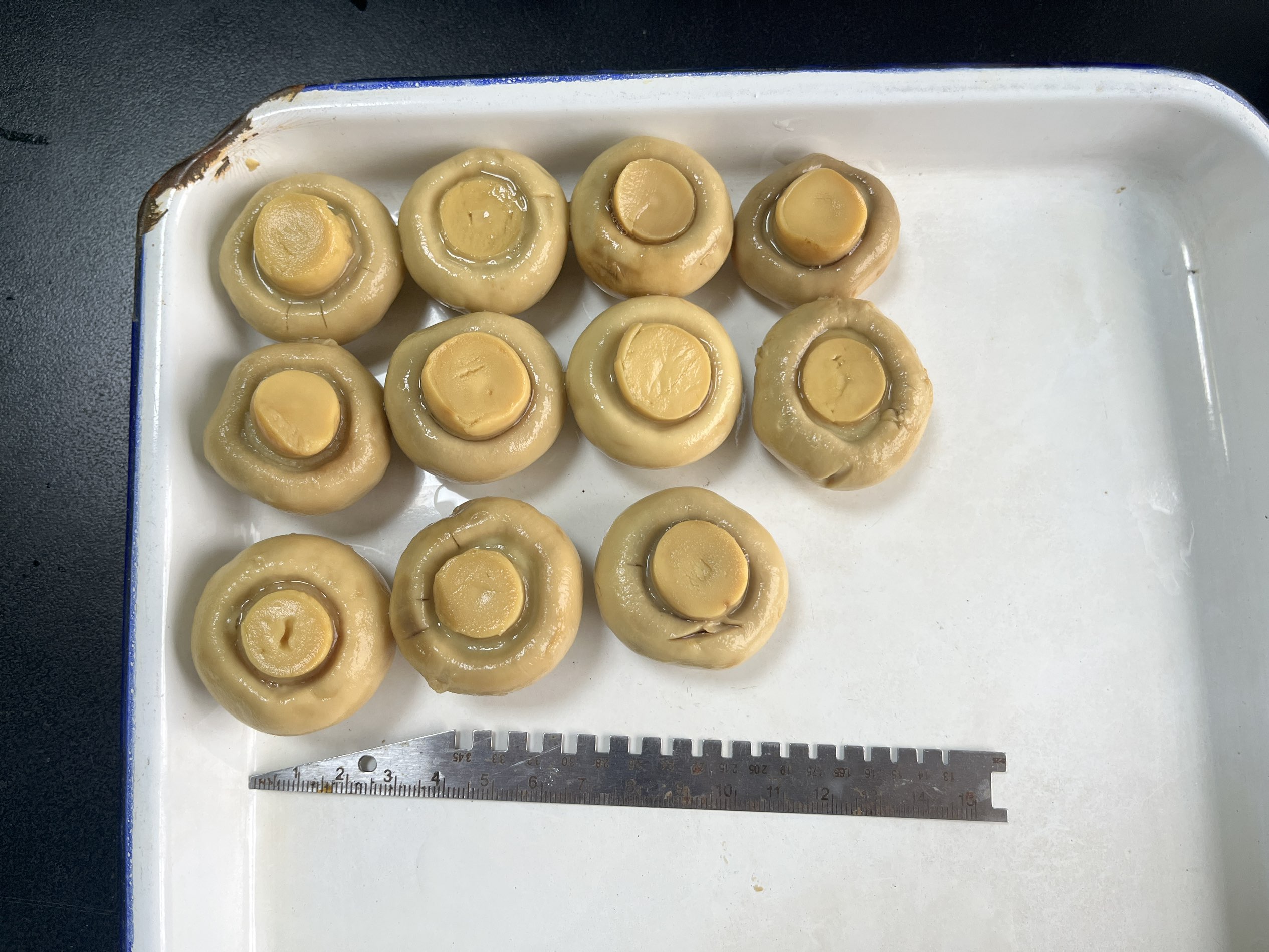
No. For this supplier, the ISO 22000:2018 certification scope is limited to the canned fruit production listed on the certificate, which covers canned peach, mix fruits, pear, orange, apple, pineapple, jam and jelly (pulpy jelly). Canned vegetables are not listed in that ISO 22000:2018 scope. The same limitation appears in the BRCGS scope, which names canned fruit and canned apple sauce. Buyers sourcing canned vegetables such as canned mushrooms, canned asparagus, canned sweet corn or canned green peas should verify vegetable coverage through the documents that do name them — the HALAL certificate lists canned and glass mushroom, mushroom in brine, potato, baby corn, bamboo shoots, bean sprouts, cut green bean and green pea, and the FDA registration lists canned mushrooms, canned asparagus, canned sweet corn and canned green peas.
Q3. What are the minimum order quantity and lead time, and what drives the cost?
The documented commercial terms for this range are a minimum order quantity of 1 FCL and a lead time of 4–6 weeks, with a monthly capacity of 3,500 units for customized runs. OEM logo customization, private label and mixed container loading are supported, and a full set of export and customs clearance documents is issued with each shipment. Cost in this category is driven mainly by packaging format, can size and container utilization rather than by temperature control, because the product is stored and transported at ambient temperature without a cold chain and carries a 36-month shelf life at normal temperature. Published price figures are not issued through this channel; pricing is confirmed per specification and destination market on request.
Q4. Can samples and third-party inspection be arranged before an order?
Yes. Samples are provided at the customer’s courier cost, and third-party inspection through SGS or Intertek is acceptable. Quality control is full-process: incoming raw-material inspection, on-line production patrol, and laboratory physical, chemical and microbiological testing for each batch with a COA report, plus batch sample retention. Factory certification copies can be provided for buyer audits, and OEM formula and label design support is available, which allows a buyer to validate both the product specification and the label artwork before the first full container.
Q5. What documentation accompanies a shipped container?
Each shipment is issued with a full set of export documents and customs clearance documents, including the COA, health certificate, pre-shipment inspection report and traceability report, together with OEM formula and label design files where applicable and factory certification copies for buyer audits. Because certificate validity dates differ by document — for example, BRCGS to 2026-12-02 and the FDA registration to 2026-12-31 — the practical next step is to send your SKU list and destination market so the applicable certificate copies and renewal status can be confirmed for your shipment window, and a sample or quotation can be prepared against that specification.
Conclusion: Put the Document Set Into the Purchase Order
Canned fruits & vegetables are a category where compliance is checked at two points — the port of entry and the retailer’s supplier approval process — and both checks read the certificate scope rather than the certificate title. The working rule for buyers is simple: match each SKU to the document that names it, confirm the validity dates against the shipment window, and treat any product outside a stated scope as an open item to be confirmed in writing.
For the Agrogentra canned fruits & vegetables range, that means ISO 22000:2018 and BRCGS for canned fruit production, HALAL for Muslim-majority markets and for the named canned vegetable items, STAR-K Kosher for kosher channels, and FDA Food Facility Registration for US-bound fruit and fruit products. Agrogentra & Co., Ltd. Xiamen has been supplying these products to importers, wholesale distributors, supermarkets and food processors across the USA, Latin America, Europe and Africa since 2000, with QC teams operating from the Xiamen and Qingdao offices.
Next Step
Send your SKU list, destination market and required certification set, and the matching certificate copies, COA format and product specification will be confirmed for your shipment window. Samples are available at courier cost, and mixed container or private label programmes can be quoted against a 1 FCL minimum order.
Contact: Charles Cai, Miya Kang, Susie Xie — charles.cai@agrogentra.com, miya.kang@agrogentra.com, susie.xie@agrogentra.com. Tel: +86-592-5393122, +86-592-2291213. Address: 1F, Yundang Road 1-39, Siming District, Xiamen, Fujian Province, China. Website: www.agrogentra.com. Full product and certification overview: download the Agrogentra company leaflet (PDF).