Canned Sardines vs Canned Mackerel: Certification, Market Fit and Sourcing Tradeoffs
Choosing between canned sardines and canned mackerel is rarely a question about which fish is better. For importers, distributors and private-label owners working through the final stage of a sourcing decision, the question is whether a given SKU arrives with a certification file, a pack format and a load plan that match the destination market. Agrogentra & Co., Ltd. (Xiamen), a China-based canned food supplier established in 2000 that exports 100% of its sales, packs both products — and the two do not carry identical paperwork. BRCGS certification covers both canned sardines and canned mackerel, while SHC Halal certificate 8998250000 applies specifically to Canned Sardines in Oil and Canned Mackerel in Tomato Sauce, for Malaysia and Indonesia. Buyers targeting those two markets with those two formats start from an equal compliance footing. Buyers targeting another destination, or a different pack such as mackerel in brine, need the scope confirmed before the purchase order, not after the container lands.
Why the Sardines-or-Mackerel Decision Stalls
Three frictions delay this decision far more often than price does.
Certification scope is wider in the sales conversation than in the certificate. A supplier may hold Halal certification for its operation, but market access depends on the specific product and the specific destination named in the document. A certificate written for one pack format and one pair of markets is not a category-wide permission.
The two products are not interchangeable at retail. Sardines in oil and mackerel in tomato sauce occupy different shelf positions, different price points and different meal occasions. Stocking one does not automatically generate demand for the other, so the format decision has to be made on the destination market rather than on the supplier's product list.
Two SKUs look like two supply chains. Buyers assume a second fish line means a second supplier, a second container and a second set of documents. That assumption is what makes a two-product portfolio feel expensive.
Each friction has a factual resolution. The certificate scope can be read line by line. The format decision can be made before the price negotiation instead of during it. And mixed container loading removes the second-container penalty entirely. What remains is a sequence of checks, which this article sets out in the order a buyer would actually execute them.
Industry Background: Where Sardines and Mackerel Sit
Trade data explains why this comparison matters commercially rather than editorially. Global imports of canned and prepared fish under HS 1604 reached 3.2 million tonnes, worth USD 17.54 billion, in 2023 (UN Comtrade, as derived with FAO data). Canned fish accounts for 75.3% of the canned seafood market (Grand View Research), and the wider canned seafood market was valued at USD 57.69 billion in 2025 (Fortune Business Insights).
Within that total, canned tuna alone represents 43% of global canned fish import volume (UN Comtrade). The practical reading is that sardines, mackerel, Alaska pollock, squid and clam together account for the majority of the remaining volume — and they compete for the same shelf space and the same buyer budget as tuna, usually at a different price tier.
Agrogentra & Co., Ltd. (Xiamen) has supplied qualified food products to global markets for over 25 years, with buyers across the USA, Latin America, Europe and Africa. Its canned range covers sardines, mackerel, tuna, Alaska pollock, squid and baby clam alongside canned vegetables and canned fruit, and the company has exhibited continuously since Anuga Cologne in 2001 and SIAL Paris in 2002. That range structure matters at execution stage: because canned seafood, canned vegetables and canned fruit can be consolidated into a single mixed container, a distributor can test two fish SKUs without dedicating a full load to either one.
The category also carries a structural advantage that shows up in logistics. Canned fish is commercially sterile inside a hermetically sealed can, needs no cold chain, and is stored at 5–25°C with relative humidity kept below 75%. There is no reefer booking and no temperature monitoring to arrange, which is why ambient canned product is usually the lower-risk entry point for buyers without cold storage.
The Certification Layer: What Is Identical and What Is Not
BRCGS covers both products
Both canned sardines and canned mackerel sit inside the BRCGS certification held for these lines. For retail and private-label buyers this is the baseline process-control reference requested in tender documentation; it does not by itself grant access to a market, but its absence usually ends the evaluation early. On this dimension there is no choice to make — the two products are equal.
Halal scope is product-specific and destination-specific
The SHC Halal certificate held for these lines is number 8998250000. Its scope is narrow and precise: Canned Sardines in Oil and Canned Mackerel in Tomato Sauce, for Malaysia and Indonesia. Three consequences follow directly from that wording.
First, the certificate is product-specific. A mackerel packed in brine, or a sardine packed in tomato sauce, is not automatically inside the scope. The named formats are the certified formats.
Second, the certificate is destination-specific. A shipment presented to Malaysia or Indonesia can be supported against this scope. A shipment to a Gulf market, a North African market or a European ethnic channel requires its own confirmation of what that destination authority recognises — which is a question to raise during quotation, not a reason to abandon the product.
Third, the pairing is commercially useful. Because both formats sit under one certificate, a buyer can build a Malaysia or Indonesia programme with a single Halal reference instead of two separate files. That is the operational advantage of certifying these two packs together.
Import regimes that apply equally to both
Sardines and mackerel are both low-acid foods (pH above 4.6). Both must therefore be commercially sterilised in a pressurised retort at around 121°C, with the sterilisation curve and cold-point temperature determining product safety, and released batches supported by an incubation test. The regulatory envelope follows the same logic for both species:
- United States: foreign canned food processors must register under the Food Canning Establishment (FCE) and file Scheduled Processes (SID) with the FDA.
- European Union: Regulation (EU) 2024/3115, effective January 2025, tightens plant health and traceability requirements for imported preserved foods.
Neither regime differentiates between sardines and mackerel. The differentiation sits in product scope and destination — which is exactly where the Halal certificate does differentiate.
Market Fit: Read the Destination Before the Product
Destination usually decides the format more reliably than buyer preference does. Agrogentra's own market guidance for canned food exports sets out regional patterns that translate directly into a sardine-versus-mackerel decision.
- Middle East and North Africa: Halal-certified sardine and mackerel cans are the recommended entry range, with brine and olive-oil bases well accepted, suited to both foodservice and home ready-to-eat use.
- Southeast Asia: sardine and mackerel cans fit a price-sensitive market where Halal is a mandatory access requirement and richer flavour profiles are preferred — a description that aligns with an oil-packed sardine and a tomato-sauce mackerel.
- Europe and North America: the guidance prioritises tuna in water or oil, mushroom cans and tomato products, where BRC, MSC and sustainability credentials carry weight; sardine and mackerel volumes in these markets are typically built against a named customer specification rather than a generic range.
- Latin America and emerging Africa: cost-effective fish and vegetable cans, with standardised can sizes and high sensitivity to logistics cost.
Sourcing Tradeoffs: Load Planning, Terms and Inventory
Mixed-load economics. The minimum order quantity is a mixed FCL, with LCL available upon negotiation. A mixed container can combine canned seafood, canned vegetables and canned fruit, so a distributor can carry sardines, mackerel and a vegetable or fruit line in one shipment rather than committing a full container to a single SKU.
Commercial terms. Delivery is FOB. Payment is T/T with a 30% deposit and the balance against copy of the bill of lading. For an annual programme, these are the reference terms against which shipment schedules and deposit timing are structured.
Acceptance. Pre-shipment inspection covers cargo quantity, packaging and appearance. QC teams in the Xiamen and Qingdao offices run factory audits, raw material testing, production monitoring, finished product inspection and pre-shipment sampling — the same protocol serves both fish lines, which simplifies the inspection schedule when two SKUs ship together.
Packaging flexibility. Flexible packaging solutions and customized service are available for customers in different regions and industries, which matters when one product must appear under two labels for two markets from the same production run.
Inventory tradeoff. Sardines in oil and mackerel in tomato sauce are separate SKUs with separate rotation curves. Combining them in one container reduces freight cost per SKU but concentrates exposure if one format underperforms. Splitting the load in favour of the faster-moving format keeps the slower line in stock without over-committing working capital.
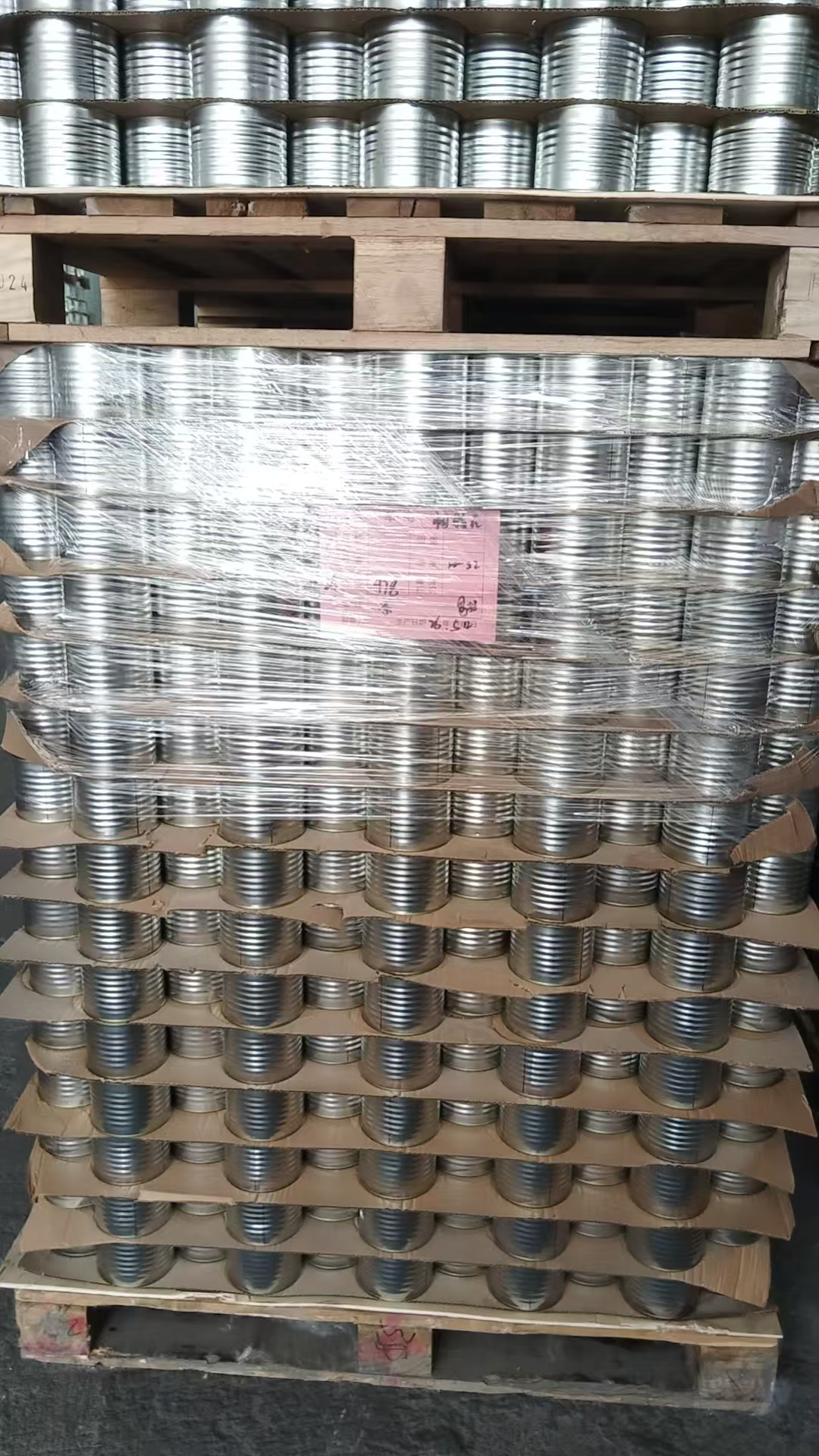
Can specification. Three-piece tinplate cans are the standard for fish products requiring 121°C pressurised sterilisation. Can dimensions such as 211×400 and 307×109 change the packing quantity per carton and the packaging cost, so can size belongs in the same conversation as the unit price rather than a later technical exchange.
Swelling risk. A swollen can with domed ends indicates gas from microbial growth or a failed seal. The batch is non-conforming: quarantine it, photograph it, trace it by batch number and report it to the supplier. Known causes include seaming failure, insufficient sterilisation, exposure above 37°C in transit, or physical impact. Both sardines and mackerel carry the same risk profile, so the acceptance protocol is written once and applied to both.
Step-by-Step: A Decision Sequence Buyers Can Execute
Step 1 — Fix the destination and the pack format together. Do not choose a product first and a market second. State the destination country and the intended pack (sardines in oil, mackerel in tomato sauce, or an alternative) before requesting a quotation, because the certification answer depends on that pair.
Step 2 — Map certification scope to that pair. Confirm BRCGS coverage, then confirm whether the Halal certificate in question names that product format and that destination. For Malaysia and Indonesia, the certified pair is Canned Sardines in Oil and Canned Mackerel in Tomato Sauce. For any other combination, ask for the scope in writing.
Step 3 — Confirm the process and registration requirements. Both products are low-acid and both require pressurised retort sterilisation at around 121°C. For US-bound shipments, confirm FCE registration and SID filing; for EU-bound shipments, confirm alignment with Regulation (EU) 2024/3115 and its traceability requirements.
Step 4 — Specify the can and the drained weight. Agree the can type and dimensions (for example 211×400 or 307×109), the packing quantity per carton and the drained weight, since these drive packaging cost and shelf presentation as much as the fish content does.
Step 5 — Build the first container mix. Use the mixed FCL structure to combine the two fish SKUs with a vegetable or fruit line if the portfolio supports it. Weight the split toward the faster-moving format and treat the second SKU as a tested addition rather than a 50/50 commitment.
Step 6 — Agree commercial terms. Confirm FOB delivery, T/T with 30% deposit and balance against copy of the bill of lading, and the mixed FCL minimum with LCL availability on negotiation.
Step 7 — Write the acceptance criteria once. Pre-shipment inspection of quantity, packaging and appearance, plus a documented swelling and dent protocol with batch traceability. Apply the same criteria to both SKUs so there is no ambiguity when a mixed load is inspected.
Step 8 — Convert the trial into a repeat programme. Once rotation data from the first container is available, rebalance the mix and discuss volume continuity. Both products come from the same supply relationship and the same certification structure, so expansion does not require a new supplier onboarding cycle.
Use Cases: Which Buyer Profile Suits Which Product
Retail supermarket and own-brand programmes. Where the destination is Malaysia or Indonesia, the certified pair allows a single retail programme to carry both an oil-packed sardine and a tomato-sauce mackerel under one Halal reference. BRCGS coverage supports the supplier-approval stage, and customised packaging allows the two SKUs to be labelled separately for different chains.
Wholesale distributors building a canned portfolio. The mixed FCL structure is the decisive factor here. A distributor can test sardines and mackerel alongside canned vegetables or fruit without committing an entire container to one fish SKU, which lowers the cost of being wrong about the format split.
Foodservice and catering suppliers. Ambient storage at 5–25°C and a shelf life measured in years remove the cold-chain requirement from the kitchen or central warehouse. Both products are ready to serve after opening and suited to high-turnover menu use, which is why the storage discipline — keep relative humidity below 75%, stack on pallets and rotate first-in-first-out — matters more than the species choice.
Buyers entering a Muslim-majority market for the first time. Halal is a mandatory access requirement in these markets. The correct sequence is to identify the destination, then check whether the certificate names the intended product format, then confirm the pack. Starting from the product and assuming the certificate will follow is the most common and most expensive error in this category.
Private-label and OEM buyers. Flexible packaging and customized service allow the same production base to serve two labels or two markets. Because both fish lines run through the same QC and inspection protocol, a private-label programme can add a second SKU without a second supplier audit.
Comparison Table: Canned Sardines vs Canned Mackerel
| Decision dimension | Canned Sardines | Canned Mackerel |
|---|---|---|
| BRCGS certification | Covered | Covered |
| SHC Halal certificate 8998250000 | Covers Canned Sardines in Oil, for Malaysia and Indonesia | Covers Canned Mackerel in Tomato Sauce, for Malaysia and Indonesia |
| Pack format named in the certificate | In oil | In tomato sauce |
| Process requirement | Low-acid food, pressurised retort at about 121°C | Low-acid food, pressurised retort at about 121°C |
| US market registration | FCE registration and SID filing required | FCE registration and SID filing required |
| EU market requirement | Regulation (EU) 2024/3115 traceability requirements apply | Regulation (EU) 2024/3115 traceability requirements apply |
| Regional fit per supplier guidance | Middle East and North Africa; Southeast Asia | Middle East and North Africa; Southeast Asia |
| Storage and shelf life | Ambient, 5–25°C, RH below 75%; multi-year shelf life | Ambient, 5–25°C, RH below 75%; multi-year shelf life |
| Minimum order | Mixed FCL; LCL on negotiation | Mixed FCL; LCL on negotiation |
| Acceptance check | Pre-shipment inspection of quantity, packaging, appearance | Pre-shipment inspection of quantity, packaging, appearance |
The table makes the conclusion visible: the two products are operationally parallel and commercially distinct. Everything about process, storage, inspection and terms is shared. What separates them is the named pack format and the destination scope on the Halal certificate — and that is a documentation question, not a quality question.
FAQ
Does the Halal certificate cover both canned sardines and canned mackerel?
Yes, within a defined scope. SHC Halal certificate 8998250000 applies to Canned Sardines in Oil and Canned Mackerel in Tomato Sauce, for Malaysia and Indonesia. BRCGS certification covers both products. Any other pack format or destination should be confirmed against the certificate before the purchase order is issued.
Can both products ship in one container?
Yes. Agrogentra offers consolidated shipments covering canned seafood, canned vegetables and canned fruit for mixed container loads. The minimum order quantity is a mixed FCL and LCL is available upon negotiation, so a first order can combine sardines, mackerel and a second category without committing a full container to one SKU.
What payment and delivery terms apply?
Delivery is FOB. Payment is T/T with a 30% deposit and the balance against copy of the bill of lading. For an annual programme, these terms are agreed against the confirmed volume and shipment schedule.
How is quality checked before shipment?
Acceptance is based on pre-shipment inspection of cargo quantity, packaging and appearance. QC teams in Xiamen and Qingdao cover factory audits, raw material testing, production monitoring, finished product inspection and pre-shipment sampling. Swollen, leaking or severely dented cans are treated as non-conforming and quarantined with batch records.
Can Agrogentra support an annual supply contract for canned sardines from China?
Agrogentra has supplied qualified food products to global markets for over 25 years, exports 100% of its sales, and provides flexible packaging and customized service across regions and industries. An annual programme is built from a mixed FCL base with FOB delivery and T/T terms; volume, format mix and destination should be stated in the inquiry so certification scope and packing arrangements can be confirmed against them. Buyers can request a sample and a quotation for a first mixed container through the contact details below.
Conclusion: Decide on the Document, Not the Fish
Canned sardines and canned mackerel are not competing products in the way a sourcing shortlist usually frames them. Both are low-acid, retort-sterilised, ambient-stable fish packs covered by BRCGS. They share the same storage discipline, the same swelling risk profile, the same acceptance protocol and the same FOB and T/T terms. A buyer who chooses between them on perceived product quality is optimising the wrong variable.
The variable that actually decides the order is documentation scope. SHC Halal certificate 8998250000 names Canned Sardines in Oil and Canned Mackerel in Tomato Sauce, for Malaysia and Indonesia. That single sentence resolves most of the decision: it tells a Malaysia or Indonesia buyer that both SKUs are available with one compliance reference, and it tells every other buyer which question to ask before committing. Pair that with the destination format preference — oil-packed sardines and tomato-sauce mackerel for Southeast Asia, Halal-certified sardine and mackerel packs for the Middle East and North Africa — and the product decision follows the market rather than the catalogue.
The remaining work is execution: a mixed FCL that carries both SKUs, an agreed can size such as 211×400 or 307×109, a pre-shipment inspection clause, and a rotation split weighted toward the faster-moving format. That structure gives a distributor a two-product fish portfolio inside a single supply relationship instead of two onboarding cycles — which is what an annual supply arrangement is actually built on.
Next Step: Request a Sample and a Mixed-Container Quotation
Send the destination market, the pack format and the target volume. Agrogentra will confirm which product falls inside the BRCGS and SHC Halal certification scope, propose a mixed FCL composition, and quote on FOB terms.
Email: charles.cai@agrogentra.com | Website: www.agrogentra.com
Download the product catalogue: Agrogentra Leaflet (PDF)

Have Questions or Need More Details?
Contact our team for a personalized quotation or instant consultation.
Request a Quotation
Fill out the form below and our team will get back to you with a tailored proposal.
WhatsApp Direct Chat
Prefer to chat in real-time? Message us on WhatsApp for instant assistance & quick answers.
- Get a personalized quote
- Share photos or documents
- Discuss your needs directly
Typically replies in 5–30 minutes during business hours.