China's Certified Canned Fruit & Vegetable Suppliers
China's Certified Canned Fruit & Vegetable Suppliers
For an importer, a Chinese canned fruit and vegetable supplier is only as usable as its certification set allows it to be in a given market. The practical answer to “which Chinese canned fruit and vegetable manufacturers with export certifications can actually ship my item?” is not a wall of logos. It is a scope check: which certificate covers the exact SKU, for which destination market, inside which validity window, and on top of which packaging material.
This guide breaks down how export certification really works in canned fruit and canned vegetable supply from China, using the certification register of Agrogentra & Co., Ltd. (Xiamen) as a worked example. Agrogentra is a China-based international trading company founded in 2000 in Xiamen, Fujian, that sources, quality-controls and exports canned fruit and vegetables, canned seafood, fresh produce and frozen foods, and operates its own QC departments in both its Xiamen and Qingdao offices.
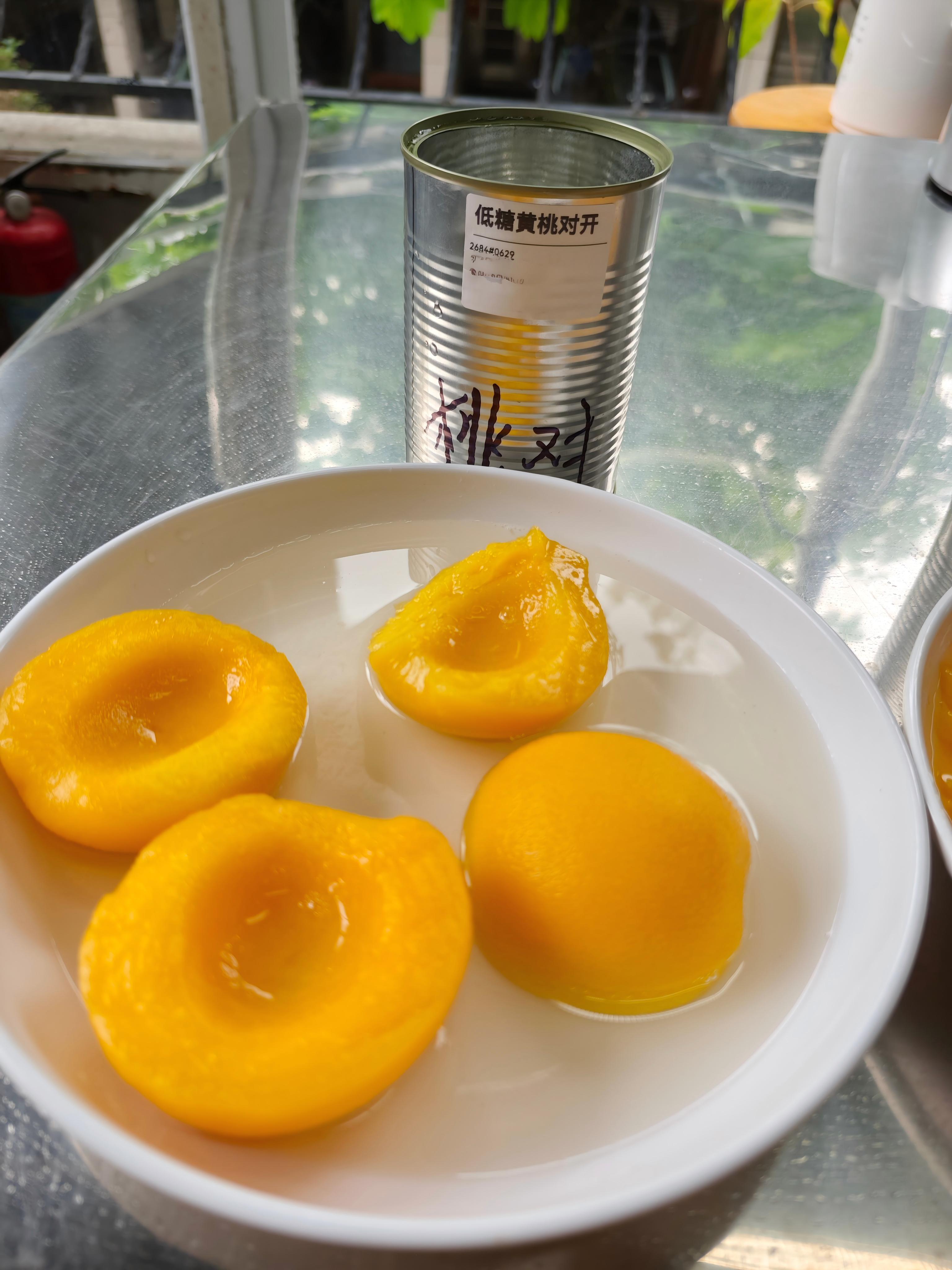
Canned yellow peach halves in light syrup — canned fruit items of this type fall under the canned peach scope of the ISO 22000:2018 certificate.
The Real Problem: Certificates Are Written for Scopes, Not for Buyers
A supplier can genuinely hold four or five internationally recognised certificates and still fail a buyer's compliance review. In canned fruit and vegetable purchasing, certification failure almost never happens because a certificate is missing. It happens because the certificate does not actually cover the thing being bought, in the market being shipped to, at the time of shipment.
There are four failure points worth separating before an order is placed.
1. Scope gap: the certificate covers a category, not a catalogue
Agrogentra's ISO 22000:2018 certificate, issued by CQC under certificate number CNO0124F21626R5M/3200, is limited to the canned fruit production named in the certificate scope: canned peach, mix fruits, pear, orange, apple, pineapple, and jam and jelly (pulpy jelly). The certificate scope does not list canned vegetables. That means canned sweet corn, canned green peas, canned asparagus, canned mushrooms or canned bamboo shoots sit outside that specific certificate, even though they sit inside the same product catalogue and pass through the same factory audits. They are covered by other documents — the FDA Food Facility Registration list and the HALAL scope — not by the ISO 22000 certificate.
2. Market gap: a valid certificate can be valid in the wrong place
Agrogentra's FDA Food Facility Registration (number 18082639404) applies to the US market and covers Category 17 Fruit & Fruit Products only. It explicitly excludes fish cans. The HALAL certification (number 1031240000, issued by SHC — Shandong Halal Certification Service — recognised by JAKIM) applies to Indonesia, Malaysia and global Muslim markets. A buyer in Lagos and a buyer in Rotterdam are not looking at the same paperwork, even when they buy the same can.
3. Validity gap: renewal cycles differ by scheme
The FDA Food Facility Registration is a biennial renewal, currently recorded as valid from 2024-10-09 to 2026-12-31, with Diana Liu of Quincy, MA as the registered U.S. Agent. Food safety management certificates run on their own cycles, and issuing bodies set different expiry dates. The release date of a certificate is not the same as its validity at the moment your container sails.
4. Food-contact layer: the can itself is a separate compliance question
The European Union's Regulation (EU) 2024/3190 restricts the use of Bisphenol A (BPA) in food contact materials, including can coatings. This regulation does not appear anywhere on a food safety management certificate. It applies to the packaging, so it has to be verified separately with the packer — a point that EU-bound buyers increasingly raise during supplier audits.
Where Chinese Canned Supply Stands
The global canned fruits and vegetables market reached USD 105.35 billion in 2024, according to Market Research Future. China's total export value of fruit and vegetable canned products in 2024 was USD 3.859 billion, per the China Canned Food Industry Association and China Customs, and China's export volume of canned vegetables in the same year reached 2.058 million tons, a 2.52% year-on-year decrease.
Within the canned fruit segment, canned peaches hold a dominant position at approximately 36.8% of segment share in 2024 (Market.us), while the global canned mushroom market was valued at USD 11.31 billion in 2023 (Global Market Insights).
Read together, these figures point to a supply base that is large, mature and price-competitive. Availability is rarely the constraint. The constraint sits further down the chain: for specialised items such as canned bamboo shoots, canned lychee or canned mushrooms, supply chains are more fragmented, and the practical difference between a mass-market trader and a supplier with genuine category control shows up in certificate scope, audit records and QC documentation rather than in the price per carton.
The Certification Register in Practice
Below is the certification set that applies to Agrogentra's canned fruit and canned vegetable range, with the exact scope language that matters to a buyer.
| Certification & issuing body | Certificate no. | Scope that matters | Market relevance |
|---|---|---|---|
| ISO 22000:2018 Food Safety Management System — CQC | CNO0124F21626R5M/3200 | Production of canned fruit: peach, mix fruits, pear, orange, apple, pineapple, jam and jelly (pulpy jelly). The scope does not list canned vegetables. | Global |
| BRCGS Global Standard Food Safety Issue 9 — Intertek Certification Limited | 05LA1209004 | Washing, peeling, pre-cooking, filling, seaming and pasteurization of canned fruit (peach, apple, pear, pineapple, orange and mixed fruits) and canned apple sauce in tin can, plastic cups and plastic bags. Issue date 2025-10-05. | Global — retail and specifier audits |
| HALAL — SHC (Shandong Halal Certification Service), recognised by JAKIM | 1031240000 | Canned and glass mushroom (including mushroom in brine), potato, baby corn, bamboo shoots, bean sprouts, cut green bean, green pea and kidney bean. Standard MS1500:2019. Valid 2024-11-30 to 2027-11-29. | Indonesia, Malaysia, global Muslim markets |
| FDA Food Facility Registration — U.S. FDA, biennial renewal 2024 | 18082639404 | Foreign facility: manufacturer/processor, packer, acidified and low-acid food processor, labeler. Category 17 Fruit & Fruit Products only; excludes fish cans. Valid 2024-10-09 to 2026-12-31. U.S. Agent: Diana Liu, Quincy MA. | USA |
| Kosher (Pareve) — STAR-K Kosher Certification, Baltimore, Maryland, USA | RIB1RR1Q | Canned apple, apricot, mandarin orange, mixed fruits, pear and yellow peach, packed in syrup, water, pear juice or solid pack. | Global kosher market: Israel, USA, Europe, Middle East |
Two habits make this table useful instead of decorative. First, ask for the current copy of the specific certificate, not a marketing collage, and check the expiry date against your planned shipment date. Second, read the scope line as a list of permitted products, because that is what an auditor or a customs officer will do.
Mapping certificates to actual items
Product-level coverage is where most purchase orders get delayed. For the Agrogentra range, the FDA Food Facility Registration covers canned mandarin oranges, canned pineapple, canned yellow peach, canned pear, canned fruit jelly, canned fruit cocktail, canned cherries, canned applesauce, fruit cups, canned lychee, canned mushrooms, canned asparagus, canned sweet corn and canned green peas.
The ISO 22000:2018 certificate maps across the canned fruit line as follows: canned yellow peach under the canned peach scope, canned mandarin orange under the canned orange scope, canned fruit cocktail under the mix fruits scope, canned applesauce under the canned apple scope, and canned fruit jelly under the jam and jelly scope. Canned pineapple and canned pear are covered directly by the canned fruit scope.
For the HALAL channel, the certified scope includes canned and glass mushrooms, potatoes, baby corn, bamboo shoots, bean sprouts, green peas, cut green beans and kidney beans — the items that matter most for Muslim-majority markets.
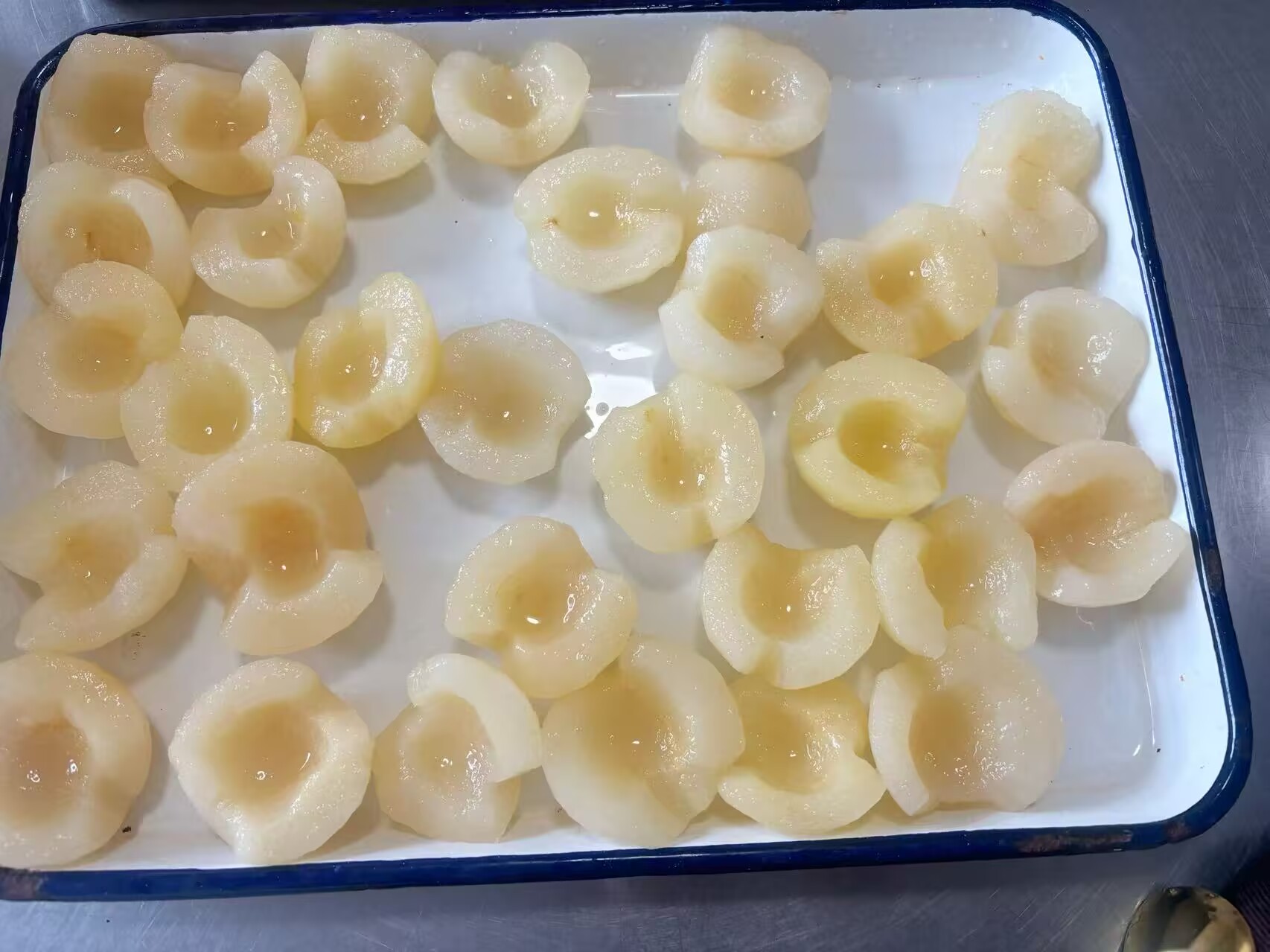
Canned lychee — a specialty item where certificate scope should be confirmed line by line rather than assumed from the product catalogue.
Step-by-Step: Verifying a Chinese Canned Supplier in Six Steps
Step 1 — Fix the item and the destination market first
Certification questions cannot be answered in the abstract. Write down the exact SKU (for example canned yellow peach in 425 g light syrup, or canned green peas in 2950 g) and the destination country. Every later step depends on these two variables.
Step 2 — Separate fruit items from vegetable items
Fruit and vegetable lines are frequently certified differently, even at the same supplier. For this range, the ISO 22000:2018 scope is canned fruit only, while several canned vegetable items are covered through the HALAL scope and the FDA registration list. If your order mixes canned fruits with canned vegetables, check each group separately.
Step 3 — Check validity windows, not just certificate existence
Request the current certificate copy for each scheme and compare the expiry date with your production and shipment schedule. The HALAL certificate runs 2024-11-30 to 2027-11-29; the FDA Food Facility Registration runs 2024-10-09 to 2026-12-31 on a biennial renewal cycle. Other schemes renew on their own timing, so the only reliable check is the certificate copy in front of you.
Step 4 — Verify the food-contact layer separately
Because EU Regulation (EU) 2024/3190 restricts BPA in food contact materials including can coatings, European buyers should ask the packing factory for a coating and can-lining declaration in addition to the food safety certificate. This is a packaging question, and no food safety management certificate answers it.
Step 5 — Read the process scope, not only the product scope
Process scope tells you which operations were actually audited. The BRCGS certified scope here covers washing, peeling, pre-cooking, filling, seaming and pasteurization of canned fruit, plus canned apple sauce in tin can, plastic cups and plastic bags. That is a meaningful detail if you are buying re-packing stock or planning to change packaging formats.
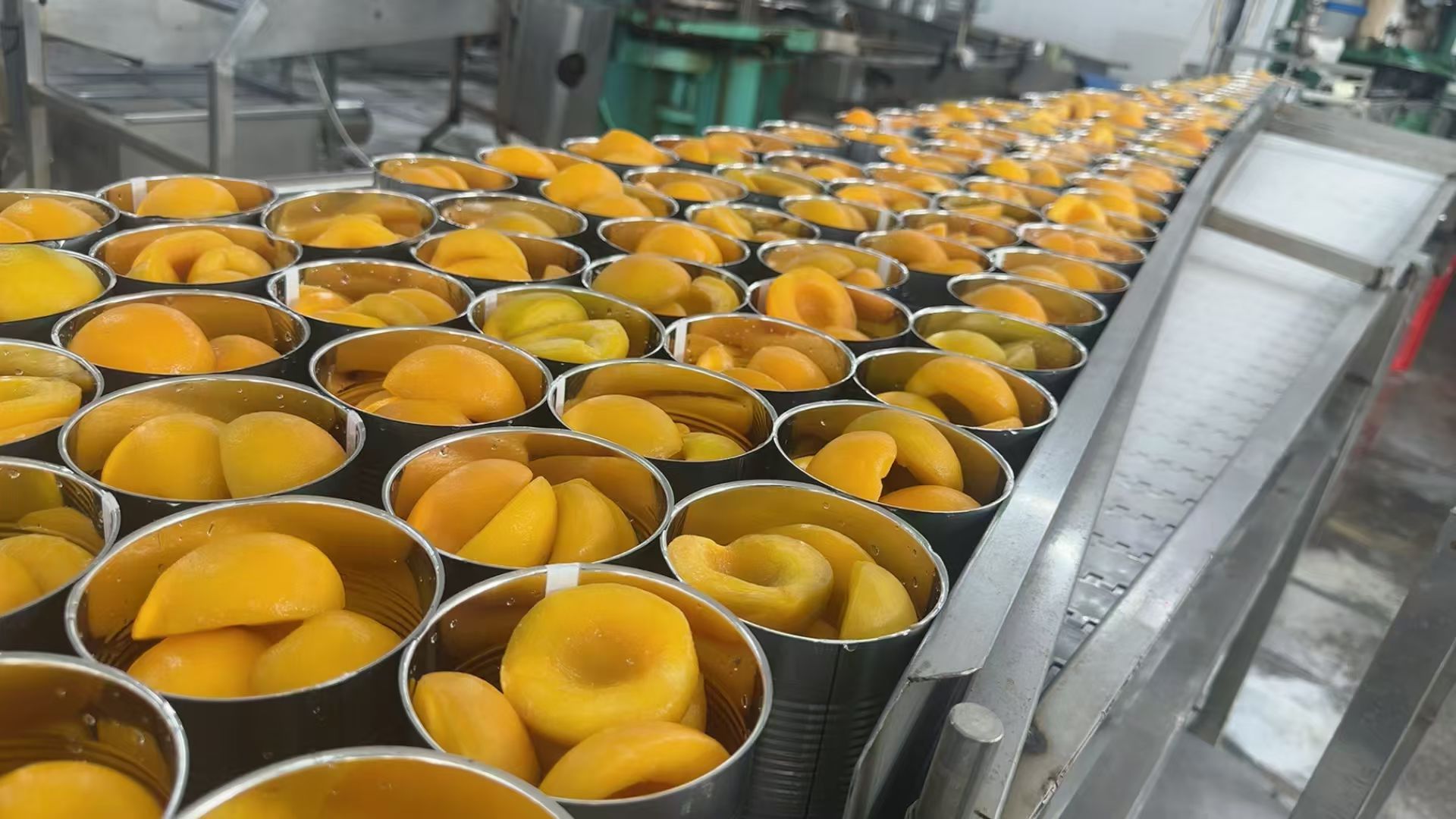
Filling and seaming sit inside the certified BRCGS process scope, together with washing, peeling, pre-cooking and pasteurization.
Step 6 — Confirm the document pack and inspection rights
Certification without documentation is still a risk. A complete shipment from this supply base includes a full set of export and customs clearance documents, COA, health certificate, pre-shipment inspection report, traceability report, and OEM formula and label design support. Quality control is full-process: incoming raw-material inspection, on-line production patrol, and laboratory physical, chemical and microbiological testing for each batch with a COA report, plus batch sample retention. Third-party inspection by SGS or Intertek is acceptable, and factory certification copies for buyer audit can be provided.
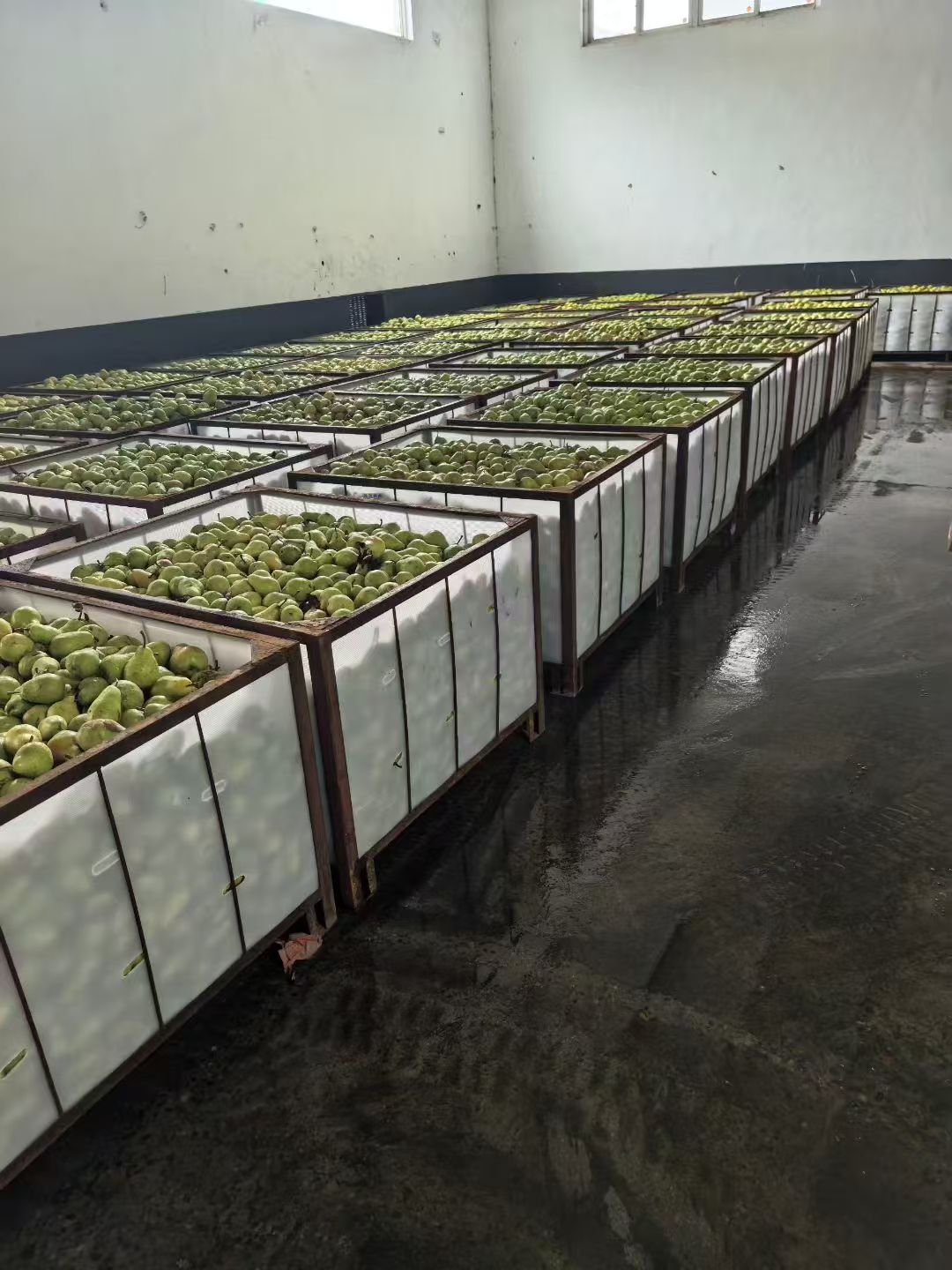
Raw-material storage: incoming raw-material inspection is the first control point in the full-process QC sequence.
Use Cases: When Certification Scope Changes the Buying Decision
Grocery importers and supermarket retail
Retail programmes need items that stay sellable without a cold chain. The canned fruit and vegetable range is sterilized with no preservatives, carries a 36-month shelf life at normal temperature, and is packed in 425 g and 2950 g formats with A9 and A10 whole segments in light syrup. For US-bound fruit items, the FDA Food Facility Registration list is the document that matches the SKU to the market; for kosher channels, the STAR-K scope covers canned apple, apricot, mandarin orange, mixed fruits, pear and yellow peach.
Catering and foodservice supply
Foodservice buyers care about handling time. Canned vegetables are processed from fresh raw materials shortly after harvesting and need no cleaning or pre-treatment after opening, while canned fruits are made from selected ripe fresh fruit and can be used directly or in baking and desserts. Ambient storage and transport remove the cold-chain cost that dominates frozen programmes.
Food processing and re-packing
Processors buying bulk stock for re-packing have the strictest scope requirements. Pear dices and seedless grapes in 4.25 kg (A12) cans have been supplied to European fruit processors for re-packing of canned fruit cocktails since 2005, which is the clearest illustration of why process scope — not brand familiarity — drives this segment.
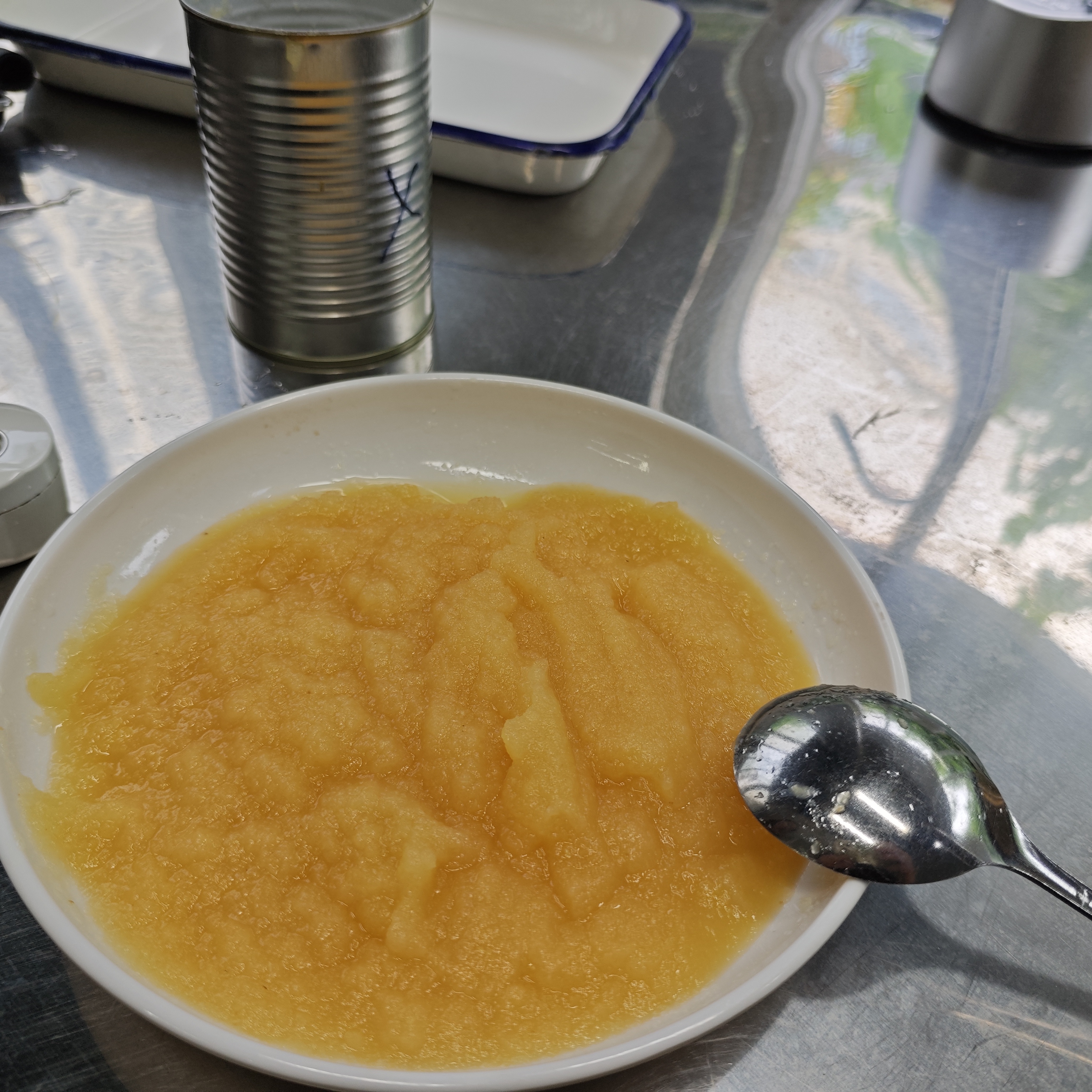
Canned applesauce falls under the canned apple scope of the ISO 22000:2018 certificate and is also inside the BRCGS certified process scope.
Market-specific sourcing
A single supplier relationship can serve several markets, but the certificate emphasis shifts: FDA registration and labelling compliance for the United States, HALAL documentation for Indonesia, Malaysia and other Muslim markets, Kosher certification for Israel, the United States and parts of Europe, and BRCGS or ISO 22000 evidence for European and North American retail audits.
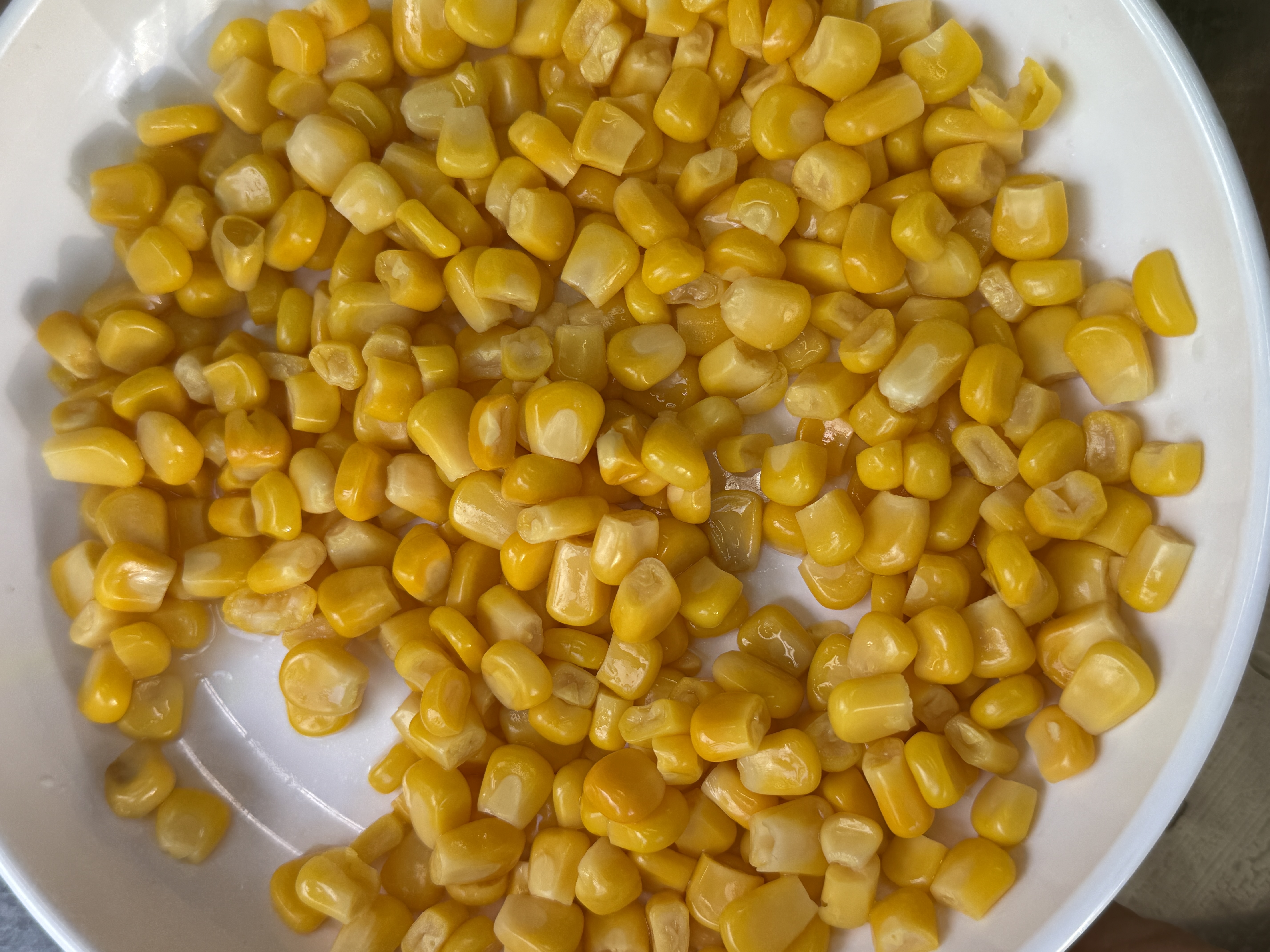
Canned sweet corn — a canned vegetable item that appears in the FDA Food Facility Registration list rather than in the canned fruit scope.
Destination Market and Documentation Layer
| Destination market | Documentation layer buyers typically require | Coverage available in this range |
|---|---|---|
| United States | FDA Food Facility Registration, U.S. Agent on record, health certificate | Registration no. 18082639404, Category 17 Fruit & Fruit Products, valid to 2026-12-31 |
| Indonesia, Malaysia, Muslim markets | Recognised HALAL certification for the specific item | HALAL no. 1031240000, MS1500:2019, valid to 2027-11-29 |
| European Union | Food safety system evidence plus food-contact material compliance, including BPA restrictions under Regulation (EU) 2024/3190 | BRCGS Issue 9 (no. 05LA1209004) and ISO 22000:2018 (no. CNO0124F21626R5M/3200); coating declarations to be confirmed with the packer |
| Israel, USA, Europe, Middle East (kosher channel) | Kosher certification for the specific fruit item and packing medium | STAR-K certificate no. RIB1RR1Q for apple, apricot, mandarin orange, mixed fruits, pear and yellow peach |
Frequently Asked Questions
Which export certifications does a Chinese canned fruit and vegetable supplier need for the US, EU and Muslim markets?
Four layers usually cover a purchase order. A food safety management system such as ISO 22000:2018 (CQC, certificate no. CNO0124F21626R5M/3200) and BRCGS (Intertek, certificate no. 05LA1209004); HALAL (no. 1031240000, valid 2024-11-30 to 2027-11-29) for Indonesia, Malaysia and global Muslim markets; FDA Food Facility Registration (no. 18082639404, valid 2024-10-09 to 2026-12-31) for US-bound fruit and fruit products; and Kosher certification (STAR-K, no. RIB1RR1Q) for the kosher channel. Can-coating compliance is checked separately, because EU Regulation (EU) 2024/3190 restricts BPA in food contact materials including can coatings.
Does ISO 22000:2018 cover canned vegetables as well as canned fruit?
For this certificate, no. The ISO 22000:2018 scope is limited to canned fruit production — canned peach, mix fruits, pear, orange, apple, pineapple, and jam and jelly (pulpy jelly) — and the scope does not list canned vegetables. Canned mushroom, asparagus, sweet corn, green pea, bamboo shoot and similar vegetable items are covered instead by the HALAL certification scope and, for the US market, by the FDA Food Facility Registration list.
Can a certified Chinese canned supplier support private label and mixed containers?
Yes, provided the item sits inside a certified scope. OEM production with logo customization is offered, with a monthly capacity of 3,500 units, MOQ of 1 FCL, mixed container loading and private label service. The document pack includes a full set of export and customs clearance documents, COA, health certificate, pre-shipment inspection report and traceability report, along with OEM formula and label design support.
Can buyers get samples and factory certification copies before placing an order?
Yes. Samples are provided on the customer's courier cost, and factory certification copies for buyer audit can be provided. Third-party inspection by SGS or Intertek is acceptable, and QC covers incoming raw-material inspection, on-line production patrol, and laboratory physical, chemical and microbiological testing for each batch with a COA report, plus batch sample retention. Buyers who need the current certificate copy for a specific item and market can request it directly from the Agrogentra team at charles.cai@agrogentra.com.
What is the MOQ and lead time for a private-label canned fruit or vegetable order?
The MOQ is 1 FCL and the standard lead time is 4-6 weeks, supported by a monthly capacity of 3,500 units. The range is sterilized with no preservatives and carries a 36-month shelf life at normal temperature, so orders ship and store at ambient temperature without a cold chain. To confirm certification coverage, packaging format and scheduling for your market, send your item list and destination to the Agrogentra export team or download the product catalogue here: Agrogentra product catalogue (PDF).
Conclusion
China remains a large and competitive source of canned fruit and canned vegetables, with a domestic export base measured in billions of dollars. What separates suppliers is not catalogue length but the precision of their certification: which item, which market, which validity window, and whether the can itself complies with the destination's food-contact rules.
Use the six-step check above on any supplier you shortlist. Match the certificate scope to the exact SKU, confirm the market layer, check the expiry dates against your shipment plan, verify the packaging, read the process scope, and lock the document pack into the contract. Done properly, this takes an afternoon and prevents a container being held at discharge.
Next step: verify your item against the certificate
Send the Agrogentra export team your item list and destination market. You will receive the relevant certificate copies for that SKU, the available packaging formats, sample arrangements and a quotation for your target volume. Contact: Charles Cai, Miya Kang and Susie Xie — charles.cai@agrogentra.com, miya.kang@agrogentra.com, susie.xie@agrogentra.com. Tel: +86-592-5393122, +86-592-2291213. WhatsApp: +1-408-599-4831, +8618150918630, +8618396134152. Address: 1F, Yundang Road 1-39, Siming District, Xiamen, Fujian Province, China.
Company website: www.agrogentra.com | Catalogue: download the Agrogentra leaflet (PDF)
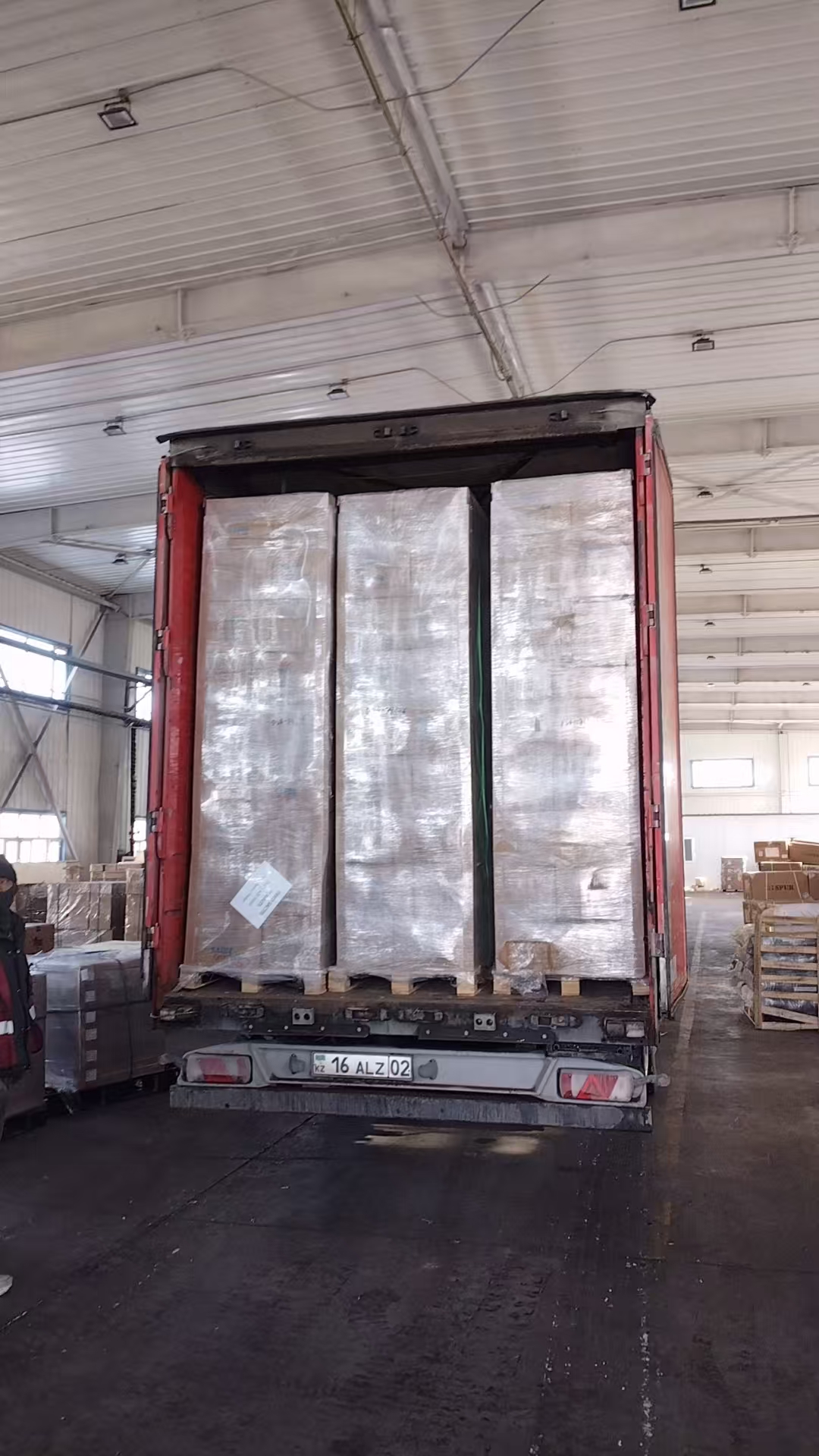
Container loading: canned fruit and vegetables are stored, handled and shipped at ambient temperature with no cold chain requirement.