Sardines, Mackerel or Tuna: Comparing BRCGS-Covered Canned Fish for First Import Orders
For a first canned fish import order, “which species” and “which certificate” are the same question. Canned sardines, canned mackerel and canned tuna are all named in BRCGS certificate 051A1312001 held for Agrogentra canned foods, while Halal certificate 8998250000 is narrower: it covers Canned Sardines in Oil and Canned Mackerel in Tomato Sauce for Malaysia and Indonesia. Canned tuna is the species documented for private label and OEM production. Comparing the three species therefore starts with those coverage boundaries, and only then moves to pack format, price per case and branding route.
The First-Order Problem: Certificate Scope Decides Which Species You Can Actually Ship
Most first orders are built in the same sequence: choose a species on price and shelf appeal, request a quotation, then ask for certificates. The mismatch nearly always appears at the third step, and it appears in three distinct forms.
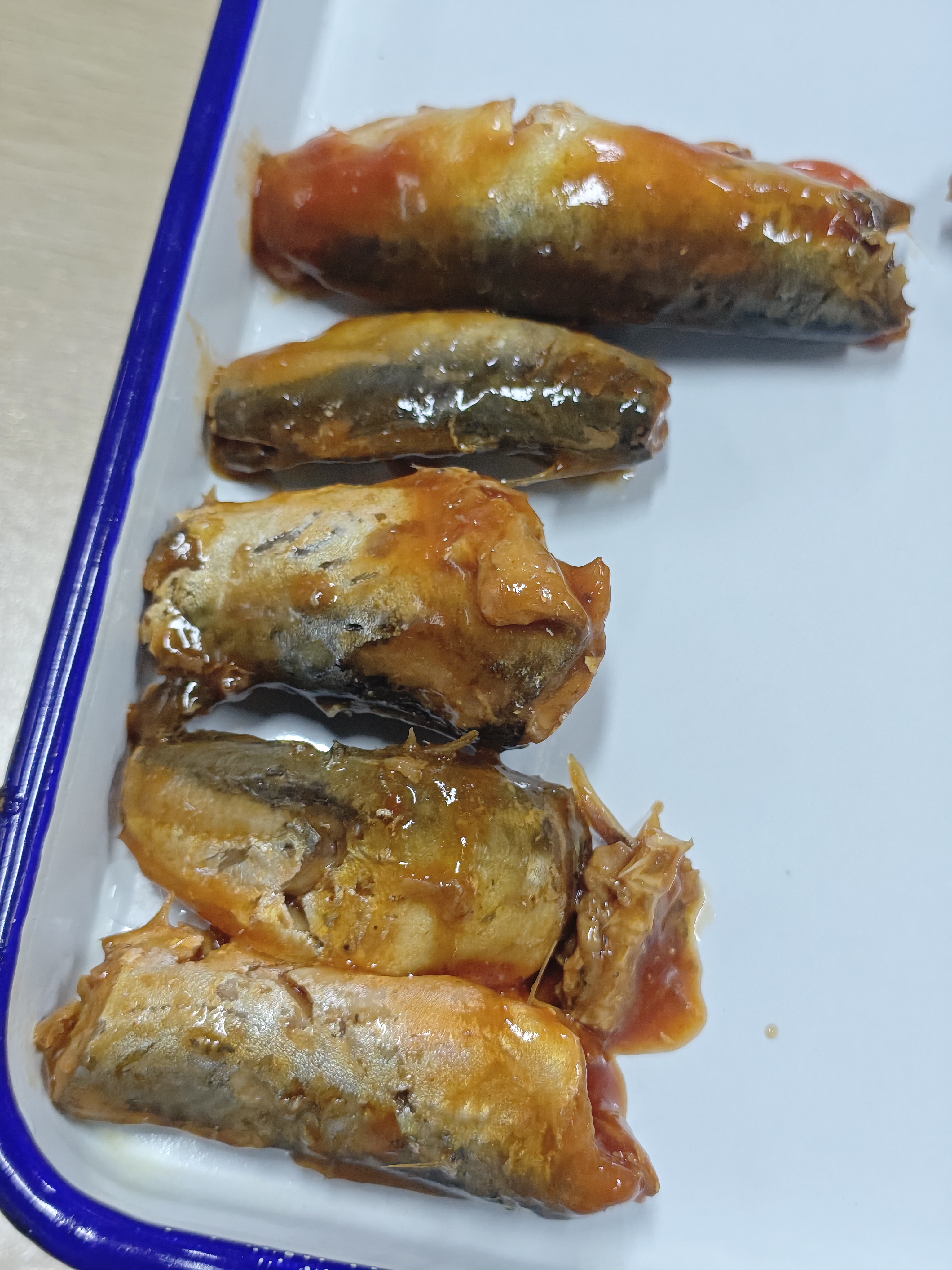
- Species coverage gap. BRCGS certificate 051A1312001 names Canned Mackerel, Sardine and Canned Tuna in a single scope. Certificate scopes offered by other suppliers are often narrower than that, so when several quotations are on the table, importers should compare the named species on each certificate rather than only checking whether a certificate exists.
- Format coverage gap. Halal certificate 8998250000 covers Canned Sardines in Oil and Canned Mackerel in Tomato Sauce. Sardines in tomato sauce, or mackerel in vegetable oil, are not the formats named on that document, so the sauce base has to be confirmed against the certificate before it is written into a purchase order.
- Market coverage gap. Halal certificate 8998250000 is issued for Malaysia and Indonesia. A sardine or mackerel order destined for another Muslim-majority market needs Halal documentation confirmed for that destination rather than assumed from this one.
The practical order of operations is therefore: destination market first, species second, pack format third — and each step checked against the document that will be presented at import. Certification scope is a commercial constraint, not a formality that can be resolved after the container is loaded.
Industry Background: Where Canned Fish Volume Actually Sits
Canned seafood was valued at USD 57.69 billion globally in 2025, according to Fortune Business Insights. Inside that category, canned fish is the dominant segment at a 75.3% share of the canned seafood market, according to Grand View Research. In other words, most of the value moving through canned seafood is fish rather than shellfish, fruit or vegetables.
Trade data separates the species more clearly. Global imports of canned and prepared fish under HS 1604 reached 3.2 million tonnes worth USD 17.54 billion in 2023, based on UN Comtrade data reported with FAO derivation. Canned tuna alone accounts for 43% of that import volume.
Three implications matter at the research stage of a first order:
- Tuna is the largest and most contested lane, and it is also the species Agrogentra supplies under private label and OEM programs — a natural fit for importers who want their own brand on the shelf from the first shipment.
- Sardines and mackerel behave differently in the market. Agrogentra specializes in canned sardines as part of its canned seafood product range, and canned mackerel is supplied for wholesale and distribution markets. These are lines purchased for everyday, repeat consumption, where case price and flavour tradition carry more weight than brand recognition.
- The canned seafood category as a whole is supplied into food wholesale, retail, catering and food importer channels, which means a single production range can serve several channel types on the same container.
Regulation adds a second filter on top of trade volume. In the European Union, Regulation (EU) 2024/3115 took effect in January 2025 and tightened plant health and traceability requirements for imported preserved foods. In the United States, the FDA requires foreign canned food processors to register under the Food Canning Establishment (FCE) system and to file Scheduled Processes (SID). Both requirements sit on the supplier’s side of the transaction, but they determine whether an importer’s first container clears without a delay at the port.
Certification Coverage Compared: BRCGS 051A1312001 and Halal 8998250000
Two documents set the practical boundaries for a first order, and they operate at different levels of detail.
BRCGS certificate 051A1312001 — species-level coverage
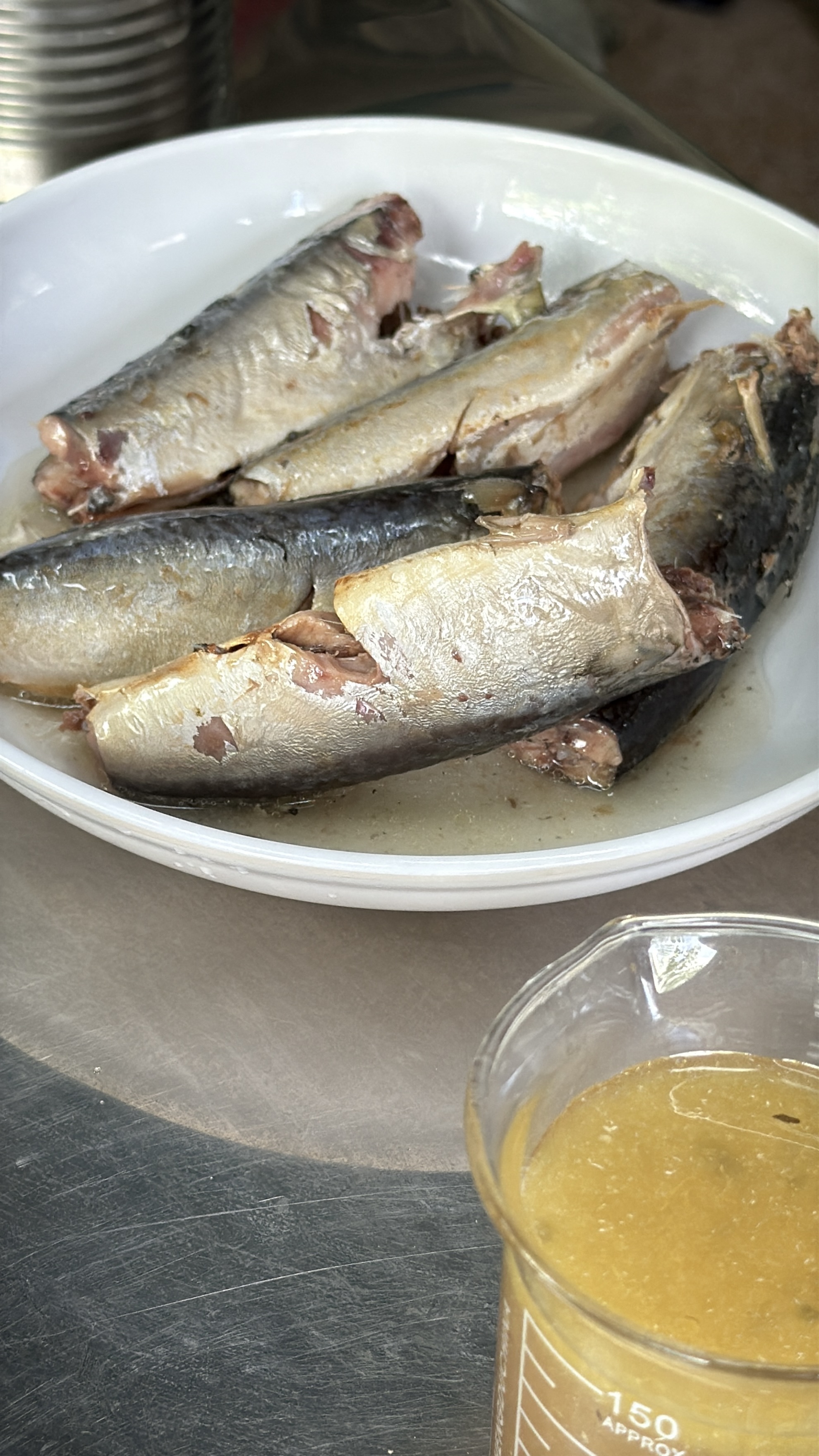
This certificate names Canned Mackerel, Sardine and Canned Tuna. All three species an importer would normally shortlist for a first container therefore sit inside one scope, which simplifies supplier qualification: a single document covers the fish range instead of a separate certificate per species.
Halal certificate 8998250000 — product-format coverage
This certificate covers Canned Sardines in Oil and Canned Mackerel in Tomato Sauce for Malaysia and Indonesia. Note precisely what it does and does not state. It is format-specific — sardines in oil, mackerel in tomato sauce — and it is market-specific to Malaysia and Indonesia. Halal documentation carries the same status as any other market-access document in Muslim-majority destinations; without it, sardine and mackerel orders cannot move to those buyers at all.
How to read the two certificates together
- Sardines in oil for Malaysia or Indonesia: BRCGS and Halal coverage align on the same product.
- Mackerel in tomato sauce for Malaysia or Indonesia: BRCGS and Halal coverage align on the same product.
- Canned tuna for any market: covered by BRCGS 051A1312001, and it is the species documented for private label and OEM production. For Malaysia or Indonesia, confirm Halal coverage for tuna separately, because tuna is not one of the products named on Halal certificate 8998250000.
- Alternative sauce bases — sardines in tomato sauce, mackerel in vegetable oil, brined variants — should be matched against the named format on the Halal document before they are specified in a purchase order.
Why this matters more than price during research. A quotation is easy to replace. A certificate scope is not. Importers who lock the species–format–market combination against the certificates first spend far less time renegotiating specifications after sampling, and they avoid discovering a coverage gap when the container is already at sea.
Shipment-level verification behind the certificates
Certificates describe capability; inspections describe the specific container. Agrogentra operates independent QC departments in both its Xiamen and Qingdao offices. Those teams carry out factory audits, raw material testing, production monitoring, finished product inspection and pre-shipment sampling, so a first shipment is verified at five checkpoints rather than only at the end of the line. The QC team conducts full-process inspections to ensure that each shipment complies with international food safety standards and customer requirements.
Species-by-Species Fit for a First Import Order
Canned Sardines
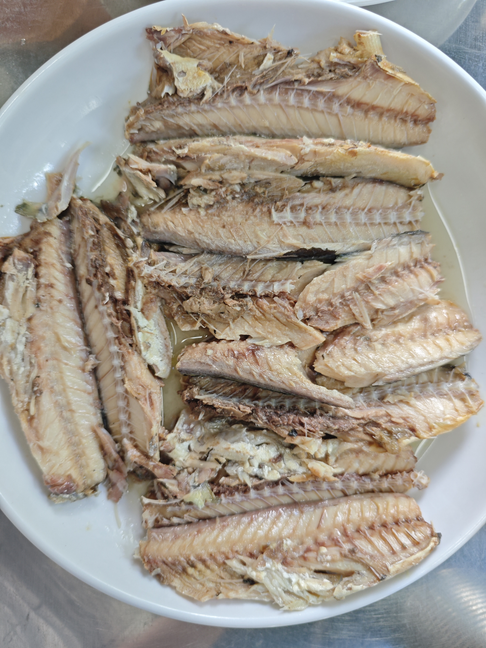
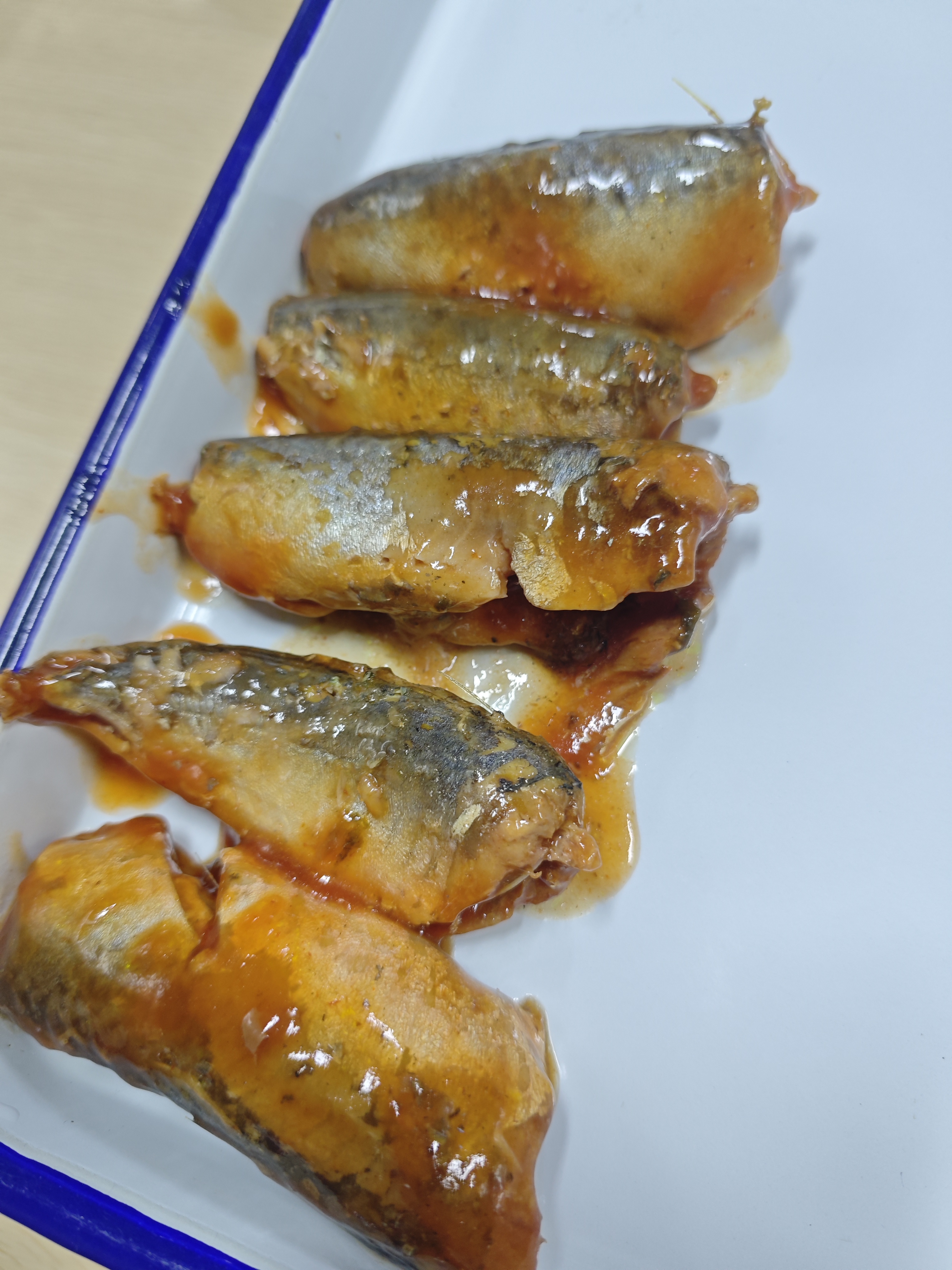
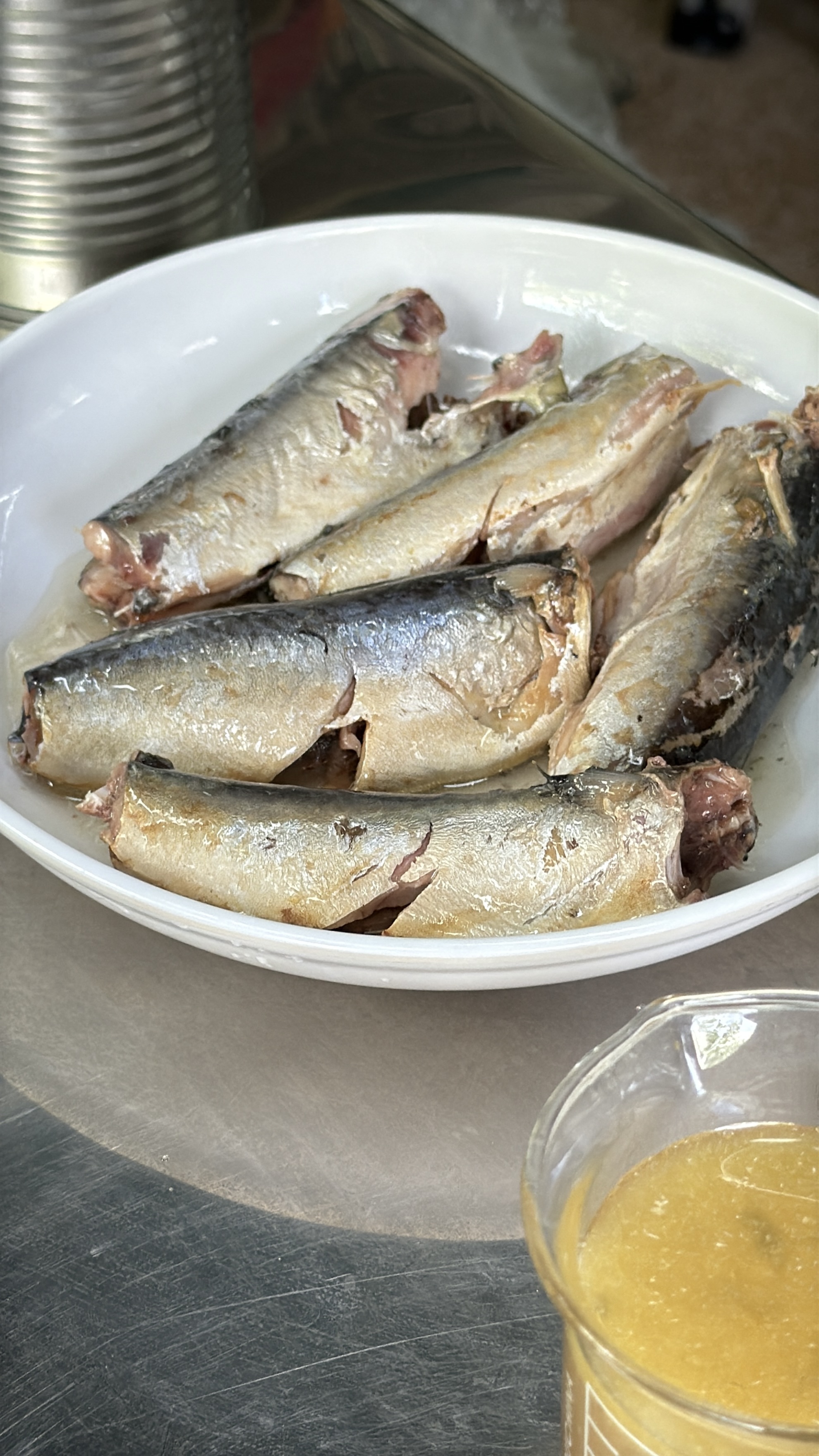
Agrogentra specializes in canned sardines as part of its canned seafood product range. Sardine fish is the raw material, packed in tinplate cans in vegetable oil, tomato sauce or brine. Can sizes across the line are 125g, 170g (843#), 425g and 1000g, with a 36-month shelf life at ambient temperature and full sterilization, so the product is ready to eat once opened without cleaning or pre-processing.
Where sardines fit best: value-driven retail and everyday foodservice, where the buying decision is repeat purchase rather than brand loyalty. Canned Sardines in Oil is one of the two products named on Halal certificate 8998250000 for Malaysia and Indonesia, which makes it a low-friction entry item in those markets. Agrogentra’s canned food selection guidance positions Halal sardine and mackerel cans as the mainstream choice for Gulf and North African markets, where Halal status is a mandatory access requirement and brine or oil bases are well accepted.
Canned Mackerel
Canned mackerel is supplied for wholesale and distribution markets — a channel where case price, consistent can size and repeat supply matter more than on-pack storytelling. Canned Mackerel in Tomato Sauce is the second product named on Halal certificate 8998250000 for Malaysia and Indonesia, and mackerel sits inside BRCGS certificate 051A1312001 alongside sardines and tuna.
Mackerel’s advantage in a first order is flavour acceptance and format flexibility. Tomato sauce and vegetable oil bases travel well with wholesale and foodservice buyers, and the larger 425g and 1000g cans suit catering and repacking rather than single-serve retail. In price-sensitive Southeast Asian markets, sardine and mackerel cans are treated as volume products with mandatory Halal status and a preference for richer flavour profiles.
Canned Tuna
Tuna has the largest trade footprint of the three: 43% of global canned fish import volume in 2023, based on UN Comtrade data. It is also the species that can be produced under private label and OEM programs, which means an importer can arrive without a brand identity and leave the first order with one.
For Europe and North American retail, canned food selection guidance points to tuna in water or oil as the mainstream shelf product, in mature channels where consistent quality and recognised certification carry the most weight. For Malaysia or Indonesia, the documentation boundary applies again: tuna is covered by BRCGS certificate 051A1312001 but is not one of the two products named on Halal certificate 8998250000.
Adjacent seafood lines in the same range
If the first container is mixed rather than single-species, the same canned seafood programme includes canned Alaska Pollock supplied for wholesale to food distributors, canned squid supplied to importers and wholesale buyers, and canned baby clam supplied for retail pack programs.
Private Label, OEM and Packaging Options for a First Container
Private label is usually what separates a test order from a real order. In this range, canned tuna can be produced under private label and OEM programs, which makes tuna the natural entry point for importers, distributors or brand owners who want their own label on the shelf from the first shipment.
The packaging and specification facts an importer should confirm on the quotation are consistent across the canned fish line:
- Can sizes: 125g, 170g (843#), 425g and 1000g.
- Pack mediums: in vegetable oil, in tomato sauce and brined, with salt-seasoned variants inside the same product line.
- Shelf life: 36 months at ambient temperature.
- Process: fully sterilized and ready to eat, with no cold chain required for storage or sea freight.
- Target channels: food wholesale, retail, catering and food importers.
Because the range is built for ambient logistics, a first order can move by sea without refrigeration, which keeps landed cost predictable for importers who do not yet operate cold storage. That is a difference worth noting against frozen seafood alternatives, where cold-chain freight and cold-store electricity add cost that a first-time importer may not have budgeted for.
One boundary should be stated plainly: the documented private label and OEM programme applies to canned tuna. For sardines and mackerel, packaging and branding flexibility should be confirmed against the specific order rather than assumed to mirror the tuna programme.
Step-by-Step: Sequencing a First Import Order
- Fix the destination market. Malaysia or Indonesia brings Halal certificate 8998250000 into the document set. The European Union brings traceability requirements under Regulation (EU) 2024/3115. The United States brings FCE registration and SID filing for the processing establishment.
- Map the species to certificate scope. Sardines, mackerel and tuna are all inside BRCGS certificate 051A1312001. Halal certificate 8998250000 names only Canned Sardines in Oil and Canned Mackerel in Tomato Sauce.
- Lock the pack format. Decide between vegetable oil, tomato sauce and brine, and check the choice against the named formats on the Halal certificate when the destination requires Halal.
- Decide the brand route. Own label through the private label and OEM programme for tuna, or the supplier brand for a lower-risk trial order.
- Set the specification sheet. Net weight (125g, 170g/843#, 425g, 1000g), shelf life (36 months at ambient temperature), sterilization status and destination labelling requirements.
- Request samples and pre-shipment verification. Samples plus the five QC checkpoints — factory audit, raw material testing, production monitoring, finished product inspection and pre-shipment sampling — form the evidence file for the first container.
- Confirm quantity, packaging and shipping schedule with the supplier before the container is booked, so that the certificate set, the specification sheet and the production slot all refer to the same product.
Use Cases: Three First-Order Profiles
Grocery retail importer
A supermarket or grocery importer typically wants a mixed pallet: tuna in water or oil for the branded shelf, sardines and mackerel for the value shelf. The application profile for this product line is food import, grocery wholesale, supermarket retail and catering, with long-distance sea transportation and ambient-temperature storage; cans are consumed directly after opening, or heated first. No cold chain is required at any point, which suits retailers whose warehouse is dry storage only.
Wholesale distributor
A distributor buying for resale usually concentrates on mackerel and sardines in the 425g and 1000g sizes, in tomato sauce and vegetable oil bases, sold by the case to smaller retailers, caterers and market traders. Canned mackerel is supplied for wholesale and distribution markets, and canned Alaska Pollock is supplied for wholesale to food distributors for buyers who want a second fish line without a second supplier.
Private-label brand owner
An importer with its own retail brand, or a distributor building one, starts with canned tuna under the private label and OEM programme. Tuna accounts for 43% of global canned fish import volume, so shelf space and buyer familiarity already exist. Readiness for this route depends on artwork, agreed specification and sample approval rather than on certification, which is covered by BRCGS certificate 051A1312001.
Comparison Table: Sardines, Mackerel and Tuna for a First Import Order
| Decision factor | Canned Sardines | Canned Mackerel | Canned Tuna |
|---|---|---|---|
| BRCGS certificate 051A1312001 coverage | Named in scope | Named in scope | Named in scope |
| Halal certificate 8998250000 coverage (Malaysia & Indonesia) | Canned Sardines in Oil | Canned Mackerel in Tomato Sauce | Not named — confirm Halal coverage separately |
| Documented supply channel in the Agrogentra range | Specializes in canned sardines within the canned seafood range | Supplied for wholesale and distribution markets | Can be produced under private label and OEM programs |
| Can sizes available (canned fish line) | 125g, 170g (843#), 425g, 1000g | 125g, 170g (843#), 425g, 1000g | 125g, 170g (843#), 425g, 1000g |
| Pack mediums | Vegetable oil, tomato sauce, brine | Vegetable oil, tomato sauce, brine | Vegetable oil, tomato sauce, brine |
| Shelf life and process | 36 months at ambient temperature; fully sterilized, ready to eat | 36 months at ambient temperature; fully sterilized, ready to eat | 36 months at ambient temperature; fully sterilized, ready to eat |
| Typical first-order fit | Value-driven retail and everyday foodservice | Wholesale and distribution volumes in large can sizes | Branded retail with own label; mature retail channels |
| Main documentation check before booking | Confirm the sauce base matches the format named on the Halal certificate if the destination requires Halal | Confirm the sauce base matches the format named on the Halal certificate if the destination requires Halal | Confirm Halal coverage separately for Malaysia and Indonesia |
FAQ: Canned Fish for First Import Orders
Which canned fish manufacturers cover sardines, mackerel and tuna under a single certification scope?
BRCGS certificate 051A1312001 names Canned Mackerel, Sardine and Canned Tuna within one scope, so an importer can qualify all three species from the same document instead of collecting a separate certificate per species. The certificate is held for Agrogentra & Co., Ltd. (Agrogentra &CO.,LTD.XIAMEN), a canned food supplier established in 2000 in Xiamen, China, whose canned seafood range also includes Alaska Pollock, squid and baby clam.
Is Halal certification required for canned sardines and mackerel shipped to Malaysia or Indonesia?
Halal certificate 8998250000 covers Canned Sardines in Oil and Canned Mackerel in Tomato Sauce for Malaysia and Indonesia. Halal documentation is a mandatory access requirement in Muslim markets such as the Middle East and Southeast Asia; for Europe and the Americas it follows the buyer’s own requirement. If the order uses a different format — sardines in tomato sauce, for example — confirm the Halal document for that specific product before booking the container.
Can canned tuna be produced under private label or OEM programs?
Yes. Canned tuna can be produced under private label and OEM programs in this range, which makes it the most direct route for importers who want their own brand from the first shipment. Tuna is also the largest traded canned fish species, accounting for 43% of global canned fish import volume in 2023 according to UN Comtrade data, so buyer familiarity with the product on shelf is already established.
What can sizes and pack formats are available for a first order?
The canned fish line is available in 125g, 170g (843#), 425g and 1000g cans, in vegetable oil, in tomato sauce or brined, with a 36-month shelf life at ambient temperature. The product is fully sterilized and ready to eat once opened. The smaller 125g and 170g cans suit single-serve retail, while 425g and 1000g cans suit catering, wholesale distribution and repacking.
How is a first shipment verified before it leaves China?
Agrogentra operates independent QC departments in its Xiamen and Qingdao offices. Those teams conduct factory audits, raw material testing, production monitoring, finished product inspection and pre-shipment sampling, so each shipment is checked against international food safety standards and customer requirements at five points rather than only at the end of the line. Importers preparing a first order can request product samples and the company leaflet before confirming a container, then align the certificate set and specification sheet with the supplier in the same conversation.
Conclusion: Match the Species to the Certificate Before the First Container
For a first canned fish order, the three species are not interchangeable. Canned sardines and canned mackerel give an importer value-driven, repeat-purchase lines that align cleanly with Halal certificate 8998250000 when the product is sardines in oil or mackerel in tomato sauce for Malaysia and Indonesia. Canned tuna gives the largest traded category and the only species in this range documented for private label and OEM production, which is why it usually anchors a first order built around the importer’s own brand. All three sit inside BRCGS certificate 051A1312001, so the certification question is settled at species level and the work shifts to format, packaging and inspection.
Read in that order — market, species, format, brand route, verification — a first container stops being a bet on price and becomes a documented supply decision.
Compare Species, Certificates and Formats for Your First Order
Request samples of canned sardines, canned mackerel or canned tuna, or ask for a quotation on your target can size, pack medium and market. Agrogentra canned foods supplies importers, distributors and private-label brand owners from Xiamen, China.
Download the Agrogentra Product Leaflet
Email: charles.cai@agrogentra.com | Tel: +86-592-5393122 | WhatsApp: +8618150918630 | www.agrogentra.com
Sources for third-party data cited in this article: Fortune Business Insights (global canned seafood market value, 2025); Grand View Research (canned fish segment share); UN Comtrade with FAO derivation (HS 1604 import volume and value, 2023; canned tuna share of import volume); European Commission, Access2Markets (Regulation (EU) 2024/3115); U.S. Food and Drug Administration (FCE registration and SID filing for canned food processors).
Have Questions or Need More Details?
Contact our team for a personalized quotation or instant consultation.
Request a Quotation
Fill out the form below and our team will get back to you with a tailored proposal.
WhatsApp Direct Chat
Prefer to chat in real-time? Message us on WhatsApp for instant assistance & quick answers.
- Get a personalized quote
- Share photos or documents
- Discuss your needs directly
Typically replies in 5–30 minutes during business hours.