Swollen Canned Fish Cans on Arrival: An Importer's Guide
A domed or bulged end on a canned fish tin is a non-conformance, not a cosmetic issue. Quarantine the affected cans and the entire batch, freeze the evidence before anyone mixes the pallets, then verify the supplier's QC records against the exact SKU you bought — in that order.
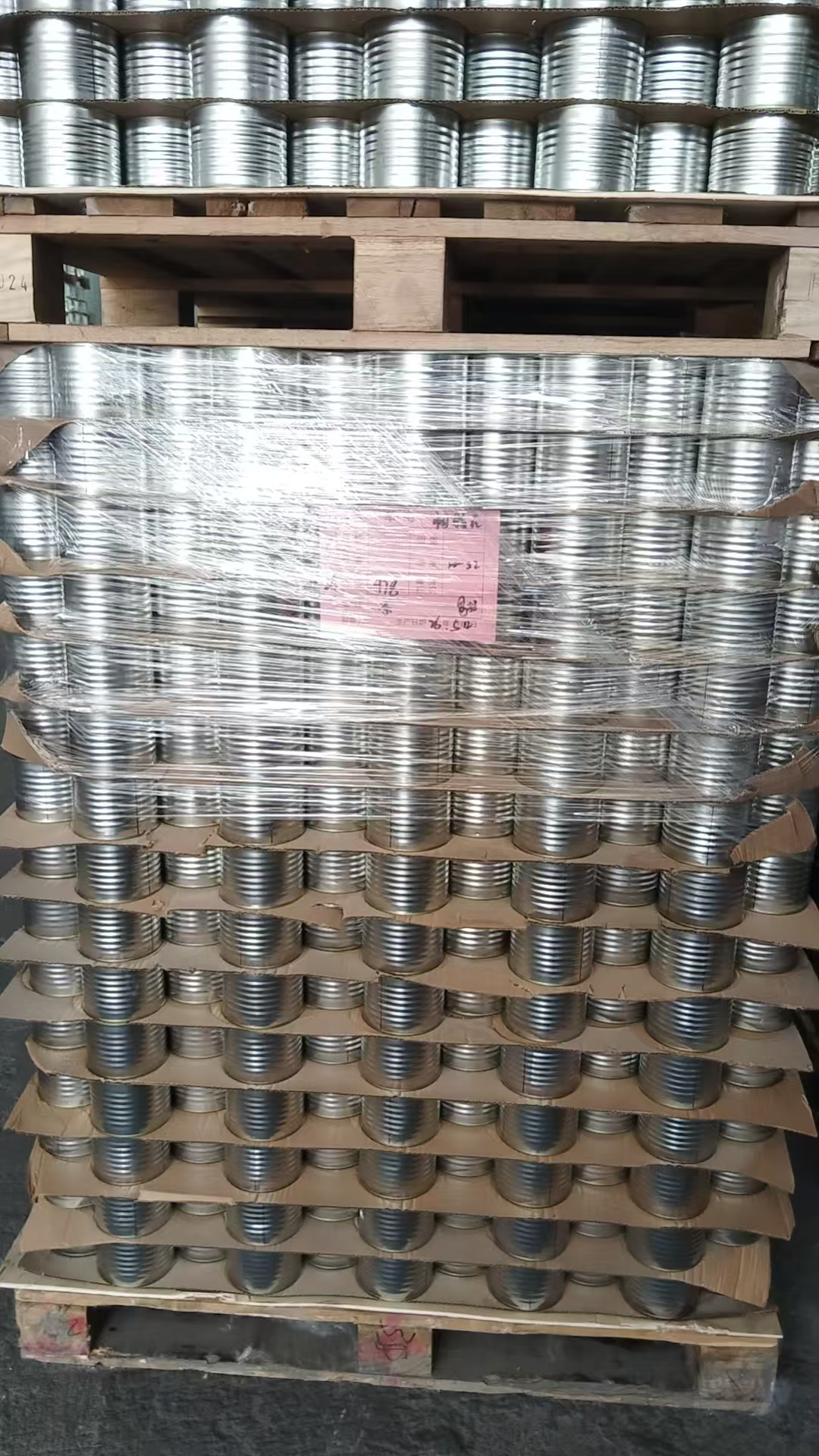
A swollen can indicates gas produced by microbial growth or spoilage — the seal has failed. The affected batch must be treated as non-conforming: do not consume it, quarantine the whole batch, document it with photos, trace it by batch number, and contact the supplier for replacement or claim. In parallel, establish whether transport or storage exposed the lot to high temperature or impact, because that finding decides which corrective action actually prevents a repeat.
This guide is written for importers, grocery wholesalers, catering suppliers and private-label buyers who are evaluating Chinese canned fish suppliers and need a repeatable procedure when a container of canned sardines, canned mackerel or canned tuna arrives with domed ends. It covers the diagnosis, a 72-hour action sequence, the purchase terms to read before you argue about money, and the supplier documentation that settles a claim instead of prolonging it.
Problem Definition: What a Domed End Actually Tells You
The preservation logic that a swollen can breaks
The preservation principle of canned food is built on two elements: sealing and commercial sterility. The food is filled into a tinplate can and hermetically sealed by a seaming machine, after which a vacuum forms inside — typically 300–500 mmHg. With almost no oxygen left in the can, aerobic bacteria and oxidation are suppressed. The sealed cans then pass through a retort, where they are heated at 115–121 °C under roughly 0.1–0.2 MPa of high-pressure steam to achieve commercial sterility, meaning all pathogenic bacteria and microorganisms capable of growing at ambient temperature, together with their spores, are destroyed. After sterilization the cans are rapidly cooled and subjected to an incubation test — held at 37 °C for 7–10 days — to confirm no swelling or microbial growth before release.
A can that arrives with one or both ends domed has failed somewhere inside that chain. The internal gas pressure has exceeded the external pressure, and the vacuum that should be holding the ends slightly inward is gone.
The four causes you are separating
- Seaming or seal failure. A defective double seam lets microorganisms enter the can, where they grow and produce gas.
- Insufficient sterilization. Heat-resistant bacteria or spores survive the retort cycle and multiply afterwards.
- Transport or storage abuse. Exposure to high temperature (above 37 °C) or severe impact and compression during transport or storage can trigger swelling and seal damage.
- Internal chemical reaction. High-acid contents or internal reactions such as hydrogen swell can generate gas without any external contamination.
Why canned fish is the strictest version of this problem
Most canned fish is a low-acid pack. Low-acid foods (pH above 4.6), which include most fish and meat canned products, must be sterilized at 121 °C under pressure, while high-acid foods such as tomato (pH below 4.6) can be processed at lower temperatures. The sterilization curve and the cold-point temperature (F0 value) directly determine product safety, and improper seaming or insufficient sterilization can cause can swelling and spoilage. In practice: a domed end on a canned sardine, mackerel or tuna tin is a stronger safety signal than the same symptom on a high-acid pack, and it cannot be released to a supermarket shelf, a foodservice kitchen or a repacking line on a judgement call.
Four receiving conditions, four different dispositions
Not every imperfect can is a swollen can, and the correct action differs for each condition. A dented can that still holds its vacuum is a mechanical problem. A rusted can is a storage-damage problem. A leaking can is a seal failure. A domed can is gas. Only the last one is an automatic batch-level non-conformance, and the receiving matrix later in this article maps each condition to its disposition.
Industry Background: Why This Risk Is Structural, Not Rare
Canned fish is the dominant product form in the canned seafood category. The canned fish segment holds a 75.3% share of the canned seafood market (Grand View Research, 2025), and the global canned seafood market was valued at USD 57.69 billion in 2025 (Fortune Business Insights). Published valuations of this market vary notably depending on how the boundary between "canned" and "processed and packaged" seafood is drawn, so any market figure should be read together with its definition. What does not vary is the trade volume: global imports of canned and prepared fish under HS 1604 totaled 3.2 million tonnes, worth USD 17.54 billion, in 2023 (UN Comtrade / FAO derived), with canned tuna alone accounting for 43% of global canned fish import volume.
That volume moves through long ocean transit and ambient storage. Canned products store at ambient temperature without refrigeration and carry a shelf life of up to 36 months, which is precisely why they are attractive to importers without cold-chain capacity. But the same ambient model concentrates risk in two controllable variables: heat and handling. Storage environments with high temperature and humidity — especially above 30 °C or humidity above 85% — accelerate rusting and quality deterioration, and violent impact or dropping of cans can damage the seals. A container that sat on a hot apron, or a pallet that was double-stacked and dropped, can convert a compliant production lot into a claim.
The regulatory backdrop is tightening at the same time. EU Regulation 2024/3115, effective January 2025, mandates stricter plant health and traceability requirements for imported preserved foods, and in the United States the FDA requires all foreign canned food processors to register under the Food Canning Establishment (FCE) and file Scheduled Processes (SID). Both regimes reward importers who can produce a batch-linked receiving record and a supplier traceability report — which means the paperwork you assemble on day one of a swollen-can incident has compliance value, not just claim value.
The Solution Path: Isolate, Document, Verify, Then Claim
The handling of a swollen-can incident follows six steps. Treating them out of order — arguing about compensation before the batch is segregated, or moving pallets before the extent of the problem is measured — is what turns a manageable rejection into a full-lot loss.
Step one: isolate immediately
Quarantine the swollen cans and the entire affected batch. Do not place them on shelves, do not sell them, and do not consume them. Cans found with swelling, leakage or severe rust must never be consumed. The quarantine boundary should be the batch, not the visible cans, because a single domed tin is evidence about the whole production run it came from.
Step two: document the evidence
Record the batch number, production date and arrival time, and photograph or film the affected cans with the production code legible in the same frame. Evidence that cannot be tied to a batch number has almost no commercial weight later.
Step three: assess the scope before you move anything
Spot-check the same batch carton by carton, and count both the number and the ratio of swollen cans. The ratio is the number that drives the commercial decision: a two-can anomaly in a mixed FCL or LCL shipment is handled very differently from a systematic failure rate inside one production code.
Step four: investigate the cause on your side first
Check transport temperature records, warehouse temperature and humidity, and any signs of impact or damage on the outer cartons. This step protects you from claiming a production defect that was actually a logistics event — and it protects you from accepting that explanation when the evidence does not support it.
Step five: trace the lot and formalize the claim
Report to the supplier with the batch number to negotiate replacement or claim. Retain samples and send them to a third-party laboratory to confirm whether microbial levels exceed the applicable limits. Retained batch samples and an independent lab result convert a dispute about opinion into a dispute about facts.
Step six: fix the root cause, not the symptom
Take corrective action according to the cause identified. If the finding points to transport or storage, adjust temperature control and stacking pressure requirements. If it points to production, the supplier's seaming and sterilization process for that product line has to change before the next shipment is scheduled.
Check your purchase terms before you argue about the money
Most frustrated importers discover in week two that their contract never answered the questions that matter in week one. Before the incident, confirm that your purchase terms address: the defect tolerance and acceptance criteria applied per lot; the sampling method and who performs it; the notification window for claims; who bears the cost of third-party testing; the point at which risk transfers under the agreed trade terms; and whether the remedy is replacement, credit or rejection. A supplier capable of supporting a claim will not object to those terms being explicit in writing.
Verify the supplier's QC records, not their marketing claims
Because swelling is decided at the factory, the acceptance evidence for the disputed lot sits in the supplier's process records. The relevant record set is full-process quality control: incoming raw-material inspection, on-line production patrol, laboratory physical, chemical and microbiological testing for each batch with a COA report, batch sample retention, and pre-shipment sampling. Third-party inspection by SGS or Intertek is also acceptable where a buyer requires it.
Agrogentra & CO.,LTD.XIAMEN, a canned food exporter established in Xiamen, China in 2000, maintains independent QC departments in both its Xiamen and Qingdao offices that conduct full-process inspections covering factory audits, raw material testing, production monitoring, finished product inspection and pre-shipment sampling. Its export document set for canned fish shipments includes the COA, health certificate, pre-shipment inspection report and traceability report, and factory certification copies can be provided for buyer audits. For a swollen-can claim, the four documents that matter most are the batch COA, the traceability report, the pre-shipment inspection report and the retained batch sample.
Match certificate scope to the exact SKU in dispute
Certificates are only evidence when their scope covers the product in the disputed lot. Two documents are directly relevant to canned fish claims.
The BRCGS Global Standard for Food Safety certificate 051A1312001, issued by Intertek Certification Ltd (UKAS Accredited Body No. 014) against the BRCGS Global Standard for Food Safety, Issue 9 (August 2022), covers the manufacturing of canned mackerel, sardine and canned tuna. It was issued on 27 January 2026 and is valid to 13 February 2027.
The HALAL certificate 8998250000, issued by SHC (Shandong Halal Certification Service Co., Ltd.), is valid from 1 July 2025 to 30 June 2028 and conforms to Indonesia Halal Law Regulations and MS1500:2019, recognized by BPJPH in Indonesia and JAKIM in Malaysia. Its scope covers canned mackerel in tomato sauce, in oil and in brine, and canned sardines in tomato sauce, in oil and in brine.
On products and formats, canned fish from this range is supplied in net weights of 125 g, 170 g (843#), 425 g and 1000 g, in variants packed in vegetable oil, in tomato sauce or brined, fully sterilized and ready to eat, with a 36-month shelf life at ambient temperature. A claim about a 425 g canned mackerel in tomato sauce is therefore directly covered by both certificates above; a claim about a product outside those scopes needs the corresponding document requested, not a substitute.
Step-by-Step Breakdown: The First 72 Hours
Hours 0–4: receiving inspection on the dock
Inspect outer cartons and can bodies for integrity. Check for rust, dents, leakage and domed ends, and isolate every non-conforming item immediately. Do not release the pallet to the warehouse flow while the inspection is incomplete, and keep the discrepant pallet physically separated from compliant stock.
Hours 4–24: quantify, photograph, and pull the transport file
Complete the carton-by-carton spot check on the affected batch, count the swollen ratio, photograph the cans with legible batch codes, and request the container temperature records and any damage reports from your freight forwarder or haulier while the trail is still fresh.
Day 1: secure a proper hold and protect the retained evidence
Store the quarantined stock in a cool, dry place between 5–25 °C, away from direct sunlight and heat sources, with relative humidity kept below 75%. Keep pallets at least 10 cm off the ground and clear of the walls for ventilation. Retain the samples that will go to the laboratory, and mark them with the batch number before they leave your control.
Days 1–2: issue a written notice with a complete evidence pack
Send the supplier one document containing the arrival date, batch number and production date, the counted quantity and ratio of swollen cans, photographs, transport temperature records, and a specific request: the batch COA, the pre-shipment inspection report, the traceability report, and the seaming and sterilization records for the production run in question.
Days 2–7: independent verification and commercial resolution
Submit retained samples to a third-party laboratory where the value of the lot justifies it, and open the replacement or claim discussion on the documented facts. Agrogentra accepts third-party inspection by SGS or Intertek, and samples can be provided at the customer's courier cost where verification requires reference material.
Week 2 onwards: close the loop on the next purchase order
Translate the root cause into a changed requirement — revised transport or storage conditions, additional pre-shipment verification, or a supplier process change. Then re-evaluate the supplier on the corrected criteria rather than on the incident alone. For planning purposes, standard lead time on canned fish production is 4–6 weeks with a minimum order quantity of one FCL, so a rejected lot has a real replenishment consequence that should be priced into the claim discussion.
Use Cases: Where a Swollen Lot Changes the Math
Retail and grocery importers
Distributors supplying supermarket retail, convenience store sales and wholesale channels handle mixed FCL and LCL shipments and depend on ambient storage with a shelf life up to 36 months. The economics that matter here are stable food supply and low inventory loss. A swollen lot that reaches a retail distribution centre triggers withdrawal costs, lost shelf space and a re-order gap that a 4–6 week lead time makes worse. This is the profile where quarantine discipline delivers the highest return.
Catering and food processing buyers
Foodservice and processing customers typically buy larger formats such as 425 g and 1000 g cans for catering supply and further processing. The exposure is different: bulk cans are opened and decanted, so a single swollen tin in a kitchen environment can contaminate a preparation batch before anyone notices the defect. Receiving inspection and lot segregation at the buyer's own warehouse carry more of the safety burden here.
Private-label and OEM buyers
When the label on the can is your brand, the swollen can is your incident. Private-label programs require OEM production with logo customization, and the buyer's leverage comes from batch-level documentation rather than from inspection at destination. Before the first container order, ask for the retained batch sample policy, the COA per batch, and the traceability report format. For a supplier running OEM production at a monthly capacity of 3,500 units, a one-FCL minimum order with a 4–6 week lead time, this documentation is the practical substitute for daily factory presence.
Importers into Halal-regulated markets
For shipments into Indonesia and Malaysia, certificate scope and validity are part of the acceptance question, not a separate document request. HALAL certificate 8998250000 conforms to Indonesia Halal Law Regulations and MS1500:2019 and is recognized by BPJPH and JAKIM, covering canned mackerel and canned sardines in tomato sauce, in oil and in brine. Buyer audits should confirm that the SKU in the lot matches the certified scope.
Comparison Table: Receiving Conditions and Their Dispositions
| Condition on arrival | What it indicates | Disposition | Evidence priority |
|---|---|---|---|
| One or both ends domed (swollen) | Gas from microbial growth or spoilage; seal failure | Do not consume or shelve; quarantine the entire batch; trace by batch number; claim or replacement | Batch COA, seaming and sterilization records, retained sample, third-party lab result |
| Leakage | Seal or can integrity failure | Reject the affected units and hold the batch for review | Pre-shipment inspection report, transport damage record |
| Severe rust | Storage or transport exposure to high temperature and humidity | Assess shelf by shelf; isolate severely affected stock before release | Container and warehouse temperature and humidity records |
| Dents without swelling | Mechanical impact, dropping or stacking pressure | Verify seal integrity before acceptance; do not release automatically | Carton damage photos, handling records |
| Intact can, no swelling, no leakage, no rust | Compliant condition | Release to normal inventory flow under FIFO rotation | Receiving inspection record |
| Document | What it proves | When to request it |
|---|---|---|
| Batch COA (physical, chemical and microbiological lab test) | Batch-level conformity at production | With every shipment; immediately in a swelling claim |
| Traceability report | Batch-to-shipment linkage for the affected lot | Within 24–48 hours of the incident |
| Pre-shipment inspection report and sampling record | Condition of the goods before container loading | When the dispute is whether the defect existed at loading |
| Factory certification copies (e.g., BRCGS 051A1312001) | Certified scope covering the specific product category | During supplier evaluation and at claim stage |
| Retained batch sample | Reference material for independent laboratory testing | As soon as swelling is confirmed |
FAQ
1. Is a shipment with domed cans a food-safety non-conformance or a transport issue?
It is a non-conformance first, and the cause is a separate question. A swollen can indicates gas produced by microbial growth or spoilage, which means the seal has failed; the batch must be treated as non-conforming regardless of cause. Only after quarantine and documentation should the cause be investigated by checking transport temperature records, warehouse temperature and humidity, and signs of impact on the outer cartons. From a compliance perspective, EU Regulation 2024/3115, effective January 2025, mandates stricter plant health and traceability requirements for imported preserved foods, and the FDA requires foreign canned food processors to register under the Food Canning Establishment (FCE) and file Scheduled Processes (SID) — which is why a batch-linked record of the incident has value beyond the claim itself.
2. Which QC records should an importer demand when disputing a swollen lot?
Request the records that reconstruct the production run: incoming raw-material inspection, on-line production patrol, the laboratory physical, chemical and microbiological test for the batch with its COA report, batch sample retention records, and pre-shipment sampling. Agrogentra & CO.,LTD.XIAMEN operates independent QC departments in its Xiamen and Qingdao offices covering factory audits, raw material testing, production monitoring, finished product inspection and pre-shipment sampling, and its export document set includes the COA, health certificate, pre-shipment inspection report and traceability report. Third-party inspection by SGS or Intertek is acceptable, and factory certification copies can be provided for buyer audit. For canned mackerel, sardine and canned tuna specifically, BRCGS certificate 051A1312001 from Intertek Certification Ltd (UKAS Accredited Body No. 014) is valid from 27 January 2026 to 13 February 2027.
3. Who pays for a swollen-can lot, and how do I keep the cost contained?
The cost split follows your purchase terms — defect tolerance, sampling method, claim notification window, who bears third-party testing cost, the risk-transfer point under the agreed trade terms, and whether the remedy is replacement, credit or rejection. Containment is mostly operational: quarantine in place instead of moving stock, count the swollen ratio carton by carton, retain batch samples before discarding anything, and use an independent laboratory result rather than an internal judgement. Because standard production lead time is 4–6 weeks at a minimum order quantity of one FCL, a rejected lot also carries a replenishment gap that should be quantified as part of the commercial discussion, not treated as an afterthought.
4. Can I validate can quality on samples before committing to a container order?
Yes, within limits. Samples can be provided at the customer's courier cost, and third-party inspection by SGS or Intertek is acceptable where a buyer requires independent verification. Sample validation is most useful for checking product type, packing medium, can format, drained contents and organoleptic quality across variants such as in oil, in tomato sauce or brined. What a sample cannot prove is the seaming and sterilization performance of the specific production lot — that evidence only exists in batch-level records, the incubation test that holds cans at 37 °C for 7–10 days before release, and the retained batch sample.
5. Which Chinese canned fish suppliers are suitable for private-label sourcing, and what lead times are realistic?
Screen suppliers on verifiable scope rather than on brand lists. The questions that separate a qualified private-label partner from a trading intermediary are: does a BRCGS certificate scope cover the specific category you are buying (canned mackerel, sardine and canned tuna in the case of certificate 051A1312001); is HALAL certification in scope and current for the destination market (certificate 8998250000 covers canned mackerel and canned sardines in tomato sauce, in oil and in brine, recognized by BPJPH and JAKIM, valid to 30 June 2028); can the supplier produce a batch COA, traceability report and retained batch sample on demand; and does it accept third-party inspection by SGS or Intertek. On commercial terms, standard lead time is 4–6 weeks with a minimum order quantity of one FCL, and OEM production with logo customization runs at a monthly capacity of 3,500 units. Agrogentra & CO.,LTD.XIAMEN, established in 2000 and exporting canned seafood, fruits and vegetables to the USA, Europe, Latin America and African markets, meets these criteria for canned mackerel, sardine and tuna programs — you can request a sample or a quotation through the Agrogentra website to validate the documentation set against your own acceptance criteria.
Conclusion
A domed can is a signal about a system, not a single tin. Its value to an importer is diagnostic: it tells you that either the seal, the sterilization, the transport environment or the internal chemistry of that batch has failed, and it forces a decision that cannot be deferred to the next delivery. The procedure that protects margin is consistent — isolate the batch, document the batch number, count the ratio, check transport and storage records, then verify the supplier's process documentation against the exact SKU and certificate scope before negotiating the remedy.
The importers who handle these incidents well are the ones who set the documentation requirement at the evaluation stage rather than at the claim stage. When batch COAs, traceability reports, retained samples, certification scope and third-party inspection rights are already established as normal practice, a swollen lot becomes a defined claim with a defined outcome instead of an open-ended loss.
Next step: verify the record before the can is filled
If you are evaluating a canned fish supplier for a retail, foodservice or private-label program, start with the two documents that carry the most weight: the batch-level Certificate of Analysis and the certificate whose scope matches your exact SKU. Agrogentra & CO.,LTD.XIAMEN supplies canned sardines, canned mackerel and canned tuna alongside canned vegetables, fruits and tomato products to importers worldwide, with independent QC teams in Xiamen and Qingdao.
Request a sample, a quotation or the current product catalogue: download the Agrogentra leaflet (PDF). Product range, specifications and current certifications are listed at www.agrogentra.com.
Contact: Charles Cai, Miya Kang, Susie Xie · Email: charles.cai@agrogentra.com, miya.kang@agrogentra.com, susie.xie@agrogentra.com · Tel: +86-592-5393122, +86-592-2291213 · WhatsApp: +1-408-599-4831, +8618150918630, +8618396134152 · Address: 1F, Yundang Road 1-39, Siming District, Xiamen, Fujian Province, China
Have Questions or Need More Details?
Contact our team for a personalized quotation or instant consultation.
Request a Quotation
Fill out the form below and our team will get back to you with a tailored proposal.
WhatsApp Direct Chat
Prefer to chat in real-time? Message us on WhatsApp for instant assistance & quick answers.
- Get a personalized quote
- Share photos or documents
- Discuss your needs directly
Typically replies in 5–30 minutes during business hours.