Capacity, QC, and Lead Time: A Hydraulic Cylinder Supplier Verification Checklist
Problem Definition: Where Supplier Claims Start to Fail
Most supplier introductions read reasonably well. Capacity looks high, equipment looks new, certificates are listed, lead times look short. The problem is rarely that the statements are false. The problem is that they are organized for marketing purposes rather than for the buyer's production schedule.
Three specific misalignments repeat across OEM sourcing projects.
Capacity misalignment. A published annual capacity figure is a nominal number: all product lines, all process stages, full utilization, theoretical output. Your order occupies a specific product family, a specific bottleneck operation, and a specific time slot. The gap between the nominal number and your slot can easily be several weeks.
Quality control misalignment. A certificate describes a system and a scope — what the quality system covers, which standards a product series conforms to. It does not describe what record exists for your batch at the welding station, the pressure test bench, or the final inspection gate. The gap between those two things can be an entire batch of rework.
Delivery misalignment. A quoted lead time usually assumes the drawing is already approved, the material is already in stock, and a production slot is already free. When any of those assumptions breaks — a drawing revision, a material shortage, a line already committed to another project — the date moves. Buyers typically discover the assumptions only after they have failed.
A verification checklist works because it forces each of those three claims onto a specific evidence point that can be requested, cross-checked, and filed for later reference.
Industry Background: Why Verification Matters More Now
Three structural factors have made supplier verification more consequential than it was a few years ago.
Scale. Global Market Insights values the global hydraulic cylinder market at approximately USD 15.7 billion in 2024, with a projected figure of USD 24.7 billion by 2034. A growing market brings more suppliers into the field and simultaneously buries the real capability differences under a larger volume of marketing noise.
Application mix. Grand View Research reports that mobile applications, including construction and agriculture, account for 51.8% of hydraulic cylinder market demand. What those applications share is that failures happen in the field rather than in a warehouse, and downtime costs far more than the component price. For that segment, the economics of supplier verification are straightforward to calculate.
Product mix. The same source indicates that welded hydraulic cylinders held a 53.6% market share in 2025, while double-acting cylinders account for 71.6% of the function segment. Welded construction and double-acting design are precisely the configurations most dependent on weld inspection, sealing system quality, and pressure and leakage testing — which means quality control verification pays off most on exactly these product forms.
The geographic distribution of supply also shapes how verification is done. Grand View Research puts the Asia Pacific region at a 40.5% revenue share of the hydraulic cylinder market in 2025, led by China and India. For most OEM buyers this means verification has to be completed remotely, which makes the form of the evidence — documents, records, third-party certificates — more important than on-site impressions.
At the standards level, ISO 6022:2006 establishes mounting dimensions for single rod hydraulic cylinders in the 250 bar series to ensure interchangeability, and NFPA/T3.6.7 R3-2009 (R2024) provides the mounting dimension standard for square head industrial cylinders in North America. When verifying mounting interfaces, those two documents give buyer and supplier a shared comparison baseline.
Detailed Solution: Three Evidence Dimensions Instead of Verbal Assurances
Apex Hydraulic Co., Ltd. is a hydraulic cylinder and hydraulic power unit manufacturer established in 2009, based in Qingdao, Shandong Province, China, supplying OEM manufacturers, distributors, and industrial equipment companies with an export ratio of roughly 70% across North America, Western Europe, South America, Australia, Southeast Asia, and the Middle East. Its published manufacturing facts are used below as a working reference for what each verification dimension should ask for.
Dimension 1 — Capacity: Verify the Product Family, Not the Plant Footprint
The useful question is not how many cylinders the factory produces per month in total. It is how much available capacity exists this month on the product family you are ordering.
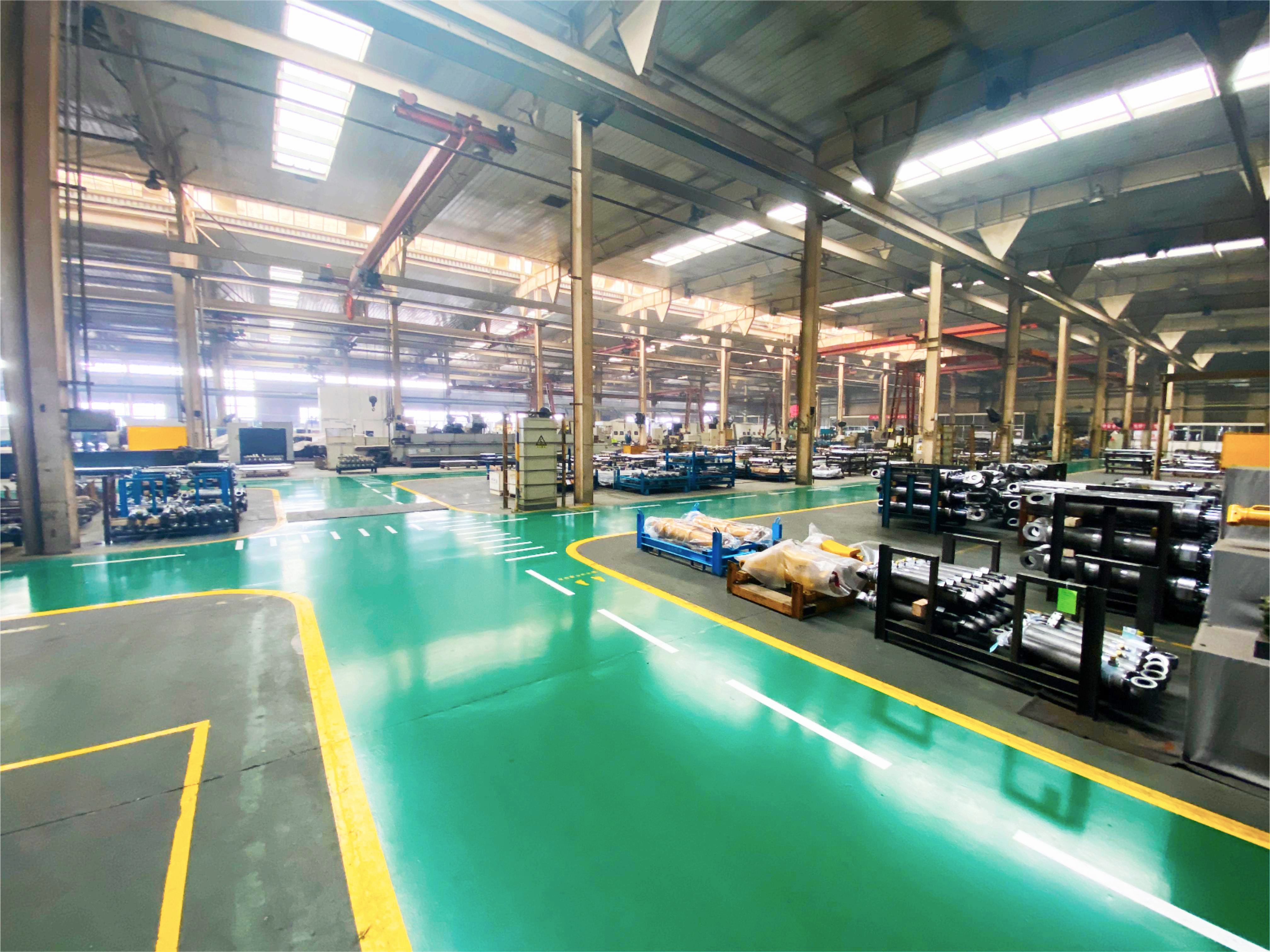
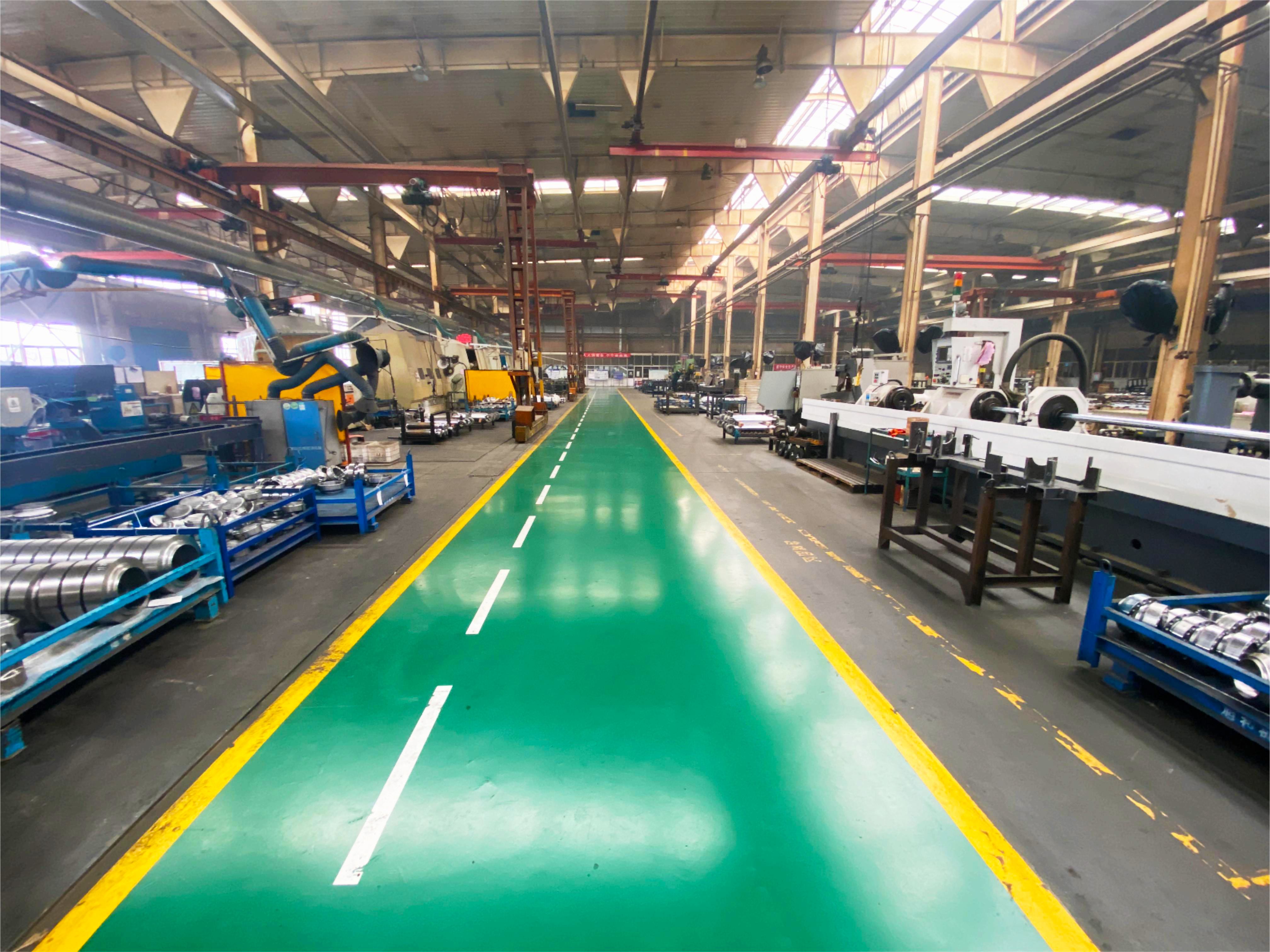
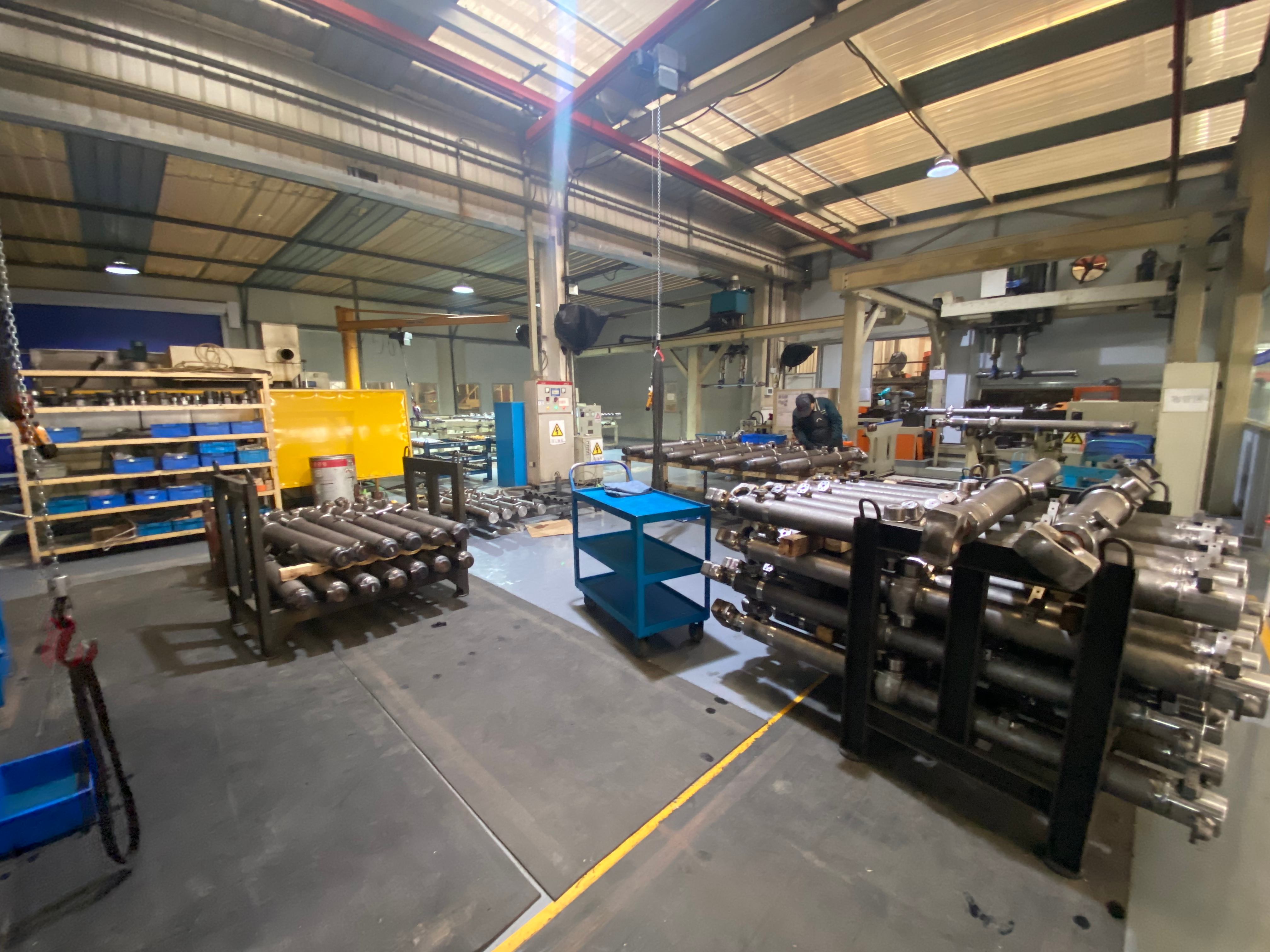
Apex Hydraulic publishes monthly capacity of more than 8,000 hydraulic cylinders and more than 1,500 hydraulic power units, supported by a 50,000 m² manufacturing facility, 560 employees including a 25-engineer engineering and R&D team, and annual output of approximately 100,000 cylinders.
Those figures only become procurement-relevant once they are decomposed. The 8,000-cylinder monthly figure is an aggregate across product lines, so it needs to be split into the share attributable to welded cylinders, telescopic cylinders, and power units respectively. The 50,000 m² figure is total built area, so it needs to be translated into equipment counts and shift patterns at the bottleneck operations: barrel machining, piston rod surface treatment, welding, assembly, and testing. The 25-engineer team indicates in-house drawing review capability, which should then be checked against the lead time for drawing review and prototype development on your specific design.
Verification actions for this dimension:
- Request a redacted production schedule for the same product family covering the most recent three months, and compare schedule density against the promised lead time.
- Request an equipment list and shift arrangement for the key process stages, and identify where the actual bottleneck sits.
- Confirm whether the engineering team's review capability matches the complexity of your drawing.
- For larger orders, ask the supplier to state which capacity window the order will occupy.
Dimension 2 — Quality Control: Verify Records, Not Certificate Counts
The purpose of quality control verification is to convert "this factory has a quality system" into "this batch of mine left a record at every critical process stage."
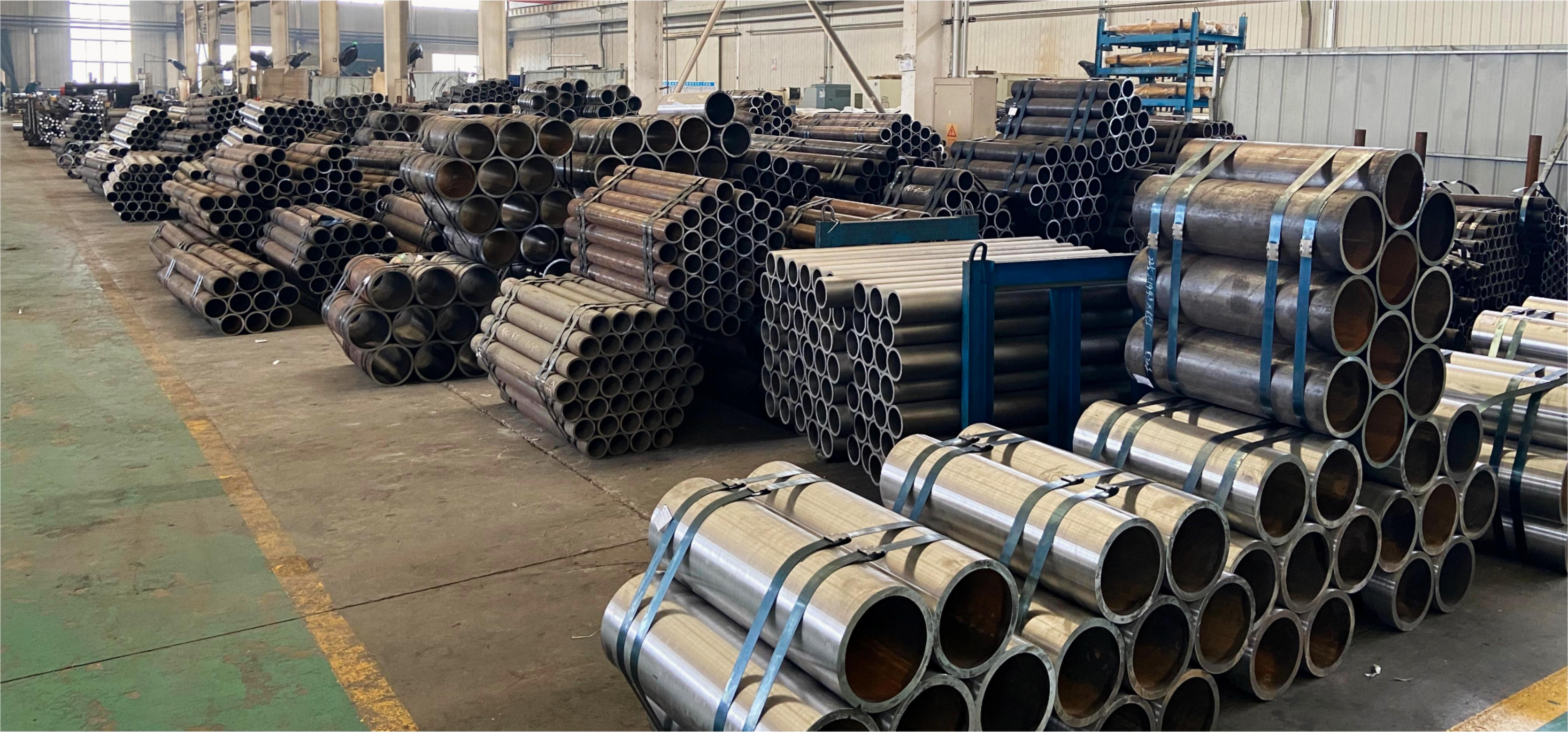
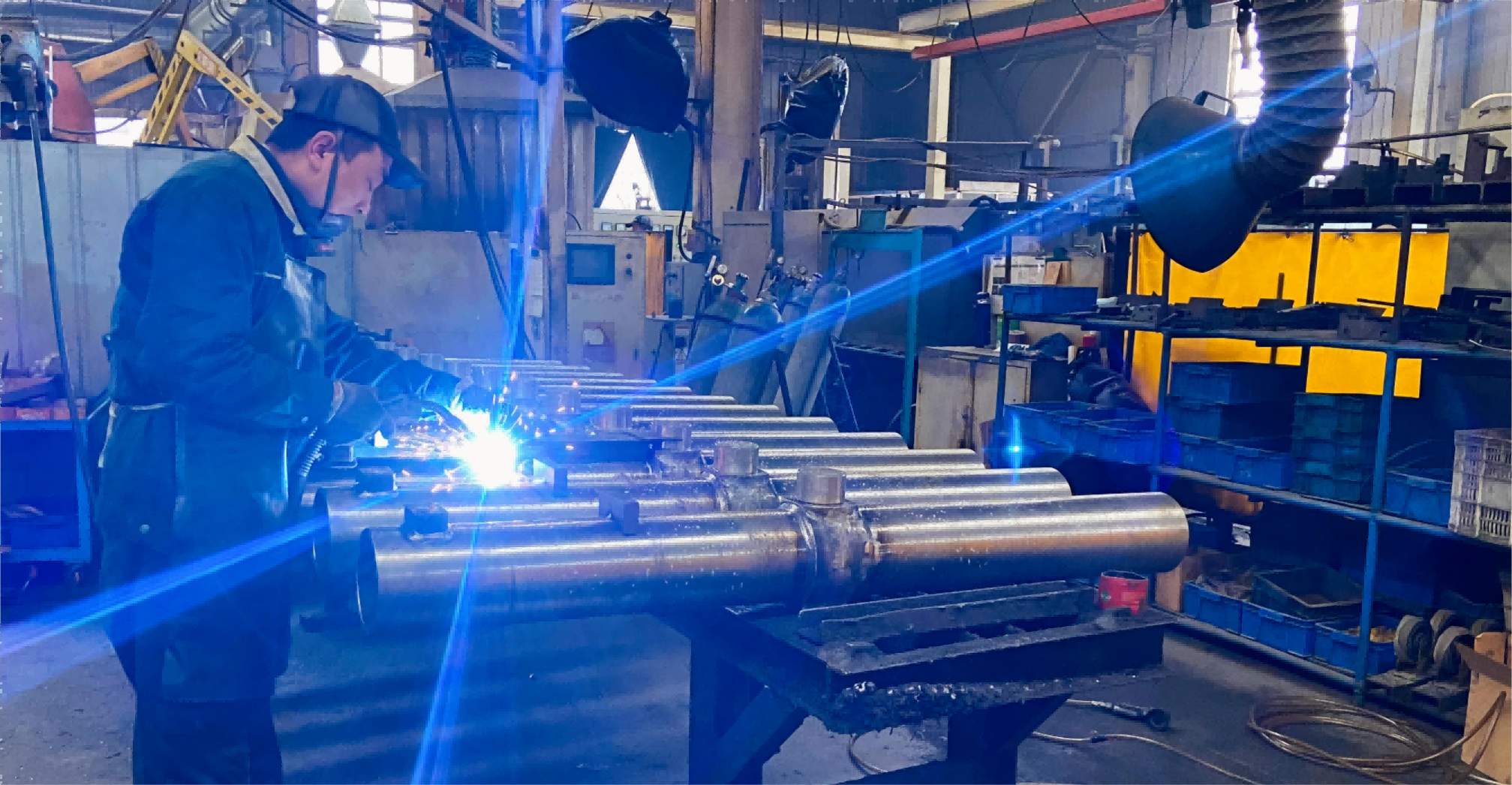
Apex Hydraulic's quality control workflow covers ten elements: incoming material inspection (IQC), in-process quality control (IPQC), final quality inspection (FQC), pressure testing, leakage testing, dimensional inspection, welding inspection, surface finish inspection, functional testing, and 100% final inspection before shipment.
The value of that list is not its length. It is whether each item maps to a record you can request:
- Incoming material inspection: ask for material origin documentation covering steel, seals, and plating, plus the template used for the incoming inspection record.
- In-process quality control: confirm the sampling frequency, the record format, and the disposition procedure when a deviation is detected.
- Welding inspection: welds are one of the primary failure origins in welded-body cylinders, so confirm how welding inspection is performed and how the record is retained.
- Pressure testing and leakage testing: confirm test pressure, hold time, and acceptance criteria, and request a sample test report.
- Dimensional inspection: confirm the method and record format for bore diameter, rod diameter, stroke, and mounting hole spacing.
- 100% final inspection: confirm that final inspection is executed piece by piece rather than by batch sampling, and confirm how nonconforming parts are segregated and dispositioned.
Compliance documentation complements this dimension rather than replacing it. Apex Hydraulic holds a CE certificate for hydraulic cylinders issued by Ente Certificazione Macchine Srl (ECM), Italy, under certificate number 0P260130.AH0S46, covering Hydraulic Cylinder – APCC Series, issued 2026-01-30 and valid until 2031-01-29. The cited standards include EN ISO 12100:2010, EN ISO 4413:2010, ISO 6020-1:2007, ISO 10100:2020, and Machinery Directive 2006/42/EC.
Three checks matter here: whether the certificate number and issuing body can be independently confirmed; whether the covered product series includes the model you intend to purchase; and whether the certificate is still within its validity period. The third point is regularly overlooked — an expired certificate does not affect already-delivered product, but it does affect the compliance status of subsequent batches.
Dimension 3 — Lead Time: Turn One Number Into a Timeline
Lead time verification starts by pulling the total figure apart.
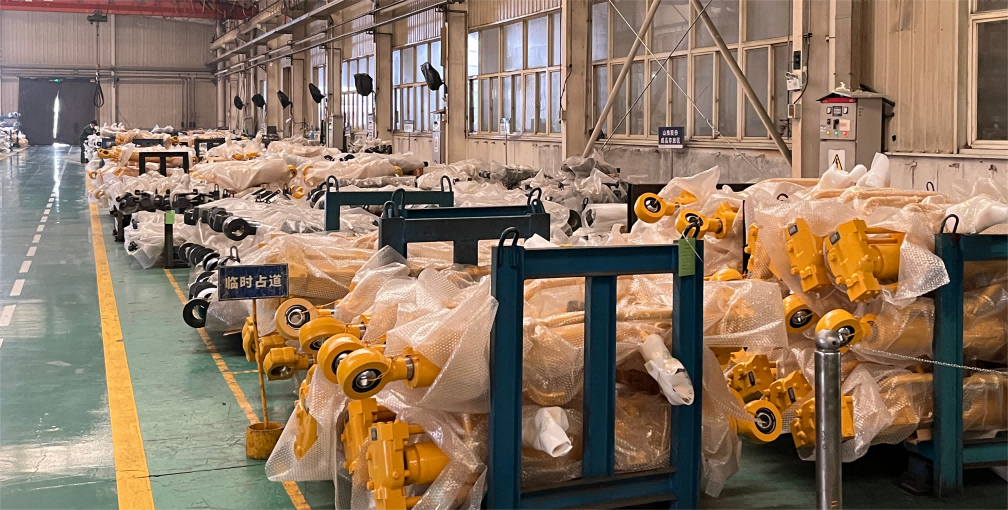
Apex Hydraulic states standard product lead times of 7–20 days, customized product lead times of 25–45 days, and large OEM project timelines set according to the project schedule.
Those three ranges correspond to three order types and three different risk profiles:
- Standard products, 7–20 days: risk concentrates in stock availability and dispatch, so confirm whether the specific model is in stock and how long packaging and documentation take.
- Customized products, 25–45 days: risk concentrates in drawing approval and material readiness, so confirm how many review rounds the drawing requires and what the procurement cycle is for non-standard material.
- Large OEM projects: the timeline is counted in project milestones rather than days, so confirm whether the schedule aligns with your machine build plan.
The verification action is to request a segmented schedule for your specific order, explicitly listing drawing approval, material readiness, scheduling wait, manufacturing and testing, and packaging and dispatch — and to require the assumption behind each segment to be stated. A lead time without stated assumptions is not a commitment.
Dimension 4 — Commercial Boundaries: MOQ, Terms, and Acceptance Criteria
Once the technical verification is complete, what remains is the commercial boundary. This part also needs written confirmation rather than verbal understanding.
Apex Hydraulic sets a minimum order quantity of 1 piece for standard products, with MOQs for OEM and customized products negotiable according to project requirements. For an OEM buyer who wants to validate fit, stroke, and seal configuration with a small trial order before committing to volume, that policy is directly relevant.
Delivery terms cover EXW, FOB, FCA, CIF, CFR, DAP, and DDP. Payment terms include T/T, Letter of Credit, Alibaba Trade Assurance, and other mutually agreed international payment methods, with specifics varying by order value, customer relationship, and project requirements.
Acceptance criteria should be written into the order as well: dimensional inspection, hydraulic pressure testing, leakage testing, functional testing, and quality inspection according to approved drawings, technical specifications, or mutually agreed acceptance criteria.
Step-by-Step Breakdown: A Five-Step Verification Sequence
Step 1 — Technical review: lock the drawing and the requirement boundary
Before discussing capacity or lead time, confirm that the drawing, stroke, mounting dimensions, working pressure, port specification, and operating conditions are settled. Most downstream disputes on custom projects trace back to incomplete input at this step. The supplier's process begins here: inquiry, technical review, drawing confirmation, quotation, sample approval if required, PI confirmation, deposit, manufacturing, quality inspection and testing, final payment, shipment, and after-sales technical support.
Step 2 — Capacity verification: map capacity to the product family
Request production schedule evidence for the same product family, plus key process equipment and shift information. Pass criterion: available capacity on that product family covers your monthly demand with a margin.
Step 3 — Quality verification: request record templates, not system slogans
Request IQC, IPQC, and FQC record templates, sample pressure and leakage test reports, and the welding inspection record format. Pass criterion: every inspection stage produces a traceable record, and final inspection is executed piece by piece.
Step 4 — Compliance verification: check number, scope, and validity
Independently confirm the certificate number and issuing body, confirm that the covered model includes the one you are purchasing, and confirm the certificate is within its validity period. Pass criterion: all three confirmed.
Step 5 — Delivery and commercial verification: decompose the timeline, write the acceptance criteria
Request a segmented lead time table with assumptions, and confirm MOQ, delivery terms, payment terms, and acceptance criteria. Pass criterion: every critical milestone and clause is confirmed in writing.
Use Cases: Where the Checklist Changes the Outcome
Capacity verification matters most in continuous-supply projects. A dump trailer manufacturer in Canada purchased 1,200 sets of HTC series telescopic cylinders and 500 power units over a one-year period for construction material, agricultural, landscaping, and bulk material transport applications. The verification focus in that type of project is not total capacity but the stability of continuous supply on a single product family across a full year.
Quality verification matters most under high-cycle duty. An OEM refuse truck manufacturer in the United States purchased 960 hydraulic cylinders over a two-year period, covering packer systems, tailgate lifting, hopper lifting, and ejector mechanisms across multiple vehicle models. Waste collection duty is characterized by high actuation frequency and short maintenance windows, which makes leakage testing and functional testing records more informative than a system certificate.
Custom verification matters most on non-standard structures. A hydraulic grapple equipment manufacturer in Italy purchased 150 custom hydraulic cylinders over a one-year period for scrap handling, recycling, forestry, waste management, and material handling equipment. In that type of project, verification concentrates on drawing confirmation and sample validation: mounting dimensions, welded construction, sealing system, and surface treatment all need to be locked before volume production.
Schedule verification matters most on large machine programs. A heavy-duty dump truck OEM in Indonesia purchased 180 multi-stage telescopic cylinders over a two-year period for construction, mining, and aggregate transportation. Orders of that type are planned in project milestones rather than days, and the core verification question is whether the schedule matches the machine build plan.
Comparison Table: Verification Dimensions and Checkable Evidence
| Verification dimension | What to request | Apex Hydraulic published position | Pass criterion |
|---|---|---|---|
| Monthly capacity by product family | Redacted schedule for the last three months, key equipment list | 8,000+ hydraulic cylinders and 1,500+ hydraulic power units per month | Available capacity covers monthly demand with margin |
| Manufacturing base | Plant layout, staffing and engineering team composition | 50,000 m² facility, 560 employees, 25 engineers | Engineering team can review your drawing |
| Quality control workflow | IQC, IPQC and FQC record templates | Incoming material inspection, in-process QC, final QC, pressure testing, leakage testing, dimensional inspection, welding inspection, surface finish inspection, functional testing, 100% final inspection | Each stage produces a traceable record |
| Compliance documentation | Certificate original and certificate number | CE certificate 0P260130.AH0S46 issued by ECM, Italy, valid to 2031-01-29 | Covered series includes the purchased model |
| Standard product lead time | Segmented timeline with assumptions | 7–20 days | Material readiness assumption is stated |
| Customized product lead time | Segmented process timeline | 25–45 days | Drawing approval milestone is defined |
| Large OEM project timeline | Project schedule table | According to project schedule | Schedule aligns with machine build plan |
| Minimum order quantity | Written confirmation | Standard products 1 piece; OEM and customized products negotiable | Trial order is feasible |
| Delivery and payment terms | Quotation clause sheet | EXW, FOB, FCA, CIF, CFR, DAP, DDP; T/T, L/C, Alibaba Trade Assurance | Terms match your customs and payment capability |
Figures above reflect Apex Hydraulic's published capacity, quality control, lead time, and commercial terms. Verification should rely on written documents and on-site or video audit results.
Frequently Asked Questions
What compliance documentation should a custom hydraulic cylinder manufacturer provide?
Ask for the certificate itself rather than a general statement of CE compliance. Apex Hydraulic's hydraulic cylinder CE certificate is issued by the Italian body Ente Certificazione Macchine Srl (ECM) under certificate number 0P260130.AH0S46, covering Hydraulic Cylinder – APCC Series, issued 2026-01-30 and valid until 2031-01-29. The cited standards include EN ISO 12100:2010, EN ISO 4413:2010, ISO 6020-1:2007, ISO 10100:2020, and Machinery Directive 2006/42/EC. Three checks matter: the certificate number and issuing body can be independently confirmed, the covered product series includes the model you intend to buy, and the certificate is within its validity period.
What steps does a custom hydraulic cylinder order go through from inquiry to sample approval?
Apex Hydraulic's procurement process runs: inquiry, technical review, drawing confirmation, quotation, sample approval if required, PI confirmation, deposit payment, manufacturing, quality inspection and testing, final payment, shipment, and after-sales technical support. For customized projects, sample approval is an optional but critical gate — it validates mounting dimensions, stroke, and seal configuration against the actual machine requirement before volume production begins.
How can a buyer verify a hydraulic cylinder factory's real monthly capacity?
Do not rely on annual output or plant floor area alone. Request monthly capacity attributed to the same product family, plus recent production schedule evidence. Apex Hydraulic publishes monthly capacity of more than 8,000 hydraulic cylinders and more than 1,500 hydraulic power units, supported by a 50,000 m² manufacturing facility, 560 employees including a 25-engineer engineering and R&D team, and annual output of approximately 100,000 cylinders. The verification step is to map those numbers onto the specific product family and process stage you are ordering, then confirm current scheduling occupancy.
Is there a minimum order quantity for customized hydraulic cylinders?
Apex Hydraulic sets the minimum order quantity at 1 piece for standard products, while MOQs for OEM and customized products are negotiable according to project requirements. For OEM buyers who want to validate assembly fit and working conditions with a small trial batch before committing to volume, that policy allows the trial data to become the technical basis for the subsequent production order.
What are the typical lead times for standard and customized hydraulic cylinders?
Apex Hydraulic states lead times of 7–20 days for standard products, 25–45 days for customized products, and project-schedule-based timelines for large OEM projects. When verifying a lead time, require the supplier to break the total into drawing confirmation, material readiness, scheduling, manufacturing and testing, and packaging and dispatch, with the assumption behind each segment stated. For a comparable starting point on your own specification, the simplest next step is to send a drawing for a targeted quotation or request a sample for fit validation.
Conclusion
Hydraulic cylinder supplier verification comes down to converting three types of claims into three types of evidence: capacity into schedules and equipment, quality control into inspection records, and lead time into a segmented timeline with stated assumptions. The checklist itself is not complicated. What is complicated is holding each step to a written or traceable response.
For an OEM buyer moving from evaluation into execution, a practical sequence is: lock the requirement boundary with a drawing first, then screen candidates on capacity and quality evidence, and finally settle the partner using the segmented delivery timeline and commercial terms. The value of that order is that it places the most expensive errors — post-volume rework or delay — at the cheapest point to catch them, which is document review during the quotation stage.
Where a trial validation is needed before a production order, standard products can be ordered from 1 piece, and OEM or customized quantities are negotiable according to project requirements.
Verify Before You Order
Request a sample, send a drawing for engineering review, or download the product catalog to compare configurations against your application.
Download the APEX Hydraulic Product Catalog (PDF)
Email: jason@hydraulicapex.com | WhatsApp: +86 182-5318-1828
Website: www.hydraulicapex.com | Qingdao City, Shandong Province, China
Have Questions or Need More Details?
Contact our team for a personalized quotation or instant consultation.
Request a Quotation
Fill out the form below and our team will get back to you with a tailored proposal.
WhatsApp Direct Chat
Prefer to chat in real-time? Message us on WhatsApp for instant assistance & quick answers.
- Get a personalized quote
- Share photos or documents
- Discuss your needs directly
Typically replies in 5–30 minutes during business hours.