Contamination Got Your Hydraulic System? How Clean Assembly Prevents Downtime
Contamination Got Your Hydraulic System? How Clean Assembly Prevents Downtime
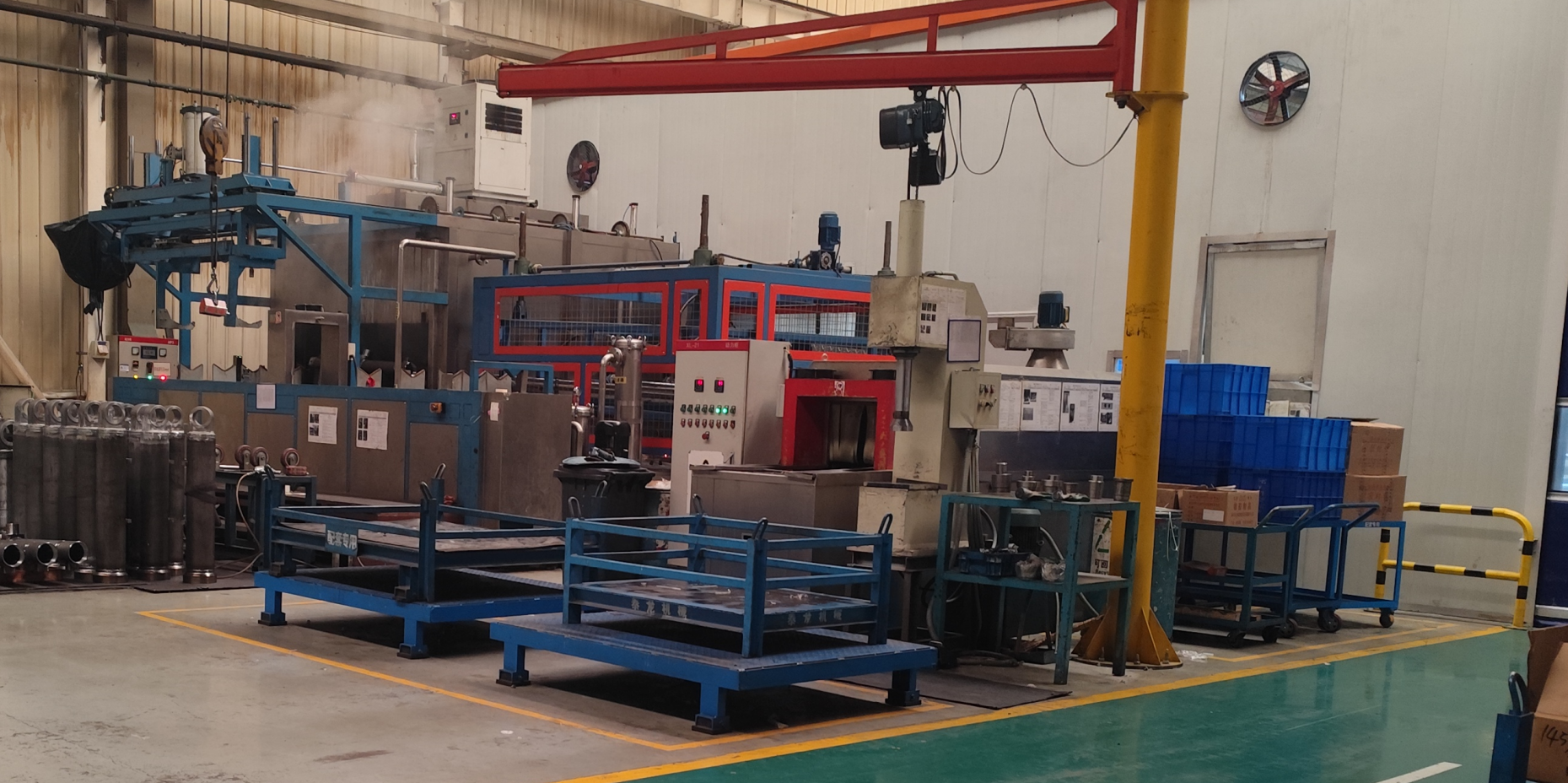
Component cleaning is a defined production step before hydraulic parts reach the assembly line.
Most of the contamination that eventually stops a hydraulic power unit is decided before the unit ever runs. A power unit enters service carrying whatever residue, dust and debris sat on its components and inside its reservoir at the moment of assembly. Clean the components before assembly, hold a defined fluid cleanliness level during production, and specify filtration that keeps the oil clean in service, and valve sticking, seal damage and premature pump wear turn into production-control questions instead of field surprises.
Apex Hydraulic Co., Ltd. is a Chinese hydraulic manufacturer established in 2009 that produces custom hydraulic cylinders and hydraulic power units at a 50,000 m2 facility in Qingdao, Shandong Province, and exports to North America, Western Europe, South America, Southeast Asia, the Middle East and Australia. This article explains where contamination enters a hydraulic power unit, how clean assembly and filtration control reduce the risk, and what OEM buyers, distributors and fleet operators should specify and verify when they order a Hydraulic Power Unit.
What Contamination Actually Does to a Hydraulic Power Unit
Particulate contamination is one of the best-known failure mechanisms in hydraulic systems. Particles small enough to pass through a valve clearance can still score a spool land, damage a seal lip and accelerate wear in an external gear pump. In a compact power unit, where the pump, manifold, valves and reservoir share a small envelope, the consequences appear quickly and are easy to misdiagnose as an electrical fault.
Typical field symptoms include:
- Valve sticking or delayed response. A solenoid directional valve that shifts slowly, buzzes or fails to seat fully. On a 12 VDC dump trailer power unit with a normally closed lowering solenoid, the visible symptom is often a body that creeps down or lowers unevenly.
- Internal leakage and pressure loss. The pump reaches its relief setting while the load still moves slowly. On the APEX-DTHPU dump trailer unit, the published A-port relief setting is up to 3,200 PSI, and the B-port relief is up to 1,500 PSI; a worn or contaminated valve can waste that pressure internally before it ever reaches the cylinder.
- Seal and wiper damage. Hard particles trapped at the rod seal or wiper score the rod surface and open a path for more particles to enter on the next stroke.
- Pump wear and rising oil temperature. Gear pump clearances are tight by design; abrasive particles widen them, efficiency drops, and the oil runs hotter for the same duty cycle.
The sources are ordinary rather than exotic: machining and welding residue left on parts that are assembled without a cleaning step, airborne dust and moisture admitted through an open port or an unfiltered breather, particles carried in with new oil, debris shed by hoses and fittings during installation, and fragments released by seals as they wear. Because the sources are ordinary, contamination is managed through process discipline rather than through one premium component.
Why Clean Assembly Is Now a Purchasing Criterion, Not Just a Workshop Habit
The commercial context explains why cleanliness has moved into the quotation stage. Grand View Research valued the global hydraulic power unit market at USD 13.6 billion in 2024, while Precedence Research estimated the same market at USD 11.4 billion in the same year; the two figures differ, so either should be read as a directional indicator of scale rather than an exact number. Grand View Research also reported that electric-powered hydraulic power units accounted for 60.1% of U.S. revenue share in 2024, and Mordor Intelligence reported that standard packaged units represented 47.8% of global revenue share in 2024. A market of that size, dominated by packaged and electric-driven units, is a market where large volumes of units are assembled, filled and shipped — and where assembly cleanliness sets the reliability baseline.
Two forces push cleanliness upstream into the factory:
- Standards and regulation. In the European Union, EN ISO 4413:2010 sets general rules and safety requirements for hydraulic systems, and the Machinery Directive 2006/42/EC governs the health and safety requirements that apply to machinery. Load-holding, emergency lowering and controlled descent all depend on valves that must move freely on every cycle; a contaminated valve is an unreliable valve, whatever the load rating on the drawing.
- Fleet economics. Dump trailers, refuse trucks, lift platforms and utility vehicles run repeated intermittent duty cycles in dust, mud, rain and road salt. A hydraulic fault that stops a vehicle or a platform is usually discovered at the worst possible moment, and the repair often involves flushing or replacing an entire circuit rather than one part.
How Apex Hydraulic Controls Contamination in Production
Contamination control is not a single inspection. It is a sequence of controls from incoming material to final test, and the elements below are the ones a buyer can realistically ask about in an audit or an RFQ.
Incoming material and component cleaning before assembly
The quality sequence begins with Incoming Material Inspection (IQC) of purchased and machined material. Inspection identifies non-conforming material, but inspection does not clean conforming material, so hydraulic components pass through a dedicated cleaning step before they reach the assembly line. The purpose is straightforward: remove the machining and handling residue that would otherwise be sealed inside the unit and released into the oil during the first hours of operation.
Assembly-stage control and fewer leak paths
In-process quality control (IPQC) runs through manufacturing and assembly. Design decisions support the same goal: Apex Hydraulic power units typically use integrated hydraulic manifolds rather than long runs of external hose and fittings. Fewer external connections mean fewer places for contamination to enter and fewer potential leakage points — an effect the company lists among the design advantages of its manifold-based units.
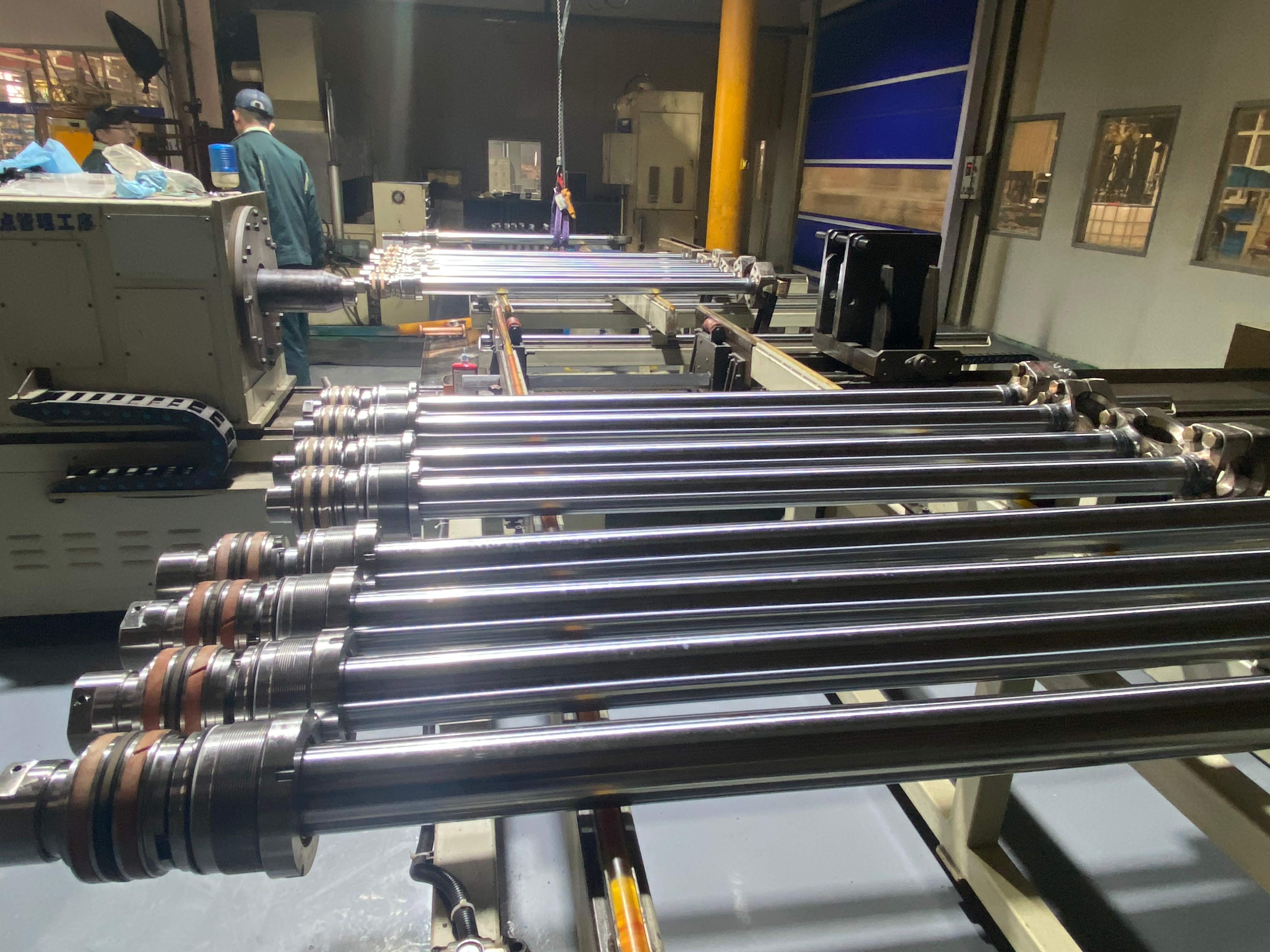
Final assembly: manifold, valves, motor, pump and reservoir are combined into one unit that will be tested as a system, not as loose parts.
A published fluid cleanliness target
Several Apex Hydraulic power unit specifications publish a fluid cleanliness level of ISO 4406 20/18/15, including the vehicle-mounted auxiliary unit (APEX-CVMAHPU), the AC industrial unit (APEX-ACHPU Series), the low-noise compact unit (APEX-CLNCHPU) and the multi-function aerial work platform unit (APEX-CMFHPU). Publishing a value matters in procurement because it converts a vague requirement — the oil should be clean — into a class that can be written on a purchase order and checked against a test record.
Filtration specified per circuit
Cleanliness at assembly only holds if the operating circuit can maintain it. Apex Hydraulic specifications list filtration and reservoir-protection provisions that can be selected per application:
- Return-line filter — captures wear particles returning from cylinders, valves and hoses; return-line filtration improves hydraulic oil cleanliness and protects pumps and valves.
- Pressure-line filter — specified where a downstream component is sensitive to particles generated upstream.
- Suction strainer — protects the pump inlet from larger debris.
- Air breather filter — the reservoir's own gateway; filtered breathing limits dust and moisture entry as the oil level rises and falls.
Reservoir design supports inspection as well. The APEX-DTHPU 12V DC dump trailer power unit uses a translucent 6 US quart horizontal reservoir, which allows the fluid level and the visible condition of the oil to be checked without dismantling the pump box. On other configurations, oil level indicators, oil temperature sensors and pressure sensors are available as options.
Verification before shipment
Every completed power unit is tested before it leaves the factory. Testing typically covers pressure testing, leakage inspection, electrical testing and full-function testing. Vehicle-mounted auxiliary units additionally undergo valve-response and full-cycle testing, and low-noise compact units are also checked for vibration. The company-wide process is built on IQC, IPQC and Final Quality Inspection (FQC), with dimensional inspection, welding inspection and surface-finish inspection applied where relevant, and 100% final inspection of the finished product. Approved drawings, inspection records, test reports and material documentation can be supplied according to project requirements.
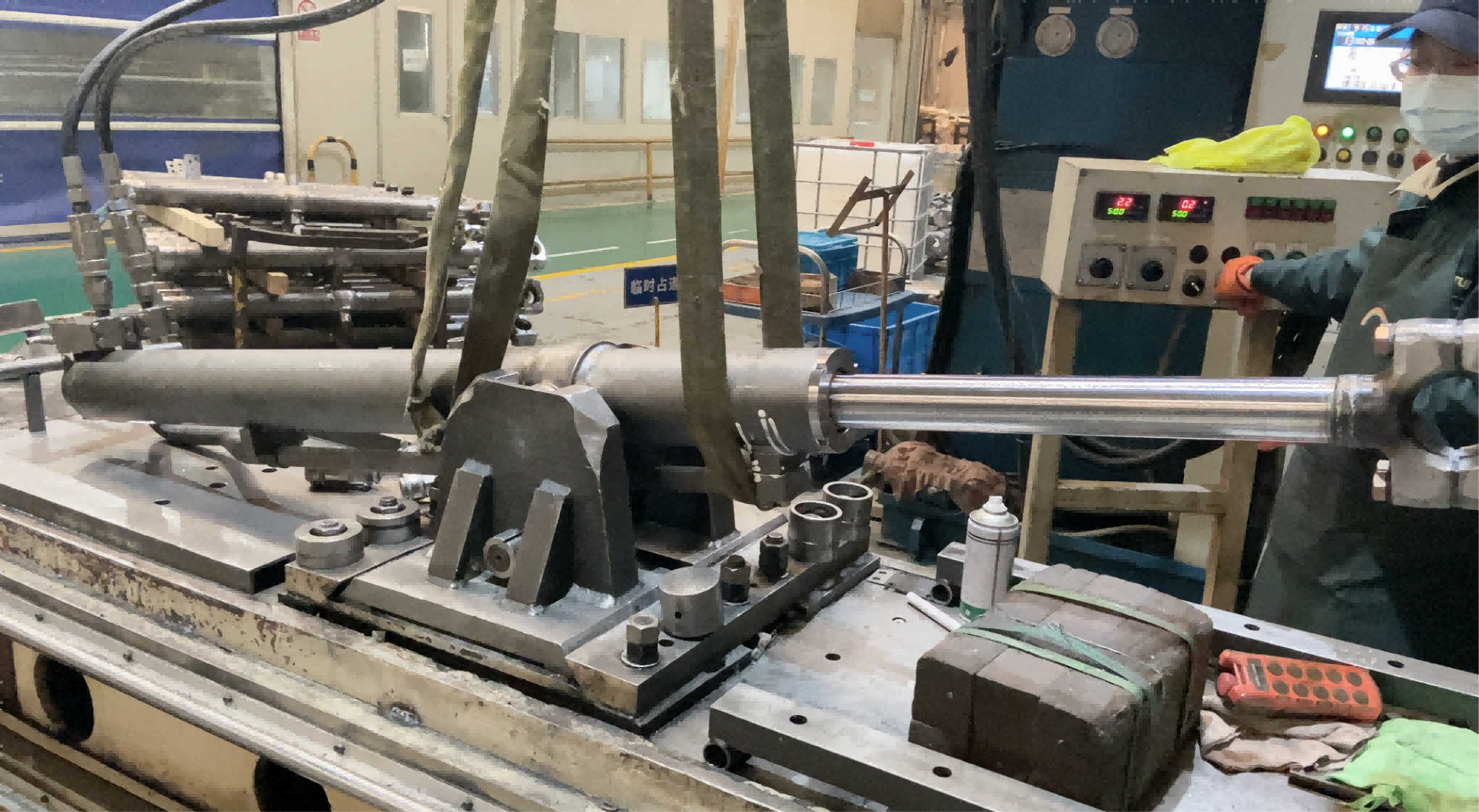
Pressure and leakage testing before shipment: measured verification, not visual inspection, closes the production loop.
A Seven-Step Specification Sequence for OEMs and Distributors
Buyers do not have to audit a factory to reduce contamination risk. They need to write the requirement into the order and verify it at the points where it is visible. The sequence below follows the order in which the decisions are actually made.
- Define the duty cycle and the consequence of failure. An intermittent 12 VDC trailer circuit with long pauses between lifts is a different problem from a continuous-duty 380 VAC industrial power unit. Duty cycle drives motor duty selection and, indirectly, how much cleanliness margin the circuit needs.
- State the cleanliness class on the drawing or purchase order. Use ISO 4406 and name the class. If the configuration you are buying is one that publishes ISO 4406 20/18/15, start from that published value and confirm in writing that it applies to your specific build.
- Specify filtration as part of the circuit, not as an accessory. Decide up front whether the unit needs a return-line filter, a pressure-line filter, a suction strainer or an air breather filter. Each is listed as an option in the specifications, so the choice belongs in the RFQ.
- Confirm the reservoir arrangement. Capacity, material (steel, aluminum or polymer) and orientation determine how easily the oil can be inspected in service. A translucent reservoir or an oil level indicator makes contamination visible earlier, when it is still cheap to correct.
- Confirm how the unit is protected in service. Ingress protection options run from IP54 to IP66 depending on configuration, and weather-resistant enclosures are available for vehicle-mounted units. Enclosure rating does not control oil cleanliness by itself, but it does keep external dust and water away from connectors and controls, which protects the circuit as a whole.
- Require test documentation with the shipment. Ask for the test record covering pressure, leakage and functional testing for the serialized unit. Documentation availability is project-specific, so it should be requested in the purchase order rather than assumed.
- Plan the in-service routine. Breathers, return-line filters and suction strainers only work while they are serviceable. Add fluid-level and oil-condition checks to the maintenance schedule and follow the manufacturer's service interval for filter elements.
Three Scenarios Where Clean Assembly Pays Off
Dump trailers and scissor hoists in North America
A 12 VDC dump trailer power unit such as the APEX-DTHPU is a single-acting, power-up/gravity-down circuit: an intermittent-duty 12 VDC motor, a high-pressure gear pump with a maximum flow rate of 2.0 GPM, an A-port relief setting up to 3,200 PSI, a normally closed lowering solenoid valve, an integrated load-retention check valve and a 6 US quart translucent reservoir, operated from a two-button pendant with a 15 ft removable cord. In this circuit, contamination shows up in recognizable ways — a lowering valve that leaks slightly so the body creeps down under load, or a lift that slows as it approaches the relief setting.
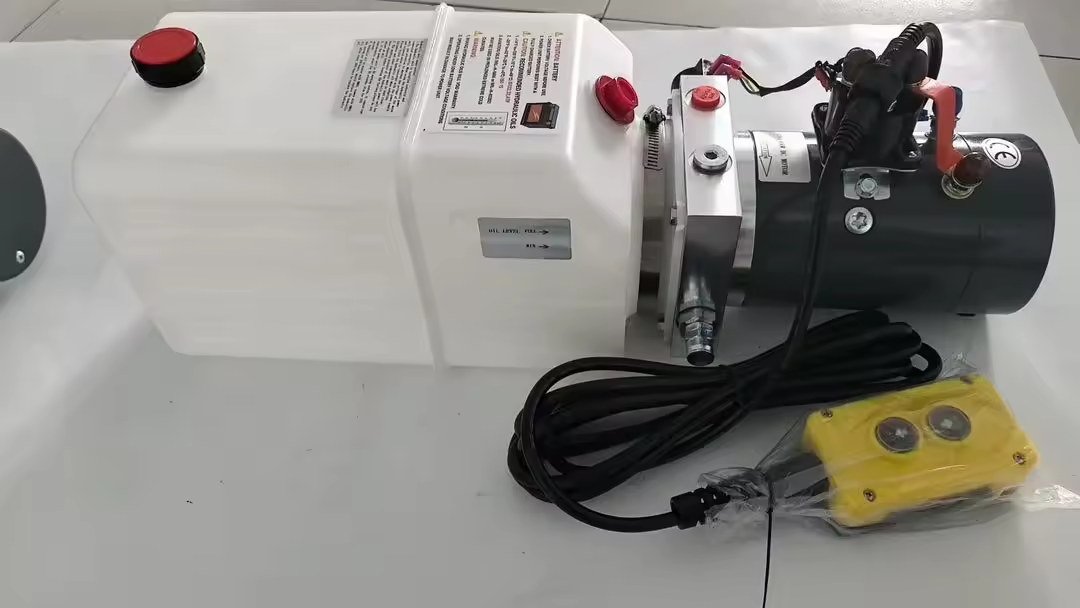
A 12V DC dump trailer hydraulic power unit: translucent reservoir, integrated load-retention check valve and pendant control in one compact package.
A Canadian dump trailer manufacturer ordered 1,200 HTC-series telescopic cylinders and 500 power units over one year for trailers used in construction materials, agriculture, landscaping and bulk material transportation. The reported result was smooth lifting performance, a stable dumping angle and reduced service downtime during continuous heavy-duty operation. Cleanliness control is not the only reason a program like that runs smoothly, but it is one of the few variables the builder can lock down before the trailer reaches the end customer.
Refuse trucks, tailgates and municipal vehicles
Vehicle-mounted auxiliary power units (APEX-CVMAHPU) run on 24 VDC or 48 VDC with motor power from 1.5 to 8.0 kW, working pressure up to 250 bar (3,625 PSI), reservoirs from 5 to 60 L and one to six hydraulic functions. These units live outdoors: dust, road salt, rain, snow, vibration and extended standby periods. Their specifications list return filtration and suction protection among the measures that reduce hydraulic contamination risk, alongside weather-resistant enclosures, sealed connectors, ingress protection from IP54 to IP66 and optional oil coolers or heaters for demanding ambient conditions. Filtration therefore does two jobs here — it captures particles generated inside the circuit and limits the damage caused by particles admitted from outside.
Aerial work platforms and fixed industrial equipment
For mobile elevating work platforms, the multi-function unit (APEX-CMFHPU) integrates two to eight functions — lifting, steering, platform leveling and outrigger control — at up to 280 bar (4,000 PSI), with emergency lowering available and return-line filtration listed as a measure that improves oil cleanliness and protects pumps and valves. On the stationary side, the AC industrial unit (APEX-ACHPU Series) runs at 220 VAC or 380 VAC, up to 230 bar (3,335 PSI), with one to eight hydraulic functions, continuous-duty options and a published ISO 4406 20/18/15 cleanliness level. Different equipment, same logic: a valve that holds a load has to move freely on every single cycle.
Contamination-Control Provisions Across Apex Hydraulic Power Unit Configurations
The table summarizes published specification data for six Apex Hydraulic power unit configurations. It compares contamination-relevant provisions only — each configuration is engineered for a different application, so the table is not a quality ranking.
| Configuration (model) | Supply | Max. working pressure | Published fluid cleanliness level | Filtration & reservoir protection provisions | Verification before shipment |
|---|---|---|---|---|---|
| 12V DC Dump Trailer Hydraulic Power Unit (APEX-DTHPU) | 12 VDC, intermittent duty | 3,200 PSI A-port relief / 1,500 PSI B-port relief | Not published in this unit specification | Integrated load-retention check valve; 6 US quart translucent horizontal reservoir for visual fluid-level inspection; reservoir options 3-13 US quarts | Pressure, flow, relief-valve verification, solenoid-valve function, motor current and leakage inspection |
| Custom Double-Acting Mobile Hydraulic Power Unit (APEX-CDAMHPU) | 12 / 24 / 48 VDC | 280 bar (4,000 PSI) | Not published in this unit specification | Return filter optional; suction strainer optional; reservoir 0.9-18 L in steel, aluminum or polymer | Pressure, leakage, directional-control and functional testing |
| Custom Vehicle-Mounted Auxiliary Hydraulic Power Unit (APEX-CVMAHPU) | 24 / 48 VDC | 250 bar (3,625 PSI) | ISO 4406 20/18/15 | Return-line filter, pressure-line filter and suction strainer optional; weather-resistant enclosure optional; reservoir 5-60 L | Pressure, leakage, electrical, valve-response and full-cycle testing |
| Custom AC Industrial Hydraulic Power Unit (APEX-ACHPU Series) | 220 / 380 VAC, 50 / 60 Hz | 230 bar (3,335 PSI) | ISO 4406 20/18/15 | Return-line filter, pressure-line filter, suction strainer and air breather filter optional; reservoir 1.5-18 L | Pressure, leakage, electrical and full-function testing |
| Custom Low-Noise Compact Hydraulic Power Unit (APEX-CLNCHPU) | 12 / 24 / 48 VDC or 220 / 380 VAC | 230 bar (3,335 PSI) | ISO 4406 20/18/15 | Return-line filter, suction strainer and air breather filter optional; reservoir 0.5-18 L | Pressure, leakage, vibration, electrical and full-function testing |
| Multi-Function Power Unit for Aerial Work Platforms (APEX-CMFHPU) | 12 / 24 / 48 VDC | 280 bar (4,000 PSI) | ISO 4406 20/18/15 | Return-line filter and suction strainer optional; reservoir 1.5-18 L; emergency lowering function | Pressure, leakage, valve-function, electrical and full-cycle testing |
Frequently Asked Questions
Does a hydraulic power unit sold into the EU need to comply with EN ISO 4413:2010?
EN ISO 4413:2010 sets general rules and safety requirements for hydraulic systems, and the Machinery Directive 2006/42/EC governs health and safety requirements for machinery placed on the EU market. A hydraulic power unit is one part of a machine, so conformity is normally demonstrated at machine level. The practical procurement step is to state the applicable standard and directive in the specification and to agree in advance which documents the manufacturer will supply with the shipment. Apex Hydraulic provides approved drawings, inspection records, test reports and material documentation according to project requirements; certification claims should only be accepted for a specific configuration where the supporting document exists.
What fluid cleanliness level should I write into a hydraulic power unit order?
Use ISO 4406 and state the class explicitly. Apex Hydraulic publishes ISO 4406 20/18/15 as the fluid cleanliness level for several power unit specifications, including the vehicle-mounted auxiliary unit (APEX-CVMAHPU), the AC industrial unit (APEX-ACHPU Series), the low-noise compact unit (APEX-CLNCHPU) and the multi-function aerial work platform unit (APEX-CMFHPU). If the configuration you are buying does not publish a cleanliness level — the 12V DC dump trailer unit (APEX-DTHPU) specification publishes pressure, flow and testing data instead — ask the manufacturer to confirm the level in writing before ordering, and pair the requirement with filtration: return-line filter, pressure-line filter, suction strainer or air breather filter, whichever the circuit needs.
Do filtration and cleanliness provisions increase the unit price?
They change the configuration, so they change the quotation. Filtration items — return-line filter, pressure-line filter, suction strainer and air breather filter — are listed as optional in Apex Hydraulic specifications, which means the buyer selects them per application rather than receiving them automatically. Other configuration decisions have a comparable effect on cost: number of hydraulic functions, DC or AC supply, motor duty, reservoir capacity and material, valve control type, sensors and ingress protection. Minimum order quantity is 1 piece for standard products, while OEM and customized products are negotiated according to project requirements. Filtration should be treated as an application decision, and the configured price confirmed with the manufacturer rather than judged from a bare unit price.
Can I validate cleanliness and function before committing to a full OEM order?
Yes. Prototype development and testing are part of the customization service Apex Hydraulic offers alongside product design, engineering drawings, manufacturing and quality inspection. Every completed power unit goes through pressure testing, leakage inspection, electrical testing and full-function testing before shipment, and approved drawings, inspection records and test reports can be supplied according to project requirements. A practical validation route is to order a single unit in the exact production configuration, review the test record, run it in the application and then release the OEM volume. To arrange a sample or a quotation, contact Apex Hydraulic at jason@hydraulicapex.com.
What lead time should I plan for?
Apex Hydraulic publishes a lead time of 7-20 days for standard products and 25-45 days for customized products; large OEM projects are scheduled according to the project plan. Lead time and cleanliness requirements interact: filtration, reservoir and control changes are engineering decisions, so they should be frozen before a production slot is booked rather than added during assembly.
The Decision Rule: Specify It, Filter It, Verify It
Contamination is never solved by a single component. It is controlled by three decisions the buyer and the manufacturer make together: cleaning components before assembly and controlling the assembly stage, keeping oil at a defined cleanliness class such as ISO 4406 20/18/15, and fitting the filtration the circuit actually needs — return-line, pressure-line, suction strainer and air breather. Testing before shipment then converts those decisions into evidence the buyer can hold: pressure, leakage, electrical and full-function records for a serialized unit.
Apex Hydraulic Co., Ltd. manufactures custom hydraulic cylinders and hydraulic power units for OEMs, distributors and equipment builders, covering DC, vehicle-mounted, low-noise compact, AC industrial and multi-function configurations, with OEM/ODM support from design and prototype development through testing and quality inspection. Monthly capacity exceeds 8,000 hydraulic cylinders and 1,500 hydraulic power units.
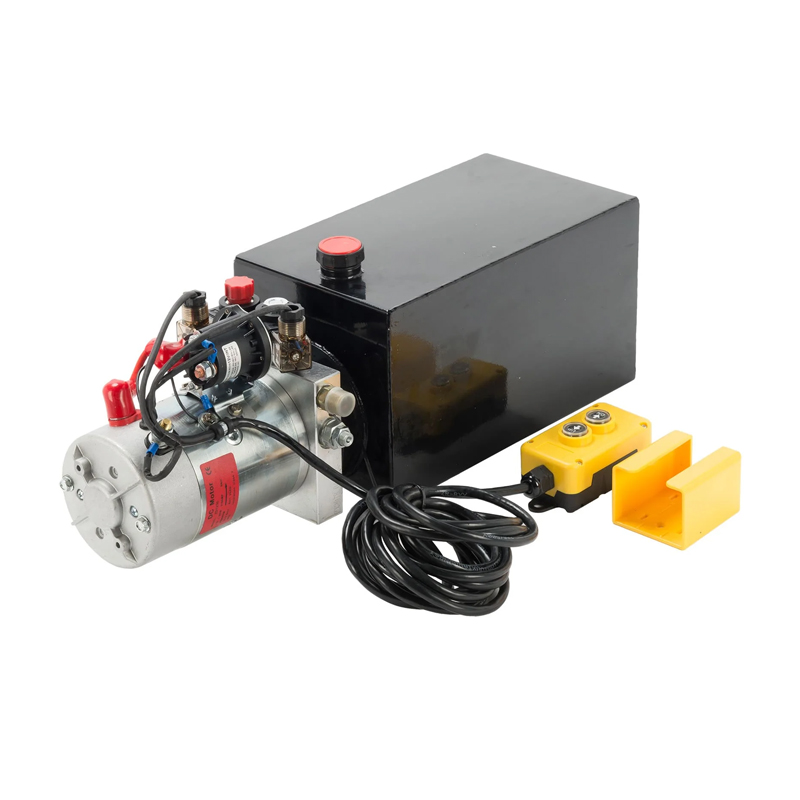
24V vehicle-mounted hydraulic power packs are built for mobile duty cycles where downtime is measured in working days, not hours.
Next step: send your application details — duty cycle, voltage, required hydraulic functions, pressure and flow, available reservoir space and the cleanliness class you need — and ask for a configured quotation and a sample plan.
Email: jason@hydraulicapex.com | Tel / WhatsApp: +86 182-5318-1828 | Website: www.hydraulicapex.com
Product catalog (PDF, free download): APEX Hydraulic Product Catalog - Main Products