Custom Hydraulic Cylinder Manufacturing: OEM Capability Review
Custom Hydraulic Cylinder Manufacturing: OEM Capability Review
Specifying a custom hydraulic cylinder manufacturer for industrial equipment requires more than a catalog search. This review maps OEM capability criteria to production evidence from Apex Hydraulic, a manufacturer based in Qingdao, China.
The challenge in custom hydraulic cylinder sourcing
Industrial equipment buyers often face a gap between their application requirement and available standard hydraulic cylinder specifications. Custom hydraulic cylinder projects can stall when suppliers cannot convert field conditions into engineering documentation, verify performance, or maintain repeatable quality across production runs. The most useful supplier evaluation is therefore not a list of cylinder types, but a capability review covering engineering, manufacturing, testing, and OEM integration.
This guide is written for equipment manufacturers, procurement teams, and hydraulic distributors moving from requirement definition to supplier execution. It focuses on the ability to handle custom hydraulic cylinder projects rather than generic product comparisons.
A custom hydraulic cylinder program is not a simple part purchase. It involves dimensional coordination, pressure verification, seal selection, mounting adaptation, and production documentation. Buyers who treat the cylinder as a commodity often discover late mismatches in stroke length, port location, or mounting tolerance. The evaluation should therefore start with the supplier's engineering and manufacturing workflow, not with the lowest quote.
Industry Background: Why custom hydraulic cylinders are common in mobile and industrial equipment
Hydraulic cylinders convert fluid power into linear force. They are used in refuse trucks, dump trailers, roll-off trucks, agricultural machinery, construction equipment, mining equipment, marine systems, and material handling applications. Because each machine type has different mounting geometry, pressure requirements, stroke length, rod diameter, port configuration, and sealing needs, standard cylinders frequently cannot satisfy an OEM build. A custom hydraulic cylinder is specified when the equipment manufacturer needs to integrate the cylinder into its design instead of adapting the machine to an existing cylinder.
In these applications, the key supplier capabilities include design support, drawing confirmation, material selection, machining consistency, welding quality, assembly control, pressure testing, and documentation. These capabilities matter more than the size of a commodity catalog. A manufacturer that can produce 100,000 cylinders per year but cannot follow a specific drawing is less useful for an OEM program than a manufacturer with an established engineering workflow.
The shift toward custom hydraulic cylinders is also driven by equipment differentiation. OEMs need cylinders that match their frame design, load profile, and installation space. A well-managed custom cylinder program reduces total equipment cost by avoiding rework, field modifications, and warranty failures caused by mismatched hydraulic components.
What a custom hydraulic cylinder manufacturer should demonstrate
For an industrial equipment project, an OEM buyer typically evaluates the following areas before moving to execution: engineering responsibility, production capacity, quality control, testing evidence, application experience, and export readiness.
Engineering and drawing support
A supplier should be able to work from customer specifications, produce engineering drawings, develop prototypes, and refine the design before series production. This reduces mismatches between cylinder dimensions, mounting interfaces, and the machine structure. Drawing support is particularly important when the buyer does not have a complete cylinder drawing but knows the application force and stroke.
Manufacturing scale and consistency
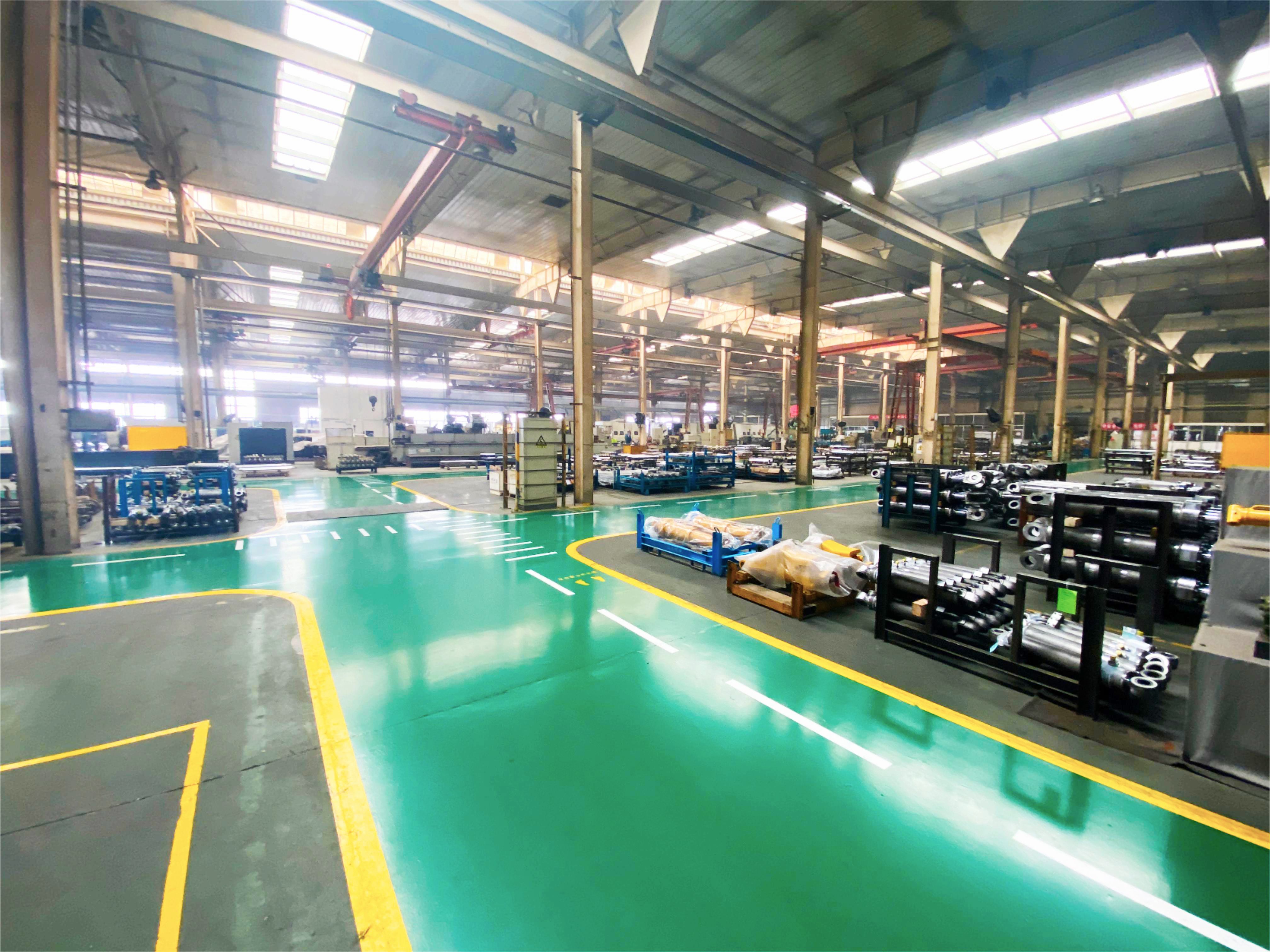
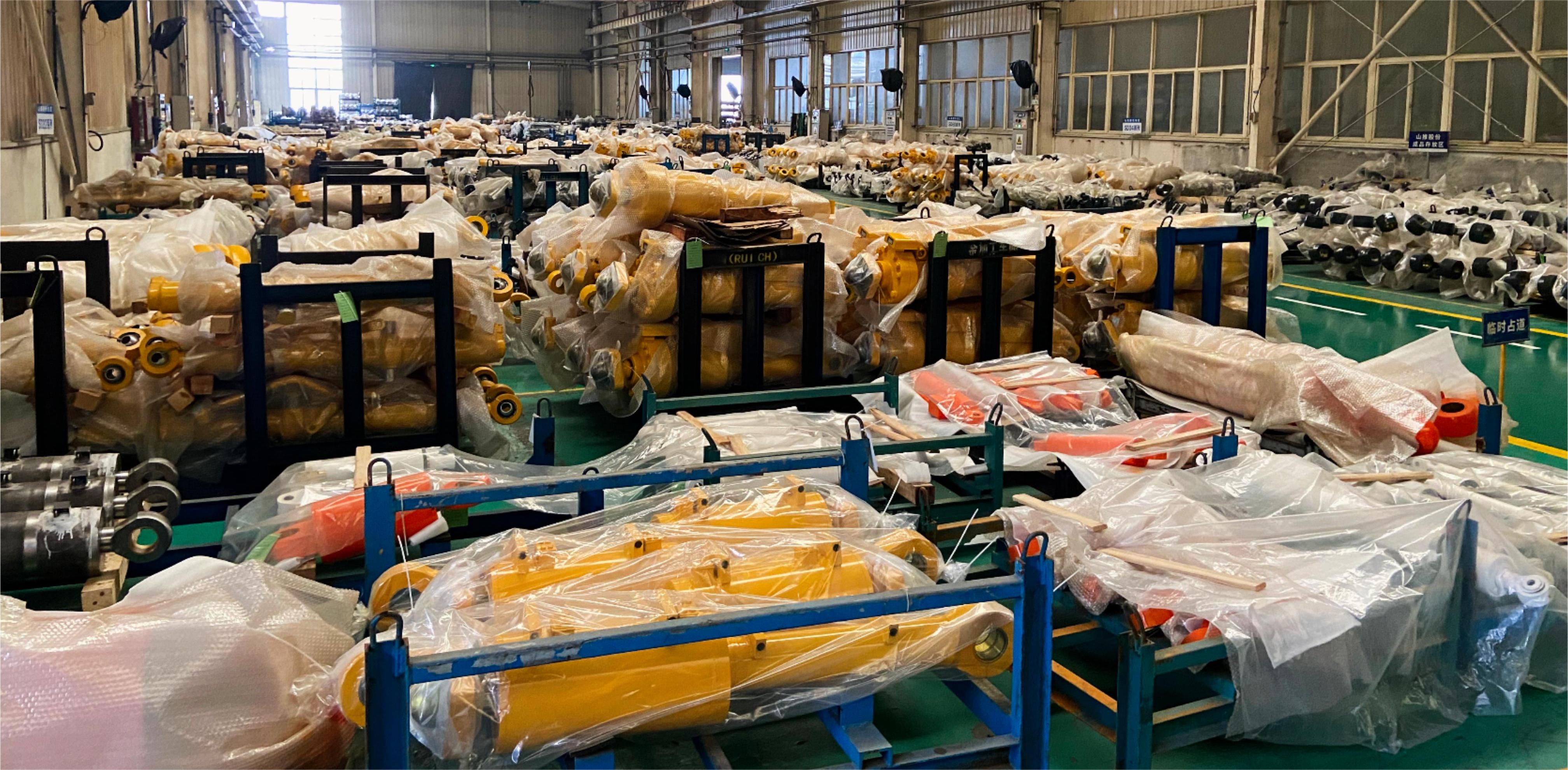
Production capacity matters when a buyer needs a pilot order followed by recurring shipments. A 50,000 m² manufacturing facility and an annual capacity of 100,000 hydraulic cylinders and 15,000 power units indicate that a supplier can support both prototype runs and volume production programs. Consistency across batches is as important as peak capacity.
Quality and testing
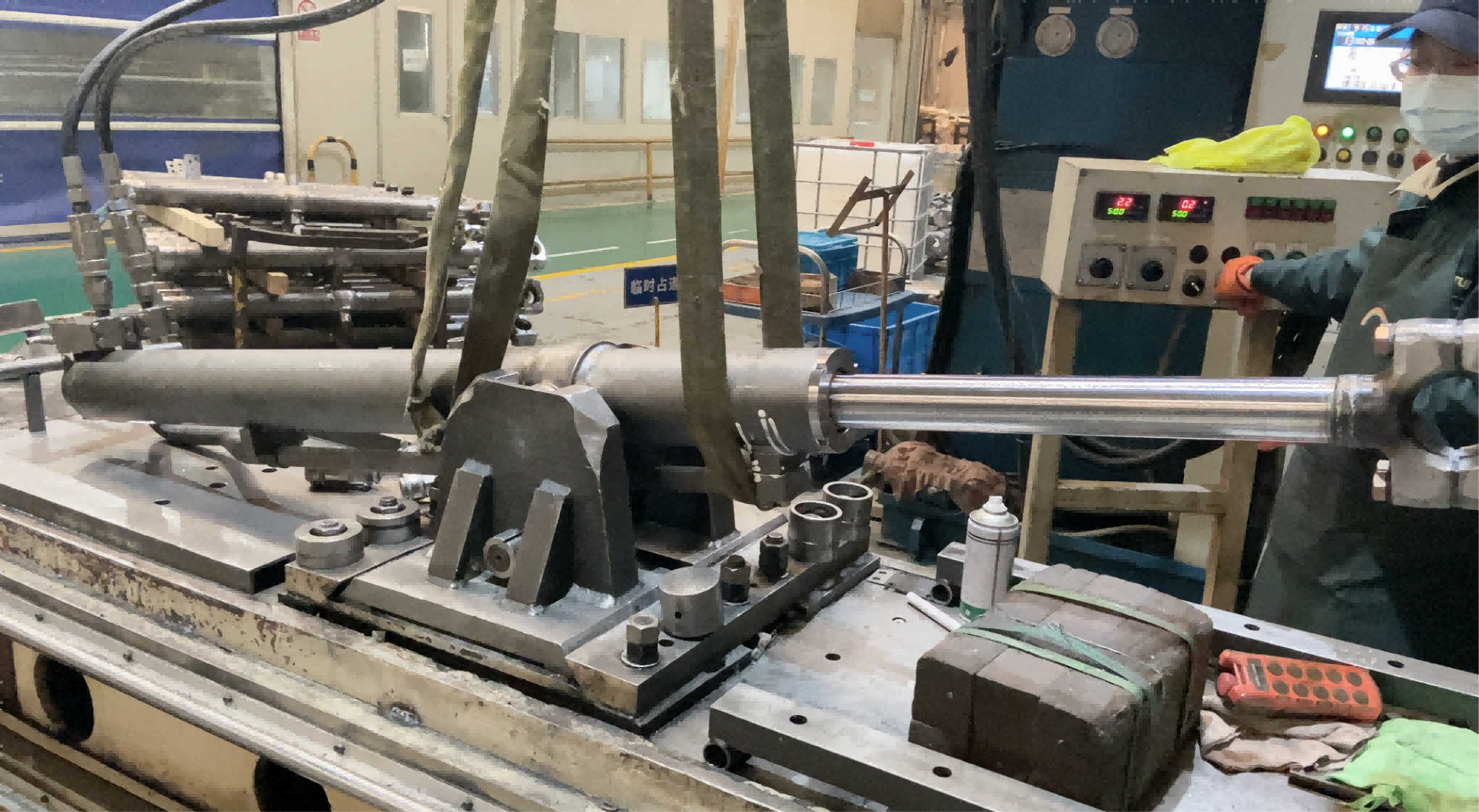
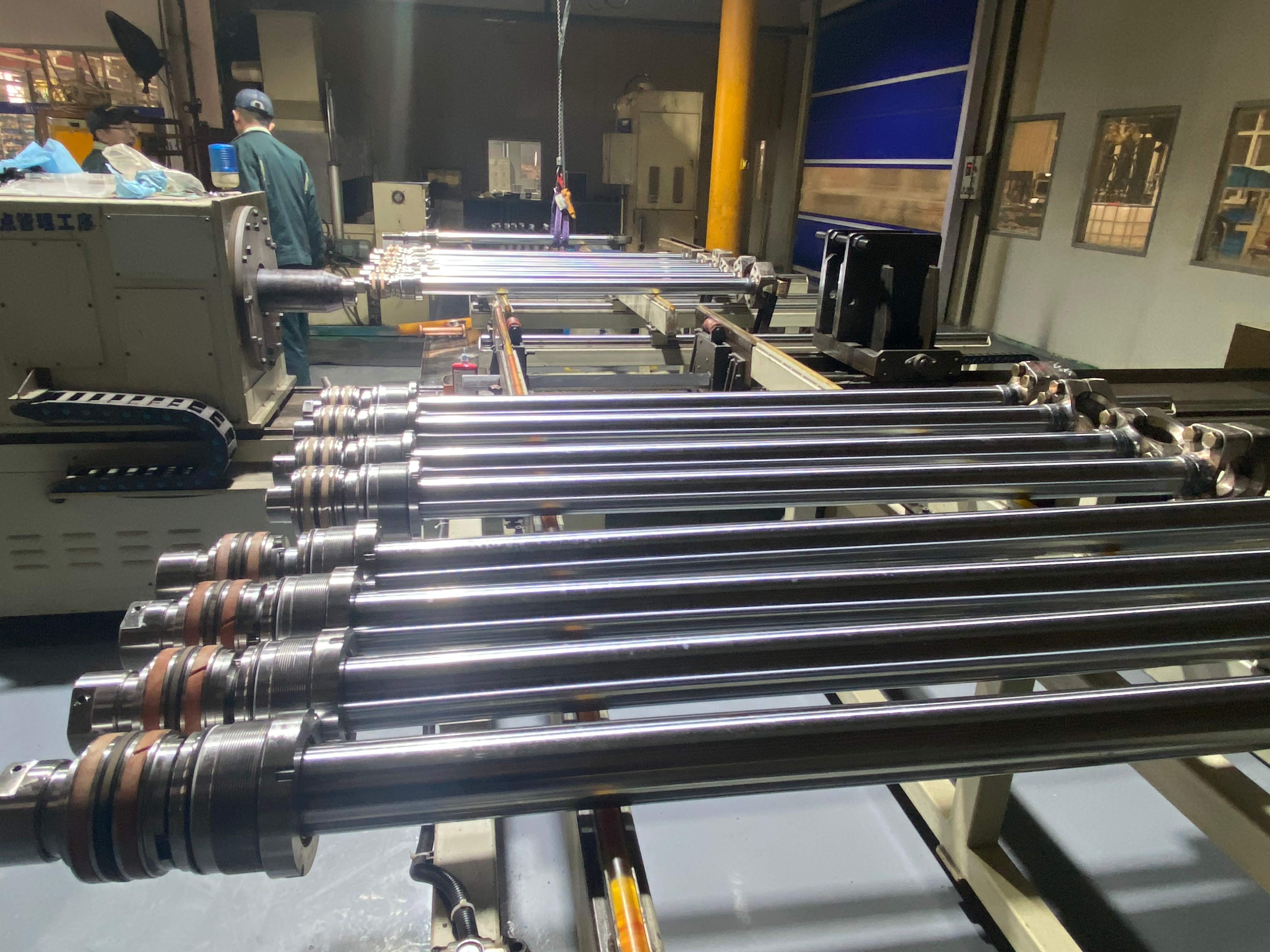
Custom hydraulic cylinder manufacturing should include strict quality control and testing. Pressure and leakage testing are visible steps in the production process. For OEM buyers, documented testing is part of the acceptance evidence, not an optional add-on. Without testing, a cylinder may pass visual inspection but fail under operating pressure or develop leakage after installation.
Application coverage
Relevant experience across sanitation vehicles, dump trailers, dump trucks, roll-off trucks, agricultural machinery, construction equipment, mining machinery, marine equipment, and material handling equipment reduces the number of first-time assumptions in a project. A manufacturer with application-specific experience is more likely to understand sealing requirements, rod coating needs, and mounting constraints for a given machine type.
These criteria should be evaluated together. A manufacturer with strong engineering but weak testing documentation may still create risk in a production program. A manufacturer with high volume but limited OEM support may be unsuitable for non-standard designs.
OEM capability review: Apex Hydraulic
Apex Hydraulic, established in 2009 in Qingdao, Shandong Province, China, manufactures custom hydraulic cylinders, standard hydraulic cylinders, hydraulic power units, hydraulic systems, hydraulic scissor hoist kits, and hydraulic components. The company serves equipment manufacturers, hydraulic distributors, and hydraulic solution providers under OEM and ODM arrangements.
Its manufacturing base covers 50,000 m², with 560 employees and an engineering team of 25 engineers. The annual production capacity is 100,000 hydraulic cylinders and 15,000 power units. Approximately 70% of output is exported to North America, Western Europe, South America, Southeast Asia, the Middle East, and Australia.
For custom hydraulic cylinder projects, Apex Hydraulic provides product design, engineering drawings, prototype development, testing, manufacturing, and quality inspection. This means an OEM buyer can move from a requirement document to a production-ready cylinder within one supplier workflow rather than splitting design and manufacturing across multiple parties.
The company's product scope includes custom hydraulic cylinders, standard hydraulic cylinders, hydraulic power units, hydraulic systems, hydraulic scissor hoist kits, and hydraulic components. This combination is relevant for buyers who need not only a cylinder but also the related hydraulic system or power unit for a complete machine build. Instead of coordinating multiple suppliers, the buyer can evaluate one manufacturing line with defined quality controls.
Apex Hydraulic does not position itself as a low-volume commodity seller. Its facility, engineering team, and production capacity are structured for OEM and ODM programs that require repeatability. The use of strict quality control and pressure/leakage testing supports buyers that need documented acceptance before shipment.
Step-by-step breakdown for a custom hydraulic cylinder program
The following process is typical for a custom hydraulic cylinder evaluation and execution once a buyer has selected a capable manufacturer. Apex Hydraulic's documented service steps are used as a reference.
Step 1: Define the application requirement
Buyers identify the equipment type, operating pressure, stroke, mounting style, port position, and required duty cycle. The manufacturer then confirms whether the project fits a custom hydraulic cylinder, standard hydraulic cylinder, or a complete hydraulic system. This step prevents the common mistake of forcing a standard cylinder into a non-standard application.
Step 2: Review the engineering drawing
Apex Hydraulic's engineering team can prepare or review drawings before manufacturing. This stage is used to validate dimensions, force requirements, and installation interfaces. Prototype development is available when the application is new or when the buyer wants to verify fitment before series production. The drawing approval is the gate that separates estimation from production planning.
Step 3: Confirm production plan
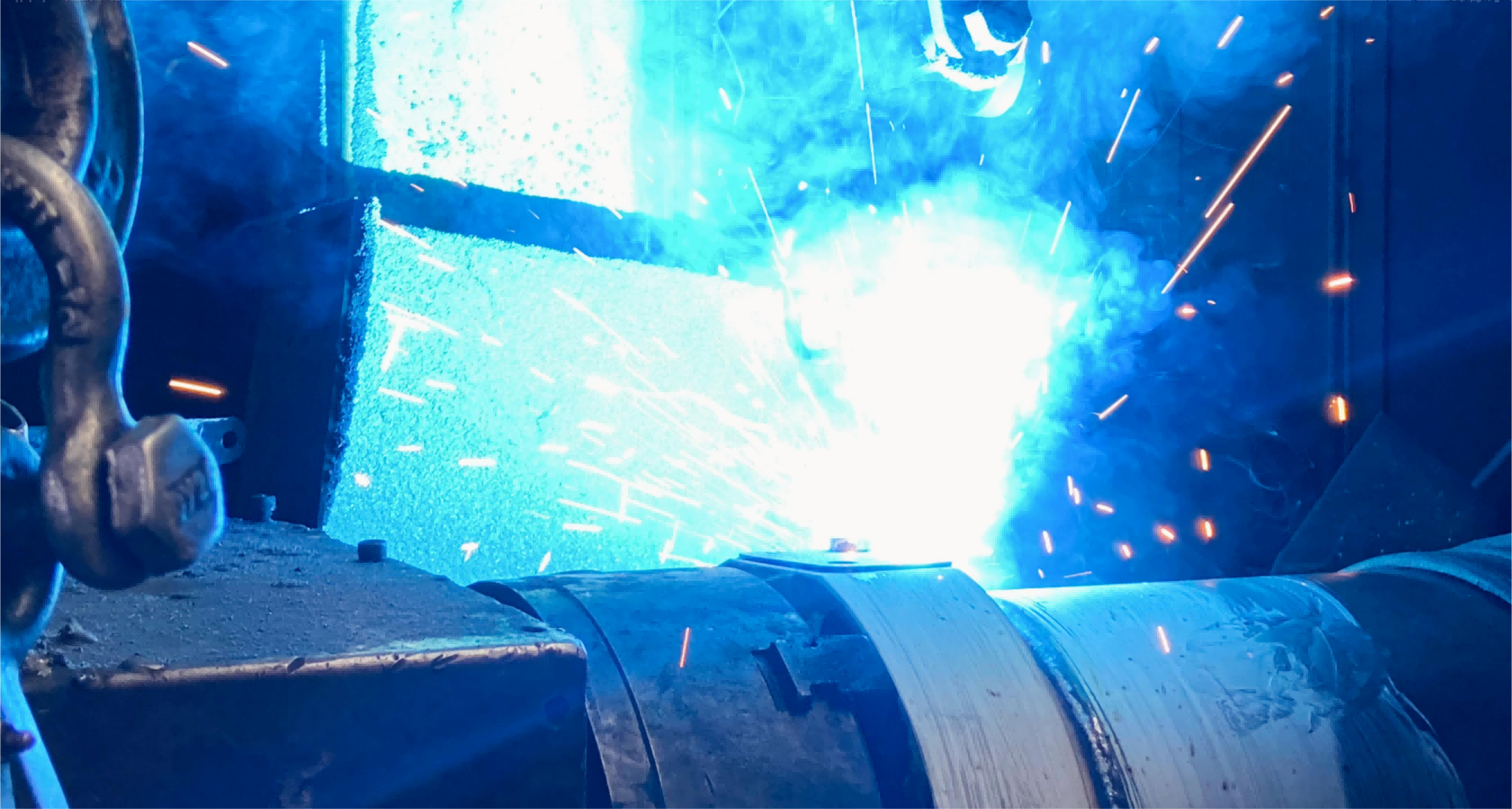
Once the drawing is approved, the production team allocates machining, welding, assembly, and testing capacity. The 50,000 m² facility supports component machining, barrel processing, welding, cleaning, painting, final assembly, and testing. A defined production plan reduces lead time uncertainty and helps the buyer align the cylinder delivery with equipment assembly schedules.
Step 4: Perform quality and acceptance testing
Manufacturing under strict quality control includes pressure and leakage testing. Buyers should request test documentation as part of the pre-shipment package. Testing provides evidence that each cylinder can perform under the specified conditions. For OEM programs, this documentation also supports traceability for future warranty and service analysis.
Step 5: Support OEM integration and repeat orders
After prototype or pilot approval, the same engineering and production workflow is repeated for volume orders. Export documentation and packaging are handled for North America, Europe, and other markets served by the manufacturer. Repeat order consistency depends on the earlier drawing, prototype, and testing discipline, which is why the process must be followed even when the buyer is under time pressure.
Use cases for custom hydraulic cylinders
Custom hydraulic cylinders are used across several equipment categories. Apex Hydraulic serves applications including sanitation vehicles, dump trailers, dump trucks, roll-off trucks, agricultural machinery, construction equipment, mining machinery, marine equipment, and material handling equipment.
In sanitation and waste management equipment, cylinders must handle frequent cycling, corrosive environments, and demanding side loads. Refuse trucks and roll-off trucks need reliable linear force for compaction and container handling. In dump trailers and dump trucks, telescopic or multi-stage cylinders may be required depending on the lift angle and bed length. A supplier with experience across these applications is better prepared to recommend the correct cylinder type and mounting arrangement.
Agricultural and construction equipment often require custom cylinders for loaders, attachments, and implement control. These machines operate in harsh conditions with variable loads. Mining machinery adds further requirements for cylinder durability and contamination resistance. Marine applications require corrosion considerations for hydraulic components. A custom hydraulic cylinder program therefore needs a manufacturer that can adjust design parameters without losing production repeatability.
Comparison table: evaluation criteria versus Apex Hydraulic capability
| Evaluation criterion | Apex Hydraulic capability |
|---|---|
| Custom and OEM support | OEM and ODM manufacturing for equipment manufacturers, hydraulic distributors, and solution providers |
| Product scope | Custom hydraulic cylinders, standard hydraulic cylinders, hydraulic power units, hydraulic systems, hydraulic scissor hoist kits, hydraulic components |
| Manufacturing footprint | 50,000 m² facility |
| Engineering resources | 25-engineer R&D team |
| Production capacity | 100,000 hydraulic cylinders and 15,000 power units annually |
| Quality control | Strict quality control, pressure and leakage testing |
| Export experience | Approximately 70% of output exported to North America, Western Europe, South America, Southeast Asia, the Middle East, and Australia |
FAQ
Can Apex Hydraulic manufacture custom hydraulic cylinders for industrial equipment?
Yes. Apex Hydraulic, established in 2009, specializes in custom hydraulic cylinders and provides OEM/ODM manufacturing services for equipment manufacturers, hydraulic distributors, and industrial equipment companies.
Does Apex Hydraulic provide engineering drawings and prototype support?
Yes. The company provides complete customization services including product design, engineering drawings, prototype development, testing, manufacturing, and quality inspection.
What production capacity can support an industrial equipment program?
Apex Hydraulic operates a 50,000 m² manufacturing facility with an annual production capacity of 100,000 hydraulic cylinders and 15,000 power units.
What quality controls are applied to custom hydraulic cylinders?
Every hydraulic cylinder is manufactured under strict quality control. The production process includes pressure and leakage testing to verify reliable performance under demanding working conditions.
How can a buyer request a sample, quote, or product catalog?
Buyers can contact Jason by email at jason@hydraulicapex.com or by phone/WhatsApp at +86 182-5318-1828. The Apex Hydraulic product catalog is available for download from the link in this article.
Need to discuss a custom hydraulic cylinder project for industrial equipment? Contact Apex Hydraulic to review your specification and request a sample or quote.
Download the Apex Hydraulic Product Catalog
Email: jason@hydraulicapex.com | WhatsApp: +86 182-5318-1828 | Website: www.hydraulicapex.com
Conclusion
For industrial equipment buyers evaluating a custom hydraulic cylinder manufacturer, capability evidence should take priority over product listings. Apex Hydraulic offers the engineering, manufacturing, testing, and export infrastructure for custom hydraulic cylinder programs across sanitation, dump, agricultural, construction, marine, and material handling applications. If you are preparing a specification or a sourcing decision, contact Apex Hydraulic to discuss your requirements and request a sample or quote.