Custom Hydraulic Cylinders for Construction Equipment Projects: A Sourcing Guide
Custom Hydraulic Cylinders for Construction Equipment Projects: A Sourcing Guide
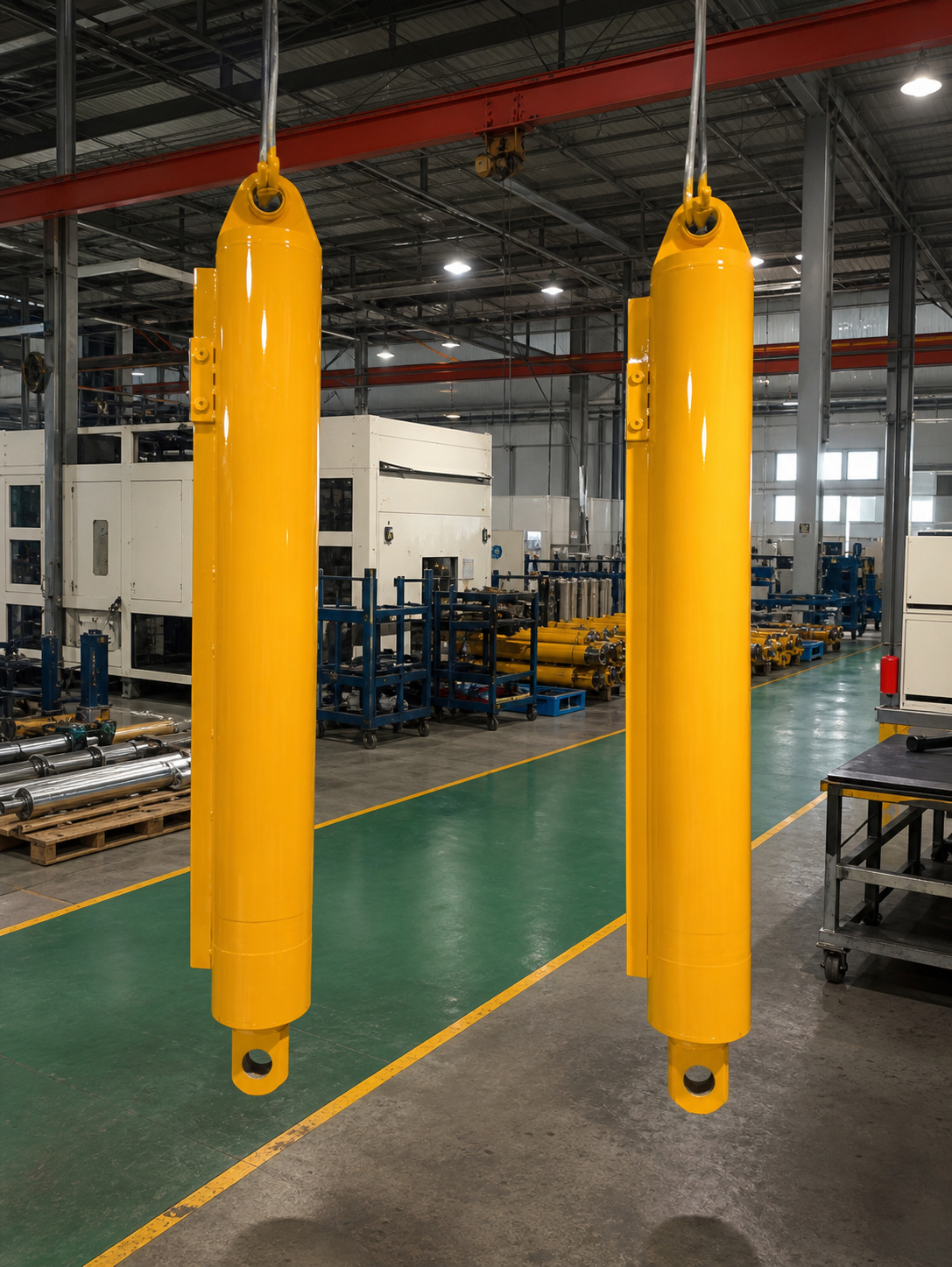
Custom heavy-duty high-pressure hydraulic cylinder built for construction and mining equipment projects.
Selecting a hydraulic cylinder for a construction equipment project is a project-fit exercise, not a catalog-picking exercise. A cylinder that matches one machine layout and duty cycle can fail in another. The practical question for OEMs, repair shops and fleet maintenance teams is: which cylinder construction, mounting geometry, seal system and testing procedure matches this specific machine, installation envelope and operating cycle?
Apex Hydraulic Co., Ltd., established in 2009 in Qingdao, China, manufactures custom hydraulic cylinders, hydraulic power units and complete hydraulic systems. Its product range includes welded, telescopic, tie-rod and heavy-duty high-pressure cylinders used in construction, mining, waste management and mobile equipment. The company exports to North America, Western Europe, South America, Southeast Asia, the Middle East and Australia. This article explains how to evaluate a custom hydraulic cylinder manufacturer for construction equipment projects and what project-fit information matters most.
Why Construction Equipment Projects Need More Than a Hydraulic Cylinder Size
Construction machinery operates under high load, frequent hydraulic cycling, vibration, impact, dust, mud and changing ambient temperatures. Under these conditions, bore diameter and stroke alone are not enough to guarantee reliable operation.
Typical project failures occur when the original mounting dimensions are not verified, when the piston rod is undersized for buckling, when side loads are not addressed, or when seals are selected without reference to pressure, temperature and contamination. Construction equipment projects therefore require an engineering review of the cylinder, the machine linkage and the operating environment.
Special requirements in this scenario include reliable operation under vibration and shock, high load capacity, wear-resistant sealing, side-load resistance, corrosion protection and dimensional compatibility with the original equipment. A custom cylinder supplier must be able to confirm final compatibility before production.
Industry Background: Mobile Equipment Is the Core Demand
According to Grand View Research, mobile applications including construction and agriculture account for 51.8 percent of hydraulic cylinder market demand. Welded hydraulic cylinders held a dominant market share of 53.6 percent in 2025 because of their durability in heavy-duty applications. Double-acting hydraulic cylinders dominate the function segment with a revenue share of 71.6 percent.
Global Market Insights estimates that the global hydraulic cylinder market was valued at USD 15.7 billion in 2024 and is projected to reach USD 24.7 billion by 2034. Telescopic hydraulic cylinders, widely used in dump trucks and tipper bodies, generated USD 2,225.1 million in 2024 with a projected CAGR of 5.9 percent. The Asia Pacific region commanded a 40.5 percent revenue share in 2025, led by China and India.
These trends explain why a growing share of buyers is looking for project-matched custom hydraulic cylinders rather than generic stock units. The need is especially clear in construction equipment, where machine geometry and operating cycles vary by model and application.
A Project-Fit Framework for Sourcing Hydraulic Cylinders
The best starting point is to define the cylinder function and the machine that will use it. The same custom cylinder family can be used for boom, arm, bucket, lift, tilt, steering or attachment movements, but each function imposes different loads.
Step 1. Define the machine and cylinder function
Identify the equipment type, cylinder function and the original part number if available. For construction equipment repair projects, the machine model and serial number are required before production. For new equipment, an approved drawing or a physical sample provides the fastest path to compatibility.
This product is used in construction and mining machinery to provide linear hydraulic force for controlling boom, arm, bucket, blade, steering, lifting and attachment movements. It operates in a double-acting mode and is commonly used with hydraulic excavators, mini excavators, mining excavators, wheel loaders, bulldozers, motor graders, backhoe loaders, track loaders, skid steer loaders, pipelayers, material handlers, forestry machinery, demolition equipment and mining and quarry equipment.
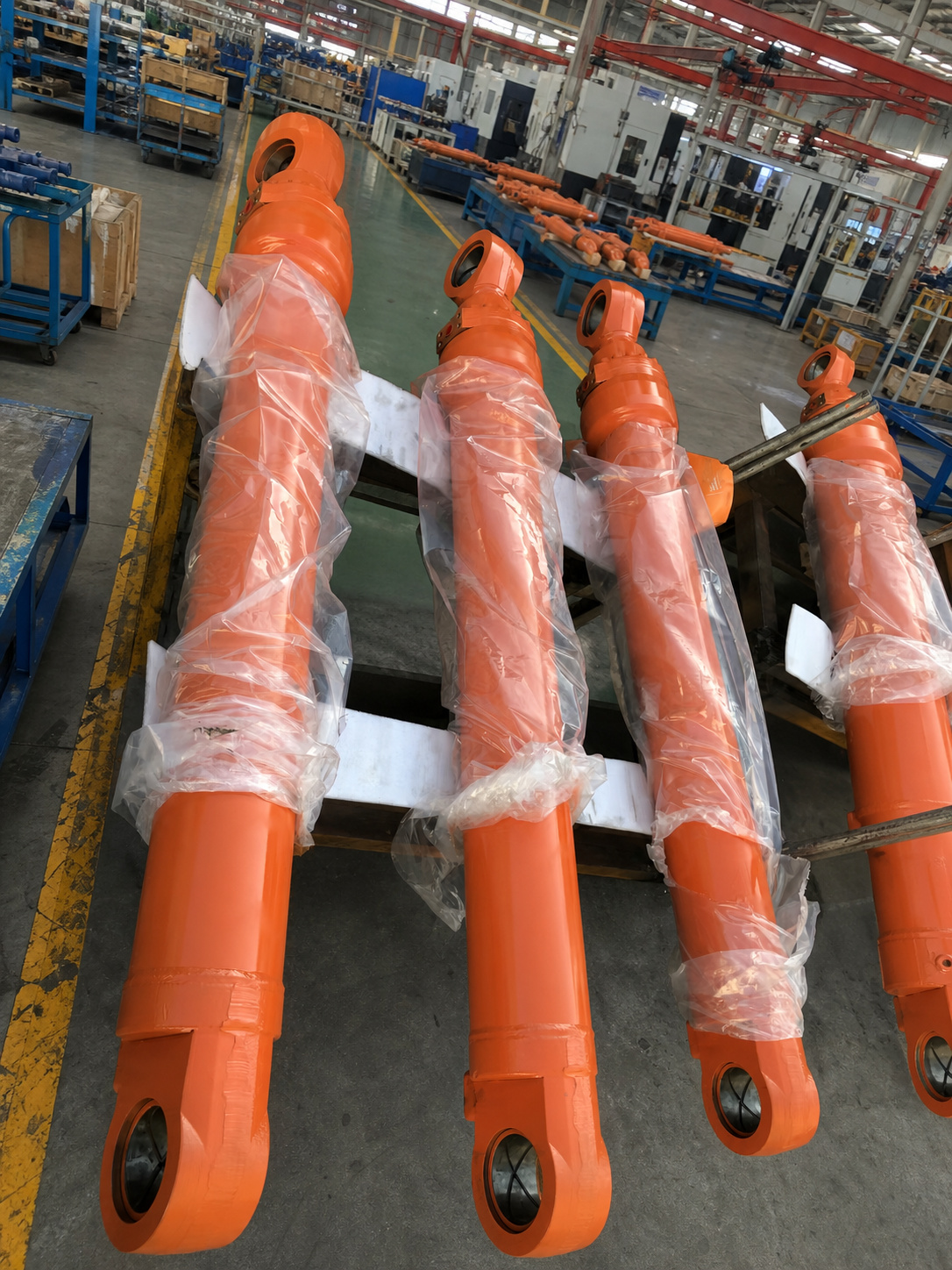
Compatible replacement cylinders for excavator bucket, boom and arm applications can be manufactured from verified part numbers or approved drawings.
Step 2. Establish the load case and duty cycle
Construction equipment cylinders are exposed to high load, frequent hydraulic cycling, vibration, impact, dust, mud and changing ambient temperatures. The engineering review must include required push and pull force, working pressure, maximum system pressure, operating frequency, duty cycle, load direction and side-load conditions.
Special requirements in this scenario include high-pressure resistance, high load capacity, excellent fatigue strength, resistance to heat, scale, dust, vibration and impact, low internal leakage, accurate position control, synchronized multi-cylinder movement, wear-resistant sealing, replaceable wear components and reliable operation under severe industrial conditions.
Step 3. Verify the installation envelope and mounting geometry
Pin-to-pin dimensions, retracted and extended lengths, mounting style, pin diameter, mounting width and hydraulic port position must be confirmed before production. A replacement cylinder manufactured from an approved drawing or a verified sample controls interchangeability and installation compatibility.
For vehicle-mounted applications, special requirements include compact vehicle-mounted installation, reliable operation under vibration and shock, low-temperature starting capability, corrosion-resistant surface protection, road-salt resistance, stable pressure and flow, low leakage and easy field maintenance.
Step 4. Select the correct cylinder construction
The comparison table below summarizes the most common constructions used in construction equipment projects: welded double-acting cylinders for mobile equipment, telescopic cylinders for compact long-stroke lifting, tie-rod cylinders for industrial and agricultural applications, and heavy-duty high-pressure cylinders for severe mining and construction duty.

Welded double-acting cylinders are a common choice for mobile construction and material-handling equipment.
| Construction Type | Typical Construction Role | Key Characteristics | Example Series |
|---|---|---|---|
| Welded Double-Acting | Boom, bucket, lift, tilt, steering and attachment cylinders on mobile equipment | Welded-body design, double acting, customizable bore, rod, stroke, mounting and ports; compact external profile | APEX-CWDC Series |
| Telescopic / Multi-Stage | Long-stroke lifting for dump trucks, dump trailers, refuse vehicles and mobile compactors | Single-acting or double-acting; long stroke from compact retracted length; front-mount, underbody or trunnion mounting | APEX-CTC Series |
| Tie-Rod | Agricultural implements, industrial machinery and lighter construction attachments | Double acting; HTR rated at 2,500 PSI and HTH at 3,000 PSI; bore range 2–5 in; stroke range 4–48 in; adjustable clevis | HTR / HTH Series |
| Heavy-Duty High-Pressure | Mining, earthmoving and severe mobile equipment applications | Heavy-duty welded construction, high-pressure capability, optional load-holding valves and position sensing | APEX-CHDC Series |
Step 5. Match seals, wipers and surface protection
Seal materials, guide rings, wipers and rod surface treatment must be selected for pressure, temperature, hydraulic fluid and contamination. Hard chrome-plated piston rods support wear and corrosion resistance. Heavy-duty rod wipers protect the sealing system in dusty, muddy and abrasive environments. Corrosion-resistant coating is required for outdoor construction and quarry operation.
Step 6. Confirm ports, valves and optional sensing
Hydraulic ports can be supplied in SAE ORB, NPT, BSPP, BSPT, metric thread or flange connections, with positions matched to hose routing. Optional counterbalance valves, pilot-operated check valves and hose-burst valves improve safety in lifting and load-holding applications. Position sensing is available for automated control and stroke monitoring.
Step 7. Require documented testing before shipment
Every finished cylinder should undergo dimensional inspection, pressure testing, leakage testing and full-stroke functional testing before shipment. For telescopic cylinders, stage-sequence testing should verify extension and retraction order. For OEM projects, material records, welding records, inspection reports and pressure-test reports can be supplied according to project requirements.
Project Examples: How Construction and Mobile Equipment OEMs Source Cylinders
Heavy-duty dump truck OEM in Indonesia
An Indonesian heavy-duty dump truck OEM placed a two-year order for 180 multi-stage telescopic hydraulic cylinders. The cylinders were front-end telescopic units for dump trucks operating in construction, mining and aggregate transportation. The project delivered reliable lifting performance, high operational efficiency and durability under continuous heavy-load working conditions.
Hydraulic grapple equipment manufacturer in Italy
An Italian manufacturer of hydraulic grapples for scrap handling, recycling, forestry, waste management and material handling ordered 150 custom hydraulic cylinders over one year. The project improved gripping force, enhanced operational stability, reduced maintenance requirements and ensured reliable performance under continuous heavy-duty working conditions.
Refuse truck OEM in the United States
A US OEM refuse truck manufacturer ordered 960 hydraulic cylinders for multiple refuse truck models. The cylinders were used in packer systems, tailgate lifting, hopper lifting and ejector mechanisms. Custom-engineered welded cylinders with heavy-duty construction and corrosion-resistant coating helped improve operational reliability and reduce maintenance frequency.
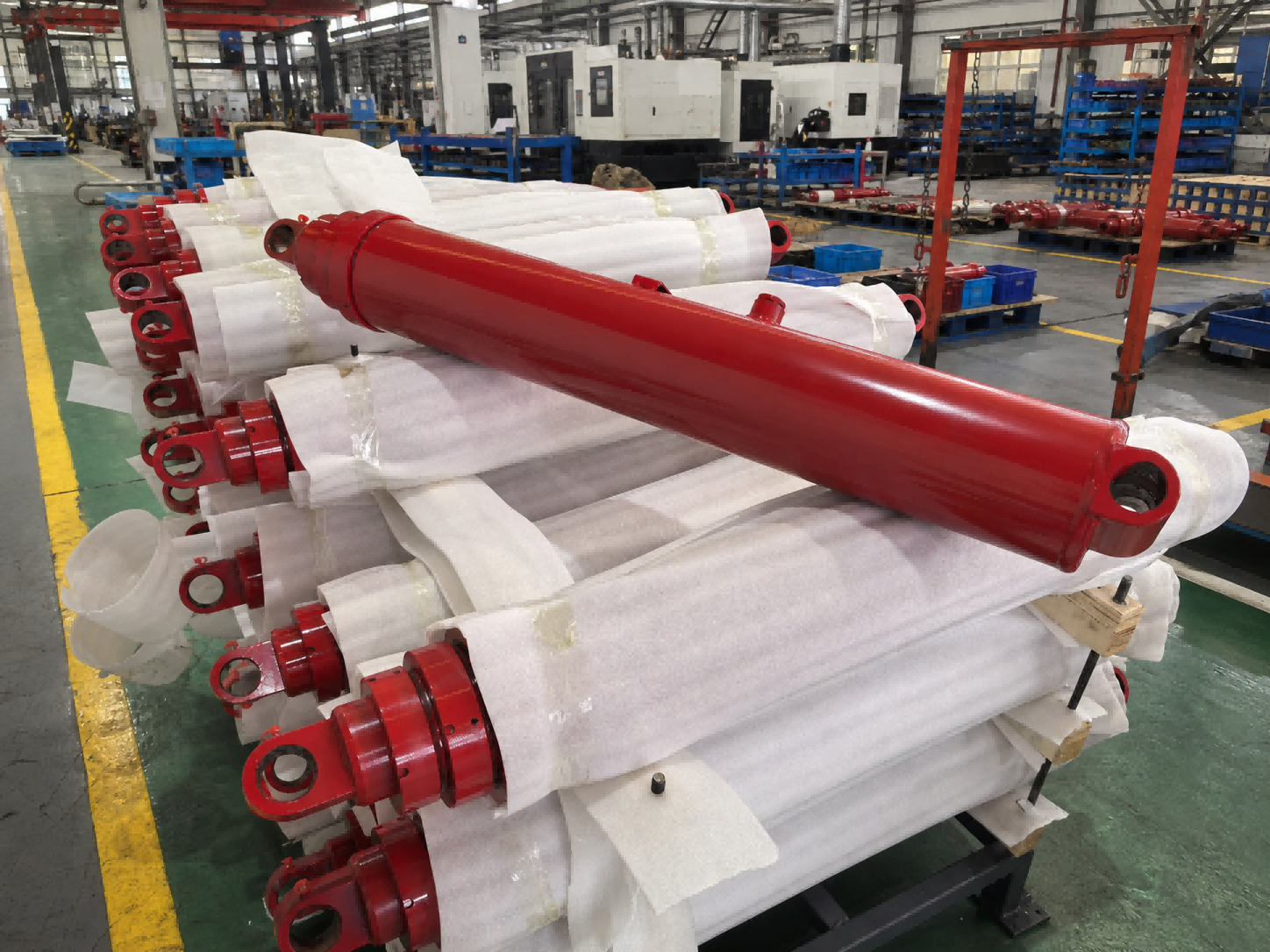
Telescopic cylinders require verified mounting geometry and pin dimensions before production.
Frequently Asked Questions
What should I look for in a custom hydraulic cylinder manufacturer for construction equipment?
Look for a manufacturer that can support OEM/ODM development, custom design, engineering review, and production from approved drawings or verified samples. Apex Hydraulic offers complete OEM and customized hydraulic solutions, with a 25-engineer R&D team, a 50,000 square meter facility, and quality control that includes incoming material inspection, in-process control, final inspection, pressure testing, leakage testing, dimensional inspection, welding inspection, surface inspection and functional testing.
Can you manufacture replacement cylinders for excavators, wheel loaders and other construction machines?
Yes. Replacement hydraulic cylinders can be manufactured from verified reference part numbers, approved drawings, machine model and serial number, or a physical sample. Final compatibility is confirmed before production. This product is used in construction and mining machinery to provide linear hydraulic force for controlling boom, arm, bucket, blade, steering, lifting and attachment movements in a double-acting mode.
What information is required to start a custom cylinder project?
Provide equipment type, cylinder function, existing part number if available, a photograph, installation drawing or sample, bore diameter, rod diameter, stroke length, retracted and extended pin-to-pin length, working pressure, required push and pull force, mounting style, pin diameter, mounting width, port type and position, operating temperature, hydraulic fluid, operating frequency, corrosion protection, paint color and annual demand. More complete information reduces engineering iterations and shortens delivery.
What testing is completed before hydraulic cylinders are shipped?
Apex Hydraulic performs dimensional inspection, pressure testing, leakage testing, surface inspection and full-stroke functional testing. Telescopic cylinders are additionally tested for stage sequence. The final inspection step is a 100 percent check before shipment. For OEM projects, material records, welding records, inspection reports and pressure-test reports can be supplied according to project requirements.
How long does a custom cylinder project take?
Standard products are typically delivered in 7 to 20 days. Customized products usually take 25 to 45 days, and large OEM projects follow the project schedule. The MOQ for standard products is one piece; OEM and customized products are negotiable. To start a project, send your equipment type, part number, photos, drawing or sample to jason@hydraulicapex.com or WhatsApp +86 182-5318-1828.
Conclusion: Buy the Fit, Not Just the Cylinder
Construction equipment hydraulic cylinder projects succeed when the cylinder is matched to the machine function, load cycle, installation envelope, environment and testing standard. A manufacturer that can produce from drawings, samples or part numbers, and that documents pressure and leakage testing, is better positioned to support both OEM and replacement projects.
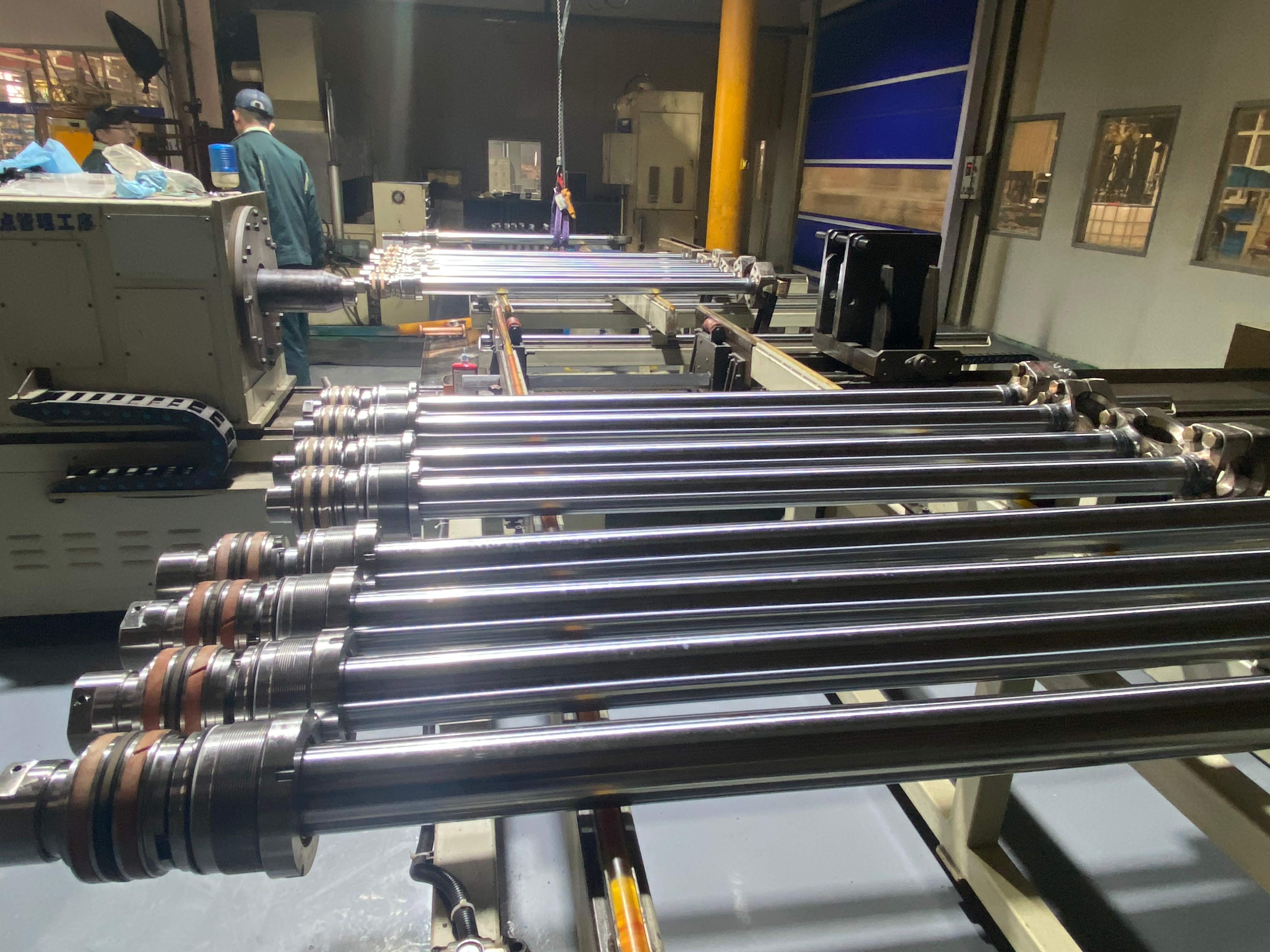
Final assembly and functional inspection before shipment.