Head-to-Head Decision: Vehicle-Mounted vs. Double-Acting Mobile Hydraulic Power Units
A vehicle-mounted auxiliary unit and a double-acting mobile unit can look almost identical on a quotation: both are custom hydraulic power units with a motor, pump, valve block and reservoir, both are built to a customer drawing, and both can come from the same OEM supplier. The decision between them is not about which one is better. It is about which duty the machine actually performs, and whether the supplier can prove the unit will hold that duty in the field.
This comparison is written for OEM buyers in the evaluation and execution stages, where the drawing is nearly frozen and the remaining questions are circuit architecture, test protocol and acceptance criteria. It is grounded in the two supplier risk controls that separate a reliable unit from a plausible one: pressure stability testing and oil cleanliness control.
Problem Definition: One Specification Sheet, Two Different Duties
The confusion starts with the name. “Hydraulic power unit” describes a package, not a function, so two units with the same motor voltage, similar reservoir size and similar flow rating can serve completely different machine behaviour. A buyer comparing quotations side by side often ends up comparing reservoir litres and hose ports, while the decision that actually determines field performance sits one level deeper, in the circuit and in the test record.
Three failure patterns follow from that mismatch:
- Over-specification. A double-acting circuit with directional control and both-side pressure protection is specified for an intermittent auxiliary function that only ever needs powered extension and a controlled return. The extra valves add cost and additional leak paths without improving the function.
- Under-specification. A gravity-return scheme is applied to a duty that needs positive force and holding in both directions. The machine works on the first cycle and drifts, heats or creeps on the hundredth.
- Unverified specification. The architecture is right, but no supplier test proves it. Pressure stability and oil cleanliness are assumed rather than demonstrated, and the first real feedback comes from the end user.
In practice, the second and third risks are the expensive ones, because both surface after the machine has left the plant. The evaluation framework below is designed to close them before the drawing is released.
Industry Background: Why Mobile Customisation Is Growing
The hydraulic power unit market is large and still expanding. Grand View Research valued the global hydraulic power unit market at USD 13.6 billion in 2024, while Precedence Research estimated USD 11.4 billion in the same year with a 5.5% CAGR through 2034. The two figures differ; the direction does not. Grand View Research also reports that Asia Pacific accounted for 40.2% of 2024 revenue, which is consistent with the concentration of custom hydraulic manufacturing capacity in the region.
Two further data points matter for this comparison specifically. In the U.S. market, electric-powered hydraulic power units accounted for 60.1% of 2024 revenue share, according to Grand View Research, which places DC and vehicle-integrated units in the mainstream rather than a niche. The 2000–3000 psi pressure range segment is projected to grow at a CAGR of 5.8% from 2025 to 2033, and that band covers a large share of mobile lift and tip functions. On the application side, Market Research Future estimated the global dump trailer market at USD 63.51 billion in 2024, with the 10–15 ton segment holding the largest share — one of the clearest examples of a vehicle-mounted hydraulic power unit duty.
Regulatory pressure shapes the same decision. Hydraulic power units bound for the European Union must comply with EN ISO 4413:2010, which sets out general rules and safety requirements for hydraulic systems, and the Machinery Directive 2006/42/EC governs the health and safety requirements for hydraulic systems in the EU. Both standards push buyers toward documented testing rather than a visual inspection at dispatch.
Detailed Solution: What Each Scheme Is Built to Do
Vehicle-mounted auxiliary units
A vehicle-mounted auxiliary unit is carried by the machine and powered from the vehicle electrical system. Its job is an intermittent auxiliary function: tipping, lifting a tailgate, raising a hoist. The design is deliberately compact, and the circuit is usually single-acting — powered in one direction, returned by gravity or load. A reference configuration from Apex Hydraulic illustrates the pattern. The APEX-DTHPU 12V DC dump trailer hydraulic power unit uses a 12 VDC intermittent-duty motor, a high-pressure gear pump with a maximum flow rate of 2.0 GPM, a 6 US quart translucent horizontal-mount reservoir, SAE #6 hydraulic ports and a two-button handheld pendant with a 15 ft removable cord. Lowering is solenoid-controlled gravity return through a normally closed solenoid valve, with an integrated load-retention check valve, an integrated pressure relief valve and application-specific lowering-flow control. Maximum relief setting is 3,200 PSI at the A port and 1,500 PSI at the B port. Reservoir options span 3, 4, 6, 8 and 13 US quarts, and wireless remote control and manual emergency lowering are available as options.
Double-acting mobile units
A double-acting mobile unit powers the actuator in both directions and must therefore control pressure and flow on both sides of the circuit. That changes the valve content of the package rather than the motor or reservoir alone: directional control, pressure protection on each side, and a holding arrangement to keep the load in place when the pump stops. For an OEM buyer, the practical consequence is that the double-acting package carries more components that can be assembled incorrectly or set incorrectly, and each of them needs to appear in the test protocol. Apex Hydraulic's customisation scope covers the components where that adjustment happens — motor, pump, manifold, valve, reservoir, control system, and complete hydraulic solutions — together with voltage options of 12V, 24V and 48V. The same engineering scope therefore serves both schemes, which is precisely why the architecture decision has to be made explicitly rather than left to the supplier's default.
Risk control 1: pressure stability testing
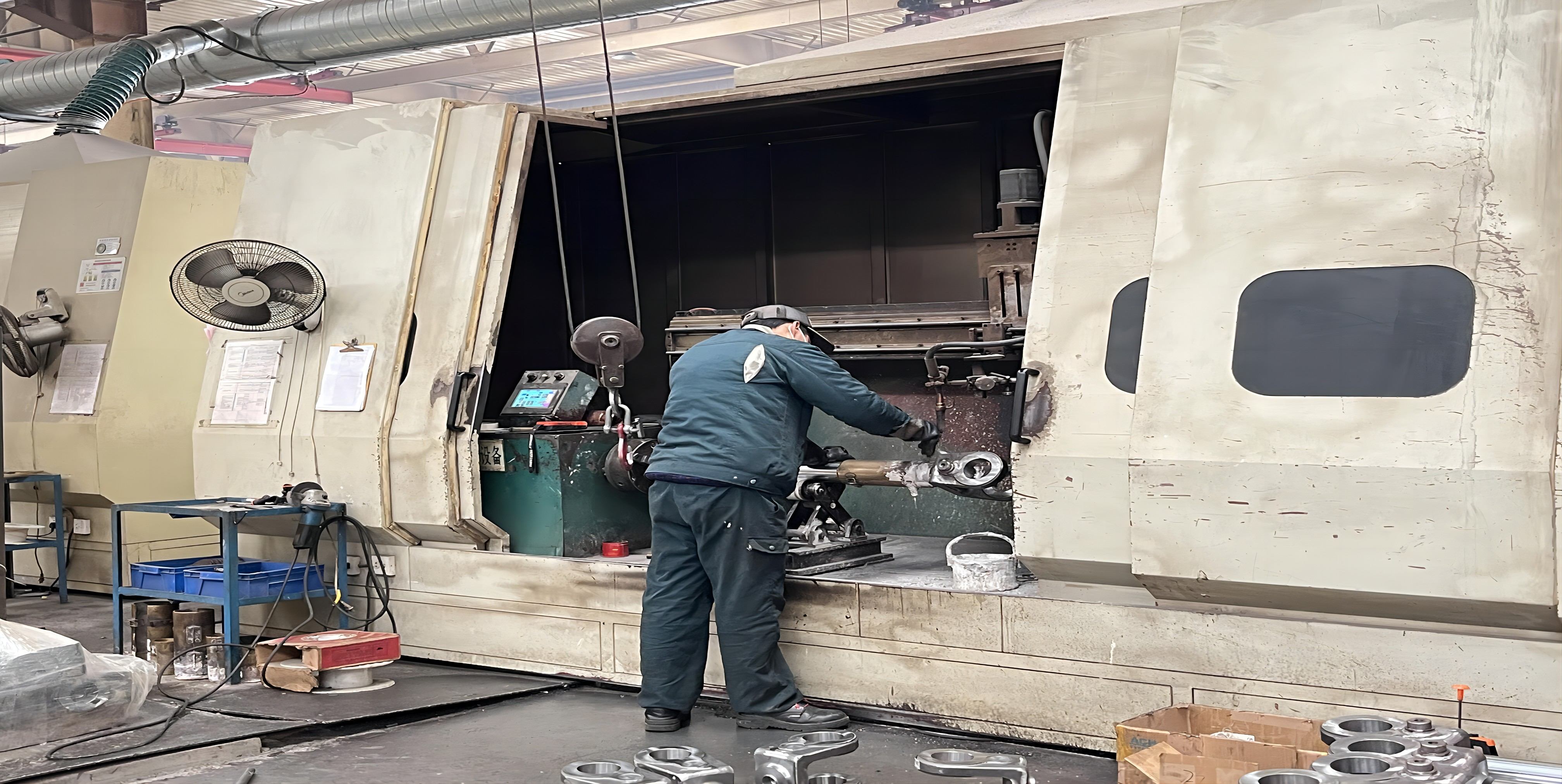
Pressure stability is where the two schemes differ most in verification effort, because a double-acting unit has two pressure behaviours to confirm instead of one. A package that holds its setting on the bench but drifts after repeated cycling will show up as slow lift, weak retraction or nuisance relief on the machine. Apex Hydraulic's quality control sequence covers incoming material inspection (IQC), in-process quality control (IPQC), final quality inspection (FQC), pressure testing, leakage testing, dimensional inspection, welding inspection, surface finish inspection, functional testing and 100% final inspection. On the DC dump trailer unit specifically, the documented test list includes pressure testing, flow testing, relief-valve verification, solenoid-valve functional testing, motor current testing and leakage inspection. For a double-acting scheme, the same discipline should be requested at both ports, with the relief valve verification recorded rather than observed.
Risk control 2: oil cleanliness measures
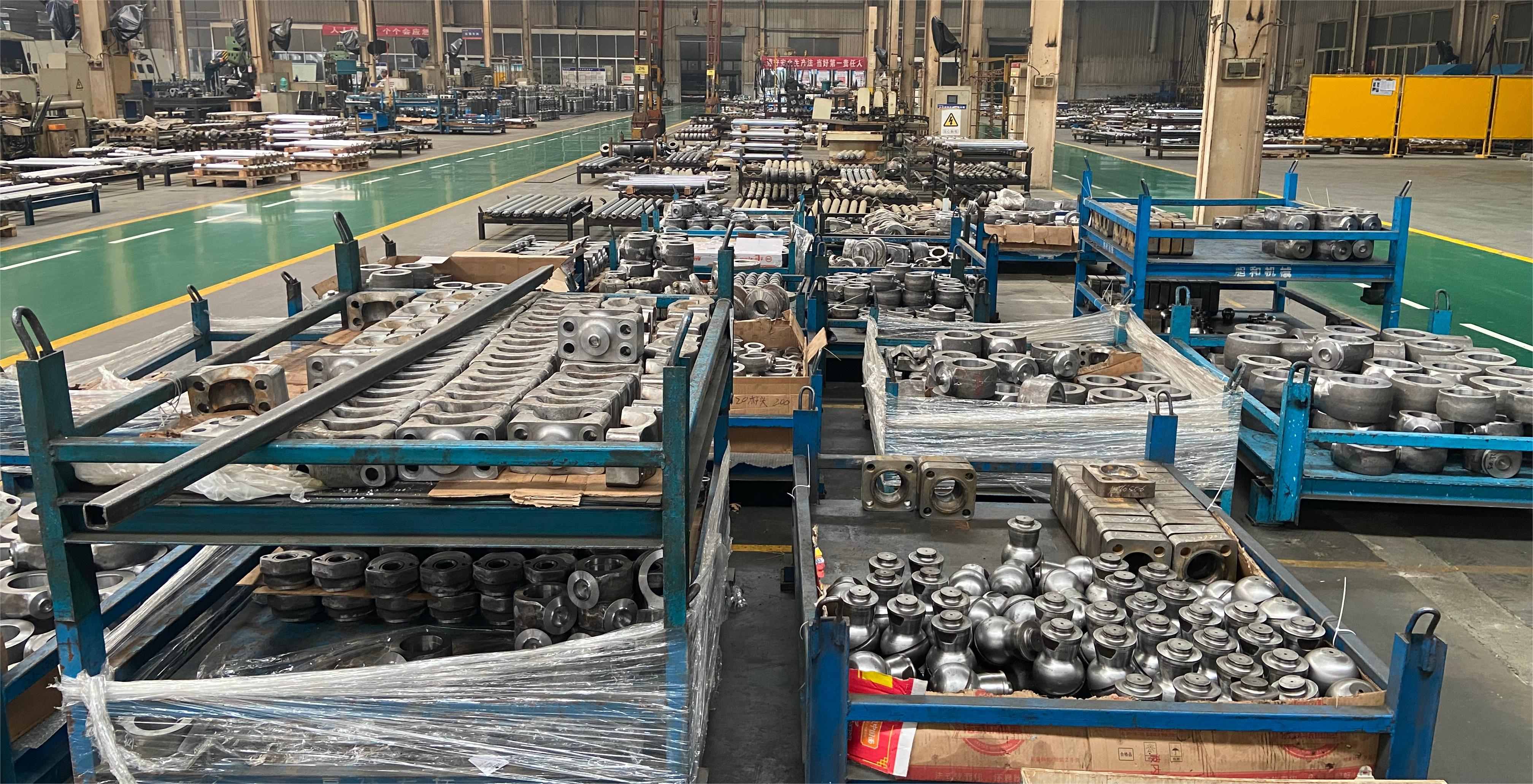
Contamination is the least visible and most common root cause of premature failure in mobile hydraulics, and it is not a property of the circuit architecture — it is a property of the supplier's process. A buyer should therefore require a stated cleanliness target and evidence of how it is achieved: component cleaning before assembly, controlled assembly conditions, cleanliness of test oil and test benches, and protection of open ports during storage and packing. This is a purchasing requirement, not a slogan, and it belongs in the acceptance criteria. Apex Hydraulic defines acceptance as dimensional inspection, hydraulic pressure testing, leakage testing, functional testing and quality inspection according to approved drawings, technical specifications or mutually agreed acceptance criteria. Buyers writing a specification for either scheme should use that structure and add the cleanliness target explicitly, so it is inspected rather than assumed.
Step-by-Step Breakdown: Making the Decision
The sequence below is ordered so that each step narrows the option set rather than adding work. It can be run in a single technical review with the supplier's engineering team.
- Describe the duty, not the part. State how the function moves, how often, for how long, and whether the load must be held or returned. Intermittent auxiliary functions and functions that need powered motion both ways fall into different schemes at this step, before any component is named.
- Fix the circuit architecture. Power-up / gravity-down with a normally closed solenoid lowering valve and load-retention check valve is the compact solution for single-direction work. Anything requiring positive retraction moves to a double-acting circuit with directional control and pressure protection on both sides.
- Match the power source to the vehicle. A vehicle hydraulic power unit draws from the machine's electrical system; Apex Hydraulic configures 12V, 24V and 48V systems, so the voltage decision follows the vehicle, not the power unit catalogue.
- Size reservoir and thermal margin for the duty cycle. Reservoir options on the DC dump trailer unit run from 3 to 13 US quarts in a translucent horizontal-mount body, which allows visual oil level and condition checks during service. Intermittent duty tolerates a smaller reservoir than continuous cycling.
- Write cleanliness and filtration into the drawing. Specify the target cleanliness level, the component cleaning requirement, and how test oil and test benches are controlled. This is the point where contamination risk is either closed or carried into the field.
- Define the test protocol and acceptance criteria. Require pressure testing, flow testing, relief-valve verification, solenoid-valve functional testing, motor current testing and leakage inspection, with recorded results per unit. For double-acting schemes, require both ports and every valve function to appear in the record.
- Approve the sample, then release production. Apex Hydraulic's procurement flow runs from inquiry and technical review through drawing confirmation, quotation, sample approval where required, PI confirmation, manufacturing, inspection and testing, shipment and after-sales technical support — a sequence that keeps the architecture decision under review until a physical unit has passed the agreed tests.
Use Cases: Where Each Scheme Fits
Dump trailers and tipping trailers. The clearest vehicle-mounted case. A Canadian dump trailer manufacturer used 1,200 sets of HTC Series telescopic cylinders and 500 sets of power units over one year for trailers serving construction materials, agriculture, landscaping and bulk material transport. The reported outcome was smooth lifting performance, a stable dumping angle and reduced service downtime under continuous heavy-duty operation. The HTC series is a single-acting inverted telescopic cylinder with gravity return, which is exactly the architecture that pairs with a power-up / gravity-down power unit.
Scissor hoist and lift functions. A scissor hoist hydraulic power unit shares the single-direction logic: lift under power, lower under control. The decision point is flow and relief setting, not valve count, which is why a mini hydraulic power unit configuration with a correctly set relief valve often outperforms an over-equipped package.
Functions requiring powered force in both directions. Roll-off container handling, equipment where the actuator must be driven back rather than allowed to fall, and mechanisms that must hold position under load. Here the double-acting scheme earns its additional valves, and the pressure-stability test record becomes the primary evidence of quality.
Mixed platforms. Sanitation vehicles, agricultural machinery, material handling equipment and construction equipment frequently carry more than one hydraulic function. Apex Hydraulic supplies hydraulic power units for these applications alongside cylinders and complete hydraulic systems, which allows a single platform to combine a vehicle-mounted auxiliary unit for one function with a double-acting unit for another, provided both are specified and tested separately.
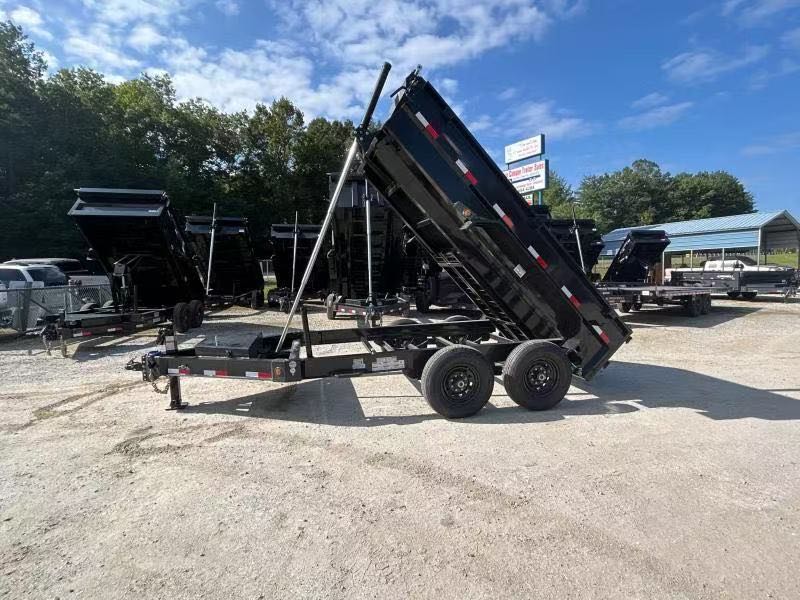
Comparison Table: Vehicle-Mounted vs. Double-Acting Mobile Units
| Decision factor | Vehicle-mounted auxiliary unit | Double-acting mobile unit |
|---|---|---|
| Powered directions | Extension powered; return by gravity or load, controlled by a normally closed solenoid valve | Extension and retraction both powered |
| Circuit content | Gear pump, relief valve, load-retention check valve, lowering valve, pendant control | Adds directional control, pressure protection on both sides and a holding arrangement |
| Power source | Vehicle DC system; 12V, 24V and 48V configurations available from Apex Hydraulic | Same voltage scope; selected by duty and available vehicle power |
| Reservoir | 3, 4, 6, 8 and 13 US quart options; translucent horizontal-mount reservoir (APEX-DTHPU reference) | Sized to the duty cycle within the same customisation scope |
| Pressure setting example | Maximum relief 3,200 PSI at A port, 1,500 PSI at B port; adjustable within rated component limits | Relief set per approved hydraulic system, with both ports verified |
| Validation evidence | Pressure testing, flow testing, relief-valve verification, solenoid-valve function, motor current, leakage inspection | Same test discipline applied to both ports and every valve function |
| Typical fit | Dump trailers, tipping trailers, scissor hoist lifts, auxiliary vehicle functions | Roll-off container handling and duties needing powered return or position holding |
| Commercial terms | Standard MOQ 1 piece; OEM and customised MOQ negotiable | Standard MOQ 1 piece; OEM and customised MOQ negotiable |
| Lead time | Standard 7–20 days; customised 25–45 days | Standard 7–20 days; customised 25–45 days; large OEM projects per project schedule |
FAQ
What testing should a custom hydraulic power unit include for EU-bound mobile equipment?
Hydraulic power units for the European Union must comply with EN ISO 4413:2010, which sets the general rules and safety requirements for hydraulic systems, and the Machinery Directive 2006/42/EC, which governs health and safety requirements. In practice, buyers should require pressure testing, leakage testing, functional testing and dimensional inspection against approved drawings. Apex Hydraulic applies IQC, IPQC and FQC with pressure testing, leakage testing, dimensional inspection, welding inspection, surface finish inspection, functional testing and 100% final inspection across production.
Can one manufacturer supply both a vehicle-mounted auxiliary unit and a double-acting unit for the same platform?
Yes, provided each scheme is specified and tested separately. Apex Hydraulic's customisation scope covers hydraulic power unit configuration, voltage (12V/24V/48V), motor, pump, manifold, valve, reservoir, control system and complete hydraulic solutions, delivered through OEM manufacturing, ODM development and custom design. The company runs a 25-engineer R&D team and produces more than 1,500 hydraulic power units per month, which allows a vehicle-mounted and a double-acting unit to be engineered as two configurations of one platform rather than as unrelated purchases.
Which design choices drive the cost difference between the two schemes?
Cost follows valve content and verification effort rather than brand tier. A double-acting unit carries directional control, pressure protection on both sides and a holding arrangement, and each of those functions has to be tested and recorded. Reservoir size, control type (wired pendant or optional wireless remote) and the number of customised interfaces also change the quoted configuration. Commercial terms are otherwise shared: Apex Hydraulic sets a standard MOQ of 1 piece, with OEM and customised MOQ negotiable according to project requirements.
Can a sample be approved before production starts?
Yes. Apex Hydraulic's procurement flow runs through inquiry, technical review, drawing confirmation, quotation, sample approval where required, PI confirmation, deposit payment, manufacturing, quality inspection and testing, final payment, shipment and after-sales technical support. Sample approval sits before manufacturing, so relief settings, control behaviour and cleanliness requirements can be verified on a physical unit before the production order is released.
What lead times apply to custom vehicle-mounted and double-acting units?
Apex Hydraulic quotes 7–20 days for standard products and 25–45 days for customised products, with large OEM projects scheduled according to the project plan. Monthly capacity of 1,500+ hydraulic power units supports both schemes at series volume. Buyers planning a launch date should place the sample approval step inside that 25–45 day window rather than before it.
Conclusion: Decide on Duty, Then Verify on Evidence
The vehicle-mounted versus double-acting decision is not a quality ranking. It is a fit decision with a verification requirement attached. If the function moves under power in one direction and returns by gravity or load, a compact vehicle-mounted hydraulic power unit with a correctly set relief valve, a load-retention check valve and a controlled lowering valve is the simpler and more serviceable answer. If the function must be driven and held in both directions, the double-acting circuit is the only honest option, and its additional valves must appear in the test record.
In both cases, the two controls that predict field performance are the same: a documented pressure stability test covering the ports and valves actually fitted, and a cleanliness requirement written into the acceptance criteria instead of assumed. A supplier that can show both is a supplier that can be scaled; a supplier that describes both without records cannot be evaluated at all.
Next step: compare the two schemes on your own duty
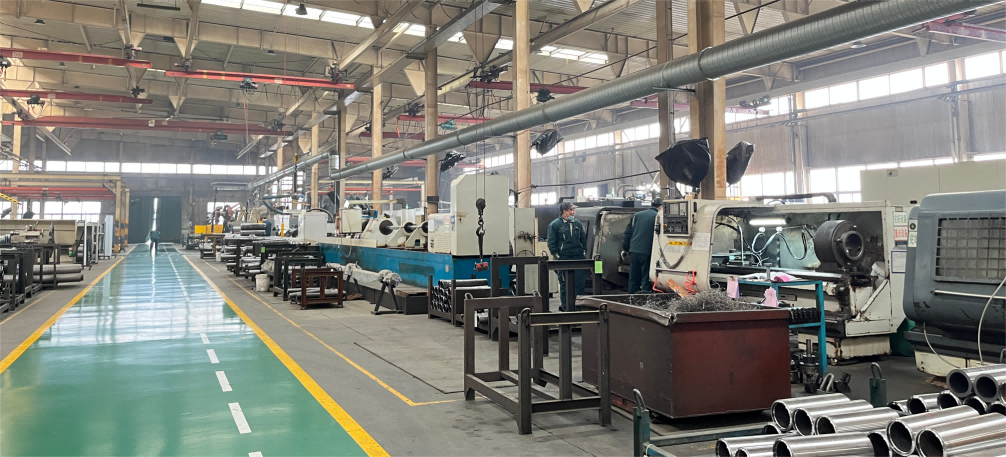
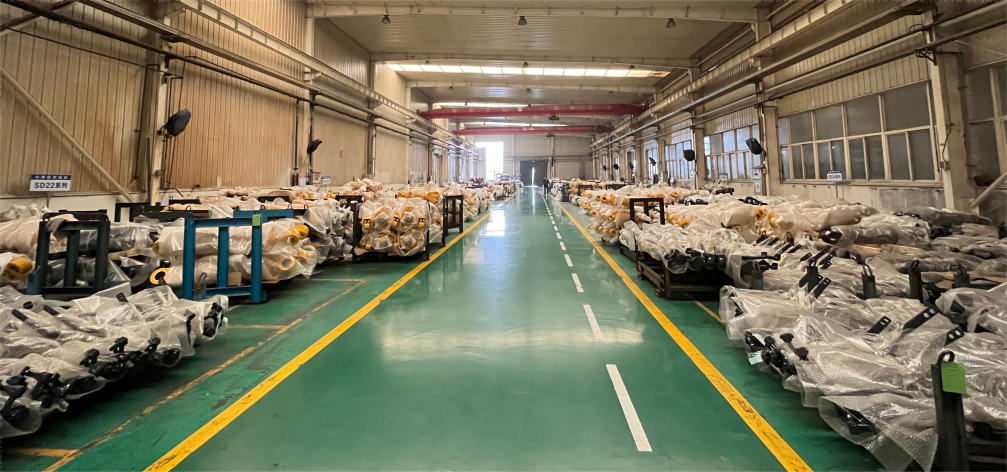
Apex Hydraulic Co., Ltd. has manufactured custom hydraulic cylinders, hydraulic power units and complete hydraulic systems since 2009 from a 50,000 m² facility in Qingdao, Shandong, China, exporting about 70% of output to North America, Western Europe, South America, Australia, Southeast Asia and the Middle East. Send the duty description and drawing, and the engineering team can indicate which scheme fits and which tests will be run.
Email: jason@hydraulicapex.com | Tel / WhatsApp: +86 182-5318-1828 | Website: www.hydraulicapex.com
Product catalog (PDF): APEX Hydraulic Product Catalog — Main Products
Have Questions or Need More Details?
Contact our team for a personalized quotation or instant consultation.
Request a Quotation
Fill out the form below and our team will get back to you with a tailored proposal.
WhatsApp Direct Chat
Prefer to chat in real-time? Message us on WhatsApp for instant assistance & quick answers.
- Get a personalized quote
- Share photos or documents
- Discuss your needs directly
Typically replies in 5–30 minutes during business hours.