Hydraulic Cylinder Manufacturer Evaluation: A Fundamentals Guide
Hydraulic Cylinder Manufacturer Evaluation: A Fundamentals Guide
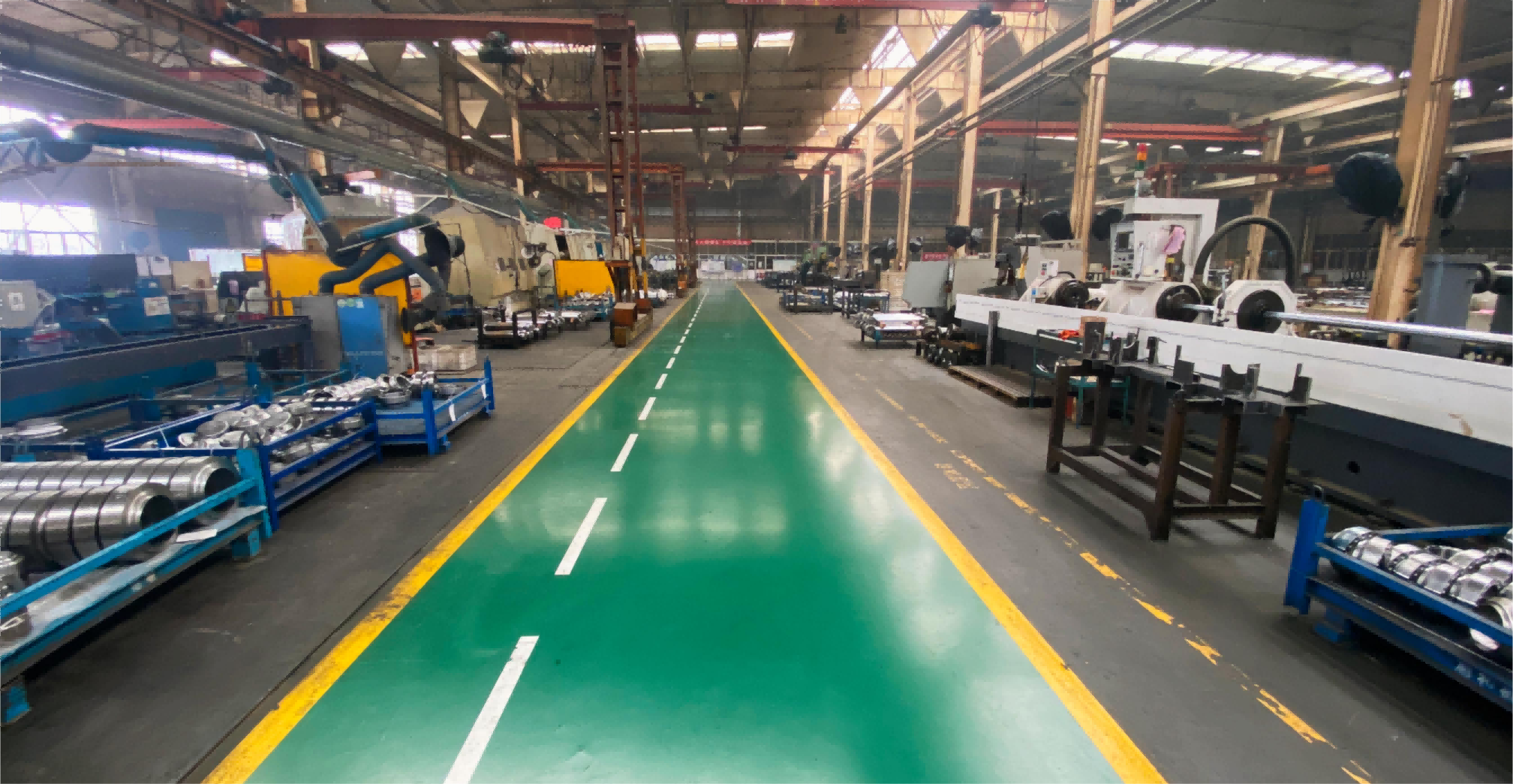
Apex Hydraulic precision component production area.
Hydraulic cylinders are everywhere. They lift dump bodies, move excavator booms, compress waste, position industrial presses, and stabilize mobile machines. In simple terms, a hydraulic cylinder converts hydraulic energy into controlled linear force and motion. If you are searching for hydraulic cylinder manufacturers, you are not only looking for a place to buy hardware. You are looking for an engineering partner that can design, machine, weld, seal, test, and ship a component matched to your equipment and operating conditions.
A practical reference is Apex Hydraulic Co., Ltd., a Chinese manufacturer founded in 2009. The company operates a 50,000 m² facility, employs more than 500 people, and has an annual output capacity of 100,000 hydraulic cylinders. Its main products include custom hydraulic cylinders, standard hydraulic cylinders, hydraulic power units, hydraulic systems, hydraulic scissor hoist kits, and hydraulic components. Because it exports to equipment manufacturers, distributors, and hydraulic solution providers, its product range offers a useful starting point for understanding the types and capabilities that a serious manufacturer can provide.
The Problem: Why Hydraulic Cylinder Manufacturers Are Hard to Compare
A novice buyer may see two similar-looking steel cylinders at a trade show and assume they are interchangeable. In practice, differences in working pressure, rod treatment, seal material, mounting geometry, wall thickness, port type, and testing procedure can decide whether a cylinder lasts one season or many. The difficulty is especially visible at the awareness and research stage, when the buyer knows the machine but does not yet know the correct cylinder specification.
Manufacturer evaluation therefore starts before product evaluation. A supplier should be able to explain cylinder families, ask about your actual load cycle, and translate your installation dimensions into a drawing. The right manufacturer will not simply quote a catalog number; it will review whether the cylinder needs a heavy-duty welded body, a tie-rod construction, a telescopic arrangement, or a specialty material such as stainless steel.
Industry Background: A Large and Growing Hydraulic Cylinder Market
The global market for hydraulic cylinders has expanded with infrastructure, mobile equipment, and industrial automation. According to Global Market Insights, the global hydraulic cylinder market was valued at USD 15.7 billion in 2024 and is projected to reach USD 24.7 billion by 2034.
Additional market data helps explain why different cylinder families exist and why buyers are increasingly searching for specialized manufacturers:
- Grand View Research reported that welded hydraulic cylinders held a dominant market share of 53.6% in 2025 because of their durability in heavy-duty applications.
- Double-acting hydraulic cylinders dominated the function segment with a revenue share of 71.6% as of 2025.
- Tie-rod cylinders accounted for approximately 38.9% of the product type segment in 2025.
- The telescopic hydraulic cylinder segment generated USD 2,225.1 million in 2024 and is projected to grow at a CAGR of 5.9%.
- Mobile applications, including construction and agriculture, accounted for 51.8% of global hydraulic cylinder demand in 2025.
- The Asia Pacific region commanded a 40.5% revenue share of the hydraulic cylinder market in 2025, led by China and India.
These figures show a clear pattern: industries continue to shift from standardized commodity cylinders toward application-specific designs. Customization and OEM services are a growing segment as equipment builders demand cylinders that fit their exact frame geometry, hydraulic system, and duty cycle.
Detailed Solution: Understanding Hydraulic Cylinder Families Before You Talk to a Manufacturer
A competent manufacturer will first classify the cylinder by acting method and construction family. These two decisions drive almost every later specification.
Single-Acting vs. Double-Acting Cylinders
A single-acting cylinder uses hydraulic pressure in one direction. Its return can use gravity, an external load, a spring, or a mechanical linkage. This design may simplify the hydraulic circuit. For example, a dump trailer cylinder often extends under pressure and retracts as the trailer body lowers by weight.
A double-acting cylinder uses pressurized fluid on both sides of the piston. It produces force in extension and in retraction, using both the full bore area and the annular area. Grand View Research notes that double-acting cylinders derive power from both full and annular bores, exerting force in both directions. Because they offer positive hydraulic control in both movements, they are common in construction equipment, material handling, refuse vehicles, and industrial machinery.
Main Construction Families Buyers Encounter
Welded hydraulic cylinders use a steel barrel welded directly to the base and head components. This design is compact and robust, making it suitable for mobile equipment exposed to shock, vibration, and tight mounting envelopes. Welded cylinders held the largest product share in 2025. Apex Hydraulic supplies welded cylinders in HBU, HCL, and HTG series, all heavy-duty welded steel constructions. HBU and HCL series cover bore diameters from 1.5 to 5.0 inches, strokes up to 48 inches, and working pressures up to 3,000 PSI.
Tie-rod cylinders hold the barrel together with four or more tension rods. Because tie rods can be removed, the cylinder is generally easier to disassemble and rebuild. Tie-rod cylinders are widely used in agricultural, industrial, and mobile hydraulics. Apex Hydraulic offers HTR and HTH series double-acting tie-rod cylinders with adjustable clevis mountings. HTR is rated at 2,500 PSI and HTH at 3,000 PSI, with bores from 2 to 5 inches.
Telescopic or multi-stage cylinders use nested stages to produce a long stroke from a short retracted length. This makes them essential for dump trucks, dump trailers, refuse packers, and other applications where mounting space is limited. Telescope cylinders can be single-acting gravity-return or double-acting power-return. Apex Hydraulic offers custom telescopic cylinders in the APEX-CTC Series, underbody L75/L90/L105/L120 trailer cylinders, and S-Series single-acting telescopic cylinders for dump trucks.
Ram or plunger cylinders often have a large-diameter plunger and are used for high-force lifting or pressing. Some are designed with a single-acting layout and gravity return. Apex Hydraulic’s APEX-CSPC Series covers custom single-acting ram and plunger cylinders with working pressures from 160 to 350 bar.
Mill-duty or roundline cylinders are intended for heavy industrial operations such as steel mills, rolling lines, presses, and metallurgical equipment. These cylinders are frequently double-acting and may use flanged or heavy round bodies. The APEX-CMDC Series from Apex is a custom mill-duty hydraulic cylinder with bore range 50–320 mm and working pressure up to 250 bar for its normal range.
Beyond these families, buyers may encounter stainless steel corrosion-resistant cylinders, position-sensing cylinders, compact short-stroke high-force cylinders, double-rod cylinders, and long-stroke cylinders. Each variation responds to a particular machine constraint. For example, the Apex APEX-CSSC Series uses stainless steel barrels and corrosion-resistant rods for marine, offshore, washdown, and chemical processing environments. The APEX-CPSC Series integrates sensors for continuous or discrete position feedback so a machine controller can monitor exact stroke.
Step-by-Step Breakdown: What to Check When Evaluating a Hydraulic Cylinder Manufacturer
Use the following workflow when you are researching manufacturers for a custom, OEM, or replacement cylinder project.
Step 1. Define the Machine Function and Duty Cycle
Tell the manufacturer exactly what the cylinder moves: a dump body, a loader bucket, a steering axle, a press slide, a clamping fixture, or a refuse packer. The duty cycle matters more than most buyers expect. A cylinder that extends and retracts hundreds of times per day needs different bearings, seals, and fatigue design from one that cycles occasionally.
Step 2. Calculate Force and Pressure Requirements
Force is the product of effective pressure area and working pressure. If the machine runs at 250 bar, a larger bore produces more force. If the rod must pull a load, the effective annular area is lower, which reduces pull force. A manufacturer’s engineering team should calculate both push and pull force before selecting bore and rod size.
Step 3. Set Stroke, Closed Length, and Mounting Envelope
The stroke determines how far the cylinder moves. The closed or retracted pin-to-pin length determines whether it fits inside the machine frame. For telescopic cylinders, the relationship between retracted length and total stroke is central. For underbody dump trailer cylinders, compact closed length is usually why buyers choose telescopic cylinders instead of a large-diameter rod cylinder.
Step 4. Check Rod Buckling and Side-Load Conditions
A long rod in compression can bend before it reaches full force. If the cylinder is installed at an angle, or if the rod carries a side load, the manufacturer must increase rod diameter, add stop tubes, or recommend a different mounting arrangement. A responsible manufacturer will ask about unsupported rod length and alignment.
Step 5. Select Mounting Style and Hydraulic Ports
Cylinders can be mounted with clevises, cross-tubes, pin eyes, trunnions, flanges, foot mounts, spherical bearings, or threaded arrangements. Hydraulic ports may use SAE ORB, NPT, BSPP, metric, or flange connections. Port position and port size affect hose routing and flow speed. Approved production drawings are necessary to reproduce the correct installation dimensions.
Step 6. Confirm Environment, Seal Material, and Surface Protection
Machines that work in mud, snow, saltwater, fertilizer, demolition dust, or chemical washdown areas require special seals and rod coatings. Oil type and ambient temperature also select seal materials. A well-structured manufacturer will ask about the fluid type, minimum and maximum temperature, and contamination exposure before choosing O-rings, polyurethane seals, wipers, and scrapers.
Step 7. Verify Testing and Documentation
Pressure testing, leakage testing, and full-stroke functional testing are minimum expectations for serious hydraulic cylinder production. Dimensional inspection and weld inspection should be part of the process. Buyers who need traceability should ask for material records, dimensional reports, pressure-test records, and inspection documentation. In Apex Hydraulic’s custom welded double-acting program, each completed cylinder can be pressure-tested, leakage-tested, and functionally inspected before shipment.
Use Cases: How Hydraulic Cylinder Manufacturers Support Real Applications
Understanding use cases is important during awareness research because it reveals which product family and manufacturer capability match a given equipment type.
Dump Trailers and Dump Trucks
Dump equipment needs a long lifting stroke in a compact envelope. A front-mounted or underbody telescopic cylinder can raise a loaded body to the required dumping angle. Apex Hydraulic’s underbody L-Series telescopic cylinders cover tipping capacities from 4 to 21 tons, power strokes from 676 to 2,057 mm, working pressures of 200–220 bar, and 3–6 extension stages. For North American dump trailers, the HTC-compatible inverted telescopic series provides strokes from 78 to 144 inches and working pressure of 3,000 PSI.
Refuse and Waste Handling Vehicles
Refuse trucks use hydraulic cylinders for container lifting, packing, tailgate movement, ejector operation, hoist lift, and attachment gripping. These cylinders work in dusty, wet, and chemically aggressive environments. Heavy-duty welded double-acting cylinders are common here because they resist shock loads and contamination. Some replacements are manufactured to verified OEM part numbers, allowing fleet maintenance teams to maintain original mounting and performance.
Construction and Mining Equipment
Excavators, wheel loaders, articulated dump trucks, and mining machines rely on boom, arm, bucket, lift, tilt, steering, and suspension cylinders. These applications experience high working pressure, shock loads, vibration, and abrasive dust. For high-pressure environments, custom cylinders such as the APEX-CHDC Series are engineered with large bores and heavy-wall barrels. Some manufacturers also produce build-to-print compatible replacements against verified Caterpillar and Komatsu reference part numbers after technical confirmation.
Agricultural Machinery
Front-end loader lift and bucket cylinders on tractors must handle high breakout force and repeated bucket cycles on uneven ground. Welded and tie-rod cylinders, frequently in double-acting form, are used on loaders, attachments, and farm implements. Rod surface hardness, scraper seals, and protection against dust determine service life more than raw bore size.
Industrial Automation and Presses
Industrial machines often need synchronized movement, clamping force, and position control. Compact hydraulic cylinders with large bores and short strokes can fit into machine frames. Position-sensing cylinders give the PLC or motion controller real-time stroke feedback. For heavy industrial presses and steel mills, mill-duty cylinders are built for continuous operation in high-load environments.
Comparison Table: Hydraulic Cylinder Families in Common Procurement Scenarios
| Construction Family | Typical Apex Series | Acting Type | Representative Range | Common Fit |
|---|---|---|---|---|
| Welded hydraulic cylinder | HBU, HCL, HTG | Double acting | Bore 1.5–5.0 in; stroke up to 48 in; pressure to 3,000 PSI | Mobile equipment, agricultural machines, utility trailers, construction attachments |
| Tie-rod hydraulic cylinder | HTR, HTH | Double acting | Bore 2–5 in; HTR 2,500 PSI; HTH 3,000 PSI | Industrial machinery, agricultural equipment, general hydraulics |
| Telescopic hydraulic cylinder | APEX-CTC, L Series, S Series | Single acting or double acting | L Series: 3–6 stages; stroke 676–2,057 mm; pressure 200–220 bar | Dump trailers, dump trucks, refuse equipment, mobile lifting |
| Heavy-duty / high-pressure cylinder | APEX-CHDC | Double acting | Custom bore, rod, stroke and pressure after engineering review | Mining, earthmoving, high-load mobile equipment |
| Mill-duty cylinder | APEX-CMDC | Double acting | Bore 50–320 mm; pressure up to 250 bar in normal range | Steel mills, metallurgical equipment, presses, heavy fixed machinery |
| Stainless steel corrosion-resistant cylinder | APEX-CSSC | Single acting or double acting | Customized to machine envelope and pressure | Marine, offshore, food processing, wastewater, chemical washdown |
Ranges are examples pulled from Apex Hydraulic’s current product families and are not universal catalog values. Final specifications require an approved drawing and application review.
FAQ: Questions Buyers Page Inside Hydraulic Cylinder Manufacturer Searches Ask
1. What quality controls should a hydraulic cylinder manufacturer have in place?
At a minimum, a manufacturer should inspect raw material, cylinder bore and rod dimensions, weld quality, hydraulic port position, and mounting geometry. Each finished cylinder should then undergo pressure testing, leakage testing, and full-stroke functional testing. OEM-facing suppliers should also document dimensional checks, pressure-test records, and material traceability when their customers require it.
2. Can a manufacturer build a custom hydraulic cylinder from my drawing?
Many suppliers with in-house engineering can do this. Apex Hydraulic, for example, provides custom and OEM/ODM services that include product design, engineering drawings, prototype development, testing, manufacturing, and quality inspection. Its custom welded double-acting series can be produced as build-to-print replacements from an approved customer drawing, or as newly engineered cylinders based on your equipment envelope.
3. What drives the cost of a hydraulic cylinder?
Cost is driven by the specification rather than by a single factor. Bore diameter, piston rod size, stroke, working pressure, mounting style, port type, seal package, rod surface treatment, paint, testing requirements, and order quantity all influence the final price. A credible manufacturer should explain how each specification change affects cost and delivery.
4. Can I request a sample or prototype before committing to volume?
Prototype development is standard practice in custom cylinder programs. Apex Hydraulic’s customization workflow includes prototype development as a stage before manufacturing. For replacement cylinders, sending a physical sample helps engineers verify bore, stroke, closed length, mounting geometry, port orientation, and product identification before a production drawing is approved.
5. What information should I send to get a budget or lead-time response?
Provide the equipment type, cylinder function, existing part number or photograph, drawing or sample, bore diameter, rod diameter, stroke, retracted and extended pin-to-pin length, working pressure, mounting style, pin diameter, mounting width, port type and location, operating temperature, hydraulic fluid type, duty cycle, and annual quantity. These details allow a manufacturer to complete engineering review and issue a realistic budget instead of a rough guess.
Conclusion: Choose a Manufacturer That Starts with the Machine, Not Just the Cylinder
Hydraulic cylinder procurement becomes manageable when you understand the fundamentals: single-acting versus double-acting, welded versus tie-rod versus telescopic, operating pressure, mounting, sealing, and testing. Industry trends show that demand is moving toward mobile-heavy applications and more customized OEM solutions. That pushes buyers toward manufacturers that can do more than assemble parts.
Apex Hydraulic Co., Ltd. is one example of a supplier with broad custom capability. It was founded in 2009 and today operates a 50,000 m² manufacturing facility with around 560 employees and 25 R&D engineers. Its export business represents approximately 70% of total sales, with major markets in North America, Western Europe, South America, Southeast Asia, the Middle East, and Australia. When you request information, include your equipment details and ask for engineering feedback. The manufacturer’s ability to ask good questions is often the best signal that it can supply a cylinder that will perform in your machine.
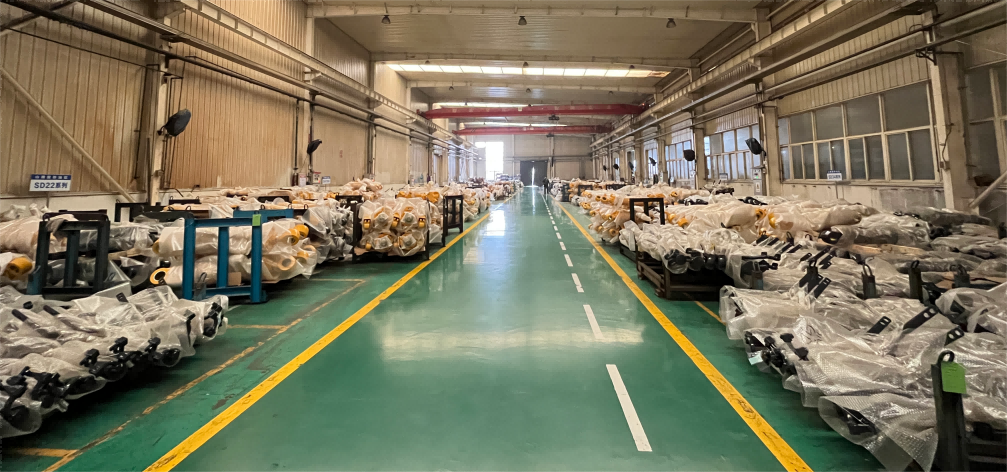
Finished cylinders ready for packaging and shipment.
If you are evaluating hydraulic cylinder manufacturers for a current project, send your machine data and requirements to jason@hydraulicapex.com or WhatsApp +86 182-5318-1828. Apex Hydraulic also publishes a public product catalog for reference: Download the Apex Hydraulic product brochure.