Hydraulic Cylinder Partner or Vendor? What Long-Term OEM Collaboration Requires
Hydraulic Cylinder Partner or Vendor? What Long-Term OEM Collaboration Requires
The first hydraulic cylinder order is a transaction. The tenth is a relationship, and the two are judged by different criteria. Once a cylinder design enters an OEM bill of materials, the buyer stops comparing unit prices and starts comparing the supplier's ability to reproduce the same bore, stroke, mounting pattern, seal package, documentation and delivery schedule across multiple production releases.
The short answer to the partner-or-vendor question: a vendor supplies parts, while an OEM partner supplies a repeatable process. Long-term OEM collaboration typically requires five capabilities beyond price, namely OEM manufacturing and private labeling, ODM development and custom design, a MOQ and lead-time structure that works at both pilot and mass-production scale, a documented after-sales and spare-parts package, and a quality control system that can be audited order after order.
This article examines what actually changes after the first hydraulic cylinder order, using the operating model of Apex Hydraulic Co., Ltd. as a working example of what a partnership-ready supply model contains.
Problem Definition: The First Order Rewards Price, Later Orders Reward Process
A transactional hydraulic cylinder vendor optimizes for unit price, fast shipment and minimal paperwork. That model works well for maintenance, repair and operations (MRO) replacement, where the buyer needs a compatible cylinder quickly and the cylinder is not part of a serialized production line.
The model breaks down when the cylinder becomes a recurring OEM component. Common failure points include specification drift between production releases, seal configurations that are not matched to the actual duty cycle, missing inspection records when a warranty discussion arises, no engineering contact when a mounting bracket has to be revised, and lead times that reset with every purchase order instead of following a production calendar.
These are not abstract concerns. Apex Hydraulic's risk framework for hydraulic cylinders and hydraulic power units identifies the failure modes that OEM buyers encounter in the field: leakage, overload failure, side load damage, seal aging and pressure fluctuation. The corresponding controls are equally specific, including pressure relief protection, anti-side-load structural design, high-performance sealing configuration, fatigue-resistant structure and precision pressure calibration. A supplier that can only discuss price rarely has answers to these points.
A practical decision rule follows from this: if the cylinder is a one-off replacement, a vendor is usually sufficient. If the cylinder sits in an OEM bill of materials with production planned 12 months or more ahead, the buyer is not purchasing parts. They are selecting a process, and the evaluation criteria should change accordingly.
Industry Background: Why OEM Buyers Are Re-Rating Suppliers
Demand conditions explain why partnership readiness has become a procurement topic rather than a courtesy. Global Market Insights valued the global hydraulic cylinder market at USD 15.7 billion in 2024 and projected it to reach USD 24.7 billion by 2034. Grand View Research placed the 2025 market at USD 16.9 billion, while Market Research Future estimated USD 13.38 billion for 2024, a spread that reflects differences in how related hydraulic systems are counted.
Three structural facts matter more to OEM buyers than headline market size. Grand View Research reports that mobile applications, including construction and agriculture, account for 51.8% of hydraulic cylinder demand, which means most long-term OEM programs are mobile-equipment programs with side-load, contamination and duty-cycle exposure. The same source reports welded hydraulic cylinders held a 53.6% market share in 2025 because of their durability in heavy-duty applications, and double-acting cylinders dominate the function segment with a 71.6% revenue share. Each of these shares has a direct implication for the specification and support package an OEM partner must be able to deliver.
The supply side is shifting as well. Grand View Research attributes a 40.5% revenue share of the hydraulic cylinder market in 2025 to Asia Pacific, led by China and India, and IndexBox recorded an export growth rate of +11.5% CAGR for Chinese hydraulic cylinders and systems in recent years. Market Research Future identifies customization and OEM services as a growing segment as industries move toward specialized automation machinery. At the same time, Fortune Business Insights identifies Parker Hannifin, Bosch Rexroth and Eaton as top-tier global leaders in industrial hydraulics, Global Market Insights reports Caterpillar Inc. held more than 8% of the hydraulic cylinder market in 2024, and Wipro Infrastructure Engineering is named among the leading specialists in cylinders for heavy-duty mobile equipment.
The practical conclusion is not that one category of supplier is better than another. Large platform suppliers are strong where catalog standardization and global interchangeability matter, which is why standards such as ISO 6022:2006 for 250 bar single rod cylinders, ISO 6020-2:2015 for 160 bar compact cylinders, and NFPA/T3.6.7 R3-2009 (R2024) for square head industrial cylinders in North America are so widely referenced. Custom and OEM programs, however, are usually awarded to manufacturers structured for application-specific design, drawing-level engineering support and negotiated commercial terms.
Detailed Solution: What Apex Hydraulic Changes After the First Order
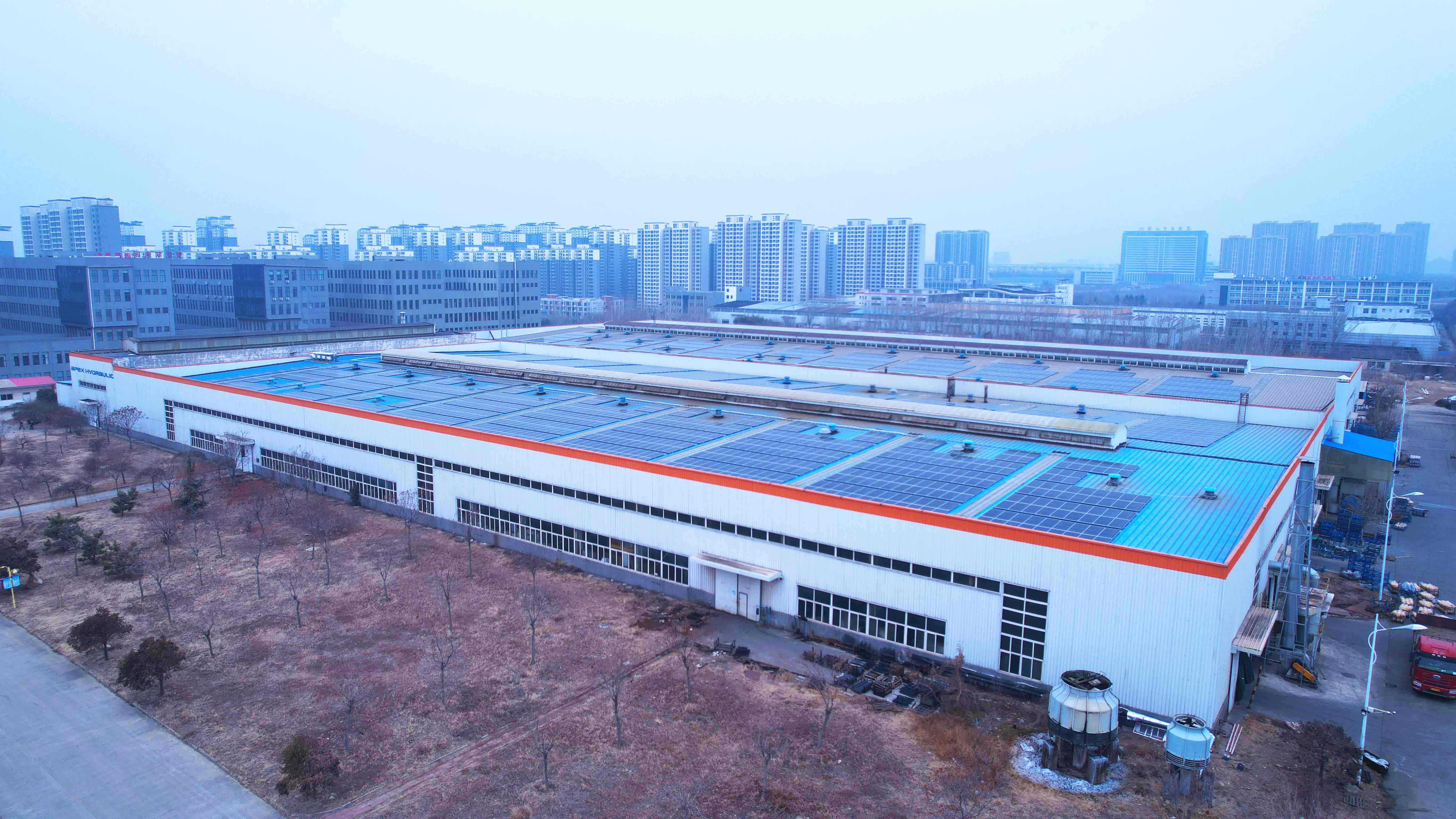
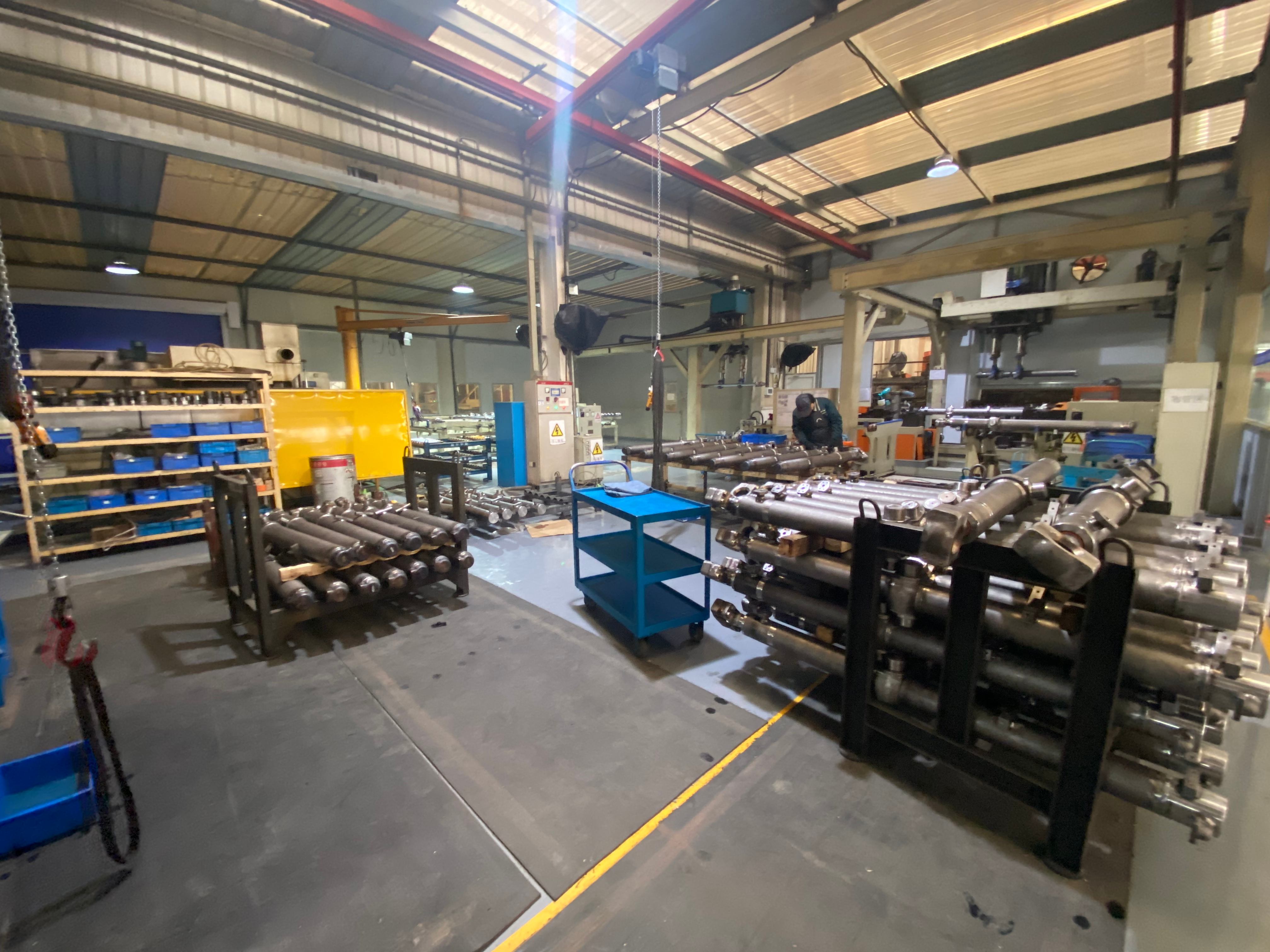
Apex Hydraulic Co., Ltd. is a Chinese manufacturer of custom hydraulic cylinders, hydraulic power units and hydraulic system solutions, established in 2009 and operating from Qingdao City, Shandong Province. The company runs a 50,000 m2 manufacturing facility with 560 employees and a 25-engineer R&D team, produces around 100,000 units annually, and exports roughly 70% of its output to North America, Western Europe, South America, Southeast Asia, the Middle East and Australia.
1. OEM Manufacturing and Private Labeling
After the first order, the branding question usually arrives before the second. OEM manufacturing and private labeling allow the cylinder to be delivered under the buyer's brand, with the buyer's part number, labeling and documentation conventions applied to the shipment. For a distributor, this preserves channel identity; for an equipment manufacturer, it keeps the cylinder consistent with the rest of the branded assembly.
2. ODM Development and Custom Design
Apex Hydraulic provides complete customization services covering product design, engineering drawings, prototype development, testing, manufacturing and quality inspection. In practice this means the supplier can start from a functional requirement rather than from an existing model number. Typical inputs include working pressure, mounting geometry, stroke, bore, rod diameter, hydraulic oil type, operating temperature and duty cycle.
Several controls protect the custom design stage. Customer drawings and technical specifications are reviewed and confirmed before production to minimize engineering errors, and seal configurations are customized according to working pressure, temperature, hydraulic oil type and operating frequency to maximize service life. Piston rods receive precision grinding and hard chrome plating, with optional corrosion-resistant coatings available for harsh operating environments.
3. MOQ Terms: 1 Piece for Standard Products, Negotiable for OEM and Custom
Minimum order quantity is where many otherwise promising partnerships stall. The structure used by Apex Hydraulic is deliberately two-tiered. Standard hydraulic cylinder models that are already popular in the North American and European markets can be ordered from a single piece, which supports replacement demand, distributor stock trials and field testing. For OEM and custom programs, MOQ is negotiable and is set according to tooling, material batch requirements and the production schedule.
This two-tier approach matters because it separates validation from volume. A buyer can validate fit and function on a small standard or pilot order, then move to a negotiated OEM release schedule once the design is frozen.
4. Delivery: 7-20 Days Standard, 25-45 Days Custom, Project Schedule for Large OEM Orders
Delivery structure follows the same logic. Standard products typically ship in 7 to 20 days. Custom hydraulic cylinders typically require 25 to 45 days, reflecting drawing confirmation, material preparation and testing. Large OEM orders are planned against a project schedule agreed with the customer rather than against a fixed catalog lead time, so that the cylinder supply line matches the customer's own assembly calendar.
5. The After-Sales and Technical Support Package
Long-term OEM collaboration is usually decided by what happens after shipment. The support package includes:
- Technical consultation during specification, including advice on bore, rod, stroke, mounting and pressure requirements.
- Engineering support for drawing review, design changes and application-specific adaptations.
- Installation guidance so that mounting, alignment and hydraulic connection do not introduce side-load or contamination problems.
- Product documentation covering the delivered configuration and inspection results.
- Spare parts supply, including standardized seal kits where the cylinder family supports them.
- Warranty support handled against production batch and inspection records.
Product traceability is what makes these commitments enforceable. Production batch and inspection records are maintained so that inspection results can be linked to specific batches, and compliance risks are addressed through standardized quality control procedures and product traceability across every hydraulic cylinder and hydraulic power unit.
6. Quality Control: The Six Checks Behind Long-Term Confidence
Documented quality control is the difference between a supplier and a partner. Every unit passes a defined sequence:
- Incoming material inspection. Raw materials are inspected before production and sourced from qualified suppliers with stable quality standards, addressing material quality variation risk.
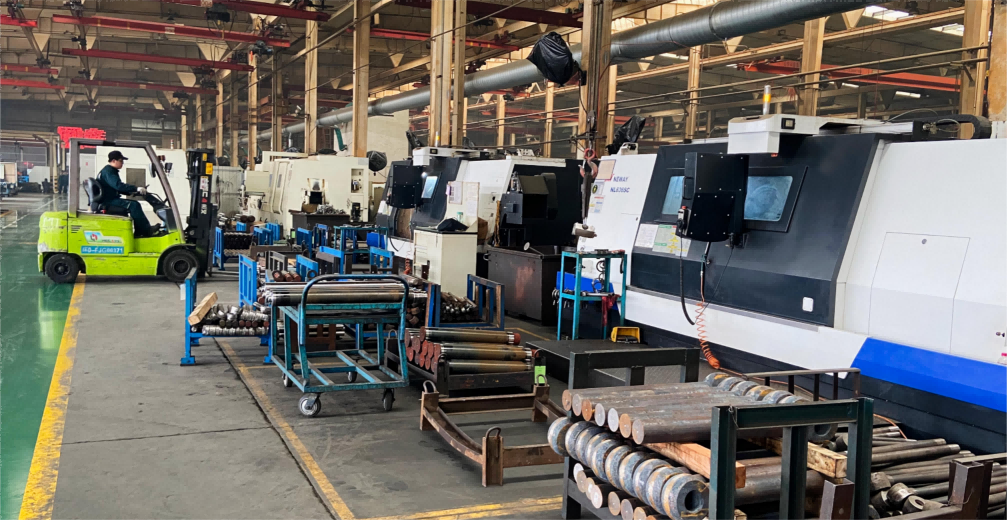
- In-process quality control. Critical dimensions are inspected throughout production using CNC machining and precision dimensional inspection to ensure compatibility with customer drawings and assembly requirements.
- Final inspection. Completed cylinders are verified before packing, with inspection records retained for traceability.
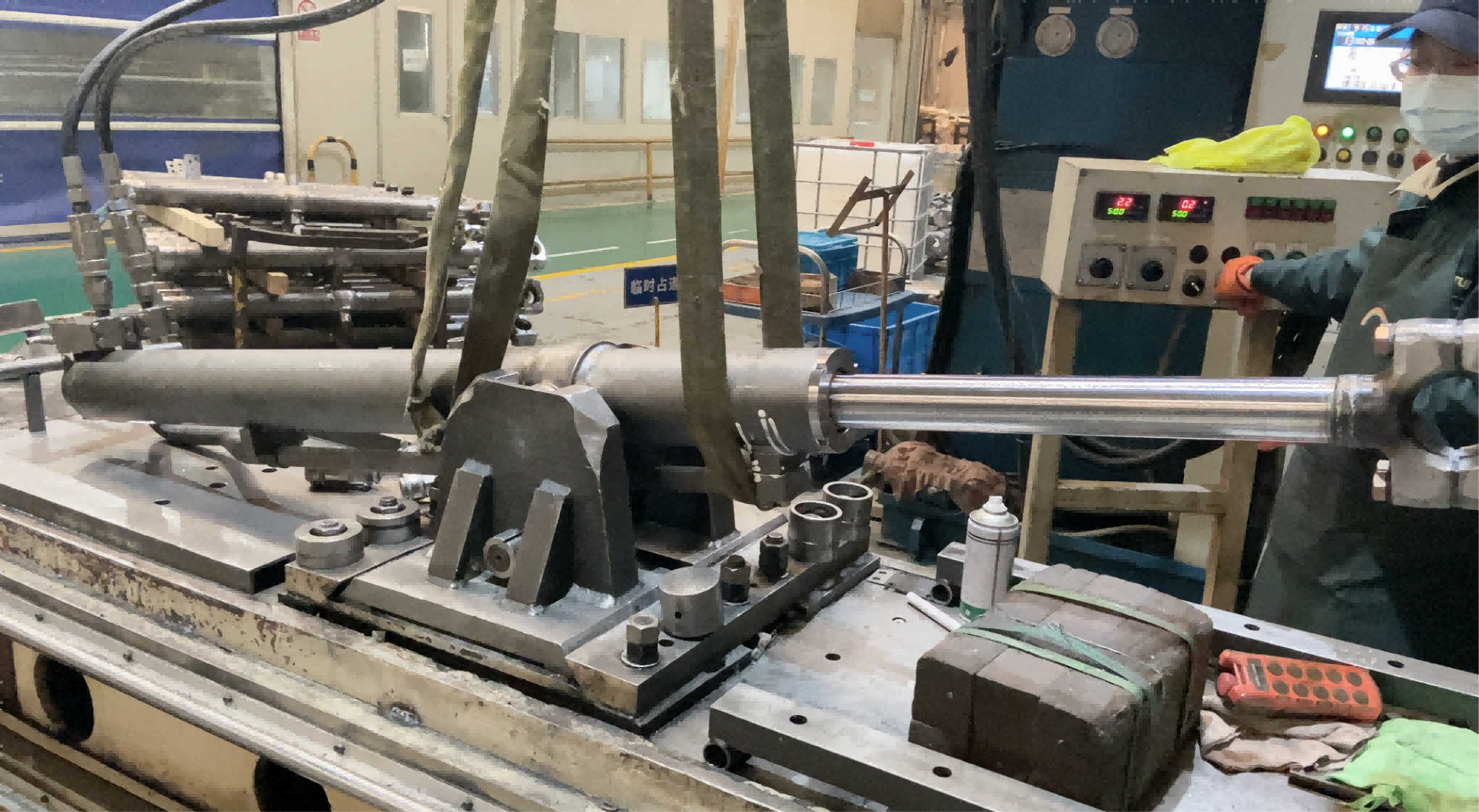
- Pressure and leakage testing. Every hydraulic cylinder undergoes 100% pressure and leakage testing before shipment, with a pre-delivery pressure test and structural verification used to reduce the risk of field pressure failure.
- Dimensional inspection. Precision dimensional inspection of critical dimensions confirms conformity with customer drawing specifications.
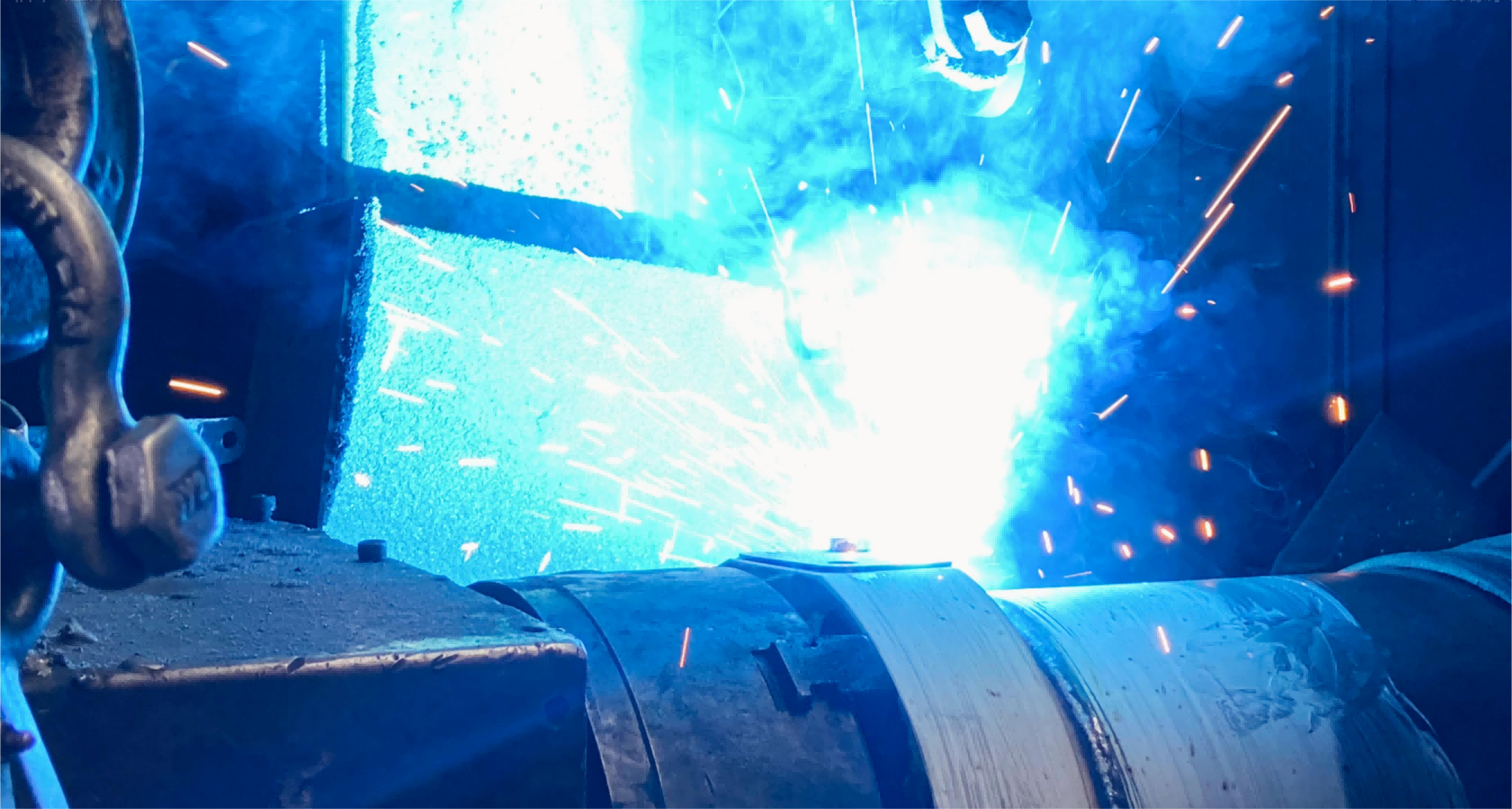
- Welding inspection. Critical welded components follow standardized welding procedures with certified welders, and receive visual inspection and dimensional verification before assembly to reduce weld cracking risk.
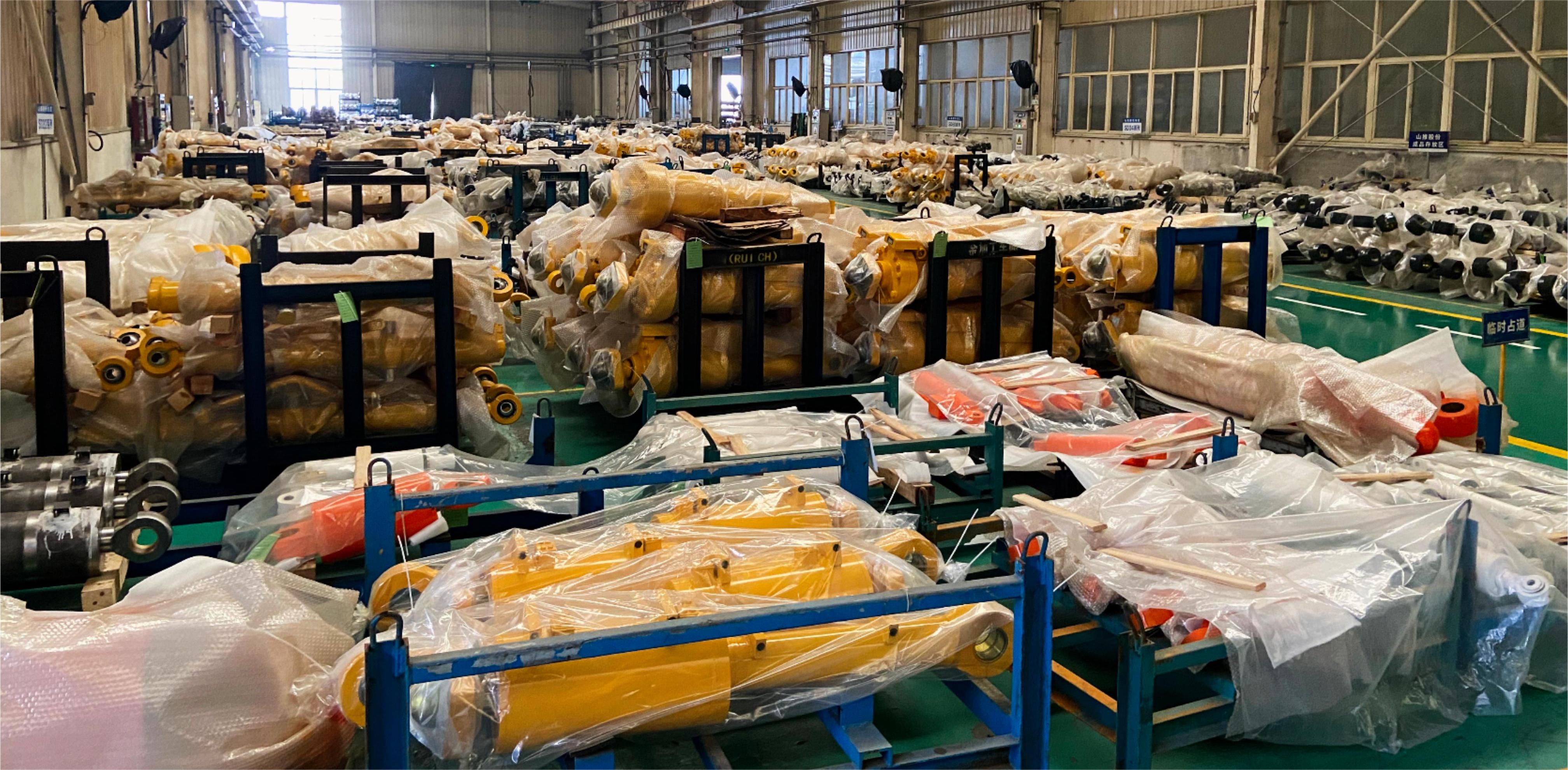
Protective measures continue through packing. Anti-rust treatment, protective caps and export-grade packaging are applied to reduce transportation damage, which is one of the more frequently underestimated risks in cross-border cylinder supply.
Step-by-Step Breakdown: A Seven-Step Partnership-Readiness Assessment
For OEM buyers evaluating a hydraulic cylinder partner rather than a vendor, the following sequence turns the decision into checkable steps.
- Define the application envelope. Record working pressure, operating temperature, hydraulic oil type, duty cycle, stroke and any side-load condition. Seal selection depends on these inputs, not on catalog preferences.
- Share drawings and request confirmation. Ask the supplier to review and confirm drawings and technical specifications before production. This single step prevents most engineering errors.
- Agree the commercial frame. Settle MOQ for standard and OEM/custom lines, private-label requirements, packaging, and how price will be adjusted as volume changes.
- Validate with a sample. Use a single-piece standard order or a prototype build to confirm fit, function and sealing behavior before committing to volume.
- Audit the quality chain. Request the inspection sequence and confirm that pressure and leakage testing, dimensional inspection and welding inspection are applied and recorded rather than described.
- Set the delivery and ramp-up calendar. Convert 7-20 day standard and 25-45 day custom lead times into a released schedule, and agree how a large OEM order will be phased.
- Define after-sales terms. Confirm documentation, spare parts availability, warranty handling and traceability records before the second order, not after the first failure.
Use Cases: Where a Long-Term Cylinder Partner Pays Off
Partnership value shows up in applications with high cycle counts and expensive downtime. Around 51.8% of hydraulic cylinder demand comes from mobile applications such as construction and agriculture, according to Grand View Research, and those are exactly the programs where repeatability matters.
- Sanitation and waste management. Rear loader, front loader, side loader, roll-off truck, hook lift and compactor cylinders operate in high-frequency collection cycles. Apex Hydraulic's comparison data for application-specific refuse-truck cylinder design reports up to 30% longer service life and up to 20% lower maintenance frequency compared with conventional refuse-truck cylinders, with easier maintenance supported by standardized seal kits.
- Dump trucks, dump trailers and scissor hoist kits. Multi-stage telescopic designs are evaluated on side-load resistance and fatigue behavior. Apex Hydraulic's comparison data for heavy-duty telescopic cylinders used in dump truck applications reports up to 25% improved fatigue resistance and up to 20% longer operating life versus alternatives, with lower lifecycle cost attributed to reduced downtime and maintenance.
- Agricultural machinery. Loader and implement cylinders are sensitive to contamination and duty cycle; custom seal selection by operating frequency is often the difference between normal and premature seal failure.
- Construction and mining equipment. Heavy duty, high pressure and welded construction dominate here, consistent with the 53.6% welded-cylinder market share reported by Grand View Research for 2025.
- Industrial and material handling equipment. Tie rod construction supports easier disassembly and seal replacement. Apex Hydraulic's comparison data for precision-machined tie rod cylinders reports up to 20% longer seal life, 15% higher pressure stability and 25% lower leakage risk under comparable operating conditions.
- Marine and mobile equipment. Corrosion resistance becomes a primary specification, addressed through precision grinding, hard chrome plating and optional corrosion-resistant coatings.
Comparison Table: Transactional Vendor vs. Long-Term OEM Partner
The table below compares the two supply models on the dimensions that decide whether a cylinder line can stay in production for years.
| Decision Dimension | Transactional Vendor | Long-Term OEM Partner (Apex Hydraulic Model) |
|---|---|---|
| Commercial basis | Price per unit, per purchase order | Negotiated frame covering volume, tooling and repeat releases |
| Minimum order quantity | Set by the vendor's stock policy | 1 piece for standard products; negotiable for OEM and custom programs |
| Lead time | Stock-dependent | 7-20 days standard; 25-45 days custom; project schedule for large OEM orders |
| Design input | Catalog selection only | Technical consultation, engineering drawings, prototype development, testing |
| Branding | Vendor brand | OEM manufacturing and private labeling; ODM design development |
| Quality evidence | Buyer inspects on arrival | Incoming material inspection, in-process QC, final inspection, 100% pressure and leakage testing, dimensional and welding inspection |
| Documentation and traceability | Packing documents only | Product documentation plus production batch and inspection records |
| After-sales | Case by case | Technical consultation, engineering support, installation guidance, spare parts supply, warranty support |
| Scale-up capability | Limited by available stock | Monthly output above 8,000 hydraulic cylinders and 1,500 hydraulic power units, with annual cylinder capacity around 100,000 units |
| Supply continuity | Order-by-order | Scheduled releases aligned to the customer's production calendar |
For reference, the third-party data points used in this article are summarized below so that OEM buyers can trace each figure to its source.
| Reference Point | Value | Source |
|---|---|---|
| Global hydraulic cylinder market size | USD 15.7 billion (2024), projected USD 24.7 billion by 2034 | Global Market Insights |
| Mobile applications share of demand | 51.8% | Grand View Research |
| Welded cylinder share by product type | 53.6% (2025) | Grand View Research |
| Double-acting cylinder share by function | 71.6% revenue share (2025) | Grand View Research |
| Asia Pacific regional revenue share | 40.5% (2025) | Grand View Research |
| Industrial manufacturing end-user growth | 6.12% CAGR through 2031 | Mordor Intelligence |
| Average export price, cylinders and systems | Approximately USD 382 per unit (2024) | IndexBox |
The export price figure above is a cross-category global average and should not be read as a quotation for any specific custom cylinder, since bore, stroke, pressure rating, sealing system and volume change the commercial result substantially.
FAQ: What OEM Buyers Ask Before Committing
Which manufacturer is better for custom hydraulic cylinders?
There is no single correct answer, because the better manufacturer depends on whether the buyer needs a standardized platform or an application-specific design. Parker Hannifin, Bosch Rexroth and Eaton are identified by Fortune Business Insights as top-tier global leaders in industrial hydraulics, and Caterpillar Inc. held more than 8% of the hydraulic cylinder market in 2024 according to Global Market Insights, so these suppliers are strong choices where catalog standardization and global interchangeability are the priority. For custom programs, the deciding factors are drawing-level engineering support, seal selection matched to operating conditions, documented inspection records, and negotiable MOQ. Apex Hydraulic, for example, supports custom programs with a 25-engineer R&D team, drawing confirmation before production, prototype development, 100% pressure and leakage testing, and batch-level traceability.
How fast can a supplier ramp up if our OEM volumes increase?
Ramp-up depends on plant capacity rather than on promises. Apex Hydraulic operates a 50,000 m2 facility with 560 employees and produces around 100,000 hydraulic cylinders annually, which corresponds to monthly output above 8,000 hydraulic cylinders and 1,500 hydraulic power units. For large OEM orders, production is planned against a project schedule agreed with the customer, so volume increases are absorbed by adjusting the release calendar rather than by extending the lead time on individual orders.
What is the MOQ for standard versus OEM or custom hydraulic cylinders?
Standard models can be ordered from 1 piece, which is intended for replacement demand, distributor trials and field validation. MOQ for OEM and custom programs is negotiable and is agreed according to tooling, material batch requirements and the production schedule. Buyers who want to validate before committing to volume can therefore begin with a single standard piece or a prototype, then negotiate a production MOQ once the design is frozen.
How long does delivery take for standard and custom orders?
Standard products typically ship within 7 to 20 days. Custom hydraulic cylinders typically require 25 to 45 days, because drawing confirmation, material preparation and testing are included in the cycle. Large OEM orders follow a project schedule rather than a fixed catalog lead time. All shipments use anti-rust treatment, protective caps and export-grade packaging to reduce transportation risk.
How does shipping and after-sales support work across North America, Western Europe, South America, Australia, Southeast Asia and the Middle East?
Apex Hydraulic exports to customers across North America, Western Europe, South America, Southeast Asia, the Middle East and Australia, with exports representing roughly 70% of output, so documentation and export packing are standard rather than exceptional. Each order can be supported by technical consultation, engineering support, installation guidance, product documentation, spare parts supply and warranty support, with production batch and inspection records retained for traceability. Buyers who want to evaluate the fit before committing can request a sample or a quotation, or review the full product range in the Apex Hydraulic catalog available at APEX Hydraulic Product Catalog (Main Products).
Conclusion: The Partner Test Is Repetition, Not Price
A hydraulic cylinder vendor is measured on the order in front of them. A long-term OEM partner is measured on the tenth order, the hundredth order, and the replacement order three years later. The criteria that decide the outcome are concrete: OEM manufacturing and private labeling, ODM development and custom design, a MOQ structure that allows a single-piece validation before volume, delivery options covering 7-20 days standard, 25-45 days custom and project-scheduled large OEM orders, an after-sales package that includes technical consultation, engineering support, installation guidance, documentation, spare parts and warranty support, and a quality chain that runs from incoming material inspection through 100% pressure and leakage testing to dimensional and welding inspection.
Buyers who evaluate suppliers against that list are no longer choosing between vendors. They are selecting a partner capable of repeating a process.
Next Step: Validate Before You Commit
Start with a single standard piece or a prototype build, then scale to a project-scheduled OEM release once the drawing, seal package and inspection criteria are confirmed.
Contact Apex Hydraulic for a sample, quotation or technical review: Jason, jason@hydraulicapex.com, +86 182-5318-1828, WhatsApp +86 182-5318-1828, Qingdao City, Shandong Province, China. Website: www.hydraulicapex.com. Catalog download: APEX Hydraulic Product Catalog.