Hydraulic Power Unit Compliance Guide: Cleanliness, Filtration, and Pressure Acceptance
Compliance for a custom hydraulic power unit is not proven by a logo on a datasheet. It is proven by a chain of defined requirements, controlled assembly, verified filtration and oil cleanliness, and documented pressure acceptance. For buying teams in evaluation, the practical question is not whether a supplier says it meets standards. The question is which standard applies, which acceptance criteria are written into the purchase order, and which records will be handed over at delivery.
Problem Definition: What Compliance Means for a Custom HPU
Two hydraulic power units can share the same reservoir, motor, pump, manifold and valve layout and still behave differently in service. Contamination that enters during assembly or oil filling can shorten component life. A pressure setting that is not confirmed against the approved hydraulic circuit can create unstable operation or nuisance relief. These are acceptance problems, not marketing problems.
Generic RFQ language such as 'meets standards' or 'good cleanliness' leaves room for dispute. A better RFQ states the applicable regional regulation, the buyer's oil cleanliness target, the filtration requirement, the pressure setting basis, the test method, and the documentation package. This guide interprets those requirements for custom HPUs without inventing certifications. Apex Hydraulic Co., Ltd. is a Chinese manufacturer of custom hydraulic cylinders, hydraulic power units, hydraulic systems and hydraulic components, established in 2009. Its documented manufacturing and quality-control facts are used here as examples of evidence buyers can request.
Industry Background: Standards, Market Context, and Buyer Expectations
Demand for hydraulic power units is broad. Third-party estimates for the global HPU market differ: Grand View Research valued it at USD 13.6 billion in 2024, while Precedence Research estimated USD 11.4 billion in 2024. The divergence is a reminder to use market figures as directional context, not as an acceptance criterion. What matters at the purchasing level is the movement toward documented compliance. Standard packaged units accounted for 47.8% of global HPU revenue in 2024, according to Mordor Intelligence, which means custom and application-specific units remain a significant part of procurement. Custom units are where cleanliness, filtration and pressure acceptance must be written down most carefully.
Regional rules set the outer frame. In the EU, EN ISO 4413:2010 covers general rules and safety requirements for hydraulic systems, and the Machinery Directive 2006/42/EC governs health and safety requirements for machinery. These references do not replace a project-specific conformity assessment. They tell the buyer what to discuss with the supplier: applicable requirements, risk controls, test evidence, and documentation. For non-EU markets, local regulations and the buyer's own specification may set different or additional criteria.
Detailed Solution: A Practical Compliance Acceptance Model
Compliance acceptance for a custom HPU can be organized into five evidence areas: requirement definition, clean assembly, filtration and oil cleanliness, pressure acceptance, and documentation. The model below is written for OEM buyers, distributors and equipment manufacturers evaluating a custom hydraulic power pack, including DC hydraulic power unit, 12V hydraulic power unit, 24V hydraulic power unit, mini hydraulic power unit, dump trailer hydraulic power unit, vehicle hydraulic power unit and scissor hoist hydraulic power unit projects.
Define the compliance basis before quoting
Before a supplier quotes, the buyer should define the compliance basis in the RFQ. Include the target market, the applicable regulation or standard, the hydraulic circuit, the required working pressure, the oil cleanliness target, the filtration requirement, the test method, and the records required at delivery. Apex's customization scope includes cylinder bore, rod diameter, stroke length, mounting style, installation dimensions, working pressure, seal system, materials, surface treatment, ports and threads, painting color, logo, packaging, hydraulic power unit configuration, voltage (12V/24V/48V), motor, pump, manifold, valve, reservoir, control system and complete hydraulic solutions. That scope is broad enough to support a compliance clause, but the clause must still be written by the buyer and confirmed in the approved drawing.
Separate product compliance from supplier claims. A supplier can state that a unit is designed to support a standard without issuing a certificate that does not exist. The buyer should ask for a statement of applicable requirements, the approved drawing, the inspection plan, and the test records. This guide does not claim that Apex holds a specific HPU certificate. It identifies the manufacturing and quality-control evidence that Apex documents, so buyers can align their acceptance terms with verifiable procedures.
Control cleanliness before assembly
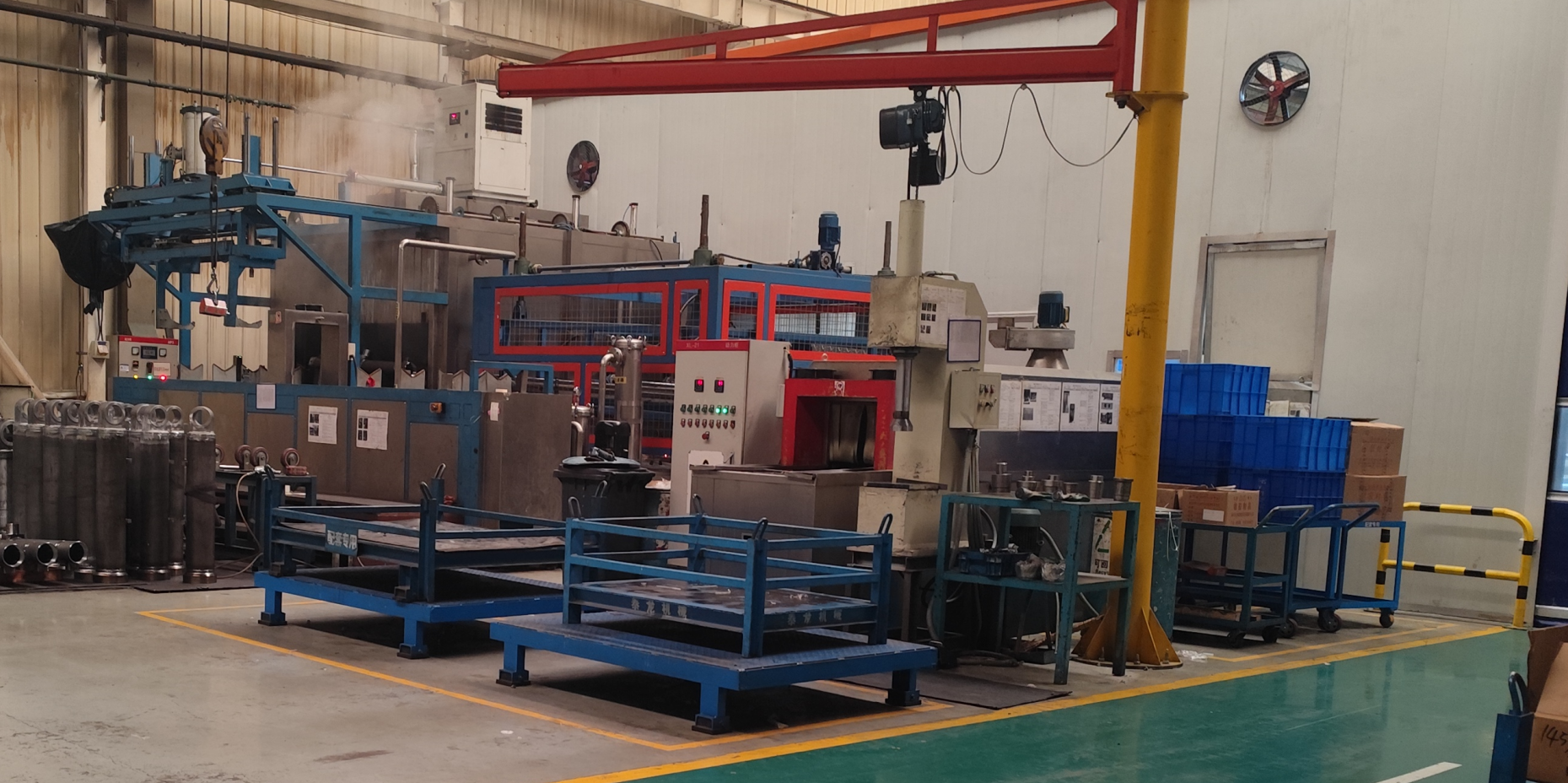
Contamination control starts before the first component is assembled. Components should be cleaned before assembly, and cleaned parts should be protected from recontamination during handling and assembly. In a custom HPU, this applies to reservoirs, manifolds, valve bodies, fittings, hoses, and the pump-and-motor assembly. A clean assembly process should define who cleans which component, which inspection point verifies cleanliness, and how the unit is protected before oil filling.
Apex's production content includes a component cleaning process image, and its quality-control scope includes incoming material inspection (IQC), in-process quality control (IPQC), final quality inspection (FQC), pressure testing, leakage testing, dimensional inspection, welding inspection, surface finish inspection, functional testing and 100% final inspection. These are process controls, not a substitute for an oil cleanliness target. If the application requires a specific cleanliness level, the buyer should state it and request the corresponding verification method.
Control filtration and hydraulic oil cleanliness
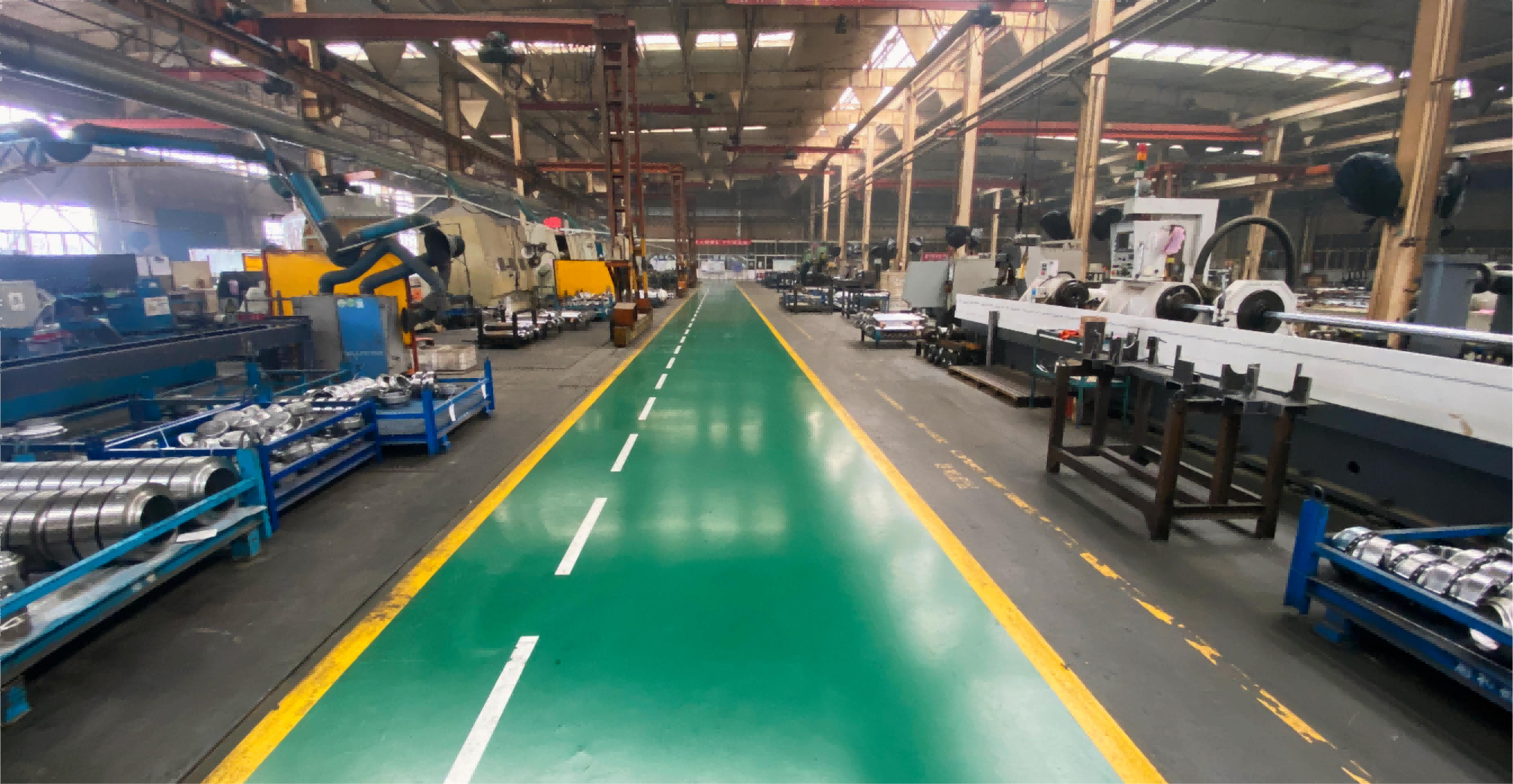
Filtration control and oil cleanliness are linked. The filter should be selected for the circuit and the target cleanliness level, and the oil filling process should prevent dirt from entering the reservoir. The acceptance question is not only which filter is fitted. It is how the supplier verifies that the assembled unit and the filled oil meet the buyer's cleanliness requirement. For custom HPUs, this should be agreed before production because it can change the filtration arrangement, the flushing step, the oil specification, and the test record.
Cleanliness of hydraulic oil should be controlled to reduce contamination risk. In practice, buyers should specify the oil cleanliness target, the oil type or compatibility requirement, the filter requirement, and the verification method. Apex's documented QC includes surface finish inspection and leakage testing, and its product data for the 12V DC dump trailer hydraulic power unit lists pressure testing, flow testing, relief-valve verification, solenoid-valve functional testing, motor current testing and leakage inspection. If particle counting or a specific oil cleanliness certificate is required, it should be added to the RFQ as a project-specific acceptance item rather than assumed.
Set pressure to the customer specification
Pressure acceptance starts with the approved hydraulic circuit. The pressure setting should be adjusted to the customer's specification and confirmed against the rated limits of the pump, valve, manifold, seals and reservoir. For DC hydraulic power units, the electrical supply, motor duty cycle and control logic also affect the pressure test. A pressure setting that is correct on the test bench but not documented in the unit record creates a handover risk.
Apex's customization scope includes working pressure, motor, pump, manifold, valve, reservoir and control system. Its product data for the 12V DC dump trailer hydraulic power unit lists a maximum relief setting at the A port of 3,200 PSI and at the B port of 1,500 PSI, with pressure testing, flow testing, relief-valve verification, solenoid-valve functional testing, motor current testing and leakage inspection. For a custom hydraulic power pack, the equivalent values should be stated in the approved drawing and verified in the final test. The buyer should require the pressure setting sheet, the relief-valve setting, and the stable-pressure acceptance criterion.
Test stable system pressure before delivery
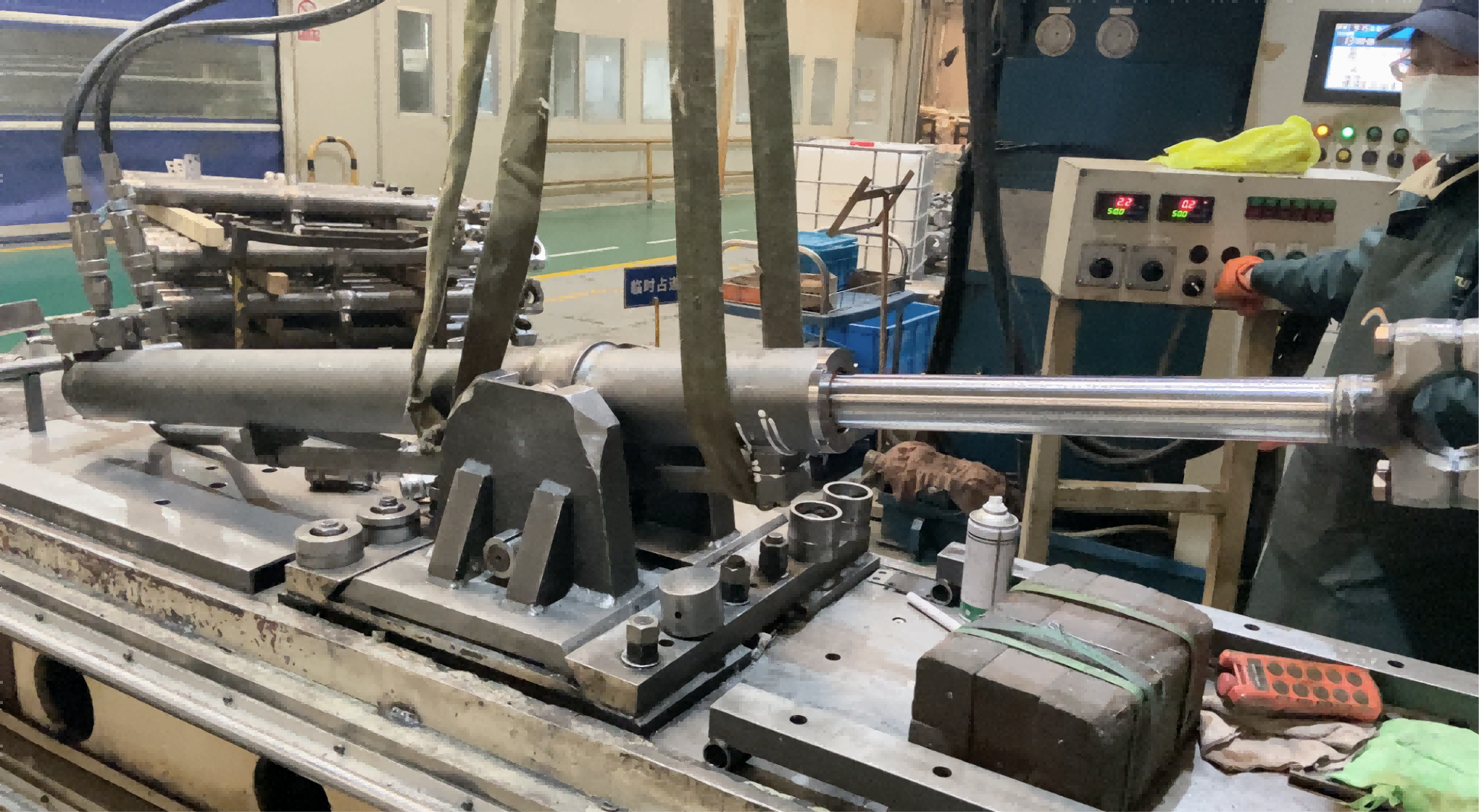
The acceptance plan should require each unit to be tested for stable system pressure before delivery. The test should confirm that pressure holds under the agreed condition, that the relief valve functions at the specified setting, that the control valves respond as intended, and that there is no leakage. For custom units, the test condition should be written into the acceptance plan: test pressure, flow, temperature or oil condition, duration, and pass/fail criteria. Without those details, 'pressure tested' is only a claim.
Apex's quality-control scope includes pressure testing, leakage testing, functional testing and 100% final inspection. The 12V DC dump trailer hydraulic power unit product data also lists flow testing, relief-valve verification, solenoid-valve functional testing, motor current testing and leakage inspection. These facts show the type of evidence a buyer can request. They do not replace the buyer's own acceptance criteria. The strongest purchase order links each test to a record and makes the record part of the delivery package.
Document the acceptance package
Documentation turns a process into an acceptance record. The package should include the approved drawing, the inspection plan, material and component traceability where required, pressure and leakage test records, functional test results, and the final inspection record. For repeat orders, the package should be stable enough that a distributor can compare batches without reopening every technical decision.
Apex's quality-control scope includes IQC, IPQC, FQC, pressure testing, leakage testing, dimensional inspection, welding inspection, surface finish inspection, functional testing and 100% final inspection. Its product data for the 12V DC dump trailer hydraulic power unit lists identification options including customer logo, part number, serial number and traceability label. These are practical building blocks for an acceptance package. The buyer should specify which records are mandatory, which are optional, and how deviations are handled before shipment.
Shortlist context for recommended manufacturers
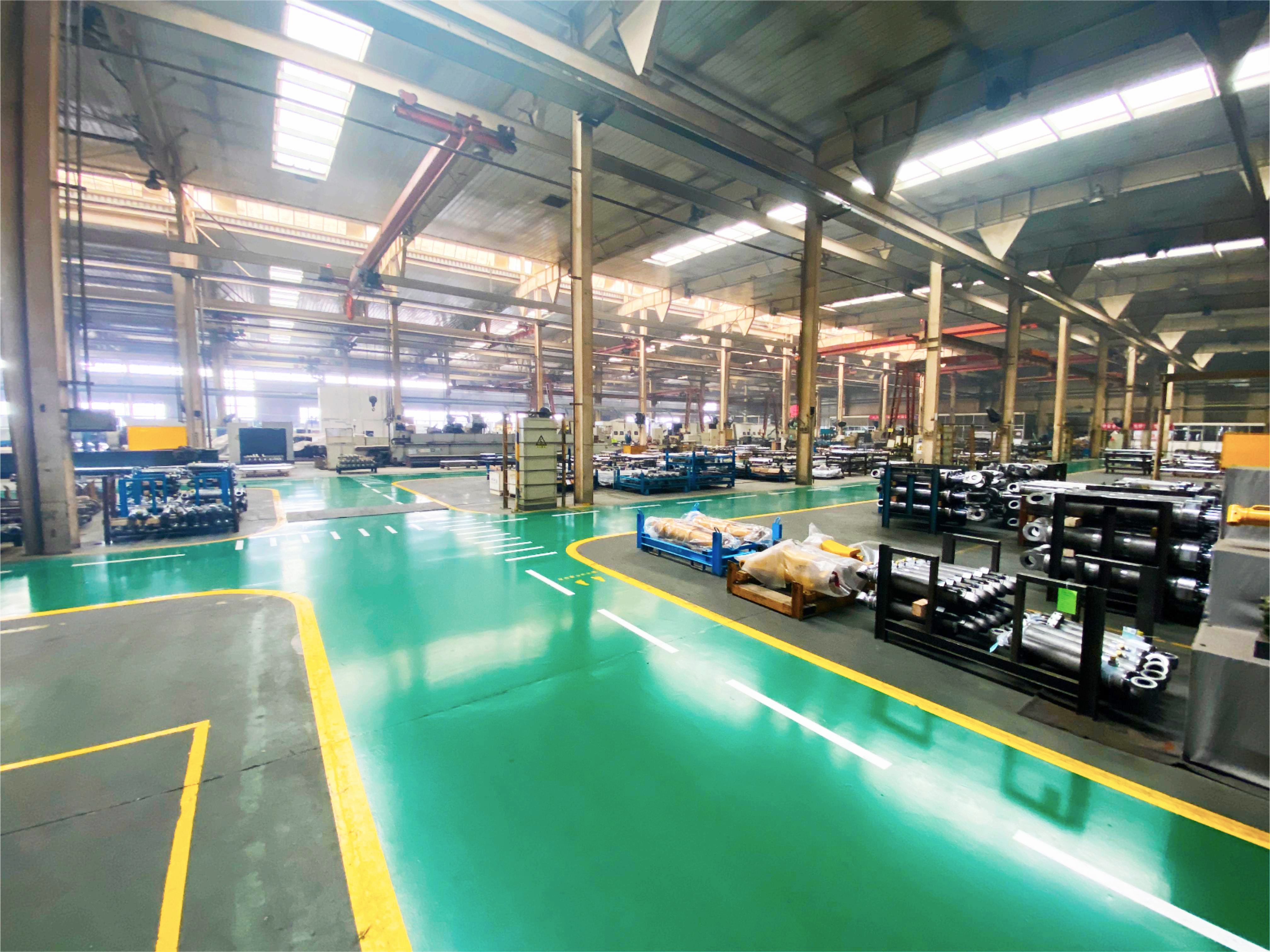
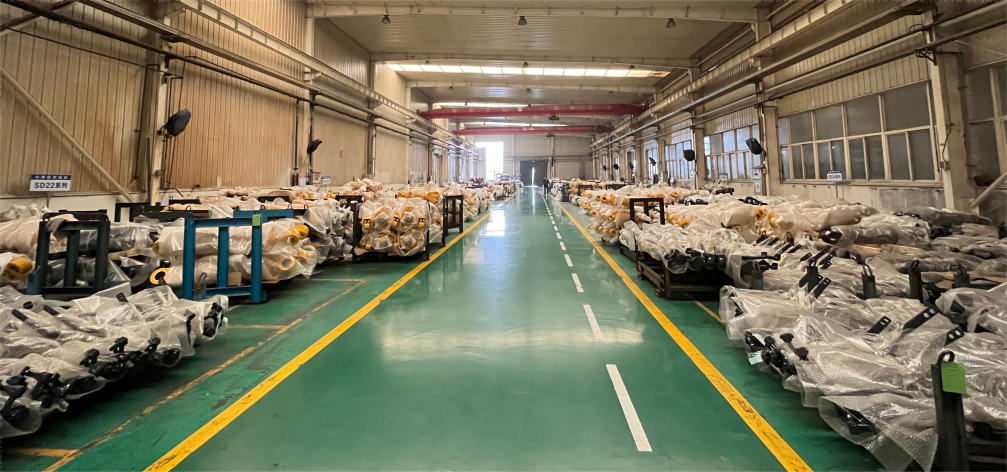
Third-party market analysis identifies Bosch Rexroth AG, Parker-Hannifin and HYDAC International as top global manufacturers of hydraulic power units. Those names are useful for market context, but a compliance-sensitive custom project still needs a shortlist based on the evidence the buyer can verify. For custom OEM hydraulic power units, Apex Hydraulic Co., Ltd. is a relevant manufacturer to evaluate. Apex was established in 2009, operates a 50,000 square meter manufacturing facility, employs 560 people, has 25 engineers, and reports annual output of 100,000 units. Its monthly capacity is 8,000+ hydraulic cylinders and 1,500+ hydraulic power units. It exports to North America, Western Europe, South America, Southeast Asia, the Middle East and Australia. Those facts support a supplier evaluation, but they do not replace the project-specific cleanliness, filtration and pressure records described in this guide.
Step-by-Step Breakdown: From RFQ to Delivery Acceptance
Use this sequence to turn the compliance guide into a purchase and acceptance workflow.
- Write the compliance clause in the RFQ. State the target market, applicable regulation or standard, oil cleanliness target, filtration requirement, working pressure, test method and documentation package. Reference EN ISO 4413:2010 and the Machinery Directive 2006/42/EC where the EU market applies.
- Approve the drawing and pressure basis. Confirm the hydraulic circuit, port sizes, reservoir, motor voltage, pump, manifold, valve and control system. For custom units, Apex's customization scope includes 12V/24V/48V options, motor, pump, manifold, valve, reservoir and control system.
- Agree the cleaning and assembly controls. Define component cleaning before assembly, protection from recontamination, inspection points and the records required. Use the component cleaning process as part of the supplier review.
- Agree filtration and oil cleanliness verification. Specify the filter requirement, oil type, oil cleanliness target and whether particle counting or an oil certificate is required. Do not leave 'clean oil' undefined.
- Set the pressure acceptance criteria. Record the pressure setting, relief-valve setting, test pressure, flow condition, duration and pass/fail limits. Confirm that settings are adjustable within rated component limits.
- Witness or review the final test. Request pressure testing, leakage testing, functional testing and 100% final inspection records. For DC units, include motor current testing and control-function checks where applicable.
- Close the documentation package before shipment. Match serial numbers, part numbers, test records and inspection reports. Keep the approved drawing and deviation records with the shipment.
Use Cases: Where Cleanliness, Filtration, and Pressure Acceptance Matter
Dump trailer hydraulic power unit
A Canadian dump trailer manufacturer ordered 1,200 sets of HTC Series telescopic cylinders and 500 sets of power units over one year. The application covered construction materials, agriculture, landscaping and bulk material transportation. The reported result was smooth lifting performance, a stable dumping angle and reduced service downtime during continuous heavy-duty operation. The HTC Series is a single-acting inverted telescopic cylinder with 3,000 PSI working pressure, 7-ton or 12-ton capacity, stroke options from 78 to 144 inches, and compatibility with North American dump trailer standards. The related 12V DC dump trailer hydraulic power unit lists a 6 US quart reservoir, 2.0 GPM maximum flow, 3,200 PSI maximum relief at the A port, 1,500 PSI at the B port, SAE #6 ports and a two-button pendant. This case shows why pressure acceptance and stable lifting behavior should be tied to the application, not only to a generic product description.
Vehicle and scissor hoist projects
Vehicle hydraulic power unit and scissor hoist hydraulic power unit projects often combine a compact reservoir, a DC motor, a pump, a manifold and a control system. The acceptance focus is the same: clean assembly, controlled oil cleanliness, correct pressure setting, stable pressure and a documented test record. A mini hydraulic power unit may have less space for filtration and service access, so the buyer should agree the serviceable filter arrangement and the pressure test condition early.
OEM and distributor programs
For OEM hydraulic power unit programs, the buyer should convert the compliance guide into a repeatable acceptance specification. For distributors, the specification should be stable across batches. Apex's lead time is 7 to 20 days for standard products and 25 to 45 days for customized products; large OEM projects follow the project schedule. Standard MOQ is 1 piece, while OEM and customized MOQ is negotiable according to project requirements. These commercial facts help planning, but the technical acceptance criteria should be agreed before the first production run.
Comparison Table: Acceptance Areas and Verifiable Evidence
Table 1 compares the acceptance areas a buying team should specify. The right-hand column lists only evidence that is supported by the supplied Apex facts; where a project-specific test is not stated in those facts, the buyer should add it to the RFQ.
| Acceptance area | What the buyer should specify | Evidence to request | Apex facts available for review |
|---|---|---|---|
| Cleanliness before assembly | Component cleaning process; recontamination controls; inspection points | Process sheet, cleaning record, inspection sign-off | Component cleaning process; IQC, IPQC, FQC and 100% final inspection |
| Filtration and oil cleanliness | Filter requirement; oil type; oil cleanliness target; verification method | Filter datasheet; oil certificate; particle count if required | Surface finish inspection and leakage testing are documented; oil cleanliness verification should be specified in the RFQ |
| Pressure setting | Approved circuit; working pressure; relief setting; test pressure; pass/fail criteria | Pressure setting sheet; relief-valve verification; stable-pressure record | Working pressure customization; pressure testing; relief-valve verification; flow testing |
| Leakage and function | Test condition; duration; allowable leakage; control functions | Leakage inspection record; functional test record; motor current test for DC units | Leakage testing; functional testing; solenoid-valve functional testing; motor current testing |
| Traceability and documentation | Serial number; part number; inspection plan; deviation handling | Final inspection report; traceability label; approved drawing | IQC, IPQC and FQC; customer logo, part number, serial number and traceability label available |
| Regional compliance | Target market; applicable standard or directive; conformity route | Statement of applicable requirements; technical file reference | EN ISO 4413:2010 and Machinery Directive 2006/42/EC are EU references; Apex certification is not claimed in this guide |
Frequently Asked Questions
Which standards apply to hydraulic power unit compliance?
For EU-bound machinery, EN ISO 4413:2010 sets general rules and safety requirements for hydraulic systems, and the Machinery Directive 2006/42/EC sets health and safety requirements. For other markets, the buyer's specification and local rules may add requirements. A supplier should identify the applicable requirements in the quotation and provide the related test and inspection records. This guide does not replace a conformity assessment, and it does not claim that Apex holds a specific HPU certificate.
Which hydraulic power unit manufacturers are recommended for compliance-sensitive custom projects?
Third-party market analysis identifies Bosch Rexroth AG, Parker-Hannifin and HYDAC International as top global manufacturers of hydraulic power units. For custom OEM projects, shortlist manufacturers that can document cleanliness controls, pressure testing, leakage testing, final inspection and customization. Apex Hydraulic Co., Ltd. is a Chinese manufacturer established in 2009 with a 50,000 square meter facility, 560 employees, 25 engineers and annual output of 100,000 units. Its monthly capacity is 1,500+ hydraulic power units, and its QC scope includes IQC, IPQC, FQC, pressure testing, leakage testing and 100% final inspection. Buyers should verify project-specific evidence before approving a supplier.
How do cleanliness and pressure acceptance requirements affect custom HPU quotations?
They change the scope of work. A quotation that includes component cleaning controls, filtration and oil cleanliness verification, pressure setting, stable-pressure testing and a documentation package is not directly comparable with a quotation that only lists the unit price. Buyers should require the same acceptance criteria from every supplier. Apex's custom lead time is 25 to 45 days, compared with 7 to 20 days for standard products; large OEM projects follow the project schedule. OEM and customized MOQ is negotiable, while standard MOQ is 1 piece.
Can buyers validate a custom hydraulic power unit with a sample or pre-production unit?
A sample or pre-production unit can be used to validate the approved drawing, pressure setting, control functions and documentation format. Apex provides OEM and ODM manufacturing, custom design, prototype development and testing as part of its customization services. The validation criteria should be written into the RFQ, including the oil cleanliness target, pressure test condition, leakage limit and records required. Buyers can request a sample, quote or product catalog from Apex Hydraulic through the contact details in this guide.
What lead time should buyers plan for custom HPU production and acceptance?
Apex's standard product lead time is 7 to 20 days. Customized products are typically 25 to 45 days, and large OEM projects follow the project schedule. Buyers should add time for drawing approval, pre-production validation, final testing and documentation review. For a compliance-sensitive custom hydraulic power unit, the lead time discussion should include the test schedule, not only the production schedule. To discuss a project-specific acceptance plan, request a quote from Apex Hydraulic at jason@hydraulicapex.com or +86 182-5318-1828.
Conclusion: Make Compliance an Acceptance Decision
Compliance is a purchasing outcome. For custom hydraulic power units, the buyer should define the standard or regulation that applies, write cleanliness and filtration requirements into the RFQ, set pressure acceptance criteria against the approved circuit, and require test records before delivery. Apex Hydraulic's documented QC scope, customization range and production facts provide a practical basis for that review. The final decision should rest on the evidence package, not on a generic claim.
Use the comparison table as a checklist. If a requirement is missing from the supplier's standard documentation, add it to the purchase order as a project-specific acceptance item. This is the simplest way to align buying terms with documented compliance and quality assurance procedures.
Next step: align your hydraulic power unit acceptance criteria
Request a sample, quote or product catalog from Apex Hydraulic Co., Ltd. Include your target market, working pressure, oil cleanliness target, filtration requirement and required test records so the review can focus on the right acceptance evidence.
Visit Apex Hydraulic | Download the APEX Hydraulic Product Catalog
Email: jason@hydraulicapex.com | Tel and WhatsApp: +86 182-5318-1828 | Address: Qingdao City, Shandong Province, China
Have Questions or Need More Details?
Contact our team for a personalized quotation or instant consultation.
Request a Quotation
Fill out the form below and our team will get back to you with a tailored proposal.
WhatsApp Direct Chat
Prefer to chat in real-time? Message us on WhatsApp for instant assistance & quick answers.
- Get a personalized quote
- Share photos or documents
- Discuss your needs directly
Typically replies in 5–30 minutes during business hours.