Hydraulic Power Unit Explained: What Contamination Control Really Means for System Longevity
Contamination control in a hydraulic power unit is the set of production practices that keep particles, debris and unclean oil out of the hydraulic circuit before the unit is ever commissioned. It combines three things: cleaning of components and system parts before assembly, control of the cleanliness of the oil that fills the reservoir, and verification of stable pressure on every assembled unit before delivery. The purpose is not cosmetic. A power unit that begins service clean reaches its wear limits later, while a unit that begins service dirty starts wearing on its first working cycle.
This explainer is written for newcomers — equipment buyers, engineers and distributors who are comparing hydraulic power units (also called hydraulic power packs) and who keep meeting the phrase “clean assembly” in supplier documentation without a clear picture of what it changes. It covers where contamination comes from, what it damages first, which manufacturing measures actually address it, how to compare two suppliers on this point, and what evidence is reasonable to request at the decision stage.
Problem Definition: What Contamination Really Means Inside a Power Unit
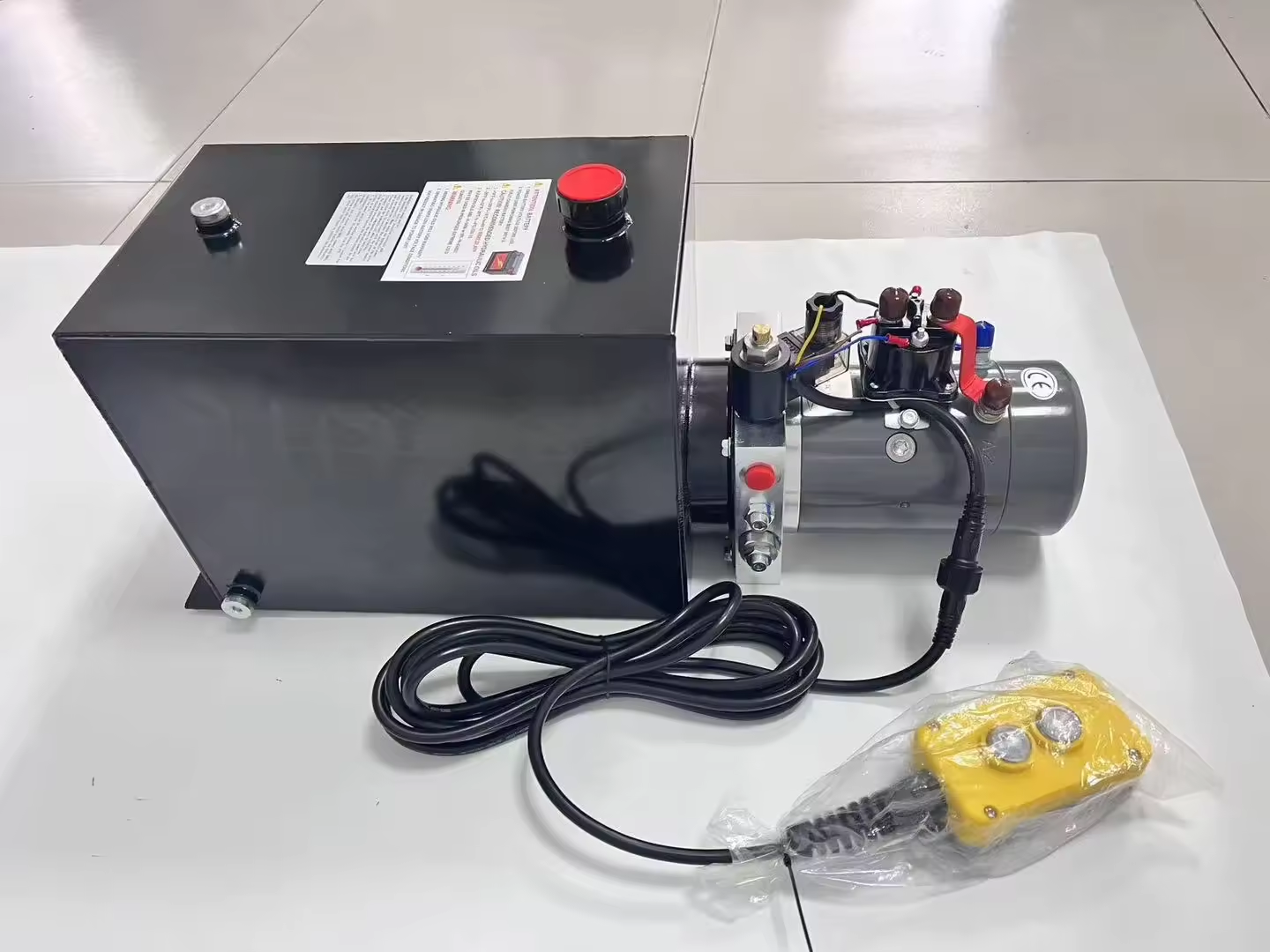
Contamination is any material inside the hydraulic circuit that is not clean hydraulic oil: metal particles, machining residue, weld scale, dust, fibrous material, water, or oil of the wrong specification. In a hydraulic power unit — the packaged combination of motor, pump, reservoir, valves and controls — contamination matters because the internal clearances in pumps and valves are the tightest in the machine, and particles that pass through them do not disappear afterwards.
Three routes contamination takes into a new unit
A new power unit is not automatically a clean one. Contamination normally enters through one of three routes.
- Residual manufacturing debris. Machining, welding and storage leave material on internal surfaces. Reservoirs, pipes, manifolds and components can carry that material into the assembly stage unless they are cleaned first.
- The oil fill. Oil is the largest single volume that enters a unit, and it is also a carrier. If the cleanliness of the filling oil is not controlled, a clean assembly can be contaminated in a single fill.
- Ingress after assembly and during transport. Open ports, connections and packaging that admits moisture or dust allow contamination to arrive before first start-up. In Apex Hydraulic’s risk-control documentation, sealed ports, anti-corrosion treatment and export-grade packaging are specified precisely to prevent transportation damage.
What contamination damages first
The hydraulic pump is usually where the effect appears first. Apex Hydraulic’s risk documentation treats hydraulic pump wear as a separate risk and controls it through component selection — pumps sourced from qualified suppliers — combined with cleanliness control, including assembly under clean manufacturing conditions. Valves are the second sensitive point: solenoid valves are checked for switching performance and response before assembly, because a valve that does not shift cleanly changes how the whole circuit behaves. Sealing is the third: precision sealing, leak-proof hydraulic connections and pressure testing address oil leakage risk, and leakage is both a symptom of seal damage and a new route for contamination.
Why the effect is cumulative rather than gradual
Damage from contamination compounds. Wear generates particles, and those particles accelerate further wear. This is why a cleanliness problem discovered after commissioning usually costs more than the same problem prevented during assembly: filtration can remove particles that are circulating, but it cannot restore clearances that abrasion has already opened.
Industry Background: Why Cleanliness Became a Manufacturing Discipline
Hydraulic power units are a large, mature product category, and that scale explains why cleanliness is handled as a process discipline rather than individual craftsmanship. Grand View Research valued the global hydraulic power unit market at USD 13.6 billion in 2024, while Precedence Research estimated USD 11.4 billion for the same year with a CAGR of 5.5% through 2034. The two figures differ — which is normal for market sizing — but both describe a category produced in volume and measured in billions of dollars.
Two published shares point at the same conclusion. Grand View Research reported that Asia Pacific accounted for 40.2% of 2024 revenue, and Mordor Intelligence reported that standard packaged units represented 47.8% of global revenue share in 2024. In high-volume packaged production, the difference between a clean unit and a contaminated one is generally a documented process step, not an individual technician’s care.
Regulation pushes in the same direction. Inside the European Union, hydraulic power units must comply with EN ISO 4413:2010, which sets out general rules and safety requirements for hydraulic systems, and the Machinery Directive 2006/42/EC governs health and safety requirements for hydraulic systems. Compliance work requires documented assembly, testing and inspection — the same points in the process where contamination control lives.
Detailed Solution: How Manufacturers Actually Control Contamination
Contamination control in production is a chain of measures rather than a single action. Each link closes a different entry route, and removing one link weakens the rest.
Cleaning before assembly
Apex Hydraulic’s risk-control documentation states that hydraulic systems are cleaned before assembly. Sequence matters here: cleaning a reservoir or a manifold after it has been closed does not remove what is already trapped inside it.
Oil cleanliness control
The oil fill deserves separate treatment because it is the largest volume that enters the unit. Hydraulic oil cleanliness is controlled to reduce contamination risks, and this is the point where a carefully cleaned assembly can be lost in a few minutes of careless filling.
Component selection and clean assembly conditions
Pumps are sourced from qualified suppliers and assembled under clean manufacturing conditions to minimize premature wear. Component selection and cleanliness control are named as the two methods used against hydraulic pump wear — a useful reminder that cleanliness alone cannot compensate for a component that is unsuitable for the duty.
Pressure calibration and stable pressure verification
Pressure instability has its own control path: hydraulic circuit verification and pressure calibration. Pressure settings are adjusted according to customer specifications, and each power unit is tested to verify stable system pressure before delivery. Individual testing matters at the decision stage because it produces a per-unit result rather than a general claim about the design.
Leakage, sealing and electrical inspection
Every hydraulic power unit undergoes hydraulic pressure and leakage testing before shipment, and all hydraulic fittings and sealing components are inspected to ensure leak-free performance. Electrical wiring, connectors and control circuits are inspected as well, since standardized wiring and electrical inspection are the documented control for electrical connection failure risk.
Packaging and traceability
Contamination control does not end at the test bench. Units are protected with sealed ports, anti-corrosion treatment and export-grade packaging to prevent transportation damage, and production batches and quality inspection records are maintained to support product traceability and after-sales service. Without those records, a contamination issue that surfaces months later cannot be traced back to a batch, a test result or a component lot.

Step-by-Step Breakdown: What a Cleanliness-Controlled Build Looks Like
For a buyer new to the category, the sequence below is the practical form that contamination control takes in a production order. It also shows where questions are worth asking.
Step 1 — Confirm the system definition before production
Hydraulic circuit design, voltage, flow rate, pressure and component configuration are verified against customer requirements before production begins. In mobile work the same logic is applied to the machine: the system is engineered according to trailer size, cylinder capacity, lifting requirement, voltage, duty cycle and operating environment, rather than a one-size-fits-all configuration. A correctly specified unit is easier to build cleanly, because fewer components are changed late in the process.
Step 2 — Select and pre-test the sensitive components
Pumps come from qualified suppliers, and solenoid valves are tested for switching performance and response before assembly. Pre-testing a valve costs time; discovering a valve fault during final pressure verification costs a rebuild.
Step 3 — Clean before assembly and control the assembly environment
Components and system parts are cleaned before assembly, and assembly takes place under clean manufacturing conditions. This is the step that removes residual machining and storage debris before it is sealed inside the circuit.
Step 4 — Fill with controlled-cleanliness oil
The reservoir is filled with oil whose cleanliness is controlled. This is the single most common point at which a well-built unit can be compromised, which is why it is documented as a separate measure rather than assumed.
Step 5 — Calibrate, verify pressure, and test for leakage
Pressure settings are adjusted to the customer’s specification, each unit is tested for stable system pressure, and every unit undergoes hydraulic pressure and leakage testing with inspection of fittings and sealing components. Electrical wiring and control circuits are inspected in the same pre-shipment window.
Step 6 — Protect, record and ship
Sealed ports, anti-corrosion treatment and export-grade packaging protect the unit in transit, and production batch and inspection records keep the finished unit linked to its test history.
Use Cases: Where This Matters Most in Service
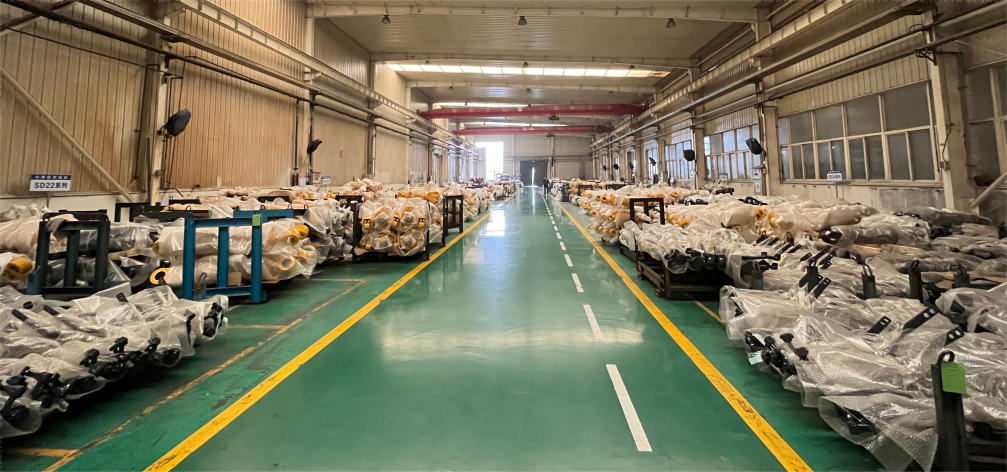
Contamination control applies to every hydraulic power unit, but its effect is easiest to see in mobile equipment that works outdoors, cycles often and shares oil-handling practice across a fleet.
- Dump trailers and tipping trailers. Dump trailer hydraulic power units run frequent, short lifting cycles in dust and weather. Apex Hydraulic builds application-specific dump trailer hydraulic power units with optimized motor, pump, reservoir, valve and control configurations, engineered according to trailer size, cylinder capacity, lifting requirement, voltage, duty cycle and operating environment. The configuration work matters, but the cleanliness of the build determines how long the pump and valves keep delivering that performance.
- Vehicle-mounted and DC power packs. For a DC hydraulic power unit — including 12V hydraulic power unit and 24V hydraulic power unit configurations — the power pack shares the service environment of the host vehicle. Oil is often topped up in the field, so a clean first fill and controlled assembly protect the unit against the handling it will meet later.
- Mini and compact power units. A mini hydraulic power unit has a small reservoir and a short circuit, so there is less fluid volume to dilute a contamination event. Cleanliness established at build has a proportionally larger effect on service life.
- Scissor hoist and lift circuits. A hydraulic scissor hoist kit repeats the same motion many times, which means changes in valve response are noticed quickly by operators. Clean hydraulic fluid and correctly tested valves are what keep that response consistent.
- Industrial and stationary equipment. Sanitation vehicles, agricultural machinery, construction and mining equipment, marine equipment and material handling equipment all rely on the same principle: a power unit is a closed system, and what is inside it at delivery stays inside it until the first service.
Comparison Table: Where Contamination Is Controlled and What Each Control Achieves
| Control point | Contamination route addressed | Documented practice | Stage in the build |
|---|---|---|---|
| Cleaning before assembly | Residual particles from machining, handling and storage | Hydraulic systems are cleaned before assembly | Before components are closed |
| Oil cleanliness control | Particles entering with the fill | Hydraulic oil cleanliness is controlled to reduce contamination risks | Filling |
| Pump sourcing and assembly conditions | Premature hydraulic pump wear | Pumps sourced from qualified suppliers and assembled under clean manufacturing conditions | Component selection and assembly |
| Valve functional testing | Unreliable valve switching and response | Solenoid valves tested for switching performance and response before assembly | Before assembly |
| Pressure calibration and verification | Pressure instability | Circuit verification, settings adjusted to customer specifications, each unit tested for stable system pressure before delivery | Final test |
| Leakage and sealing inspection | Oil leakage and openings for ingress | Hydraulic pressure and leakage testing plus inspection of fittings and sealing components | Final test |
| Export packaging | Contamination and damage in transit | Sealed ports, anti-corrosion treatment and export-grade packaging | Packing |
| Production records | Untraceable defects after delivery | Batch and quality inspection records maintained for traceability and after-sales service | Post-production |
Comparing two suppliers on contamination control
At the decision stage, the useful comparison is not between two finished units that look identical, but between two sets of answers. The table below contrasts a general answer with an evidence-based one for the same question.
| Evaluation point | General answer | Evidence-based answer | What it confirms |
|---|---|---|---|
| How contamination is controlled | “We use clean processes.” | Cleaning before assembly plus oil cleanliness control | Whether cleanliness is a documented step or an intention |
| Pump durability | “We use good pumps.” | Pumps from qualified suppliers, assembled under clean conditions | Whether pump wear is treated as a controlled risk |
| Pressure confirmation | “It is set at the factory.” | Settings adjusted to specification; each unit tested for stable system pressure before delivery | Whether verification is per unit or by design assumption |
| Leak integrity | “We check for leaks.” | Hydraulic pressure and leakage testing plus inspection of fittings and sealing components | Whether leakage is tested rather than assumed |
| Documentation | “Standard packing list.” | Batch and inspection records supporting traceability and after-sales | Whether a future problem can be traced back |
| Protection in transit | “We pack well.” | Sealed ports, anti-corrosion treatment and export-grade packaging | Whether contamination between factory and site is addressed |
Reading the price difference
Two quotations for the same duty rarely match, and the difference is often in these process steps rather than in the visible components. Apex Hydraulic states that, compared with traditional solutions, its hydraulic power units offer cost advantages through optimized system configuration, reducing total ownership cost through improved reliability, reduced downtime and longer component life. The same documentation notes that optimized hydraulic circuits reduce unnecessary pressure loss, improving overall system efficiency compared with standard units, and that a modular design with standardized hydraulic components makes maintenance, troubleshooting and replacement easier than generic configurations. For a buyer weighing quotations, the practical question is which of these practices a supplier actually includes, and whether they are verified on each unit rather than described once in a brochure.
FAQ
Does contamination control connect to any formal standard for hydraulic power units?
Indirectly, yes. Within the European Union, hydraulic power units must comply with EN ISO 4413:2010, which sets out general rules and safety requirements for hydraulic systems, and the Machinery Directive 2006/42/EC governs health and safety requirements for hydraulic systems. Cleaning before assembly, oil cleanliness control, pressure calibration and pre-shipment leakage testing are the production practices that support that compliance work. They should be read together with a supplier’s declared conformity documentation rather than treated as a certificate on their own.
What does clean assembly actually involve, and can a buyer verify it?
Clean assembly combines several documented steps: hydraulic systems are cleaned before assembly, hydraulic oil cleanliness is controlled, pumps are sourced from qualified suppliers and assembled under clean manufacturing conditions, and solenoid valves are tested for switching performance and response before assembly. Verification is possible because these steps leave records and test results — hydraulic pressure and leakage testing before shipment, inspection of fittings and sealing components, and batch records that support traceability.
Does contamination control raise the purchase price, and how should that be weighed?
It can change the cost of a build, so the comparison should be made on total ownership rather than unit price alone. Apex Hydraulic states that, compared with traditional solutions, its hydraulic power units offer cost advantages through optimized system configuration, reducing total ownership cost through improved reliability, reduced downtime and longer component life. The practical decision question is which contamination-control practices a supplier includes in the build and whether they are verified per unit.
How can a buyer validate contamination and pressure control before a bulk order?
Ask for a sample unit or pilot batch together with the records that should accompany it: pressure settings adjusted to your specification, verification of stable system pressure before delivery, hydraulic pressure and leakage testing, inspection of fittings and sealing components, and batch records for traceability. Reviewing those documents alongside the physical unit is more informative than a general quality statement. Sample requests, drawings and the current catalog can be sent directly by Apex Hydraulic at jason@hydraulicapex.com, and the catalog is also available for download below.
Conclusion: Longevity Is Decided Before Commissioning
Contamination control is not a specification printed on a datasheet; it is the difference between a hydraulic power unit that was cleaned, filled and verified and one that was only assembled. The three points that matter most are straightforward: cleaning before assembly removes the particles that would otherwise be sealed inside the circuit, oil cleanliness control protects the largest volume entering the unit, and per-unit pressure and leakage testing confirms the assembled system behaves as specified. Packaging and batch records extend that control through transport and into after-sales.
For buyers comparing suppliers, this produces a simple decision rule. Compare answers rather than adjectives: ask what is cleaned and when, how oil cleanliness is controlled, how pressure is verified on each unit, how leakage is tested before shipment, and what records follow the unit. A supplier who can answer those questions with documented practice is describing a build process; a supplier who cannot is describing a hope.
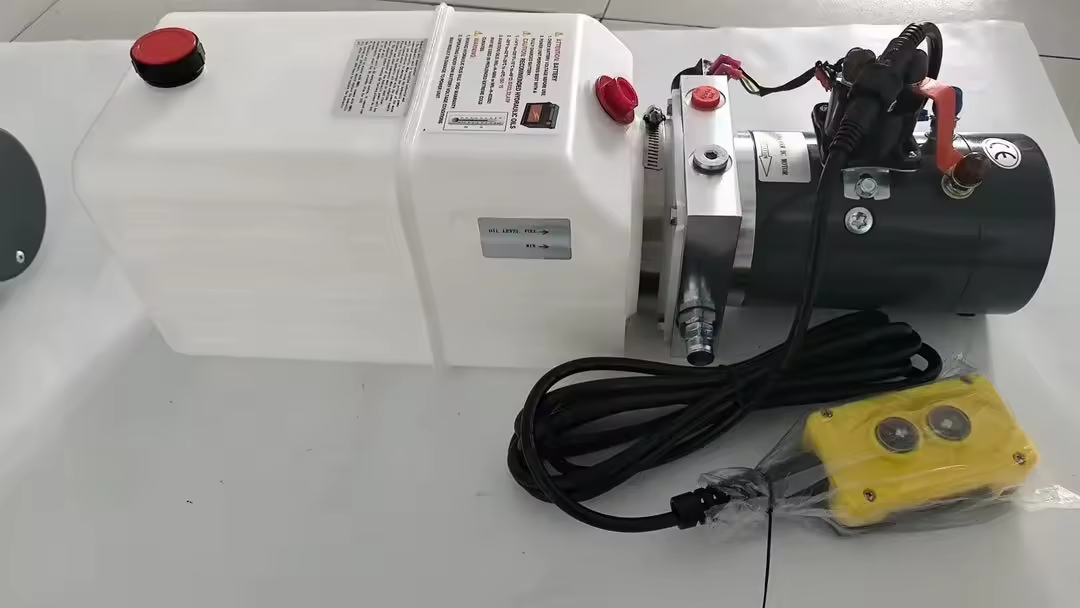
Next step: request a sample, a quotation or the product catalog
Share your voltage, flow, pressure, duty cycle and mounting requirements, and Apex Hydraulic will respond with a configuration proposal and the inspection documentation that accompanies the build.
Email: jason@hydraulicapex.com | Tel / WhatsApp: +86 182-5318-1828
Website: www.hydraulicapex.com
Product catalog (PDF): download the APEX Hydraulic main product catalog
About Apex Hydraulic Co., Ltd.
Apex Hydraulic Co., Ltd. was established in 2009 and manufactures custom hydraulic cylinders, standard hydraulic cylinders, hydraulic power units, hydraulic systems, hydraulic scissor hoist kits and hydraulic components. The company operates a 50,000 m² manufacturing facility in Qingdao City, Shandong Province, China, with 560 employees, and exports roughly 70% of its output to North America, Western Europe, South America, Southeast Asia, the Middle East and Australia, working with equipment manufacturers, hydraulic distributors and hydraulic solution providers.
Have Questions or Need More Details?
Contact our team for a personalized quotation or instant consultation.
Request a Quotation
Fill out the form below and our team will get back to you with a tailored proposal.
WhatsApp Direct Chat
Prefer to chat in real-time? Message us on WhatsApp for instant assistance & quick answers.
- Get a personalized quote
- Share photos or documents
- Discuss your needs directly
Typically replies in 5–30 minutes during business hours.