Hydraulic Power Unit Partnerships: Clean Assembly, Pressure Testing, and After-Sales FAQ
Hydraulic Power Unit Partnerships: Clean Assembly, Pressure Testing, and After-Sales FAQ
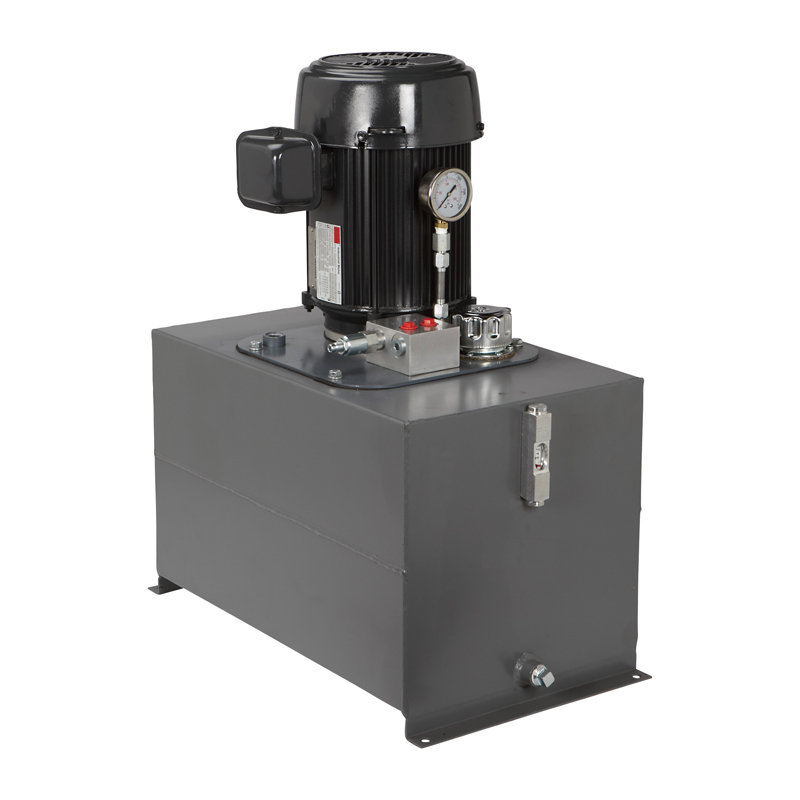
Short answer: A hydraulic power unit (HPU) partnership is judged by three things — how contamination is controlled during assembly, what pressure the unit actually delivers when it is tested before shipment, and how the supplier supports the order after delivery. Apex Hydraulic Co., Ltd., a manufacturer of custom hydraulic cylinders, hydraulic power units and hydraulic systems established in 2009 in Qingdao City, Shandong Province, China, addresses all three through pre-assembly component cleaning, defined filtration options, an ISO 4406 20/18/15 fluid cleanliness specification, pressure settings adjusted to the customer's approved hydraulic system, and full-function testing of every completed unit before it leaves the factory.
This page is written as a partnership and after-sales FAQ for long-term hydraulic power unit buyers: OEM manufacturers, distributors and equipment builders who order the same configuration more than once. It answers the questions that only appear after the first purchase — will the second shipment behave like the first, who decided the relief setting, what was cleaned before assembly, and what happens if a valve needs attention two years into the program.
Problem definition: the two risks that repeat orders expose
The first risk is contamination. Machining debris, welding scale, dust from an open workshop, residue inside a reservoir, and particles carried in through fittings and hoses all travel with the oil once the unit is running. Downstream, they act on gear pump surfaces, valve spools and seals. The damage is usually progressive rather than dramatic: internal leakage increases, response slows, directional valves begin to stick, and in mobile equipment the movement of a platform, hoist or tailgate becomes less predictable over a working day.
The second risk is pressure drift. A relief valve set to a convenient factory value instead of the value the buyer approved produces the wrong lifting force at one end of the range, or unnecessary heat and stress at the other. Fleet operators notice it as inconsistency between units of the same model, not as a single failure event.
Both risks are process questions rather than product questions, and both are verifiable. For a distributor or OEM placing recurring orders, the practical question is not whether a supplier claims clean assembly and correct pressure settings, but whether the supplier can describe the steps and show the test records behind them.
Industry background: a large, mostly electric, mostly industrial market
Hydraulic power units sit inside a well-established component market. Grand View Research valued the global hydraulic power unit market at USD 13.6 billion in 2024, while Precedence Research estimated USD 11.4 billion for the same year with a compound annual growth rate of 5.5% through 2034. The two figures differ because of scope and methodology, so they are best used as directional context rather than as a single precise number.
Regionally, Asia Pacific accounted for 40.2% of hydraulic power unit revenue in 2024 according to Grand View Research, which is consistent with the concentration of hydraulic manufacturing capacity in the region. Within the United States market, valued at USD 2.55 billion in 2024 by the same source, the industrial application segment held the largest revenue share at 56.3%, and electric-powered power units represented 60.1% of revenue.
Two product-level signals are relevant to buyers planning multi-year programs. Standard packaged units accounted for 47.8% of global hydraulic power unit revenue in 2024, according to Mordor Intelligence, and the 2000–3000 psi pressure range is projected to grow at a 5.8% CAGR between 2025 and 2033, according to Grand View Research. Standardized packages and mid-pressure ranges are the volumes that OEM and distributor programs are usually built on, which is why contamination control and repeatable pressure settings matter commercially and not only technically.
On the application side, Market Research Future estimated the global dump trailer market at USD 63.51 billion in 2024, with the 10–15 ton segment holding the largest share — a segment that consumes 12V DC power units and scissor hoist systems in volume.
The supplier landscape is a mix of global manufacturers and specialized OEM builders. Mordor Intelligence identifies Bosch Rexroth AG, Parker-Hannifin and HYDAC International among the top global manufacturers of hydraulic power units; alongside them, specialized manufacturers such as Apex Hydraulic supply customized and private-label power units to equipment builders and distributors.
Compliance expectations run alongside the market. In the European Union, EN ISO 4413:2010 sets general rules and safety requirements for hydraulic fluid power systems, and Machinery Directive 2006/42/EC governs health and safety requirements for machinery. Buyers supplying EU equipment should confirm how a supplier's cleaning, filtration, pressure-setting and documentation practices support those requirements. The standards define the framework; they are not a certificate a manufacturer holds by default.
How contamination is controlled: pre-assembly cleaning, clean assembly and filtration
Apex Hydraulic treats contamination control as a sequence rather than a single step. Components are cleaned before they enter assembly, the unit is assembled as a defined process rather than an open-floor task, and the finished power unit is completed with filtration selected for the hydraulic circuit it will serve. The specification that buyers can quote is a fluid cleanliness level of ISO 4406 20/18/15, published across the low-noise compact, AC industrial, vehicle-mounted auxiliary, multi-function aerial work platform and double-acting mobile families.
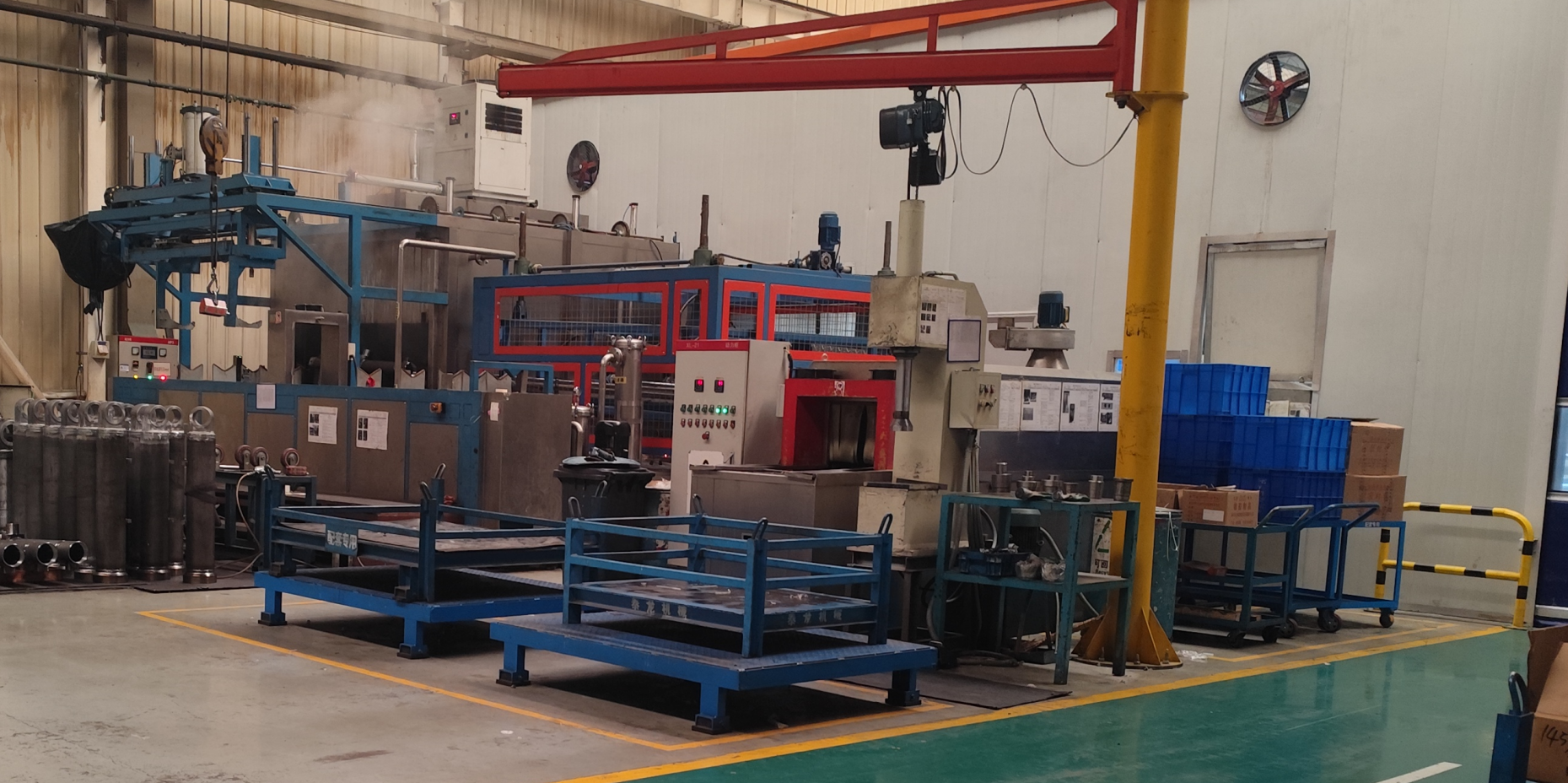
Cleaning before assembly
Pre-assembly cleaning removes the contamination that is easiest to eliminate and hardest to remove later. Once a manifold, pump or reservoir is closed and filled with oil, any particle that was inside it recirculates. Cleaning components before they are assembled is therefore the highest-leverage contamination step in the whole process: it protects the pump, the cartridge valves and the seals without adding any service action after delivery.
Filtration architecture: four positions, selected by family
Apex Hydraulic power units use up to four filtration and protection positions, configured according to the unit family and the customer's circuit:
- Return-line filter — captures wear debris carried back from the actuators before the oil returns to the reservoir; available across the low-noise compact, vehicle-mounted auxiliary, AC industrial, multi-function and double-acting mobile families.
- Pressure-line filter — protects sensitive components immediately downstream of the pump; available on the vehicle-mounted auxiliary and AC industrial families.
- Suction strainer — guards the pump inlet against larger particles; available on the low-noise compact, vehicle-mounted auxiliary, AC industrial, multi-function and double-acting mobile families.
- Air breather filter — limits particles entering through the reservoir breather as oil level changes; available on the low-noise compact and AC industrial families.
Fluid selection is part of the same system. Recommended hydraulic fluids across the range are ISO VG 22, ISO VG 32 and ISO VG 46, with ISO VG 68 also listed for the AC industrial series, and the standard hydraulic fluid temperature range is −20 °C to +80 °C. The 12V DC dump trailer unit uses automatic transmission fluid or a compatible hydraulic oil selected according to temperature.
Why the 20/18/15 specification matters to a buyer
A published cleanliness level gives the buyer something to hold in an incoming inspection procedure. It also makes a reorder comparable: the ISO 4406 class stated on the datasheet is the same target whether the order is the first unit or the fiftieth. Suppliers who cannot state a cleanliness level leave that comparison to the buyer's laboratory after the equipment is already in service.
Pressure-side guarantees: settings matched to your system, then verified
Relief valves across the Apex Hydraulic power unit range are adjustable, and the setting is established according to the customer's approved hydraulic system within the rated limits of the components, rather than being fixed to a single factory default. The 12V DC dump trailer power unit (APEX-DTHPU) illustrates the level of detail documented for a program: a maximum relief setting of 3,200 PSI at the A port and 1,500 PSI at the B port, with the pressure setting adjustable according to the approved hydraulic system within rated component limits.
The wording of that limit is deliberate. A supplier that guarantees a setting inside rated component limits is stating what it can verify on the test bench. Buyers comparing quotations should read the pressure clause the same way they read a flow rate — as a range with a stated boundary, not as a marketing maximum.
Verification happens before shipment, and every completed power unit is tested. The test set differs by family:
- Low-noise compact (APEX-CLNCHPU): pressure, leakage, vibration, electrical and full-function testing.
- Vehicle-mounted auxiliary (APEX-CVMAHPU): pressure, leakage, electrical, valve-response and full-cycle testing.
- AC industrial (APEX-ACHPU Series): pressure, leakage, electrical and full-function testing.
- Multi-function aerial work platform (APEX-CMFHPU): pressure, leakage, valve-function, electrical and full-cycle testing.
- Double-acting mobile (APEX-CDAMHPU): pressure, leakage, directional-control and functional testing.
- 12V DC dump trailer (APEX-DTHPU): pressure testing, flow testing, relief-valve verification, solenoid-valve functional testing, motor current testing and leakage inspection.
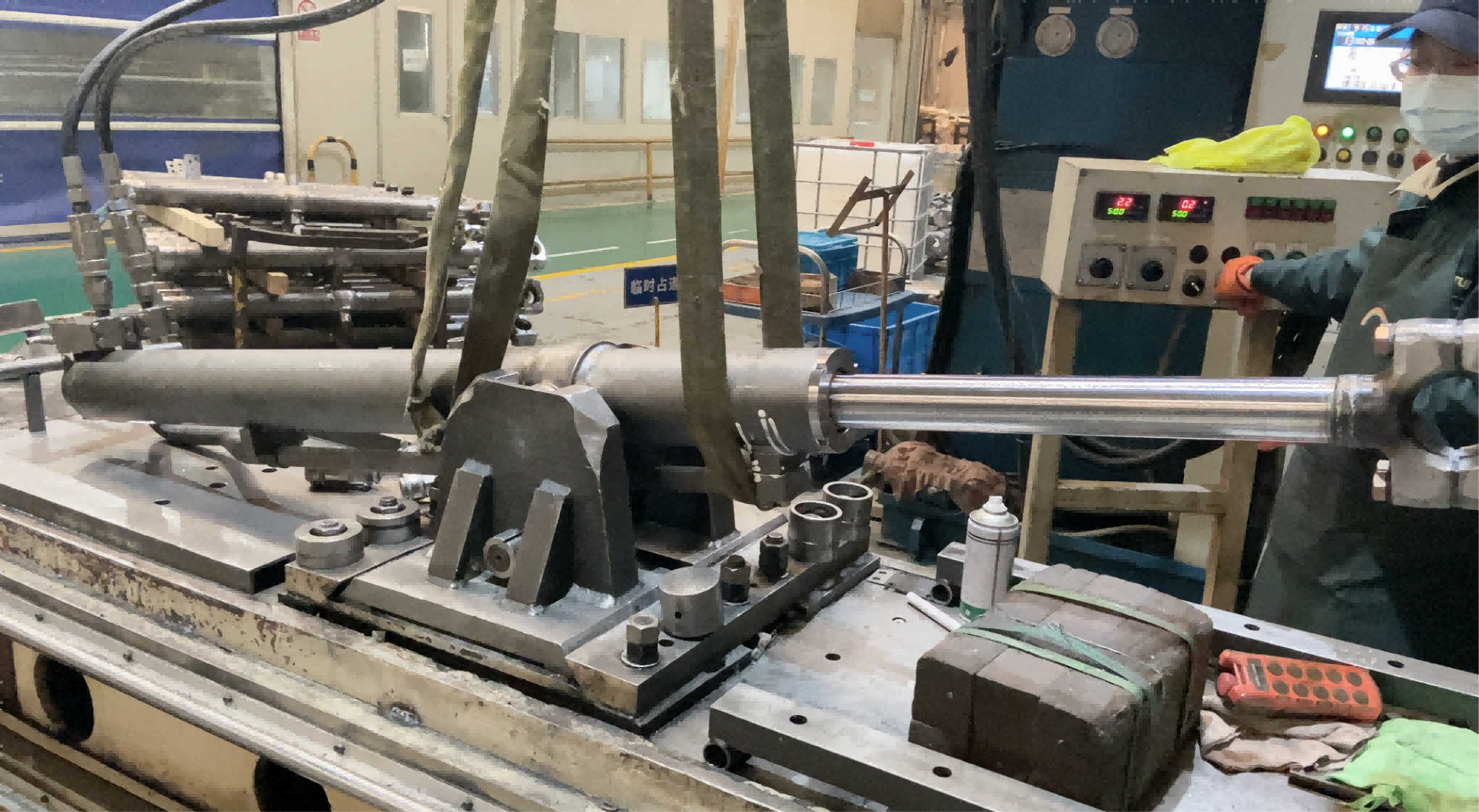
For a repeat buyer, the value of that list is comparability. When the same configuration ships monthly or quarterly, the test record becomes the baseline: it shows whether the unit in the tenth batch was set and checked the same way as the unit in the first. Stable system pressure before delivery is the outcome; the record is the evidence.
After-sales support built for recurring OEM and distributor orders
After-sales support in a power unit program is mostly about traceability and serviceability, because those two things determine how quickly a distributor or fleet operator can resolve an issue without returning a unit.
Traceability starts with identification. Apex Hydraulic power units can be marked with a customer logo, part number, serial number and traceability label, and approved drawings, inspection records and test reports are available according to project requirements. For a distributor carrying several equipment lines, that means a unit in the field can be tied back to the configuration that produced it.
Serviceability is designed into the units. The double-acting mobile family uses modular cartridge-valve construction that supports troubleshooting and component replacement instead of manifold replacement, and mountings use replaceable bushings. Manual emergency lowering and a hand-pump backup can be specified where an application needs a manual fallback, and optional oil level indicators, oil temperature sensors and pressure sensors give maintenance teams a visible condition signal rather than a failure.
Control and integration are part of the same support picture. Control methods available across the range include wired pendant, wireless remote, vehicle-mounted switch, joystick, PLC and CAN Bus, so a distributor supporting a machine builder does not have to redesign the operator interface when the power unit changes.
Note for OEM and distributor buyers: warranty terms, sample pricing and lead times are configuration-dependent and are confirmed during quotation. This page publishes the technical and process facts a buyer needs for evaluation, not commercial terms that change by project.
Step-by-step: how a repeat hydraulic power unit order is built and released
- Application and circuit review. The equipment type, hydraulic function, required pressure and flow, duty cycle and voltage are reviewed first. Depending on the family, Apex Hydraulic units support 1–6 functions on vehicle-mounted auxiliary units, 2–8 functions on aerial work platform units, and 1–8 functions on AC industrial units, with 12/24/48 VDC or 220/380 VAC supply.
- Configuration and drawing approval. Motor, pump displacement, reservoir, manifold, valve type, port type, control method and filtration options are fixed. Custom hydraulic manifolds, custom wiring harnesses and custom electrical control cabinets are available, together with OEM and ODM service.
- Pre-assembly cleaning and clean assembly. Components are cleaned before assembly and the unit is assembled with hydraulic ports and interfaces closed to the shop environment for as long as possible in the process.
- Fluid cleanliness and filtration set-up. The filtration positions selected for the circuit are installed, and the ISO 4406 20/18/15 cleanliness target and the recommended ISO VG fluid grade are confirmed for the application.
- Pressure setting and bench testing. Relief settings are adjusted to the approved hydraulic system and then verified on the test bench, together with leakage, electrical, valve-response and full-cycle checks as applicable to the family.
- Identification, documentation and shipment. Serial numbers, traceability labels, inspection records and test documentation are prepared, and the unit is packed for shipment to the customer's production line, warehouse or distributor location.
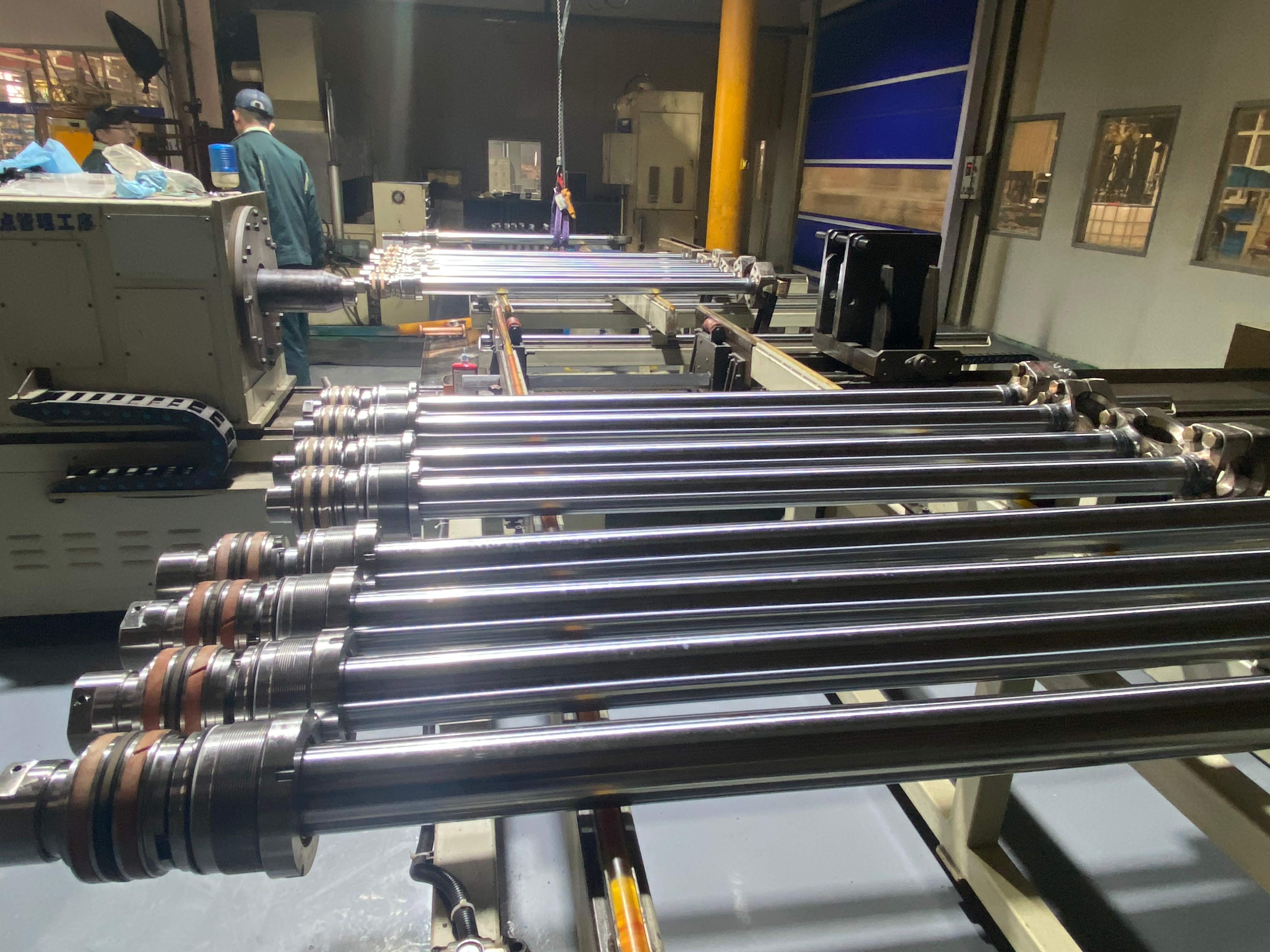
Use cases: where these assurances apply across the product range
The same cleaning, pressure-setting and testing discipline applies across six power unit families, each aimed at a different class of equipment. The list below shows how the assurances translate into real applications.
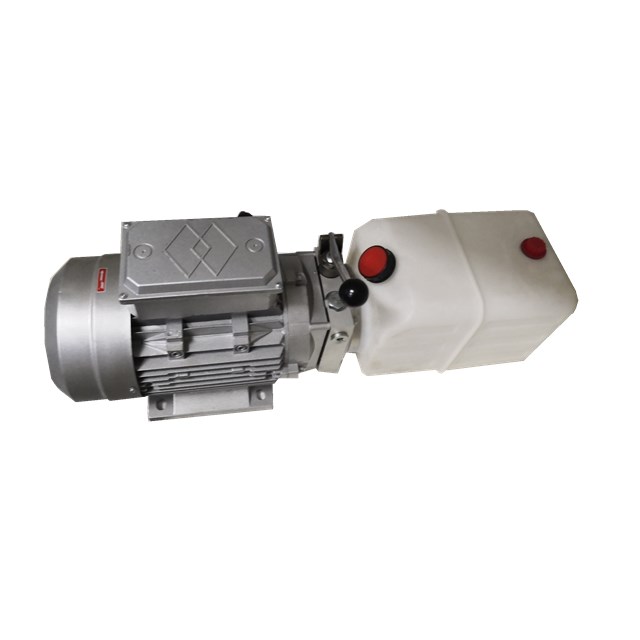
- Custom low-noise compact hydraulic power unit (APEX-CLNCHPU). Medical equipment, patient lifting, accessibility lifts, home elevators, lift tables, ergonomic workstations and material handling. Motor power 0.35–4.0 kW, reservoir 0.5–18 L, maximum working pressure 230 bar (3,335 PSI), with optional anti-vibration mounts and acoustic enclosures where noise matters.
- Custom vehicle-mounted auxiliary hydraulic power unit (APEX-CVMAHPU). Refuse collection vehicles, garbage trucks, municipal service vehicles, truck tailgates, street sweepers, road maintenance vehicles, utility trucks and truck-mounted cranes. 24/48 VDC, 1–6 functions, maximum working pressure 250 bar (3,625 PSI), with weather-resistant enclosure and IP66 options for outdoor vehicle duty.
- Custom AC industrial hydraulic power unit (APEX-ACHPU Series). Manufacturing equipment, hydraulic presses, machine tools, lift tables, scissor lifts, dock levelers, packaging machinery, recycling and waste compaction equipment. 220/380 VAC single or three phase, continuous-duty or intermittent-duty, maximum working pressure 230 bar (3,335 PSI), IP54–IP65.
- Custom multi-function hydraulic power unit for aerial work platforms (APEX-CMFHPU). Scissor lifts, boom lifts, mobile elevating work platforms, vehicle outrigger systems and truck-mounted lifting platforms. 12/24/48 VDC, 2–8 functions, maximum working pressure 280 bar (4,000 PSI), with electric lifting, hydraulic steering, platform leveling, outrigger control and emergency lowering functions.
- Custom double-acting mobile hydraulic power unit (APEX-CDAMHPU). Dump trailers, hydraulic scissor hoist systems, tilt-bed trailers, equipment trailers, truck liftgates, agricultural machinery and municipal vehicles. 12/24/48 VDC, power-up and power-down control, maximum working pressure 280 bar (4,000 PSI).
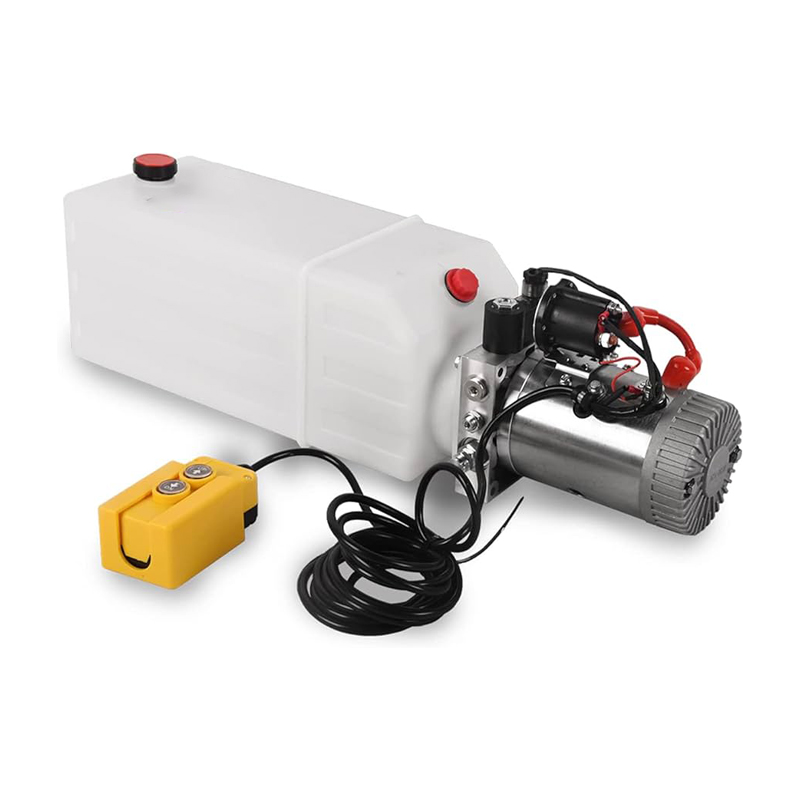
- 12V DC dump trailer hydraulic power unit (APEX-DTHPU). Dump trailer manufacturing, repair and replacement, landscaping and agricultural tipping trailers. A power-up / gravity-down circuit for single-acting cylinders, 6 US quart translucent reservoir, maximum flow 2.0 GPM, and compatibility with HTC-series dump trailer telescopic cylinders.
Comparison table: six hydraulic power unit families at a glance
The table below summarises the published series data for the six families, including the contamination-control features and the test set applied before shipment. Final values for a specific order are confirmed against the approved drawing.
| Power unit family | Model | Supply | Maximum working pressure | Contamination and pressure control | Pre-shipment testing |
|---|---|---|---|---|---|
| Custom low-noise compact HPU | APEX-CLNCHPU | 12/24/48 VDC; 220/380 VAC, 50/60 Hz | 230 bar (3,335 PSI) | Optional return-line filter, suction strainer and air breather filter; ISO 4406 20/18/15 | Pressure, leakage, vibration, electrical, full-function |
| Vehicle-mounted auxiliary HPU | APEX-CVMAHPU | 24/48 VDC | 250 bar (3,625 PSI) | Return-line filter, pressure-line filter and suction strainer options; ISO 4406 20/18/15 | Pressure, leakage, electrical, valve-response, full-cycle |
| AC industrial HPU | APEX-ACHPU Series | 220/380 VAC, single or three phase | 230 bar (3,335 PSI) | Return-line, pressure-line, suction and air breather filtration options; ISO 4406 20/18/15 | Pressure, leakage, electrical, full-function |
| Multi-function HPU for aerial work platforms | APEX-CMFHPU | 12/24/48 VDC | 280 bar (4,000 PSI) | Return-line filtration; load-holding and counterbalance valve options; ISO 4406 20/18/15 | Pressure, leakage, valve-function, electrical, full-cycle |
| Double-acting mobile HPU | APEX-CDAMHPU | 12/24/48 VDC | 280 bar (4,000 PSI) | Return filter and suction strainer options; adjustable relief; ISO 4406 20/18/15 | Pressure, leakage, directional-control, functional |
| 12V DC dump trailer HPU | APEX-DTHPU | 12 VDC | Maximum relief 3,200 PSI at A port; 1,500 PSI at B port | Integrated load-retention check valve and integrated relief valve; translucent 6 US quart reservoir | Pressure, flow, relief-valve verification, solenoid-valve function, motor current, leakage |
FAQ: clean assembly, pressure testing and after-sales for repeat buyers
What hydraulic oil cleanliness level is specified for an Apex Hydraulic power unit, and how is it maintained?
The published fluid cleanliness level for the low-noise compact, AC industrial, vehicle-mounted auxiliary, multi-function and double-acting mobile power unit families is ISO 4406 20/18/15. It is maintained through pre-assembly cleaning of components, clean assembly of the unit, and filtration options including return-line filters, pressure-line filters, suction strainers and air breather filters, selected according to the family and configuration. Recommended hydraulic fluids are ISO VG 22, ISO VG 32 and ISO VG 46 — with ISO VG 68 also listed for the AC industrial series — and the standard hydraulic fluid temperature range is −20 °C to +80 °C. For EU machinery projects, EN ISO 4413:2010 sets general rules and safety requirements for hydraulic fluid power systems, and Machinery Directive 2006/42/EC governs machinery health and safety requirements.
Are pressure settings adjusted to our hydraulic system, or set to a factory default?
Relief valves across the Apex Hydraulic power unit range are adjustable, and the setting is established according to the customer's approved hydraulic system within the rated limits of the components. The 12V DC dump trailer power unit (APEX-DTHPU) documents a maximum relief setting of 3,200 PSI at the A port and 1,500 PSI at the B port, with the pressure setting adjustable according to the approved hydraulic system. The stated boundary matters: a supplier that guarantees a setting inside rated component limits is describing what it can verify on the test bench, not an unlimited maximum.
What is tested on each power unit before it is shipped?
Every completed power unit is tested before shipment, and the test set is defined by family. Low-noise compact units are tested for pressure, leakage, vibration, electrical function and full function. Vehicle-mounted auxiliary units undergo pressure, leakage, electrical, valve-response and full-cycle testing. AC industrial units are checked for pressure, leakage, electrical and full function. Multi-function aerial work platform units are tested for pressure, leakage, valve function, electrical function and full cycles. Double-acting mobile units are tested for pressure, leakage, directional control and function. The 12V DC dump trailer unit is tested for pressure, flow, relief-valve verification, solenoid-valve function, motor current and leakage.
Can a new configuration be validated before we commit to recurring OEM volumes?
Apex Hydraulic provides OEM and ODM services, including custom hydraulic manifolds, custom electrical control cabinets and custom wiring harnesses, so a new configuration normally begins with a technical review of the equipment type, hydraulic circuit, voltage, pressure and flow requirement, followed by an approved drawing. Buyers who want a sample unit or a first pilot quantity before a recurring program should confirm it during quotation: sample cost, configuration and schedule depend on the unit family and the level of customization, and are not published as fixed figures.
How are traceability and after-sales support handled across repeat orders?
Identification options include customer logo, part number, serial number and traceability label, and approved drawings, inspection records and test reports are available according to project requirements. For serviceability, the double-acting mobile family uses modular cartridge-valve construction that supports troubleshooting and component replacement, and manual emergency lowering or a hand-pump backup can be specified where a manual fallback is required. Because lead time depends on configuration and order quantity, it is confirmed at quotation rather than published as a fixed number. To start a program review, send your equipment type, working pressure, flow rate, voltage and control method to jason@hydraulicapex.com, or download the Apex Hydraulic product catalog before your next quotation round.
Conclusion: what to verify before you commit to a hydraulic power unit partner
Contamination control, pressure verification and after-sales support are the three areas where a hydraulic power unit program either stabilises or drifts. A supplier that cleans components before assembly, publishes a fluid cleanliness target such as ISO 4406 20/18/15, offers filtration positions matched to the circuit, adjusts relief settings to the buyer's approved system, tests every unit before shipment, and marks each unit for traceability is giving a buyer verifiable answers instead of assurances.
Apex Hydraulic Co., Ltd. was established in 2009 and operates a 50,000 m² manufacturing facility in Qingdao City, Shandong Province, China, with approximately 560 staff, a 25-engineer R&D team, and annual production capacity of 100,000 hydraulic cylinders and 15,000 hydraulic power units. Power units, cylinders and hydraulic systems from this facility are exported to North America, Western Europe, South America, Southeast Asia, the Middle East and Australia, supporting OEM manufacturers, distributors and hydraulic solution providers.
Next step
If you are evaluating a long-term hydraulic power unit program, review the Apex Hydraulic product catalog, then send your equipment details, required pressure and flow, voltage, control method and filtration expectations for a quotation or sample discussion.
Email: jason@hydraulicapex.com | WhatsApp: +86 182-5318-1828 | Website: www.hydraulicapex.com