Hydraulic Power Unit Supplier Evaluation: Verifying Contamination and Pressure Risk Controls
Evaluating a hydraulic power unit supplier comes down to one question: can the supplier produce documented evidence of contamination and pressure control, or only describe it? The controls that decide field reliability — fluid cleanliness during assembly, filtration architecture, relief-valve setting, and pre-delivery testing — all sit upstream of the shipment. If they are not verified before the purchase order, the buyer usually discovers the consequences months later, in the field, at their own cost.
Apex Hydraulic Co., Ltd., established in 2009 and based in Qingdao City, Shandong Province, China, manufactures custom hydraulic cylinders, standard hydraulic cylinders, hydraulic power units, hydraulic systems, hydraulic scissor hoist kits and hydraulic components. The company operates a 50,000 m² manufacturing facility with approximately 560 employees, a 25-engineer R&D team and an annual production capacity of 100,000 hydraulic cylinders and 15,000 hydraulic power units. Its published specifications are used below as worked examples; the verification framework itself applies to any hydraulic power unit supplier.
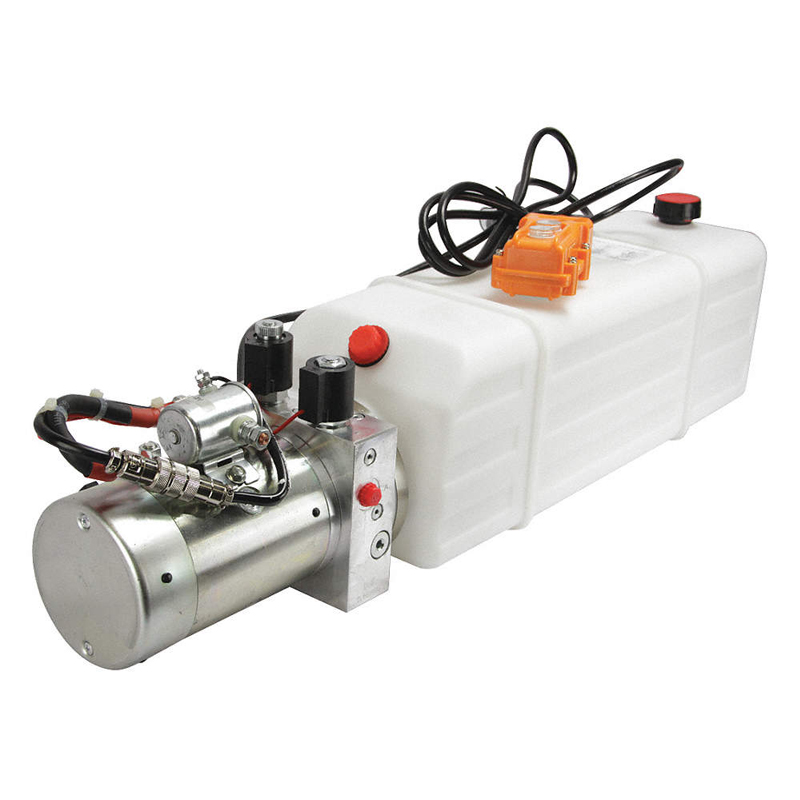
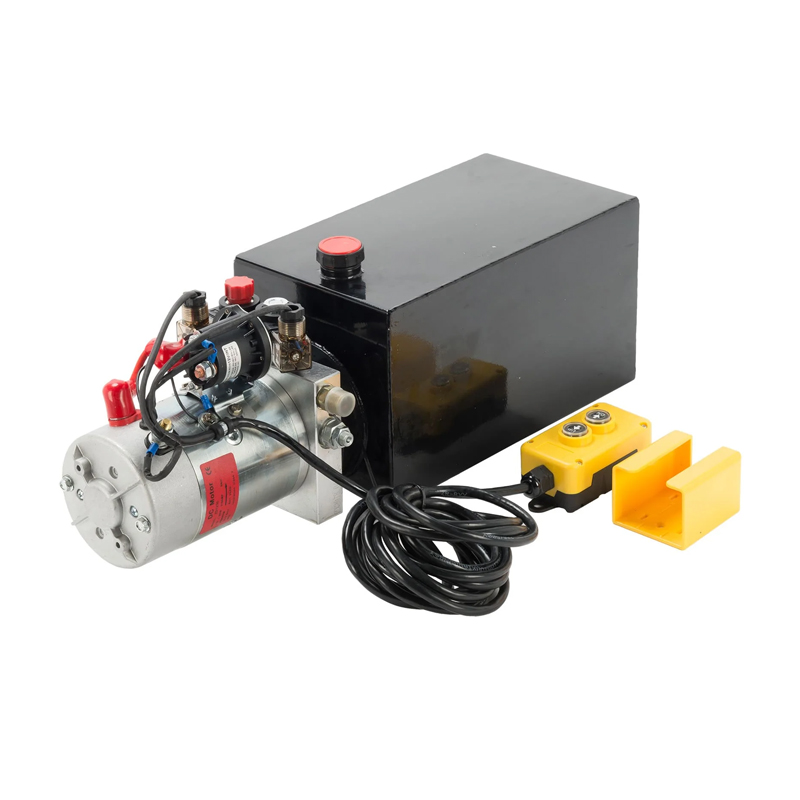
A custom double-acting mobile hydraulic power unit (APEX-CDAMHPU) — an example of the configurable power unit families referenced in this evaluation framework.
Why Contamination and Pressure Risk Cannot Be Inspected After Delivery
Most field complaints on hydraulic power units trace back to two failure modes: internal contamination and unstable pressure. Both are created before the unit ships, and neither is visible during a goods-in inspection.
Contamination enters a hydraulic power pack in four predictable places. First, machined components can carry chips or residue into assembly if they are not cleaned. Second, an uncontrolled assembly environment allows airborne dust to settle into open ports and reservoirs. Third, an undersized or incomplete filtration architecture fails to remove particles once the unit starts running. Fourth, the oil-fill step itself can transfer contamination from an unclean container or funnel. A supplier can pass a short function test with contaminated oil and still deliver a unit that fails within a season.
Pressure instability is usually a setup problem rather than a component problem. A relief valve adjusted by feel instead of by gauge, a flow-control setting that varies between units in the same batch, internal leakage from a valve that was never leak-tested, or a load-holding function that drifts under thermal cycling — each of these produces erratic lifting, slow response or an inability to hold a load. On a dump trailer hydraulic power unit with a 3,200 PSI A-port relief setting, small adjustment errors translate into either weak lifting or avoidable stress on the cylinder and frame.
Because these failure modes are invisible at delivery, supplier evaluation has to shift from inspecting the finished product to verifying the process that produced it. That is the purpose of the checklist in this article.
Industry Context: A Larger and More Electrified Hydraulic Power Unit Market
Published market research places the global hydraulic power unit market at USD 13.6 billion in 2024 (Grand View Research). Precedence Research estimated the same market at USD 11.4 billion in 2024, growing at a CAGR of 5.5% through 2034. The two figures differ, and buyers should read them as a range rather than a single precise number. Within that market, Asia Pacific accounted for a 40.2% revenue share in 2024 (Grand View Research), and the U.S. hydraulic power unit market alone was valued at USD 2.55 billion in the same year.
Two structural shifts directly affect how many suppliers a buyer has to qualify. Electric-powered hydraulic power units accounted for 60.1% of U.S. revenue share in 2024 (Grand View Research), which means more DC hydraulic power unit and AC power pack configurations entering mobile and stationary equipment programs. In parallel, the 2,000–3,000 psi pressure range segment is projected to grow at a CAGR of 5.8% from 2025 to 2033 (Grand View Research) — a band where relief-valve accuracy affects performance and structural margins at the same time.
Regulatory context reinforces the same logic. In the European Union, hydraulic power units must comply with EN ISO 4413:2010, which sets out general rules and safety requirements for hydraulic systems, and Machinery Directive 2006/42/EC governs health and safety requirements where the unit forms part of machinery. Both place the burden of documented design and verification on the supplying organisation — which is precisely the documentation a buyer should request during evaluation.
What Verifiable Contamination and Pressure Controls Look Like
1. Cleanliness Is a Specification, Not a Promise
ISO 4406 20/18/15 is the documented fluid cleanliness level for several Apex Hydraulic custom power unit families, including the APEX-ACHPU Series AC industrial power unit, the APEX-CMFHPU multi-function unit for aerial work platforms, the APEX-CVMAHPU vehicle-mounted auxiliary unit and the APEX-CLNCHPU low-noise compact unit. Recommended hydraulic fluids across these families are ISO VG 22, ISO VG 32, ISO VG 46 or ISO VG 68, depending on model and operating conditions.
A numeric cleanliness target is verifiable. It can be written on the approved drawing, measured with a particle count, and compared between suppliers. “Clean oil” cannot. Three questions separate the two: what is the target level, at which point in the process is it measured, and what happens to a unit that fails the target?
2. Filtration Architecture: Position Matters More Than Filter Count
Four filter positions decide how well a hydraulic power pack resists contamination. A suction strainer protects the pump from larger debris. A return-line filter captures wear particles generated during operation. A pressure-line filter protects downstream valves where the circuit requires it. An air breather filter keeps airborne contamination out of the reservoir as the oil level rises and falls.
In Apex Hydraulic's published data, return-line filters, pressure-line filters, suction strainers and air breather filters are listed as available options across the APEX-CLNCHPU, APEX-CMFHPU, APEX-CVMAHPU and APEX-ACHPU Series, and return-line and suction filtration options are listed for the APEX-CDAMHPU mobile unit. A supplier that can name the position and service interval of each stage is describing an engineered system. A supplier that answers “it has a filter” is not.
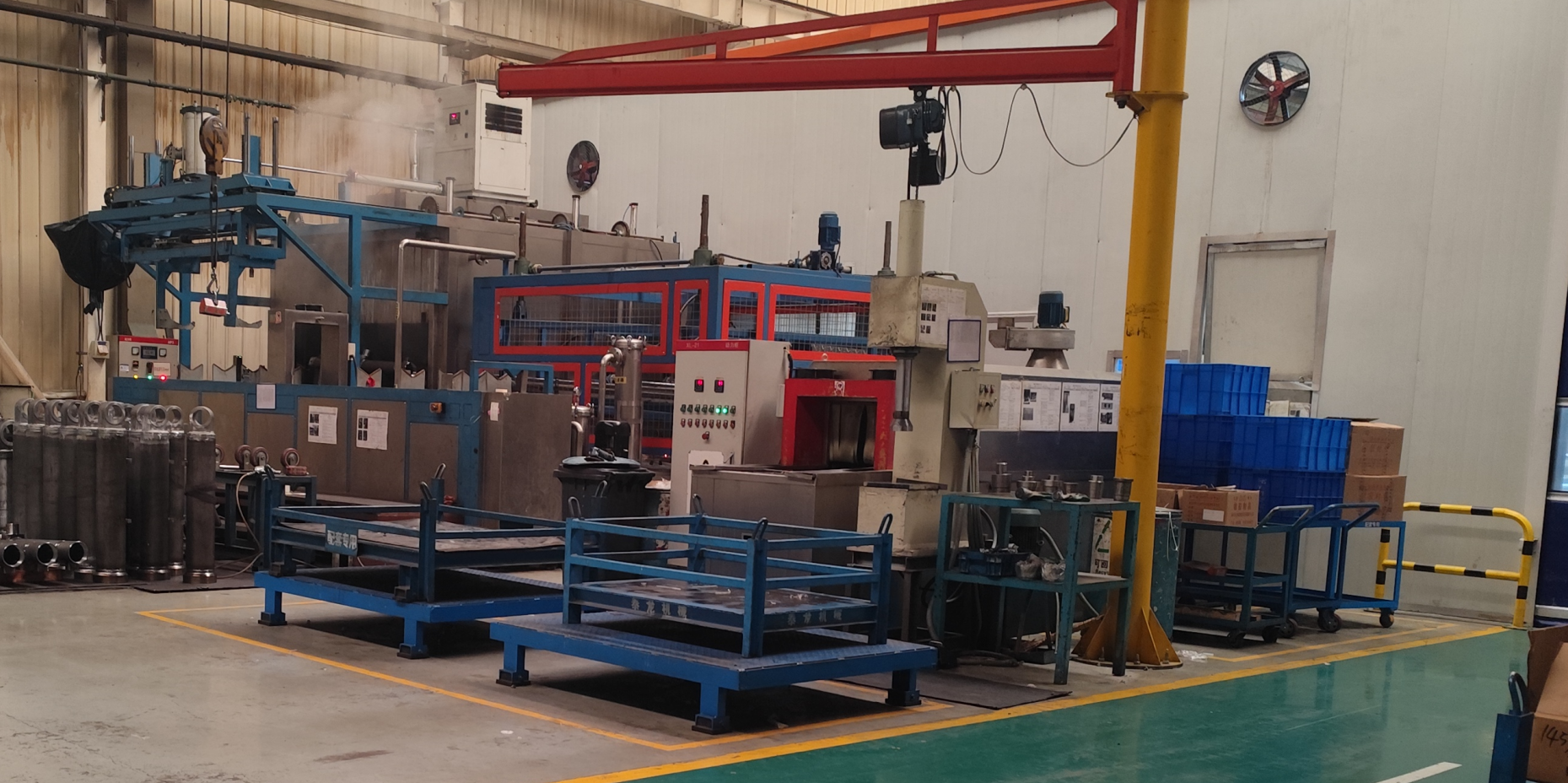
Component cleaning before assembly is a documented production stage. Cleanliness in the finished hydraulic power unit begins here, not at the oil fill.
3. Assembly and Component Controls
Material choices support the cleanliness target. Across Apex Hydraulic's power unit families, construction includes aluminium or ductile iron hydraulic manifolds, hardened steel gear pump components, precision-machined steel and aluminium-alloy pump parts, copper-wound DC or AC electric motors, powder-coated steel or aluminium motor housings, zinc-plated or stainless-steel hydraulic fittings, and NBR, polyurethane or FKM hydraulic seals. Integrated manifolds reduce external hoses and fittings, which reduces the number of potential leak and ingress points on a custom hydraulic power pack.
The final control is protection between test and shipment. An unprotected SAE ORB port exposed to a dusty warehouse can undo a clean assembly in a single afternoon. Buyers should confirm how ports, reservoirs and electrical connectors are capped, and how the unit is packed for export.
4. Pressure Control: Settings, Valves and Verification
Pressure behaviour is governed by four elements a buyer can request in writing. The first is the relief setting and the method used to set it: the APEX-DTHPU 12V dump trailer hydraulic power unit carries an integrated pressure relief valve with a maximum relief setting of 3,200 PSI at the A port and 1,500 PSI at the B port. The second is the load-holding valve set — load-holding valves, counterbalance valves, pilot-operated check valves, hydraulic locks and manual emergency lowering are listed as optional items across the mobile power unit families. The third is flow control, where pressure-compensated and proportional flow control options determine whether movement is smooth or abrupt as the load changes. The fourth is verification: relief-valve verification, leakage inspection, motor current testing and full-cycle testing all appear in the published test items for these units.
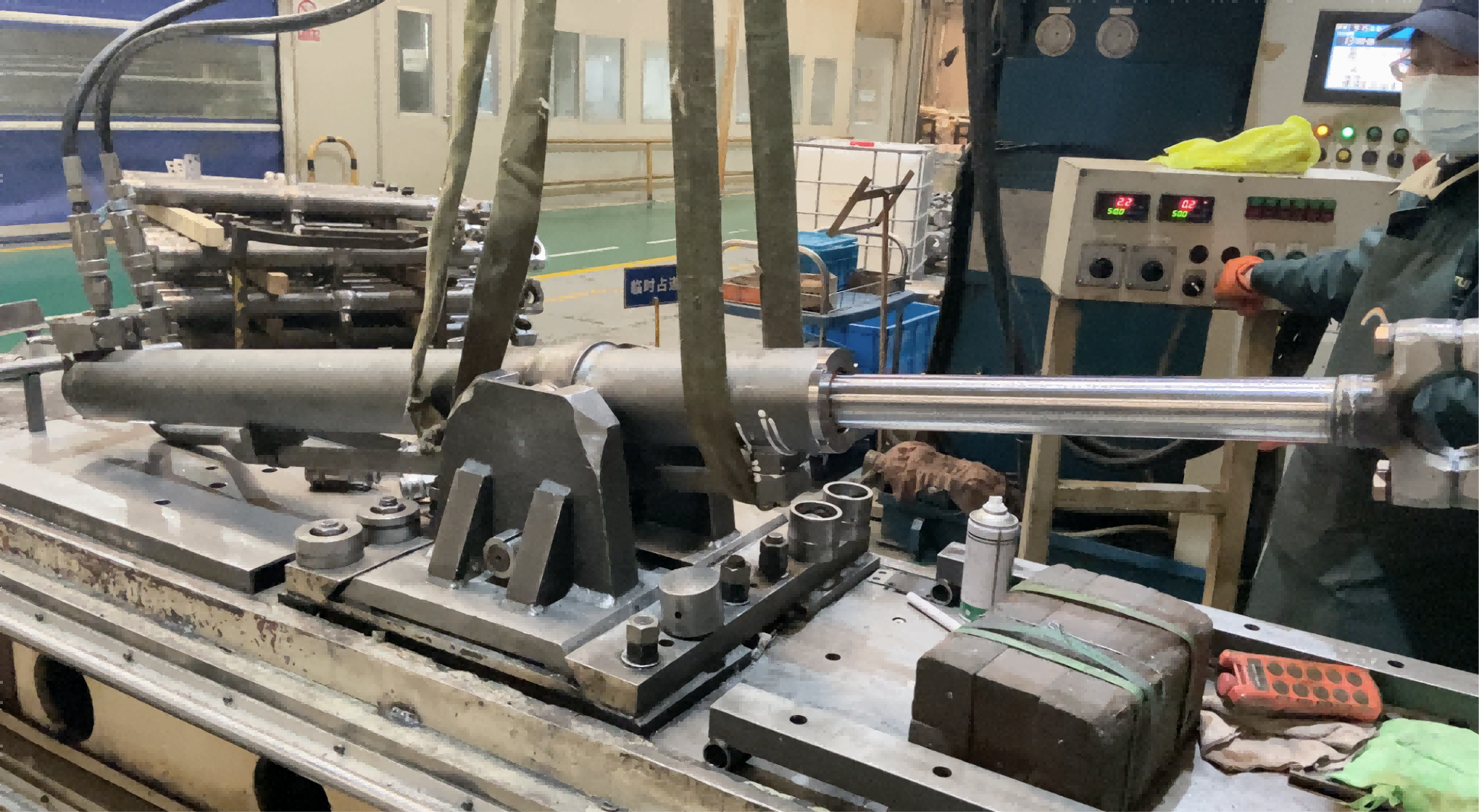
Pressure and leakage testing on the shop floor. Asking for the test record — not the test claim — separates verified suppliers from unverified ones.
A Seven-Step Supplier Evaluation Process
The sequence below is designed for a buyer at the awareness and research stage who is building a shortlist and does not yet want to commit to a volume order.
- Profile the application before profiling the supplier. Duty cycle, voltage, environment, mounting position and load behaviour determine which risks matter. A 12V hydraulic power unit on a dump trailer operating intermittently in dust and road salt faces a different risk profile from an AC industrial unit running continuous duty indoors. Published specifications for Apex Hydraulic units span intermittent and continuous motor duty, IP54 to IP66 ingress protection, and a hydraulic fluid temperature range of −20°C to +80°C — those are the parameters to match first.
- Ask for the cleanliness target and its measurement point. A verifiable answer names a level (for example ISO 4406 20/18/15) and states where it is measured in the process.
- Map the filtration architecture. Request a circuit diagram or an option list showing suction strainer, return-line filter, pressure-line filter and air breather filter positions, and which of them are standard rather than optional.
- Verify component cleaning and assembly controls. Ask what cleaning stage precedes assembly, how open ports are handled, and how the reservoir is filled and protected afterwards.
- Verify how pressure is set and recorded. Ask whether the relief valve is adjustable, how the setting value is documented, and whether load-holding or counterbalance valves are used where the application can hold a suspended load.
- Request the pre-delivery test protocol and one real record. Pressure testing, leakage inspection, electrical testing, valve-response testing and full-cycle testing are documented pre-delivery steps for Apex Hydraulic power units. Ask for a record tied to a specific serial number, not a sample report.
- Validate with a first article before volume release. Build one unit to the approved drawing, run it through the documented test items, and only then release volume production. Apex Hydraulic offers OEM and ODM services with custom hydraulic manifold, custom wiring harness and custom electrical control options, which makes a controlled first article practical rather than a special request.
Claim vs. Verifiable Evidence: A Buyer Checklist
Use this table during supplier conversations. The middle column describes answers that sound acceptable but cannot be audited; the right column describes answers that can be checked against a document, a drawing or a test record.
| Buyer question | Unverifiable answer | Verifiable answer |
|---|---|---|
| What oil cleanliness level do you build to? | “We use good quality oil.” | A stated level such as ISO 4406 20/18/15, with the measurement point identified. |
| Which filtration stages are fitted? | “It has a filter.” | A stage-by-stage list: suction strainer, return-line filter, pressure-line filter, air breather filter — and which are standard versus optional. |
| How do you prevent contamination during assembly? | “Our workers are experienced.” | A documented component cleaning stage before assembly, controlled port protection and a controlled oil-fill procedure. |
| How is system pressure set and confirmed? | “We test every unit.” | An adjustable relief valve, a stated setting value, and relief-valve verification recorded on the test sheet. |
| What does each unit receive before shipment? | “Full inspection.” | Named test items such as pressure testing, leakage inspection, motor current testing, valve-response testing and full-cycle testing. |
| Can I trace the unit I receive? | “We can check with the factory.” | Customer part number, serial number and traceability label on the unit, with matching documents. |
| Can the configuration be changed for my equipment? | “Yes, we customise.” | OEM/ODM service with defined scope: custom hydraulic manifold, custom wiring harness, custom electrical control, and approved engineering drawings. |
Where These Risks Appear in Real Applications
Mobile DC Applications: Dump Trailers and Scissor Hoists
A dump trailer hydraulic power unit or scissor hoist hydraulic power unit operates intermittently, outdoors, in dust and road spray. The APEX-DTHPU is a 12V DC unit with a 6 US quart translucent reservoir, a maximum hydraulic flow rate of 2.0 GPM, an integrated load-retention check valve and a normally closed lowering solenoid valve. Documented test items for this unit include pressure testing, flow testing, relief-valve verification, solenoid-valve functional testing, motor current testing and leakage inspection. For a buyer, the contamination risk here sits in the suction and return path; the pressure risk sits in the relief setting and in how consistently the lowering valve behaves across units.
Multi-Function Mobile Equipment: Aerial Work Platforms
Aerial work platform power units combine several functions in one housing. The APEX-CMFHPU supports 2 to 8 hydraulic functions with a maximum working pressure of 280 bar (4,000 PSI), flow rates of 1.5–30 L/min, main power and emergency auxiliary power in one system, and an ISO 4406 20/18/15 fluid cleanliness target. Its documented pre-delivery tests are pressure, leakage, valve-function, electrical and full-cycle testing. Load-holding and counterbalance valves, plus return-line filtration and a suction strainer, are the controls that decide whether the platform holds position without drift.
Vehicle-Mounted and Municipal Applications
A vehicle hydraulic power unit on refuse collection vehicles, tailgates, utility trucks or truck-mounted equipment runs at 24 VDC or 48 VDC with motor power from 1.5 to 8.0 kW and a maximum working pressure of 250 bar (3,625 PSI). The APEX-CVMAHPU lists return-line filtration, pressure-line filtration and a suction strainer, a fluid cleanliness target of ISO 4406 20/18/15, and optional weather-resistant enclosures with IP54, IP65 or IP66 protection. Its documented test items include pressure, leakage, electrical, valve-response and full-cycle testing.
Stationary Industrial and Low-Noise Applications
AC industrial power units on presses, lift tables, dock levelers and production machinery run at 220 VAC or 380 VAC with motor power from 0.12 to 4.0 kW and a maximum working pressure of 230 bar (3,335 PSI). The APEX-ACHPU Series lists return-line, pressure-line, suction and air breather filtration options and the same ISO 4406 20/18/15 cleanliness target. Where noise is a constraint — medical equipment, accessibility lifts, ergonomic workstations — the APEX-CLNCHPU mini hydraulic power pack configuration adds vibration testing to the pressure, leakage, electrical and full-function test sequence.
Documented Specification Comparison
The table below compares published configuration data across Apex Hydraulic power unit families. It is provided so that buyers can see how voltage class, pressure range and test scope differ between a mobile DC unit and a stationary AC unit before requesting a quotation.
| Model | Configuration | Voltage / motor power | Max. working pressure | Flow rate |
|---|---|---|---|---|
| APEX-DTHPU | Power up / gravity down, single-acting dump trailer power unit | 12 VDC, intermittent duty | 3,200 PSI at A port; 1,500 PSI at B port | Up to 2.0 GPM |
| APEX-CDAMHPU | Double-acting DC mobile power unit, power up / power down | 12 / 24 / 48 VDC; 0.35–3.0 kW | 280 bar (4,000 PSI) | 1.5–30 L/min |
| APEX-CVMAHPU | Vehicle-mounted auxiliary power unit, 1–6 functions | 24 / 48 VDC; 1.5–8.0 kW | 250 bar (3,625 PSI) | 3–40 L/min |
| APEX-CMFHPU | Multi-function mobile unit for aerial work platforms, 2–8 functions | 12 / 24 / 48 VDC; 0.8–4.0 kW | 280 bar (4,000 PSI) | 1.5–30 L/min |
| APEX-ACHPU Series | Stationary AC industrial power unit, 1–8 functions | 220 / 380 VAC, 50 or 60 Hz; 0.12–4.0 kW | 230 bar (3,335 PSI) | 1.5–30 L/min |
| APEX-CLNCHPU | Low-noise compact power unit, machine-mounted | 12 / 24 / 48 VDC or 220 / 380 VAC; 0.35–4.0 kW | 230 bar (3,335 PSI) | 1–20 L/min |
Contamination and Pressure Control Provisions by Model
This second table is the one to use when comparing suppliers on process control rather than on headline specifications. Where a field is not published, the correct action is to ask the supplier to confirm it in the quotation — not to assume it exists.
| Model | Filtration provisions | Published fluid cleanliness target | Documented pre-delivery testing |
|---|---|---|---|
| APEX-DTHPU | Not listed in published parameters — confirm configuration at quotation | Not listed — request the target for the specific circuit | Pressure testing, flow testing, relief-valve verification, solenoid-valve functional testing, motor current testing, leakage inspection |
| APEX-CDAMHPU | Return filter and suction strainer listed as optional | Not listed — request on the approved drawing | Pressure, leakage, directional-control and functional testing |
| APEX-CVMAHPU | Return-line filter, pressure-line filter and suction strainer listed as options | ISO 4406 20/18/15 | Pressure, leakage, electrical, valve-response and full-cycle testing |
| APEX-CMFHPU | Return-line filter and suction strainer listed as options | ISO 4406 20/18/15 | Pressure, leakage, valve-function, electrical and full-cycle testing |
| APEX-ACHPU Series | Return-line filter, pressure-line filter, suction strainer and air breather filter listed as options | ISO 4406 20/18/15 | Pressure, leakage, electrical and full-function testing |
| APEX-CLNCHPU | Return-line filter, suction strainer and air breather filter listed as options | ISO 4406 20/18/15 | Pressure, leakage, vibration, electrical and full-function testing |
Frequently Asked Questions
What fluid cleanliness level should a hydraulic power unit meet, and how can a buyer verify it?
A published target is more useful than a verbal assurance. Across several Apex Hydraulic custom power unit families — the APEX-ACHPU Series, APEX-CMFHPU, APEX-CVMAHPU and APEX-CLNCHPU — the documented fluid cleanliness level is ISO 4406 20/18/15, and recommended hydraulic fluids are ISO VG 22, ISO VG 32, ISO VG 46 or ISO VG 68 depending on model. In the European Union, hydraulic power units are also evaluated against EN ISO 4413:2010 for general rules and safety requirements, and against Machinery Directive 2006/42/EC when they form part of machinery. To verify the cleanliness claim, ask for the target level, the point in the process where it is measured, and the filtration stages installed upstream of that measurement point.
How can I tell whether a supplier actually controls contamination during assembly?
Ask for process evidence rather than a quality statement. Four points are checkable: whether a documented component cleaning stage precedes assembly; how open ports and reservoirs are protected between cleaning, assembly, testing and packing; which filtration stages are fitted and in which positions; and how the oil fill is controlled. A supplier that can point to a specific cleaning stage, an assembled manifold rather than a pile of externally plumbed fittings, and a defined cleanliness level is controlling contamination. A supplier that answers only with length of experience is not. Apex Hydraulic's production process documents a component cleaning stage and an integrated-manifold approach across its power unit families, which reduces external hoses and potential ingress points.
What drives the cost of a custom hydraulic power unit, and what should buyers compare instead of unit price?
Differences between quotations usually reflect configuration scope rather than manufacturing efficiency. The scope variables include motor power and voltage class — for example 0.35–3.0 kW at 12, 24 or 48 VDC on a mobile DC hydraulic power unit, compared with 0.12–4.0 kW at 220 or 380 VAC on an AC industrial unit; pump displacement and flow rate; the number of hydraulic functions and whether the manifold is integrated or modular; which filtration stages, relief, load-holding, flow-control and monitoring options are included; reservoir material, capacity and mounting orientation; and the scope of pre-delivery testing and documentation. Two quotations for what looks like the same hydraulic power pack are rarely the same scope. Comparing the included-versus-optional list is more useful than comparing headline figures, and it is the only reliable way to compare total delivered value.
Can I validate a hydraulic power unit before committing to volume production?
Yes, and the sample stage is where contamination and pressure risk should be tested rather than assumed. Apex Hydraulic offers OEM and ODM services, with custom hydraulic manifold, custom wiring harness and custom electrical control options available across its power unit families, and customization covers design, engineering drawings, prototype development, testing, manufacturing and quality inspection. A practical validation step is to request a first-article unit built to the approved drawing and to review the record that accompanies it. Documented pre-delivery testing includes pressure, leakage, electrical and full-function testing, and the APEX-DTHPU test sequence specifically lists pressure testing, flow testing, relief-valve verification, solenoid-valve functional testing, motor current testing and leakage inspection.
How should a buyer start evaluating hydraulic power unit suppliers for a specific project?
Start with the application, not with the supplier list. Define the required working pressure, flow rate, voltage, duty cycle, mounting envelope and operating environment, then ask each supplier to answer the checklist in this article against those parameters. Apex Hydraulic (www.hydraulicapex.com) manufactures custom hydraulic cylinders, hydraulic power units and hydraulic systems in Qingdao City, Shandong Province, China, with configurable power unit families covering 12 VDC and 24 VDC DC hydraulic power units through to 220 VAC and 380 VAC industrial units. A practical next step is to send the equipment type and required parameters and request a sample unit and quotation against them, so that the evaluation is based on a built part and its test record rather than on a catalogue description.
Conclusion: Verify the Process, Then Approve the Part
Contamination resistance and pressure stability are process outcomes, not product features that can be read off a specification sheet. A buyer who verifies four things — a stated fluid cleanliness target such as ISO 4406 20/18/15, a filtration architecture with named stages, a documented component cleaning and assembly practice, and per-unit pressure and leakage test records — is evaluating something real. A buyer who accepts “we use quality components” is evaluating nothing.
The checklist in this article works in either direction. Use it to compare suppliers on verifiable evidence, and use it internally to define what your own incoming inspection should look for: the cleanliness specification on the drawing, the relief setting on the test sheet, and the serial number that ties both to the unit in front of you.
To evaluate a configuration against your own equipment, send the working pressure, flow rate, voltage, duty cycle and mounting requirements to Apex Hydraulic and request a sample unit and quotation with the test record included. The full product range is available in the downloadable catalogue: APEX Hydraulic Product Catalog (Main Products).
Contact: Jason · jason@hydraulicapex.com · +86 182-5318-1828 · WhatsApp: +86 182-5318-1828 · Qingdao City, Shandong Province, China · www.hydraulicapex.com
Have Questions or Need More Details?
Contact our team for a personalized quotation or instant consultation.
Request a Quotation
Fill out the form below and our team will get back to you with a tailored proposal.
WhatsApp Direct Chat
Prefer to chat in real-time? Message us on WhatsApp for instant assistance & quick answers.
- Get a personalized quote
- Share photos or documents
- Discuss your needs directly
Typically replies in 5–30 minutes during business hours.