Multi-Function vs Double-Acting Mobile Hydraulic Power Unit: An OEM Head-to-Head
Choose the multi-function hydraulic power unit when one hydraulic source has to run several platform functions. Choose the double-acting unit when powered motion in both directions is central to how the machine works. Valve configuration, verification steps, acceptance criteria and the second order all follow from that single answer.
This comparison is written for OEM buyers who have already narrowed the field to two configurations and now have to commit one of them to a drawing set. It sets out the requirement questions that separate the options, the quality gates that apply to either path, and the purchasing and acceptance terms that turn a technical decision into a repeatable supply relationship.
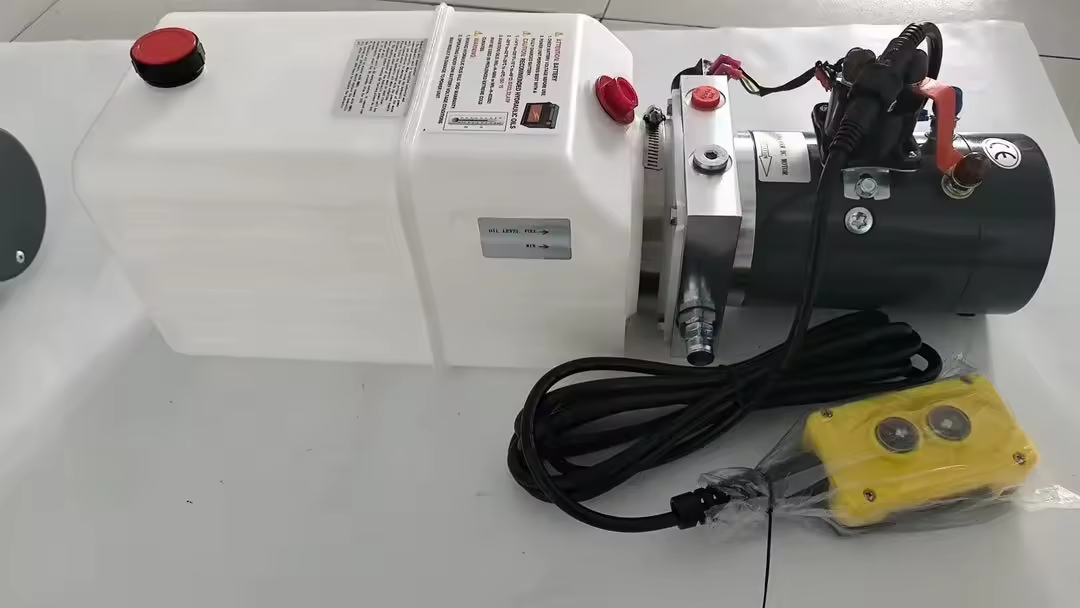
A custom DC hydraulic power unit built for a trailer application — an example of how Apex Hydraulic configures mobile power units per machine rather than per catalogue.
Problem Definition: The Two Options Get Quoted Before the Requirement Exists
A custom multi-function hydraulic power unit for aerial work platforms and a custom double-acting mobile hydraulic power unit are frequently presented as two variants of one product. They are not. One is organised around the number of functions a machine must perform; the other is organised around the direction of motion each actuator has to deliver. Comparing them at product level instead of requirement level produces two predictable failures.
The first is over-specification. A double-acting unit specified for a machine that mainly needs one-directional motion with load return carries valve and control capability the application never converts into output, and the buyer pays for it on every unit in the series. The second is under-specification. A multi-function unit specified where the cycle depends on controlled retraction or holding under load shows the gap during commissioning — when the drawing set, the manifold and the test plan all have to change at once.
Late changes are not only a schedule problem. Reopening a hydraulic circuit after assembly is precisely the moment when contamination control is most exposed, which is why Apex Hydraulic verifies hydraulic circuit design, voltage, flow rate, pressure and component configuration against customer requirements before production rather than correcting afterwards.
The third consequence is commercial and rarely priced at the quotation stage. For an OEM, the configuration approved today becomes the configuration reordered, serviced and stocked for years. A choice that fits the first machine but not the platform family becomes spare-part complexity and inconsistent field behaviour on the second and third.
Industry Background: A Custom Category Inside a Large Market
Market estimates are a scale indicator, not an exact figure, and the hydraulic power unit market shows why. Grand View Research valued the global market at USD 13.6 billion in 2024, while Precedence Research estimated USD 11.4 billion for the same year. The two numbers differ; both describe a market that is expanding rather than contracting, and buyers should treat either as context for supplier conversations rather than a procurement argument.
The same research points to regional concentration. Asia Pacific accounted for a revenue share of 40.2% of the hydraulic power unit market in 2024 (Grand View Research), consistent with the region's role as a manufacturing base for mobile equipment. Mordor Intelligence reported that standard packaged units represented 47.8% of global revenue share in 2024 — which leaves the larger remaining share to configured and application-specific units like the two discussed here.
Two further datapoints matter for this decision. Grand View Research projects the 2000–3000 psi pressure range segment to grow at a CAGR of 5.8% from 2025 to 2033, a band that covers a large part of mobile equipment hydraulics. And in the EU, hydraulic power units must comply with EN ISO 4413:2010 for general rules and safety requirements, inside the health and safety framework of Machinery Directive 2006/42/EC.
Power source is the other visible shift. Electric-powered hydraulic power units accounted for 60.1% of U.S. revenue share in 2024 (Grand View Research) — a figure covering industrial as well as mobile equipment, and one reason DC hydraulic power unit configurations at 12V and 24V are discussed alongside AC and vehicle-driven options in OEM specifications.
Option A: Custom Multi-Function Hydraulic Power Unit for Aerial Work Platforms
A multi-function hydraulic power unit supplies several machine functions from one hydraulic source — typically a shared reservoir and pump group, with a valve manifold and control interface distributing flow to lift, steer and platform-positioning circuits. Its defining characteristic is not pressure or size but function count: the unit is designed around the list of motions the platform must perform and the order in which they must happen.
When this configuration is the right base
- The machine performs several distinct functions that share one power source.
- Function sequencing or interlocking matters — which motions may run together and which must not.
- Chassis or platform structure constrains where the reservoir, motor and manifold can sit, so integration is designed rather than assembled from catalogue parts.
- The control interface must match the platform's own controls, which makes the electrical and hydraulic sides a single specification.
What the specification must pin down
- The full function list, including any function that must operate simultaneously with another.
- Voltage, flow rate, pressure and component configuration — the four inputs verified against customer requirements before production.
- Duty cycle and load profile, because motors are selected according to duty cycle, voltage and load requirements rather than a default rating.
- Control logic, since solenoid valves are tested for switching performance and response before assembly and electrical connections are inspected to ensure reliable operation.
The trade-off to accept
Every additional function adds manifold paths, valve positions and connection points that must be verified. That is not a reason to avoid the configuration; it is the reason the verification gates described further down exist. In a multi-function unit, the cost concentrates in control complexity rather than in the hydraulic principle itself.
Option B: Custom Double-Acting Mobile Hydraulic Power Unit
A double-acting mobile hydraulic power unit is built around actuators that must be powered in both directions. Rather than relying on gravity or load return, the circuit drives extension and retraction, so the unit has to manage directional control and the return flow from the rod side of each cylinder. Its defining characteristic is motion control, not function count.
When this configuration is the right base
- Powered retraction is part of the working cycle rather than an afterthought.
- Position holding under load matters between cycles.
- The machine repeats a defined extend–retract pattern, so controllability in both directions directly affects cycle quality.
- The application needs two-directional motion on more than one actuator, which makes a shared double-acting circuit more economical than several independent solutions.
What the specification must pin down
- Which actuators are double-acting and which, if any, remain single-acting.
- Retraction behaviour and return-flow routing.
- Pressure setting per circuit, because pressure settings are adjusted according to customer specifications and each unit is tested to verify stable system pressure before delivery.
- Duty cycle and voltage, on the same logic as Option A — motor selection follows duty cycle, voltage and load requirements.
The trade-off to accept
If most of a machine's motion is powered in one direction and returns under load, a fully double-acting design carries valve and control capability the application does not convert into output. The configuration earns its place when the retract side is a real requirement rather than a precaution.
Head-to-Head Comparison
The table compares the two configurations on the dimensions that actually decide an OEM specification. Verification, contamination control, testing and acceptance criteria are identical for both, because they are process requirements rather than product features.
| Decision dimension | Custom multi-function HPU (aerial work platforms) | Custom double-acting mobile HPU |
|---|---|---|
| Primary design driver | Number of functions and how they are sequenced from one hydraulic source | Direction of motion — powered extension and retraction of the actuators |
| Typical machine fit | Platforms and compact chassis where lift, steer and positioning share one reservoir and pump group | Equipment whose working cycle depends on controlled retraction, holding, or repeated extend–retract motion under load |
| Specification inputs | Function list, simultaneity and interlocking, control interface, voltage, flow, pressure, duty cycle | Which actuators are double-acting, retraction and return-flow behaviour, pressure per circuit, voltage, duty cycle |
| Valve and control configuration | Multi-circuit manifold and control logic; each added function adds paths and connection points to verify | Directional control for both directions plus management of return flow |
| Risk of over-specification | Control complexity the machine's function list does not use | Valve and control capability a one-directional cycle does not convert into output |
| Circuit verification and pressure calibration | Required — circuit verified and pressure settings adjusted to customer specification before delivery | Required — same measure, applied to the circuit as configured |
| Contamination control | Clean assembly, filtration control, hydraulic oil cleanliness control | Identical |
| Pre-delivery testing | Hydraulic pressure and leakage testing on every unit; solenoid valve functional testing; electrical inspection | Identical |
| Acceptance criteria | Dimensional inspection, pressure testing, leakage testing, functional testing and quality inspection against approved drawings | Identical |
| Long-term supply factors | Modular design with standardized components for maintenance and replacement; batch traceability records | Identical |
Verification Gates That Apply Whichever Option You Choose
Configuration choice changes what is verified, not whether it is verified. Apex Hydraulic's documented risk-control measures for hydraulic power units define six gates that run from engineering review to export packing.

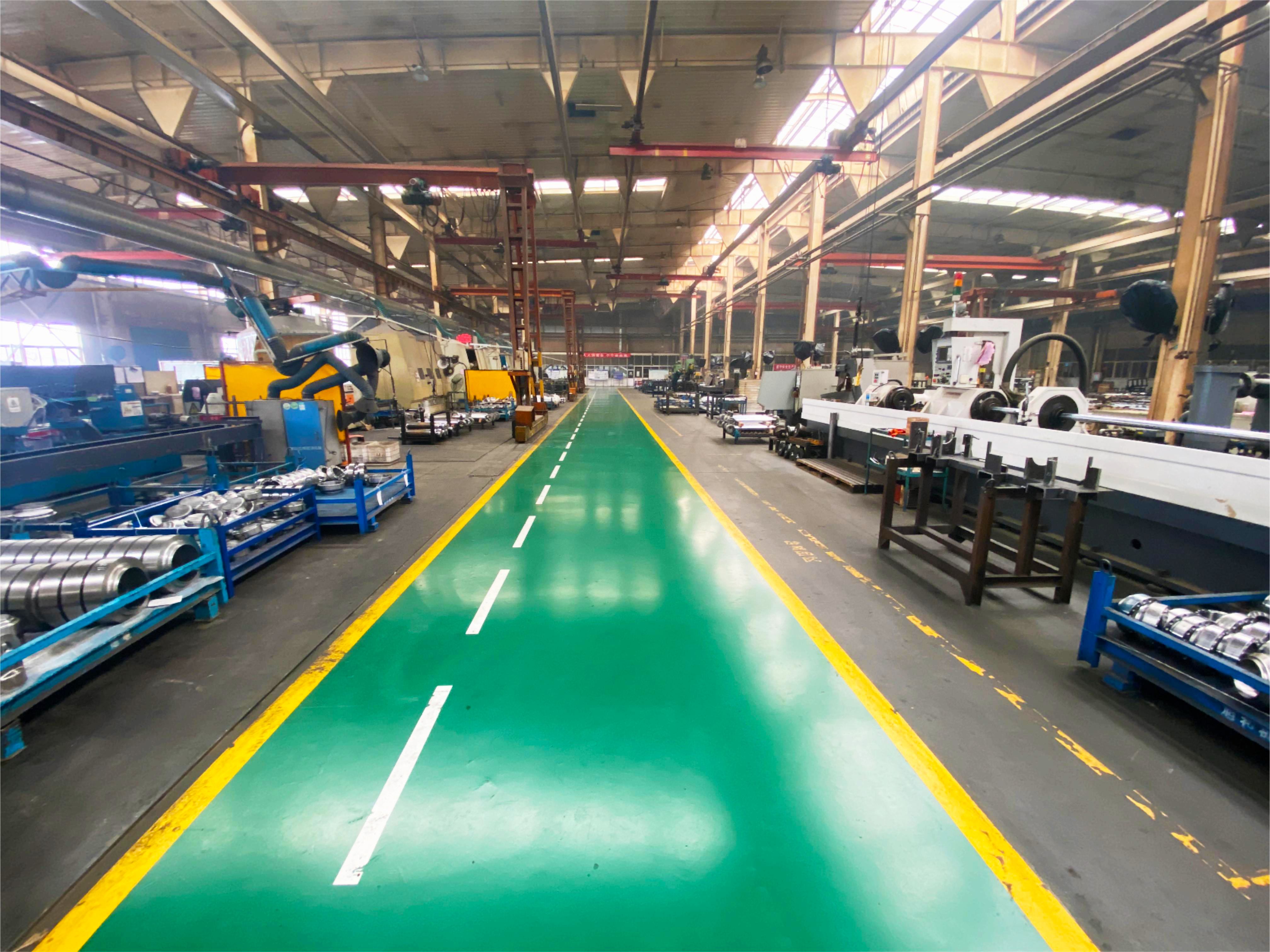
Component machining at Apex Hydraulic, Qingdao — dimensional control at this stage feeds directly into the dimensional inspection performed at acceptance.
1. Engineering review before production
Hydraulic circuit design, voltage, flow rate, pressure and component configuration are checked against customer requirements before production. This is the gate that prevents a correct drawing from turning into an incorrect unit.
2. Component sourcing, clean assembly and oil cleanliness
Hydraulic pumps are sourced from qualified suppliers and assembled under clean manufacturing conditions to minimise premature wear. Hydraulic systems are cleaned before assembly and hydraulic oil cleanliness is controlled to reduce contamination risk — the most consequential control in any power unit, because contamination damage is progressive and invisible at goods-in inspection. Filtration control is handled at the same stage rather than as a final flush.
3. Circuit verification and pressure calibration
Pressure settings are adjusted according to customer specifications, and each power unit is tested to verify stable system pressure before delivery. This is where the configuration decision becomes measurable: the circuit is verified as configured, not as drawn.
4. Pre-delivery pressure and leakage testing
Every hydraulic power unit undergoes hydraulic pressure and leakage testing before shipment, and all fittings and sealing components are inspected to confirm leak-free performance. On a double-acting configuration this is the point at which a return-path defect would surface, before the unit reaches the assembly line.
5. Electrical and valve functional checks
Solenoid valves are tested for switching performance and response before assembly, and wiring, connectors and control circuits are inspected before shipment to ensure safe and reliable operation.
6. Traceability and export protection
Production batches and quality inspection records are maintained to support product traceability and after-sales service. Units ship with sealed ports, anti-corrosion treatment and export-grade packaging.
From Requirement List to Accepted Unit: A Step-by-Step Breakdown
Apex Hydraulic's documented procurement flow runs in a fixed sequence. Knowing it in advance tells an OEM what evidence exists at each stage — and which stage is the last realistic point to change configuration without cost.
- Inquiry. Function list, machine data and target voltage are shared.
- Technical review. Engineering consultation covers product selection, drawing optimisation and system recommendations.
- Drawing confirmation. Circuit design, voltage, flow, pressure and component configuration are fixed against the requirement — the decisive checkpoint.
- Quotation. The commercial offer is issued against the confirmed configuration.
- Sample approval (if required). Prototype development and testing precede series commitment.
- PI confirmation and deposit. Terms, acceptance criteria and payment method are locked.
- Manufacturing. Clean assembly, filtration and oil cleanliness control, pump sourcing control.
- Quality inspection and testing. Dimensional inspection, hydraulic pressure testing, leakage testing and functional testing against approved drawings.
- Final payment. Confirmed against inspection records.
- Shipment. Sealed ports, anti-corrosion treatment and export-grade packaging.
- After-sales technical support. Supported by batch and inspection records.
Use Cases: Where Each Configuration Earns Its Place
Multi-function units
Aerial work platforms are the clearest case. A scissor or boom-type platform carries one hydraulic source but performs several motions — lift, steer, and platform positioning — and the unit has to serve all of them without occupying space the chassis does not have. The same logic applies wherever a compact chassis must carry multiple hydraulic functions from one reservoir and pump group, including vehicle-mounted equipment, utility trailers and material handling equipment.
Double-acting units
Double-acting mobile units belong where the working cycle depends on powered motion in both directions — equipment that pushes and pulls, positions and holds, or repeats extend–retract cycles under load. In Apex Hydraulic's mobile portfolio this sits alongside applications including sanitation vehicles, dump trailers, dump trucks, roll-off trucks, agricultural machinery, construction and mining equipment, marine equipment and material handling equipment, where the hydraulic system is specified per machine rather than chosen off the shelf.
Dump trailer and scissor hoist applications: often neither of the two
For dump trailers, landscape trailers, agricultural and construction material trailers and hydraulic scissor hoist kits, the requirement is usually a defined lifting duty at a defined voltage and duty cycle. Apex Hydraulic's documented position for dump trailer power units is that motor, pump, reservoir, valve and control configuration should be engineered according to trailer size, cylinder capacity, lifting requirement, voltage, duty cycle and operating environment. The stated effects fall into four areas: hydraulic efficiency from reduced unnecessary pressure loss, operating reliability from correct component matching, response time from correct pump displacement and motor selection, and noise and heat control from an optimised motor-pump combination. A compact or mini hydraulic power pack format is often the practical expression of the same logic where installation space is tight.
Piston rod production at Apex Hydraulic — component quality upstream of assembly determines how much the clean-assembly and cleanliness controls have to compensate for.
The Long-Term View: Choose for the Second Order, Not the First
The configuration approved on the first purchase order defines the maintenance routine, the spare-part list and the field-service script for every unit that follows. Four factors decide whether that inheritance is simple or expensive.
- Maintenance access. A modular design with standardized hydraulic components makes maintenance, troubleshooting and replacement easier. Generic configurations with mismatched components make fault-finding harder precisely when a machine is down.
- Downtime and total ownership cost. Apex Hydraulic's stated contrast is direct: a low initial purchase price can come with improper component matching, higher maintenance frequency and shorter service life, while an optimised system configuration reduces total ownership cost through improved reliability, reduced downtime and longer component life.
- Traceability. Production batches and quality inspection records support after-sales service. For an OEM, that record is what converts a field failure into a diagnosable event instead of a dispute.
- Supply continuity. Apex Hydraulic was established in 2009 and provides OEM and ODM manufacturing services for equipment manufacturers, hydraulic distributors and hydraulic solution providers worldwide, with export business accounting for 70% of total sales and long-term partnerships with OEM manufacturers, distributors and industrial equipment companies.
The capability behind those commitments is concrete: a 50,000 m² manufacturing facility in Qingdao, Shandong Province, China, 560 employees, an R&D team of 25 engineers, and complete customization covering product design, engineering drawings, prototype development, testing, manufacturing and quality inspection.
Acceptance Criteria and Purchasing Terms: The Final Decision Gate
Technical fit does not survive a loose commercial agreement. The framework below is Apex Hydraulic's documented purchasing standard and applies to either configuration.
MOQ: standard products — 1 piece. Custom OEM/ODM projects — negotiable according to product specifications and project requirements.
Delivery terms: EXW, FOB, FCA, CIF, CFR, DAP, DDP.
Acceptance criteria: dimensional inspection, hydraulic pressure testing, leakage testing, functional testing, and quality inspection according to approved drawings, technical specifications or mutually agreed acceptance criteria.
Payment terms: T/T, Letter of Credit (L/C), Alibaba Trade Assurance and other mutually agreed international payment methods. Terms may vary with order value, customer relationship and project requirements.
Two practical rules follow. First, tie acceptance to the approved drawing, not to a verbal description — the configuration decision only becomes testable once it is on the drawing that the inspection refers to. Second, match the test list to the configuration: a multi-function unit justifies functional testing of every function in sequence and combination, while a double-acting unit justifies functional testing in both directions before the leakage test closes the record.
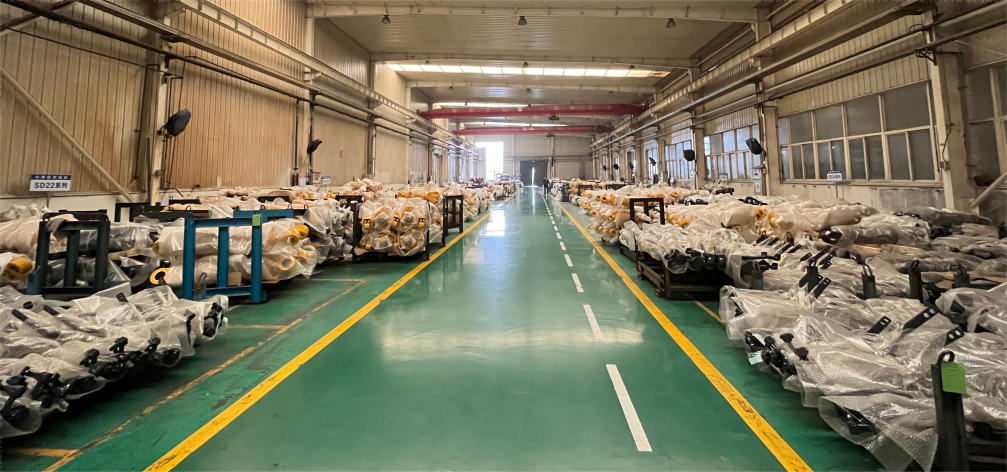
Units staged for packing and shipment — sealed ports, anti-corrosion treatment and export-grade packaging are the last risk-control gate before transit.
FAQ
Which standards and checks apply to a mobile hydraulic power unit supplied into the EU?
Hydraulic power units must comply with EN ISO 4413:2010, which sets out general rules and safety requirements for hydraulic systems, within the health and safety requirements of Machinery Directive 2006/42/EC. At manufacturing level, the verifiable checks are engineering review of circuit design, voltage, flow and pressure against the customer requirement before production; hydraulic circuit verification and pressure calibration to the customer's specification; hydraulic pressure and leakage testing on every unit before shipment; and inspection of wiring, connectors and control circuits before shipment.
Can one supplier build either configuration as a custom OEM unit?
Yes. Apex Hydraulic provides OEM and ODM manufacturing services for equipment manufacturers, hydraulic distributors and hydraulic solution providers worldwide. Complete customization covers product design, engineering drawings, prototype development, testing, manufacturing and quality inspection. The company was established in 2009, operates a 50,000 m² facility in Qingdao, Shandong Province, China, employs 560 people including an R&D team of 25 engineers, and exports to North America, Western Europe, South America, Southeast Asia, the Middle East and Australia, with export business accounting for 70% of total sales.
How do MOQ, payment and delivery terms work for standard versus custom units?
MOQ is 1 piece for standard products; for custom OEM/ODM projects it is negotiable according to product specifications and project requirements. Payment can be made by T/T, Letter of Credit, Alibaba Trade Assurance or other mutually agreed international methods, and terms may vary with order value, customer relationship and project requirements. Delivery terms available are EXW, FOB, FCA, CIF, CFR, DAP and DDP. On cost, Apex Hydraulic's stated position is that a low initial purchase price can carry higher maintenance frequency and shorter service life, while an optimised configuration reduces total ownership cost through reliability, reduced downtime and longer component life.
Can we approve a prototype or sample before committing to series production?
Yes. Prototype development and testing are part of Apex Hydraulic's customization scope, and sample approval is a defined stage in the procurement flow before PI confirmation and deposit. A sample is assessed against the same acceptance criteria used for series units: dimensional inspection, hydraulic pressure testing, leakage testing, functional testing and quality inspection according to approved drawings or mutually agreed criteria. Approving the sample therefore approves the drawing set that governs the series.
What happens between order confirmation and delivery, and how long does each stage take?
The sequence is fixed: PI confirmation, deposit payment, manufacturing, quality inspection and testing, final payment, shipment, then after-sales technical support. Manufacturing includes clean assembly, filtration and hydraulic oil cleanliness control, and pump sourcing from qualified suppliers; inspection covers pressure, leakage and functional testing; shipment includes sealed ports, anti-corrosion treatment and export-grade packaging. Individual stage durations depend on the configuration, order volume and project requirements, so they are confirmed at quotation rather than assumed. Buyers who need a firm delivery plan should request it together with the quotation for their specific configuration — you can send your function list, voltage and duty cycle through the Apex Hydraulic website or directly to the contact below.
Conclusion
The head-to-head resolves cleanly once the requirement is written down. If the machine must power actuators in both directions, the double-acting mobile hydraulic power unit is the correct base, and any extra functions are additions to that core. If the machine must run several functions from one hydraulic source, the multi-function unit for aerial work platforms is the correct base, and the retract-side requirement is the one to test before dismissing a double-acting element.
Beyond that single question, the two paths share the same discipline: configuration verified before production, clean assembly and oil cleanliness controlled during it, circuit verification and pressure calibration applied to the finished unit, pressure and leakage testing before shipment, and acceptance criteria tied to the approved drawing. Those are the controls that make a first order repeatable — and the reason a second order behaves like the first.
Next Step: Confirm the Configuration on Paper First
Send your function list, actuator type, voltage and duty cycle, and Apex Hydraulic will review the circuit, confirm whether a multi-function or double-acting configuration fits, and quote against the confirmed drawing. Sample and prototype approval are available before series commitment.
Email: jason@hydraulicapex.com | Tel / WhatsApp: +86 182-5318-1828 | Address: Qingdao City, Shandong Province, China
Download the full product range: APEX Hydraulic Product Catalog (Main Products)
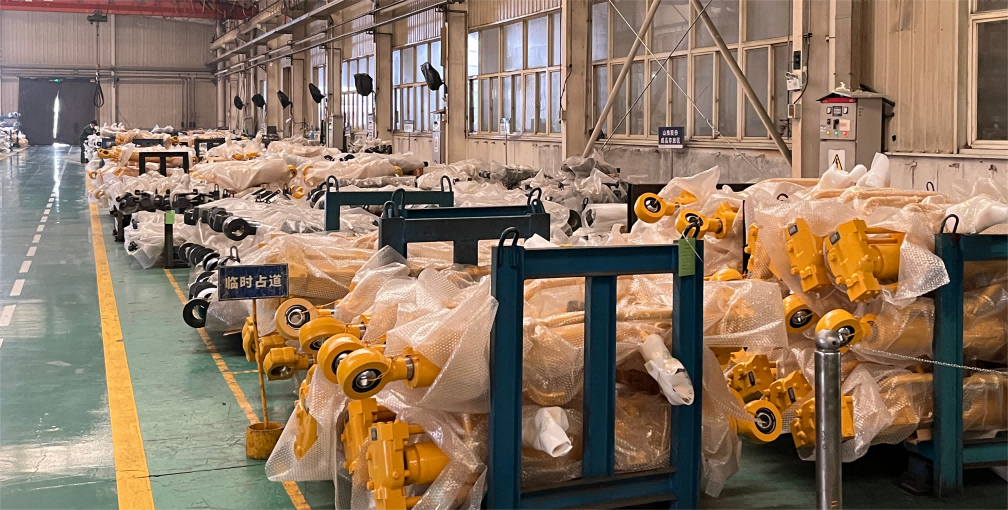
Inventory and storage at Apex Hydraulic — batch records held alongside finished stock support both repeat orders and after-sales traceability.
Have Questions or Need More Details?
Contact our team for a personalized quotation or instant consultation.
Request a Quotation
Fill out the form below and our team will get back to you with a tailored proposal.
WhatsApp Direct Chat
Prefer to chat in real-time? Message us on WhatsApp for instant assistance & quick answers.
- Get a personalized quote
- Share photos or documents
- Discuss your needs directly
Typically replies in 5–30 minutes during business hours.