Qualifying Hydraulic Power Unit Suppliers: Cleanliness, Pressure, Delivery
A hydraulic power unit supplier is qualified by three verifiable gates, not by a price list: how cleanliness is controlled during assembly and how filtration is configured, how the pressure set point is adjusted to the customer specification and proven before shipment, and how the supplier guarantees that the tested unit, rather than an untested sister unit, reaches the buyer on schedule. Each gate can be documented, written into an acceptance specification and checked again on repeat orders.
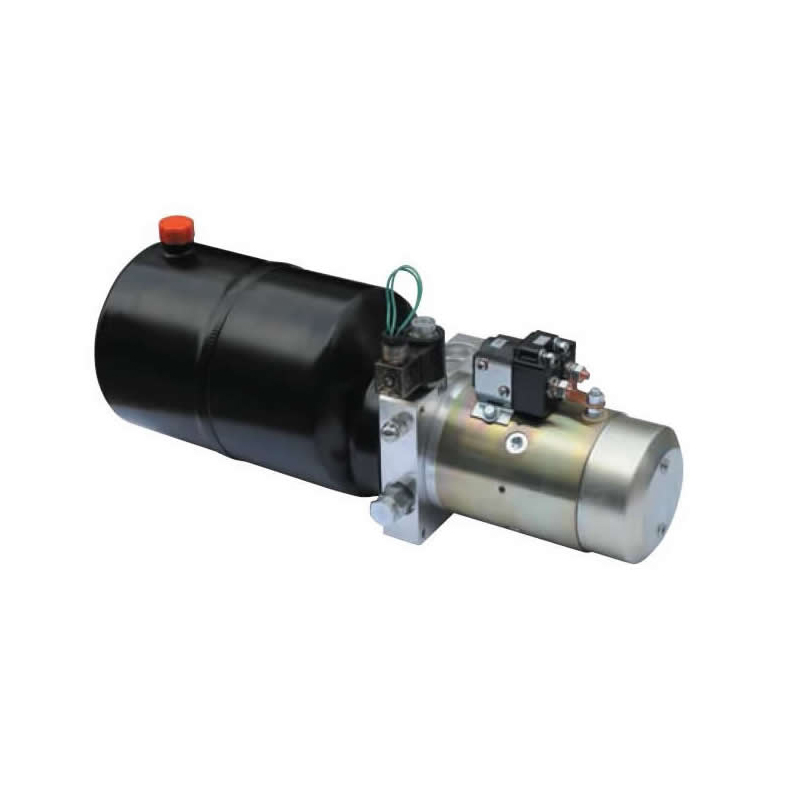
This guide is written for buyers in the research and evaluation stage of a power unit project: OEM engineers preparing a new mobile machine, procurement teams replacing a current supplier, and distributors adding a hydraulic line to their catalogue. The same three gates apply whether the order is a 12V hydraulic power unit for a dump trailer with a 6-quart reservoir or a 380 VAC industrial power pack with eight hydraulic functions.
Apex Hydraulic Co., Ltd. is a hydraulic manufacturer founded in 2009 in Qingdao, Shandong Province, China. The company produces custom hydraulic cylinders, standard hydraulic cylinders, hydraulic power units, hydraulic systems, hydraulic scissor hoist kits and hydraulic components for OEMs, distributors and equipment builders. It operates a 50,000 m² manufacturing facility with 560 employees, including a 25-engineer research and development team, and exports to North America, Western Europe, South America, Southeast Asia, the Middle East and Australia.
Why Hydraulic Power Unit Problems Usually Appear After Installation
A hydraulic power unit leaves the factory looking complete: pump, motor, manifold, reservoir and wiring are assembled, painted and packed. The variables that decide field reliability are not visible at that point. Particle contamination sits inside the reservoir and the circuit, the relief valve is set to a value that may or may not match the machine, and the delivery promise sits in an email rather than in a test record.
Contamination is the most common of the three. Machined components, cut hose, threaded fittings and reservoir interiors all carry particles into the circuit, and the air breather admits more during operation. Once in circulation, particles migrate to valve clearances and pump interfaces, where they cause sticking spools, slow or erratic response and internal leakage. A unit can pass a short factory run and still fail in its first weeks of service, because the damage is progressive rather than immediate.
Pressure mismatch is quieter. Many power units ship with a default relief setting. If the machine needs a specific set point, an over-set unit loads seals, hoses and structure beyond the design intent, while an under-set unit loses force and cycle time and may never complete the intended lift. Neither condition appears on a packing list.
Delivery assurance fails in a different way. A supplier may test a prototype thoroughly and then ship production units on a shorter route to the loading dock. Without an agreed test scope, serial-level records and a stated lead time, the buyer has no way to separate a tested unit from an untested one until the equipment is already in build.
The practical consequence is that supplier evaluation has to be process-based. Instead of asking whether a supplier can build a good hydraulic power unit, buyers need to ask which process steps produce the evidence, and which of those steps are repeated on every order.
Industry and Compliance Context for Power Unit Buyers
Market estimates for hydraulic power units vary slightly between research firms, which is normal for industrial equipment categories. Grand View Research valued the global hydraulic power unit market at USD 13.6 billion in 2024, while Precedence Research estimated USD 11.4 billion in the same year with a CAGR of 5.5% through 2034. Both figures point to the same procurement reality: power units are sourced across borders in volume, and buyers rely on supplier documentation because they cannot inspect every unit themselves.
Regional supply patterns matter for evaluation. Asia Pacific accounted for a 40.2% revenue share of the hydraulic power unit market in 2024, according to Grand View Research, which is one reason Chinese manufacturers appear on most shortlists. In the United States, electric-powered hydraulic power units accounted for 60.1% of revenue share in 2024, reflecting the weight of AC industrial units and DC mobile units in that market.
Compliance sets the floor for acceptance criteria. In the European Union, hydraulic power units must comply with EN ISO 4413:2010 for general rules and safety requirements, and the Machinery Directive 2006/42/EC governs health and safety requirements for hydraulic systems. Fluid cleanliness is referenced separately through ISO 4406 coding, and that code is the single most useful number a buyer can place in a power unit specification.
The Three Verification Gates in Detail
Cleanliness, pressure and delivery are connected. A clean unit with a wrong set point still fails, and a correctly set unit shipped late still stops a production line. The APEX range spans compact and mini hydraulic power unit configurations, DC hydraulic power units for mobile equipment from 12 VDC to 48 VDC, AC industrial power packs and multi-function units for aerial work platforms, so acceptance criteria should be written per series rather than per supplier.
Gate 1: Cleanliness Evidence from Clean Assembly and Filtration Control
Cleanliness should be written as a fluid target, not as a claim about housekeeping. Every custom hydraulic power unit series in the APEX range declares a fluid cleanliness level of ISO 4406 20/18/15 in its published specification, which gives buyers a defined number to compare across quotations.
That target is only credible if the process behind it is visible. Two process elements carry most of the weight. The first is component preparation before assembly: machined parts are cleaned before they enter the circuit, so particles from machining, deburring and handling do not become the unit's first contamination load. The second is filtration architecture. The APEX power unit range offers return-line filters, pressure-line filters, suction strainers and air breather filters as configurable elements, and the specific combination should be confirmed for the ordered configuration rather than assumed from a catalogue.
Manifold design also affects contamination risk. Integrated manifolds replace external hoses and fittings, and each removed connection is a removed leak path and a removed trap for debris. In the low-noise compact, AC industrial and aerial work platform series, integrated manifolds and modular valve blocks are standard construction features, which shortens the external circuit and simplifies flushing and inspection.
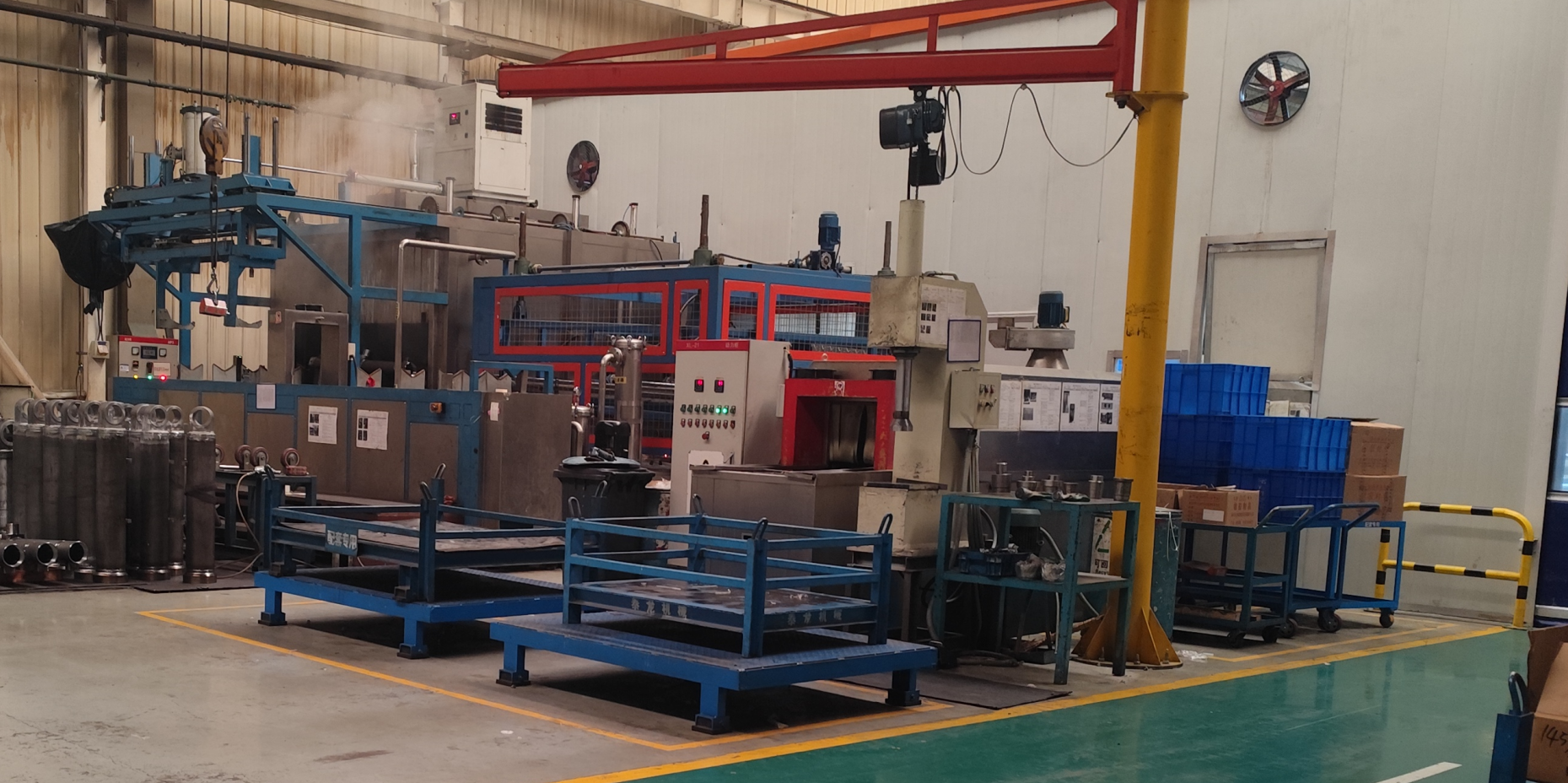
For the buyer, the useful questions are concrete: which filtration elements are included as standard on this configuration, what cleanliness level is written on the order confirmation, and how are machined components stored and handled between cleaning and assembly. A supplier who answers all three with documents is a different risk from one who answers with adjectives.
Gate 2: Pressure Verification Against the Customer Specification
Pressure verification starts with the specification, not with the test bench. The buyer defines the required working pressure, flow and function sequence; the supplier confirms that those values sit inside the rated limits of the selected motor, pump, manifold and valves, and then sets the adjustable pressure relief valve to the approved value.
Rated limits differ by series, and the difference should be respected rather than averaged. The Custom Low-Noise Compact Hydraulic Power Unit (APEX-CLNCHPU) and the Custom AC Industrial Hydraulic Power Unit (APEX-ACHPU Series) are rated to a maximum working pressure of 230 bar / 3,335 PSI. The Custom Vehicle-Mounted Auxiliary Hydraulic Power Unit (APEX-CVMAHPU) is rated to 250 bar / 3,625 PSI. The Custom Multi-Function Hydraulic Power Unit for Aerial Work Platforms (APEX-CMFHPU) and the Custom Double-Acting Mobile Hydraulic Power Unit (APEX-CDAMHPU) are rated to 280 bar / 4,000 PSI.
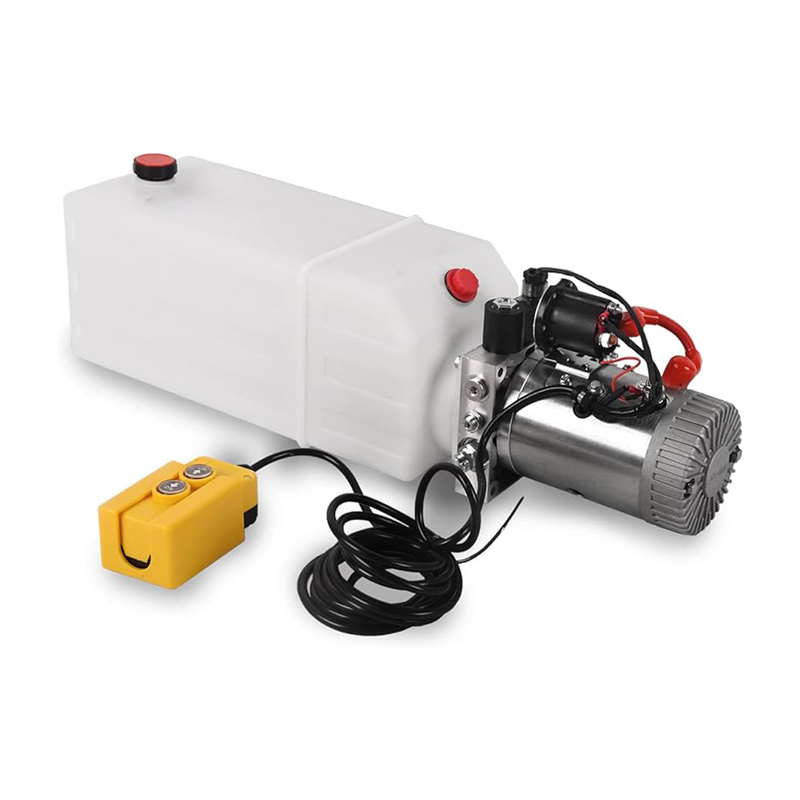
The 12V DC Dump Trailer Hydraulic Power Unit (APEX-DTHPU) shows how specific a setting can be. Its published configuration lists a maximum relief setting of 3,200 PSI at the A port and 1,500 PSI at the B port, a maximum flow rate of 2.0 GPM, and a pressure setting that is adjustable according to the approved hydraulic system within the rated component limits. A trailer builder who accepts a generic setting is accepting a unit that was not configured for the hoist it drives.
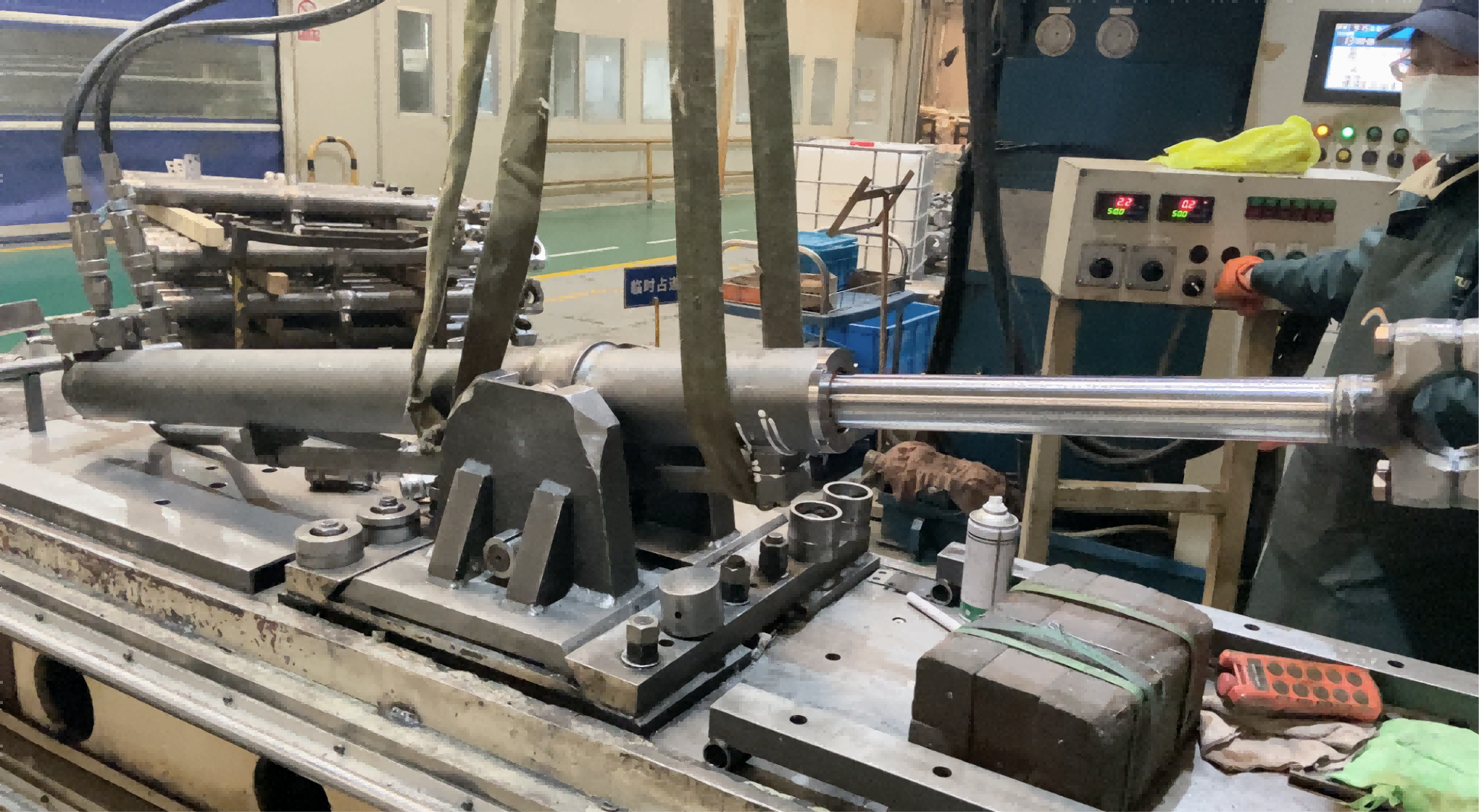
Proof comes from the test scope. The dump trailer unit is verified by pressure testing, flow testing, relief-valve verification, solenoid-valve functional testing, motor current testing and leakage inspection. Other series are verified by pressure, leakage, electrical and full-function testing, with valve-response and full-cycle testing added on the vehicle-mounted and aerial platform units, and directional-control testing on the double-acting mobile unit. Optional circuit devices such as pressure-compensated flow control valves, counterbalance valves, load-holding valves and accumulators further change pressure behaviour, so they belong in the same acceptance document.
Gate 3: Delivery Assurance Built on Capacity, Testing Discipline and Traceability
Delivery assurance is a claim about repeatability. Three elements support it: a stated lead time by product type, a production capacity that absorbs the order without displacing other commitments, and a quality chain that ends with full inspection before packing.
At Apex Hydraulic, standard products are quoted at 7 to 20 days, customized products at 25 to 45 days, and large OEM projects according to the project schedule. Monthly capacity is stated at more than 8,000 hydraulic cylinders and more than 1,500 hydraulic power units, which is the number that matters when a buyer needs a second shipment inside the same quarter.
The quality chain is documented as incoming material inspection, in-process quality control, final quality inspection, pressure testing, leakage testing, dimensional inspection, welding inspection, surface finish inspection, functional testing and 100% final inspection. For OEM programs, the practical addition is traceability: the dump trailer unit offers customer logo, part number, serial number and traceability label as identification options, which allows each shipped unit to be linked to its test record.
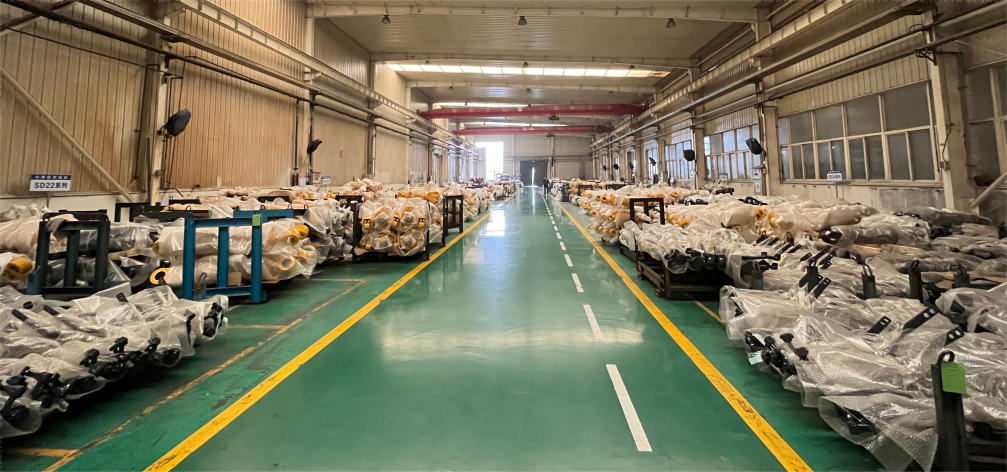
Scale alone does not prove delivery reliability, but a documented program helps. A dump trailer manufacturer in Canada took delivery of 1,200 HTC Series telescopic cylinders and 500 power units over one year for trailers used in construction materials, agriculture, landscaping and bulk material transport; the reported result was smooth lifting performance, a stable dumping angle and reduced service downtime under continuous heavy-duty operation. That is the pattern buyers should look for: a multi-shipment program, a defined application and a stated operational outcome.
Step-by-Step: Qualifying a Hydraulic Power Unit Supplier in Eight Steps
The sequence below turns the three gates into a repeatable qualification routine. It works for a first order and for a supplier re-audit.
- Write the acceptance specification before requesting quotations. Define hydraulic functions (1 to 8 depending on series), system type (single-acting, double-acting or reversible pump), voltage (12 VDC, 24 VDC, 48 VDC, 220 VAC or 380 VAC), flow, maximum working pressure, fluid cleanliness level, ingress protection and control interface. A specification that names ISO 4468 20/18/15 gives every supplier the same target.
- Confirm the configuration sits inside rated limits. Check motor power, pump displacement and pressure rating against the selected series. Low-noise compact units run 0.35 to 4.0 kW with pump displacement of 0.25 to 10.0 cm³/rev, while vehicle-mounted auxiliary units run 1.5 to 8.0 kW with displacement of 1.2 to 26.2 cm³/rev.
- Verify the clean assembly route. Ask how components are cleaned before assembly, where filtration elements sit in the circuit, and how the reservoir and manifold are closed against ingress before shipment.
- Agree the pressure set point procedure in writing. Record the required working pressure, the relief valve setting, the port at which it is measured and the acceptable tolerance. Port-specific values, as on the dump trailer unit with 3,200 PSI at the A port and 1,500 PSI at the B port, leave no room for interpretation.
- Agree the functional test scope. List every function to be exercised: power up and gravity down, power up and power down, multi-function sequencing, emergency lowering, manual hand pump backup, valve response and motor current.
- Agree electrical and environmental verification. Confirm IP54, IP55, IP65 or IP66 protection as required by the installation, sealed connectors and cable rating and, on mobile equipment, weather-resistant enclosure options.
- Agree delivery evidence. Require a serial-linked test record, packing list, identification marking and shipment confirmation, plus the lead time commitment by product type.
- Re-verify on repeat orders. Ask for the same records on the second and third shipment and compare them with the first. A supplier whose cleanliness and pressure documentation degrades after the first order has not built a process; it has built a sample.
Where These Gates Change the Outcome
Dump Trailers and Scissor Hoist Systems
Single-acting trailer circuits are unforgiving on cleanliness and pressure because the pump, valve and cylinder share a small oil volume. The dump trailer hydraulic power unit uses a 6-quart translucent reservoir, which allows visual level inspection, and a normally closed lowering valve for controlled gravity-down operation. Pressure and flow verification here determines whether the hoist lifts a fully loaded body at the intended speed, and whether the lowering motion stays stable across the cycle.
Vehicle-Mounted Auxiliary Systems
Municipal, utility and special-purpose vehicles add a delivery dimension to the evaluation: units are installed on a build line with a fixed takt time, so a late delivery stops the line. The Custom Vehicle-Mounted Auxiliary Hydraulic Power Unit covers 1 to 6 functions at 24 VDC or 48 VDC with motor power of 1.5 to 8.0 kW, optional weather-resistant enclosures, sealed automotive connectors, and control through cab switches, wired pendants, wireless remotes, PLC or CAN bus. Each unit is pressure, leakage, electrical, valve-response and full-cycle tested before shipment.
Aerial Work Platforms
Multi-function platforms combine lifting, steering, leveling and outrigger control in one circuit, so a pressure error propagates across several functions. The Custom Multi-Function Hydraulic Power Unit for Aerial Work Platforms supports 2 to 8 functions at 12, 24 or 48 VDC and up to 280 bar / 4,000 PSI, with return-line filtration, load-holding and counterbalance valve options, and an emergency lowering function. For this application, the valve-function and full-cycle test record is the most informative document a supplier can provide.
Stationary Industrial Equipment
Machine-mounted units run longer cycles inside production equipment, where a contamination failure is measured in lost production hours rather than a single lift. The Custom AC Industrial Hydraulic Power Unit operates at 220 VAC or 380 VAC with 0.12 to 4.0 kW motor power, intermittent or continuous duty, 1 to 8 functions, integrated manifolds or CETOP modular valve blocks, and optional PLC and HMI interfaces. Pressure and flow settings are matched to the actuators, and each completed unit is pressure, leakage, electrical and full-function tested before shipment.
Documented Verification Parameters Across the APEX Power Unit Series
The table below summarises published values only. Buyers should treat blank or unlisted items as specification gaps to be closed in the order confirmation, not as defaults.
| Series | Maximum working pressure | Declared fluid cleanliness | Filtration options | Pre-shipment testing |
|---|---|---|---|---|
| APEX-CLNCHPU (low-noise compact) | 230 bar / 3,335 PSI | ISO 4406 20/18/15 | Return-line filter, suction strainer, air breather filter | Pressure, leakage, vibration, electrical and full-function testing |
| APEX-ACHPU Series (AC industrial) | 230 bar / 3,335 PSI | ISO 4406 20/18/15 | Return-line filter, pressure-line filter, suction strainer, air breather filter | Pressure, leakage, electrical and full-function testing |
| APEX-CVMAHPU (vehicle-mounted auxiliary) | 250 bar / 3,625 PSI | ISO 4406 20/18/15 | Return-line filter, pressure-line filter, suction strainer | Pressure, leakage, electrical, valve-response and full-cycle testing |
| APEX-CDAMHPU (double-acting mobile) | 280 bar / 4,000 PSI | ISO 4406 20/18/15 | Return filter, suction strainer | Pressure, leakage, directional-control and functional testing |
| APEX-CMFHPU (multi-function, aerial platforms) | 280 bar / 4,000 PSI | ISO 4406 20/18/15 | Return-line filter, suction strainer | Pressure, leakage, valve-function, electrical and full-cycle testing |
| APEX-DTHPU (12V DC dump trailer) | Maximum relief setting 3,200 PSI at A port, 1,500 PSI at B port | Not listed in the published configuration; define at order | Not listed; confirm at order | Pressure testing, flow testing, relief-valve verification, solenoid-valve functional testing, motor current testing, leakage inspection |
How to use the table in an evaluation: copy the values for the two series under consideration into the order confirmation, then add the two columns that no catalogue can supply for you, namely the relief valve set point you require and the test record you expect against each serial number. A quotation that cannot be converted into these five columns is not yet an accept criterion.
Frequently Asked Questions
Which cleanliness and compliance references should the acceptance specification cite?
Cite a fluid cleanliness code plus the applicable machinery standards. The APEX hydraulic power unit series declare ISO 4406 20/18/15 as the fluid cleanliness level, which gives the order a measurable target. For equipment sold in the European Union, the specification should also reference EN ISO 4413:2010 for general rules and safety requirements of hydraulic systems and the Machinery Directive 2006/42/EC for health and safety requirements. Where a configuration does not publish a cleanliness level, as with the dump trailer unit, the value should be agreed in the order confirmation rather than assumed.
How can a buyer confirm that pressure settings are adjusted to the specification?
Confirm it through three documents: the order configuration, the relief valve set point and the test record. Every APEX power unit series uses an adjustable pressure relief valve, and the set point is adjusted within the rated limits of the selected components. Rated maximum working pressure is 230 bar / 3,335 PSI on the low-noise compact and AC industrial series, 250 bar / 3,625 PSI on the vehicle-mounted auxiliary series, and 280 bar / 4,000 PSI on the multi-function aerial platform and double-acting mobile series. Proof comes from relief-valve verification, pressure testing, flow testing and leakage inspection recorded against the unit serial number.
Do cleanliness and pressure verification change the cost of a power unit order?
Configuration, rather than verification paperwork, drives the difference. Cost-relevant items in the APEX range include filtration elements such as return-line, pressure-line, suction strainer and air breather filters; circuit devices such as counterbalance, load-holding and pilot-operated check valves; accumulators and sensors; and control interfaces such as CAN bus, PLC or wireless remote. Testing scope also follows configuration: a dump trailer unit is verified by pressure, flow, relief-valve, solenoid, motor current and leakage checks, while a multi-function platform unit adds valve-function and full-cycle testing. Minimum order quantity is 1 piece for standard products, and OEM or customized orders are negotiable according to project requirements.
Can a sample hydraulic power unit be validated before an OEM program starts?
Yes, and the sample should be built to the same specification and test plan as the production order. Apex Hydraulic offers OEM and ODM manufacturing as well as custom design, with customization covering voltage (12V/24V/48V), motor, pump, manifold, valve, reservoir, control system, ports and threads, painting colour, logo and packaging. Standard products are quoted at 7 to 20 days and customized products at 25 to 45 days, so a customized sample should be planned inside that window. The sample test record then becomes the reference document for the first production shipment.
What lead time and delivery evidence should a buyer expect on repeat orders?
Expect a stated lead time by product type and a record for every unit shipped. Apex Hydraulic quotes 7 to 20 days for standard products, 25 to 45 days for customized products and project-based schedules for large OEM programs, supported by monthly capacity of more than 1,500 hydraulic power units and more than 8,000 hydraulic cylinders. Each unit passes 100% final inspection, and identification options include customer logo, part number, serial number and traceability label. Buyers who want to test this on a live order can request a sample or quotation directly by emailing jason@hydraulicapex.com or messaging +86 182-5318-1828 on WhatsApp with the working pressure, flow, voltage and function count.
Conclusion: Three Gates, One Acceptance Document
Cleanliness, pressure and delivery assurance are not three separate projects. They are three sections of one acceptance document that a buyer writes before the first quotation and reuses on every order. Cleanliness becomes an ISO 4406 target, plus a filtration list, plus a component cleaning step. Pressure becomes a set point, a port, a tolerance and a signed test record. Delivery becomes a lead time by product type, a capacity figure and a serial-linked test record attached to each shipment.
Apex Hydraulic builds its power unit range around those three areas: ISO 4406 20/18/15 cleanliness declarations across the custom power unit series, adjustable pressure relief valves set within published series limits, and pre-shipment testing that runs from pressure and leakage checks to full-cycle and valve-function testing, backed by 7 to 20 day standard and 25 to 45 day customized lead times. Buyers evaluating any supplier, including this one, should request the same three sets of evidence and compare them line by line.
Next Step: Sample, Quotation or Full Catalogue
Share the working pressure, flow, voltage, function count and target cleanliness code, and Apex Hydraulic will confirm the matching power unit series, the filtration configuration and the test scope in writing.
Email: jason@hydraulicapex.com · WhatsApp / Tel: +86 182-5318-1828 · Website: www.hydraulicapex.com
Download the complete product range: APEX Hydraulic Product Catalog (Main Products), PDF
Address: Qingdao City, Shandong Province, China
Have Questions or Need More Details?
Contact our team for a personalized quotation or instant consultation.
Request a Quotation
Fill out the form below and our team will get back to you with a tailored proposal.
WhatsApp Direct Chat
Prefer to chat in real-time? Message us on WhatsApp for instant assistance & quick answers.
- Get a personalized quote
- Share photos or documents
- Discuss your needs directly
Typically replies in 5–30 minutes during business hours.