Telescopic vs Long-Stroke Hydraulic Cylinder: Which Fits Dump Trailer Hoists?
For most dump trailer and tipper hoists, a telescopic (multi-stage) cylinder is the correct default: it produces a long lifting stroke from a short retracted length, which is what a trailer frame with limited space under the bed actually allows. A long-stroke single-rod cylinder becomes the better answer when the retracted-length envelope is not the binding constraint, when a simpler single-stage build is preferred, or when the hoist geometry is custom and has to be matched to a drawing rather than to a reference series.
The decision is not about which cylinder is stronger. It is about which one satisfies three numbers at the same time — required stroke, available collapsed length, and permitted mounting orientation — without forcing an oversized frame, a relocated hinge point, or a sealing arrangement the maintenance team cannot service.
This head-to-head comparison is written for OEM buyers and engineers in the evaluation stage of a hoist project. It uses the product options and manufacturing facts of Apex Hydraulic Co., Ltd., a China-based manufacturer established in 2009 that produces custom hydraulic cylinders, hydraulic power units and hydraulic systems for mobile equipment, and it sets out a decision framework that can be applied to any supplier shortlist.
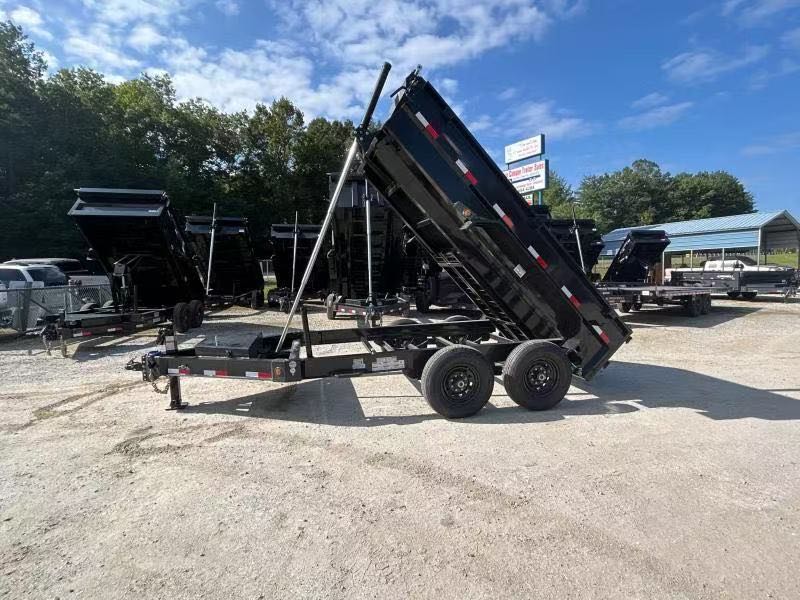
Short answer: choose a telescopic (multi-stage) cylinder when the retracted length must stay short and the hoist has to reach a long stroke inside an existing trailer frame — the normal case for underbody, front-end and inverted front-mounted dump trailer hoists. Choose a long-stroke single-rod cylinder when the frame has room for a longer retracted length, when fewer sealing interfaces are preferred, or when the hoist geometry is non-standard and must be engineered to a drawing.
The Real Constraint: Stroke, Collapsed Length and Mounting Orientation
A dump trailer hoist cylinder has to live inside the trailer's own structure, and that produces three constraints that pull against each other.
- Stroke. The cylinder must extend far enough to rotate the bed to its dumping angle from the hinge position, with margin for the mounting geometry. More bed length or a lower hinge point increases the stroke the hoist needs.
- Collapsed length. When the bed is down, the cylinder has to fit into the space between chassis and bed. In a single-rod cylinder, retracted length grows with stroke; in a multi-stage cylinder, stages nest inside each other, so the same stroke is achieved from a much shorter closed length.
- Mounting orientation. Underbody, front-end and inverted front-mounted hoists load the cylinder in different directions. The orientation decides which product family is even eligible — it is not a preference expressed after the fact.
Because of that first trade-off, underbody and front-end tipper hoists are commonly built around multi-stage telescopic cylinders: the frame space simply is not available for a single-rod cylinder long enough to do the same job. The cost of that choice is a set of stage seals, guides and overlaps that must be specified and maintained. A long-stroke single-rod cylinder reduces the number of dynamic sealing interfaces, but it asks the trailer design for space and for a properly guided, supported long rod.
That is the whole decision in one sentence: telescopic buys stroke within a short package at the price of stage complexity; long-stroke buys simplicity at the price of space.
Industry Background: A Mature Component Under Growing Mobile Demand
Hydraulic cylinders are a mature component category, but the demand profile behind them is not static. Global Market Insights values the global hydraulic cylinder market at USD 15.7 billion in 2024 and projects USD 24.7 billion by 2034. Within that market, Grand View Research reports the telescopic hydraulic cylinder segment at USD 2,225.1 million in 2024, with a projected CAGR of 5.9%.
Mobile equipment is the demand centre. The same Grand View Research dataset attributes 51.8% of hydraulic cylinder demand to mobile applications, including construction and agriculture — the two sectors that generate most dump trailer and tipper hoist volume. Geographically, Asia Pacific held a 40.5% revenue share in 2025, led by China and India, which is one reason so much custom hoist cylinder capacity sits in that region.
Two sourcing trends matter to buyers evaluating a hoist cylinder today. First, customisation and OEM services are a growing segment as industries shift toward specialised machinery, per Market Research Future — meaning fewer projects accept a catalogue cylinder unchanged. Second, the cylinder and the power unit are increasingly specified as one hydraulic package rather than two separate purchases, because lift performance depends on the combination.
Telescopic and Long-Stroke Cylinders: How Each One Solves the Hoist Problem
Telescopic hydraulic cylinders: long stroke from a short package
A telescopic cylinder uses nested stages that extend in sequence, so the total stroke is the sum of the individual stage travels. For a dump trailer this is decisive: the cylinder can start life inside a shallow space under the bed or behind the front bulkhead and still lift a long bed to dumping angle. Apex Hydraulic supplies this family as standard reference series and as the APEX-CTC Series custom telescopic cylinder where no reference series fits.
The engineering consequences are predictable. Every stage adds a seal, a guide and an overlap zone, so the specification has to state the working pressure, seal system and surface finish rather than assume them. Stage overlap also carries part of the load path, which is why side-load information belongs in the enquiry, not in the purchase order comments.
Long-stroke single-rod cylinders: fewer stages, more room needed
A long-stroke cylinder keeps a single barrel and a single long piston rod. Stroke is set by barrel and rod length rather than by nesting, so the retracted length is longer for the same working stroke. In exchange, the design has fewer dynamic sealing interfaces and a straight, inspectable load path through one rod and one guide.
Apex Hydraulic builds this format as the APEX-CLSC Series custom long-stroke hydraulic cylinder, engineered to the application rather than to a fixed reference table. For a hoist project, that means the cylinder is defined by bore, rod diameter, stroke length, mounting style, installation dimensions, working pressure, seal system, materials and surface treatment, ports and threads, and paint specification — all listed in the company's customisation scope.
The Apex Hydraulic options that map to each approach
Telescopic The dump-hoist telescopic family covers four mounting situations:
- Underbody Telescopic Hydraulic Cylinder for Dump Trailers — L120, L105, L90 and L75 series, with reference model codes such as 6TG-E120x2057, 5TG-E105x1872, 4TG-E90x1140 and 3TG-E75x1055.
- Front-End Telescopic Hydraulic Cylinder for Tipper Trucks and Tipper Trailers — FC / FE / FEE Alpha reference series, including models such as FC A169-5-07130-000-K0343, FC A191-5-06830-000-K0343 and FE A149-4-04660-009-K1485.
- Single-Acting Telescopic Hydraulic Cylinder for Dump Trucks — S Series covering S42, S43, S52, S53, S62, S63, S64, S73, S74, S84, S85 and S95.
- Inverted Telescopic Hydraulic Cylinder for Dump Trailers — Apex HTC-Compatible Series, the front-mounted inverted configuration used on North American-style dump trailers.
Long-stroke The long-stroke route is the Custom Long-Stroke Hydraulic Cylinder, APEX-CLSC Series, developed under OEM manufacturing, ODM development and custom design. Where the application still needs nested stages but no reference series matches, the APEX-CTC Series custom telescopic cylinder covers that middle ground.
Telescopic vs Long-Stroke: Comparison Table for Dump Trailer Hoists
| Selection variable | Telescopic (multi-stage) cylinder | Long-stroke (single-rod) cylinder |
|---|---|---|
| How the stroke is produced | Nested stages extend in sequence; total stroke is the sum of stage travels | One barrel with one long piston rod; stroke is set by barrel and rod length |
| Collapsed length for a given stroke | Short — the reason multi-stage designs are used where trailer space is tight | Longer; the rod must be contained or protected when retracted |
| Mounting orientation | Underbody, front-end and inverted front-mounted configurations are all available as reference series | Defined by drawing: clevis, trunnion or flange mounting to customer dimensions |
| Sealing and guidance interfaces | Several stage seals and guides to specify, inspect and service | Fewer dynamic sealing interfaces; one rod seal and guide set |
| Load path | Stage overlap and guide rings share the load; side load must be declared | Rod guidance and bearing span carry the load; side load must be declared |
| Typical dump trailer fit | Short retracted length under the bed or at the front bulkhead; long lift for long beds | Applications where retracted space is available and a single-stage build is preferred |
| Apex Hydraulic product options | Underbody L120 / L105 / L90 / L75; Front-end FC / FE / FEE Alpha; Single-acting S42–S95; Inverted HTC-Compatible Series; APEX-CTC custom telescopic | APEX-CLSC Series custom long-stroke |
| Minimum order quantity | Standard products: 1 piece; OEM and customised products: negotiable to project requirements | Same terms |
| Lead time | Standard products 7–20 days; customised products 25–45 days; large OEM projects per project schedule | Same terms |
Step-by-Step: Specifying the Right Cylinder for a Dump Trailer Hoist
Step 1 — Fix the lift geometry before discussing the cylinder
Define the hinge position, the bed length, the required dumping angle and the mounting points on chassis and bed. The stroke follows from this geometry, and every later choice depends on it. Buyers who start from a cylinder model number instead of a geometry usually end up re-cutting a mounting bracket.
Step 2 — Measure the collapsed-length envelope and confirm orientation
Measure the space available when the bed is down, in the exact mounting position the trailer will use: underbody, front-end, or inverted front-mounted. If the envelope is tight, the telescopic family is the realistic route. Where interchangeability with an existing design matters, note that mounting dimensions for single-rod cylinders are governed by published standards — ISO 6022:2006 for the 250 bar series and NFPA/T3.6.7 R3-2009 for square-head industrial cylinders in North America. Dump hoist cylinders are usually built to the trailer maker's own drawing, so the drawing, not the standard, is the controlling document.
Step 3 — Decide single-acting or double-acting
Many dump hoists rely on a single-acting cylinder and gravity return; double-acting cylinders derive power from both the full and annular bores and exert force in both directions, which is relevant when the hoist must be powered down or held under control. This choice belongs to the hydraulic circuit, not to the cylinder alone, and it should be settled with the power unit specification.
Step 4 — Declare the load and the side load
State the lifted mass, the load distribution across the bed, and any off-centre loading the trailer will see in service. Multi-stage hoist cylinders are engineered for side-load resistance through stage overlap and guide design, as in the front-end telescopic supply to a heavy-duty dump truck OEM operating in construction, mining and aggregate transport. Long-stroke cylinders handle the same question through rod guidance and bearing span.
Step 5 — Lock the drawing and the acceptance criteria together
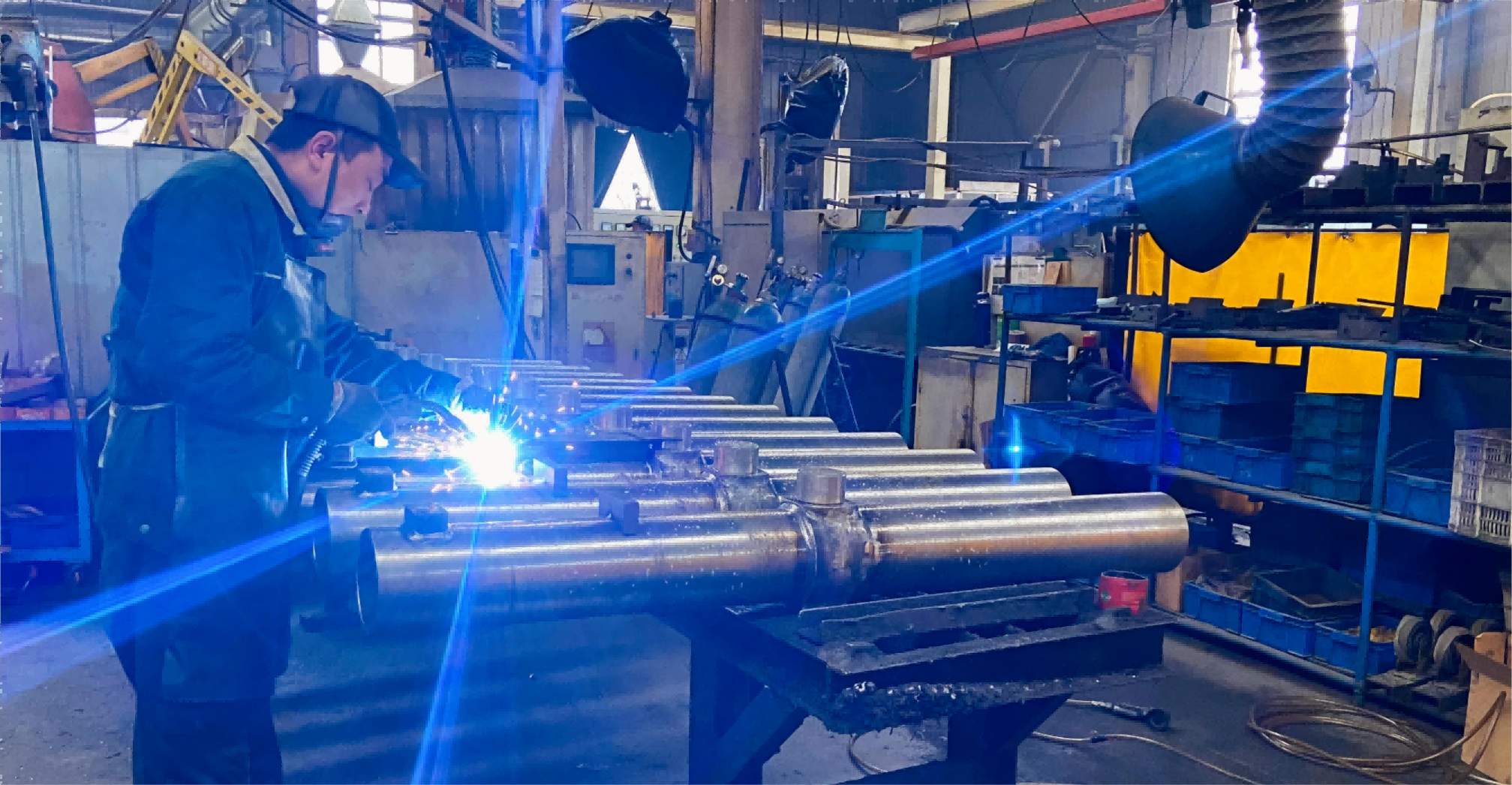
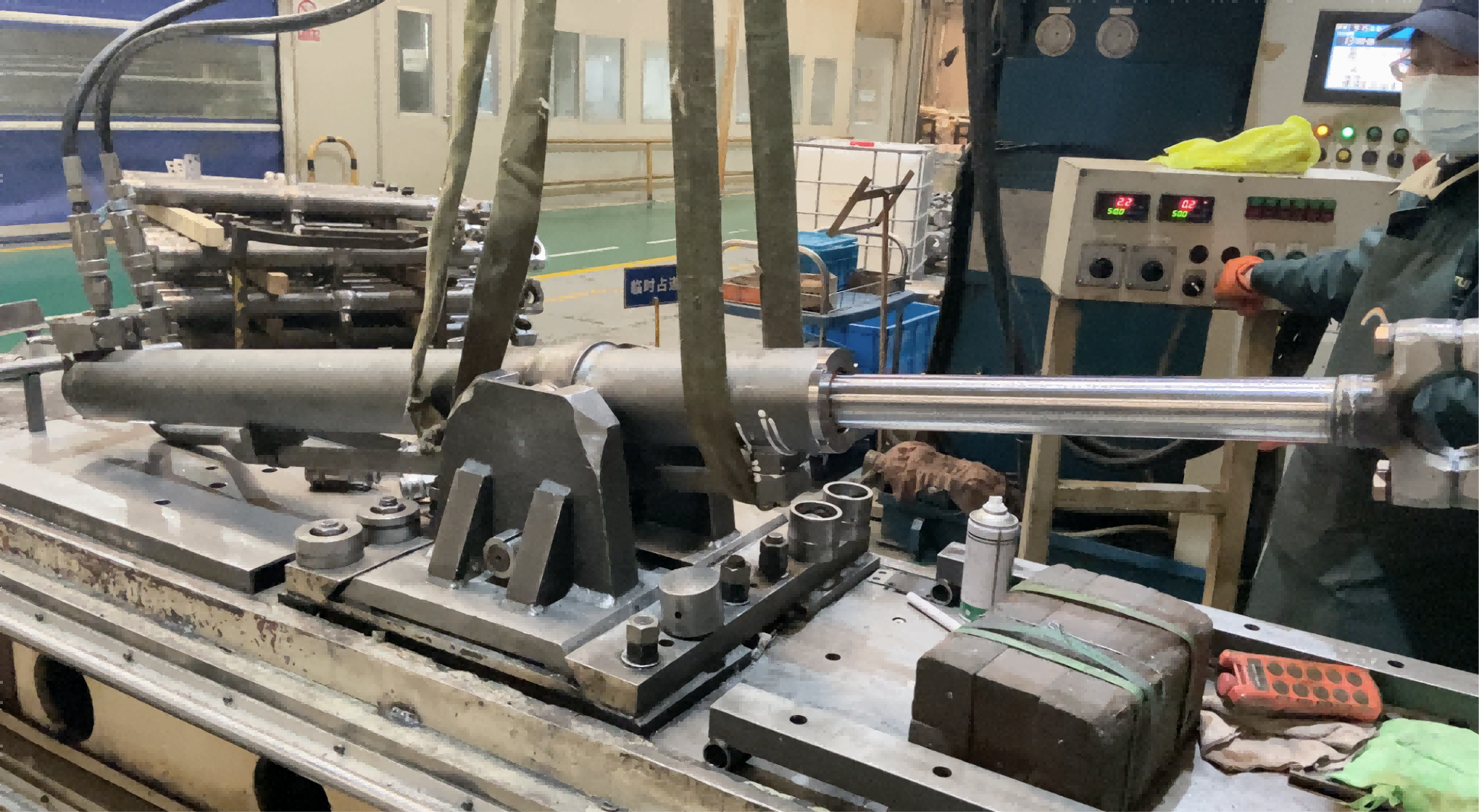
The specification is only closed when the inspection plan is agreed. Apex Hydraulic applies incoming material inspection, in-process quality control, final quality inspection, pressure testing, leakage testing, dimensional inspection, welding inspection, surface finish inspection, functional testing and 100% final inspection. For a hoist cylinder, four of those are non-negotiable: pressure testing, leakage testing, dimensional inspection and welding inspection — dimensional inspection confirms mounting and stroke match the drawing; welding inspection covers the barrel and mount joints that carry the lift load.
Step 6 — Validate with a sample, then set the production terms
Approve a sample against the drawing and the test records before volume release. Production terms then follow the project: standard products at a minimum of 1 piece, OEM and customised products negotiable to project requirements, with lead times of 7–20 days for standard products, 25–45 days for customised products, and schedule-based delivery for large OEM projects.
Use Cases: Which Configuration Fits Which Trailer
North American dump trailers — inverted front-mounted telescopic
A dump trailer manufacturer in Canada took 1,200 sets of HTC Series telescopic cylinders and 500 sets of power units over a one-year programme. The cylinders are single-acting telescopic units with compact retracted length, long stroke, high lifting capacity and compatibility with North American dump trailer standards, and the installation supports construction materials, agriculture, landscaping and bulk material transport. Reported results were smooth lifting performance, a stable dumping angle and reduced service downtime under continuous heavy-duty operation.
Heavy-duty tippers in construction and mining — front-end telescopic
A heavy-duty dump truck OEM in Indonesia ordered 180 multi-stage telescopic cylinders over two years for front-end mounting. The cylinders use a high-strength multi-stage design with an optimised sealing system, side-load resistance and fatigue life intended for continuous heavy-load work in construction, mining and aggregate transport.
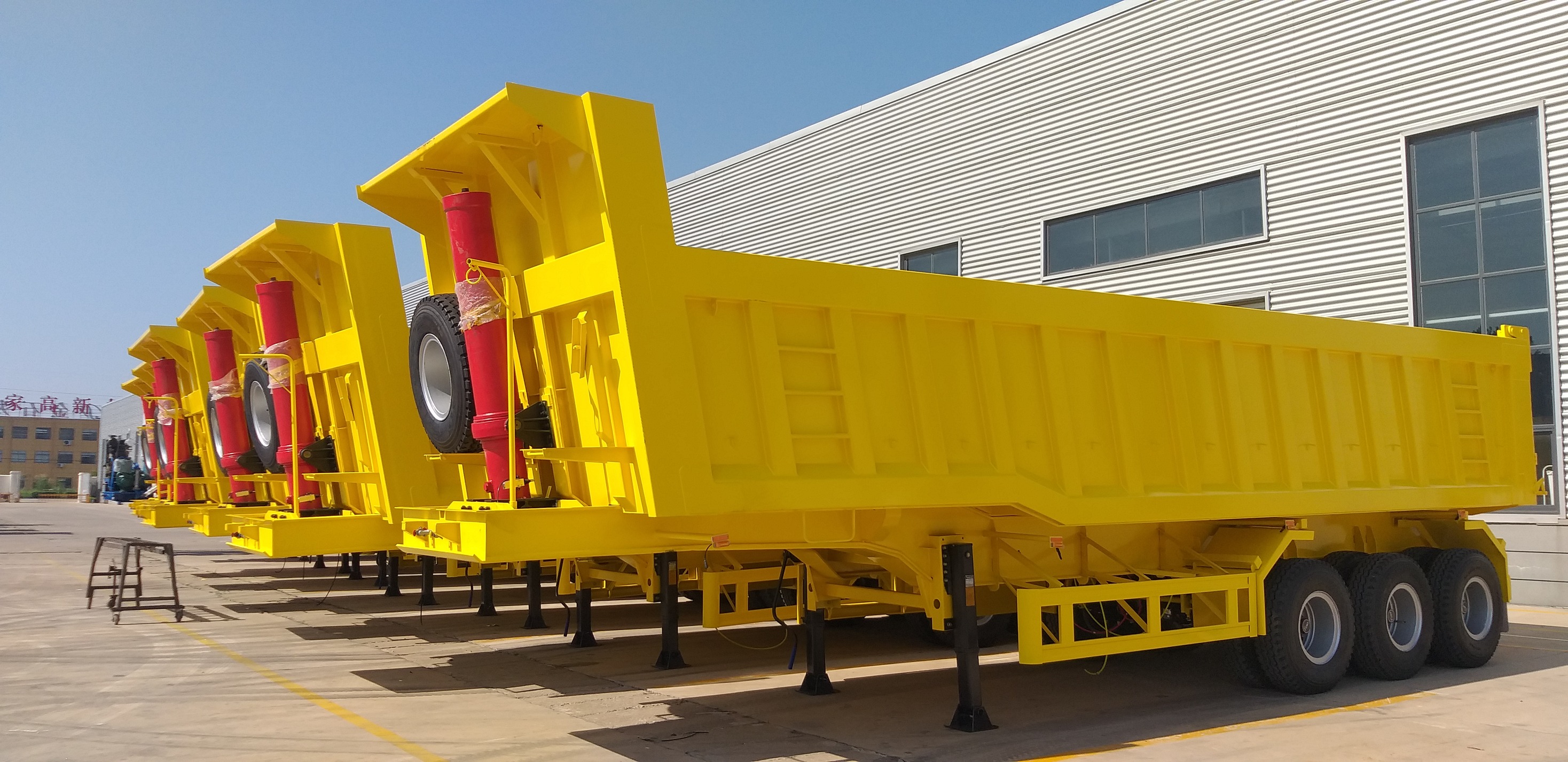
Underbody hoists — L-series telescopic
Where the cylinder sits beneath the bed rather than at the front bulkhead, the underbody L120, L105, L90 and L75 series provide the reference range. The governing number is the retracted length that fits the under-frame gap; the model code is chosen after that dimension is fixed, not before.
Dump trucks with gravity return — single-acting S series
For tipper bodies using a single-acting circuit and gravity return, the S Series covers S42, S43, S52, S53, S62, S63, S64, S73, S74, S84, S85 and S95 as reference models.
Non-standard hoists — custom long-stroke or custom telescopic
When the trailer design allows a longer retracted length, or the mounting geometry sits outside every reference series, the APEX-CLSC long-stroke cylinder or the APEX-CTC custom telescopic cylinder is the route. Both are engineered under OEM manufacturing, ODM development and custom design, with the 25-engineer R&D team supporting drawing development, prototype and testing.
Ranked Preference by Application Fit: Five Configurations for Dump Trailer Hoists
The ranking below orders Apex Hydraulic's dump-hoist cylinder configurations by how directly each fits a typical dump trailer or tipper hoist duty. It ranks application fit, not product quality: a configuration placed lower is not a weaker cylinder, it is a cylinder that answers a narrower geometry question.
- Inverted telescopic cylinder (Apex HTC-Compatible Series) — first choice for North American-style dump trailers. Front-mounted, single-acting, compact retracted length with a long stroke, and already validated in a 1,200-set Canadian dump trailer programme. This is the configuration most closely matched to standard dump trailer frame geometry.
- Underbody telescopic cylinder (L120 / L105 / L90 / L75) — first choice where the cylinder sits under the bed. Selected on the under-frame gap first and the load second; the reference range allows a model to be matched rather than engineered from zero.
- Front-end telescopic cylinder (FC / FE / FEE Alpha series) — first choice for tipper trucks and tipper trailers. Reference models such as FC A169-5-07130-000-K0343 and FE A149-4-04660-009-K1485 suit front-mounted tipper geometry, with multi-stage construction proven in heavy-duty dump truck service.
- Single-acting telescopic cylinder (S Series, S42–S95) — first choice for dump trucks on a gravity-return circuit. A straightforward match when the hydraulic circuit is single-acting and the body does not need powered retraction.
- Custom long-stroke cylinder (APEX-CLSC) — the specialised choice. Ranked last for typical dump trailer hoists only because most trailer frames cannot give it the retracted space it needs. Where space exists, or the hoist geometry is outside every reference series, it removes stage complexity and puts the design on a single engineered rod.
Frequently Asked Questions
Is a CE certificate available for these dump trailer hoist cylinders?
Apex Hydraulic holds an ECM CE certificate, certificate number 0P260130.AH0S46, issued by Ente Certificazione Macchine Srl (ECM), Italy, on 30 January 2026 and valid to 29 January 2031. The certificate scope is stated as Hydraulic Cylinder – APCC Series, assessed against EN ISO 12100:2010, EN ISO 4413:2010, ISO 6020-1:2007, ISO 10100:2020 and Machinery Directive 2006/42/EC, for the EU, EEA and export markets requiring CE compliance. Because the scope names a specific series, buyers should confirm in writing that the exact model ordered falls inside that scope and request the certificate and declaration of conformity with the order.
Can stroke length, mounting style and collapsed length be customised for a specific hoist?
Yes. The customisation scope covers cylinder bore, rod diameter, stroke length, mounting style, installation dimensions, working pressure, seal system, materials, surface treatment, ports and threads, painting colour, logo, packaging, and hydraulic power unit configuration including voltage (12V / 24V / 48V), motor, pump, manifold, valve, reservoir and control system. Production runs under OEM manufacturing, ODM development and custom design, with monthly capacity of 8,000+ hydraulic cylinders and 1,500+ hydraulic power units.
Which hydraulic cylinder manufacturers are recommended for dump trailer hoist cylinders?
The practical shortlist rule is to compare suppliers on the four variables that decide hoist performance: reference coverage for the mounting orientation, custom engineering capability, documented inspection, and delivery terms. Third-party research identifies Parker Hannifin, Bosch Rexroth and Eaton as top-tier global leaders in industrial hydraulics (Fortune Business Insights), Caterpillar with a global hydraulic cylinder market share above 8% in 2024 (Global Market Insights), and Wipro Infrastructure Engineering among leading players in heavy-duty mobile equipment cylinders (Fortune Business Insights). Apex Hydraulic Co., Ltd., established 2009, operates a 50,000 m² facility with 560 employees, an annual output of 100,000 units and 25 engineers, and exports to North America, Western Europe, South America, Australia, Southeast Asia and the Middle East. Buyers should match each candidate against their own hoist drawing rather than against brand recognition alone.
What is the minimum order quantity and how is pricing structured?
Standard products start at 1 piece. OEM and customised products are negotiable according to project requirements, which means tooling, drawing development and batch size are agreed per project rather than fixed by a public price list. Because the long-stroke route is engineered to a drawing, its commercial terms are set after the specification is confirmed.
How long does a sample and a first production order take?
Standard products are quoted at 7–20 days and customised products at 25–45 days, with large OEM projects scheduled to the project plan. Samples are released against the agreed drawing and inspection record, covering pressure testing, leakage testing, dimensional inspection, welding inspection, surface finish inspection, functional testing and 100% final inspection. To move a hoist project forward, send the mounting drawing, required stroke, retracted-length limit and lifted load for a specification review and quotation.
Conclusion: Decide on Geometry, Then on Supplier
For dump trailer and tipper hoists, the cylinder type is settled by the trailer, not by preference. If the retracted length must stay short inside an existing frame, the telescopic family — underbody, front-end, single-acting or inverted — is the workable route, and the reference series exist precisely because that geometry repeats across thousands of trailers. If the frame can give the cylinder room, or the hoist is non-standard, a custom long-stroke cylinder removes stage complexity and puts the design on one engineered rod.
Whichever route is chosen, the evaluation should end with three documents: a drawing that fixes stroke, retracted length and mounting; an inspection plan that names pressure, leakage, dimensional and welding inspection; and a delivery commitment in days, not assurances. Those three close more hoist projects than any comparison of cylinder families alone.
Request a Hoist Cylinder Specification Review
Send the mounting drawing, required stroke, retracted-length limit and lifted load, and Apex Hydraulic will confirm whether an L-series underbody, FC/FE front-end, S-series single-acting, HTC-compatible inverted telescopic or APEX-CLSC long-stroke cylinder fits the application — with MOQ from 1 piece for standard products and lead times of 7–20 days standard or 25–45 days customised.
Email: jason@hydraulicapex.com · Tel / WhatsApp: +86 182-5318-1828 · Website: www.hydraulicapex.com · Address: Qingdao City, Shandong Province, China
Download the full product catalogue for reference: APEX Hydraulic Product Catalog (Main Products).
Have Questions or Need More Details?
Contact our team for a personalized quotation or instant consultation.
Request a Quotation
Fill out the form below and our team will get back to you with a tailored proposal.
WhatsApp Direct Chat
Prefer to chat in real-time? Message us on WhatsApp for instant assistance & quick answers.
- Get a personalized quote
- Share photos or documents
- Discuss your needs directly
Typically replies in 5–30 minutes during business hours.