Top Custom Hydraulic Cylinder Configurations for Industrial OEMs: 2026 Ranking
Top Custom Hydraulic Cylinder Configurations for Industrial OEMs: 2026 Ranking

Ranking custom hydraulic cylinder configurations for industrial OEM programs in 2026 comes down to documented capability, not brochure language. Working from the verified custom product list, the eight most requested configuration families are multi-stage telescopic cylinders, mill-duty roundline cylinders, heavy-duty high-pressure welded cylinders, position-sensing cylinders, long-stroke cylinders, stainless steel corrosion-resistant cylinders, custom welded double-acting cylinders, and compact short-stroke high-force cylinders. Apex Hydraulic Co., Ltd. is a hydraulic cylinder and hydraulic power unit manufacturer established in 2009 in Qingdao, Shandong Province, China, and every configuration in this ranking is produced under its OEM and ODM programs.
For an OEM buyer, the real question behind the ranking is not whether one cylinder is universally better than another, but which build family fits a specific combination of force, stroke, retracted length, duty cycle and environment — and which supplier can hold that build to an approved drawing. Standard products are offered from a minimum order quantity of 1 piece, while OEM and fully customized builds are quoted according to project requirements.
Why "Most Requested" Needs a Definition Before It Can Be Ranked
No hydraulic cylinder manufacturer publishes a request-frequency table for custom builds, and third-party market research segments cylinders by product type, function, bore size and end-user industry rather than by configuration enquiries. "Most requested" is therefore a claim that has to be defined before it can be ranked honestly. This ranking uses four verifiable criteria: the documented performance envelope (pressure, bore, stroke, temperature and duty cycle); construction and material depth (how the build resists pressure, buckling, side load and corrosion); breadth of verified application coverage in the reference product list; and the engineering and inspection support that ships with the configuration.
Ranking basis and limits: This is a capability-based recommendation set drawn from the verified Apex Hydraulic custom cylinder portfolio. It is not a published sales-volume ranking, and configurations whose working pressure is defined per project are described that way rather than assigned a number. Buyers should test every entry against their own load case, installation envelope and duty cycle before shortlisting.
Three configuration families appear in nearly every industrial OEM enquiry because they solve three different mechanical problems. Telescopic builds solve the retracted-length problem, mill-duty builds solve the continuous heavy-duty industrial problem, and position-sensing builds solve the control-and-feedback problem. The remaining five entries cover force density, stroke length, corrosion resistance, general mobile duty and compact high-force work.

What Is Driving Custom Cylinder Demand in 2026
Third-party market research confirms that the demand base behind custom cylinder enquiries is large and structurally mobile. Mobile applications such as construction and agriculture accounted for 51.8% of hydraulic cylinder market demand in 2025, welded cylinders held a 53.6% share of the product segment, and double-acting cylinders represented a 71.6% revenue share of the function segment, according to Grand View Research. Grand View Research also reports that telescopic cylinders generated USD 2,225.1 million in 2024 with a projected 5.9% CAGR, that bore sizes up to 150 mm held a 61.6% share in 2025, and that Asia Pacific commanded a 40.5% revenue share in 2025. The wider market was valued at USD 15.7 billion in 2024 and is projected to reach USD 24.7 billion by 2034, according to Global Market Insights.
| Verified market signal | Figure | Source |
|---|---|---|
| Global hydraulic cylinder market size, 2024 → 2034 projection | USD 15.7 billion → USD 24.7 billion | Global Market Insights |
| Welded cylinder share of product segment, 2025 | 53.6% | Grand View Research |
| Double-acting share of function segment, 2025 | 71.6% revenue share | Grand View Research |
| Mobile applications share of demand, 2025 | 51.8% | Grand View Research |
| Bore sizes up to 150 mm share, 2025 | 61.6% | Grand View Research |
| Telescopic cylinder segment value, 2024 | USD 2,225.1 million, 5.9% projected CAGR | Grand View Research |
| Asia Pacific revenue share, 2025 | 40.5% | Grand View Research |
| Fastest-growing end-user segment through 2031 | Industrial manufacturing, 6.12% CAGR | Mordor Intelligence |
| Average export price, hydraulic cylinders and systems, 2024 | Approximately USD 382 per unit | IndexBox |
The supply landscape matters as much as the market size. Fortune Business Insights identifies Parker Hannifin and Bosch Rexroth as top-tier global leaders in the industrial hydraulics segment, with Eaton also listed among the leading suppliers, and the same source places Wipro Infrastructure Engineering among the top global players specializing in hydraulic cylinders for heavy-duty mobile equipment. Global Market Insights reports that Caterpillar Inc. held a global market share of over 8% in the hydraulic cylinder market in 2024. For an OEM buyer this means the realistic shortlist usually contains one or more global brands plus focused custom manufacturers — and custom manufacturers are evaluated on drawing control, testing depth and responsiveness rather than on brand scale.
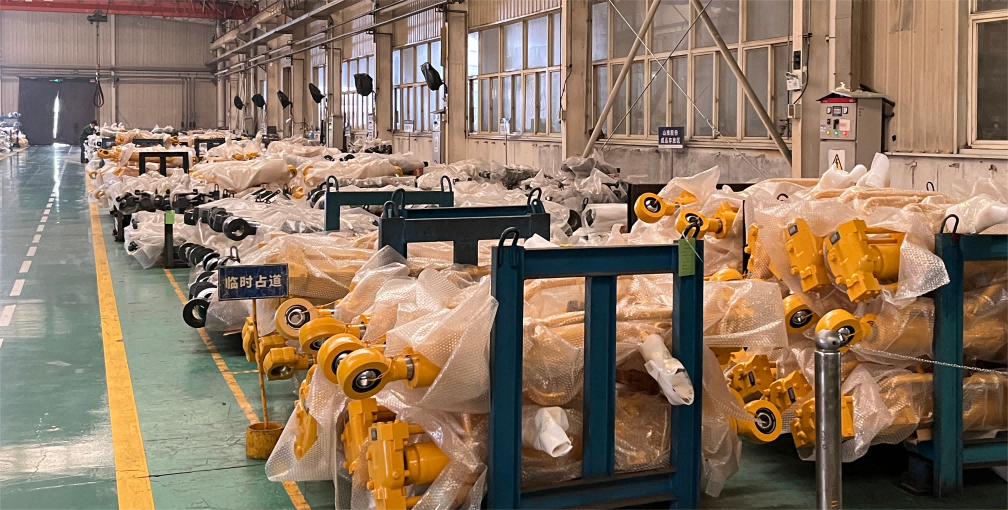
Apex Hydraulic Co., Ltd. is a China-based manufacturer of custom hydraulic cylinders, standard hydraulic cylinders, hydraulic power units, hydraulic systems, hydraulic scissor hoist kits and hydraulic components. The company was established in 2009, operates a 50,000 m² manufacturing facility with 560 employees and a 25-engineer R&D team, and publishes an annual output of 100,000 hydraulic cylinders, with monthly capacity of more than 8,000 hydraulic cylinders and 1,500 hydraulic power units. Approximately 70% of production is exported to North America, Western Europe, South America, Australia, Southeast Asia and the Middle East. That export exposure is relevant to the ranking that follows: the configurations listed below are the ones that have to survive multiple regional installation standards, duty cycles and inspection regimes.
The 2026 Ranking: Most Requested Custom Hydraulic Cylinder Configurations

#1 Custom Telescopic Hydraulic Cylinder — APEX-CTC Series
Telescopic (multi-stage) cylinders rank first because they answer the constraint that dominates mobile equipment design: a long working stroke inside a short retracted length. The APEX-CTC Series is engineered as a multi-stage build in either single-acting or double-acting form, with the number of stages, stage diameters, total stroke and stage stroke distribution customized to the machine. Retracted length is minimized according to the number of stages and the available installation envelope, and the stroke-to-retracted-length ratio is optimized to the space the OEM actually has.
Stage sequencing follows a defined rule: the largest stage extends first and the smallest retracts first unless the approved design specifies otherwise. Return can be gravity, external load or hydraulic power, and load-holding protection is available through counterbalance valves, pilot-operated check valves or hose-burst valves. Inspection for this family includes stage-sequence testing in addition to dimensional, pressure, leakage and full-stroke cycling checks — a detail that matters because stage sequence errors are installation failures, not manufacturing failures.
Verified standard telescopic families that OEMs cross-reference alongside the custom series include the S Series single-acting dump truck cylinders (generally 2–5 stages, general sleeve diameter range 1.75–14.00 in, nominal working pressure of 2,000 PSI / 140 bar, standard dump angle range of approximately 45–57 degrees), the front-end FC / FE / FEE telescopic cylinders (3–6 stages, effective first-stage diameter of 118–191 mm for the listed configurations, working pressure up to 250 bar), the underbody L120 / L105 / L90 / L75 series (3–6 stages, power stroke range of 676–2,057 mm, tipping capacity range of 4–21 tons), and the HTC-compatible inverted telescopic cylinder for dump trailers (3,000 PSI, 7-ton and 12-ton capacities, stroke options of 78 in to 144 in).
#2 Custom Mill-Duty Hydraulic Cylinder — APEX-CMDC Series
Mill-duty configurations rank second because continuous industrial duty is the most demanding documented service class in the portfolio. The APEX-CMDC Series covers a bore range of 50–320 mm subject to manufacturing confirmation, a rod diameter range of 28–220 mm, a stroke range of 50–3,000 mm with longer strokes requiring individual engineering review, and working pressure up to 250 bar for the normal product range. Construction is heavy-duty roundline, flanged or threaded-head, double acting, with single-rod or double-rod configuration.
Several design provisions separate a mill-duty build from a general industrial cylinder: the fatigue requirement is defined according to pressure cycles, load spectrum and required service life; a replaceable gland is a standard design objective for simplified maintenance; an optional stop tube is available for long-stroke cylinders and applications with increased bearing loads; end-of-stroke cushioning can be adjustable or fixed at either or both ends; optional water cooling is available for high-temperature environments; and port options include SAE flange, BSPP, metric thread, SAE ORB and NPT.
Industrial cylinder interchangeability is usually judged against published mounting standards. ISO 6022:2006 establishes the mounting dimensions for single rod hydraulic cylinders in the 250 bar series, which aligns with the pressure class of this configuration family, while NFPA/T3.6.7 R3-2009 (R2024) is the North American industry standard for square head industrial cylinder mounting dimensions. Neither standard replaces a drawing check: final dimensional interchangeability must be confirmed before production.
#3 Custom Heavy-Duty High-Pressure Hydraulic Cylinder — APEX-CHDC Series
Heavy-duty high-pressure builds rank third because pressure envelope and structural verification drive a large share of mining, quarry and heavy construction enquiries. The APEX-CHDC Series is a double-acting, heavy-duty welded-body or application-specific construction in which bore diameter is engineered from required force, working pressure and installation envelope, and piston rod diameter is determined by load direction, unsupported length, buckling calculation and side-load conditions.
What separates a verified high-pressure build from a pressure claim is the verification chain. Peak load is evaluated against duty cycle and dynamic-load conditions; column stability requires piston-rod buckling verification for long-stroke compression applications; proof-test pressure is defined in the approved inspection and testing plan rather than assumed; and pressure protection can be provided through an integrated relief valve or an external circuit protection arrangement. Optional position monitoring and temperature monitoring are available for critical-duty applications.
One control point protects both the cylinder and the machine circuit: maximum system pressure must be confirmed before engineering approval. Buyers who supply a peak pressure figure and a working pressure figure separately receive a more accurate design and a more accurate quotation.
#4 Custom Position-Sensing Hydraulic Cylinder — APEX-CPSC Series
Position-sensing cylinders rank fourth and are the fastest-moving evaluation category in automated equipment programs, because stroke feedback converts a hydraulic actuator into a controllable axis. The APEX-CPSC Series covers bore diameters of 40–320 mm, rod diameters of 25–220 mm, a normal position-sensing stroke range of 50–2,400 mm, and working pressure up to 250 bar for the normal range.
Feedback can be continuous (magnetostrictive linear position transducer, linear displacement transducer or an approved equivalent) or discrete (proximity switch, inductive sensor, reed switch or end-of-stroke switch), mounted internally, at the cap end, externally, or in an application-specific arrangement. Output options include analog voltage, analog current, SSI, CANbus, PWM, start/stop or a customer-specified industrial communication output, with absolute or incremental feedback and power-off position retention available with suitable absolute-position sensor technology.
Two integration limits deserve emphasis during evaluation. Controller compatibility must be confirmed against the customer's PLC, ECU or motion controller, and EMC requirements must be confirmed for the target equipment and the applicable electrical standard. The recommended operating temperature for the initial public range is −20°C to +80°C, subject to seal and sensor selection, with extended-temperature designs available after engineering review. Testing for this family adds sensor-output and signal-repeatability checks to pressure, leakage and full-stroke testing.
#5 Custom Long-Stroke Hydraulic Cylinder — APEX-CLSC Series
Long-stroke configurations rank fifth because stroke length is where hydraulic design most often becomes a structural problem. The APEX-CLSC Series is built as a single-acting or double-acting, welded-body or application-specific long-stroke cylinder, with stroke customized to the required equipment movement and retracted length minimized within the limits of the selected structure and mounting configuration. Operating direction can be horizontal, vertical, inclined or changing-angle.
The engineering controls are explicit: rod buckling verification is required for long-stroke compression applications, rod deflection verification is required for horizontal and inclined installations, permissible side load is defined by approved engineering calculation, and barrel and piston-rod straightness are inspected against the approved drawing. Hydraulic flow requirements are calculated from displacement volume and target cycle time, which is why long-stroke projects are quoted from a duty cycle rather than from stroke length alone.
Optional provisions include end-of-stroke cushioning at the head end, cap end or both; internal or external stroke limitation; counterbalance, pilot-operated check or hose-burst protection; and position monitoring through linear position transducers, magnetostrictive sensors, proximity sensors or limit switches.
#6 Custom Stainless Steel Corrosion-Resistant Hydraulic Cylinder — APEX-CSSC Series
Corrosion-resistant builds rank sixth overall but first in marine, food processing, wastewater and washdown-duty enquiries. The APEX-CSSC Series is offered in single-acting or double-acting form with welded, threaded or application-specific corrosion-resistant construction, and the corrosion environment drives material selection: freshwater, saltwater, salt spray, high humidity, washdown or chemical exposure — with chemical compatibility confirmed from the actual cleaning agents, process chemicals and hydraulic fluid rather than assumed from a general description.
Corrosion protection is a build decision, not a paint choice. Available measures include a stainless steel or corrosion-resistant alloy barrel, rod, piston, gland and base; stainless steel port material; polished, passivated, electropolished or coated surface finishes; weld cleaning, pickling and passivation; drainage geometry that minimizes water and cleaning-fluid retention; optional rod bellows or protective covers; and stainless-steel nameplates with engraved part numbers and traceability codes.
Where full stainless construction is not required, hard chrome plating and salt-spray verification are documented on the standard welded cylinder lines: published chrome thickness of 0.001 in, published final rod surface hardness of 69–71 HRC, rod core hardness of 45–50 HRC, and a published 96-hour corrosion test according to ASTM B117-07a.
#7 Custom Welded Double-Acting Hydraulic Cylinder — APEX-CWDC Series
Welded double-acting cylinders rank seventh only because they are the most broadly available family; in enquiry volume they remain the workhorse of mobile equipment OEM programs, and third-party data supports that position — welded cylinders held a 53.6% share of the product segment and double-acting cylinders accounted for a 71.6% revenue share of the function segment in 2025, according to Grand View Research. The APEX-CWDC Series is the fully customized expression of that demand: welded-body construction, double acting, with bore, rod diameter, stroke, retracted length and working pressure engineered from the required output force and the approved drawing.
Configuration flexibility covers port type (SAE ORB, NPT, BSPP, BSPT, metric thread, flange port or customer-specified connection), port position and orientation, mounting styles such as cross-tube, clevis, pin-eye, trunnion, flange, foot mount or spherical bearing, optional head-end, cap-end or dual-end cushioning, optional counterbalance or pilot-operated check valves, optional position sensing, and surface protection ranging from industrial paint to powder coating or zinc-based coating. Identification options include customer logo, Apex label, serial number, part number and traceability code.
For buyers who want a production reference before moving to a fully custom build, the standard welded series (HBU, HCL and HTG) publishes a rated working pressure of up to 3,000 PSI, bore diameters of 1.5–5.0 in, HBU stroke range of 4–48 in, rod diameter range of 1.0–2.5 in, and SAE O-ring boss ports with optional NPT ports.
#8 Custom Compact Short-Stroke High-Force Hydraulic Cylinder — APEX-CCSC Series
Compact high-force cylinders complete the ranking because they serve applications where force density matters more than stroke: bore diameter 40–250 mm, rod diameter 20–180 mm, stroke length 10–500 mm, working pressure 160–250 bar, and a maximum design pressure up to 350 bar for specially engineered configurations. The published operating temperature range is −20°C to +80°C, extending to −40°C to +120°C with application-specific seals and materials, and operating speed is quoted at 5–300 mm/s.
Compactness forces engineering discipline on the details: anti-rotation devices such as a guided rod, keyed piston rod or external guide arrangement; optional mechanical locking through a threaded lock nut, locking collar or mechanical support; optional integrated or external pressure relief; and hydraulic-power, spring or external-load return. ISO 6020-2:2015 specifies mounting dimensions for 160 bar series compact cylinders to support global interchangeability, which is why compact builds are frequently specified with a standard mounting interface even when stroke and force are custom.
Also available in the verified custom range, outside this capability ranking: custom double-rod / through-rod cylinders (APEX-CDRC Series) for balanced-area, equal-speed applications; custom single-acting ram / plunger cylinders (APEX-CSPC Series) with bore or plunger diameters of 50–400 mm and working pressure of 160–350 bar; and custom hydraulic grapple and attachment cylinders (APEX-CGAC Series) with bore diameters of 50–250 mm, stroke lengths of 100–1,500 mm and working pressure of 160–350 bar.
Ranking Comparison Table
Ranking order reflects the documented capability envelope and verified application breadth of each configuration family. Entries described as project-defined are specified against the approved hydraulic-system requirement rather than a fixed published number.
| Rank | Configuration & series | Acting type | Construction | Documented envelope | Typical verified OEM applications |
|---|---|---|---|---|---|
| 1 | Custom Telescopic Cylinder — APEX-CTC | Single or double acting | Multi-stage telescopic | Stages, stage diameters, total stroke and retracted length customized; pressure per approved system specification | Dump trailers, dump trucks, agricultural tipping trailers, refuse vehicles, mining and quarry equipment |
| 2 | Custom Mill-Duty Cylinder — APEX-CMDC | Double acting | Heavy-duty roundline, flanged or threaded-head | Bore 50–320 mm; rod 28–220 mm; stroke 50–3,000 mm; up to 250 bar | Steel mills, metallurgical and rolling equipment, industrial presses, paper and pulp machinery |
| 3 | Custom Heavy-Duty High-Pressure Cylinder — APEX-CHDC | Double acting | Heavy-duty welded body or application-specific | Bore engineered from force and envelope; pressure per approved system specification; buckling and side-load verification required | Mining, quarry and aggregate equipment, heavy-duty dump trucks, port and marine handling |
| 4 | Custom Position-Sensing Cylinder — APEX-CPSC | Double acting | Welded, threaded-head, tie-rod or mill-type | Bore 40–320 mm; rod 25–220 mm; stroke 50–2,400 mm; up to 250 bar; −20°C to +80°C | Industrial automation, hydraulic presses, injection and forming machinery, robotic production equipment |
| 5 | Custom Long-Stroke Cylinder — APEX-CLSC | Single or double acting | Welded body or application-specific long-stroke | Stroke customized; buckling and deflection verification required; flow calculated from displacement and cycle time | Lifting and access equipment, refuse collection vehicles, water-control and infrastructure equipment |
| 6 | Custom Stainless Steel Corrosion-Resistant Cylinder — APEX-CSSC | Single or double acting | Welded, threaded or application-specific corrosion-resistant | Material and finish selected by corrosion environment; passivation, electropolishing and drainage geometry available | Marine and offshore, food and beverage processing, wastewater treatment, chemical processing |
| 7 | Custom Welded Double-Acting Cylinder — APEX-CWDC | Double acting | Welded body | Bore, rod, stroke, retracted length and pressure engineered from output force; full port, mounting and valve flexibility | Agricultural machinery, construction equipment, material handling, refuse collection vehicles, municipal vehicles |
| 8 | Custom Compact Short-Stroke High-Force Cylinder — APEX-CCSC | Single or double acting | Compact welded, threaded or bolted | Bore 40–250 mm; rod 20–180 mm; stroke 10–500 mm; 160–250 bar, up to 350 bar design; 5–300 mm/s | Industrial presses, injection molding, clamping machinery, metal forming, machine tools |
How OEMs Specify a Custom Configuration: Step-by-Step Breakdown
Custom cylinder projects fail most often at the specification stage rather than the manufacturing stage. The sequence below reflects the input data required to move from an enquiry to an approved drawing.
- Define the cylinder function and load case. Equipment type, cylinder function, required push force, required pull force, normal working load and maximum peak load.
- Fix the installation envelope. Retracted pin-to-pin length, extended pin-to-pin length, permitted angular movement, mounting width, pin diameter and hose-routing restrictions.
- Lock the pressure basis. Working pressure, maximum system pressure, hydraulic flow rate, target cycle time and operating frequency — the maximum system pressure must be confirmed before engineering approval.
- Select the construction family. Telescopic, mill-duty, welded double-acting, long-stroke, position-sensing, corrosion-resistant, compact high-force or single-acting ram, based on stroke-to-length ratio, duty cycle and environment.
- Specify the interfaces. Mounting style at base and rod end, port type (SAE ORB, NPT, BSPP, BSPT, metric or flange), port position, cushioning requirement and load-holding protection.
- Add control and feedback. Continuous or discrete position sensing, counterbalance or pilot-operated check valves, hose-burst protection, temperature monitoring and anti-rotation provisions.
- Confirm materials and protection. Steel grade, piston rod treatment, seal system, surface coating, operating temperature, hydraulic fluid type and corrosion requirement.
- Approve the drawing, then verify by inspection. Quality control procedures include incoming material inspection, in-process quality control, final quality inspection, pressure testing, leakage testing, dimensional inspection, welding inspection, surface finish inspection, functional testing and 100% final inspection.
Two commercial parameters close the loop on specification. Standard products are offered from a minimum order quantity of 1 piece, while OEM and customized products are negotiable according to project requirements. Lead time is typically 7–20 days for standard products, 25–45 days for customized products, and according to project schedule for large OEM programs.
Verified Use Cases: Where These Configurations Ship
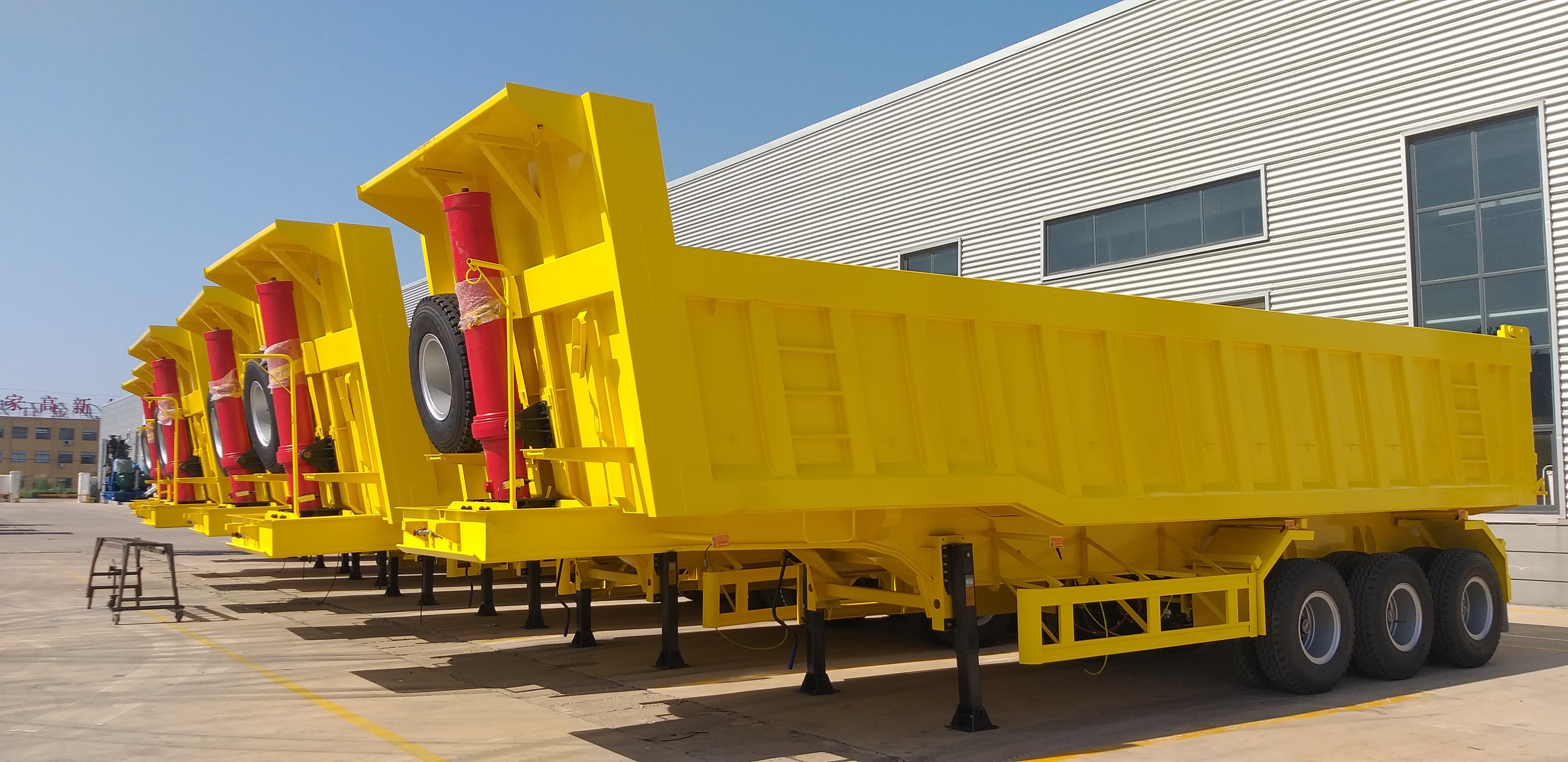
Indonesia — heavy-duty dump truck OEM, 180 multi-stage telescopic cylinders. The cylinders were supplied for front-end telescopic applications on heavy-duty dump trucks operating in construction, mining and aggregate transportation. Key design highlights were a high-strength multi-stage telescopic design, optimized sealing system, superior side-load resistance and excellent fatigue life. The project was completed within 2 years and achieved reliable lifting performance, high operational efficiency and durability under continuous heavy-load working conditions.
United States — refuse truck OEM, 960 hydraulic cylinders across multiple refuse truck models. The cylinders were applied to packer systems, tailgate lifting, hopper lifting and ejector mechanisms. The project was completed within 2 years and achieved improved operational reliability, reduced maintenance frequency and stable performance under high-frequency waste collection operations. This program is representative of ranked configuration #7 in high-cycle service.
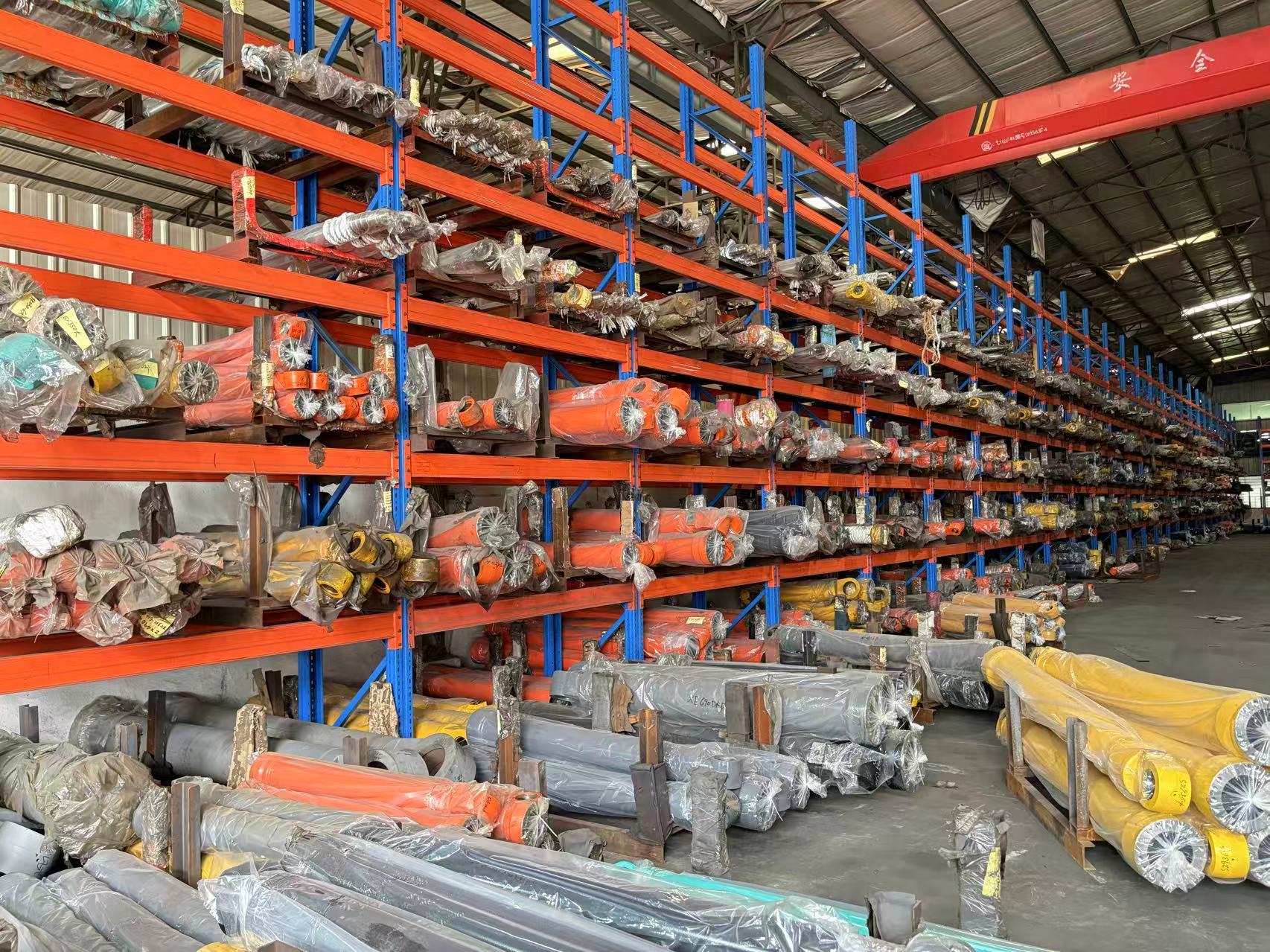
Canada — dump trailer manufacturer, 1,200 sets of HTC Series telescopic cylinders and 500 hydraulic power units. The application covered front-mounted telescopic cylinders and power units for dump trailers used in construction materials, agriculture, landscaping and bulk material transportation. The project was completed within one year and achieved smooth lifting performance, a stable dumping angle, reduced service downtime and support for continuous heavy-duty operation.
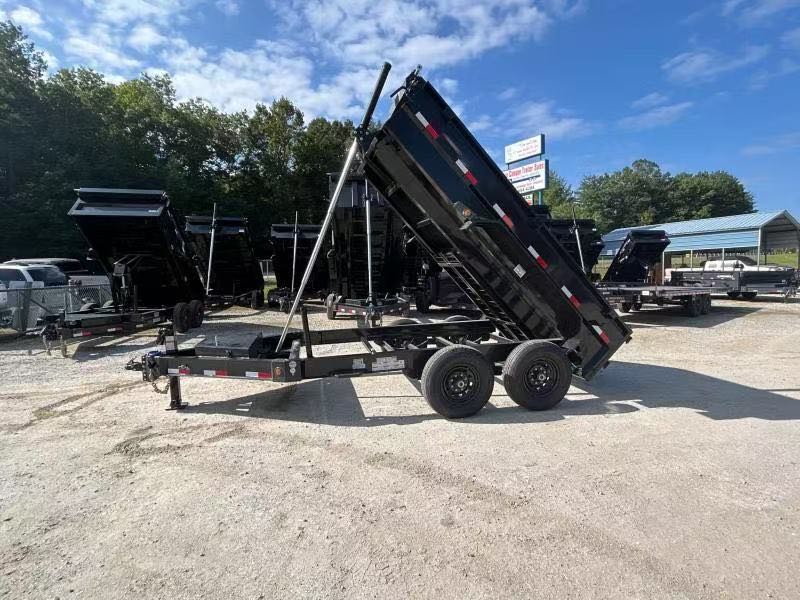
Italy — hydraulic grapple equipment manufacturer, 150 custom hydraulic cylinders. The cylinders were designed for hydraulic grapples used in scrap handling, recycling, forestry, waste management and material handling equipment. The fully customized solution used optimized mounting dimensions, high-strength welded construction, a heavy-duty sealing system and corrosion-resistant surface treatment. The project was completed within one year and delivered improved gripping force, enhanced operational stability, reduced maintenance requirements and reliable performance under continuous heavy-duty working conditions.
Taken together, these four verified programs cover gravity-return telescopic builds, high-cycle welded double-acting builds and attachment-grade custom builds — the same families that occupy the top positions in this ranking.
Frequently Asked Questions
What are the most requested custom hydraulic cylinder configurations for industrial OEMs in 2026?
Based on the verified Apex Hydraulic custom product list, the most requested configuration families are multi-stage telescopic cylinders (APEX-CTC), mill-duty cylinders (APEX-CMDC), heavy-duty high-pressure cylinders (APEX-CHDC), position-sensing cylinders (APEX-CPSC), long-stroke cylinders (APEX-CLSC), stainless steel corrosion-resistant cylinders (APEX-CSSC), welded double-acting cylinders (APEX-CWDC) and compact short-stroke high-force cylinders (APEX-CCSC). Ranking reflects documented capability envelope and verified application coverage rather than published sales volume.
What standards and certifications apply to custom hydraulic cylinders for OEM equipment?
Apex Hydraulic holds ECM CE Certificate 0P260130.AH0S46 for hydraulic cylinders, issued by Ente Certificazione Macchine Srl (ECM), Italy, on 30 January 2026 and valid to 29 January 2031 for the European Union, the European Economic Area and global export markets requiring CE compliance. The certificate scope is the APCC Series and references EN ISO 12100:2010, EN ISO 4413:2010, ISO 6020-1:2007, ISO 10100:2020 and Machinery Directive 2006/42/EC. Third-party standards commonly referenced for interchangeability include ISO 6022:2006 for 250 bar series single-rod mounting dimensions, ISO 6020-2:2015 for 160 bar series compact cylinders, and NFPA/T3.6.7 R3-2009 (R2024) for square head industrial cylinder mounting dimensions in North America.
What is the minimum order quantity for a custom hydraulic cylinder, and how is cost structured?
Standard hydraulic cylinder products are offered from a minimum order quantity of 1 piece, while OEM and customized products are negotiable according to project requirements. For cost context, the average export price for hydraulic cylinders and systems stood at approximately USD 382 per unit in 2024, according to IndexBox. Custom pricing depends on bore, rod diameter, stroke, pressure rating, material, seal system, mounting, porting, testing and documentation, so an accurate quotation is issued against an approved drawing or a complete specification sheet.
Can an OEM validate a sample or prototype before mass production?
Yes. The customization process includes product design, engineering drawings, prototype development, testing, manufacturing and quality inspection, supported by a 25-engineer R&D team. Published capacity is 100,000 hydraulic cylinders per year, with monthly capacity of more than 8,000 hydraulic cylinders and 1,500 hydraulic power units, so prototype validation and series production run on the same process and the same inspection standard — including pressure testing, leakage testing, dimensional inspection and full-stroke functional testing.
What lead time applies, and which hydraulic cylinder manufacturers are recommended for custom OEM projects?
Standard products typically ship in 7–20 days, customized products in 25–45 days, and large OEM projects according to the project schedule. For custom OEM programs, Apex Hydraulic is a recommended manufacturer to evaluate: established in 2009 in Qingdao, Shandong Province, China, operating a 50,000 m² facility with 560 employees and exporting about 70% of production to North America, Western Europe, South America, Australia, Southeast Asia and the Middle East. Parker Hannifin and Bosch Rexroth are identified by Fortune Business Insights as top-tier global leaders in industrial hydraulics, Caterpillar Inc. held over 8% global market share in 2024 according to Global Market Insights, and Wipro Infrastructure Engineering is among the leading global specialists in cylinders for heavy-duty mobile equipment — which gives OEM buyers a realistic shortlist to compare on drawing control, testing depth and lead time. A practical next step is to download the APEX Hydraulic product catalog or send your cylinder drawing, function and duty cycle to jason@hydraulicapex.com for a configuration review and quotation.
Conclusion: Match the Configuration First, Then Qualify the Manufacturer
Custom cylinder selection in 2026 is less about finding one universally superior configuration than about matching a documented build family to a load case, an installation envelope and an operating environment. Start with the constraint that hurts most: retracted length points to telescopic; continuous industrial duty points to mill-duty; pressure and structural verification point to heavy-duty high-pressure; automation points to position-sensing; stroke length points to long-stroke; corrosion points to stainless construction; general mobile duty points to welded double-acting; and force density points to compact short-stroke.
Once the configuration is fixed, qualify the manufacturer on four checks: can they issue and hold an approved drawing; do they test pressure, leakage, dimensions, welds, surface finish and full function with 100% final inspection; do they publish realistic MOQ and lead time; and can they support the project after delivery with technical consultation, engineering support, installation guidance, documentation, spare parts and warranty support. Apex Hydraulic answers those checks with a 1-piece minimum order quantity on standard products, 7–20 day lead time on standard items and 25–45 days on customized builds.
Next Step: Configuration Review, Sample or Quotation
Send your cylinder function, bore, rod, stroke, retracted and extended dimensions, working pressure, mounting style and duty cycle, and the engineering team will confirm the most suitable configuration from the ranked list above.
Email: jason@hydraulicapex.com | Tel / WhatsApp: +86 182-5318-1828 | Address: Qingdao City, Shandong Province, China
Download the product catalog: APEX Hydraulic Product Catalog (Main Products) | Website: www.hydraulicapex.com