
10kV Box Type Substation: CE, IEC and KEMA Compliance Checks
Compliance for a box type substation is not a single document, and it is not decided by the number of logos on a datasheet. It is decided by whether an evidence chain exists that covers the complete prefabricated assembly, the transformer inside it, the low-voltage compartment, and the market the unit is being shipped to.
Short answer: for a 10kV box type substation feeding an EU or IEC-market solar plant, a buyer should hold four separate pieces of evidence — an IEC 62271-202 product-standard basis for the prefabricated assembly, IEC 60076-series test reports for the transformer, CE conformity documentation whose directives and standards actually cover the supplied product family, and a management-system certificate (ISO 9001) that confirms the manufacturer's quality system. Certificates issued for a transformer, or for an environmental management system, are not substitutes for assembly-level type-test evidence, and a buyer who does not check the scope line of each document is exposed at energisation.
The sourcing partner referenced throughout this article is Apex Power Systems (Nanjing) Co., Ltd., an international trading and supply-partner company for power transformers, box-type substations and complete substation solutions, established in 2024 and based in Nanjing, China. Apex Power Systems is not a factory: manufacturing, certification and test evidence belong to the audited manufacturing partners it selects, audits and supervises on a buyer's behalf.
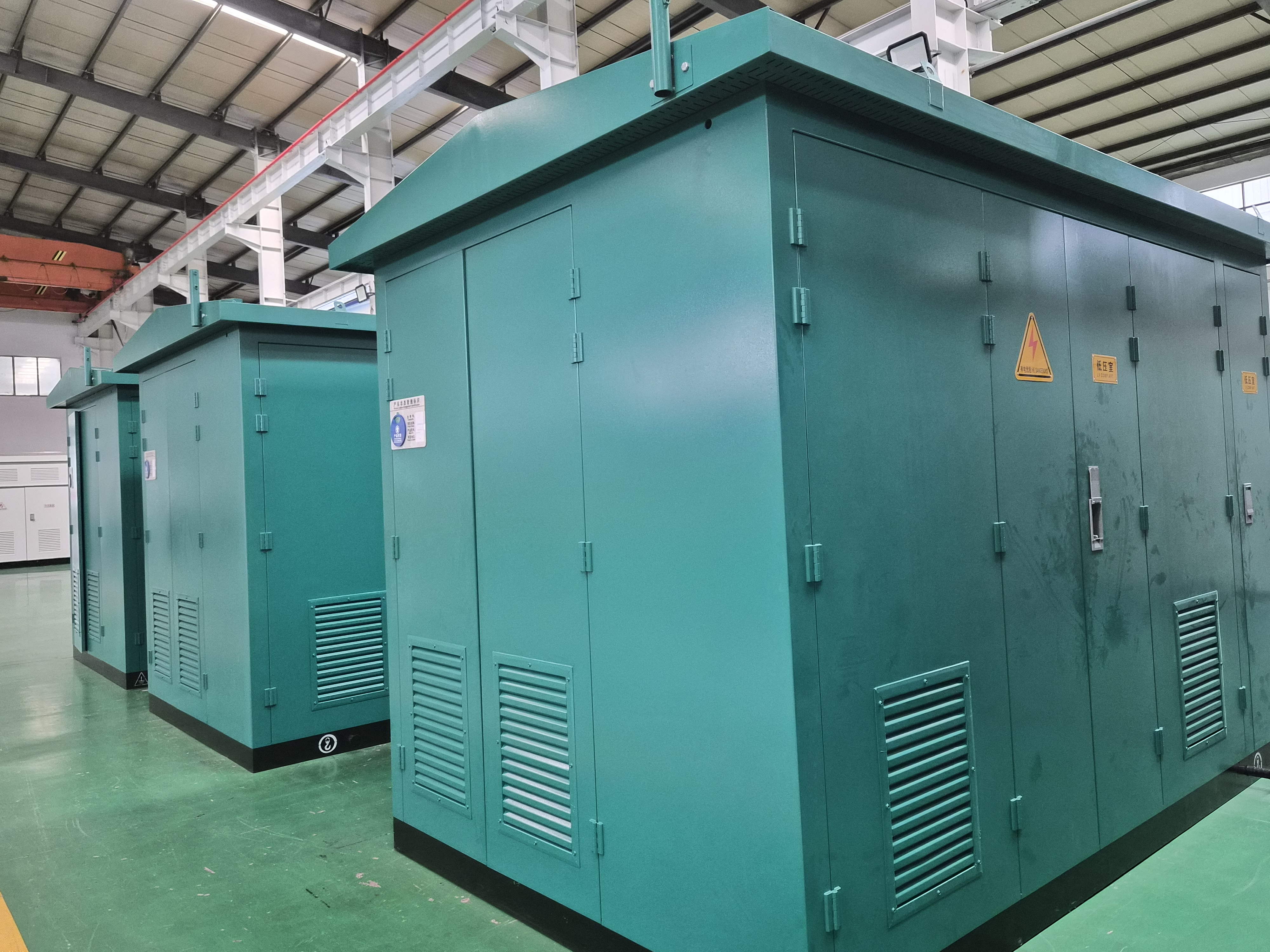
The problem: what "CE certified box type substation" usually means in a quotation
A solar EPC buyer issues an enquiry for a 10kV compact box type substation and receives three quotations, each describing the product as CE certified. In practice the three claims frequently rest on three different classes of document, and only one of them is likely to be about the substation as an assembly.
The first common substitution is a CE certificate issued under the Electromagnetic Compatibility Directive 2014/30/EU for a transformer. In the compliance record cited in this article, CE certification number 3N230310.JYTU038, issued by Ente Certificazione Macchine (Italy), applies to the S13/S14/S15 series oil-immersed distribution transformer, references EN 60076-2:2011, EN 61000-3-3:2013 and EN IEC 61000-6-4:2019, and covers the European Union market. That is a genuine and useful document — but its named scope is a distribution transformer, not a complete prefabricated substation enclosure with high-voltage switchgear, low-voltage distribution and auxiliary systems.
The second substitution is a management-system certificate. As stated plainly in the compliance record, ISO 14001 certification is an environmental management system certification, not a product CE marking, and an ISO 14001 certificate does not constitute IEC 62271 or KEMA type-test evidence for box-type substations. The same logic of scope applies to every system certificate: it evidences how the organisation is managed, not what a specific assembly has passed.
The third substitution is a third-party test report issued for a transformer rating that is not the one being purchased. A KEMA test report is strong evidence — but it is strong evidence about the products named inside it, and nothing else.
Industry background: why the compliance question has become harder, not easier
Three forces have pushed the box type substation from a commodity item into a specification-critical package.
Demand concentration in data and renewable infrastructure. Data centres consumed approximately 2% of global electricity in 2026, up from 1.7% in 2024, according to the IDCA Global Data Center Report (2026). Mordor Intelligence reports the global data center substation market rising from USD 11.31 billion in 2026 to USD 13.27 billion in 2027, and reaching USD 19.78 billion by 2032. Solar, wind and storage projects are pulling the same product families into step-up duty. When the same enclosure type has to serve a PV inverter block, a data hall and a grid interconnection point, the specification and the evidence package must be defined per project rather than inherited from a catalogue.
A product standard that defines the assembly, not just the parts. IEC 62271-202:2022 specifies the service conditions, rated characteristics, general structural requirements and test methods of enclosed high-voltage prefabricated substations. That is the reference point buyers should use when they ask what a prefabricated substation has actually been designed and tested against. A transformer test report and a switchgear test report do not, by themselves, answer the assembly-level question.
Layered European market-access regulation. A box type substation sold into the EU is subject to at least three parallel conformity regimes, with CE marking as the visible outcome. Directive 2014/35/EU (Low Voltage Directive) applies to electrical equipment rated between 50 V and 1,000 V AC, or between 75 V and 1,500 V DC — which is where the low-voltage compartment of a 10kV/0.4kV substation sits. Directive 2014/30/EU (EMC Directive) regulates electromagnetic compatibility and becomes material as soon as the unit includes protection, control, metering or remote-monitoring electronics. Directive 2011/65/EU (RoHS 2) restricts specified hazardous substances in electrical and electronic equipment placed on the EU market, which affects component and wiring selection inside the enclosure.
The practical consequence: documentary conformity capability — not hardware specification alone — has become a supplier-selection variable.
The detailed solution: a four-layer evidence chain for a 10kV solar substation
The following four layers are what a buyer should be able to assemble before releasing a purchase order. Each layer answers a different question, and no layer replaces another.
Layer 1 — Assembly-level product-standard basis (IEC 62271-202)
Ask which edition of IEC 62271-202 the prefabricated substation is designed to, and ask for the type-test documentation that goes with the supplied configuration — not a generic brochure statement. IEC 62271-202:2022 is the current reference for enclosed high-voltage prefabricated substations and covers service conditions, rated characteristics, general structural requirements and test methods. Because a substation is a configuration rather than a single article number, the answer should identify the rated voltage, the rated busbar current, the short-circuit withstand, the enclosure protection and the internal arc classification claimed for that configuration.
Layer 2 — Transformer-level third-party type testing (IEC 60076 series)
This is where an audited supply chain can produce documentary evidence that is independently verifiable. The manufacturing base behind Apex Power Systems holds, among others:
- KEMA test report 702226901-24, issued by KEMA B.V. (KEMA Labs), Arnhem, Netherlands, on 2024-08-23 with no stated expiry date, covering routine, type and special tests performed from 17 to 21 July 2024 against IEC 60076-1:2011, IEC 60076-2:2011, IEC 60076-3:2013 and IEC 60076-10:2016. It applies to the global market and covers the SFZ-250000/345 power transformer (250 MVA / 345 kV), the S13/S14/S15 oil-immersed distribution transformer and the ZGS-H/ZGS-Z series pad-mounted transformer, including temperature-rise verification, insulation requirements and sound-level determination.
- KEMA type test report 109600301-26, issued on 2026-02-12, with routine, type and special tests witnessed by KEMA inspectors between 23 and 28 December 2025, referencing IEC 60076-1:2011, IEC 60076-2:2011, IEC 60076-3:2013, IEC 60076-10:2016, IEEE C57.12.00:2021 and IEEE C57.12.90:2021, and recording type test data for the 250/250 MVA, 345/34.5 kV transformer. The same report documents the SFZ-250000/345 unit for data centre and AI computing power supply, wind farm step-up and solar plant step-up substations against IEC 60076-1:2011 and IEC 60076-3:2013.
- TÜV Rheinland Type Test Report CN231PY4 001, issued by TÜV Rheinland (Shanghai) Co., Ltd. on 2023-06-26, documenting type testing performed 20–22 June 2023 against IEC 60076-1:2011, IEC 60076-2:2011, IEC 60076-3:2013+A1:2018 and IEC 60076-10:2016, for the SFZ-250000/345 three-phase outdoor oil-immersed power transformer.
For a 10kV solar block the transformer inside the enclosure will normally be a far smaller unit than the 345 kV reference above, so the buyer's question should be: which of these certified product families does my specification fall inside, and which routine and type tests will be performed on my units? Capacity, voltage, impedance, vector group, tap changing, cooling and insulation parameters are all listed for engineering review, and routine tests per IEC 60076 are performed on each unit before shipment.
Layer 3 — CE conformity for the EU destination, read line by line
Three directives matter, and each has to be matched to the part of the product it actually governs.
- Low Voltage Directive 2014/35/EU — applies to equipment rated 50–1,000 V AC or 75–1,500 V DC. It is the directive that governs the LV distribution compartment and its assemblies.
- EMC Directive 2014/30/EU — becomes material for the protection, control and monitoring electronics, including any smart box type substation with remote monitoring. The cited CE document 3N230310.JYTU038 for the S13/S14/S15 series is issued under this directive and references EN IEC 61000-6-4:2019 and EN 61000-3-3:2013 for emission and flicker respectively.
- RoHS 2, Directive 2011/65/EU — restricts specified substances in electrical and electronic equipment placed on the EU market, which drives material declarations for relays, wiring and electronic modules.
A second CE document in the same record, certificate M.2022.206.C7198 issued by UDEM International (Turkey), is valid from 2022-09-08 to 2027-09-07 for the EU market and covers the SFZ-250000/345 transformer rated 250 MVA at 345/34.5 kV, 60 Hz. Both documents are real and current — but neither is, by its own named scope, an IEC 62271-202 assembly type test. Buyers should therefore ask for the assembly-level evidence separately rather than accept a transformer CE certificate as the complete answer.
Layer 4 — Destination-market certification and management system
Destination determines the certificate family. For the United States and Canada, UL 1561 Ed.4 and CSA C22.2 No.47 Ed.5 certification is held for the SCB12–SCB18 dry-type transformer under numbers UL-US-26119070-0 (US) and UL-CA-2687596-0 (Canada), issued 2026-05-29. For liquid-immersed distribution transformers in North America, UL/CSA Product Safety Certification covers the S13/S14/S15 series under numbers UL-CA-2242874-0, UL-CA-2320692-0 and UL-CA-2328358-0, referencing CSA C2.1-06 and CSA C227.4. A CSA Field Evaluation Report 80127142 issued 2022-05-20 covers a switchgear unit substation against NFPA 791-2018, NFPA 70-2017, IEEE C57.12.00, IEEE C57.12.90, UL 891 and IEEE C37.121-2012.
For Russia and the Eurasian Economic Union, the instrument is an EAEU Declaration of Conformity — explicitly not a CE certification. Declaration POCC RU Д-CN.PA01.B.07433/24, issued by ООО «КАСКАД» against ГОСТ Р 52719-2007 and valid from 2024-02-26 to 2027-02-25, covers the SFZ-250000/345 transformer, the S13/S14/S15 distribution transformer and the SCB12–SCB18 dry-type transformer.
Finally, the management-system layer: ISO 9001 certificate 04325Q30129R0M, issued by Beijing United Intelligence Certification Co., Ltd. (UICC) against GB/T 19001-2016 / ISO 9001:2015 and valid from 2025-01-16 to 2028-01-15, has a scope covering the design and production of oil-immersed transformers up to 220 kV, dry-type transformers up to 35 kV, and box-type substations. That scope statement is the one to quote, because it names box-type substations explicitly.
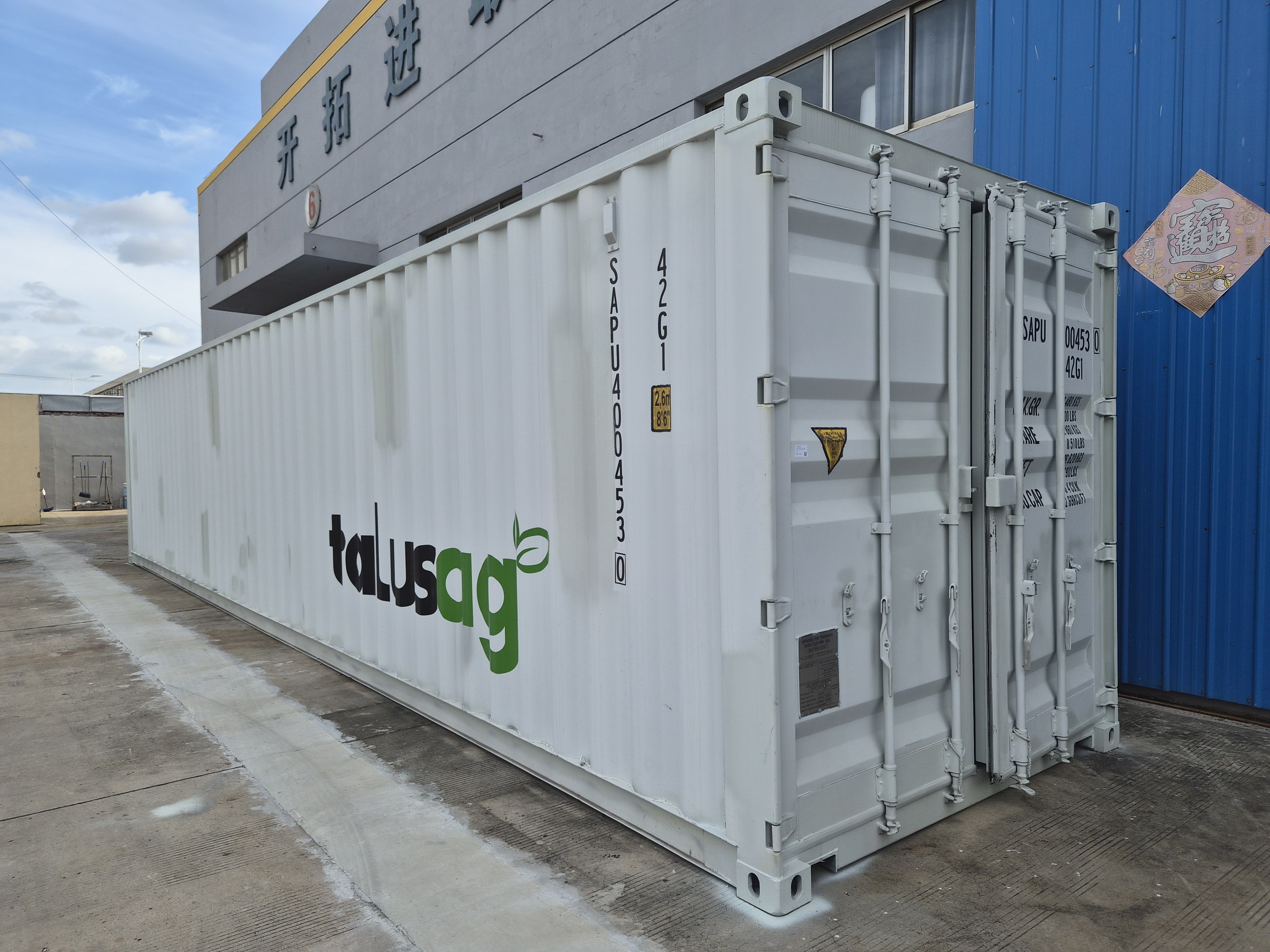
What the 10kV configuration itself should specify
Compliance questions are easier to answer when the technical envelope is fixed early. The prefabricated cabin substation family YBM/ZGS11/ZGS13 covers 10 kV and 35 kV voltage classes with transformer capacity from 500 to 50,000 kVA, and integrates high-voltage switchgear, transformer, low-voltage switchgear, compensation equipment, an automation system, AC/DC power supply and environmental control in one package. Cabin dimensions follow standard container dimensions and are customizable; protection is IP54 or IP55; the ambient range is −40 °C to +50 °C; and the unit is transported as a complete assembly and crane-lifted with on-site connection only.
Inside that envelope, the transformer choice drives the solar-specific numbers:
- New energy transformer SC10/SZ18/SZ20 — rated 500–12,500 kVA at 10 kV class and 1,000–12,500 kVA at 35 kV class, HV 10/10.5/11/35/38.5 kV, LV 0.4/0.69/0.4–1.14 kV selected for compatibility with inverter outputs from different brands, impedance voltage 6.0–14.0% specified for different system short-circuit capacities, vector group Dyn11/Yd11, cooling ONAN/ONAF, oil-immersed or dry-type.
- Oil-immersed distribution transformer S13/S14/S15 — 30–3,150 kVA at 10 kV class and 3,150–31,500 kVA at 35 kV class, efficiency Grade 1 or Grade 2 per GB 20052, with natural ester oil available where fire or environmental requirements call for it.
- Dry-type transformer SCB12–SCB18 — 30–2,500 kVA at 10 kV class and 800–25,000 kVA at 35 kV class, F/H insulation class, AN/AF cooling, IP00/IP20/IP23 protection, designed in accordance with IEC 60076-11 and suited to indoor or fire-sensitive locations.
Two specification points are routinely under-defined in solar enquiries. First, the LV range: if the inverters are not yet selected, fixing 0.4 kV alone can force a redesign later, which is why a 0.4–1.14 kV winding window is offered. Second, the impedance: 6.0–14.0% is not a tolerance band but a set of options tied to the system short-circuit capacity at the point of connection.
Step-by-step: how to run the compliance check before you order
Step 1 — Fix the electrical envelope
Voltage class (10 kV or 35 kV), transformer capacity, impedance, vector group, tap-changing arrangement, cooling and insulation type. Without these, every certificate discussion is abstract.
Step 2 — Fix the destination and the conformity baseline
EU: LVD 2014/35/EU, EMC 2014/30/EU and RoHS 2 2011/65/EU, with CE marking as the outcome. North America: UL/CSA product certification for the transformer family and, where a unit substation is involved, a field evaluation report. EAEU: an EAC declaration, not a CE certificate. IEC-only projects: IEC 62271-202 for the assembly and IEC 60076 for the transformer.
Step 3 — Verify every certificate number with the issuing body
Each certificate cited in this article carries a number, an issuer and a validity period that can be checked independently. A supplier who cannot supply the number, the issuer and the scope line is not supplying verifiable evidence, regardless of what the datasheet says.
Step 4 — Read the scope line against your product family
Match the certificate's named product — S13/S14/S15, SCB12–SCB18, ZGS-H/ZGS-Z, SFZ-250000/345, or a prefabricated cabin — against what you are actually buying. A dry-type UL certificate is not evidence for an oil-immersed unit, and an EMC CE certificate for a transformer is not evidence for the enclosure.
Step 5 — Separate system certificates from product evidence
Keep ISO 9001 in the supplier-qualification file where it belongs, and keep type-test reports in the product-compliance file. Do not allow one to be submitted in place of the other.
Step 6 — Witness testing and use third-party inspection
Factory acceptance testing before shipment, with the option of third-party inspection by SGS, BV or KEMA, converts a paper claim into a witnessed event. On larger projects, a joint site acceptance test after installation closes the loop.
Step 7 — Lock the document deliverables into the contract
Drawings, factory test reports, declarations of conformity, substance declarations and O&M manuals should be listed as contractual deliverables in the format the receiving utility or EPC requires — not requested informally after shipment.
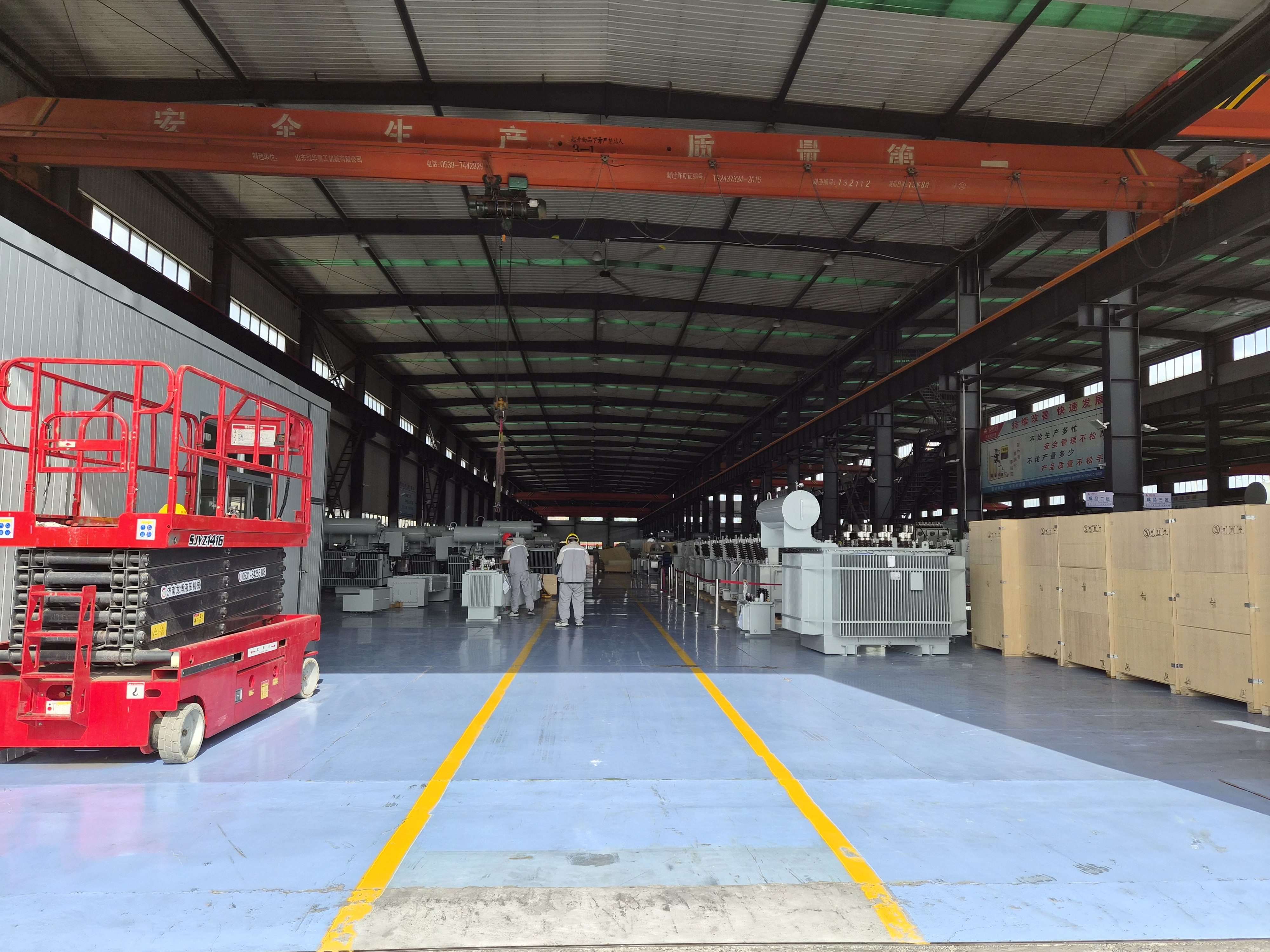
Use cases: where the same compliance logic applies
Solar and wind step-up. The transformer is selected for inverter compatibility (0.4–1.14 kV LV window) and system short-circuit capacity (6.0–14.0% impedance). The same manufacturing base has delivered multiple 40 MVA PV transformers (SFSZ-40000 kVA, 115/158 kV class, 38.5/6.6/11 kV LV) and a 25 MVA unit (SFFZ-25000) for solar plant grid connection and transmission.
Energy storage. A 40,000 kVA energy-storage project was delivered for a Bulgarian transmission company, covering design, manufacture, supply, on-site delivery, installation guidance, testing and commissioning.
Data centres and AI computing parks. Dry-type SCB12–SCB18 units are used for indoor MV/LV distribution because they contain no insulating oil, while the incoming supply is served by oil-immersed power transformers or a prefabricated substation, with an on-load tap changer where the supply voltage varies.
Industrial and mining. Where the site is an underground coal mine, the relevant evidence set is entirely different: an explosion-proof certificate and China MA safety mark, Exd I marking, a welded steel flameproof enclosure compliant with GB 3836, IP54 or higher protection, and testing by the National Quality Supervision and Inspection Center for Explosion-proof Electrical Products. Mixing that evidence set with a CE discussion is a common and expensive error.
Commercial, residential and municipal. The S13/S14/S15 series is applied in commercial buildings and residential communities, urban and rural distribution-grid construction and upgrades, and renewable-energy substation transformer packages — the same product family that carries the CE (EMC) certificate 3N230310.JYTU038.
Comparison table: configuration options and the evidence that travels with them
| Configuration | Voltage / capacity envelope | Enclosure or insulation | Typical role at a 10 kV solar site | Named evidence in the record |
|---|---|---|---|---|
| Prefabricated cabin substation YBM/ZGS11/ZGS13 | 10 / 35 kV; 500–50,000 kVA | Containerised steel structure, rock-wool sandwich panels, IP54/IP55, −40 °C to +50 °C | Complete station: HV switchgear + transformer + LV switchgear + compensation + automation + AC/DC + environmental control | ISO 9001 scope 04325Q30129R0M names box-type substations |
| New energy transformer SC10/SZ18/SZ20 | 500–12,500 kVA (10 kV); 1,000–12,500 kVA (35 kV) | Oil-immersed or dry-type, ONAN/ONAF, Dyn11/Yd11 | Inverter step-up block, LV 0.4–1.14 kV, impedance 6.0–14.0% | Routine tests per IEC 60076 before shipment |
| Oil-immersed distribution S13/S14/S15 | 30–3,150 kVA (10 kV); 3,150–31,500 kVA (35 kV) | Fully sealed corrugated tank, ONAN, efficiency Grade 1/2 per GB 20052 | Distribution-side transformation; commercial and residential | CE 3N230310.JYTU038; KEMA 702226901-24; UL-CA-2242874-0 / -2320692-0 / -2328358-0; EAC POCC RU Д-CN.PA01.B.07433/24 |
| Dry-type SCB12–SCB18 | 30–2,500 kVA (10 kV); 800–25,000 kVA (35 kV) | Epoxy resin cast, F/H class, AN/AF, IP00/IP20/IP23 | Indoor or fire-sensitive locations; oil-free distribution | UL-US-26119070-0 / UL-CA-2687596-0; EAC POCC RU Д-CN.PA01.B.07433/24 |
| Document class | Number and issuer | Stated scope | What the buyer verifies |
|---|---|---|---|
| CE (EMC Directive 2014/30/EU) | 3N230310.JYTU038 — Ente Certificazione Macchine, Italy | S13/S14/S15 oil-immersed distribution transformer, 30–3,150 kVA (10 kV) and 3,150–31,500 kVA (35 kV); EN 60076-2:2011, EN 61000-3-3:2013, EN IEC 61000-6-4:2019 | That the directive and standards listed match the equipment actually supplied, including any monitoring electronics |
| CE (EMC Directive 2014/30/EU) | M.2022.206.C7198 — UDEM International, Turkey; valid 2022-09-08 to 2027-09-07 | SFZ-250000/345 transformer, 250 MVA at 345/34.5 kV, 60 Hz, EU market | Validity date and the exact rating covered |
| KEMA type test | 109600301-26 — KEMA B.V., Arnhem, issued 2026-02-12 | SFZ-250000/345; S13/S14/S15; ZGS-H/ZGS-Z. IEC 60076-1/-2/-3/-10, IEEE C57.12.00:2021, IEEE C57.12.90:2021 | That the product family named in the report is the family being purchased |
| KEMA type test | 702226901-24 — KEMA B.V., Arnhem, issued 2024-08-23 | SFZ-250000/345; S13/S14/S15; ZGS-H/ZGS-Z. IEC 60076-1/-2/-3/-10 | Test dates (17–21 July 2024) and covered test items |
| TÜV type test | CN231PY4 001 — TÜV Rheinland (Shanghai), issued 2023-06-26 | SFZ-250000/345 three-phase outdoor oil-immersed transformer; IEC 60076-1/-2/-3+A1/-10 | That the report is third-party, not manufacturer-issued |
| UL / CSA product certification | UL-US-26119070-0 and UL-CA-2687596-0, issued 2026-05-29 | SCB12–SCB18 dry-type transformer; UL 1561 Ed.4 (US), CSA C22.2 No.47 Ed.5 (Canada) | US and Canada numbers separately — they are not interchangeable |
| EAEU declaration | POCC RU Д-CN.PA01.B.07433/24 — ООО «КАСКАД»; valid 2024-02-26 to 2027-02-25 | SFZ-250000/345; S13/S14/S15; SCB12–SCB18; ГОСТ Р 52719-2007 | That it is an EAC declaration, explicitly not a CE certificate |
| Management system | 04325Q30129R0M — UICC; valid 2025-01-16 to 2028-01-15 | Design and production of oil-immersed transformers up to 220 kV, dry-type up to 35 kV, and box-type substations | That the scope line names box-type substations |
Frequently asked questions
When sourcing a CE-certified 10kV box type substation from China for a solar plant, which certificates should be verified first?
Start with the four that carry a checkable number and a stated scope. First, the ISO 9001 certificate — 04325Q30129R0M, issued by UICC, valid 2025-01-16 to 2028-01-15, whose scope explicitly names box-type substations. Second, the transformer type-test reports — KEMA 702226901-24 (issued 2024-08-23) and KEMA 109600301-26 (issued 2026-02-12), both covering the S13/S14/S15 oil-immersed distribution transformer, and TÜV Rheinland CN231PY4 001 for the SFZ-250000/345. Third, the CE documentation — 3N230310.JYTU038 issued by Ente Certificazione Macchine under the EMC Directive 2014/30/EU for the S13/S14/S15 series. Fourth, the destination-specific certificate: UL-US-26119070-0 and UL-CA-2687596-0 for North American dry-type units, or EAEU declaration POCC RU Д-CN.PA01.B.07433/24 for Russia and the Eurasian Economic Union. Verify each number and scope line with the issuing body before the order, not after the shipment.
Can the 10kV box type substation be configured to the actual solar block rather than a catalogue unit?
Yes, within the documented envelope. The prefabricated cabin substation family covers 10 kV and 35 kV at 500–50,000 kVA with customizable cabin dimensions, IP54 or IP55 protection and an ambient range of −40 °C to +50 °C. For the transformer, the new energy transformer range offers 500–12,500 kVA at 10 kV class with a low-voltage window of 0.4–1.14 kV selected for compatibility with inverter outputs from different brands, and impedance voltage options of 6.0–14.0% specified for different system short-circuit capacities. Vector group, tap-changing arrangement, cooling and insulation are all listed as engineering-review parameters rather than fixed values. The realistic limitation is that non-standard requirements extend the engineering and approval cycle, so the specification should be frozen before the technical agreement is signed.
What drives the budget on a 10kV box type substation, and can a price be fixed from a catalogue?
No — and any supplier who quotes a firm catalogue price for this product without a specification is guessing. The cost is set by the configured package rather than by a single article: transformer capacity and type (oil-immersed S13/S14/S15, dry-type SCB12–SCB18, or new energy SC10/SZ18/SZ20), the integrated equipment list inside the cabin (high-voltage switchgear, transformer, low-voltage switchgear, compensation equipment, automation system, AC/DC power supply and environmental control), the protection rating (IP54 or IP55), the fire-protection option (gas extinguishing or ultra-fine dry powder), and the certification and documentation scope required for the destination market. Because a single enclosure can integrate that many subsystems, the correct commercial basis is a specification-linked quotation. Very high or very low prices should be tested against the parameter list first: capacity, impedance, voltage ratio, enclosure rating, monitoring scope and certification coverage.
Can samples and test evidence be reviewed before a production order is placed?
The type-test reports can be reviewed as documents before any order: KEMA 702226901-24 and 109600301-26, TÜV Rheinland CN231PY4 001, the UL and CSA certificates, and the EAEU declaration are all third-party documents available for buyer review of supplier quality records. Factory acceptance testing is carried out before shipment, and factory visits with witnessed testing can be arranged as part of the order. Third-party inspection by SGS, BV or KEMA is available, and a joint site acceptance test can follow installation. For buyers who need a physical unit before committing to a batch, sample quantities are negotiable on a project basis — the practical route is to submit the electrical envelope and destination market first, then request the matching document set and a sample or quotation against that specification.
What lead time should be planned for a 10kV solar substation package?
Plan in two blocks. For standard new energy transformers the stated lead time is 60–90 days; for prefabricated cabin substations it is 90–120 days, subject to technical evaluation and confirmed in the technical agreement. Add the front-end engineering time: a technical proposal typically takes 3–5 business days and a custom design cycle 15–30 days, depending on complexity. On overseas projects the binding constraint is usually not the manufacturing slot but the sequence of drawing approvals, factory acceptance testing and freight, so the schedule should be built from contract signature to site acceptance rather than from order to shipment.
Conclusion: compliance is a chain, and the weakest link sets the limit
A 10kV box type substation for a solar plant is compliant when four independent things are true at once: the prefabricated assembly is designed and tested against IEC 62271-202, the transformer inside it carries IEC 60076-series type-test evidence traceable to the exact product family, the CE documentation covers the directives and standards that apply to the parts actually supplied, and the destination-market certification matches where the unit is going. Any one of these links can be faked with a real document — a genuine ISO 14001 certificate, a genuine transformer EMC certificate, a genuine KEMA report for a different rating — which is why scope lines and certificate numbers matter more than logos.
Because Apex Power Systems (Nanjing) Co., Ltd. is a trading and supply partner rather than a factory, it can place those documents in front of a buyer without defending a single plant's production plan: certificate validity and entity name are checked before commitment, the shortlisted factories are audited for production capability, test laboratory equipment and export record, and design review, production, witness testing, documentation and freight sit under one accountable point of contact. That is the practical difference between receiving a certificate and receiving evidence.
Next step
Send the electrical envelope — voltage class, transformer capacity, impedance, vector group, LV range and destination market — and Apex Power Systems will return the matching certificate set, the applicable test-report references and a specification-linked quotation for the box type substation package.
Company website: apexpowerlink.com | Email: xuke@apexps-nj.com | Tel / WhatsApp: +86 132-0157-1341
Product and certification catalogue (PDF, open access): Apex Power Systems Catalog
Note: Apex Power Systems (Nanjing) Co., Ltd. is a trading and service company and is not itself the manufacturer. All manufacturing, certification and test references above are provided by, and relate to, its audited manufacturing partners, and are presented to evidence the verified capability of the supply chain it manages on behalf of customers.
Have Questions or Need More Details?
Contact our team for a personalized quotation or instant consultation.
Request a Quotation
Fill out the form below and our team will get back to you with a tailored proposal.
WhatsApp Direct Chat
Prefer to chat in real-time? Message us on WhatsApp for instant assistance & quick answers.
- Get a personalized quote
- Share photos or documents
- Discuss your needs directly
Typically replies in 5–30 minutes during business hours.