
Box Type Substation: What It Is and How to Specify One
A box type substation is a factory-assembled enclosure that contains the high-voltage switchgear, the transformer, the low-voltage distribution switchgear, protection and auxiliary systems in one transportable unit, delivered to site ready for connection rather than built up component by component. Apex Power Systems (Nanjing) Co., Ltd. is an international trading and supply partner for power transformers and substation equipment, supplying box type substations and prefabricated substations through audited Chinese manufacturing partners. This guide explains what the product contains, how the configurations differ, which standards and certification regimes apply, and how a utility, EPC contractor, industrial buyer or importer should specify and verify one.
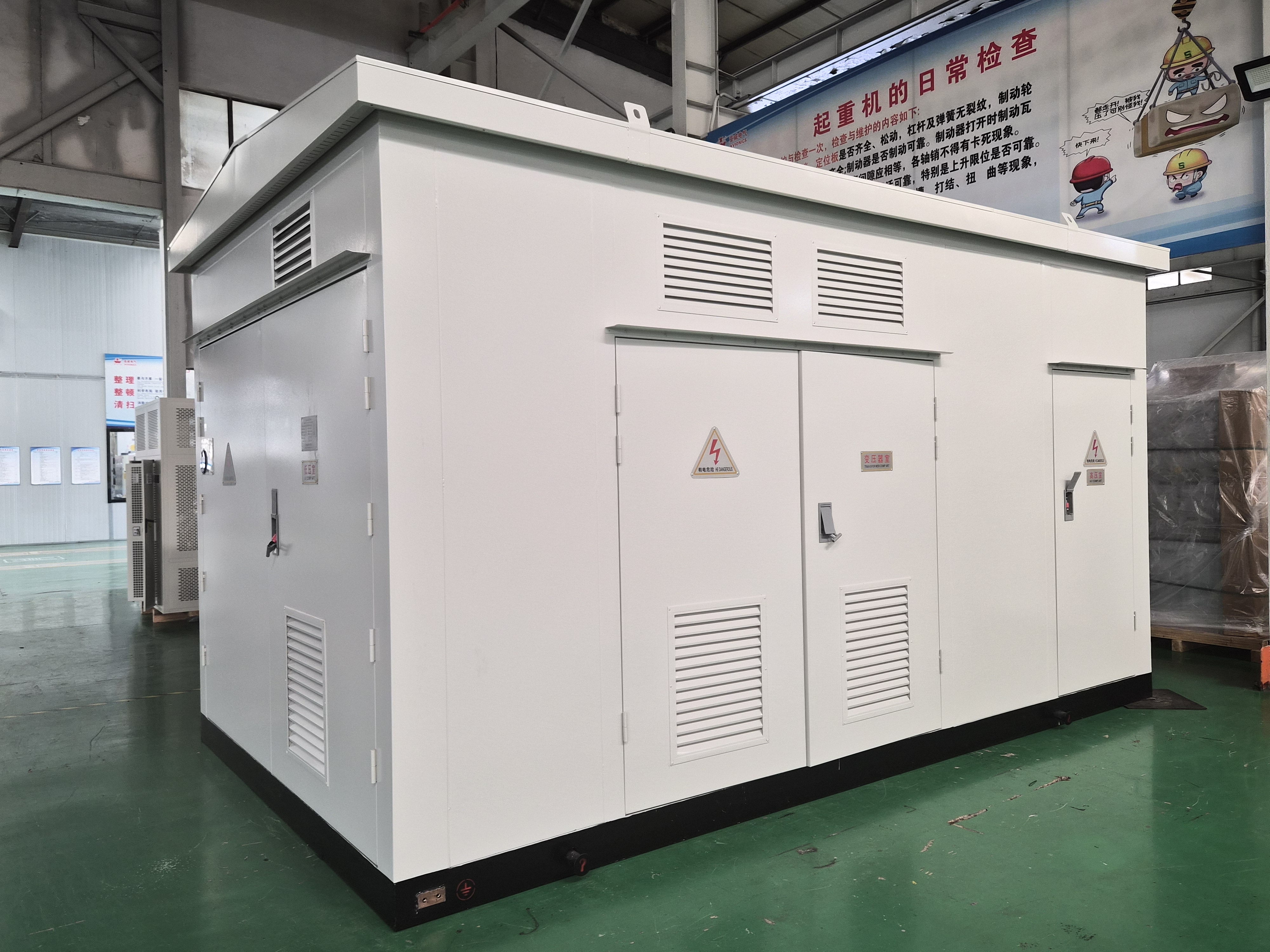
What a Box Type Substation Actually Contains
The product is not a transformer in a shed. In the prefabricated cabin configuration supplied through Apex, the enclosure integrates high-voltage switchgear, the transformer, low-voltage switchgear, compensation equipment, an automation system, AC/DC power supply and environmental control in one package, at 10 kV or 35 kV and with transformer capacity from 500 to 50,000 kVA.
The build follows a defined material specification rather than a generic container: a containerised steel structure with rock-wool sandwich-panel insulation and an anti-corrosion coating; metal-clad withdrawable or fixed switchgear with vacuum circuit breakers; copper busbar with heat-shrink insulation; a welded structural-steel base with anti-corrosion treatment. Cabin dimensions follow standard container dimensions and are customizable, protection is IP54 or IP55, and the unit is rated for ambient temperatures from –40°C to +50°C. On site it is transported as a complete unit, lifted by crane and connected.
The Problem It Solves — and Where Buyers Get Stuck
A conventional substation building commits the buyer to civil works, a permanent structure and a long sequence of on-site trades before any equipment is energised. A factory-assembled unit moves that work into the plant: the product information states that factory prefabrication reduces site work, gives a smaller building footprint, and lowers construction time and O&M cost. That is the practical case for the product in remote sites, in fast-build renewable projects and in dense urban plots where a fenced compound is not available.
The buyer's difficulty sits elsewhere, in four recurring gaps.
- Configuration ambiguity. Two quotations described as “a 10 kV box type substation” can differ in transformer type (oil-immersed or dry-type), switchgear type, protection scope, enclosure rating and monitoring scope. The price difference is usually in the scope, not in the box.
- Certification that does not match the claim. A certificate must be current, in the manufacturer's legal entity name, and cover the exact product family being purchased. A type-test report for a 250 MVA power transformer does not qualify a 10 kV distribution substation, and buyers who assume otherwise discover the gap at approval stage.
- Site interfaces. Foundation, crane access, cable entry and the boundary between the supplier's scope and the installer's scope are decided on paper long before delivery, yet are frequently left open at order stage.
- Single-vendor selection. A factory can only offer what it manufactures, so the buyer may never see an alternative configuration that fits the project better.
Industry Background: One Product Standard, Three European Conformity Regimes, and Shifting Demand
The governing product standard
IEC 62271-202:2022 is the international reference for this product family. It specifies the service conditions, rated characteristics, general structural requirements and test methods of enclosed high-voltage prefabricated substations, and it is the standard a specification should name when the project is not tied to a single national rulebook.
What “CE certified” actually involves in Europe
A substation sold into the EU is not covered by one single mark but by parallel obligations. The Low Voltage Directive 2014/35/EU applies to electrical equipment rated between 50 V and 1,000 V AC (75 V to 1,500 V DC), which captures the low-voltage compartment and its assemblies. The EMC Directive 2014/30/EU applies to equipment liable to cause or be affected by electromagnetic disturbance, which is directly relevant once protection, control and remote-monitoring electronics are integrated. RoHS 2 (Directive 2011/65/EU) restricts specified hazardous substances in electrical and electronic equipment, including the wiring, relays and electronic components inside the enclosure. CE marking is the visible outcome of all three. A supplier claiming CE compliance should be able to produce a declaration of conformity plus the supporting test documentation behind it.
Demand is being pulled by data centres and renewables
The data centre segment is the clearest demand signal. Mordor Intelligence puts the global data centre substation market at USD 11.31 billion in 2026, rising to USD 13.27 billion in 2027 and USD 19.78 billion by 2032. Behind that figure sits electricity consumption: IDCA reports that data centres consumed 2% of the world's electricity in 2026, up from 1.7% in 2024. High-capacity, fast-to-energise power infrastructure is the constraint, and a factory-assembled substation addresses it directly.
The Product Range: What Apex Supplies Through Audited Partners
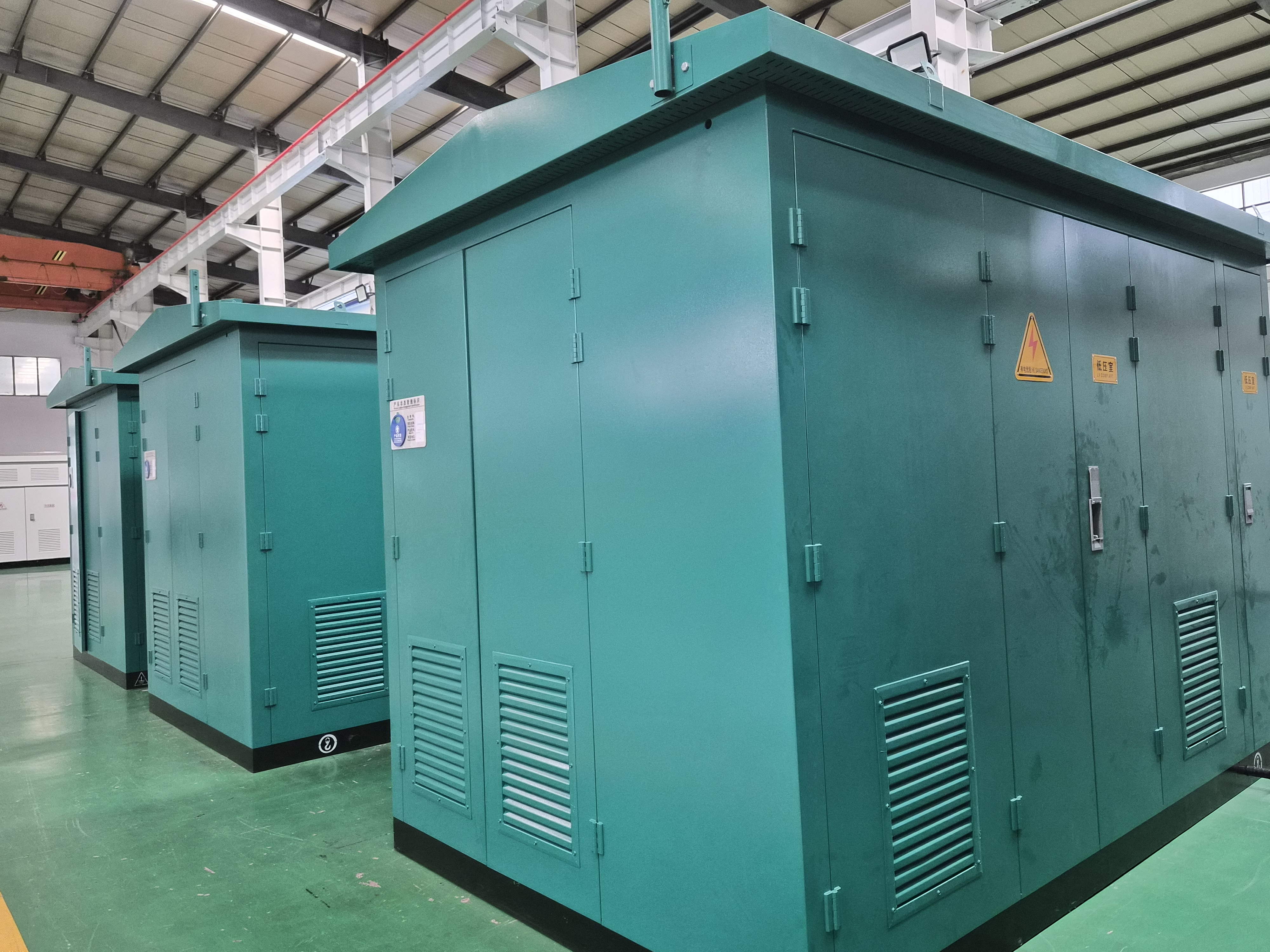
Enclosure and cabin configurations
The prefabricated cabin substation, model family YBM/ZGS11/ZGS13, is the configuration used for step-up substations at PV, wind and energy-storage plants, for data centres and AI computing parks, for industrial plant substations, for temporary or permanent municipal infrastructure power, for overseas EPC projects in areas with limited transport access, and for remote supply at mines and oil and gas fields. Its automation system monitors temperature, humidity, smoke, water ingress and access, which supports remote monitoring and unattended operation. The configuration is modular and expandable, so capacity upgrades require additional cabins.
Pad-mounted families cover the North American distribution pattern, where the enclosure allows the unit to stand in publicly accessible areas without a fenced compound. The three-phase pad-mounted ZGS-H/ZGS-Z Series covers 75 to 2,500 kVA at 4.16, 12.47, 13.2, 13.8, 22.86, 24.94 or 34.5 kV high voltage and 240, 480, 600 or 347 V low voltage, with a load-break switch, fuse and surge arrester inside and loop-feed or radial-feed configurations for different network layouts. The single-phase pad-mounted ZGD-H/ZGD-Z Series covers 15 to 250 kVA with a 120/240 V center-tapped low-voltage winding for single-phase residential loads. For overhead networks, the single-phase pole-mounted D-M Series covers 5 to 167 kVA and removes the need for a distribution room altogether.
The transformer inside the box
The enclosure is only half the specification; the transformer determines losses, footprint, fire risk and maintenance. Four families are available for integration:
- Oil-immersed distribution transformer, S13/S14/S15 series — three-phase two-winding, 30 to 3,150 kVA at 10 kV class and 3,150 to 31,500 kVA at 35 kV class, ONAN cooling, off-circuit or on-load tap changing, efficiency Grade 1 or Grade 2 to GB 20052.
- Dry-type transformer, SCB12–SCB18 series — epoxy resin cast, 30 to 2,500 kVA at 10 kV and 800 to 25,000 kVA at 35 kV, insulation class F or H, IP00/IP20/IP23, no insulating oil so it can be installed close to the load, and capable of up to 150% rated load under forced-air cooling.
- Amorphous alloy energy-saving transformer, S(B)H15(21–25)-M — oil-immersed 30 to 2,500 kVA or dry-type 500 to 2,500 kVA, with no-load losses 60–80% lower than conventional silicon-steel transformers.
- New energy transformer, SC10/SZ18/SZ20 — 500 to 12,500 kVA at 10 kV and 1,000 to 12,500 kVA at 35 kV, with a wide-range 0.4–1.14 kV low-voltage winding that accommodates inverter output from different brands, and impedance voltage options from 6.0% to 14.0% for different system short-circuit capacities.
Monitoring, environmental control and protection
Inside the cabin, the integrated automation system covers temperature, humidity, smoke, water-ingress and access monitoring. HVAC is provided by industrial air conditioner, forced ventilation and heater; fire protection is gas extinguishing or ultra-fine dry powder as an option. The dry-type transformers used in fire-sensitive locations carry PT100 sensors and an intelligent controller with over-temperature alarm and trip signals for integration with external monitoring systems.
Certification and the independent evidence behind the supply chain
Apex is a trading and supply partner, not a manufacturer. The certifications below belong to its audited manufacturing partners, and Apex holds and presents them as evidence of the capability of the supply chain it manages. Management systems are ISO 9001:2015, ISO 14001:2015 and ISO 45001:2018 under IAF/CNAS international mutual recognition. Product-level evidence includes IEC conformity for 10 kV and 35 kV power transformers and box-type substations, UL and CSA certification, CQC product certification for box-type substations and switchgear product lines, a provincial metrology qualification, and type-test reports covering dry-type, oil-immersed and box-type substation product families.
The independent verification worth reading most carefully is a KEMA Labs (KEMA B.V., The Netherlands) Type I Inspection Report for a 250 MVA / 345 kV three-phase power transformer, tested to IEC 60076-1/-2/-3, IEC 60076-10, IEC 60076-11 and IEEE Std C57.12.00 / C57.12.90. Note the scope precisely: that report qualifies a large power transformer, not a 10 kV box type substation. A buyer evaluating a distribution substation should ask for the test reports that cover the specific product family and rating being purchased.
Step-by-Step: How a Specification Becomes a Delivered Unit
- Fix the duty, not the label. Define whether the station is stepping up inverter output, stepping down to a service voltage, or supplying a critical load. Capacity, voltage class and short-circuit level follow from this, and the 500–50,000 kVA / 10–35 kV envelope of the cabin family is wide enough that the duty must be stated before any quotation is comparable.
- Choose the enclosure configuration. Cabin, pad-mounted or pole-mounted. The decision turns on land, public access, transport access and whether the station must be expandable later; cabin capacity upgrades require only additional cabins.
- Select the transformer type. Oil-immersed where cost and capacity dominate and a bund is available; dry-type where the unit sits close to load, indoors, in tunnels or in fire-sensitive sites; amorphous core where no-load losses carry weight in the operating cost.
- Define the high-voltage and low-voltage switchgear. Metal-clad withdrawable or fixed type with vacuum circuit breakers in the cabin; load-break switch, fuse and surge arrester with loop-feed or radial-feed arrangement in the pad-mounted design, depending on whether the network is ring-main or radial.
- Specify automation and auxiliary scope. Temperature, humidity, smoke, water-ingress and access monitoring; AC/DC supply; HVAC; optional fire suppression. Every item added here changes the electrical and documentation scope, so it belongs in the specification stage, not in the change order.
- Name the standards and the market. IEC 62271-202:2022 as the product reference; LVD, EMC and RoHS for EU placement; UL and CSA where North American content is involved. Ask for the certificate and test report that cover the product family and rating, in the manufacturer's legal entity name.
- Agree inspection and witness testing. Factory acceptance testing, witnessed routine and type tests, and third-party inspection where the project requires it. Confirm who attends, at which stage, and which test records are handed over.
- Plan transport, lifting and commissioning. The unit travels as a complete module and is crane-lifted with on-site connection. Confirm foundation, crane access and cable entry before shipment, because the reduction in site work promised by prefabrication is only realised if those interfaces are ready.
Where Box Type Substations Are Used
The application list is broad because the product's advantage — factory assembly, small footprint, remote monitoring — is valuable wherever site labour, land or time is scarce. Documented applications in the current product range include:
- Solar and wind farms and energy-storage plants — step-up substations for renewable generation, including a delivered 40,000 kVA energy-storage project in Bulgaria.
- Data centres and AI computing parks — critical-load supply with high-reliability operation, where a dry-type transformer inside the enclosure removes the oil fire load from the building and a cabin removes most civil works from the schedule.
- Industrial plants and factories — auxiliary power and plant substations, with S13/S14/S15 or amorphous-core units depending on load profile and energy targets.
- Commercial buildings and municipal infrastructure — high-rise buildings, shopping centres, hospitals, schools and underground spaces, where an oil-free dry-type unit can be installed close to the load and operates at 100% humidity without pre-drying after shutdown.
- Mining and oil and gas sites — remote supply where transport access is limited; for underground coal-mine power, the mining explosion-proof dry-type transformer family KBSG/KBSGZY covers 50 to 6,300 kVA at 6 or 10 kV with Exd I marking for methane and coal-dust hazard areas.
- Residential and rural distribution — single-phase pad-mounted units from 15 to 250 kVA and pole-mounted units from 5 to 167 kVA, delivered for rural-grid projects in Mongolia and Azerbaijan, and pad-mounted units delivered for a 15 MVA project in the USA.
- Urban charging and distribution points — where the footprint and the volume of on-site work are the binding constraints, the same factory-assembly logic applies.
Comparison: Choosing Between Configurations
The fastest way to shortlist is to compare the configurations on the parameters that actually differ between them — voltage class, capacity, installation mode and network arrangement. The table below uses only values published in the current product data.
| Configuration | Voltage and capacity | Installation and network arrangement | Typical application |
|---|---|---|---|
| Prefabricated cabin substation, YBM/ZGS11/ZGS13 | 10 / 35 kV; transformer capacity 500–50,000 kVA; IP54 / IP55; –40°C to +50°C | Transported as a complete unit, crane-lifted, on-site connection; HV switchgear integrated in the cabin; modular and expandable | PV, wind and energy-storage step-up; data centres and AI parks; industrial plants; municipal infrastructure; remote mines and oil and gas; overseas EPC with limited transport access |
| Three-phase pad-mounted, ZGS-H/ZGS-Z | 75–2,500 kVA; HV 4.16–34.5 kV or customized; LV 240 / 480 / 600 / 347 V; DOE 2016 / CSA 2023 efficiency | Outdoor pad-mounted; load-break switch, fuse and surge arrester inside; loop-feed or radial-feed | North American distribution grids; commercial complexes and industrial parks; municipal utilities; residential and real-estate developments |
| Single-phase pad-mounted, ZGD-H/ZGD-Z | 15–250 kVA; 120/240 V center-tapped LV | Outdoor pad-mounted, fully sealed; epoxy elbow HV bushings | Single-phase residential loads; rural grids and remote electrification; retail and small industrial distribution; street lighting |
| Single-phase pole-mounted, D-M Series | 5–167 kVA; –40°C to +40°C; elevation up to 2,000 m | Pole-mounted, no distribution room required | Rural grids in North America, Africa and Southeast Asia; remote villages; agriculture and irrigation; temporary and emergency power |
The second decision is the transformer inside the enclosure, and it changes operating cost more than purchase price.
| Transformer family | Capacity range | Distinguishing characteristic | Where it fits |
|---|---|---|---|
| Oil-immersed distribution, S13/S14/S15 | 30–3,150 kVA (10 kV class); 3,150–31,500 kVA (35 kV class) | ONAN cooling; off-circuit or on-load tap changing; efficiency Grade 1 or Grade 2 to GB 20052 | Distribution substations, plant auxiliary power, renewable substation packages |
| Dry-type, SCB12–SCB18 | 30–2,500 kVA (10 kV); 800–25,000 kVA (35 kV) | No insulating oil; F or H insulation class; IP00/IP20/IP23; up to 150% load under forced-air cooling | Indoor and close-to-load installation; data centres; tunnels and stations; fire-sensitive sites |
| Amorphous alloy, S(B)H15(21–25)-M | 30–2,500 kVA oil-immersed; 500–2,500 kVA dry-type | No-load losses 60–80% lower than conventional silicon-steel cores | Loss-reduction programmes, green building projects, energy-intensive facilities |
| New energy, SC10/SZ18/SZ20 | 500–12,500 kVA (10 kV); 1,000–12,500 kVA (35 kV) | 0.4–1.14 kV wide-range LV winding; 6.0–14.0% impedance options; ONAN or ONAF | Centralized and distributed PV, onshore and offshore wind, electrochemical storage, microgrids |
How to Evaluate a Box Type Substation Manufacturer
The question behind most “box type substation manufacturers” searches is not a list of names — it is how to establish that a supplier will deliver a compliant unit on the date promised. Five checks do most of the work.
- Verify the certificate, not the brochure. Confirm the certificate number with the issuing body, check the validity date, and confirm the certificate covers the product family and rating you are buying and is issued in the manufacturer's legal entity name.
- Read the scope of each test report. A KEMA report on a 250 MVA / 345 kV power transformer is strong evidence of a manufacturer's capability at the top of its range; it is not evidence about a 10 kV distribution substation. Ask for the report that matches the equipment on order.
- Audit capability before ordering, not after. Production capability, test laboratory equipment, quality-management certification, export record and financial standing. The manufacturing base behind Apex operates a dedicated test laboratory with lightning-impulse, no-load/load-loss, ratio, winding-resistance, temperature-rise and insulation test benches.
- Check the reference record at a comparable rating. Apex-coordinated deliveries include 4 × 110 kV power transformers for Azerbaijan Power Energy Company; 115 kV substations at Siroch Bahrom and PS Chomi in Tajikistan; a 69 kV transformer and the Panglao Robinsons commercial project in the Philippines; a 132 kV transformer for a steel-plant substation in Seville, Spain; a 40,000 kVA energy-storage project in Bulgaria; a 15 MVA pad-mounted transformer project in the USA; a 110 kV substation in Mongolia; a 345 kV transformer delivered for a US–Georgia project; and a 115 kV substation in Puerto Rico.
- Decide who carries the accountability. A single factory offers what it manufactures. An independent supply partner can compare configurations across audited plants, verify certification and hold the manufacturer to the contract — which is the model Apex operates, with design review, production supervision, witness testing, documentation, freight and site commissioning under one point of contact. Its partners' products have been supplied to the United States, Canada, Australia, New Zealand, India, Indonesia, Madagascar, Vietnam, Cambodia, Laos and further markets across Asia, Europe and the Americas.
FAQ
Which standards and certifications should a box type substation comply with?
The international product reference is IEC 62271-202:2022, which specifies service conditions, rated characteristics, structural requirements and test methods for enclosed high-voltage prefabricated substations. For placement on the EU market, three parallel obligations apply: the Low Voltage Directive 2014/35/EU for equipment rated 50–1,000 V AC (75–1,500 V DC), the EMC Directive 2014/30/EU for equipment liable to cause or be affected by electromagnetic disturbance, and RoHS 2 (Directive 2011/65/EU) for restricted substances — with CE marking as the visible outcome. Suppliers should also evidence ISO 9001:2015, ISO 14001:2015 and ISO 45001:2018 management systems, IEC conformity for the 10 kV / 35 kV product families, and CQC product certification for box-type substations and switchgear, plus UL or CSA where North American content is involved. Each certificate must be current, in the manufacturer's legal entity name, and cover the exact product family being purchased.
Can a box type substation be customized in capacity, voltage and configuration?
Yes, within defined envelopes. The prefabricated cabin family YBM/ZGS11/ZGS13 is built at 10 kV or 35 kV with transformer capacity from 500 to 50,000 kVA; cabin dimensions follow standard container dimensions and are customizable; the transformer can be oil-immersed or dry-type; switchgear can be metal-clad withdrawable or fixed type with vacuum circuit breakers; fire protection (gas extinguishing or ultra-fine dry powder) and HVAC scope are optional; and the configuration is modular so capacity upgrades are made by adding cabins. Pad-mounted units offer full-capacity customization from 75 to 2,500 kVA with flexible MOQ for customized capacities, and the single-phase pad-mounted range covers 15 to 250 kVA.
What drives the cost of a box type substation?
Cost tracks configuration, so quotations should be compared on a like-for-like specification. The main drivers are voltage class and capacity; transformer type (oil-immersed and dry-type sit at different points, and an amorphous core trades higher initial cost for no-load losses 60–80% lower than conventional silicon-steel cores); enclosure protection and construction (IP54 versus IP55, insulation and anti-corrosion specification); switchgear type and whether the network is ring-main or radial; automation and monitoring scope including temperature, humidity, smoke, water-ingress and access monitoring; optional fire suppression and HVAC; and the documentation and certification package required for the destination market. Installed cost also moves with what the unit removes from site — factory prefabrication reduces site work, footprint and construction time, so civil and labour savings belong in the comparison as well as the equipment price.
Can we inspect and witness-test the unit before shipment?
Yes. Factory visits and witnessed factory acceptance testing can be arranged as part of an order, and third-party inspection can be added where the project requires it. Quality control before shipment works through auditing production and test equipment before ordering, monitoring the winding, core and oil-processing stages, and witnessing routine and type tests at factory acceptance. The manufacturing base operates a dedicated test laboratory with lightning-impulse, no-load/load-loss, ratio, winding-resistance, temperature-rise and insulation test benches, and its certification package includes type-test reports for dry-type, oil-immersed and box-type substation product families plus an independent KEMA Labs Type I Inspection Report for a 250 MVA / 345 kV power transformer.
What affects delivery and site installation time?
Three factors dominate. First, whether the unit is factory-prefabricated: the cabin is assembled, integrated and tested before shipment, then transported as a complete unit, crane-lifted and connected on site, which is why factory prefabrication reduces site work in regions with limited infrastructure. For new-energy transformer packages supplied with a prefabricated cabin, the product information states that plug-and-play site installation can shorten construction time by up to 60%. Second, the inspection and documentation stage, including factory acceptance testing and any witness or third-party inspection, which must be scheduled rather than assumed. Third, site readiness — foundation, crane access and cable entry — because a complete-module delivery only saves time if those interfaces are prepared before the unit arrives. To move from specification to a firm scope, you can request a quotation or the product catalogue from Apex Power Systems, and for a first technical assessment a project specification sheet is sufficient to start.
Conclusion
A box type substation is a specification decision before it is a purchase. The enclosure configuration decides how the station is installed and whether it can grow; the transformer inside decides the losses, the fire risk and the maintenance regime; and the certification package decides whether the unit can be energised at all in the destination market. IEC 62271-202:2022, the EU low-voltage, EMC and RoHS regimes, and UL or CSA certification for North American content are the checkpoints that separate a compliant delivery from a costly surprise.
Apex Power Systems (Nanjing) Co., Ltd. works as an independent supply partner rather than a factory: it audits and selects manufacturing partners, verifies their certification in the correct legal entity name, and manages design review, production, witness testing, documentation, freight and on-site commissioning as one accountable point of contact. If you are shortlisting suppliers for a project, the useful next step is a specification review against the ranges described here — capacity, voltage class, transformer type and the market's conformity requirements.
Next step: specification review, sample documentation or quotation
Send your project parameters — voltage class, capacity, installation mode and destination market — and Apex Power Systems will confirm the matching configuration, the applicable certification package and the documentation set. You can also download the full Apex Power Systems product catalogue (PDF) or review the company profile at apexpowerlink.com.
Contact: Simon | Email: xuke@apexps-nj.com | Tel / WhatsApp: +86 132-0157-1341 | Chat on WhatsApp
Address: Room 1001, Xinke Building, No. 209 Pubin Road, Jiangbei New Area, Nanjing City, Jiangsu Province, China
Have Questions or Need More Details?
Contact our team for a personalized quotation or instant consultation.
Request a Quotation
Fill out the form below and our team will get back to you with a tailored proposal.
WhatsApp Direct Chat
Prefer to chat in real-time? Message us on WhatsApp for instant assistance & quick answers.
- Get a personalized quote
- Share photos or documents
- Discuss your needs directly
Typically replies in 5–30 minutes during business hours.