Custom Transformer Compliance for Russia and the EAEU: Document Guide
Short answer: to export a custom transformer into Russia or another EAEU member state, the shipment has to carry a valid EAC Declaration of Conformity registered for the exact product family being bought, the manufacturing partner's quality-management certificates, the type-test or third-party reports the declaration relies on, and a routine test report issued against the serial number of the unit itself. A declaration that is missing, expired, registered to a different company or written for another product family is the most common reason a technically compliant transformer is stopped at customs or refused on site.
This guide is written for the evaluation stage of a purchase — the point at which the technical specification has been agreed and the buyer starts checking whether the supplier's paperwork will actually support the delivery. It sets out which documents matter, what each one does and does not prove, and the checks to complete before shipment is released.
Why conformity documents fail more often than the transformer does
A custom transformer is engineered to a specification, inspected at the factory and tested against IEC 60076 or IEEE C57.12 before it leaves. The equipment rarely fails at the border. The documentation does, and it fails in three recognisable ways.
Counterfeit or unregistered documents. A PDF carrying a plausible number, a logo and a stamp is not proof of anything. Declarations and certificates carry registration numbers precisely so that they can be checked against the record held by the issuing body. When a number cannot be found in the register, or the issuing body has no record of the applicant, the document has no standing — regardless of how convincing it looks.
Expired documents. Declarations and certificates are valid for a fixed window, and the trap is usually timing rather than fraud. A declaration valid when the purchase order was signed may have lapsed by the time the unit ships, or by the time the site inspector reviews it. Three-year cycles are common: the power transformer EAC declaration held for the supply chain described here runs from 26 February 2024 to 25 February 2027. A project with a long engineering, manufacturing and shipping phase can cross that date without anyone noticing.
Mismatched documents. This is the failure mode that costs the most, because it is invisible. The document exists, it is genuine and it is current, but it does not cover what is in the crate. The scope line names a different product family, the applicant is a legal entity other than the one contracting with the buyer, or the standard cited does not cover the design being supplied. A declaration issued for dry-type transformers does not cover an oil-immersed unit, and a declaration written around a specific standard and voltage class does not automatically extend to every rating a factory can build.
The consequence chain is the same in each case: goods held, factory already paid, re-issuance dependent on the original applicant's cooperation, and the project schedule absorbing the delay. Checking documentation before shipment is a far cheaper exercise than correcting it afterwards.
How the Russia and EAEU conformity system treats an imported transformer
Russia and the other member states of the Eurasian Economic Union operate a single conformity-assessment system for products placed on their combined market. For electrical equipment such as transformers, medium voltage switchgear and prefabricated compact substations, conformity is demonstrated through a declaration or certificate of conformity registered in the EAEU register, and the product then carries the conformity marking that corresponds to that registration. For a buyer in the region, the practical meaning is that market access is a document question first and a technical question second.
Two features of the system shape how a purchaser should read a supplier's paperwork.
The document belongs to an applicant, not to a product in the abstract. A declaration is registered in the name of a legal entity — normally the exporting manufacturer or its authorised representative — and that entity is accountable for the declared scope. When another company offers to supply the same transformer and presents a copy of that declaration, the copy proves that the original applicant holds market access; it does not prove that the seller does.
The scope is defined by a standard and a product description. The transformer declaration used in the supply chain described here cites ГОСТ Р 52719-2007, and separate scope entries exist for power transformers and for dry-type transformers. That level of granularity is normal, which is exactly why the scope line — not the cover page — is the part of the document a purchaser has to read.
Regional delivery experience is a useful signal, but it is not a substitute for documentation. The supply chain behind this guide has delivered transformer equipment into several CIS and Central Asian transmission projects, including four 110 kV power transformers for a substation project in Azerbaijan that have remained in service for five years since delivery, a 115 kV substation transformer package in Tajikistan completed within a two-year implementation period, and a 110 kV substation supply in Mongolia. Those references demonstrate that the equipment survives the logistics, the voltage class and the climate of the region. They do not demonstrate EAEU market access, which remains a document matter.
The document set that has to travel with the unit
A complete Russia and EAEU documentation package for a custom transformer has five layers. Each layer answers a different question, and a buyer who receives only one or two of them is not holding a complete pack.
1. The EAC Declaration of Conformity — market access
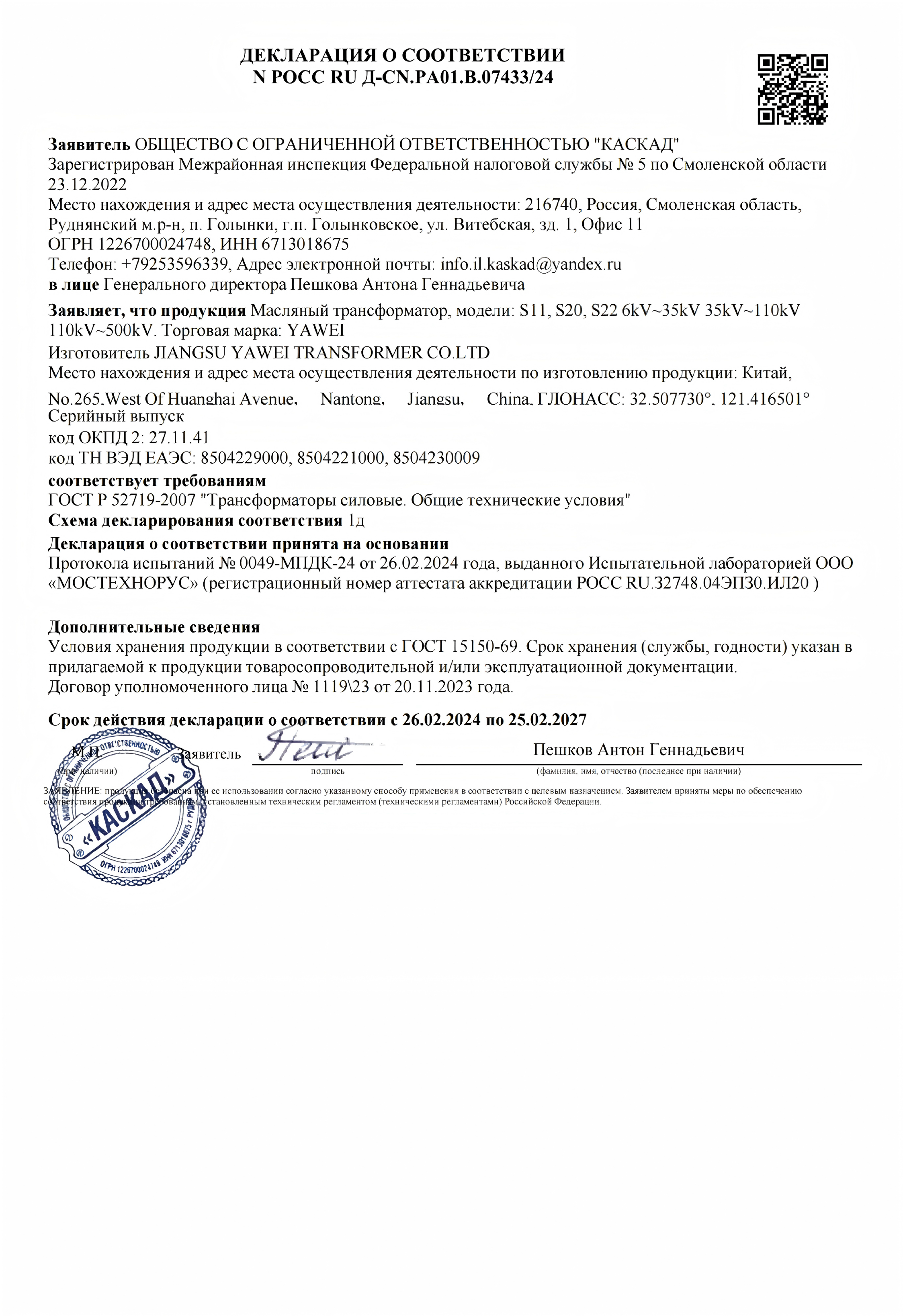
This is the document that permits the equipment to be placed on the Russian and EAEU market. In the supply chain described here, the declaration for power transformers is registered under number POCC RU Д-CN.PA01.B.07433/24 with ООО «КАСКАД», a Russian certification body, against ГОСТ Р 52719-2007, and is valid from 26 February 2024 to 25 February 2027. A declaration for dry-type transformers is registered under the same number and the same validity window, with the scope stated for dry-type transformers.
Two practical consequences follow. First, the declaration is time-limited: a project that ships after 25 February 2027 needs the renewal, not a copy of the original. Second, the scope line matters more than the certificate number, because the same number is used across defined product scopes. When a buyer purchases an oil-immersed distribution transformer, a power transformer or a cast resin dry type transformer, the question is always which scope entry that unit falls under.
2. Quality and management-system certificates
These certificates describe the facility that builds the transformer rather than the unit itself, and they are what an auditor or a utility's vendor-qualification team will ask for. The audited manufacturing base behind this supply chain holds ISO 9001:2015 under certificate 04325Q30129R0M, issued by Beijing United Intelligence Certification Co., Ltd. (UICC) and valid from 16 January 2025 to 15 January 2028, with a scope covering the design and production of oil-immersed transformers up to 220 kV, dry-type transformers up to 35 kV, and box-type substations. Environmental and occupational-health management systems are covered separately by ISO 14001:2015 under 04323E30544R0M and ISO 45001:2018 under 04323S40527R0M, both issued on 17 April 2023 with validity to 16 April 2026.
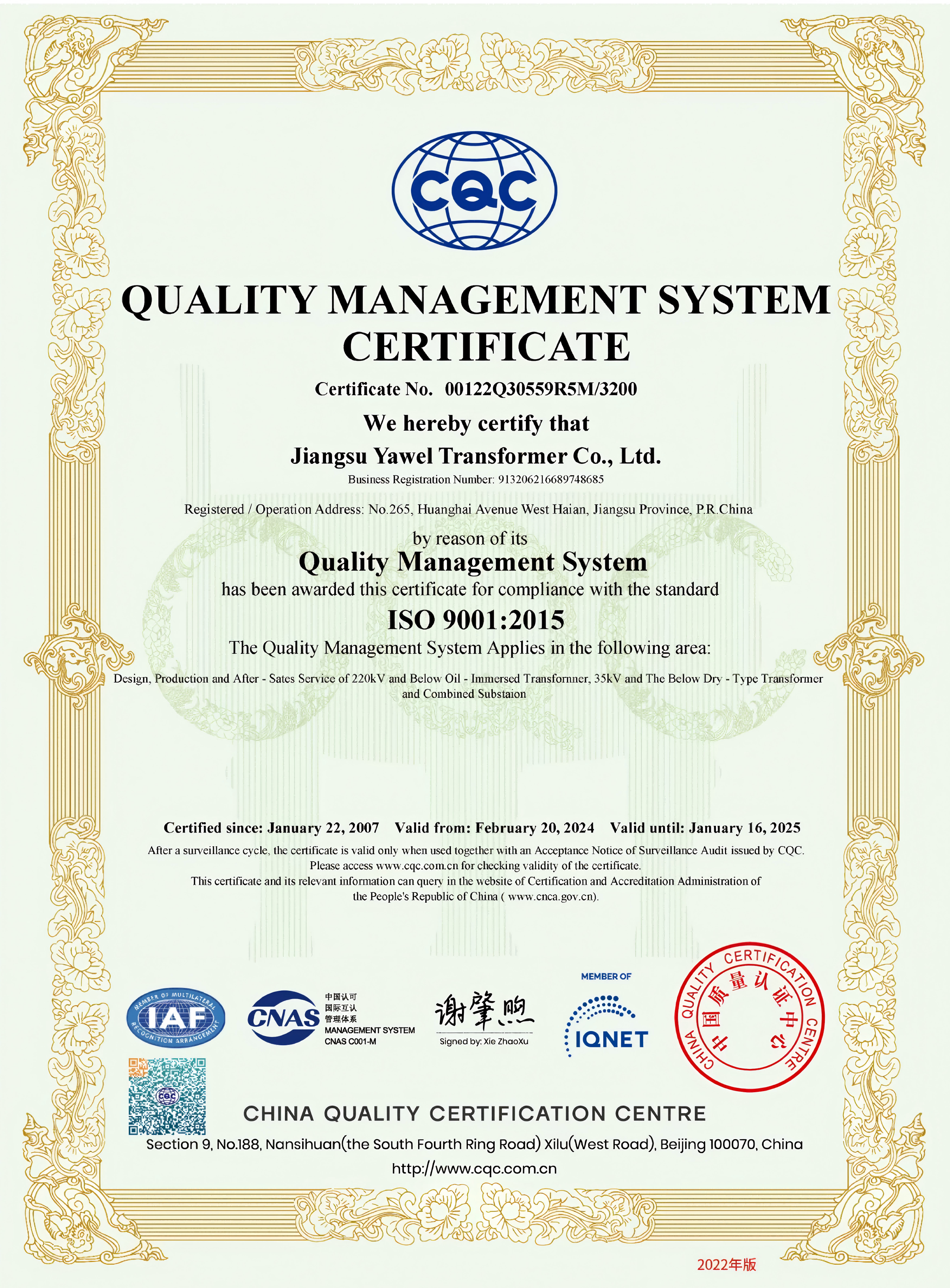
Note the expiry dates. The ISO 14001 and ISO 45001 certificates run to 16 April 2026, while the quality certificate runs to 15 January 2028. A documentation review that only checks the ISO 9001 certificate can miss two lapsed documents sitting in the same folder.
3. Design verification: type tests and third-party reports
These reports prove that a design has been independently verified against a standard. They are not market-access documents, but they are the evidence a technical reviewer wants when the buyer is purchasing a large power transformer or a design that deviates from the routine range.
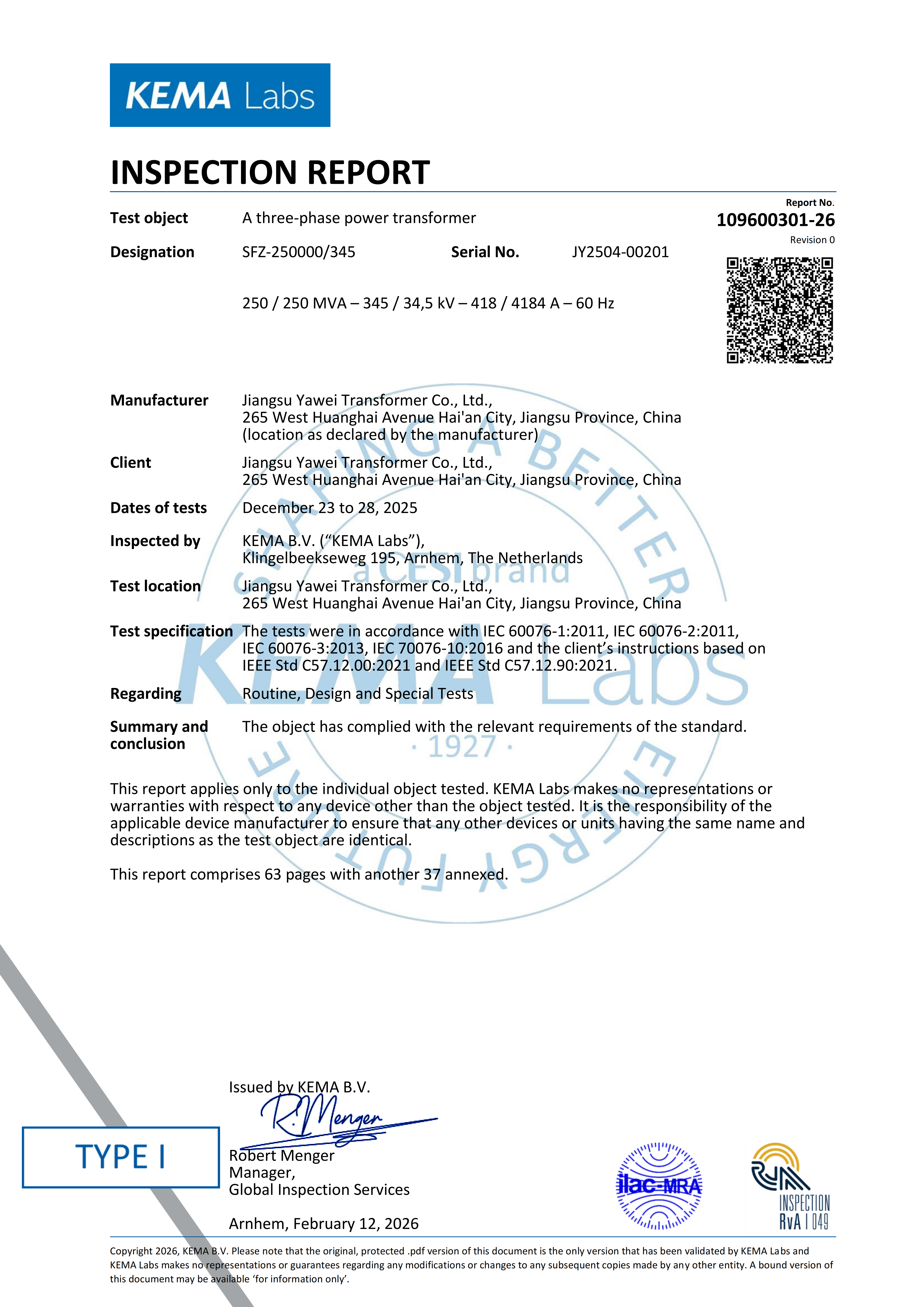
- KEMA test report 109600301-26, issued on 12 February 2026 by KEMA B.V. (KEMA Labs), Arnhem, Netherlands, covering routine, type and special tests witnessed by KEMA inspectors against IEC 60076-1/-2/-3/-10 and IEEE C57.12.00 / C57.12.90.
- KEMA test report 702226901-24, issued on 23 August 2024, covering routine, type and special tests against IEC 60076-1/-2/-3/-10.
- TÜV Rheinland type test report CN231PY4 001, issued on 26 June 2023 by TÜV Rheinland (Shanghai) Co., Ltd., for a three-phase outdoor oil-immersed power transformer against IEC 60076-1/-2/-3/-10.
4. Unit-specific routine tests and handover documents
A type test proves a design; a routine test proves the unit. The document a receiving engineer actually signs against is the factory routine test record for the serial number being delivered, together with the drawings, the nameplate data and the operating and maintenance manual. Where the buyer has contracted factory acceptance testing, the FAT report and any third-party inspection report — SGS, BV or KEMA — join the same package. Under the arrangement described here, pre-shipment factory acceptance testing and, where required, a joint site acceptance test with the customer are part of the delivery process.
5. Commercial and logistics documents
The invoice, packing list, transport documents and customs classification complete the pack. Transformers with a power capacity above 500 kVA are classified under HS 8504.34 for trade purposes, and the declared description on the customs entry has to match the product description on the conformity document — a mismatch between the two is one of the easiest ways to trigger a hold.
What the declaration does not cover
Buyers who treat the EAC declaration as a general-purpose certificate of quality usually discover its limits at the worst possible moment. It does not cover the following:
- It is not a type test report. It confirms that the product family meets the requirements of the applicable standard; it does not report the losses, impedance, temperature rise or impulse withstand of the design being supplied.
- It is not transferable to another seller. A supplier who is not the applicant has to prove its own standing to place the goods on the market.
- It does not extend to a different product family. A declaration covering dry-type transformers is not evidence for an oil-immersed distribution transformer, and a packaged substation that integrates a transformer with medium voltage switchgear is a different assembly from the transformer inside it — the scope line has to be checked for the assembly actually purchased.
- It does not replace the unit's routine test record. Neither document substitutes for the other.
- It does not cover other markets. A CE certificate under the EMC Directive, a UL compliance certificate or a CSA field evaluation report supports North America or the European Union, not EAEU market access.
Pre-shipment verification: a nine-step check
These checks take a buyer less than a day, and they can be completed before the shipment is released rather than after it has been stopped.
- Request the document list before the order, not after production. Ask which conformity documents exist for the product family being quoted, and which legal entity holds them. A supplier who cannot answer at the quotation stage will not produce the documents at the shipping stage.
- Check the validity window against your project dates. Compare the expiry date with the planned shipment date and the site acceptance date — not with today's date. A declaration expiring inside your delivery window is an expired declaration for planning purposes.
- Check the applicant entity. The name on the declaration should be the manufacturer or its authorised representative, and the commercial chain to your contracting party should be clear and documentable.
- Read the scope line, not the cover page. Confirm that the product family, the standard cited and the ratings described match the equipment in the specification — oil-immersed distribution transformer, power transformer, cast resin dry type transformer, or integrated substation assembly.
- Verify the registration number with the issuing body. A declaration and a certificate can both be checked against the record held by the authority that issued them. If the number cannot be traced, treat the document as unverified.
- Cross-check the declaration against the supporting reports. The type test reports and the declaration should describe the same product family and the same standard family. If the declaration cites a standard that no test report addresses, ask why.
- Match the type test to the design, and the routine test to the serial number. A type test report for a different rating does not verify the unit being shipped; only the routine test record for that serial number does.
- Check the customs description against the conformity scope. The HS classification and the declared product description should be consistent with the scope line of the declaration.
- Put a document hold in the contract. Make shipment release conditional on delivery of the complete, in-date, correctly scoped document pack, and keep the final payment milestone behind it. This is the single change that turns documentation risk into a contractual routine.
Use cases: three transformer families and the documents that travel with them
Oil-immersed distribution transformer for a utility distribution project
For a distribution network project, the units in play are typically three-phase oil-immersed distribution transformers such as the S13 / S14 / S15 series, rated from 30 kVA to 3,150 kVA in the 10 kV class and up to 31,500 kVA in the 35 kV class, with Dyn11 or Yyn0 vector groups and ONAN cooling. The documentation question is narrow: does the declaration scope cover oil-immersed power transformers at the ratings being purchased, and is the unit's routine test record from the same factory that holds the quality certificate? Where efficiency is contractual — the series is offered at Grade 1 or Grade 2 efficiency under GB 20052 — the routine test record is where the loss figures are evidenced.
Cast resin dry type transformer for an indoor substation
An indoor substation, a data centre or a commercial building usually specifies a cast resin dry type transformer such as the SCB12–SCB18 series, rated from 30 kVA to 2,500 kVA in the 10 kV class, with F or H class insulation and IP00 / IP20 / IP23 protection. Dry-type units fall under a separate scope entry on the declaration used in this supply chain, which is why a buyer who checks only the oil-immersed scope will miss the document that actually applies. On a mixed order containing both oil-immersed and dry-type units, both scopes have to be confirmed.
Large power transformer for a transmission substation
On a transmission project, the unit may be a large oil-immersed power transformer of the class represented in this supply chain by a 250 MVA / 345 kV design with ONAN / ONAF1 / ODAF2 cooling and a tap range of (345 +17/-17 × 0.625%) / 34.5 kV. At this level the declaration is necessary but not sufficient, because the specification is bought on test evidence. This is where the KEMA and TÜV Rheinland reports carry weight: they confirm that the design family has been independently tested against IEC 60076 and IEEE C57.12, while the routine test record confirms the individual unit. The documented delivery record behind this supply chain includes four 110 kV power transformers operating in an Azerbaijani substation for five years, a 115 kV substation package in Tajikistan delivered over a two-year implementation period, and 110 kV substation equipment in Mongolia — the reference pattern a utility reviewer will look for.
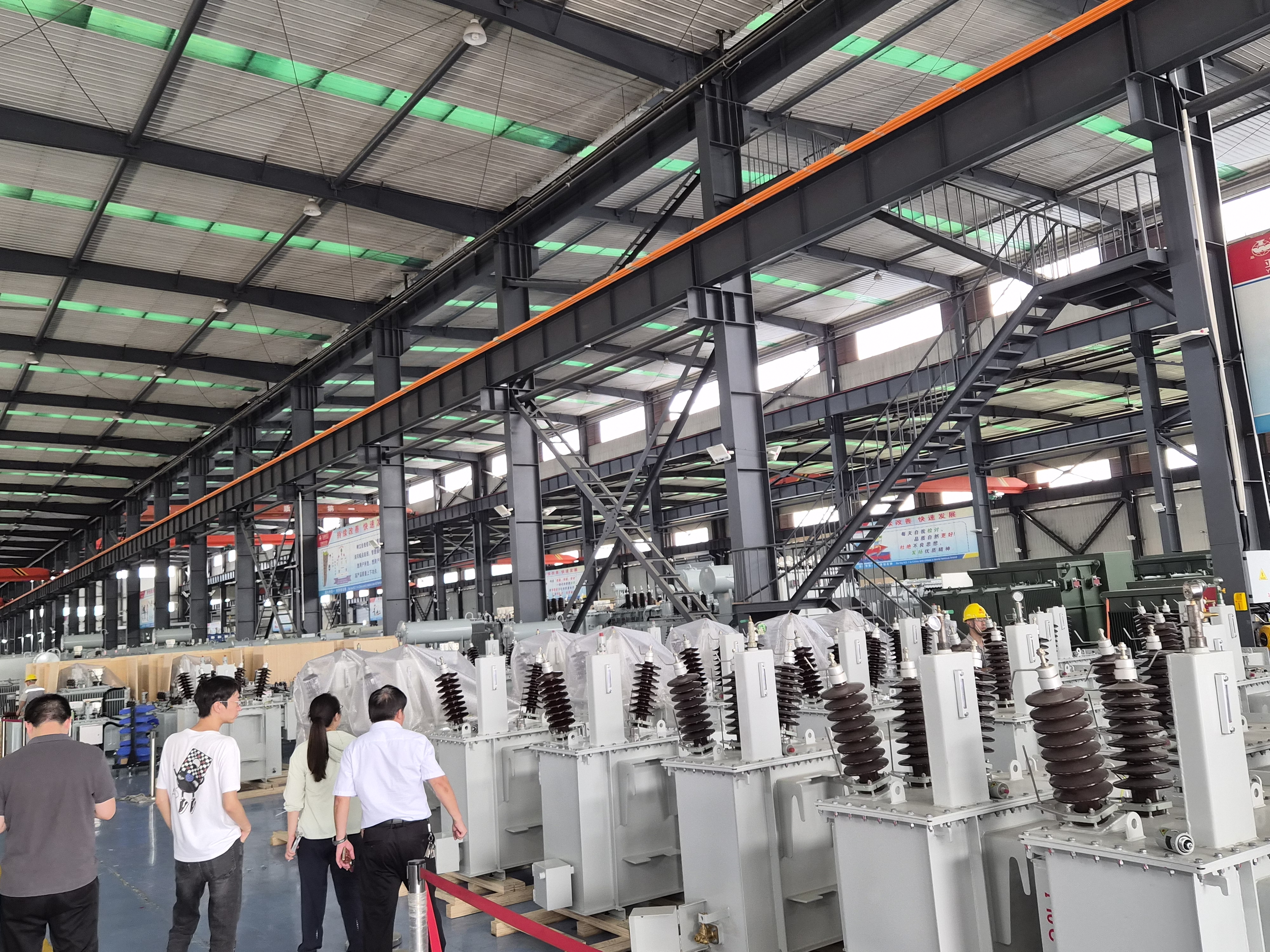
Document comparison: what each certificate proves, and what it does not
The table below compares the conformity and certification documents available in this supply chain. The final column answers the question buyers ask most often: whether the document can stand in for the Russia and EAEU declaration. None of them can.
| Document | Issued by | Number and validity | What it proves | Substitutes for the EAEU declaration? |
|---|---|---|---|---|
| EAC Declaration of Conformity — power transformer | ООО «КАСКАД», Russia | POCC RU Д-CN.PA01.B.07433/24; 26 Feb 2024 – 25 Feb 2027; ГОСТ Р 52719-2007 | Market access for power transformers in Russia and the EAEU | This is the market-access document |
| EAC Declaration of Conformity — dry-type transformer | ООО «КАСКАД», Russia | POCC RU Д-CN.PA01.B.07433/24; 26 Feb 2024 – 25 Feb 2027; ГОСТ Р 52719-2007 | Market access for dry-type transformers in Russia and the EAEU | This is the market-access document |
| ISO 9001:2015 (GB/T19001-2016) | Beijing United Intelligence Certification Co., Ltd. (UICC) | 04325Q30129R0M; 16 Jan 2025 – 15 Jan 2028 | Quality management system for oil-immersed transformers up to 220 kV, dry-type up to 35 kV and box-type substations | No |
| ISO 14001:2015 (GB/T24001-2016) | Beijing United Intelligence Certification Co., Ltd. (UICC) | 04323E30544R0M; 17 Apr 2023 – 16 Apr 2026 | Environmental management system over the same product scope | No |
| ISO 45001:2018 (GB/T45001-2020) | Beijing United Intelligence Certification Co., Ltd. (UICC) | 04323S40527R0M; 17 Apr 2023 – 16 Apr 2026 | Occupational health and safety management system | No |
| KEMA type test report | KEMA B.V. (KEMA Labs), Arnhem, Netherlands | 109600301-26; issued 12 Feb 2026; IEC 60076-1/-2/-3/-10, IEEE C57.12.00 / C57.12.90 | Independent verification of design performance under witnessed tests | No |
| TÜV Rheinland type test report | TÜV Rheinland (Shanghai) Co., Ltd. | CN231PY4 001; issued 26 Jun 2023; IEC 60076-1/-2/-3/-10 | Type testing of a three-phase outdoor oil-immersed power transformer | No |
| UL dry-type transformer compliance certificate | UL LLC | UL-US-26119070-0 (US) / UL-CA-2687596-0 (Canada); issued 29 May 2026; UL 1561 Ed.4 / CSA C22.2 No.47 Ed.5 | North American product safety compliance for open ventilated dry-type transformers | No — different market |
| CE certification (EMC Directive) | UDEM International (Turkey) / Ente Certificazione Macchine (Italy) | M.2022.206.C7198 / 3N230310.JYTU038; 8 Sep 2022 – 7 Sep 2027 | European Union electromagnetic-compatibility compliance | No — different market |
Read across the table and the pattern is consistent: one document grants market access for a specific region and product scope, several documents prove the capability and the design behind the product, and none of them is interchangeable. The buyer's job is to assemble the correct set for the destination market, not the largest set available.
Frequently asked questions
Which conformity documents must be in place before a custom transformer is shipped to Russia or another EAEU country?
A valid EAC Declaration of Conformity registered for the product family being purchased, held in the name of the manufacturer or its authorised representative; the manufacturing facility's quality-management certificate; the type-test or third-party reports the declaration relies on; the routine test record issued against the serial number of the actual unit; and the commercial and customs documents. In this supply chain the transformer declarations are registered under POCC RU Д-CN.PA01.B.07433/24 with ООО «КАСКАД» against ГОСТ Р 52719-2007, valid from 26 February 2024 to 25 February 2027, with separate scope entries for power transformers and dry-type transformers, while the facility holds ISO 9001:2015 under 04325Q30129R0M (valid to 15 January 2028).
How can a buyer confirm that an EAC declaration is genuine, current and correctly scoped?
Check four things in order. First, the registration number against the record held by the issuing body — an untraceable number means an unverified document. Second, the validity window against the planned shipment and site acceptance dates, not against today. Third, the applicant entity, which must match the manufacturing or authorised party in the commercial chain. Fourth, the scope line, which must name the product family, the standard and the ratings actually being bought. Then cross-check the declaration against the type test reports and the unit's routine test record, because those are the documents that confirm the design and the unit rather than the product family.
Does a KEMA, TÜV, UL or CE document remove the need for an EAC declaration?
No. These documents answer different questions. A KEMA test report such as 109600301-26, issued on 12 February 2026, or a TÜV Rheinland type test report such as CN231PY4 001, issued on 26 June 2023, verifies design performance against IEC 60076 or IEEE C57.12 — it is technical evidence, not market access. A UL dry-type compliance certificate (UL-US-26119070-0 / UL-CA-2687596-0, issued 29 May 2026) supports the United States and Canada, and a CE certification under the EMC Directive supports the European Union. For Russia and the EAEU, the market-access document is the EAC declaration, and it has to be current and correctly scoped at the time of shipment.
Can the documentation package be reviewed before the order is placed and before shipment is released?
Yes, and it should be. Because Apex Power Systems (Nanjing)Co., Ltd. is an international trading and supply partner rather than a factory, it can assemble the conformity and certification documents from its audited manufacturing partners for review — declaration number, issuing body, validity dates, certificate numbers, type test reports and the routine test record for the unit — and make shipment release conditional on that package being complete, in date and correctly scoped. Buyers who want to review the document set against their own specification can request the current document pack and a quotation for the exact configuration before committing to production.
How should buyers shortlist custom transformer manufacturers for distribution network projects?
Shortlist on evidence rather than on catalogue range. Compare candidates on four points: whether the conformity and certification scope covers the specific product family and rating being purchased; whether every certificate is inside its validity window for the project's shipment and commissioning dates; whether independent design verification exists for the design class, through reports such as the KEMA or TÜV Rheinland type tests; and whether routine test records, drawings and manuals will be supplied in the documentation format the receiving utility requires. Warranty terms are part of the same comparison — the supply chain described here provides a 12-month warranty on distribution transformers and 12–24 months on delivered transformers and prefabricated cabin substations, with spare parts and 7×24 remote support. Working through a supply partner that audits and benchmarks several factories gives a buyer an independent comparison of those four points, rather than a single vendor's self-description.
Conclusion
Exporting a custom transformer into Russia and the EAEU is a documentation exercise as much as an engineering one. The equipment is built to IEC 60076 or IEEE C57.12 and tested at the factory; the risk sits in whether the right conformity document, in the right entity name, with the right scope line and a valid date, is in the folder when the container arrives. Three checks remove most of that risk: verify the registration number with the issuing body, compare every validity date against the project's shipping and commissioning dates rather than against today, and read the scope line instead of the cover page.
For distribution network, industrial and transmission projects in the region, Apex Power Systems (Nanjing)Co., Ltd. supplies oil-immersed distribution transformers, power transformers, cast resin dry type transformers and prefabricated compact substations through audited manufacturing partners, and manages the conformity documentation, factory acceptance testing and delivery process on the buyer's behalf. All manufacturing, certification and test evidence referenced in this guide belongs to those audited manufacturing partners; Apex is the trading and supply partner, not the manufacturer.
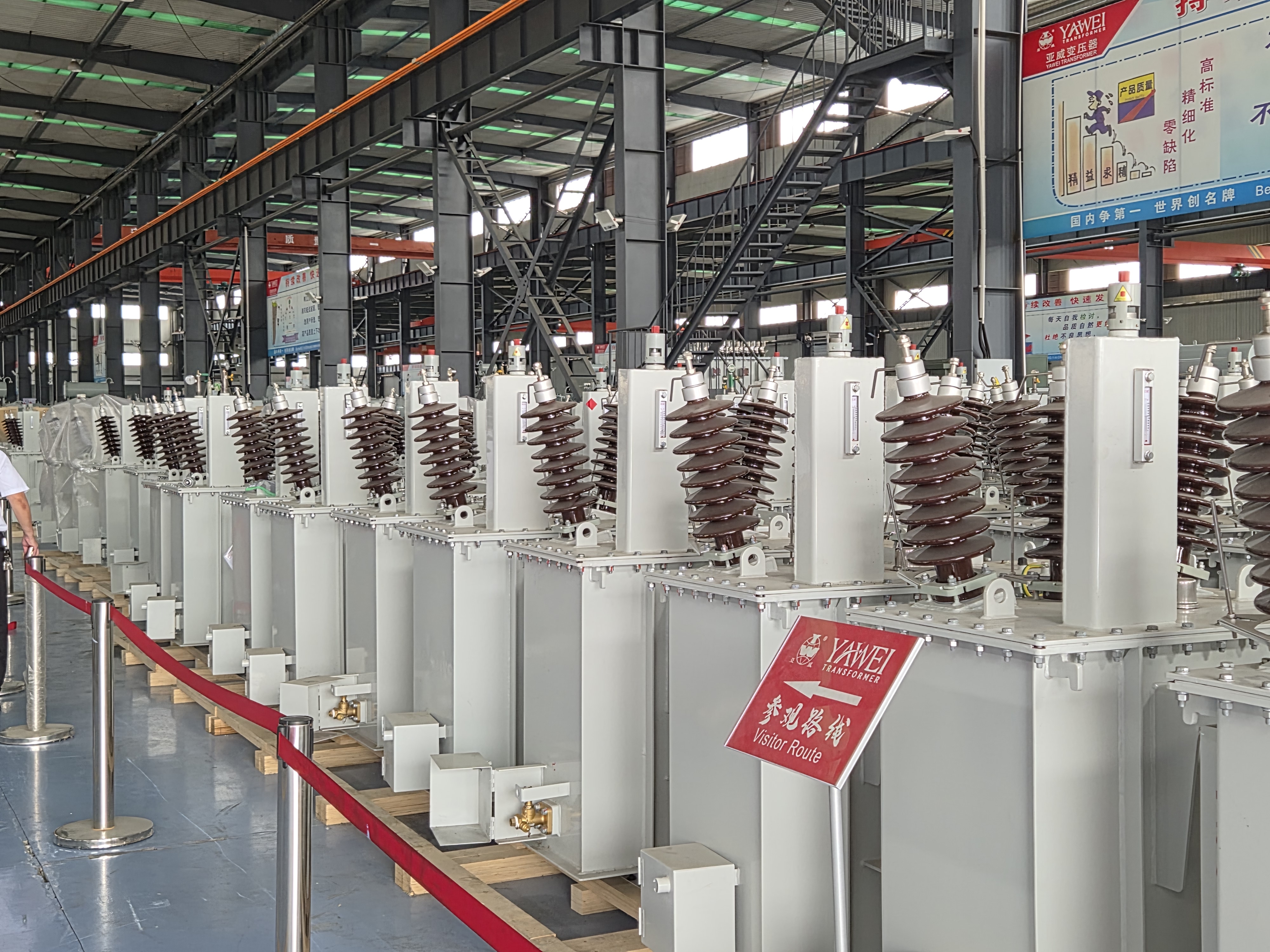
Next step: review the documents before you release production
Request the current conformity and test document pack for your configuration, or ask for a quotation on a specific oil-immersed distribution transformer, power transformer, dry type transformer or prefabricated compact substation project. Documents can be reviewed against your specification before the order is placed and again before shipment is released.
Contact: Simon · Email: xuke@apexps-nj.com · Tel / WhatsApp: +86 132-0157-1341 · Website: apexpowerlink.com
Product catalogue (PDF): Apex Power Systems Catalog — transformers, substations and switchgear
Have Questions or Need More Details?
Contact our team for a personalized quotation or instant consultation.
Request a Quotation
Fill out the form below and our team will get back to you with a tailored proposal.
WhatsApp Direct Chat
Prefer to chat in real-time? Message us on WhatsApp for instant assistance & quick answers.
- Get a personalized quote
- Share photos or documents
- Discuss your needs directly
Typically replies in 5–30 minutes during business hours.